
In this article:
- What Makes These Snowball Cookies Melt So Tenderly
- Rolling Snowball Cookies in Sugar Twice: The Timing That Matters
- Snowball Cookies Ingredients
- How to Make Snowball Cookies That Never Spread
- Ground Pecans or Chopped? The Texture Choice
- Nut-Free Snowballs and Other Variations
- Small Swaps for a Lighter Cookie Tin
- Freezing Snowball Cookies for Christmas Week
- Keeping Snowball Cookies Fresh After Baking
- FAQ
What Makes These Snowball Cookies Melt So Tenderly
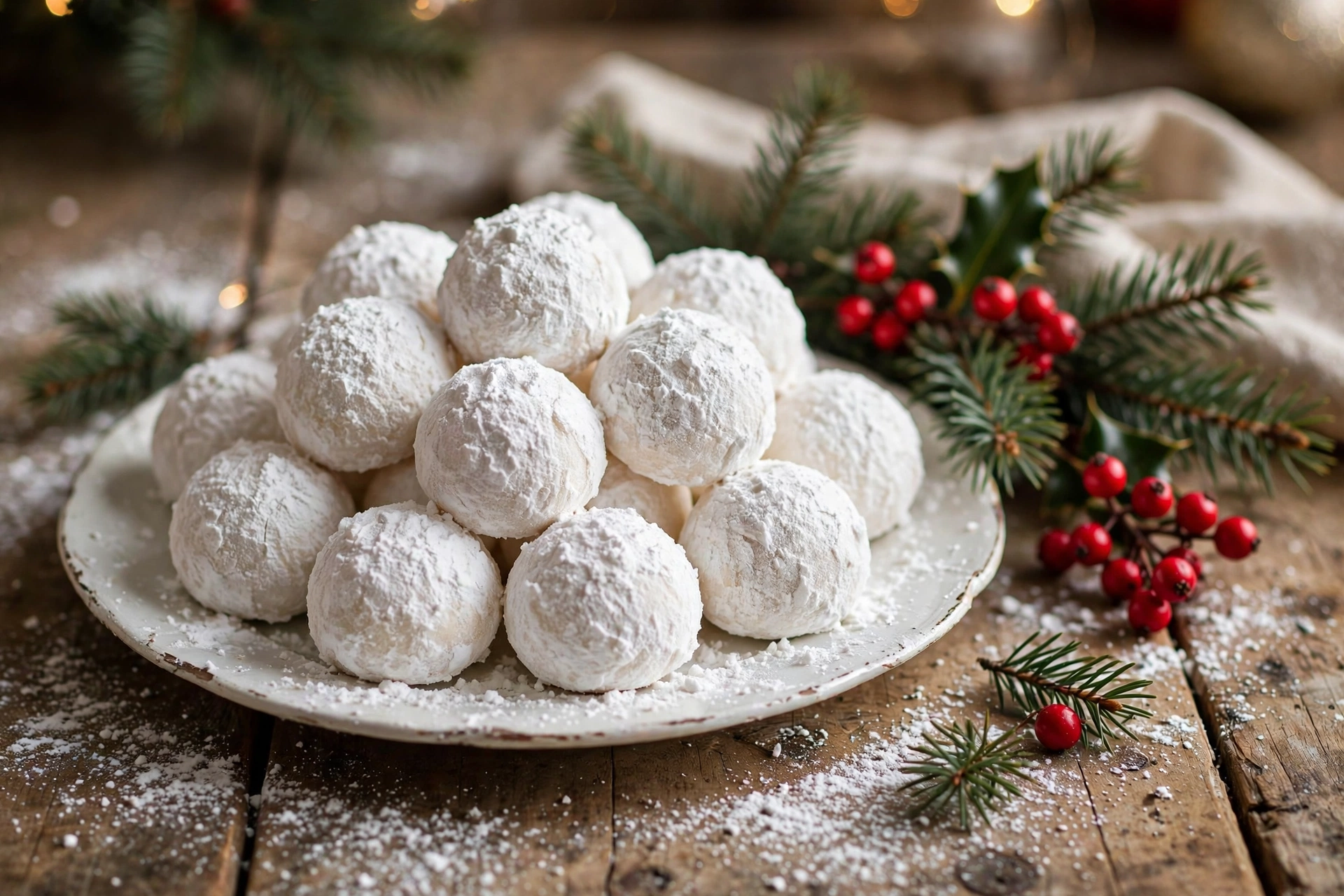
These snowball cookies melt because there is no egg and almost no liquid in the dough. Butter and flour do all the work, and the crumb stays short, sandy, and delicate instead of chewy. The pecans are ground to a coarse flour rather than chopped into pieces. Ground nuts blend into the dough itself, so every bite tastes of toasted pecan instead of only the bites that happen to contain a chunk. Toasting the pecans first is non-negotiable in my kitchen. Eight minutes in a moderate oven wakes up their oils, and that deep, warm flavor carries the whole cookie, which has nowhere else to hide. A short rest in the refrigerator firms the butter back up after mixing. Cold dough goes into the oven as neat balls and comes out as neat balls, instead of spreading into pale, flat discs. The final secret is patience with the sugar. A first roll while the cookies are warm, then a second roll once they are cool, builds the thick, snowy coat that makes people reach for them first. There is no leavening to rescue a heavy hand, which makes the mixing gentle by necessity. Stop the mixer the moment the flour disappears; every extra second of beating develops gluten and trades melt for chew. Size is part of the tenderness too. A true 1-inch ball bakes through before it dries out, and the center stays soft for days. Bigger cookies look generous but bake unevenly, with pale, fragile middles.Rolling Snowball Cookies in Sugar Twice: The Timing That Matters
The double roll is where most batches quietly go wrong, and the fix is a timer, not a technique. Fresh from the oven, the cookies are too hot: the sugar melts on contact and turns into a thin, pasty glaze. Wait exactly 5 minutes, until the cookies are warm but comfortable to hold. Roll them gently in powdered sugar now, and this first coat melts just slightly, gluing itself to the surface as a base layer. Let the cookies cool completely on a rack, a full 30 minutes. Then roll them again in fresh sugar, and this second coat stays dry, thick, and white, the fresh snowfall look the cookie is named for. Work in small batches and use a fresh bowl of sugar for the second roll. Sugar that has already met warm cookies clumps, and clumpy sugar gives you speckled cookies instead of snowy ones. If the holidays are busy, the second roll can even wait until serving day. A quick roll through fresh sugar revives cookies baked days earlier and makes them look like they just came out of the oven. Use a shallow bowl rather than a plate for both rolls. The sugar needs depth to surround the cookie, and a gentle rocking motion coats it far more evenly than pressing it down into a thin layer. One last detail: roll with dry hands, every time. Even slightly damp fingers leave fingerprints in the coat and pull the sugar away in patches, and this cookie’s whole beauty is that unbroken white surface.Snowball Cookies Ingredients
- 1 1/4 cups pecan halves (to make 1 cup finely ground toasted pecans)
- 1 cup (2 sticks) unsalted butter, softened to room temperature
- 1/2 cup powdered sugar, for the dough
- 2 teaspoons vanilla extract
- 2 cups all-purpose flour, spooned and leveled
- 1/4 teaspoon fine sea salt
- 1 tablespoon cold water, only if the dough crumbles
- 1 1/2 cups powdered sugar, for rolling
- 1/2 teaspoon ground cinnamon, optional, whisked into the rolling sugar
How to Make Snowball Cookies That Never Spread
- Heat the oven to 350°F (175°C). Spread the pecan halves on a baking sheet and toast for 8 minutes, until fragrant and a shade darker. Cool completely, about 15 minutes.
- Pulse the cooled pecans in a food processor until they look like coarse sand, stopping before any oily paste forms at the bottom. Measure out 1 cup of the ground pecans.
- Beat the softened butter with the 1/2 cup powdered sugar and the vanilla until smooth and pale, about 2 minutes with an electric mixer.
- Add the flour, salt, and ground pecans. Mix on low just until a soft dough forms. If it crumbles instead of gathering, knead in the cold water a teaspoon at a time.
- Press the dough into a flat disc, wrap it, and refrigerate for 30 minutes, until firm enough to roll cleanly.
- Line two baking sheets with parchment. Scoop tablespoon portions of dough, squeeze each one firmly in your fist, then roll it into a smooth 1-inch ball. Set the balls 1 inch apart.
- Bake one sheet at a time for 12 to 14 minutes, until the bottoms are just turning light golden. The tops stay pale; that is correct.
- Rest the sheet on a rack for exactly 5 minutes. Roll the warm cookies gently in powdered sugar and return them to the rack.
- Once fully cool, about 30 minutes, roll every cookie in powdered sugar a second time for the thick, snowy finish.
Ground Pecans or Chopped? The Texture Choice
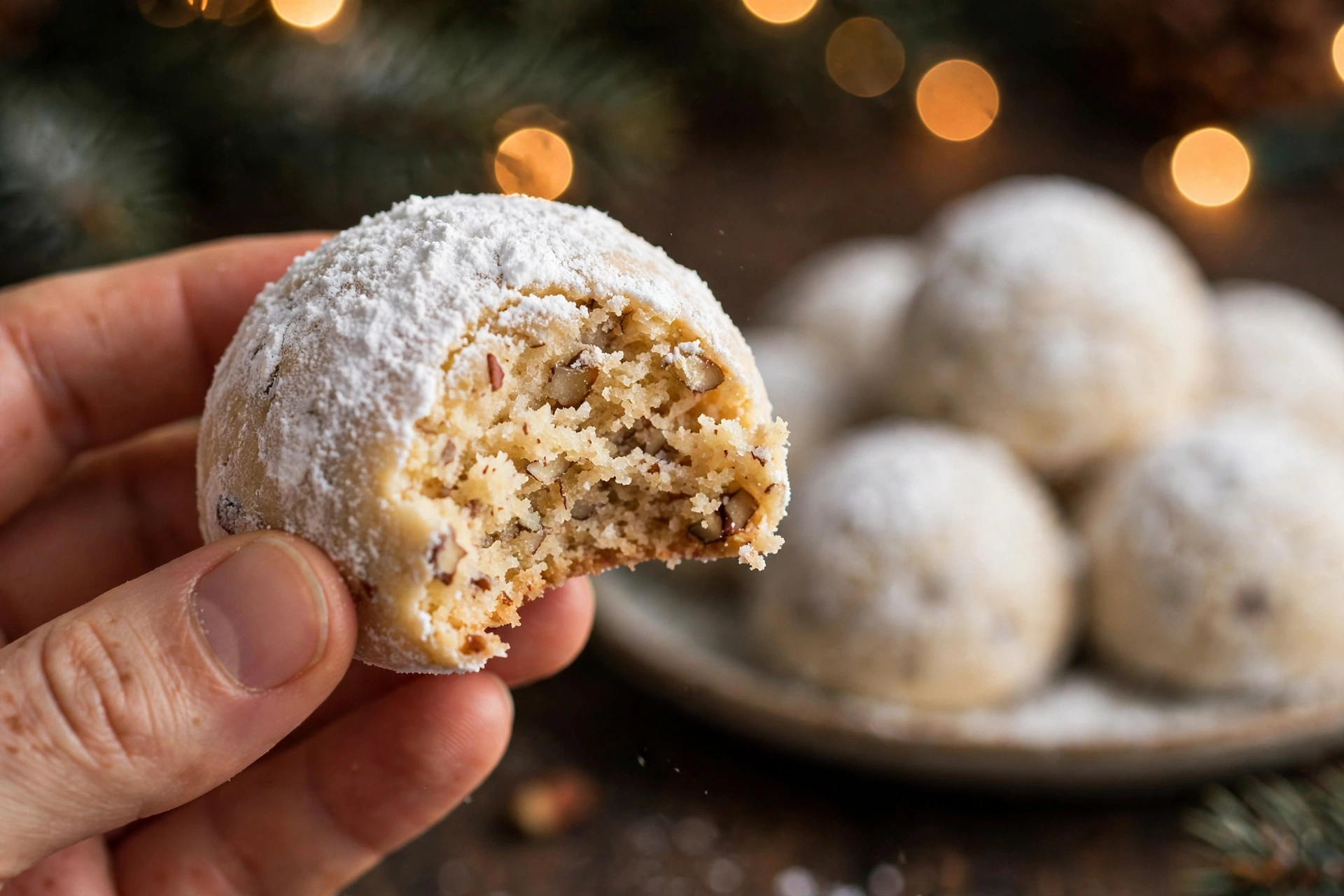
Both versions are legitimate, and the Russian tea cake tradition includes each, but they eat very differently. Ground nuts disappear into the crumb and give you that famous melt, bite after bite, with no chewing resistance. Chopped nuts keep their identity. The cookie is crunchier, sturdier, and a little more rustic, closer to a nut shortbread. It travels well in tins and stands up to mailing, which matters in December. My ruling, after many December batches: grind them for eating at home, chop them for shipping to family. The same dough handles both, so the choice costs you nothing. Whichever you choose, toast the nuts first and cool them completely before they meet the dough. Warm nuts melt the butter on contact, and you are back to spreading cookies and a greasy crumb. Watch the food processor closely if you grind. The line between ground pecans and pecan butter is about ten seconds of pulsing, so work in short bursts and stop while the texture still looks like dry, coarse sand. Aged nuts are the one ingredient that can quietly ruin the batch. Pecans go rancid faster than most bakers expect, so taste one before you toast the batch; a bitter, paint like flavor means the bag belongs in the bin, not the dough. Walnuts are the classic swap and bring a faint bitterness that suits the sweet coat. Almonds give a cleaner, marzipan leaning flavor, and hazelnuts turn the whole tin toward a European tea table.Nut-Free Snowballs and Other Variations
For a nut-free tin, simply leave the pecans out and add 2 extra tablespoons of flour so the dough keeps its structure. The cookies bake up plainer but still tender, and a pinch of cinnamon in the dough gives them back their personality. The cinnamon sugar version deserves its own following. Whisk half a teaspoon of cinnamon into the rolling sugar and the white coat gains a warm, speckled glow that tastes like the holidays smell. A citrus variation brightens the whole batch: add a teaspoon of finely grated orange zest to the dough with the vanilla. Orange and pecan are old friends, the same pairing that makes our cranberry orange shortbread cookies disappear so quickly. Chocolate lovers can fold in a quarter cup of mini chocolate chips with the nuts. It is not traditional, and nobody at my table has ever once complained about that. For a peppermint snowball, swap the vanilla for half a teaspoon of peppermint extract and roll the finished cookies in sugar mixed with finely crushed candy cane dust. Serve those the day they are made for the brightest flavor.Small Swaps for a Lighter Cookie Tin
Each cookie lands around 110 calories with 7 grams of fat, 11 grams of carbohydrates, 5 grams of sugar, and 1 gram of protein. For a butter cookie rolled in sugar, that is a modest little package. To lighten the batch, rolling the balls slightly smaller, at 3/4 inch instead of a full inch, gives you more cookies per batch and built in portion sense. Baking time drops to 10 to 12 minutes. Swapping a quarter of the butter for an equal amount of light cream cheese trims the richness a touch and adds a faint tang. The crumb turns slightly less sandy, so save this swap for the chopped nut version. Reducing the sugar in the dough from half a cup to a third of a cup works too, because the double coat brings most of the sweetness anyway. The dough becomes a little firmer, which the cold water trick handles easily. What I would not change is the butter itself. Margarine and shortening both flatten the flavor of a cookie this simple, and with so few ingredients, every single one of them has to earn its place.Freezing Snowball Cookies for Christmas Week
This is the recipe that saves my December. The dough balls freeze raw, beautifully, for up to 3 months, which means fresh baked cookies on any day of Christmas week without a single mixing bowl. Roll the balls, set them on a parchment lined sheet, and freeze until solid, about 1 hour. Tip them into a freezer bag, press out the air, and label the bag with the date and the baking temperature. Bake them straight from frozen at the same 350°F, adding 2 minutes to the time. They spread a fraction more than fresh dough, so give them their full inch of space on the sheet. Baked cookies freeze well too, for the same 3 months, but freeze them after the first sugar roll only. Thaw at room temperature for an hour, then give them their second roll in fresh sugar so the coat looks brand new. Portion the frozen balls into bags of twelve. A dozen is one baking sheet, one small gathering, or one very good evening, and smaller bags mean you never thaw more than the day actually needs. Write the roll timing on the bag along with the temperature: 5 minutes, roll, cool, roll again. Future you, standing in a busy December kitchen, will be grateful the instructions traveled with the dough. This is the same make-ahead spirit that makes christmas crack saltine toffee such a December workhorse. Do the work in November, look effortlessly ready in December.Keeping Snowball Cookies Fresh After Baking
Stored in an airtight tin at room temperature, these cookies keep their tender crumb for a full week. Layer them between sheets of parchment so the sugar coats do not rub off against each other. Keep the tin away from strong flavors. Butter cookies absorb odors eagerly, and a snowball that tastes faintly of the onion stored nearby is a small holiday tragedy that is easy to avoid. If the coat dulls after a few days, do not rebake them. Ten minutes before serving, roll the cookies through fresh powdered sugar one more time and they look freshly fallen all over again. Ten quiet seconds of work, and the whole tin looks bakery fresh again. They also make one of the best homemade gifts in the cookie canon: sturdy, pretty, and happy to travel. Pack them snugly so they cannot rattle, and they will arrive looking like the day they were baked, right beside the easy Christmas sugar cookies in the same box. So that is the whole craft of it: snowball cookies with ground toasted pecans, a cold rest, and two coats of sugar applied at exactly the right moments. Simple ingredients, precise little habits, and a tin that empties faster than any other on the table. Bake a double batch. One is for the tin, and one is for the freezer, and you will thank yourself somewhere around December 20th. From my kitchen to yours, Rita.FAQ
Why is my snowball cookie dough so crumbly?
This dough has no egg, so it starts out sandy by design. Squeeze each portion firmly in your fist before rolling, which warms the butter just enough to bind it. If it still crumbles, knead in cold water one teaspoon at a time, up to 1 tablespoon.
Why did the powdered sugar melt into a glaze on my cookies?
They were rolled too soon. Straight from the oven, the cookies are hot enough to melt the sugar into paste. Wait exactly 5 minutes so they are warm but holdable for the first roll, then roll again once fully cool for the dry, snowy coat.
Can I make snowball cookies without nuts?
Yes. Leave the pecans out and add 2 tablespoons of extra flour so the dough keeps its body. The cookies stay tender and buttery, and a pinch of cinnamon or a teaspoon of orange zest in the dough replaces the flavor the nuts usually bring.
Why did my snowball cookies spread flat in the oven?
The butter was too soft or the dough skipped its rest. The butter should dent under a fingertip without looking shiny, and the shaped dough needs its 30 minutes in the refrigerator. Chilled balls hold their round shape through the whole bake.
Can I freeze snowball cookie dough balls?
It is the best way to make them. Freeze the rolled balls solid on a sheet, then bag them for up to 3 months. Bake straight from frozen at 350°F, adding 2 minutes, and do both sugar rolls after baking exactly as written.

Snowball Cookies
Buttery snowball cookies with finely ground toasted pecans, a cold dough rest so they never spread, and a timed double roll in powdered sugar for the perfect snowy coat. The dough balls freeze for fresh batches all Christmas week.
- Total Time: 1 hour 20 minutes
- Yield: 36 cookies 1x
Ingredients
- 1 1/4 cups pecan halves (to make 1 cup finely ground toasted pecans)
- 1 cup (2 sticks) unsalted butter, softened to room temperature
- 1/2 cup powdered sugar, for the dough
- 2 teaspoons vanilla extract
- 2 cups all-purpose flour, spooned and leveled
- 1/4 teaspoon fine sea salt
- 1 tablespoon cold water, only if the dough crumbles
- 1 1/2 cups powdered sugar, for rolling
- 1/2 teaspoon ground cinnamon, optional, whisked into the rolling sugar
Instructions
- Heat the oven to 350°F (175°C). Spread the pecan halves on a baking sheet and toast for 8 minutes, until fragrant and a shade darker. Cool completely, about 15 minutes.
- Pulse the cooled pecans in a food processor until they look like coarse sand, stopping before any oily paste forms at the bottom. Measure out 1 cup of the ground pecans.
- Beat the softened butter with the 1/2 cup powdered sugar and the vanilla until smooth and pale, about 2 minutes with an electric mixer.
- Add the flour, salt, and ground pecans. Mix on low just until a soft dough forms. If it crumbles instead of gathering, knead in the cold water a teaspoon at a time.
- Press the dough into a flat disc, wrap it, and refrigerate for 30 minutes, until firm enough to roll cleanly.
- Line two baking sheets with parchment. Scoop tablespoon portions of dough, squeeze each one firmly in your fist, then roll it into a smooth 1-inch ball. Set the balls 1 inch apart.
- Bake one sheet at a time for 12 to 14 minutes, until the bottoms are just turning light golden. The tops stay pale; that is correct.
- Rest the sheet on a rack for exactly 5 minutes. Roll the warm cookies gently in powdered sugar and return them to the rack.
- Once fully cool, about 30 minutes, roll every cookie in powdered sugar a second time for the thick, snowy finish.
- Prep Time: 20 minutes
- Cook Time: 14 minutes