
In this article:
- Silky leeks, sweet squash, crisp crust
- The quarter inch slice rule
- What you need for the gratin
- Salting, layering and baking
- Assembled tonight, baked tomorrow
- Why gratins weep, and how to stop it
- Cheese and cream swaps
- A lighter cream
- Leftovers, freezing, second bake
- Between the turkey and the pie
- Questions about this gratin
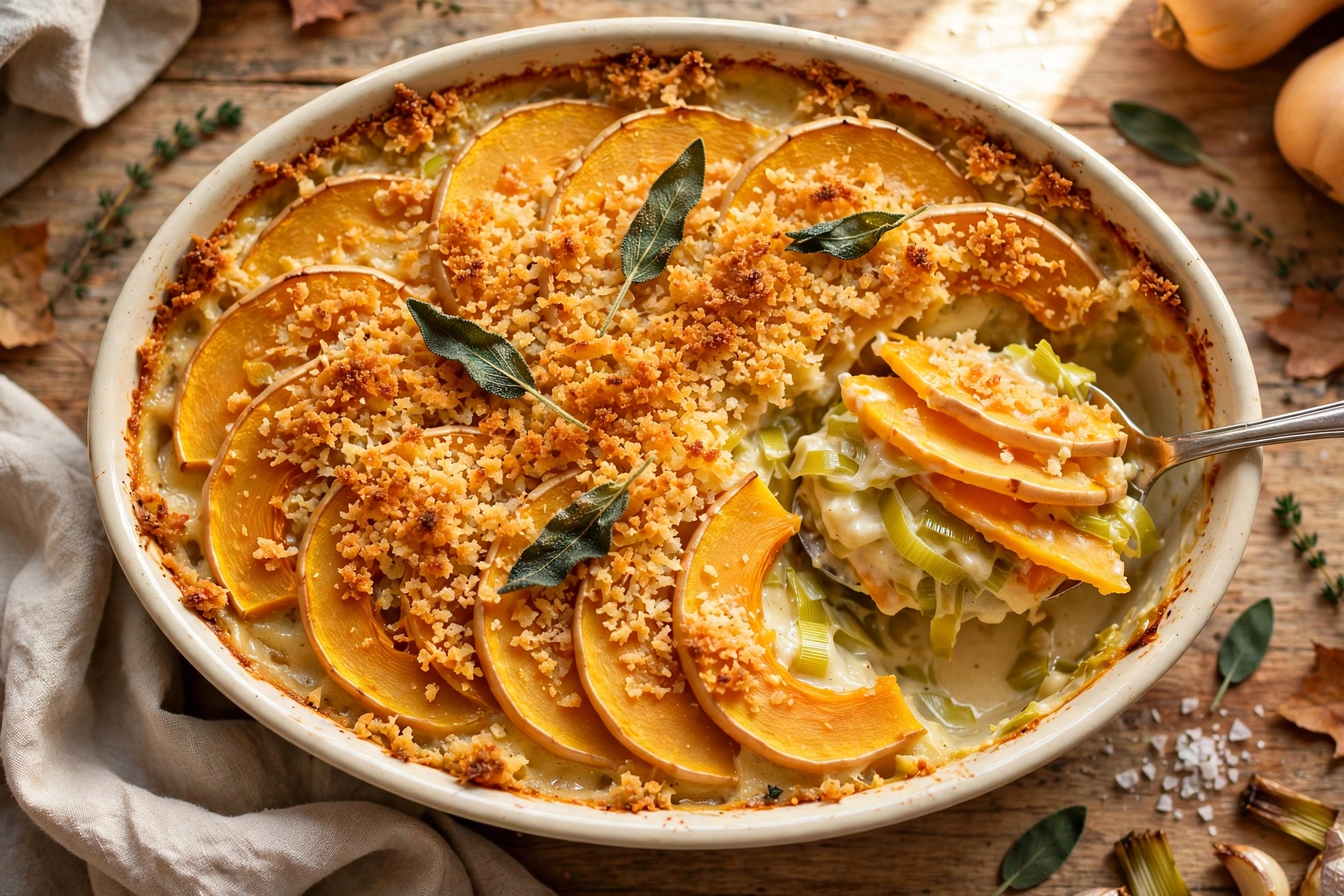
This butternut squash gratin is the side I build the night before Thanksgiving, when the house is quiet and the turkey is still somebody else’s problem. Thin slices of squash overlap like roof shingles, layered with soft leeks and a sage cream that smells like the whole holiday in one pan.
It bakes the next day under a parmesan crumb that shatters when the spoon goes in. The slices come up tender and defined, never soupy, because the squash is salted before it ever meets the cream. That one habit, plus a topping that waits for baking day, is the whole secret.
Silky Leeks, Sweet Squash and a Crust That Actually Crackles
Butternut squash is the sweetest thing on the Thanksgiving table that is not dessert, and this gratin leans into that. Slow leeks melt into the cream and turn almost jammy, so every bite of squash carries a savory base note underneath its caramel sweetness. The contrast is the dish.
Sage does quiet, essential work here. Fried briefly in the leek butter, it perfumes the cream with a woodsy flavor that reads unmistakably as late November. Nutmeg, just a quarter teaspoon, warms the background without announcing itself; guests will taste depth and be unable to name it.
The top is a study in textures. Parmesan panko bakes into a crisp, lacy crust that breaks audibly under a serving spoon, while the slices underneath stay silky enough to fold over each other on the plate. A whole sage leaf, crisped in the topping oil, lands on each serving like a garnish that was always the plan.
Served straight from the oven, the gratin steams and slumps. Given fifteen minutes of rest, it sets into clean layers that hold their shape on the spoon and still eat soft. Those fifteen minutes are not a suggestion in this recipe; they are the difference between a gratin and a very good squash soup.
It also happens to be the prettiest pan on the table. The shingled rows keep their pattern under the crumb, the edges caramelize to a deep amber, and the whole dish glows orange against the white china and the dark turkey. Pretty is not the point of a side dish, but nobody has ever complained about it.
Quarter Inch Slices: The One Cut This Butternut Squash Gratin Asks For
Every gratin failure I have ever tasted came back to uneven slicing. Thick pieces stay raw at the center while thin ones dissolve, and no amount of cream fixes a pan that cooks at two speeds. Quarter inch half moons, cut with a plain chef’s knife, are thick enough to hold their shape and thin enough to cook evenly.
You do not need a mandoline. Halve the squash lengthwise, scoop the seeds, and cut across the neck and the bulb in steady strokes, checking the first few slices against a ruler until your hand learns the thickness. Slightly imperfect is fine; wildly mixed is what the oven cannot forgive.
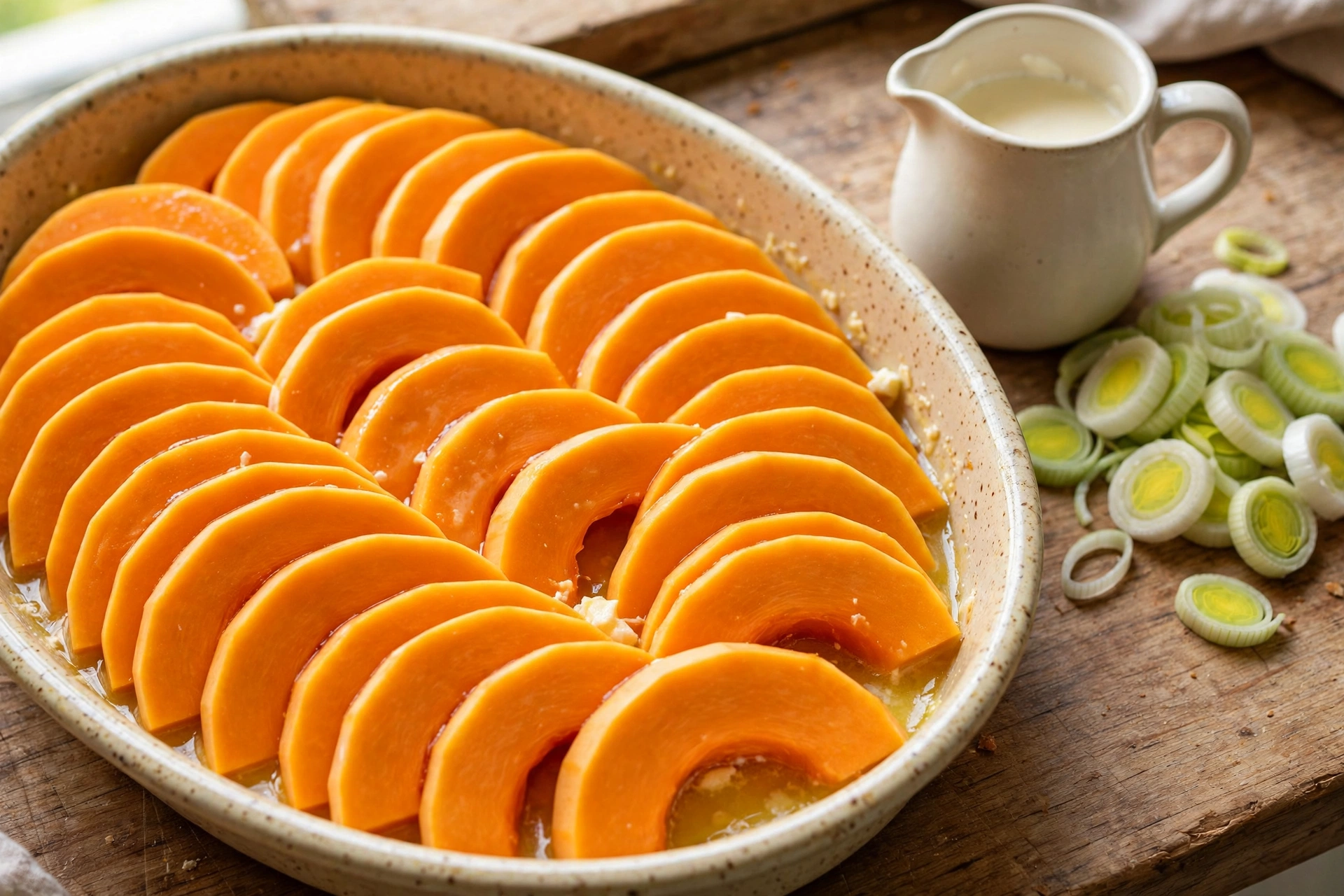
The overlap matters as much as the cut. Laid in tight, shingled rows, the slices expose thin edges to the cream and protect each other’s faces, so the pan cooks as one connected layer instead of a pile of separate pieces. It also looks beautiful before it bakes, which never hurts a dish headed for a holiday table.
What You Need: One Big Squash, Leeks, Sage and Real Parmesan
Choose a squash with a long, thick neck and a small bulb; the neck gives you the wide, even half moons that layer best. Leeks need a rinse after slicing, since grit hides between their layers. And grate the Parmesan yourself: the pre grated kind carries anti caking powders that turn a crisp crumb dusty.
- 1 large butternut squash, about 3 pounds, peeled, seeded and cut into 1/4 inch half moons
- 1 1/2 teaspoons fine salt, divided
- 2 tablespoons butter, plus more for the dish
- 2 leeks, white and light green parts only, halved and thinly sliced, about 2 cups
- 2 garlic cloves, minced
- 10 fresh sage leaves, finely chopped, plus 6 whole leaves for the top
- 1 1/4 cups heavy cream
- 1/2 teaspoon black pepper
- 1/4 teaspoon freshly grated nutmeg
- 3/4 cup finely grated Parmesan, divided
- 1/2 cup panko breadcrumbs
- 1 tablespoon olive oil
Salting, Layering and Baking the Gratin
The order of operations protects the texture at every stage. The squash is salted and drained first, the leeks are cooked until truly soft, and the cream is warmed before it pours, so the assembled pan goes into the oven already halfway to tender. On Thanksgiving, you skip to the baking steps.
- Salt the squash. Toss the slices with 1 teaspoon of the salt in a colander and leave them for 20 minutes. A surprising amount of liquid will drip out. Spread the slices on clean towels and pat them thoroughly dry.
- Heat the oven to 375°F if you are baking today, and butter a 2 quart baking dish, about 9 by 13 inches or a large oval.
- Cook the leeks. Melt the butter in a skillet over medium heat, add the leeks with a pinch of salt, and cook for 6 to 7 minutes until soft, sweet and just starting to color at the edges. Stir in the garlic and chopped sage for 30 seconds.
- Warm the cream. In a small saucepan, warm the cream with the black pepper, the nutmeg, the remaining 1/2 teaspoon of salt and half of the Parmesan. Heat only until steaming and the cheese melts; do not boil it.
- Layer the pan. Arrange half of the squash slices in tight overlapping rows. Spoon over half of the leeks and pour over half of the warm cream. Repeat with the remaining squash, leeks and cream, pressing the top layer down gently with a spatula.
- Stop here for make ahead. Cover the dish tightly and refrigerate for up to 24 hours. Keep the panko, the remaining Parmesan and the olive oil in a dry container on the counter or in the pantry, never in the refrigerator with the gratin.
- Add the topping on baking day. Stir the panko, the remaining Parmesan and the olive oil together and scatter the mixture over the cold or room temperature gratin. Tuck the whole sage leaves into the crumbs.
- Bake covered with foil for 30 minutes, then uncovered for 20 to 25 minutes, until the cream bubbles thickly around every edge and a knife slides into the center with no resistance. From the refrigerator, add 10 minutes to the covered time.
- Rest for 15 minutes before serving. The cream will set around the slices, and the crust will stay crisp instead of steaming itself soft under a cover.
Assembled Tonight, Baked Tomorrow: The Night Before This Butternut Squash Gratin
The night before rhythm is what makes this butternut squash gratin a Thanksgiving recipe instead of just a good one. Slicing and salting take twenty five minutes of calm work, the leeks cook while the squash drains, and the assembled pan goes into the refrigerator before dinner dishes are even washed.
Two details keep the overnight version as good as the same day one. The topping waits in a dry container, because panko that spends the night on wet cream will never crisp again. And the slices are patted dry after salting, because squash keeps releasing water, and that water has nowhere to go in a covered cold pan.
Oven timing on the day is forgiving, which is the third gift of the overnight plan. The gratin bakes happily at 375°F beside a turkey roasting lower and slower; give it the middle rack and its covered time first, then uncover it while the bird rests and the gravy comes together.
It comes to the table in the same quarter hour as everything else, hot, rested and ready, without a single negotiation or a last minute scramble.
Why Gratins Weep, and the Three Habits That Stop It
A watery gratin is almost never the cream’s fault. Squash is mostly water, and heat drives that water out into the pan during baking. Salting the slices first, and patting them dry, removes the first and largest wave of liquid before the dish is even assembled.
The second habit is warming the cream. Cold cream poured over cold squash spends the first twenty minutes of baking just coming to temperature, steaming the slices instead of simmering them. Warm cream starts its real work immediately, so the pan finishes on time and the sauce thickens instead of thinning.
The third habit is the rest. Straight from the oven, the cream is a liquid with slices floating in it. Fifteen minutes on the counter lets the starches in the squash and the cheese pull that cream into a sauce that coats. Cut too early and even a perfect gratin will weep on the plate.
Cheese and Cream Swaps That Keep the Character
Gruyère is the natural partner swap for the Parmesan in the layers, nuttier and more melting, though I keep Parmesan in the crumb where its sharp, salty edge matters most. A smoked Gouda, used for half of the cheese, turns the whole pan toward a firelit flavor that suits a December table as well as Thanksgiving.
For the cream, half and half works with one adjustment: whisk a teaspoon of cornstarch into it before warming, or the sauce will read thin next to the sweet squash. Whole milk alone is too lean for this dish and tends to curdle around the leeks.
Coconut cream makes a dairy free version with its own gentle sweetness; skip the Parmesan in the layers there and double the sage, and the pan still eats like itself.
A Lighter Cream, When the Table Is Already Rich
On a table that already holds a buttery stuffing and a cream laden potato dish, this gratin can step lighter without disappearing. Replace half of the cream with whole milk and the teaspoon of cornstarch described above, and cut the butter for the leeks to one tablespoon plus a teaspoon of olive oil.
The salt and the rest matter even more in the lighter version, because fat carries flavor and there is less of it to hide behind. Season the slices assertively, keep the sage at full strength, and do not shorten the fifteen minute rest. The pan will still slice cleanly and taste like a holiday, just a slightly brighter one.
Leftovers, Freezing and the Second Bake
Leftover gratin keeps for 4 days in the refrigerator, covered, and reheats best in a 350°F oven for 20 minutes under foil, with the foil off for the final 5 so the remaining crumb wakes back up.
Single portions reheat in the microwave at half power, though the crust will soften; a minute in a hot dry skillet fixes a single slice surprisingly well.
To freeze, assemble the gratin without its topping, wrap the dish in two layers, and freeze for up to 2 months. Thaw it in the refrigerator for a full day, add the fresh panko topping, and bake as directed with the extra covered time.
Baked leftovers also freeze, in portions, though the slices will be softer after their second bake. General safe storage times are worth checking at FoodSafety.gov when the holiday fridge gets crowded.
The Side That Slips Between the Turkey and the Pie
This butternut squash gratin earns its place on our table because it does the one thing Thanksgiving sides rarely do: it waits. It waits assembled in the cold, it waits baked under foil, and it waits rested on the counter while the turkey is carved and the gravy is whisked.
Build it the night before, next to the make ahead funeral potatoes, and let the two pans share the oven schedule with the make ahead mashed potatoes and the creamy corn casserole. Thursday turns into an assembly line of finished dishes instead of a pile of raw ingredients, and that is the calmest kind of holiday cooking I know.
Questions About This Butternut Squash Gratin
Can I assemble the whole gratin two days ahead instead of one?
One day is the safe, tested window. At two days the salted slices start to darken at the edges and the cream takes on the raw leek flavor. If you need two days, slice and salt the squash, cook the leeks, and store those components separately; assemble the pan the night before baking.
My gratin is bubbling at the edges but the center slices are still firm. What now?
The slices in the center were thicker, or the pan went in straight from the refrigerator without the extra covered time. Re-cover with foil and give it 10 more minutes, then test the very center with a knife again. Next time, check the first slices against a ruler until quarter inch becomes habit.
Can I use the precut butternut squash cubes from the store?
You can, but the dish changes character: cubes cook unevenly and cannot be shingled, so the gratin eats more like a bake. If cubes are what you have, cut any thick ones down, keep the salting step, and add 5 to 10 minutes to the covered bake. Slices from a whole squash are worth the ten minutes they take.
Why did my cream sauce look split when the gratin came out?
The cream probably boiled at some point, either while warming or under a too hot oven at the end. Warm it only to steaming, bake at 375°F as written, and let the pan rest the full 15 minutes; a sauce that looks loose at minute one usually pulls together as it rests.
What can I serve with this gratin besides turkey?
It is excellent beside a roast chicken or a beef tenderloin at other tables, and it can carry a vegetarian main course plate with a sharp green salad and cranberry sauce. The sweet squash and sage cream are flexible enough for any rich, savory centerpiece.