
In this article:
- Why the overnight soak works
- Cinnamon, maple and brown butter flavor layers
- What you need for the casserole
- Cutting, soaking and baking, step by step
- Fixing a soggy bottom or raw center
- Maple cream cheese icing that stays silky
- Swaps for the rolls, nuts and spice
- Reheating leftovers, slice by slice
- Building the rest of Christmas brunch
- A calm Christmas morning
- Questions about this casserole
This overnight cinnamon roll casserole is the Christmas morning bake I assemble on December 24, when the kitchen is calm and the tree lights are still on. Cubes of soft cinnamon rolls drink up a vanilla custard overnight, then bake into something between bread pudding and a sticky bun. The edges turn golden and slightly crisp. The center stays tender and swirled with spice. A maple cream cheese icing melts into every warm corner. Nobody waits for coffee to finish brewing before asking for a slice.
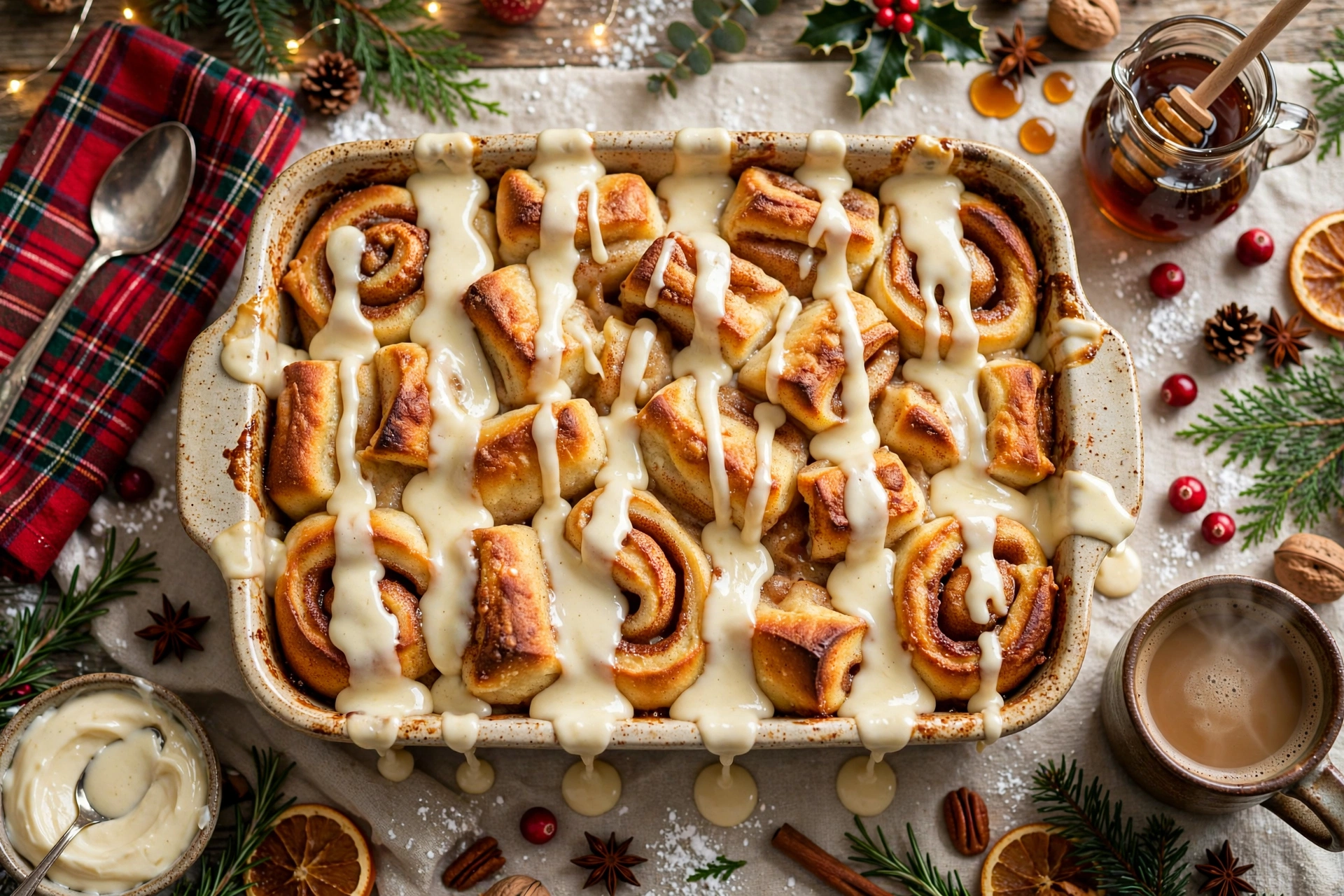
The magic is restraint. Too much custard and the bottom turns soggy. Too little and the top cubes dry out like croutons. This version uses a measured soak, a shallow dish and a short rest before serving, so each scoop holds together while staying soft.
{image_1}Why the Overnight Soak Sets This Christmas Casserole Up for Success
A good cinnamon roll casserole starts the night before, because dry roll cubes need real time to absorb custard evenly instead of floating in it. Eight hours in the refrigerator lets the cinnamon swirls soften, the eggs relax into the bread and the sugar dissolve fully. In the morning you bake, ice and serve, with no mixing bowls to wash while guests arrive.
Day old rolls work better than fresh ones here. Slightly dry crumb drinks custard like a sponge, while very fresh crumb collapses into paste. If your rolls are fresh from the bakery, cube them and leave the tray on the counter for one hour before soaking.
The shallow dish matters as much as the soak. A 9 by 13 inch dish spreads the cubes in a layer thin enough for heat to reach the center before the top over browns. A deep dish traps steam and leaves the middle pale and wet.
Cinnamon, Maple and Brown Butter: The Flavor Layers in Every Bite
The first flavor is cinnamon, warm and familiar, carried by the swirl inside every cube. Brown sugar in the custard deepens it toward caramel. A pinch of salt keeps the sweetness from tasting flat, which is the quiet problem in most holiday bakes served before noon.
Maple syrup does two jobs in this recipe. Two tablespoons in the custard add a woodsy sweetness that plain sugar cannot copy. The rest goes into the icing, where it stays front and center, glossy and fragrant against the tang of cream cheese.
Brown butter is the optional flourish I never skip. Five minutes in a light colored pan turns melted butter nutty and amber, and that warmth folds through the custard like toasted hazelnut. It makes the whole dish taste as if it came from a bakery case rather than a weeknight shortcut.
Texture is the real contrast. The top cubes bake crisp at the tips and catch tiny pools of icing. The middle stays custardy and soft, almost like the center of a cinnamon roll itself. Serve it warm, when that contrast is at its sharpest, with cold berries on the side for brightness. If citrus is your house style at Christmas, my homemade orange rolls follow the same warm spice logic with a brighter finish.
What You Need: Cinnamon Rolls, Custard and Maple Cream Cheese Icing
Buy plain cinnamon rolls without icing, or save the icing tubs for another use. You need about 24 ounces of rolls, which is two standard bakery trays. Everything else is a pantry staple in December, which is exactly why this bake survives busy holiday shopping lists.
- 24 ounces day old cinnamon rolls, cut into 1 inch cubes
- 6 large eggs, at room temperature
- 1 1/2 cups whole milk
- 1/2 cup heavy cream
- 1/3 cup packed brown sugar
- 2 tablespoons pure maple syrup, for the custard
- 2 teaspoons vanilla extract
- 1 teaspoon ground cinnamon
- 1/4 teaspoon fine salt
- 4 tablespoons butter, browned and slightly cooled
- 1/2 cup chopped pecans, optional, for the top
- 8 ounces cream cheese, softened, for the icing
- 4 tablespoons butter, softened, for the icing
- 1 cup powdered sugar, sifted, for the icing
- 1/3 cup pure maple syrup, for the icing
- 1 to 2 tablespoons milk, to loosen the icing
- 1/2 teaspoon vanilla extract, for the icing
Room temperature eggs whisk into milk without streaks, so set them out when you start cubing the rolls. Cold eggs straight from the refrigerator can leave pale ribbons in the finished custard. It is a small step that quietly improves the texture of every bite.
Cutting, Soaking and Baking the Casserole, Step by Step
- Butter a 9 by 13 inch baking dish well, including the corners. Scatter the cinnamon roll cubes in an even layer and sprinkle the pecans over the top if using.
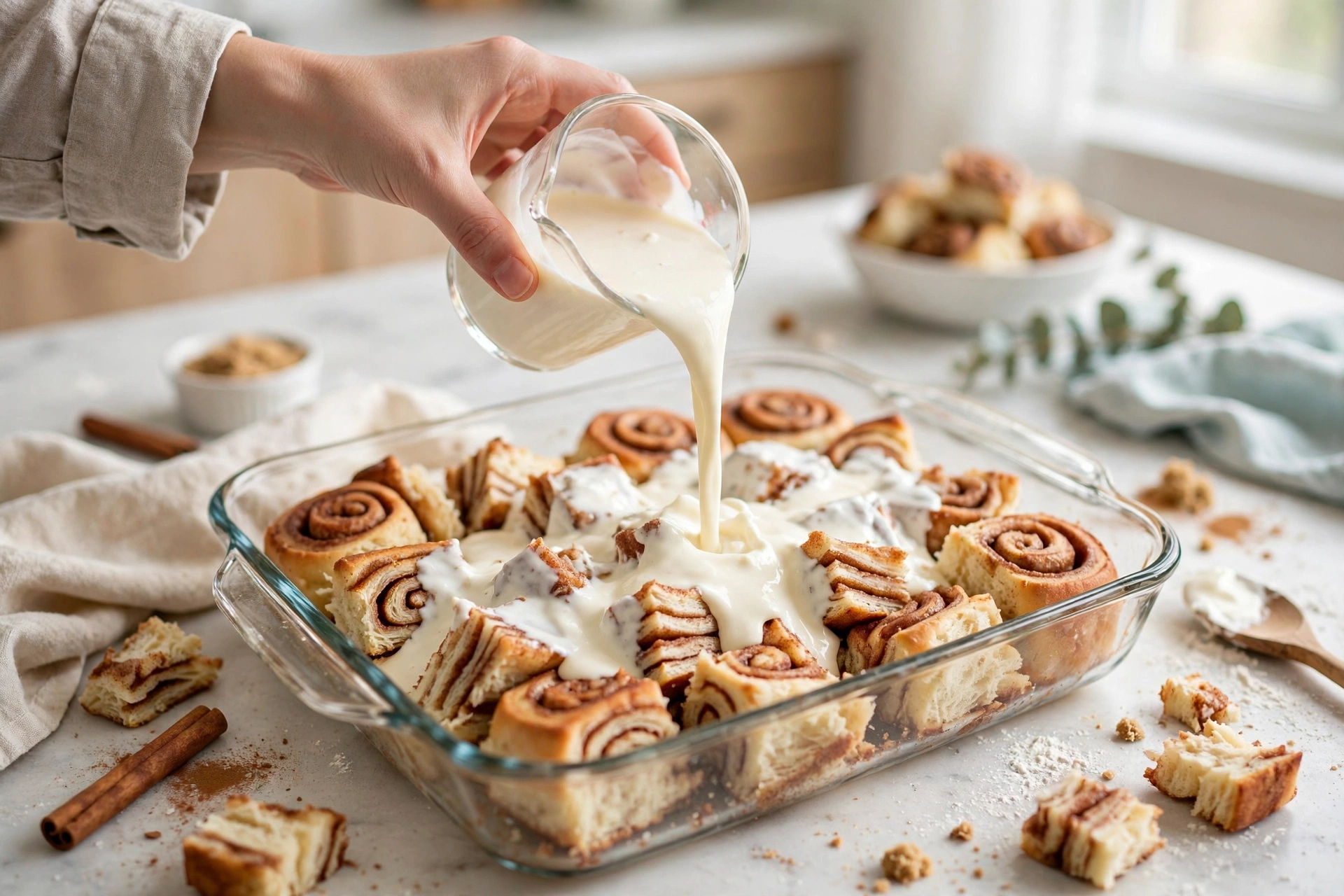
- Whisk the eggs, milk, cream, brown sugar, maple syrup, vanilla, ground cinnamon and salt until the sugar dissolves and no egg streaks remain.
- Slowly drizzle the browned butter into the custard while whisking. Pour the custard evenly over the cubes, pressing down gently with a spatula so the top pieces get coated.
- Cover the dish tightly and refrigerate for at least 8 hours and up to 24 hours. This overnight rest is what sets the custard into the crumb.
- In the morning, set the dish on the counter for 30 minutes while the oven heats to 350°F. Bake uncovered for 40 to 45 minutes, until the top is deep golden and the center barely jiggles when the dish is nudged.
- Check the center with an instant read thermometer. Egg dishes are done at 160°F, a point the USDA guide to holiday side dishes confirms for casseroles containing eggs.
- Rest the casserole for 15 to 20 minutes before icing. This pause lets the custard finish setting, so slices scoop cleanly instead of slumping.
- Beat the cream cheese and soft butter until smooth, then beat in the powdered sugar, maple syrup and vanilla. Add milk one tablespoon at a time until the icing ribbons off the spoon. Spread it over the warm casserole and serve right away.
Soggy Bottom or Raw Center? Fixing the Custard Before It Happens
Most problems with a cinnamon roll casserole trace back to one ratio: too much liquid for the amount of bread in the dish. If your rolls are small or very soft, hold back one quarter cup of the custard and add it only if dry cubes remain on top after pressing.
A raw center under a browned top usually means the dish was too deep or the oven ran hot at the surface. Tent the top loosely with foil at the 30 minute mark if it colors early, and give the center the full time it needs. The thermometer settles every argument: 160°F in the exact middle means done, whatever the top looks like.
A soggy bottom after baking often comes from skipping the rest. Cut too early and the custard that has not yet set runs to the base of the dish and pools there. Fifteen minutes of patience fixes what extra baking time cannot, because overbaking only dries the edges.
One more quiet cause: custard poured over frozen or fridge cold cubes in a cold glass dish. Let the assembled dish warm on the counter for 30 minutes before baking, as the steps above direct. A glass dish that enters the oven cold bakes unevenly from edge to center, every single time.
Maple Cream Cheese Icing That Stays Silky, Never Hard
Cream cheese icing hardens when it is spread on a casserole that has cooled too far, then firms up like a glaze on a donut. Spread it while the bake is warm but not steaming, about 15 minutes out of the oven, and it stays soft and spoonable at the table.
If your icing does set hard on leftovers, do not microwave the whole dish to fix it. Warm individual slices gently, then stir one teaspoon of warm milk into a spoonful of the icing on top. It loosens back into a sauce in seconds, without turning thin or greasy.
Maple syrup varies more than people expect. Dark, robust syrup gives the icing a deep color and a flavor that stands up to cinnamon. Lighter syrup makes a paler, sweeter icing. Both work, but taste before serving and add a tiny pinch of salt if the icing reads one note sweet.
Swaps for the Rolls, the Nuts and the Spice
Brioche cubes stand in well if cinnamon rolls are sold out, though you should raise the ground cinnamon in the custard to two teaspoons and add two extra tablespoons of brown sugar. Challah works too, with a slightly eggier crumb. Avoid sandwich bread, which dissolves instead of soaking.
Pecans are classic, but toasted walnuts bring a pleasant bitterness against the maple. For a nut free table, skip the nuts and scatter a handful of dried cranberries over the top before baking for color and chew. The casserole loses crunch, so serve it with crisp fruit on the side.
Cardamom is my favorite quiet variation: replace half the cinnamon in the custard with ground cardamom for a Scandinavian leaning bake. For a different December project altogether, the shaped Christmas tree cinnamon rolls on Kozina use the same dough family in a pull apart form that children love to decorate.
Reheating Leftover Casserole, Slice by Slice or the Whole Dish
Leftover cinnamon roll casserole keeps for three days in the refrigerator, covered tightly, and reheats better than most brunch bakes because the custard protects the crumb. For a single slice, microwave at 70 percent power for 60 to 90 seconds, then rest one minute. Full power toughens the edges before the center warms.
For the whole dish, cover with foil and warm at 325°F for 20 to 25 minutes, until the center reaches serving temperature. Add a fresh spoonful of icing after reheating rather than before, since icing warmed twice turns thin and overly sweet. A small fresh batch takes three minutes and makes leftovers taste newly baked.
Freezing works for the unbaked casserole only. Assemble, cover tightly and freeze for up to one month, then thaw overnight in the refrigerator and bake as directed. A baked and iced casserole freezes poorly, because the icing weeps and the custard grain turns spongy on thawing.
Building the Rest of Christmas Brunch Around This Bake
This bake is rich, so the rest of the table should lean fresh and savory. A big bowl of winter citrus, grapefruit and oranges with mint, cuts the maple sweetness cleanly. Crisp greens with a sharp vinaigrette work better than another sweet side competing for the same spoon.
For the savory anchor, my easy Christmas morning casserole bakes in the same oven window and feeds the guests who reach for eggs before sweets. Set both dishes out together and the table looks abundant without any morning cooking at all.
If your family expects a loaf on the table as well, the glazed eggnog banana bread slices beautifully next to this casserole and uses the bananas that ripened during the busy week. Coffee, strong tea and cold milk cover every age at the table. Keep portions of the casserole modest at first serving. Seconds are the tradition here, and the dish holds its warmth well under a clean kitchen towel while the first round disappears.
A Calm Christmas Morning, One Warm Slice at a Time
This cinnamon roll casserole earns its place on our Christmas table because the work ends the night before and the morning stays slow. Warm spice, soft custard and maple icing do the celebrating for you. Assemble it on Christmas Eve, bake it while stockings are opened, and sit down with everyone else. That is the whole point of an overnight bake, and this one delivers it reliably.
Questions About This Cinnamon Roll Casserole
Why is the center of my casserole still runny after 45 minutes?
The center is usually underbaked because the dish was deeper than 9 by 13 inches or went into the oven fridge cold. Tent with foil and bake 5 to 10 minutes more, checking for 160°F in the exact center. Always rest it 15 minutes, since the custard finishes setting off the heat.
Can I assemble this casserole two nights ahead instead of one?
One night is ideal, and 24 hours is the safe maximum before the cubes break down and turn mushy. If you need a longer lead, freeze the assembled unbaked dish for up to one month and thaw it overnight in the refrigerator before baking.
My maple cream cheese icing hardened on the leftovers. How do I soften it?
Warm the slice gently first, then stir a teaspoon of warm milk into the icing on top until it loosens into a sauce. Avoid reheating the whole dish at full power, which thins the icing and toughens the custard edges.
Can I use store bought icing tubs instead of making the maple icing?
You can, but canned icing lacks maple entirely and tastes noticeably sweeter. Stir one tablespoon of maple syrup and a pinch of salt into each tub to bring it closer to the homemade version, and spread it on while the bake is still warm.
What size cinnamon rolls work best for the cubes?
Standard bakery or canned cinnamon rolls of about 2 ounces each cube cleanly into 1 inch pieces. Mini rolls dissolve into the custard, and oversized bakery rolls need a longer soak, so add 2 extra hours of refrigeration if that is what you have.