
In this article:
- Silky custard, never soupy
- Two textures in one spoonful
- The day before plan
- What you need for the dish
- Making the pudding, bowl to oven
- The wobble test
- Cheddar, chile and brown butter directions
- A lighter dish for a heavy table
- Fridge, freezer and reheating
- The golden dish on the left of the table
- Questions about this pudding
This southern corn pudding is the side I make when the Thanksgiving table needs something golden, soft and calm. It bakes into a tender custard studded with whole kernels, and it waits patiently while bigger, louder dishes fight for attention.
Most corn sides arrive in one of two ways: a cakey casserole built on a boxed mix, or a loose scoop that slumps on the plate. This pudding takes the third road. No box, no floury crumb, just corn in two forms and a custard that sets like a savory flan.
Why This Southern Corn Pudding Sets Silky, Never Soupy
This southern corn pudding works because part of the corn becomes the sauce. One and a half cups of kernels are blended with the milk until the mixture turns pale and thick, so the custard has body before an egg ever joins it.
The remaining kernels stay whole. They are the texture, little pops of sweetness suspended in the set custard, and they keep the dish honest as a corn pudding rather than a corn flavored flan. Every spoonful carries both textures at once.
Eggs do the setting, and there are enough of them. Four eggs in a shallow dish give a custard that slices clean at the edges and trembles at the center, the exact wobble that tells you the inside stayed creamy instead of baking dry.
Cornstarch is the quiet insurance. Two tablespoons whisked into the eggs catch any extra liquid the corn releases in the oven, so the pudding never weeps into the plate. It is a small amount, invisible in the flavor, decisive in the result.
The last reason is restraint with sugar. Three tablespoons lift the natural sweetness of the corn without pushing the dish toward dessert. On a plate with cranberry sauce and candied yams nearby, that balance is what keeps people coming back for seconds.
Two Textures in One Spoonful: Popped Kernels, Poured Custard
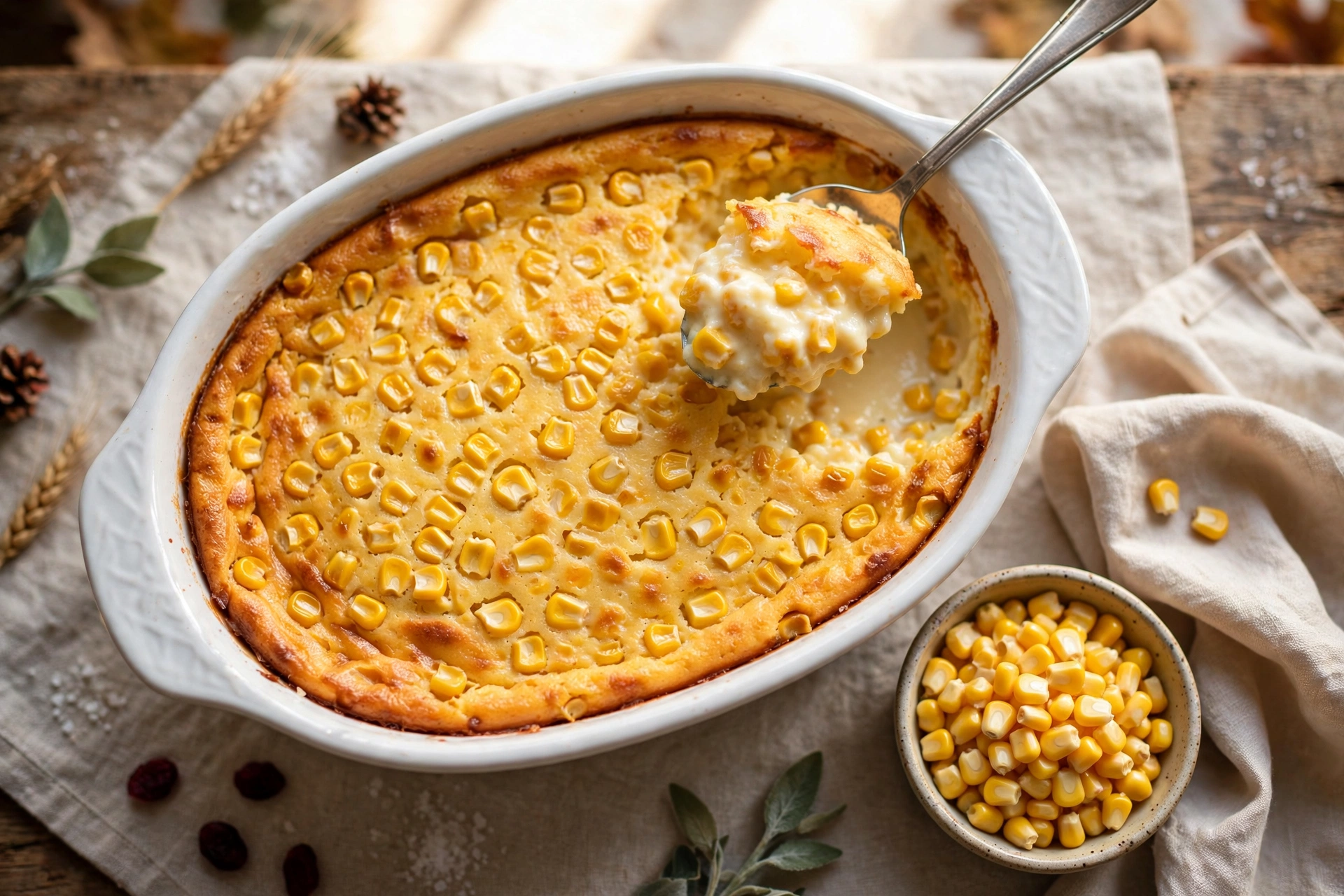
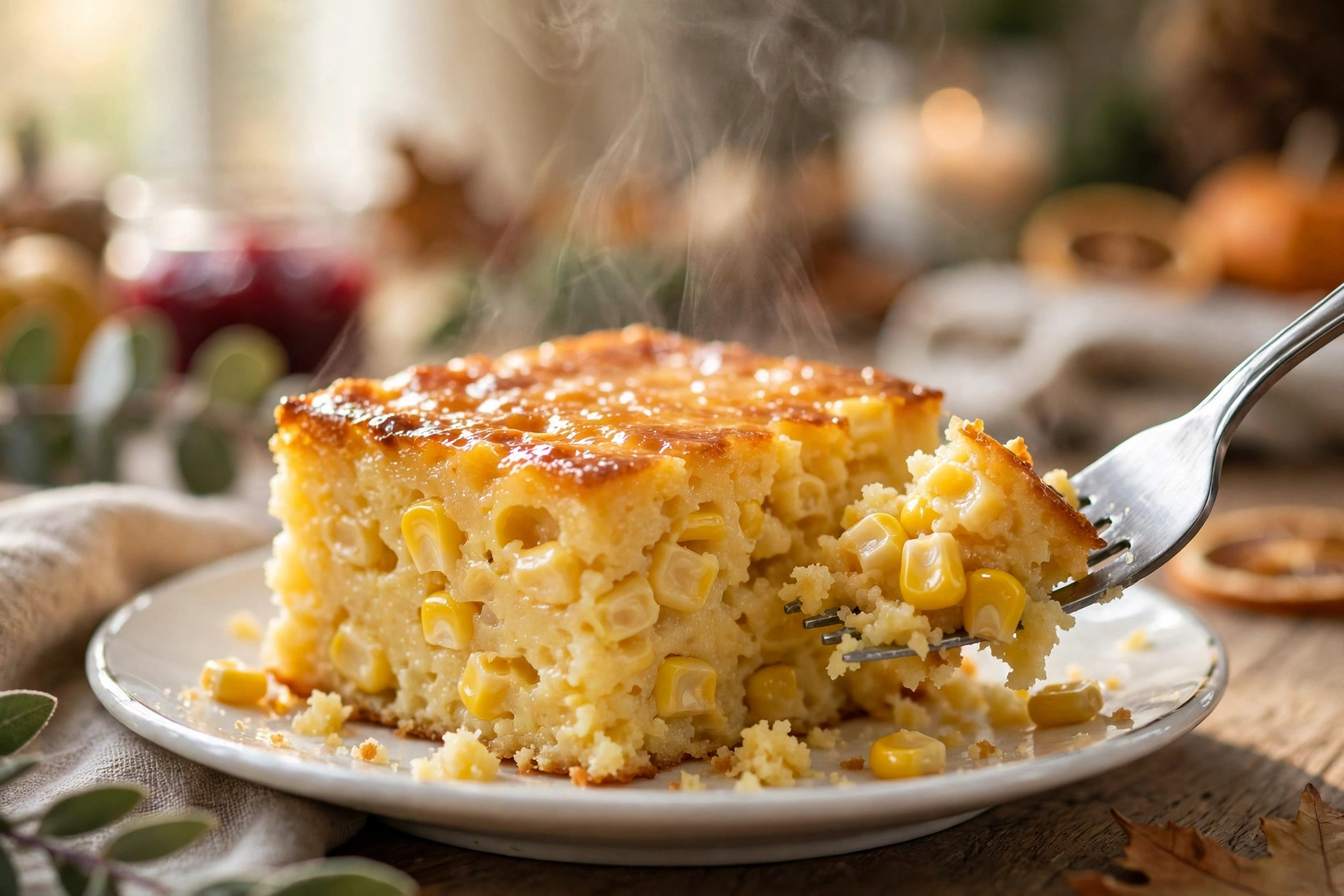
The surface bakes to a deep, even gold, thin enough to break under the spoon with a soft crackle. Underneath, the custard stays glossy and pale, closer to a sauce than a cake, and it coats the spoon instead of crumbling off it.
Warmth matters here. Served straight from the oven, the butter and cream read loud and rich. Give the pudding ten minutes of rest and the flavors settle: the corn turns sweeter, the nutmeg steps back, and the salt finds its level against the kernels.
The corn itself should taste like August, even in November. Frozen kernels, thawed and drained well, hold their sweetness honestly because they were frozen within hours of picking. Canned kernels work too, drained with the same discipline, their liquor left behind in the sink.
There is a gentle perfume to the dish when it is right: warm milk, browned butter at the edges, and the green note of chives scattered at the table. Nothing shouts. The pudding perfumes the plate the way a good sauce does, quietly and completely.
Against the rest of the spread, this dish is the soft landing. Turkey is lean, stuffing is herby and crisp at the edges, gravy is salty and dark. A spoonful of sweet, mild custard between them resets the palate for the next round.
The Day Before Plan: Blend, Whisk, Chill, Bake Tomorrow
The whole dish assembles in about fifteen minutes, and it can do those minutes on Wednesday instead of Thursday. Blend the base, whisk the custard, fold in the kernels, and the filled dish goes into the fridge under wrap for up to 24 hours.
Baking from cold takes five to eight minutes longer, and the pudding forgives the difference. It slides into the oven the moment the turkey comes out to rest, which is exactly the oven slot every Thanksgiving cook is trying to protect.
There is a second make ahead route for cooks who want zero baking on the day. Bake the southern corn pudding completely on Wednesday, cool it, refrigerate it, and reheat it covered at 325°F for about 20 minutes. The custard stays set and silky.
Either way, the chives wait. Scatter them at the table, over the hot surface, so they stay bright and raw against the gold. Herbs scattered before a reheating turn dull and taste cooked, a small loss the day before plan refuses to accept.
This is the real convenience of the recipe: not speed, but placement. The work lands on the quiet day, the baking lands in the empty oven slot, and the dish lands on the table hot, calm and exactly on schedule.
What You Need: Five Cups of Corn and No Boxed Mix
Five cups of kernels sounds like a lot until you remember that corn is the dish. Fresh ears give the brightest flavor in season; in November, good frozen kernels are the honest choice, thawed and drained until they stop dripping into the bowl.
Everything else is a short, plain list. Eggs, whole milk and a modest pour of cream build the custard. Melted butter carries the flavor. Cornstarch steadies the set. Sugar, salt, black pepper and a pinch of nutmeg season without decorating.
- 5 cups sweet corn kernels (from about 6 fresh ears, or thawed frozen, or drained canned), divided
- 4 large eggs
- 1 cup whole milk
- 1/2 cup heavy cream
- 4 tablespoons unsalted butter, melted, plus more for the dish
- 3 tablespoons granulated sugar
- 2 tablespoons cornstarch
- 1 teaspoon fine salt
- 1/4 teaspoon black pepper
- Pinch of ground nutmeg
- 2 tablespoons chopped fresh chives, to serve
Making the Southern Corn Pudding, Bowl to Oven
Two small habits decide this dish before the oven ever opens. Drain the corn like you mean it, because surface water is the enemy of a set custard. And choose a shallow 2 quart dish over a deep one, so the center cooks before the edges dry.
- Heat the oven to 350°F. Butter a shallow 2 quart baking dish. If the corn is frozen, thaw it fully and drain it in a colander for 10 minutes, pressing gently.
- Put 1 1/2 cups of the kernels in a blender with the milk. Blend for about 30 seconds, until mostly smooth with a little texture remaining. This blended base is the body of the custard.
- In a large bowl, whisk the eggs, cream, melted butter, sugar, cornstarch, salt, pepper and nutmeg until the cornstarch disappears completely and the mixture looks uniform.
- Pour the blended corn into the egg mixture and whisk once more. Fold in the remaining 3 1/2 cups of whole kernels until every kernel is coated.
- Scrape the mixture into the buttered dish and smooth the top. If you are working ahead, cover and refrigerate for up to 24 hours at this point.
- Bake for 45 to 55 minutes (add 5 to 8 minutes from cold), until the edges are set and golden, the center gives a slight wobble when the dish is nudged, and an instant read thermometer in the center registers 165°F.
- Rest for 10 minutes so the custard finishes setting. Scatter the chives over the top and serve warm, straight from the dish.
The Wobble Test and Four More Ways to Protect the Custard
Judge doneness by movement, not color. Nudge the dish: the edges should hold still while the center sways once, slowly, like set gelatin. If the whole surface ripples, give it five more minutes. If nothing moves at all, it went a touch long.
Watch the water in your corn. Fresh kernels cut from the cob weep the most, so let them stand in the colander a full ten minutes. A custard can absorb a little corn liquor; it cannot absorb a quarter cup of it and still set.
Keep the dish shallow. In a deep casserole the edges overbake before the center sets, and you trade silk for sponge. A wide, shallow dish is not presentation fussiness here, it is how the custard cooks evenly in the time given.
If the top colors faster than the center sets, lay a sheet of foil loosely over the dish for the last fifteen minutes. The gold you want is even and matte, not dark at the rim, and the foil buys the center its time.
Resting is a cooking step, not a pause. The pudding leaves the oven slightly loose by design, and the ten minutes on the counter finish the set through carryover heat. Cut in early and the first serving slumps; wait, and it spoons up in soft, clean folds.
Cheddar, Green Chile and Brown Butter Directions to Try Next
The classic plate at our table is the plain pudding with chives, but the base takes variations gracefully. A cup of shredded sharp cheddar folded in with the kernels gives a deeper, saltier dish that stands closer to a main course than a side.
For gentle heat, fold in a small can of diced green chiles, well drained, and swap the chives for sliced scallions. The chile stays in the background, a warmth behind the sweet corn, and it flatters leftover turkey the next day in a way the plain version cannot.
Brown butter is the cook’s variation. Brown the butter before melting it into the custard and add two torn sage leaves to the pan as it foams. The pudding turns nuttier and more autumnal, and it sits beautifully beside roasted squash and bitter greens.
A lighter hand with dairy also works in the other direction: replace the cream with more whole milk and add an extra egg yolk. The custard stays tender, the flavor leans corn forward, and the dish holds its own beside richer company.
A Lighter Dish for a Heavy Table
Thanksgiving plates run rich, and this pudding can step back without disappearing. Use 2 percent milk and skip the cream entirely, adding one extra egg to protect the set. The texture firms slightly and the corn flavor comes forward cleanly.
For a dairy free table, full fat oat milk and a neutral oil in place of butter make an honest version. The custard sets a little softer, so give it the full rest and serve it from the dish rather than plating neat squares.
The dish is naturally gluten free, since cornstarch does the steadying that flour does in other custards. That makes it a safe anchor on a mixed table, one of the few classic sides a celiac guest can take without a single question.
Fridge, Freezer and the Day After Reheat
Leftovers keep, covered, for up to 3 days in the fridge. Reheat single servings gently in the microwave at half power, or warm the whole dish covered at 325°F for about 20 minutes, following the same gentle reheating logic the USDA leftovers guidance gives for perishable dishes.
The baked pudding freezes for up to 2 months, tightly wrapped. Thaw it overnight in the fridge and reheat it covered until steaming at the center. The texture stays remarkably close, losing only a little of its gloss at the very edges.
Day after serving is its own pleasure. Cold squares of pudding, warmed in a skillet until the bottom crisps, sit well under a fried egg. It is the rare Thanksgiving leftover that improves by leaving the casserole format behind.
On the table itself, this pudding keeps the company it deserves. It shares the oven schedule with our green bean casserole, it follows the same calm logic as the make-ahead mashed potatoes, and it belongs to the full lineup in our Thanksgiving dinner menu. If you want its cakier cousin instead, the corn casserole is the dish to read next.
The Golden Dish That Anchors the Left Side of the Table
This southern corn pudding earns its place the quiet way: it is ready when the turkey is, it serves without fuss, and it tastes like the best version of an ingredient everyone at the table already loves.
Make it once the classic way, with chives and patience. Then make it yours, with cheddar, with chile, with brown butter and sage. The custard forgives nearly everything except haste, and Thanksgiving forgives almost nothing else.
Questions About This Southern Corn Pudding
FAQ
Why do I blend only part of the corn instead of all of it?
The blended portion becomes the body of the custard: ruptured kernels release starch and corn milk that thicken the set without flour or a boxed mix. The whole kernels left behind give the pudding its pops of texture. Blend everything and you get a smooth flan; blend nothing and the custard can turn loose.
My corn pudding came out watery. What went wrong?
Almost always the corn went in wet. Thawed frozen kernels and fresh cut kernels both weep liquid, so drain them for a full 10 minutes and press gently. A dish that is too deep is the second cause: the center stays liquid while the edges overbake. Use a shallow 2 quart dish.
Can I assemble southern corn pudding the night before Thanksgiving?
Yes, that is how this recipe is designed to run. Assemble the filled dish, cover it and refrigerate for up to 24 hours. Bake it straight from the fridge at 350°F, adding 5 to 8 minutes, until the center wobbles slightly and reads 165°F.
Can I use canned corn for this pudding?
Yes. Drain two to three cans of whole kernel corn very well and skip any creamed corn, which would sweeten and loosen the custard. The blended base gives you the creamy element canned creamed corn usually provides, with better texture.
How do I reheat corn pudding without drying it out?
Cover the dish with foil and warm it at 325°F for about 20 minutes, until steaming at the center. For single servings, the microwave at half power keeps the custard silky. High uncovered heat is what dries the edges and breaks the set.