
I love making Bread Dipping Oil at home. It transforms ordinary bread into something extraordinary. This easy recipe features rich olive oil, bright herbs, and a hint of spice. The beauty lies in its simplicity. Just a few minutes for infusion, and you’re ready to dip. Whenever I serve it, I see everyone gather around, eager for that first taste. It brings warmth and flavor to any meal. So, let’s dive into this delightful oil that pairs perfectly with crusty bread.
Pro Tips from Chef Rita
- Use high-quality olive oil for the best flavor.
- Let the oil sit to bloom the herbs’ aromas.
- Adjust herbs and spices to your taste for a personal touch.
- Always serve fresh for the best experience.
Table of Contents
Bread Dipping Oil opens a simple ritual: oil warmed by taste, brightened with citrus and herbs, finished with a faint heat. The contrast is immediate glossy oil against porous bread, cool crust and silky fat. A light technique yields clarity: brief infusions, a final seasoning scatter. Set a small bowl, breathe the aroma, and the table shifts.
Why This Recipe Works
Bread Dipping Oil shows restraint: it lets good olive oil remain center stage while precise additions sharpen and support. A few minutes of infusion coax essential oils from herbs and citrus, without cooking them into bitterness. The salt is finishing salt scattered at the end to keep textural pops and clear flavor bursts.
The logic is simple. Olive oil provides the mouthfeel. Acidity or citrus lifts the palate. Aromatics add perfume. A tiny touch of chili balances richness. The result is immediate and forgiving; small adjustments change the character without destabilizing the whole.
Flavor and Texture
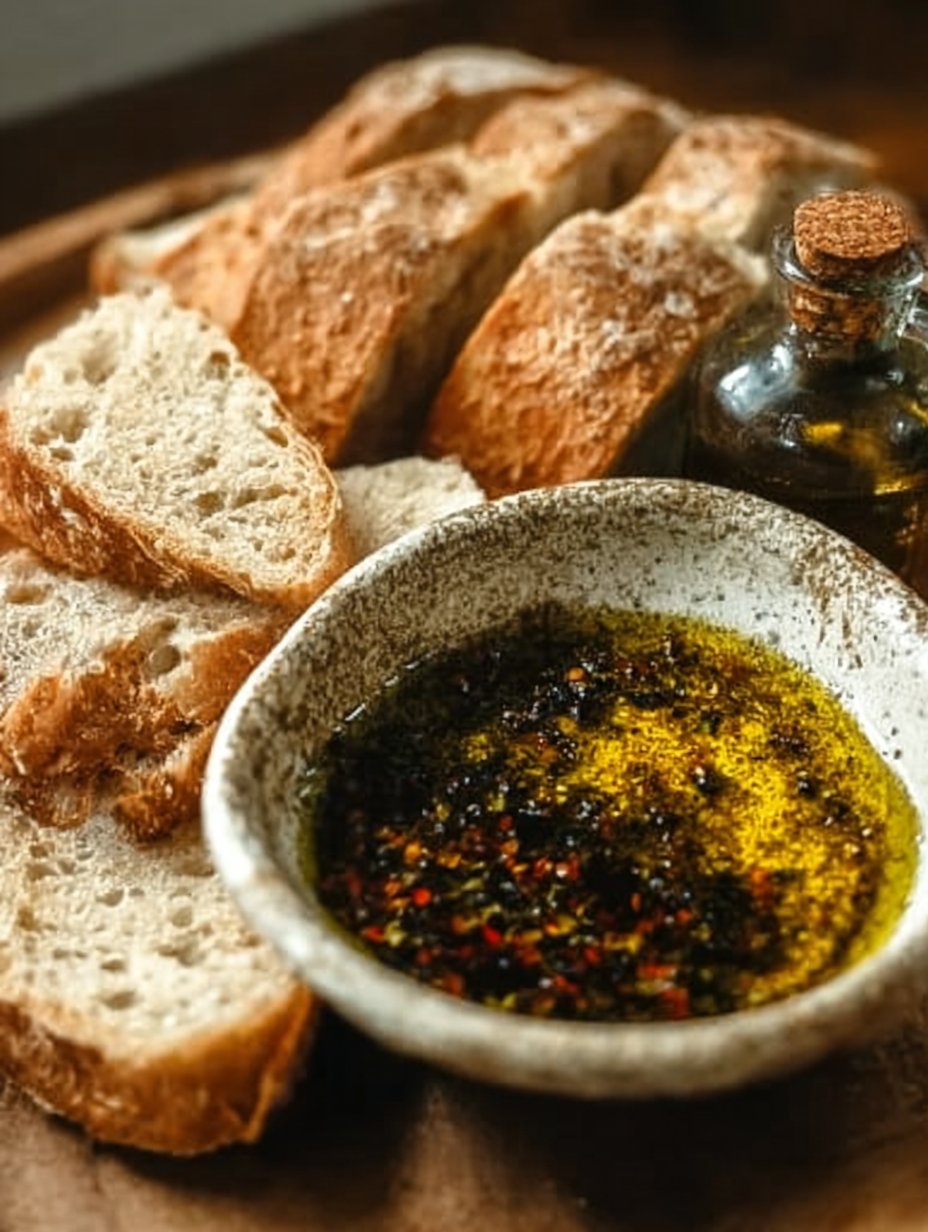
The first impression is silk. Olive oil coats the tongue, leaving a warm, rounded mouthfeel that makes bread sing. Textural contrast comes from crust and crumb: a crackly edge gives way to spongy interior that drinks oil, releasing herb and citrus perfumes.
Herbs offer green brightness; rosemary is pine, thyme is subtle citrus, basil gives clean sweetness. Lemon or orange zest brightens, tightening the backbone of the oil. A glint of chili flakes or black pepper gives a trailing warmth that refreshes with every bite. For an unexpected crunch, add toasted seeds or finely chopped toasted nuts.
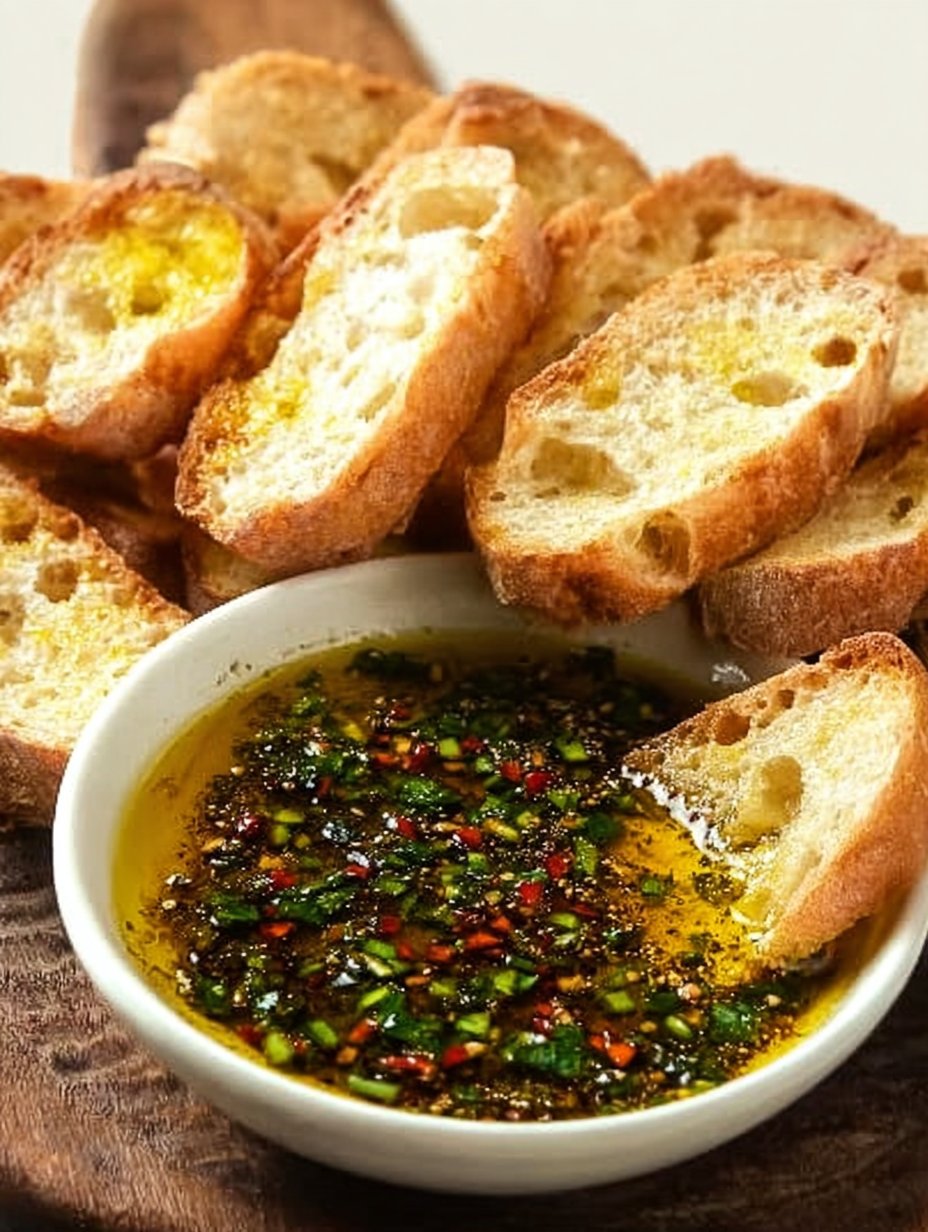
Consider a small viscous contrast: a dash of aged balsamic adds glossy depth and a faint sweetness against the oil’s richness. Visually, the bowl should look jewel-like — translucent gold specked with green and red, a composition that invites a slow, appreciative dip.
One internal reference that complements this pairing is the banana and chocolate chip bread that pairs well with a rustic oil bowl: banana and chocolate chip bread.
Convenience and Time
This recipe is quick and forgiving. Build the oil in under 15 minutes; let it rest briefly for aromatics to bloom. No cooking skills required beyond gentle warming if you choose to bloom spices. A mortar and pestle for pepper or zest is optional but adds subtle intensity.
Left to rest at room temperature for an hour, the oil gains complexity. For last-minute service, whisk ingredients together and serve immediately; the aroma will still be vivid. This makes it ideal for casual entertaining where small details feel considered without fuss.
Diet Friendly Options
The base is naturally plant-forward and adaptable for many diets. Use a mild extra-virgin olive oil or a nut-free alternative if needed. Salt can be reduced or replaced with a pinch of ground sumac for tang without sodium. For a lower-calorie option, use a lighter oil and rely on bright citrus and herbs for flavor.
If avoiding nightshades, skip chili flakes and add a faint smoked paprika instead. Simple swaps preserve the visual identity and texture while keeping the dish approachable.
Ingredients
- 120 ml extra-virgin olive oil
- 1 small garlic clove, thinly sliced
- 1 teaspoon lemon zest (finely grated)
- 1 teaspoon fresh rosemary, finely chopped
- 1 teaspoon fresh thyme leaves, lightly crushed
- 1/4 teaspoon red pepper flakes (optional)
- Sea salt, to finish
- Freshly ground black pepper, to taste
- 1 teaspoon toasted sesame or pine nuts (optional for texture)
Instructions
- Pour the olive oil into a small shallow bowl or ramekin so the oil layer is thin and invites dipping.
- Add the garlic slices, lemon zest, and chopped rosemary and thyme; stir gently to combine.
- If using, scatter the red pepper flakes and toasted nuts over the surface for color and crunch.
- Let the oil sit at room temperature for 10 to 30 minutes to allow aromatics to bloom; stir once before serving.
- Just before serving, grind black pepper over the oil and finish with a sprinkle of sea salt to taste.
Tips and Tricks for Success
Choose a good oil: it’s the main ingredient, so pick one with balanced fruitiness and a clean finish. Keep the oil shallow in the bowl; a thin layer cools faster in the mouth and clings to bread more readily. Use fresh zest pre-grated peel loses vibrancy.
Toast any seeds or nuts until fragrant but not dark; they should add a short-lived crunch, not bitterness. Slice garlic thin to avoid overpowering; tear a clove with a fork into slivers rather than mincing for a gentler release. Taste and adjust just before serving to preserve bright notes.
Ingredient Swaps
Substitute basil for thyme for a sweeter, almost sweet-tart lift, or use oregano for a Mediterranean heft. Swap lemon zest for orange if you prefer a rounder citrus note. For a smoky nuance, a pinch of smoked paprika or a few drops of toasted sesame oil can be introduced sparingly.
For a nut-free version, omit the toasted nuts and add finely chopped toasted seeds like pumpkin or sunflower for crunch. If you need a gluten-free bread partner, a crisp rice cracker or a warm flatbread maintains the dipping ritual without changing the oil’s identity.
Pairings and Serving Suggestions
Serve this oil with warm, crusty bread a torn sourdough or a lightly toasted baguette accentuates contrast. Soft cheeses like fresh ricotta or labneh plated alongside can be mixed into the oil for a silky spread. Roasted vegetables and grilled eggplant also absorb the oil beautifully.
For a compact menu, offer small bowls of oil alongside a simple salad and roasted olives for textural variety. The herbaceous profile works well with grilled fish or a plate of charred vegetables. If you’d like a playful pairing idea, try dipping a crisp slice of the chocolate peppermint bread into a tiny smear of oil-flavored whipped ricotta for a contrasting sweet-salty bite.
Storage and Make Ahead Tips
Bread Dipping Oil is best fresh. If you must store it, cover and refrigerate for up to three days; allow it to come back to room temperature before serving so the oil regains its silky texture. Re-whisk after chilling to reincorporate any separated aromatics.
For make-ahead convenience, prepare the aromatics separately and combine with oil just before guests arrive. Minimize garlic contact time in oil when preparing ahead to avoid a raw, pungent bite. Keep garnishes separate and scatter just prior to service to retain texture.
Nutrition and Health Benefits
The recipe centers on olive oil, a source of heart-healthy monounsaturated fats and polyphenols when extra-virgin varieties are used. Fresh herbs add negligible calories but supply antioxidants and aromatic compounds that enhance perceived flavor, allowing for modest salt use. Citrus contributes vitamin C in small amounts and brightens the overall profile.
Mistakes to Avoid
Avoid overheating the oil; high heat will cook the aromatics and flatten their freshness. Don’t mince garlic too fine if serving immediately; it will release harsh flavors. Over-salting early prevents correction later finish with flaky sea salt.
Resist the urge to overload the bowl: too many additions dilute the oil’s texture and make the flavor muddled. Keep the layer of oil thin to promote even absorption into bread and maintain a balanced mouthfeel.
Personal Closing Thought and Call to Action
A little care transforms a bowl of oil into a memorable prelude. Choose one strong element bright citrus, a smoky spice, or a bold herb and build around it with restraint. Try small variations and note which contrasts you prefer, then share a favorite version with friends.
If you enjoyed the approach, try the chocolate-peppermint bread pairing and see how savory and sweet dialogues change with a single dip: Bread Dipping Oil.
Conclusion
Bread Dipping Oil is a small, versatile ritual that elevates simple bread into a composed tasting moment. For more inspiration and a tested restaurant-style formula, see this complementary recipe: restaurant-style bread dipping oil recipe.
Bread Dipping Oil
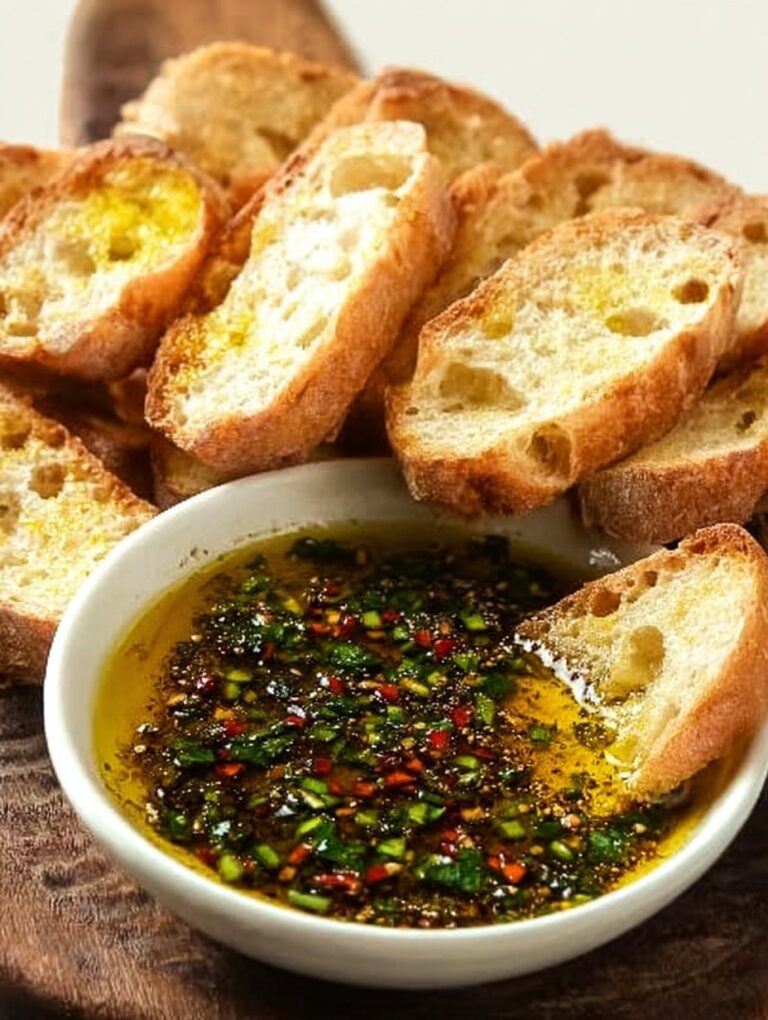
A simple, yet elegant oil infused with citrus and herbs, perfect for dipping bread.
-
Total Time:
15 minutes -
Yield:
4 servings 1x
Ingredients
Scale
- 120 ml extra-virgin olive oil
- 1 small garlic clove, thinly sliced
- 1 teaspoon lemon zest (finely grated)
- 1 teaspoon fresh rosemary, finely chopped
- 1 teaspoon fresh thyme leaves, lightly crushed
- 1/4 teaspoon red pepper flakes (optional)
- Sea salt, to finish
- Freshly ground black pepper, to taste
- 1 teaspoon toasted sesame or pine nuts (optional for texture)
Instructions
- Pour the olive oil into a small shallow bowl or ramekin so the oil layer is thin and invites dipping.
- Add the garlic slices, lemon zest, and chopped rosemary and thyme; stir gently to combine.
- If using, scatter the red pepper flakes and toasted nuts over the surface for color and crunch.
- Let the oil sit at room temperature for 10 to 30 minutes to allow aromatics to bloom; stir once before serving.
- Just before serving, grind black pepper over the oil and finish with a sprinkle of sea salt to taste.
Notes
Choose a good oil for the best flavor. Fresh zest is crucial for vibrancy.
- Prep Time: 15 minutes
- Cook Time: 0 minutes
- Category: Appetizer
- Method: No-cook
- Cuisine: Mediterranean
- Diet: Vegan
Nutrition
- Serving Size: 1 serving
- Calories: 180
- Sugar: 0g
- Sodium: 200mg
- Fat: 20g
- Saturated Fat: 3g
- Unsaturated Fat: 17g
- Trans Fat: 0g
- Carbohydrates: 0g
- Fiber: 0g
- Protein: 0g
- Cholesterol: 0mg
Frequently Asked Questions
What is Bread Dipping Oil?
Bread Dipping Oil is a flavorful blend of olive oil, herbs, and spices designed for dipping fresh bread. It’s a simple yet delicious appetizer.
How long can I store Bread Dipping Oil?
You can store Bread Dipping Oil covered in the refrigerator for up to three days. Allow it to return to room temperature before serving.
Can I customize Bread Dipping Oil?
Absolutely! Feel free to swap herbs or adjust spices based on your taste preferences. Try adding different oils or flavorings.
What types of bread pair best?
Crusty bread, like sourdough or baguette, works best for dipping. You can also try flatbreads or gluten-free options.
Is Bread Dipping Oil suitable for special diets?
Yes! This dip is naturally vegan and adaptable. You can adjust ingredients for allergies or dietary needs.
Final Thoughts
Try this Bread Dipping Oil for your next gathering. I promise it’ll be a hit! And while you’re at it, check out my Easy Mango Bread or Garlic Bread Grilled Cheese for delightful pairings.