
In this article:
- Why These Cranberry Orange Shortbread Cookies Never Crumble
- The Zest Trick That Perfumes Every Slice
- Cranberry Orange Shortbread Ingredients
- How to Make the Dough Log
- Slicing Clean Rounds Without Cracks
- The Sparkling Sugar Edge
- Dried or Fresh Cranberries: An Honest Answer
- Two Variations: Pistachio and White Chocolate
- The Christmas Cookie Box Plan
- FAQ
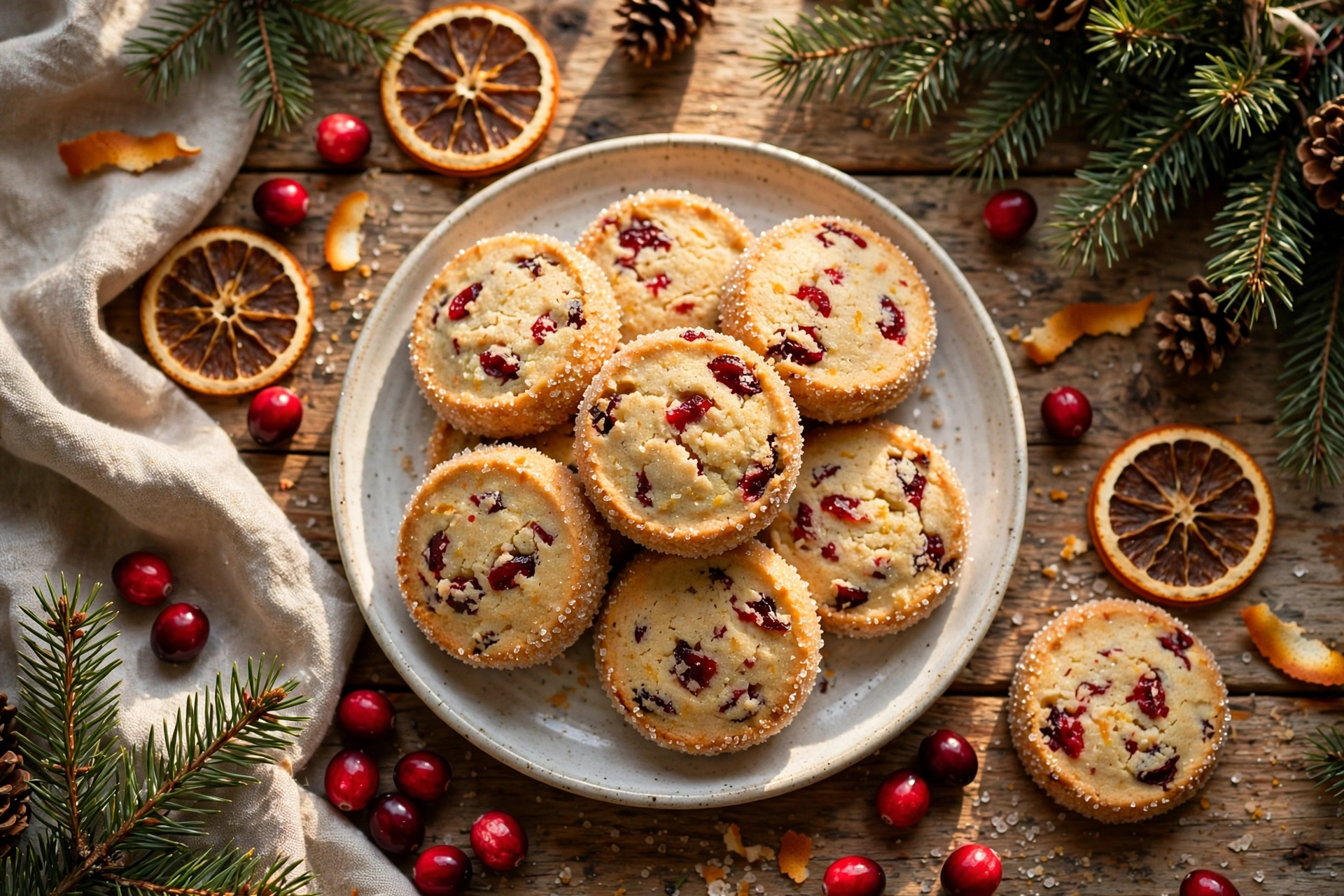
Some Christmas cookies shout. These whisper, and the whisper wins the tin. A cranberry orange shortbread cookie is a plain looking round, pale gold, freckled with ruby fruit, and it eats like butter that learned manners: tender, sandy in the best way, bright with citrus, and finished with a crackle of sugar at the rim.
Slice and bake cookies live or die by their log. Roll it carelessly and the rounds bake oval. Chill it too little and the knife drags, the edges smear, and the crumb turns tough from handling. This version is built around the three moments that decide everything: rubbing the zest into the sugar, chopping the cranberries fine enough to slice through, and resting the log until it cuts like cold butter.
There is a December mercy built in, too. The logs wait in the freezer for up to three months, so the work happens on a quiet November afternoon and the baking happens whenever guests, gifts or cravings appear. Fresh rounds, fourteen minutes, no mixer to wash.
Why These Cranberry Orange Shortbread Cookies Never Crumble
Shortbread has no egg and almost no liquid, so its structure is a negotiation between butter and flour. Too much flour and the round shatters into sand. Too little and it slumps into a greasy puddle. The ratio here, two cups of flour to one cup of butter with powdered sugar, lands in the tender middle: the cookie holds its shape, then yields.
Powdered sugar matters more than most recipes admit. Granulated sugar leaves tiny crystals that melt late and can spot the crumb; powdered sugar dissolves into the butter and gives shortbread its signature fine, almost powdery bite. It also carries a whisper of cornstarch, which quietly helps the rounds keep their edges.
The cranberries are chopped fine, and this is not fussiness. A whole dried cranberry is a roadblock for the knife: the blade catches, the log tears, and the slice crumbles at exactly that spot. Chopped to pea gravel size and tossed with a spoonful of sugar, the fruit distributes evenly and the knife passes through like the berries were never there.
Temperature finishes the argument. The dough is mixed only until it holds, shaped while pliable, then rested cold for two full hours. A cold log slices cleanly, and clean slices bake into cranberry orange shortbread cookies with sharp rims and level tops, the kind that stack neatly in a tin.
Weighing the flour is the quiet habit behind that consistency. A cup of all-purpose flour scooped from the bag can swing twenty grams heavy depending on how it was packed, and twenty grams is the difference between tender and dry in a dough with this little liquid. Two hundred and fifty grams, every time, removes the guesswork. If you do not bake with a scale, spoon the flour into the cup and level it with a knife rather than scooping; it is the closest a cup can come to honesty.
Resting the dough does chemistry as well as logistics. The flour hydrates fully during the chill, so the crumb sets fine instead of gritty, and the butter firms back around the fruit and zest. A log sliced after twenty minutes will always smear a little; the same log at two hours cuts like a candle. Patience is an ingredient in shortbread, and it is measured in hours.
The Zest Trick That Perfumes Every Slice
Most recipes stir orange zest into the finished dough, where half of it clumps and the rest barely registers. The better move takes twenty seconds: put the sugar in the bowl first, add the zest of two oranges, and rub them together with your fingertips until the sugar turns pale orange and smells like a grove.
Rubbing ruptures the zest’s oil pockets and coats every sugar crystal with that oil. When the butter is creamed in, the perfume is already everywhere, evenly, instead of hiding in a few bitter flecks. It is the single step that separates a cookie that hints at orange from one that tastes like December.
Zest only, never the white pith beneath it. The pith is bitter and it does not bake out. A microplane held at a shallow angle, turning the orange as you go, gives you the colored layer and nothing else. Two medium oranges yield about two tablespoons of zest, which is what this dough wants.
One tablespoon of the juice goes in as well, no more. It is there to help the dough gather and to sharpen the fruit, not to make an orange cookie in the cake sense. Shortbread dough that drinks too much liquid turns cakey, and cakey is the one thing these rounds refuse to be.
Cranberry Orange Shortbread Ingredients
The list is short, which means every item earns its place. Unsalted butter, cool but pliable, is the flavor and the structure at once; use the best you keep for holidays.
Powdered sugar sweetens and tenders. All-purpose flour, measured by weight if you can (250 grams), keeps the ratio honest. A half teaspoon of fine sea salt is not optional; unsalted butter plus no salt makes a flat cookie.
Dried cranberries, three quarters of a cup, chopped fine. Two oranges for zest and a spoon of juice. One teaspoon of vanilla extract rounds the citrus, and a quarter teaspoon of almond extract is the background note nobody can name. Coarse sparkling sugar, a third of a cup, waits at the end for the edges.
How to Make the Dough Log
Rub the zest into the powdered sugar until fragrant and tinted. Beat in the butter until the mixture is pale, smooth and holds soft peaks, about two minutes. Add the vanilla, almond extract and orange juice and beat just until glossy.
Add the flour and salt and mix on the lowest speed until the dough only just comes together, with no dry pockets at the bottom of the bowl. Stir in the chopped cranberries by hand so the mixer does not smear them.
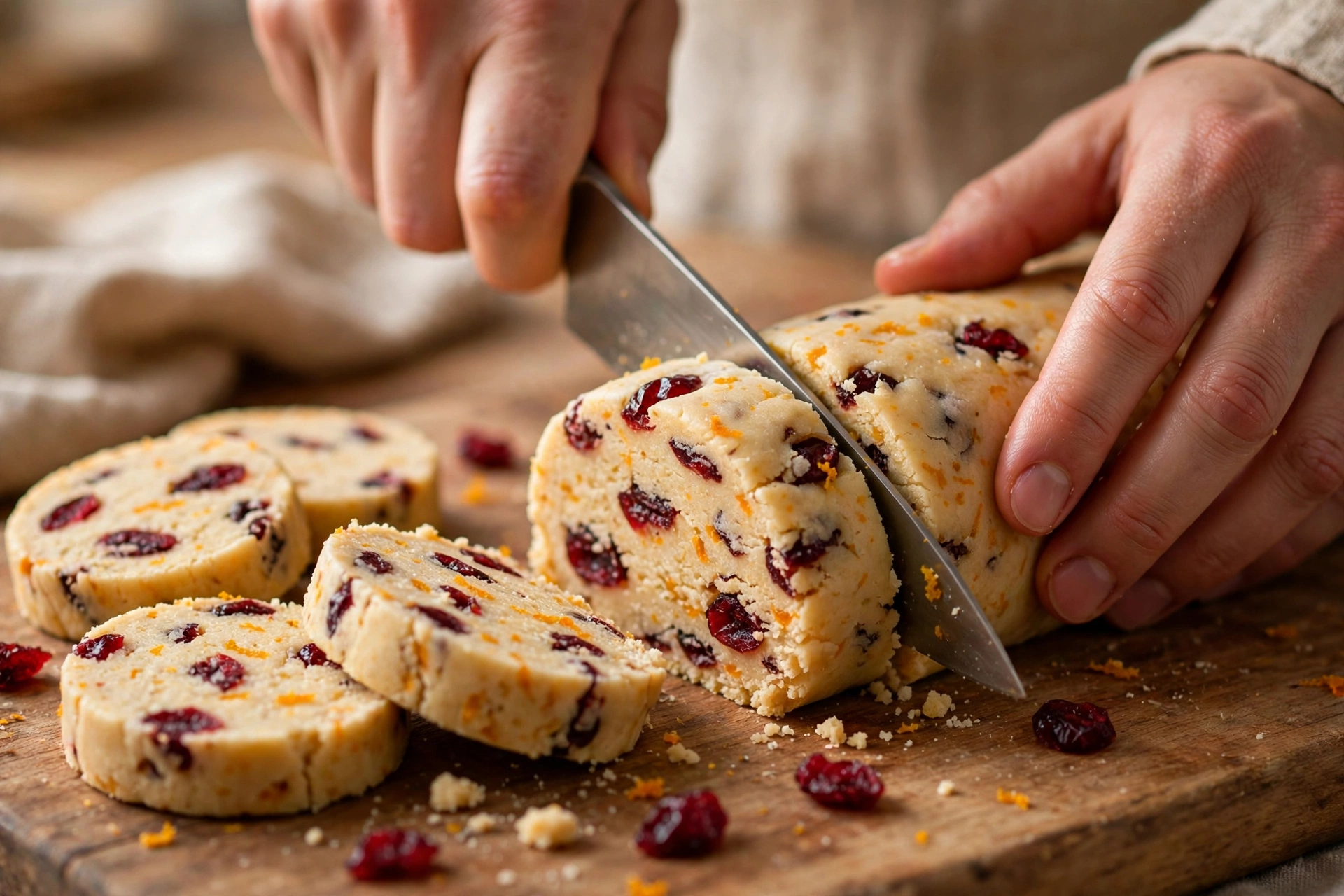
Tip the dough onto a sheet of parchment and press it into a rough log with your hands. Roll the parchment around it and twist the ends, then roll the log on the counter under your palms until it is an even cylinder about two inches across. Evenness here is destiny: a tapered log bakes tapered cookies. Chill for at least two hours, or freeze for forty five minutes if the afternoon is short.
A ruler is not beneath you. Marking the log at quarter inch intervals with the tip of a knife before slicing gives you rounds of one true thickness, and uniform rounds bake at one true rate, so the tray comes out evenly pale instead of half perfect and half bronzed. Two logs are easier to keep even than one long one, and they chill faster and freeze flatter; divide the dough in half if your first log fights you.
Square logs deserve a mention, because some bakers prefer them: press the dough into a parchment lined loaf pan, chill, unmold and slice into bars. The cookies bake identically, stack like bricks in a gift box, and the shape reads unmistakably homemade in the good way. The recipe does not change at all; only the geometry does.
Slicing Clean Rounds Without Cracks
Unwrap the cold log and let it stand five minutes, no longer. You want it firm enough to resist the knife and warm enough not to shatter. A thin, plain edged knife, not serrated, is the right tool; serrations saw, and sawing crumbles the rim.
Slice a quarter inch thick, pressing straight down in one motion. Between cuts, give the log a quarter turn. A log sliced without turning slowly flattens on the bottom and bakes into rounds with one straight edge, the quiet flaw in most holiday photos.
If a slice does crack at a cranberry, press it back together with warm fingertips. Shortbread dough is forgiving before the oven and unforgiving after, so repairs happen now. Arrange the rounds an inch apart on a parchment lined sheet; they spread only slightly.
Bake at 325°F (165°C) for fourteen to sixteen minutes, until the edges are just turning gold and the tops still look pale. These cranberry orange shortbread cookies finish setting as they cool; pull them when they look a shade underdone and you will be right. Cool five minutes on the sheet, then move them to a rack.
The Sparkling Sugar Edge
Before baking, roll each slice gently on its edge through a shallow dish of coarse sugar, or press the sugar around the rim with your fingers. The crystals survive the oven, so every cookie leaves with a jeweled, crackling border that catches light in photographs and crunches softly against the tender center.
It looks like decoration and behaves like engineering. The sugar rim slightly shields the edge from direct heat, which helps the rounds bake evenly pale. It also gives the person holding the cookie a first texture, crisp, before the melt, and that contrast is what makes a simple cookie feel made by a bakery.
Demerara sugar works, as does plain granulated in a pinch, but coarse sparkling sugar gives the widest, brightest crystals. Keep the tops bare; sugar on top melts into spots and clouds the cranberry freckles you worked to show.
Dried or Fresh Cranberries: An Honest Answer
Fresh cranberries are having a moment in shortbread, and they are genuinely good: they bake into tart, jammy pockets that burst. They also bleed. The juice stains the dough pink around each berry, softens the crumb, and the berries’ size makes slicing a negotiation. For a cookie eaten the day it is baked, warm, that trade can be worth it.
Dried cranberries behave. Chopped fine, they sweeten as they bake, keep the dough dry and sliceable, and the finished rounds store for two weeks without weeping. For the Christmas box, for gifts, for any cookie that must travel or wait, dried is the honest winner, which is why this recipe is built on them.
If you go fresh, chop the berries, toss them with a tablespoon of sugar and a teaspoon of flour, and accept pinker, softer cookies with a one day prime. Never swap fresh for dried in equal volume without the flour; the extra water is the whole story.
Two Variations: Pistachio and White Chocolate
The pistachio version swaps a third of the cranberries for finely chopped salted pistachios and keeps everything else identical. Ruby and green in one round is the most photographed combination in any cookie box, and the salted nut against the sweet butter is a small revelation. Roll the edges in a mix of sugar and extra chopped pistachio for a rim that announces itself.
For the white chocolate version, bake the plain rounds, cool them completely, then dip one half of each cookie in melted white chocolate and set them on parchment until firm. The dip adds sweetness, so this is the version for the granulated sugar rim omitted. A thread of extra zest over the wet chocolate makes them look finished by a professional.
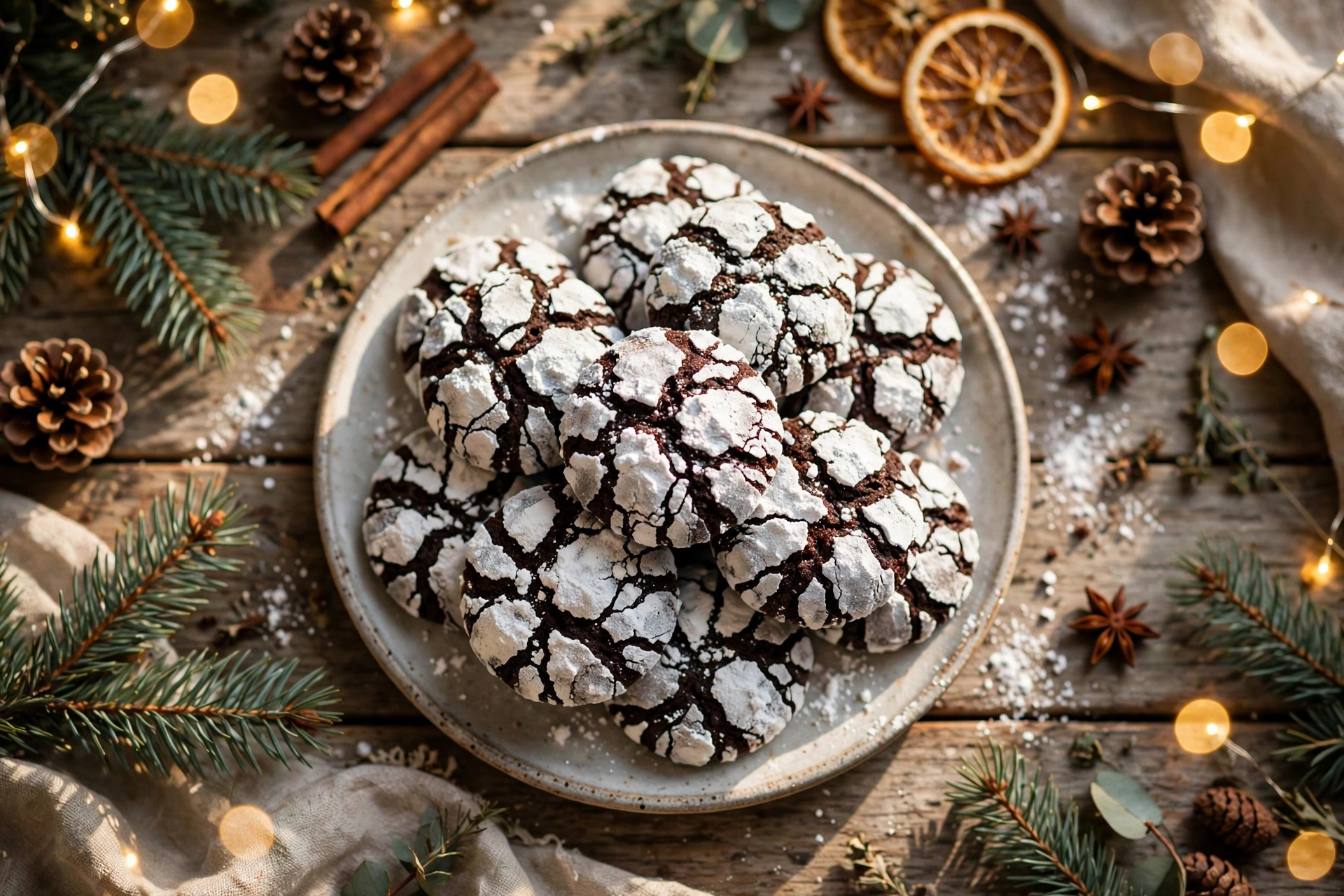
Both variations freeze as logs just as well as the original, and a box that mixes the three, plain sparkling, green rimmed and half dipped, looks like a bakery assortment from one afternoon of dough. Alongside raspberry thumbprint cookies and a batch of chocolate crinkle cookies, the tin covers every taste at the table.
The Christmas Cookie Box Plan
Each cookie carries about 118 calories, 15 grams of carbohydrate, 6 grams of fat and 1 gram of protein, which is honest arithmetic for butter, flour and fruit.
Make the logs whenever November gives you an hour. Wrapped tightly, they keep three months in the freezer and two weeks of slices bake off in an afternoon. Label each log with the date and the variation; December you will not remember which is which, and December you has enough to do.
Baked rounds keep two weeks in a metal tin at room temperature, layered with parchment, and they ship well because nothing on them melts, drips or smears. For the full spread of the season, our classic pecan pie anchors the dessert table while the cookie boxes do the visiting.
For gifting, a stack of eight rounds tied with kitchen string and one strip of dried orange on top looks like something from a market stall. Slide the stacks into cellophane bags or small tins, add the bake date on a tag, and the box is ready to travel. Cookies this plain looking need that one gesture of presentation, and the orange slice gives it in five seconds.
A shortbread log in the freezer is a kind of calm. Bake a dozen when neighbors knock, a dozen for the box you promised, a dozen because the house should smell like oranges in December. Start with the zest rubbed into the sugar, and the rest of the recipe simply follows.
FAQ
Why do my cranberry orange shortbread cookies crumble when I cut the log?
The log is either too cold straight from the freezer or the cranberries are too big. Let the log stand 5 minutes so it cuts instead of shattering, and chop the dried cranberries to pea gravel size before mixing so the knife passes through them instead of catching. These two habits give you clean cranberry orange shortbread cookies with no crumbly edges.
Why did my cranberry orange shortbread cookies spread in the oven?
The dough went in warm or the butter was too soft at mixing, so the cranberry orange shortbread cookies lost their shape. The log must be firm and cold when sliced, and the slices should go onto the sheet cold. If your kitchen is warm, chill the sliced rounds on the sheet for 10 minutes before baking.
Can I freeze cranberry orange shortbread cookie dough?
Yes, it is the best way to store cranberry orange shortbread cookie dough. Wrap the log tightly in parchment and then plastic, and freeze for up to 3 months. Slice from frozen with a thin knife, adding 1 minute to the bake, or thaw 20 minutes in the refrigerator first.
How long do cranberry orange shortbread cookies keep?
Two weeks in a sealed metal tin at room temperature, layered with parchment. The flavor of these cranberry orange shortbread cookies deepens over the first few days as the orange settles into the butter. Freeze baked cookies for up to 2 months if you need longer.
Why is the orange flavor weak in my cranberry orange shortbread cookies?
The zest was likely stirred in at the end or came from the white pith layer. Rub the zest of two oranges into the powdered sugar with your fingertips before creaming the butter; the sugar pulls the oils out and carries the perfume through every slice of these cranberry orange shortbread cookies.
Can I make cranberry orange shortbread cookies ahead for Christmas?
Absolutely — these cranberry orange shortbread cookies are made for planning ahead. Freeze the dough log for up to 3 months, or bake the cranberry orange shortbread cookies two weeks ahead and keep them in a sealed tin; the flavor only improves.
Cranberry Orange Shortbread Cookies
Slice and bake cranberry orange shortbread cookies with a fine, melt in the mouth crumb and a sparkling sugar edge. Zest rubbed into the sugar, cranberries chopped small enough to slice cleanly, and a well rested log give sharp rounds that never crumble or spread.
- Total Time: 2 hours 40 minutes
- Yield: 36 cookies 1x
Ingredients
- 1 cup unsalted butter (2 sticks), cool but pliable
- 1 cup powdered sugar (120 grams)
- 2 tablespoons orange zest (from 2 oranges), plus extra for garnish
- 1 tablespoon fresh orange juice
- 1 teaspoon vanilla extract
- 1/4 teaspoon almond extract (optional)
- 2 cups all-purpose flour (250 grams), plus 2 tablespoons if needed
- 1/2 teaspoon fine sea salt
- 3/4 cup dried cranberries, chopped fine
- 1/3 cup coarse sparkling sugar, for the edges
Instructions
- Rub the orange zest into the powdered sugar with your fingertips until the sugar turns pale orange and smells fragrant.
- Beat in the butter until pale, smooth and holding soft peaks, about 2 minutes. Beat in the orange juice, vanilla and almond extract until glossy.
- Add the flour and salt and mix on low just until the dough comes together with no dry pockets.
- Stir in the chopped cranberries by hand until evenly distributed.
- Press the dough into a log about 2 inches across on parchment, roll it smooth, twist the ends closed, and chill at least 2 hours (or freeze 45 minutes).
- Heat the oven to 325°F (165°C). Line two baking sheets with parchment paper.
- Let the log stand 5 minutes, then slice 1/4 inch rounds with a thin knife, turning the log a quarter turn between cuts.
- Roll the edge of each round in the coarse sugar and set the rounds 1 inch apart on the sheets.
- Bake 14 to 16 minutes, until the edges are barely golden and the tops stay pale.
- Cool 5 minutes on the sheet, then move to a rack to finish setting.
- Prep Time: 20 minutes
- Cook Time: 15 minutes