
In this article:
This southern cornbread dressing is the dish my Thanksgiving is quietly organized around. It bakes up with crisp, buttery edges and a soft, savory middle, and nearly all of its work happens days before the turkey even enters the oven.
Most dressing recipes read like a single hectic morning: bake bread, chop vegetables, mix, bake again, hope. This one spreads the same work across three calm days, so Thursday asks only for an oven and forty five unhurried minutes.
Why This Southern Cornbread Dressing Holds Its Slice
This southern cornbread dressing works because it respects the one rule that decides everything: dry bread drinks, fresh bread drowns. Cubes dried overnight absorb broth and egg evenly, so the baked dish sets into a sliceable crumb instead of a soggy spoonful.
Two breads pull in opposite directions, on purpose. Cornbread brings the corn sweetness and the tender crumb, while plain white bread brings structure, the quiet scaffolding that keeps each square standing on the plate next to the gravy.
The eggs are measured against the liquid, not guessed. Three eggs for roughly three and a half cups of broth gives a custard that binds without turning the dressing into a savory bread pudding. You taste corn and sage, not egg.
Warm broth is the other quiet trick. Cold broth sits on top of dried crumbs and pools; warm broth wakes the starches on contact and disappears into the crumb. The mixture looks evenly moist in the bowl, which is exactly how it bakes.
Finally, everything here is built from the pantry, with no canned soup doing hidden work. Butter, broth and the vegetables themselves make the richness, so the flavor stays clean and the salt stays where you put it.
Crisp Edges Over a Soft, Savory Middle
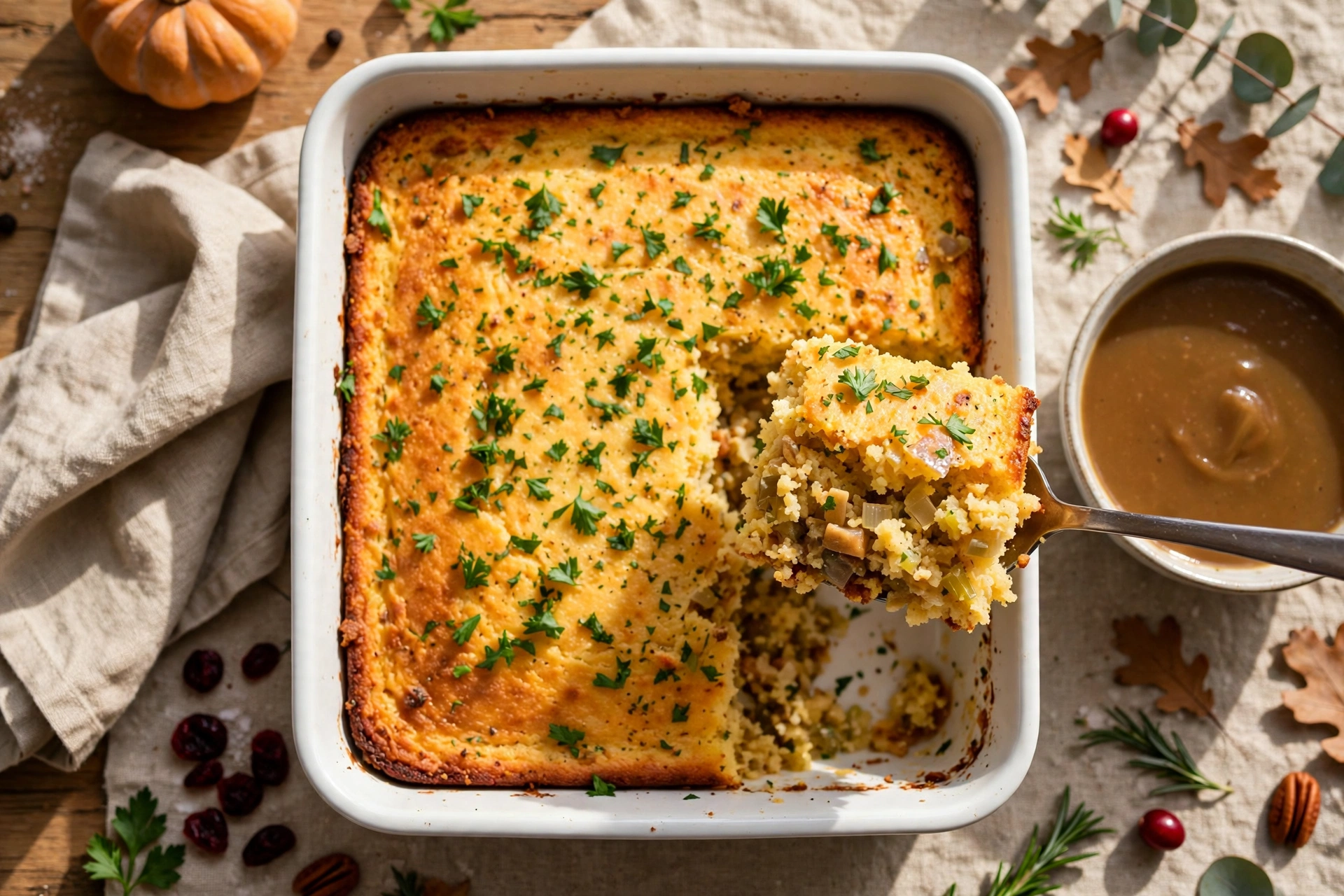
The top bakes into a deep gold crust that crackles faintly under the serving spoon. Corners and edges go a shade darker, and in my house those pieces are claimed early, sometimes before the dish formally reaches the table.
Underneath, the crumb stays moist and cohesive, closer to a savory cake than to stuffing pulled from a bird. Each bite carries soft onion, celery gone sweet, and the piney lift of fresh sage against the roundness of butter.
Cornbread keeps the flavor honest. There is a gentle corn sweetness underneath the herbs, never dessert sweet, and it is the reason this dressing sits so comfortably beside cranberry sauce on one side and dark gravy on the other.
Served warm, the dressing steams faintly when the spoon breaks the crust. That first minute, when butter, sage and toasted corn reach the table together, is the smell most people actually mean when they say Thanksgiving smells good.
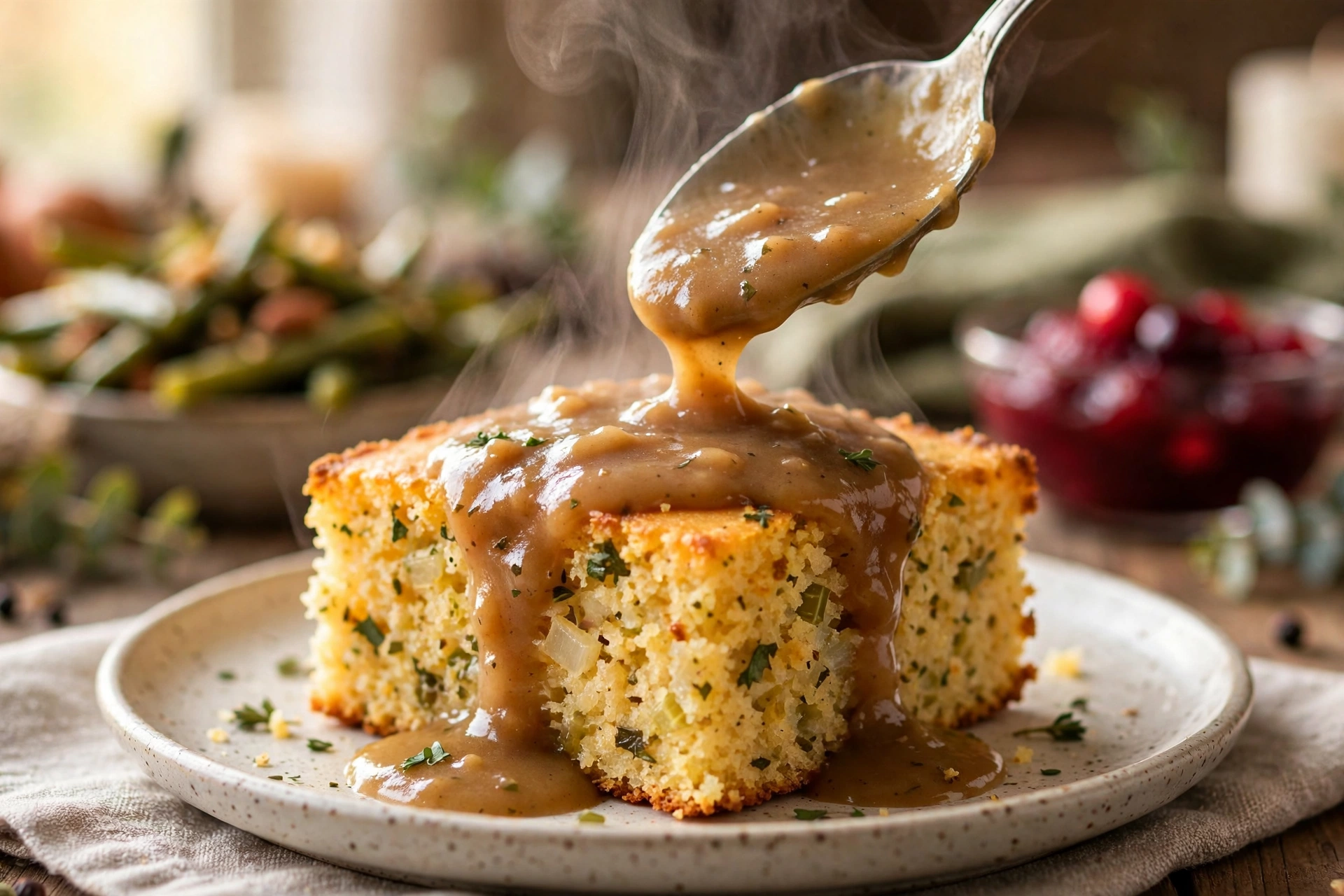
Temperature is part of the texture here, more than cooks expect. Straight from the oven the crumb is at its softest, almost spoonable; after the fifteen minute rest it firms into clean squares that hold their shape under a pour of gravy without turning stiff or dry.
The Three Day Plan That Empties Thanksgiving Morning
Day one, as early as Sunday, is cornbread day. Bake the pan, cool it completely, and leave the crumbling for later. A cornbread baked ahead is not a compromise; slightly stale cornbread is precisely what a southern cornbread dressing asks for.
Day two is for drying and chopping. Crumble and tear the breads, spread them on sheet pans, and let the air do the work overnight. Dice the onion and celery, cover them, and park them in the fridge.
Day three, Wednesday, is assembly, fifteen calm minutes. Sauté the vegetables, fold everything together, press the mixture into its buttered dish, cover and refrigerate. The flavors settle overnight in a way same day dressing never achieves.
Thursday becomes the easiest day of the four. The dish comes out of the fridge while the oven heats, bakes covered then uncovered, and rests while the turkey is carved. No chopping board, no skillet, no second sink of dishes.
The plan bends without breaking, which is why it survives real holidays. A small table needs only half the pan, dried and assembled on the same rhythm. A double batch for a crowd splits across two dishes and rotates once, halfway through the uncovered bake.
What You Need, Pantry First
For the cornbread, baked ahead in its own pan a day or more before the dressing itself finally comes together:
- 2 cups fine yellow cornmeal
- 1 cup all-purpose flour
- 1 tablespoon baking powder
- 1 teaspoon fine salt
- 1 tablespoon granulated sugar (optional)
- 2 large eggs
- 1 1/2 cups buttermilk
- 1/3 cup unsalted butter, melted
For the dressing itself, the vegetables, herbs, eggs and broth that turn those plain dried crumbs into the finished dish:
- 8 cups crumbled day-old cornbread (the pan above)
- 4 cups torn day-old white bread cubes
- 8 tablespoons (1 stick) unsalted butter, plus more for the dish
- 1 large yellow onion, finely diced (about 1 1/2 cups)
- 4 celery ribs, finely diced (about 1 1/2 cups)
- 1 teaspoon fine salt, plus more to taste
- 1/2 teaspoon black pepper
- 2 tablespoons chopped fresh sage (or 2 teaspoons dried rubbed sage)
- 1 tablespoon chopped fresh thyme (or 1 teaspoon dried thyme)
- 1 teaspoon poultry seasoning
- 3 large eggs, beaten
- 3 to 3 1/2 cups low sodium chicken or turkey broth, warmed
- 1/4 cup chopped fresh parsley, to serve
Building the Dressing, Bowl to Oven
- Bake the cornbread, up to 3 days ahead. Heat the oven to 425°F and butter a 9 inch square pan. Whisk the cornmeal, flour, baking powder, salt and sugar, then whisk the eggs, buttermilk and melted butter separately. Combine just until no dry streaks remain, scrape into the pan and bake 20 to 25 minutes, until golden and pulling from the sides. Cool completely.
- Dry the breads. Crumble the cornbread into coarse chunks and tear the white bread into bite size pieces. Spread both on sheet pans and leave uncovered overnight, or dry them in a 250°F oven for 30 to 40 minutes, turning once.
- Sauté the vegetables. Melt the stick of butter in a large skillet over medium heat. Add the onion, celery and the teaspoon of salt, and cook 7 to 9 minutes, until soft, sweet and translucent at the edges, without rushing them into browning.
- Combine the base. Tip the dried crumbs into your largest bowl. Scrape in the vegetables and every drop of their butter, then add the pepper, sage, thyme and poultry seasoning. Toss well so the herbs coat the crumbs evenly.
- Add the liquid. Whisk the beaten eggs into 3 cups of the warm broth and pour over the crumbs. Fold gently with a big spoon, then rest the bowl for 10 minutes while the bread drinks. Add more broth, a splash at a time, until the squeeze test below passes.
- Rest it overnight if you are making it ahead. Press the mixture into a buttered 9×13 inch dish, smooth the top without packing it down, cover tightly and refrigerate for up to 24 hours. Let it sit at room temperature for 30 minutes before baking.
- Bake. Heat the oven to 375°F. Bake the dressing covered with foil for 25 minutes, then uncovered for 20 to 25 minutes more, until the top is deep golden, the edges are crisp, and the center reads 165°F on an instant read thermometer.
- Rest and serve. Rest the dish for 15 minutes so the crumb finishes setting. Scatter the parsley over the top and serve warm, straight from the dish, with gravy close by.
The Squeeze Test, and Other Dressing Insurance
Here is the moisture test most recipes never describe. Take a small handful of the mixed, unbaked dressing and squeeze it once, firmly. It should hold together in a rough clump for a few seconds, and no liquid should drip or pool in your palm.
If the clump crumbles apart dry, the bread is still thirsty: fold in warm broth two tablespoons at a time and test again. If liquid beads between your fingers, you have gone past it; fold in another handful of dry crumbs and let the bowl rest.
Dry your bread more than feels reasonable. Crumbs that seem too dry in the bowl bake up tender, because the eggs and broth keep coming during the covered half of the bake. Crumbs that seem perfect in the bowl often bake up wet.
Keep the dice small and even. Onion or celery pieces larger than a pea stay crunchy in a finished dressing, and one raw crunch in a soft bite reads as a mistake even when the flavor is right.
If the baked dressing tastes dry at the table, it is not lost. Spoon a quarter cup of hot broth over the top, cover the dish for ten minutes, and the crumb drinks it in. This rescue works once, gracefully, so keep a little broth warm.
Lighter Plates and Easy Swaps
A lighter pan is mostly a matter of ratios. Swap half the butter for an equal amount of additional warm broth whisked with a spoonful of olive oil, and use whole grain white bread for part of the cubes; the crumb stays moist and the herbs carry more of the flavor.
For a vegetarian table, vegetable broth replaces the chicken or turkey broth cup for cup, and nothing else changes. Choose a broth with real body, since it is doing the seasoning work the meat broth usually does.
The classic add ins behave well here when they stay meat free. A cup of sautéed mushrooms, folded in with the vegetables, deepens the savory side, and a handful of toasted pecans scattered over the top adds the crunch some families expect from a sausage version, without any meat at all.
Gluten free bakers can build the same dish on a gluten free cornbread and a sturdy gluten free sandwich loaf, dried exactly the same way. Add the broth a little more slowly; gluten free crumbs drink faster and forgive less.
Fridge, Freezer and the Second Bake
Assembled and unbaked, the dressing keeps for 24 hours in the fridge, which is the heart of the whole plan. Assembled and frozen, it keeps for up to 2 months: wrap the dish twice, thaw it overnight in the fridge, and bake as directed with 10 extra minutes under the foil.
Baked leftovers hold for 3 to 4 days refrigerated, in line with the USDA leftovers guidance for perishable dishes. Reheat them covered at 325°F until steaming at the center, then uncover for the last five minutes so the top crisps again.
For a single serving, a skillet is better than the oven. A square of cold dressing, warmed in a little butter until the bottom crisps, makes a fine plate under a fried egg the morning after Thanksgiving.
This is the dish that shares Wednesday at my house with the rest of the make-ahead lineup: the make-ahead turkey gravy waits in its jar, and the make-ahead mashed potatoes sit ready for their final butter.
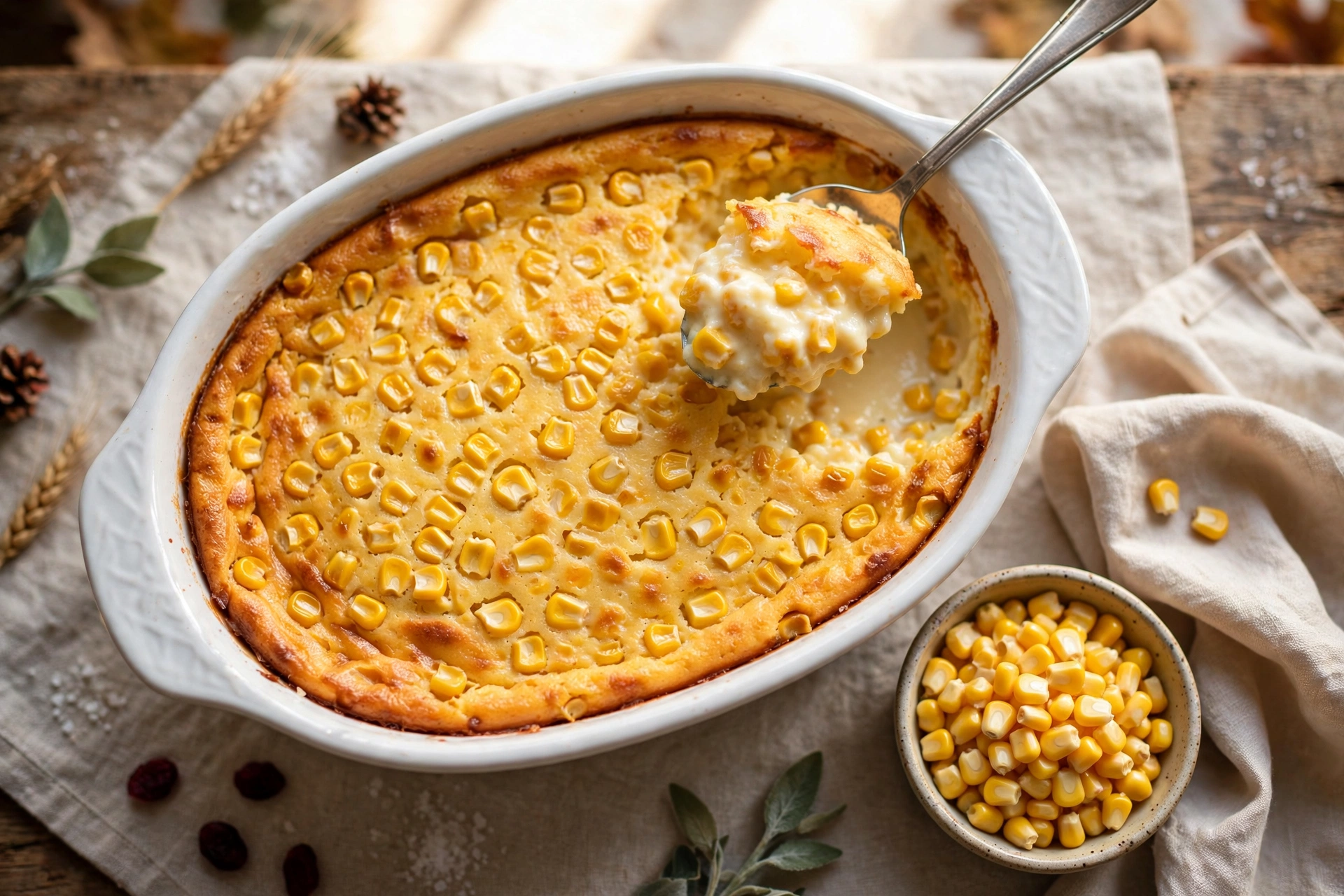
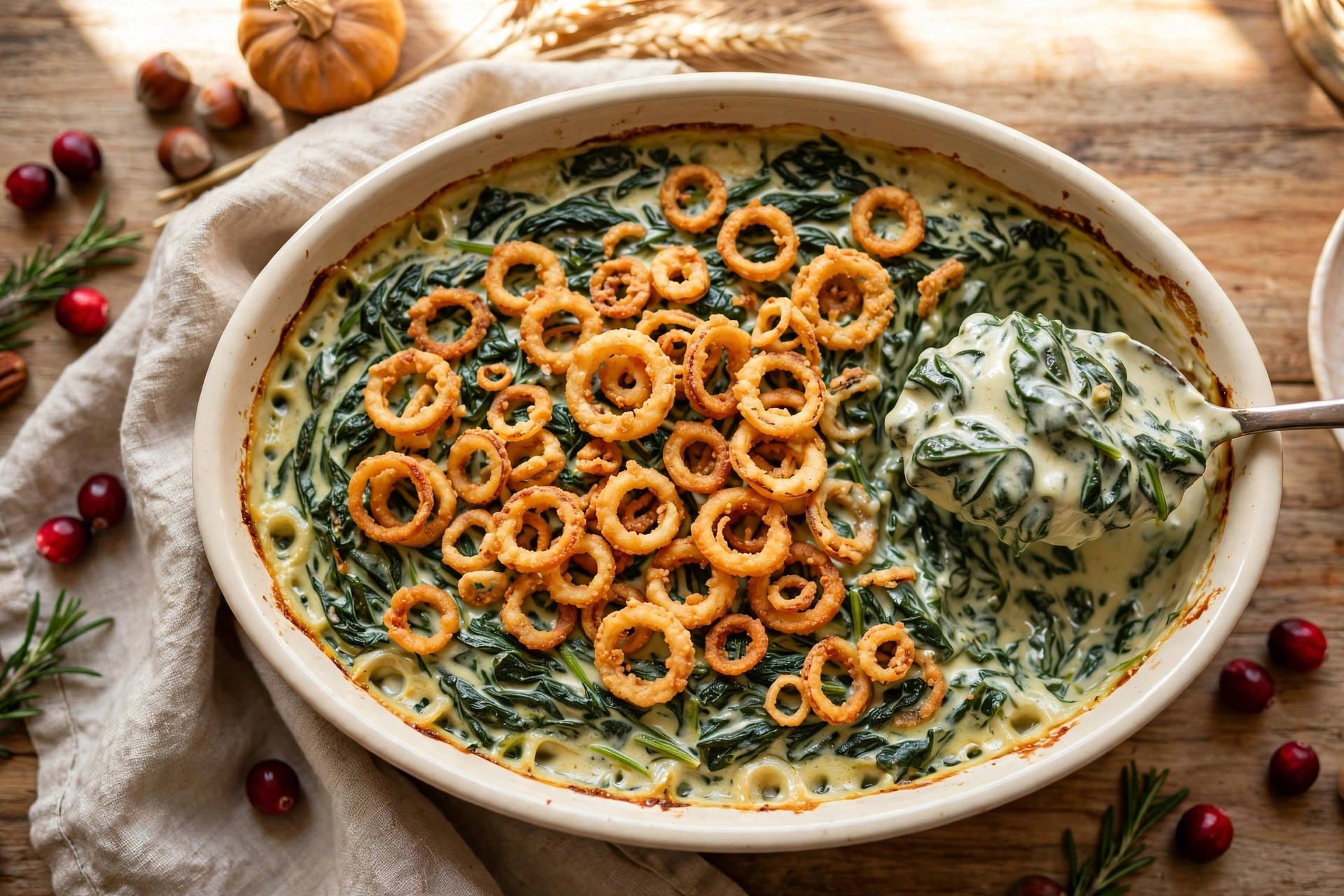
Everything takes its place on the Thanksgiving dinner menu without a single Thursday morning scramble. The dressing bakes in the same oven window as our green bean casserole, and it reheats more gracefully than its lighter cousin, the southern corn pudding from earlier this week.
The Side Nobody Skips, Two Years Running
This southern cornbread dressing earns its place the slow way: three quiet days of small tasks, then one golden pan that every single person at the table takes twice. It is the first dish finished and the first one asked about next year.
Make it once by the plan, with fresh sage and dried bread and the squeeze test done properly. After that, the calendar is yours to bend, because the dressing itself will forgive almost anything except fresh bread and a rushed Thursday.
Questions About This Cornbread Dressing
FAQ
My cornbread is fresh baked. How do I dry it fast?
Crumble it coarse, spread it on a sheet pan and bake at 250°F for 30 to 40 minutes, turning once, until the pieces feel dry and light at the edges. Cool them fully before mixing; warm crumbs keep steaming and will drink unevenly.
Should the cornbread for dressing be sweet or not?
That is the oldest argument in Southern cooking. This recipe uses one optional tablespoon of sugar, which stays in the background. If your family stands firmly on the no sugar side, leave it out; the dressing loses nothing, because the corn itself carries a natural sweetness.
Can I freeze southern cornbread dressing before baking it?
Yes. Assemble it in a freezer safe dish, wrap it twice and freeze for up to 2 months. Thaw it overnight in the fridge, let it stand 30 minutes at room temperature, then bake as directed, adding about 10 minutes to the covered stage.
How much broth is too much broth?
Use the squeeze test: a squeezed handful should hold together without dripping. Start with 3 cups, rest the bowl 10 minutes, then add broth two tablespoons at a time. When no liquid beads in your palm and the clump holds, stop, even if broth remains in the jug.
How do I reheat dressing so the top stays crisp?
Cover the dish and warm it at 325°F until steaming at the center, then uncover it for the last 5 minutes. The covered stage reheats the crumb gently while the uncovered finish dries the top again. A splash of warm broth before covering rescues a pan that dried out.