
Dans cet article :
What Makes This Make Ahead Turkey Gravy Special
Make ahead turkey gravy solves the biggest Thanksgiving stress point: a smooth, deeply flavored sauce without last-minute panic. The secret is roasted turkey wings, which deliver all the rich, meaty depth of pan drippings days before the bird enters the oven. Browning the wings at high heat creates the caramelized fond behind this gravy’s gorgeous golden color and roasted flavor.
A classic butter and flour roux, cooked until honey-colored, guarantees a silky texture with zero lumps. Fresh thyme and bay leaf simmer gently in the background, adding the savory aroma everyone associates with the holiday table. The result tastes like it was made from your actual turkey drippings, because on the big day, you will whisk those in too.
The deglazing step deserves its moment. Those browned bits stuck to the roasting pan, called fond, are concentrated flavor, and dissolving them into the broth captures every bit of roast character. Professional kitchens build entire sauces on fond, and here it works its magic in your home oven.
Make ahead turkey gravy is the Thanksgiving game changer nobody mentions until you have suffered through lumpy, last-minute sauce. Imagine a gravy so silky it pours like velvet, with deep roasted flavor and not a single lump in sight. It waits patiently in your fridge for three days while you focus on the turkey, the sides, and your guests.
When dinner time comes, you simply reheat it, whisk in the fresh pan drippings, and serve the best gravy of your life. No frantic whisking while the turkey rests, no floury taste, no thin disappointment. This is how calm holiday cooks do it, and once you try it, you will never go back.
Flavor Notes and Texture Contrast
The first spoonful tells you everything. This gravy coats the tongue with a velvety richness that only comes from real roasted bones and a properly cooked roux.
The flavor is deep and savory, built layer by layer. Caramelized turkey wings bring meaty intensity, while the browned onion, carrot, and celery add a subtle sweetness that rounds every edge.
Thyme and bay leaf stay in the background where they belong. They perfume the gravy with that unmistakable holiday aroma without turning it into an herb sauce.
Texture is where this recipe truly shines. The roux is cooked until it smells nutty and turns honey gold, which cooks out any raw flour taste and thickens the gravy to a perfect coating consistency.
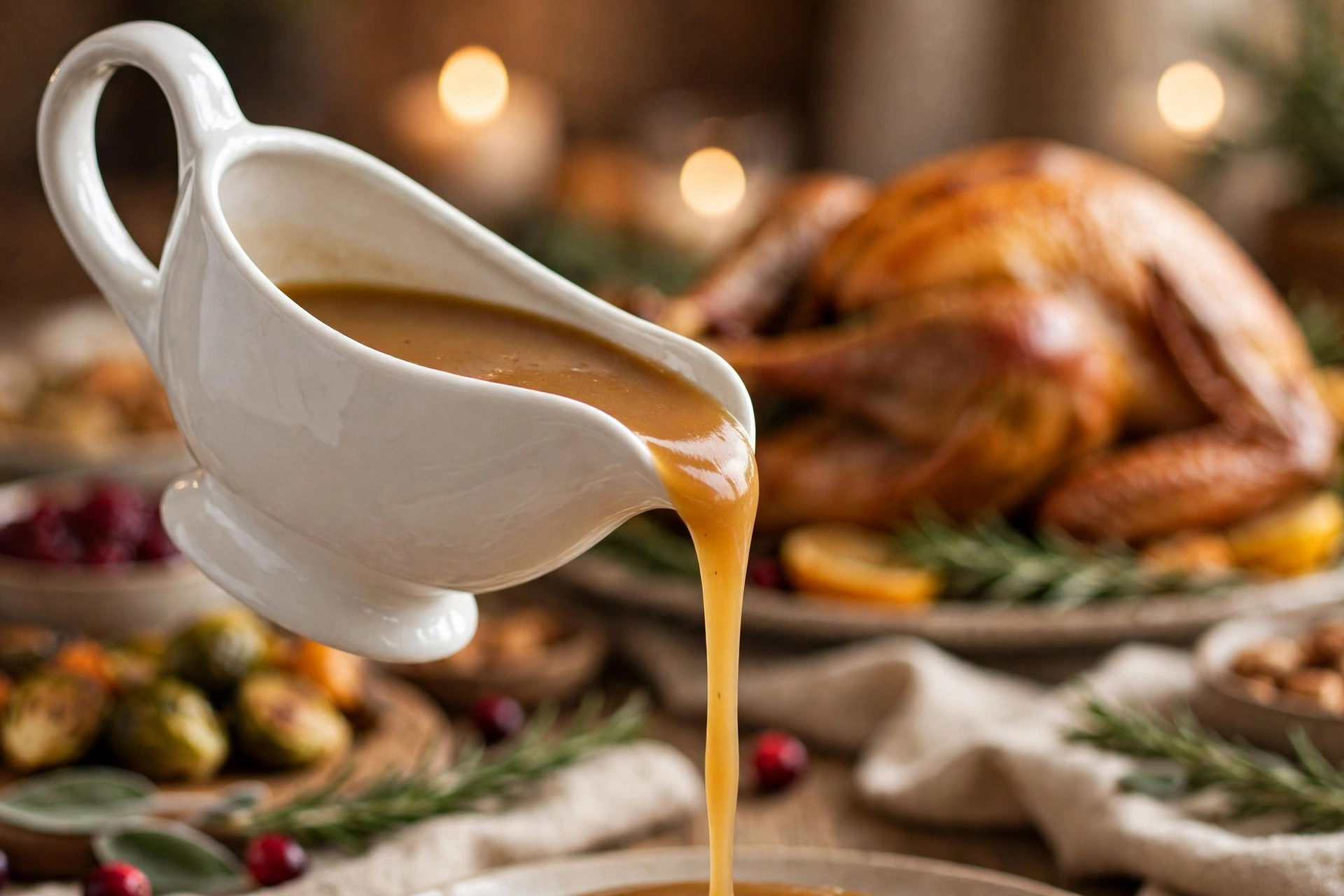
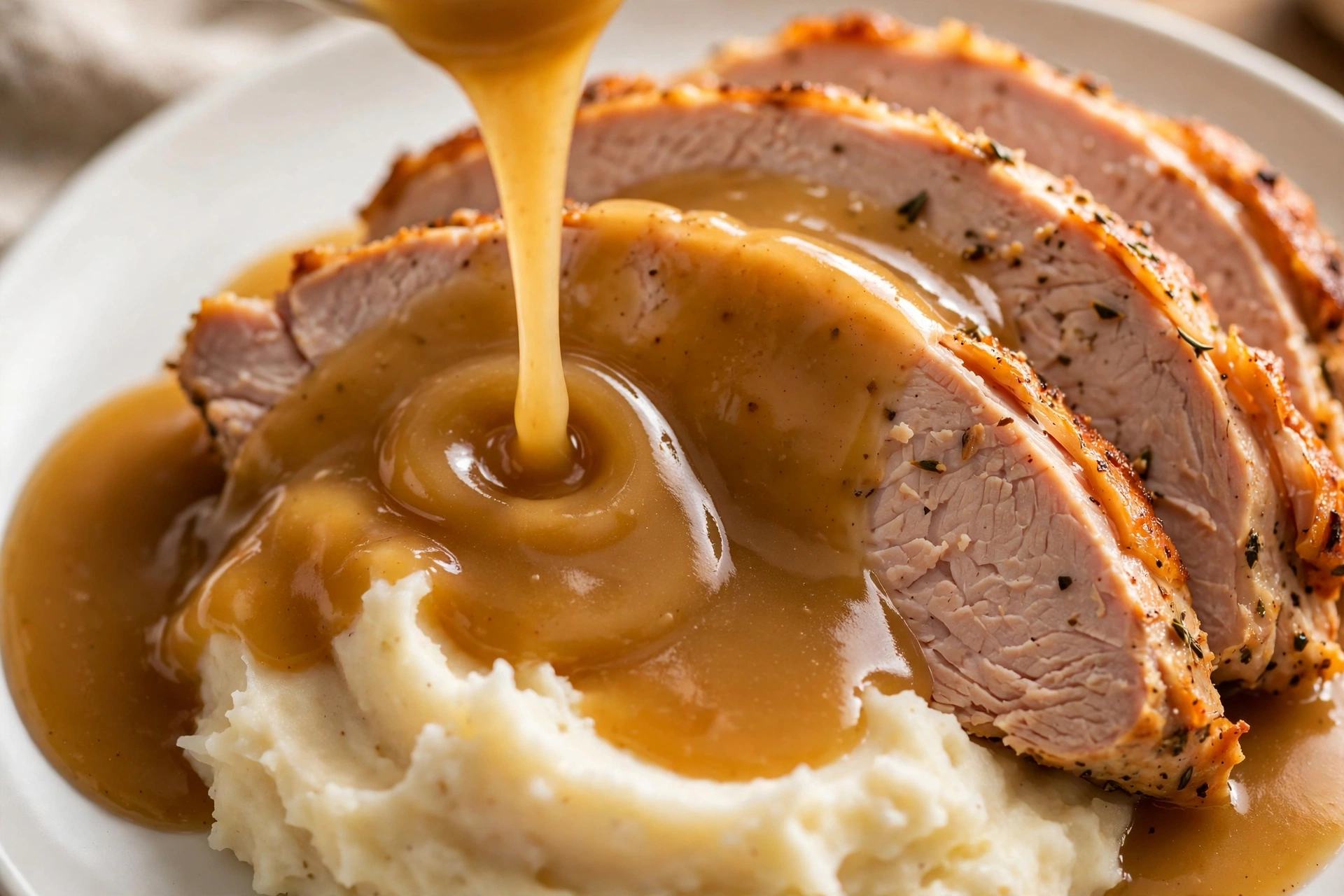
It pours in a slow, glossy ribbon and clings lovingly to turkey slices and mashed potatoes. Neither gluey nor thin, it hits the sweet spot that makes people go back for seconds.
Reheated on the day, it tastes even better than fresh. The overnight rest lets the thyme and bay fully bloom, and the flavors marry into something rounder and more harmonious. This is one of the rare sauces that genuinely improves with waiting.
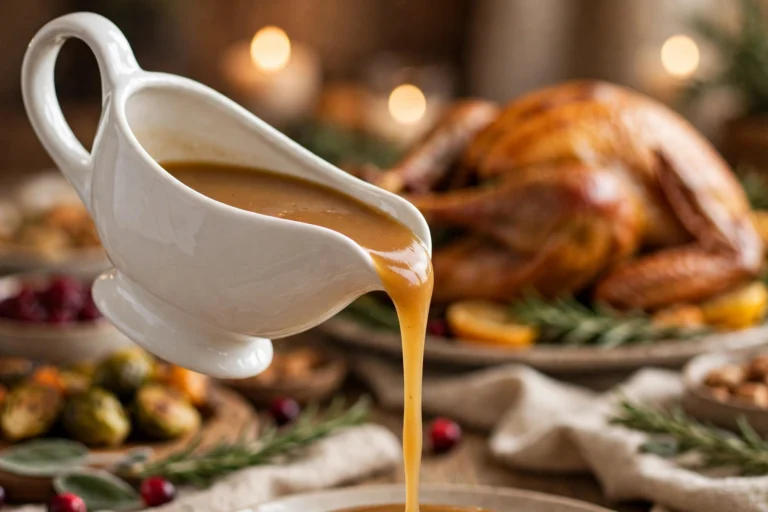
It plays well with the whole table. Ladle it over turkey, mashed potatoes, and stuffing alike, because a great gravy ties the entire plate together. I always put out extra in a second boat, since running out mid-meal is a holiday tragedy.
A final knob of butter whisked in at the end adds shine and a luxurious mouthfeel. The color is a rich amber gold, the kind that looks beautiful ladled over garlic herb roasted turkey breast on a Thanksgiving plate.
The aroma alone is worth the effort. As the wings roast, your kitchen fills with the deep, savory perfume of Thanksgiving, days before the actual holiday. It is the kind of smell that makes neighbors knock on your door.
Why It Fits Your Schedule
Thanksgiving Day has enough chaos without gravy duty. This recipe moves all the real work to the weekend before, when your kitchen is calm and your timeline is yours.
Here is the rhythm: three days out, roast the wings and simmer the broth. Two days out, strain it and build the roux, then let the finished gravy rest in the fridge while the flavors meld together.
On the big day, your only job is reheating. Warm it gently over medium-low heat, whisk in the defatted drippings from your roasted turkey, and adjust the seasoning with salt and pepper.
That is the beauty of make ahead turkey gravy: the hardest part of the holiday meal becomes a five-minute finish. Your guests get perfect gravy, and you actually get to sit down and enjoy your own dinner.
Label your containers with the date and contents. Three days before Thanksgiving, every container in the fridge starts looking identical, and future you will be grateful for the thirty seconds it takes now.
Diet Conscious Twists
For a gluten-free table, the swap is simple. Replace the all-purpose flour with an equal amount of sweet rice flour or a gluten-free blend, and cook the roux a minute longer to lose any starchy taste.
Dairy-free cooks can use olive oil or a firm vegan butter in the roux. The flavor stays rich because the roasted wings carry most of the depth, so nobody misses the butter.
Watching sodium? Start with low-sodium broth and unsalted butter, then season at the very end. You control every pinch, unlike the fixed salt level of store-bought jars.
For a lighter pour, skim the fat thoroughly after chilling the broth overnight. The gravy stays silky with less richness, and nobody misses what was never there.
Cooks avoiding butter for heart health can build the roux with olive oil alone. Use a light, fruity oil rather than a peppery one, so the gravy stays mellow and lets the turkey flavor lead.
Ingredients
- 3 lbs turkey wings (about 4 wings)
- 1 large yellow onion, quartered
- 1 large carrot, roughly chopped
- 1 celery stalk, roughly chopped
- 6 tablespoons unsalted butter, divided
- 6 tablespoons all-purpose flour
- 6 cups low-sodium chicken broth, divided
- 4 sprigs fresh thyme
- 1 bay leaf
- 1 teaspoon kosher salt, plus more to taste
- 1/2 teaspoon freshly ground black pepper
- Defatted turkey pan drippings, on Thanksgiving Day (optional but recommended)
Step by Step Instructions
- Preheat the oven to 425°F. Pat the turkey wings very dry with paper towels and arrange them in a single layer in a large roasting pan. Roast for 40 to 45 minutes, turning once, until deeply browned and mahogany colored.
- Transfer the roasted wings to a large stockpot or Dutch oven. Pour 1 cup of the chicken broth into the hot roasting pan and scrape up every browned bit with a wooden spoon, then pour it all into the pot.
- Add the remaining 5 cups of broth, the onion, carrot, celery, thyme sprigs, and bay leaf. Bring to a boil over high heat, then reduce to a gentle simmer.
- Simmer uncovered for 1 hour, skimming any foam that rises. The broth should reduce slightly and turn a rich golden brown with deep roasted aroma.
- Strain the broth through a fine-mesh sieve into a large bowl, pressing the solids to extract every drop. Discard the solids or save the wing meat for soup. Refrigerate the broth until chilled and the fat solidifies on top, at least 4 hours or overnight.
- Lift off the solidified fat and reserve 2 tablespoons of it. You should have about 5 cups of rich turkey broth; add a splash of water or broth if you are short.
- Melt 4 tablespoons of the butter with the reserved fat in a large saucepan over medium heat. Whisk in the flour and cook, whisking constantly, for 3 to 4 minutes until the roux turns honey-colored and smells nutty.
- Gradually pour in the warm broth, a little at a time, whisking constantly to keep it smooth. Once all the broth is added, bring to a gentle simmer.
- Simmer for 5 minutes, whisking occasionally, until the gravy thickens enough to coat the back of a spoon. Whisk in the remaining 2 tablespoons of butter, then season with salt and pepper to taste.
- Cool completely, then refrigerate in airtight containers for up to 3 days or freeze for up to 3 months. On Thanksgiving Day, reheat gently, whisk in the defatted pan drippings from your turkey, adjust seasoning, and serve piping hot.
Secrets for Foolproof Make Ahead Turkey Gravy Success
Brown the wings deeply, past golden and into real mahogany. Pale wings make pale gravy, and color equals flavor here, so give them the full roasting time. As Tyler Florence demonstrates in his turkey gravy recipe, deep browning is non-negotiable.
Cook the roux until it smells like toasted hazelnuts. A pale roux tastes like raw flour, while a honey-colored one gives the gravy its signature silkiness and a subtle nutty backbone.
Add the warm broth gradually, whisking constantly. Dumping it all at once is how lumps are born; a slow stream with steady whisking keeps everything perfectly smooth from the first pour.
If lumps appear anyway, do not panic. A quick blitz with an immersion blender erases them in seconds, and no one at the table will ever know the difference.
Season at the end, not the beginning. Broth reduces as it simmers, concentrating salt, so taste only after thickening and adjust with a confident hand. Serve it next to green bean casserole from scratch and watch it disappear.
Chilling the broth overnight is the easiest fat separation trick ever invented. The fat rises and solidifies into a clean cap you lift off in one piece, leaving clear broth below. No fiddly separator cup required.
Warm your broth before adding it to the roux. Cold liquid hitting hot roux can seize into lumps, while warm broth incorporates smoothly. I heat mine in the microwave while the roux cooks, and the difference is night and day.
Taste the broth before building the roux. It should already taste like great soup; if it seems weak, simmer it twenty minutes longer to concentrate. A flavorful broth is the foundation, and no amount of seasoning fixes a thin one.
Variations to Try Next Time
Add a tablespoon of tomato paste to the vegetables as they brown for deeper color and a quiet umami boost. It melts into the broth and nobody will identify it, they will just taste richer gravy.
Mushroom lovers can simmer a handful of dried porcini with the broth. They add an earthy depth that pairs beautifully with turkey and makes the gravy taste like it simmered all day.
For a giblet-style gravy, chop the simmered wing meat finely and stir it back into the finished sauce. It turns a smooth gravy into a hearty, old-fashioned delight with real substance.
A pinch of smoked paprika gives a subtle campfire note without overpowering the roast flavor. Start small, because a little goes a long way in a delicate sauce.
Fresh sage and rosemary can replace the thyme for a more robust, woodsy profile. Use half the amount, since both are stronger, and remove them before straining so they never turn bitter.
Once you trust the make ahead turkey gravy method, adapt it freely. The roasted-wing broth technique makes incredible chicken gravy all year long, not just in November.
Keeping It Fresh: Storage Guide
Refrigerate the finished gravy in airtight containers for up to 3 days. The USDA food safety guidelines recommend keeping cooked foods like gravy refrigerated promptly and reheating them to a full simmer before serving.
Freeze it for up to 3 months in portioned containers, leaving an inch of headspace for expansion. Thaw overnight in the refrigerator, never on the counter, for the safest result.
Reheat gently over medium-low heat, whisking often so the bottom never scorches. If the gravy thickened too much in the fridge, thin it with a splash of warm broth until it pours in a slow ribbon again.
On Thanksgiving Day, bring it to a bare simmer before whisking in your fresh drippings. Serve it piping hot in a warmed gravy boat alongside sweet potato casserole with pecan streusel for the full holiday spread.
Do not throw away the simmered wing meat. Shred it and fold it into soup, pot pie, or turkey salad sandwiches for the cook’s reward lunch. After all that roasting and simmering, it is tender and deeply savory.
Conclusion
Make ahead turkey gravy turns the most stressful five minutes of Thanksgiving into the calmest. Roast the wings, build the roux, and let your fridge do the rest of the work.
This year, pour gravy like you mean it, and actually sit down to enjoy it. Your future self says thank you.
One less thing to worry about on Thanksgiving morning is worth its weight in gold. Start this weekend, and walk into the holiday feeling like the calmest cook in the family.
FAQ
How much make ahead turkey gravy should I plan per guest?
Plan on about 1/3 to 1/2 cup per person, since enthusiastic guests always take more. This recipe makes about 8 cups, which comfortably serves 16 to 20 people. When in doubt, make extra: leftover gravy freezes perfectly and upgrades weeknight mashed potatoes.
Can I make this gravy without turkey wings?
Yes. Turkey legs or drumsticks work just as well, and chicken wings are a fine substitute with a slightly milder flavor. The key is using bone-in poultry roasted until deeply browned, because the bones and caramelized skin are what build the rich broth.
Why is my gravy gray instead of golden brown?
Gray gravy almost always means the wings did not brown enough. Roast them in a single layer without crowding so they roast instead of steam, and give them the full 40 to 45 minutes until mahogany colored. The roux also needs to reach honey gold, not pale blond.
Can I use cornstarch instead of flour as the thickener?
You can, but flour is the better choice for a make-ahead gravy. A cornstarch slurry thickens quickly and gives a glossy finish, yet it can turn spongy or thin out when reheated after refrigeration. The flour roux stays silky through chilling, freezing, and reheating.
My gravy tastes too salty. How do I fix it?
Whisk in unsweetened, low-sodium broth a half cup at a time until the balance returns. A splash of cream or an extra tablespoon of butter also softens sharp saltiness. Next time, season only at the very end, since the broth concentrates as it simmers and reduces.
Make Ahead Turkey Gravy | Silky, Rich and Foolproof
Silky make ahead turkey gravy with deep roasted flavor from browned turkey wings. Lump-free, stress-free, and ready days before Thanksgiving.
- Total Time: 2 hours 15 minutes
- Yield: 8 cups (about 16 servings) 1x
Ingredients
- 3 lbs turkey wings (about 4 wings)
- 1 large yellow onion, quartered
- 1 large carrot, roughly chopped
- 1 celery stalk, roughly chopped
- 6 tablespoons unsalted butter, divided
- 6 tablespoons all-purpose flour
- 6 cups low-sodium chicken broth, divided
- 4 sprigs fresh thyme
- 1 bay leaf
- 1 teaspoon kosher salt, plus more to taste
- 1/2 teaspoon freshly ground black pepper
- Defatted turkey pan drippings, on Thanksgiving Day (optional but recommended)
Instructions
- Preheat the oven to 425°F. Pat the turkey wings dry and roast in a single layer for 40 to 45 minutes until deeply browned.
- Transfer the wings to a large stockpot. Deglaze the roasting pan with 1 cup of broth, scraping up the browned bits, and pour into the pot.
- Add the remaining broth, onion, carrot, celery, thyme, and bay leaf. Bring to a boil, then simmer gently for 1 hour.
- Strain through a fine-mesh sieve, pressing the solids. Discard the solids or save the wing meat. Refrigerate the broth until the fat solidifies, at least 4 hours or overnight.
- Lift off the solidified fat and reserve 2 tablespoons.
- Melt 4 tablespoons of butter with the reserved fat in a large saucepan over medium heat. Whisk in the flour and cook 3 to 4 minutes until honey-colored and nutty.
- Gradually whisk in the warm broth, a little at a time, keeping it smooth. Bring to a gentle simmer.
- Simmer 5 minutes until thickened enough to coat a spoon. Whisk in the remaining 2 tablespoons of butter.
- Season with salt and pepper to taste. Cool completely, then refrigerate up to 3 days or freeze up to 3 months.
- On Thanksgiving Day, reheat gently, whisk in the defatted pan drippings, adjust seasoning, and serve piping hot.
- Prep Time: 15 minutes
- Cook Time: 2 hours