
In this article:
- Cream of Tartar Is the Whole Point
- Soft Middle, Crackled Top, Warm Cinnamon
- The Funny Name, and Where It Traveled From
- Snickerdoodle Cookies Ingredients
- Mixing and Rolling the Snickerdoodle Cookies
- The Chill That Builds Thick, Crackled Tops
- Reading the Bake: Puffy Centers, Set Edges
- Brown Sugar, Cardamom, and Other Tin Worthy Twists
- Freezing Dough Balls for December Baking Days
- Keeping Snickerdoodles Soft All Week
- Warm From the Oven, Rolled in Cinnamon
- Snickerdoodle Cookies Questions
Snickerdoodle cookies are the plain looking ones that disappear first from the Christmas tin: puffy, pale gold balls rolled in cinnamon sugar, with crackled tops, soft chewy centers and a gentle tang that no other cookie on the tray can copy. They ask for no icing, no sprinkles and no decoration at all.
That tang comes from one small ingredient, cream of tartar, and this recipe treats it with respect. The dough is mixed in minutes, rested cold for half an hour, rolled twice in cinnamon sugar and baked just until the centers stay soft. Every step is small, and every step shows in the finished cookie.
They are also the smartest cookie in the December lineup. The dough balls freeze raw for up to three months, so a tray of warm snickerdoodles is never more than fifteen minutes away, even on the busiest baking day of the year.
Cream of Tartar Is the Whole Point
Snickerdoodle cookies begin with a chemistry lesson small enough to fit in a teaspoon. Cream of tartar is an acid, and paired with baking soda it lifts the dough gently while it bakes. That lift is what puffs each ball upward before it settles into its crackled dome.
The acid does flavor work too. It gives the cookie its signature tang, a faint brightness under all that cinnamon, and it keeps the sugar in the dough from crystallizing into a crisp, sandy texture. The result is chew: a soft, almost pillowy middle that stays tender for days instead of hours.
Leave it out and the cookie still bakes, but it becomes a cinnamon sugar cookie, flatter, crisper and honestly a little dull. There is no shame in that cookie; it is simply a different one. If the tin says snickerdoodle, the cream of tartar goes in, two teaspoons (6 g) for this batch.
The rest of the formula stays classic on purpose. Butter for flavor, granulated sugar for clean sweetness, two eggs for structure, and a measured hand with the flour so the dough stays soft. Nothing exotic, nothing to order online: the magic was in the spice aisle all along.
One more detail matters. Cream of tartar lives in most kitchens for years, and old jars lose their strength slowly. If yours has been open since a forgotten meringue, a fresh jar costs little and guarantees the rise and the tang this recipe promises.
There is a second, quieter job the acid does, and it shows up on day three. By slowing the way the sugar sets as the cookie cools, cream of tartar keeps the crumb flexible instead of brittle. It is the reason a snickerdoodle bends slightly before it breaks, while a plain sugar cookie snaps. That bend is the chew, and the chew is the whole identity of this cookie.
Soft Middle, Crackled Top, Warm Cinnamon
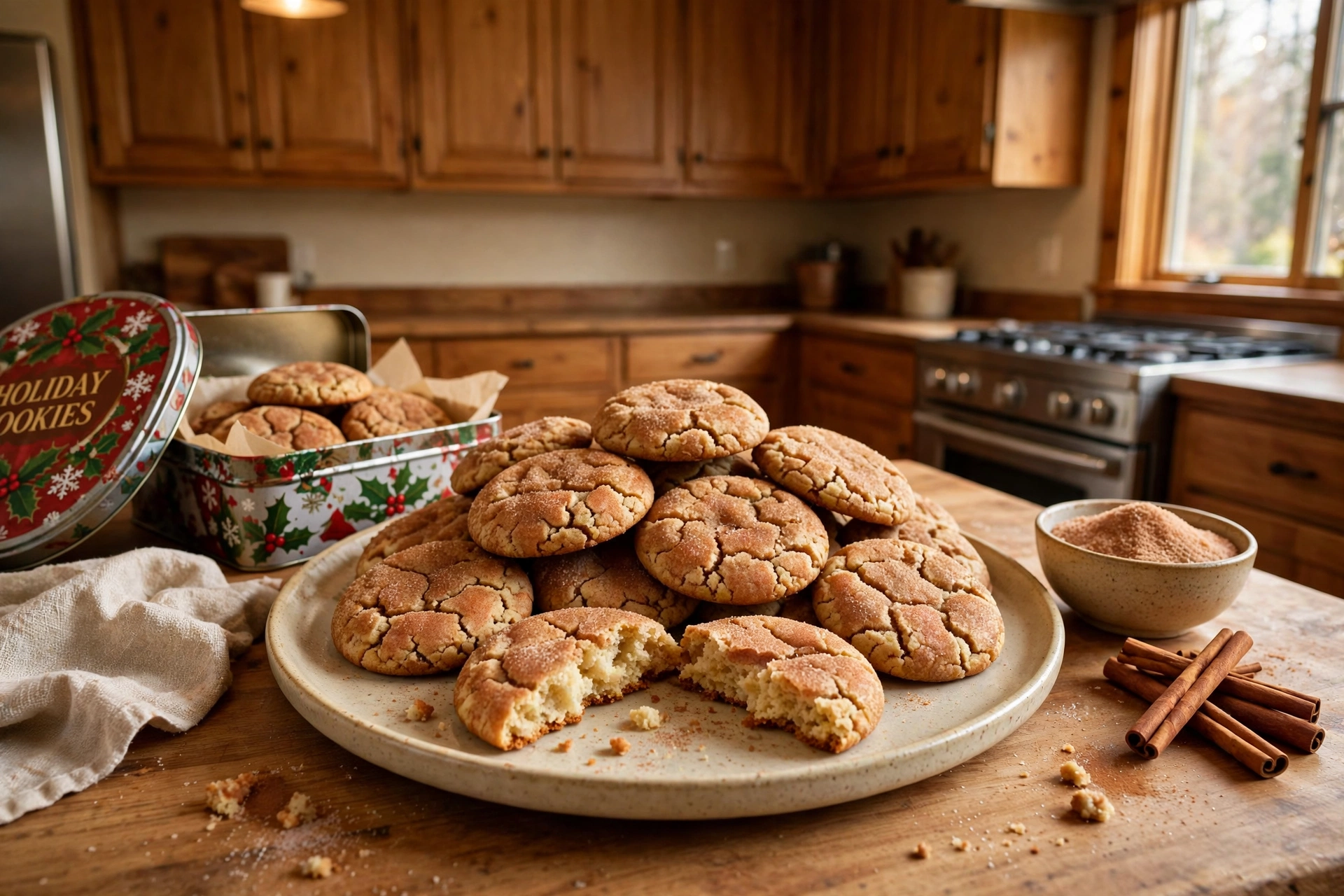
A great snickerdoodle eats in layers. The cinnamon sugar shell gives a delicate crunch and a warm spice perfume, then the crumb turns soft and chewy, almost like the center of a sugar cookie that never quite finished setting. The tang arrives last, quiet and clean, and it is what sends people back for a second one.
Warm from the oven they are at their most dramatic, puffed and fragile, the cracks wide open. Cooled, they settle into the chewy, sturdy cookie that travels well in tins and lunchboxes. Both versions are correct; our house simply votes for warm, every single time.
The Funny Name, and Where It Traveled From
Nobody truly knows where the word snickerdoodle came from, and the cookie is more charming for it. Food historians trace it to the German and Dutch baking traditions that settled in New England and Pennsylvania, where nonsense names for beloved cookies were a small household pleasure. A name this silly survives because the cookie underneath it never disappoints.
What is certain is the cookie’s long American life. It appears in community cookbooks for well over a century, always in the same plain clothes: a soft sugar dough, a cinnamon coat, a tang in the crumb. Fashions in baking have come and gone around it, from filled sandwich cookies to towering frosted ones, and the snickerdoodle has simply stayed, unbothered, in the tin.
That staying power is why it belongs at Christmas. December trays fill up with decorated, iced and filled cookies that take an afternoon each. The snickerdoodle takes half an hour, freezes beautifully, and is usually the first one gone. In a month of complicated baking, it is the reliable friend.
Snickerdoodle Cookies Ingredients
- 1 cup (227 g) unsalted butter, softened to room temperature
- 1 1/2 cups (300 g) granulated sugar
- 2 large eggs, at room temperature
- 2 teaspoons (10 ml) vanilla extract
- 2 3/4 cups (330 g) all-purpose flour, spooned and leveled
- 2 teaspoons (6 g) cream of tartar
- 1 teaspoon (5 g) baking soda
- 1/2 teaspoon (3 g) fine sea salt
- 1/4 cup (50 g) granulated sugar, for the coating
- 2 teaspoons (5 g) ground cinnamon, for the coating
Room temperature butter is not a suggestion here. It should dent easily under a finger and hold its shape, around 65°F. Butter that has gone soft and shiny in a warm kitchen creams too fast, traps too much air and gives you flat cookies with greasy edges.
Mixing and Rolling the Snickerdoodle Cookies
- Beat the butter and the 1 1/2 cups (300 g) of sugar in a large bowl for 2 minutes, until pale, fluffy and noticeably lighter in color.
- Beat in the eggs one at a time, then the vanilla, scraping the bowl once so nothing hides at the bottom.
- Whisk the flour, cream of tartar, baking soda and salt in a separate bowl. Add it to the butter mixture and mix on low just until no dry flour shows.
- Cover the dough and chill it for 30 minutes, until firm enough to scoop cleanly.
- Heat the oven to 350°F. Line two baking sheets with parchment paper.
- Stir the coating sugar and cinnamon together in a small bowl. Scoop the dough into balls of about 30 g each, roughly 1 1/2 tablespoons.
- Roll each ball in the cinnamon sugar until fully coated, then roll it once more for a thick, even shell. Set the balls 2 inches apart on the sheets.
- Bake one sheet at a time for 10 to 11 minutes, until the edges are set and the centers look puffy and still slightly soft.
- Rest the cookies on the hot sheet for 5 minutes, where they finish setting and the tops crackle fully, then move them to a rack to cool.
The Chill That Builds Thick, Crackled Tops
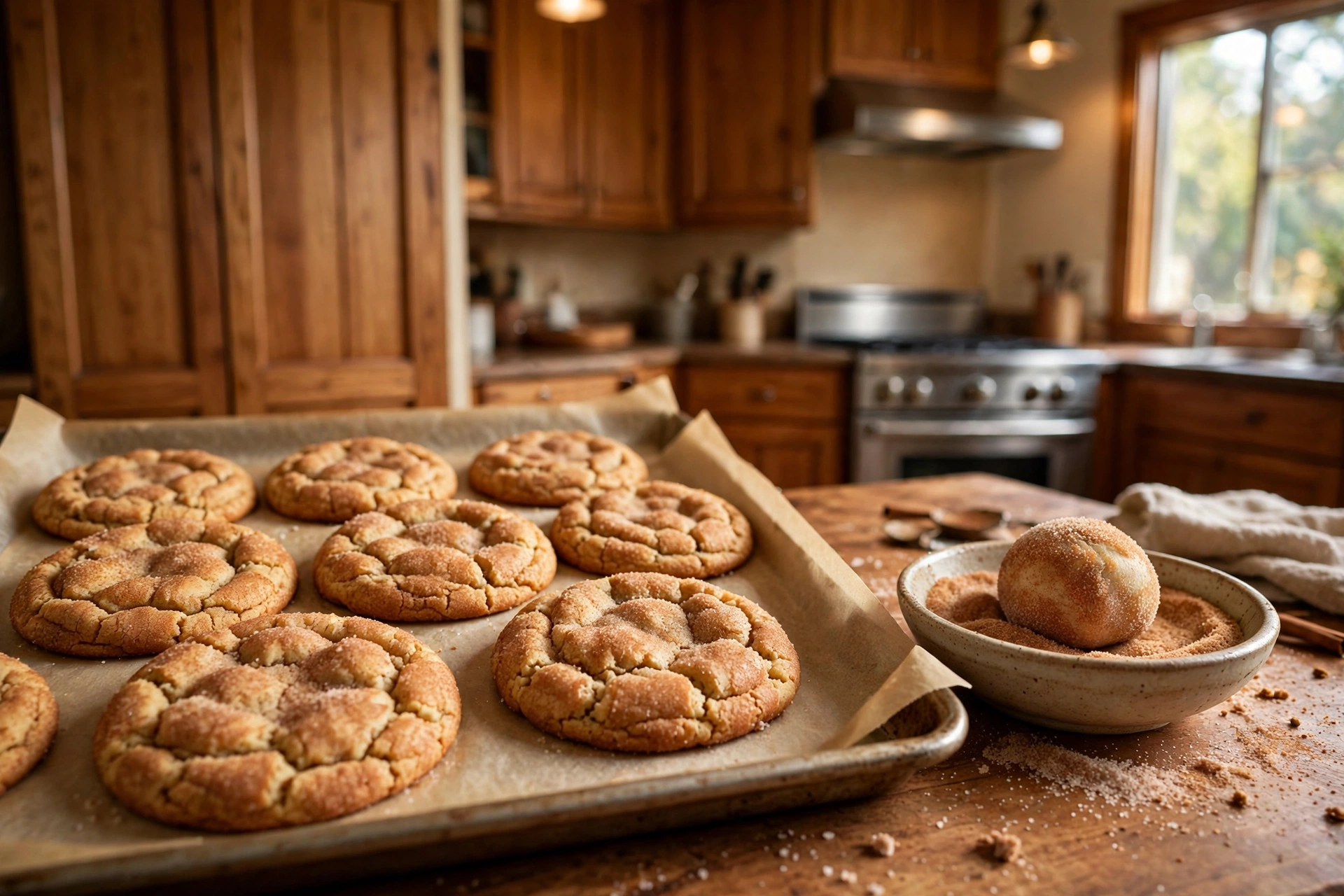
Half an hour in the refrigerator is the compromise this recipe settled on after many trays. Unchilled dough spreads fast in the heat, giving wide, thin cookies with shy little cracks. An hour or more works too, but the tops crackle less dramatically once the dough goes in truly cold and stiff.
Thirty minutes firms the butter just enough to slow the spread, so each ball holds its dome while the top dries and splits into that classic crackled map. The chill also deepens the chew, because the flour hydrates quietly while the dough rests.
If your kitchen runs warm, chill the scooped and coated balls on their sheet for 10 extra minutes while the oven heats. Cold dough meeting a fully hot oven is the whole secret to thick snickerdoodles, and it costs nothing but a little patience.
Reading the Bake: Puffy Centers, Set Edges
Forget the clock for a moment and read the cookie. At ten minutes the edges should look set and matte, the centers puffed high and still pale, with the surface just beginning to crack. That puffy, slightly underdone look is exactly right; the cookies finish on the hot sheet.
Wait for golden brown and you have gone too far. Snickerdoodles that brown in the oven cool into crisp, dry discs by the next morning. Pulled at the pale and puffy stage, they stay soft and chewy for the better part of a week, which is what makes them tin cookies in the first place.
Ovens disagree, so bake one test cookie first if your oven is new to you. Adjust by a single minute in either direction based on that cookie, not on hope. Once the timing is set for your kitchen, the remaining trays will follow it faithfully.
Sheet color changes the answer, too. Dark pans bake the bottoms faster and can push a tray from soft to crisp in the same ten minutes, so drop the time by a minute on dark metal. Light aluminum and parchment give the gentlest, palest bottoms, which is what this cookie wants. Whatever the pan, rotate it once halfway only if your oven is known to run hot on one side.
Brown Sugar, Cardamom, and Other Tin Worthy Twists
Swapping a quarter of the granulated sugar for light brown sugar, 1/4 cup (55 g) packed, deepens the chew and adds a whisper of molasses. It is the variation our family requests most, especially for cookies that will be eaten the same day they are baked.
A quarter teaspoon of ground cardamom in the coating turns the flavor toward Scandinavian Christmas baking, floral and warm beside the cinnamon. A pinch of nutmeg in the dough does something similar, quieter. Neither replaces the cinnamon; both simply give it company.
They sit happily in a mixed tin beside the easy Christmas sugar cookies and a batch of gingerbread cookies, three pale and spiced personalities that never fight. For a fourth, the whipped shortbread cookies bring the butter, and the tin is complete.
Nut flours and gluten free blends can be made to work, but they change the chew this recipe is built on, so treat them as their own project rather than a swap. The classic dough, made as written, is the one worth freezing and gifting.
Freezing Dough Balls for December Baking Days
Freeze the dough balls uncoated, and this point matters. Cinnamon sugar left on raw dough for weeks in the freezer draws moisture, melts into a damp crust and bakes up patchy. Plain balls, frozen solid on a sheet and then bagged, keep for up to three months with no loss at all.
Baking day could not be simpler. Roll the frozen balls in fresh cinnamon sugar, twice as always, set them on the sheet and add one minute to the bake. No thawing, no planning, and the house smells like December within fifteen minutes of deciding to bake.
Baked cookies freeze well too, layered between parchment in a tight tin for up to a month. A few minutes in a low oven brings back the just baked softness. Our nutrition values are calculated per cookie from the recipe as written, in line with the reference data at USDA FoodData Central.
Label the bag with the date and the bake instruction, 350°F for 11 to 12 minutes from frozen, and the dough becomes a gift in itself. A bag of frozen snickerdoodle balls with a small jar of cinnamon sugar is the present our neighbors ask for by name, because it turns into warm cookies whenever they want them.
Keeping Snickerdoodles Soft All Week
Store the cooled cookies in an airtight tin at room temperature, layered with parchment so the crackled tops stay intact. They keep their chew for about five days, which covers a full week of lunches and most of a cookie exchange season.
If a batch does firm up, a slice of soft bread tucked into the tin overnight returns moisture to the cookies by morning. It is an old baker’s trick and it works because the cookies quietly borrow the bread’s water. Remove the bread slice before serving, and nobody will ever know.
For gifting, pack the tin the day the cookies are baked or the day after, never later in the week. A small square of parchment between layers keeps the cinnamon shells from rubbing bare against each other in transit. Mailed tins travel best in cool weather; in a warm spell, freeze the packed tin overnight before it goes out, and the cookies will arrive still tasting close to fresh.
Warm From the Oven, Rolled in Cinnamon
Snickerdoodle cookies ask for almost nothing: one bowl, one small jar of cream of tartar, and the discipline to pull the tray while the centers still look soft. In return they give the Christmas tin its chewiest, tangiest, most quietly beloved cookie.
Bake a tray this week and freeze a second batch of dough balls for the days when December gets loud. Future you, standing in a busy kitchen with guests at the door, will be very glad that present you did.
Snickerdoodle Cookies Questions
What can I use if I have no cream of tartar for snickerdoodles?
The honest substitute is 2 teaspoons (10 ml) of lemon juice or white vinegar for the 2 teaspoons (6 g) of cream of tartar, which keeps the lift but softens the tang. Baking powder in place of both the cream of tartar and the soda also works. The cookies will be good, just closer to cinnamon sugar cookies than true snickerdoodles.
Why did my snickerdoodle cookies spread flat?
Warm butter and skipped chilling are the usual causes. The butter should dent under a finger but hold its shape, and the dough needs its 30 minutes in the refrigerator so the balls hold their dome in the heat. Also check that the cream of tartar and soda are fresh enough to lift.
Why did the tops of my snickerdoodles not crackle?
Crackling needs a thick cinnamon sugar shell and a fast set in a fully hot oven. Roll each ball twice so the coating is generous, chill the scooped balls while the oven heats, and do not open the door during the first 8 minutes, which lets heat escape and slows the rise.
Should I coat the dough balls before freezing them?
No. Freeze the balls plain, on a sheet until solid, then bag them for up to 3 months. Cinnamon sugar stored on raw dough turns damp and bakes patchy. Roll the frozen balls in fresh cinnamon sugar just before baking and add 1 minute to the bake time.
How long do snickerdoodle cookies stay soft?
About 5 days in an airtight tin at room temperature, layered with parchment. They stay chewy because the cream of tartar keeps the sugar from crystallizing. If they firm up, a slice of soft bread in the tin overnight restores the softness.
Snickerdoodle Cookies: Soft, Chewy and Crackled
Classic snickerdoodle cookies with real cream of tartar for the signature tang and chew, dough balls of 30 g chilled for 30 minutes, rolled twice in cinnamon sugar and baked at 350°F until the edges set and the centers stay puffy and soft. The plain dough balls freeze for up to 3 months for December baking days.
- Total Time: 55 minutes
- Yield: 24 cookies 1x
Ingredients
1 cup (227 g) unsalted butter, softened to room temperature
2 large eggs, at room temperature
2 teaspoons (10 ml) vanilla extract
2 3/4 cups (330 g) all-purpose flour, spooned and leveled
2 teaspoons (6 g) cream of tartar
1 teaspoon (5 g) baking soda
1/2 teaspoon (3 g) fine sea salt
1/4 cup (50 g) granulated sugar, for the coating
2 teaspoons (5 g) ground cinnamon, for the coating
Instructions
Beat the butter and the 1 1/2 cups (300 g) of sugar in a large bowl for 2 minutes, until pale, fluffy and noticeably lighter in color.
Beat in the eggs one at a time, then the vanilla, scraping the bowl once so nothing hides at the bottom.
Whisk the flour, cream of tartar, baking soda and salt in a separate bowl. Add it to the butter mixture and mix on low just until no dry flour shows.
Cover the dough and chill it for 30 minutes, until firm enough to scoop cleanly.
Heat the oven to 350°F. Line two baking sheets with parchment paper.
Stir the coating sugar and cinnamon together in a small bowl. Scoop the dough into balls of about 30 g each, roughly 1 1/2 tablespoons.
Roll each ball in the cinnamon sugar until fully coated, then roll it once more for a thick, even shell. Set the balls 2 inches apart on the sheets.
Bake one sheet at a time for 10 to 11 minutes, until the edges are set and the centers look puffy and still slightly soft.
Rest the cookies on the hot sheet for 5 minutes, where they finish setting and the tops crackle fully, then move them to a rack to cool.
Notes
Freeze the dough balls plain, never coated: cinnamon sugar stored on raw dough turns damp and bakes patchy. Roll the frozen balls in fresh cinnamon sugar and add 1 minute to the bake. Pull the tray while the centers still look puffy and soft; browned snickerdoodles cool crisp and dry.
- Prep Time: 15 minutes
- Cook Time: 11 minutes
Nutrition
- Calories: 178
- Sodium: 105
- Saturated Fat: 5
- Protein: 2
- Cholesterol: 36