
In this article:
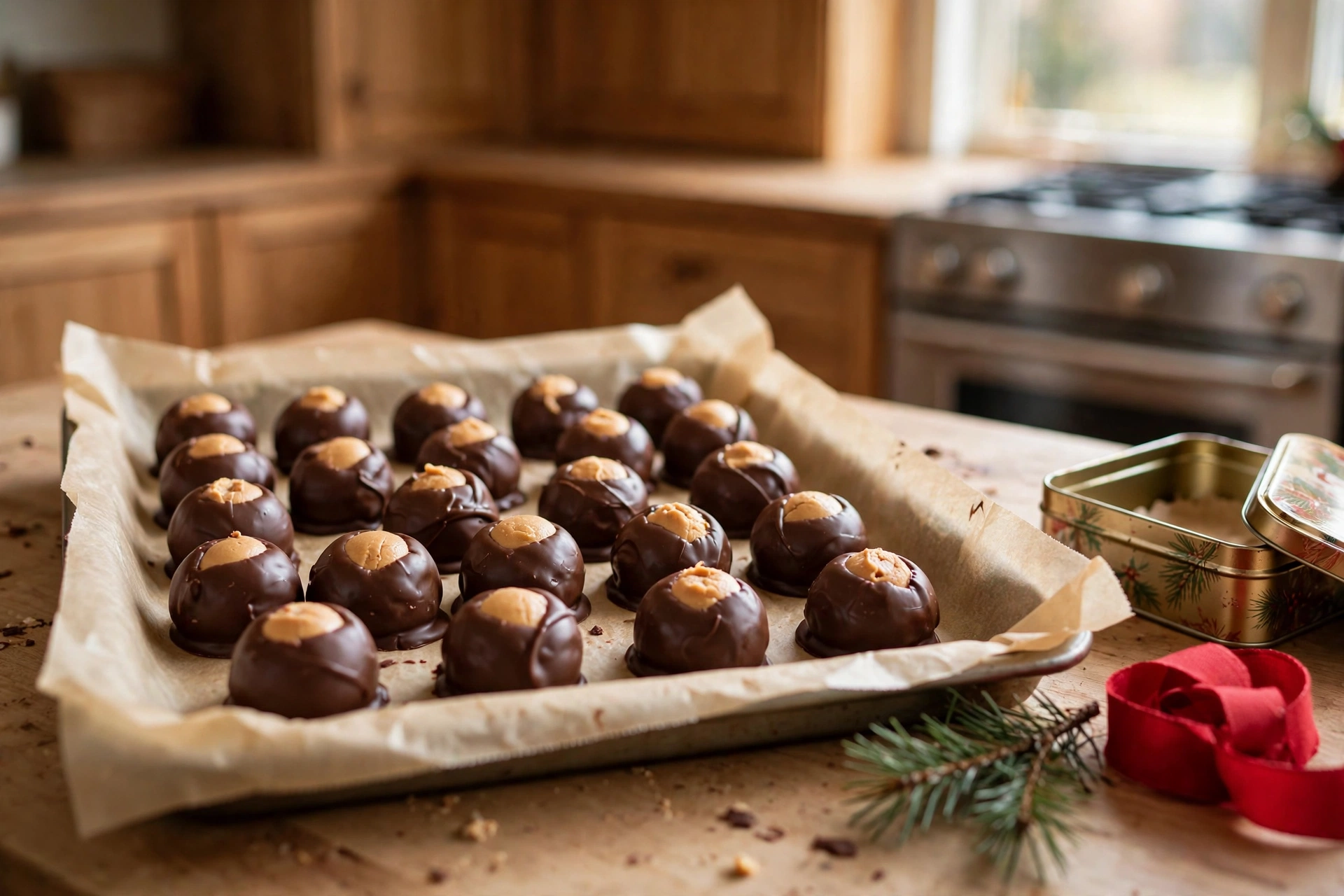
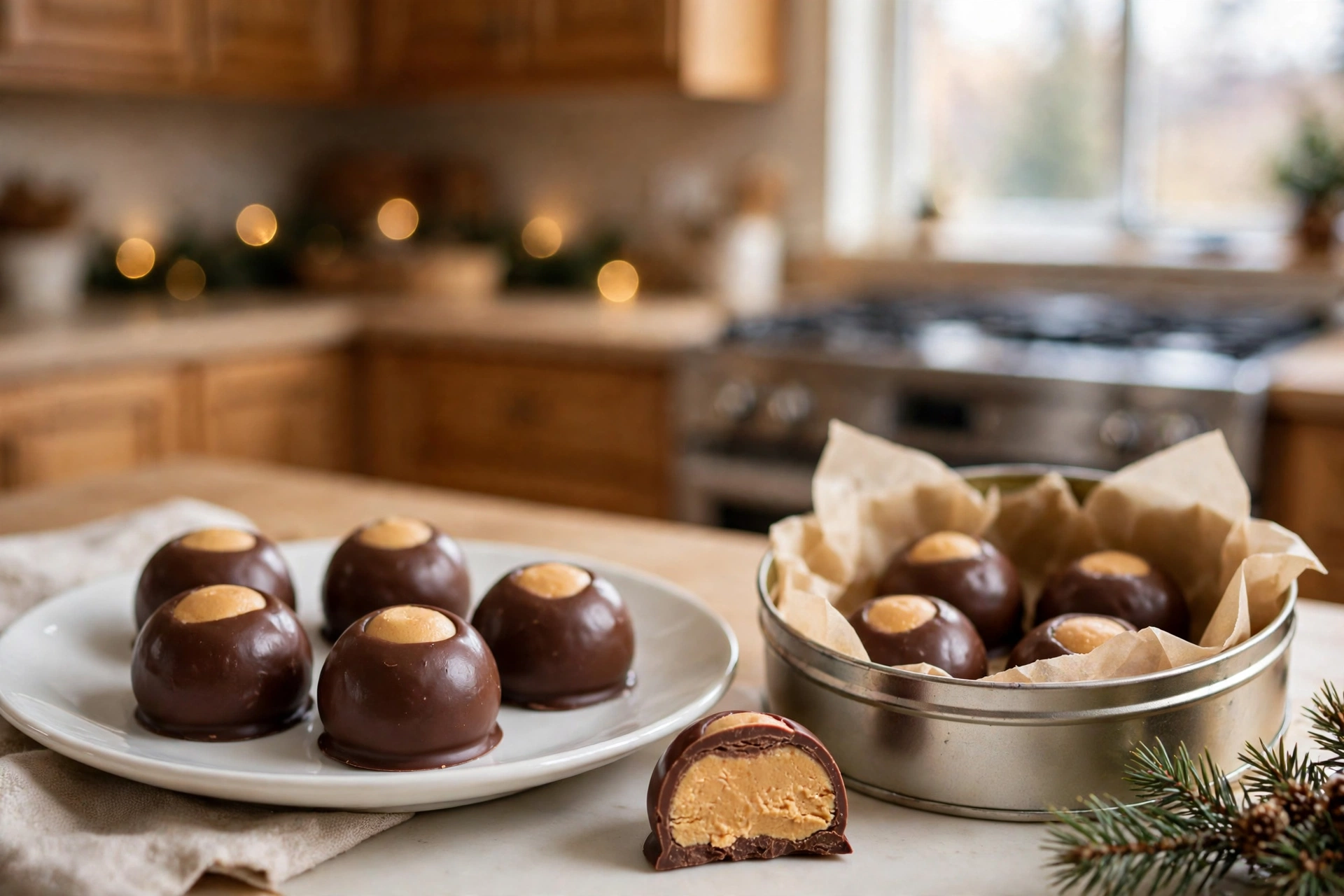
Buckeye candy is the first treat to vanish from every Christmas tray it joins: smooth peanut butter centers, a glossy chocolate shell, and that small tan circle left showing on top. They look like little jewels, and they ask for no oven at all.
The name comes from the nut of the Ohio buckeye tree, which the candies resemble, dark shell and pale eye and all. Make a batch in December and you will understand the resemblance, and why Ohio families guard their ratios like heirlooms.
This is also the friendliest candy project I know. The centers mix in one bowl, the dipping is calm and rhythmic, and the finished pieces freeze beautifully. It is the recipe I hand to anyone who wants to give homemade gifts without stress.
They are also famously the candy that converts people who claim not to like peanut butter desserts. Something about the salty sweet center and the thin shell wins them over. I have watched it happen at my own table more than once.
Why Buckeye Candy Never Lasts Long
Buckeye candy works because the center is engineered like a truffle filling, not a cookie dough. Butter softens the peanut butter, powdered sugar gives it structure, and a real pinch of salt keeps the sweetness in check. The result slices clean and melts slowly on the tongue.
The chocolate shell does more than decorate. It snaps lightly, seals the center so it stays creamy for weeks, and gives your fingers a clean way to hold each piece. A little coconut oil in the melt keeps that shell thin and glossy, never waxy or thick.
And the small bare circle is not a shortcut, it is the signature. Leaving the top undipped makes the candy instantly recognizable and shows the peanut butter inside. It also means no one needs a label to know exactly what they are reaching for.
There is one more reason they endure: the recipe forgives beginners. No thermometer, no oven watching, no timing tighter than a freezer chill. A first time candy maker can produce a tray that looks practiced, and that confidence brings them back every December.
The yield is part of the charm: forty pieces from one mixing bowl. That is a teacher gift, two neighbor tins and a party tray from a single afternoon of dipping. Few Christmas recipes stretch this far with this little effort or this little mess.
Ohio claims the buckeye as its own, and the candy shows up at tailgates and weddings there all year, not only at Christmas. Every family tweaks the ratio slightly: a little more butter for richness, a little less sugar for a firmer bite. Start with this classic balance, then make it yours.
The Peanut Butter Center: Getting the Texture Right
A perfect center feels dense and smooth, like the inside of a peanut butter cup, only fresher. It should hold a clean fingerprint for a second, then soften. If your mixture crumbles, it is too dry; if it sticks to your palms, it needs more sugar.
Sifting the powdered sugar is the step nobody wants to do and everybody should. Lumps of sugar never fully disappear into the peanut butter, and they show up later as gritty spots. Ninety seconds with a sieve buys you a completely smooth bite, every single time.
Temperature is the other quiet lever. Softened butter, never melted, keeps the centers firm enough to roll. Melted butter makes a greasy mixture that slumps on the tray and slides off the toothpick in the chocolate. If your kitchen runs warm, chill the bowl for ten minutes.
Roll the balls a breath smaller than you think. The chocolate adds a visible shell, and a finished buckeye of about one inch eats in two perfect bites. Uniform size also means uniform chilling, so every piece dips and sets at the same pace.
A stand mixer or a sturdy spoon both work here; the mixture is thick but cooperative. Mix on low once the sugar goes in, because a fast beater throws powdered sugar across the whole counter. Stop as soon as the dough holds together in a smooth mass.
Buckeye Candy Ingredients
Seven everyday ingredients, and only one rule that truly matters: choose a conventional creamy peanut butter that pours smooth and stays mixed. Natural peanut butter, the kind with oil pooling on top, makes greasy centers that refuse to set.
- 1 1/2 cups creamy peanut butter (not natural)
- 6 tablespoons unsalted butter, softened
- 1 teaspoon vanilla extract
- 1/4 teaspoon fine sea salt
- 3 1/2 cups powdered sugar, sifted
- 12 ounces semisweet chocolate chips
- 2 teaspoons coconut oil
For the shell, semisweet chocolate in the 55 to 60 percent range hits the classic balance: dark enough to offset the sweet center, mild enough to please everyone. Chocolate chips melt reliably thanks to their stabilizers; if you chop a bar instead, expect a slightly thinner shell and an even better snap.
How to Make Buckeye Candy
The work divides into three calm stages: mix, freeze, dip. None of them is hard, and the freezer does the heaviest lifting. Set out two parchment lined trays before you start and everything flows.
- Line a rimmed baking sheet with parchment paper and clear a flat space for it in the freezer.
- Beat the peanut butter, softened butter, vanilla and salt in a large bowl until smooth, pale and fluffy.
- Add the sifted powdered sugar 1 cup at a time, mixing on low after each addition, until a soft dough forms that holds together when pressed.
- Scoop 1 tablespoon portions and roll them between your palms into smooth balls. Set them on the prepared sheet in neat rows.
- Press a toothpick straight down into the top center of each ball. Freeze for 30 minutes, until the balls are very firm.
- Melt the chocolate chips and coconut oil in a microwave safe bowl in 30 second bursts, stirring between each, until smooth and glossy.
- Holding a ball by its toothpick, dip it about three quarters deep into the chocolate, leaving a small circle of peanut butter showing at the top.
- Set the dipped ball back on the sheet, twist the toothpick out, and smooth the little hole closed with a warm fingertip.
- Repeat with the remaining balls, then chill the tray for 15 minutes until the chocolate is fully set.
Set the finished tray somewhere cool and undisturbed while the chocolate sets; fingerprints on a half set shell are forever. Once they shine and feel dry to a light touch, the buckeyes are ready to box, stack, freeze or simply eat standing at the counter.
The Dipping Station, Set Up Once
Dipping forty candies goes smoothly when the station is arranged before the chocolate melts. Tray of frozen centers on your left, bowl of chocolate in the middle, clean tray on your right. Work in one direction and your hands learn the rhythm within five pieces.
Keep the chocolate deep enough to submerge most of the ball in one motion. A narrow, deep bowl beats a wide, shallow one, and a quick stir before each dip keeps the surface glossy. If the chocolate thickens as you work, ten seconds in the microwave restores it.
Cold centers are non negotiable. A ball that feels merely cool will warm the chocolate, drag streaks through the shell and sometimes slip straight off its toothpick. If the tray softens while you dip, return it to the freezer for ten minutes and take a breath.
Work in small runs if the batch is large. Twelve frozen centers at a time keeps every ball cold and every shell clean, and the short pauses let you stretch your shoulders. Candy making should feel like a pleasure, not a race against melting chocolate.
If you prefer the stove, a double boiler gives the gentlest melt and the most forgiving working time. Keep the water at a bare simmer and the bowl dry; a single drop of water can seize the whole batch into a grainy paste that no stirring will rescue.
Building a Gift Box of Buckeyes
This is where the candy earns its December keep. A small box of ten to twelve buckeyes, each in its own paper candy cup, looks like it came from a chocolate shop. Layer two rows with parchment between them so the glossy tops never touch or scuff.
They travel well on the same tray as our christmas crack saltine toffee and cranberry pistachio biscotti, two other gifts that hold up for days. Contrast is what makes a box feel generous: something crunchy, something fruity, and these, rich and smooth in the middle.
Add a small handwritten card with the storage line: keep cool, enjoy within two weeks. Recipients always ask, and the card answers before the question. If you mail boxes, choose a cold week, pack the tin tight with parchment, and skip any route that crosses warm states slowly.
One kind habit for gift boxes: add a small line on the card that says peanut butter inside. Peanut allergies are common, and a beautiful box should never carry an unpleasant surprise. The note takes ten seconds and makes the gift feel thoughtful rather than risky.
Storage, Freezing and a December Timeline
Buckeyes keep longer than almost any other homemade candy. In an airtight container in the fridge, they stay fresh for 2 weeks, and the FDA guide to storing food safely is a good reminder that airtight and cold is the winning pair. Let them sit out 15 minutes before serving for the creamiest center.
For the freezer, set the dipped candies on a tray until solid, then pack them in a freezer container with parchment between layers. They keep for 3 months without losing their snap. Thaw them in the fridge overnight, still covered, so condensation never spots the chocolate.
A calm December timeline looks like this. Roll the centers in the first week and freeze them plain; dip them in the second week as gifts are needed. Alongside classic peppermint bark and snowball cookies, you can fill a whole gift list from one weekend of dipping.
Room temperature is the one place to be careful. A cool pantry near 65°F keeps them presentable for about a week, but a warm kitchen softens the shells and dulls the shine. When in doubt, the fridge is always the safer home for this candy.
If a stored buckeye develops pale streaks on the shell, that is chocolate bloom, not spoilage. The candy is safe and still tastes right; the finish simply looks dusty. It happens when pieces warm up and cool down repeatedly, so store them at one steady cold temperature.
For serving at a party, arrange the buckeyes in a single layer on a chilled plate and replenish from the fridge as the tray empties. Small batches on the table keep every piece glossy and cool, and the cook gets to watch the tray disappear several times.
Small Batches, Big Trays
Buckeye candy scales in both directions without complaint. Halve it for a quiet weekend treat, or double it and invite a friend to dip with you, one tray each. Either way, the last piece is always negotiated over, and that is exactly how it should be.
Make them once and they will join your permanent Christmas list, right beside the cookies. Fair warning: people will start asking about them in November.
If this is your first homemade candy, welcome to the easiest win of the season. If it is your fiftieth batch, you already know: the bowl is usually empty before the boxes are even tied.
Buckeye Candy Questions
Why does buckeye candy leave a circle of peanut butter showing on top?
The circle copies the pale eye of the real Ohio buckeye nut, which gives the candy its name. It is also practical: the bare spot is where the toothpick sits, and it shows everyone the filling inside before they even take a bite.
Can I dip buckeyes completely, with no circle showing?
Yes, and many families do. Use a dipping fork instead of a toothpick, lower the ball fully, and lift it out with a swirl. Fully coated pieces keep a few days longer, since the center is completely sealed from the air.
My peanut butter mixture is too soft to roll. What went wrong?
Warm butter or a warm kitchen is the usual cause. Chill the bowl for 15 minutes and try again; if it is still soft, mix in more sifted powdered sugar, 2 tablespoons at a time, until it holds a clean ball.
How long can buckeyes sit out at a Christmas party?
About 4 hours is comfortable in a cool room; the chocolate softens but the centers stay safe and pleasant. For an all day open house, set the tray over a shallow pan of ice or refresh it with a chilled batch halfway through.
Can I make buckeye candy with crunchy peanut butter?
You can, and the little peanut pieces add a pleasant bite. The centers will look slightly rustic and the balls roll a touch less smoothly, so chill them a few extra minutes before dipping to keep every piece neat.
Buckeye Candy: Creamy Peanut Butter, Smooth Chocolate, No Baking
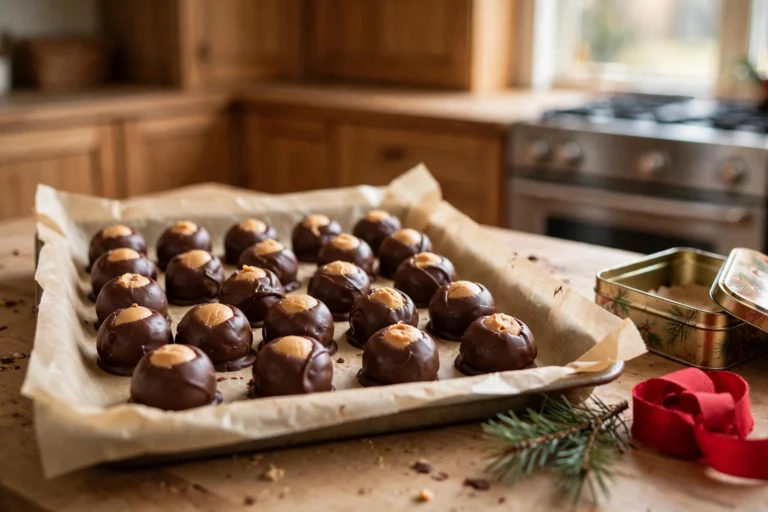
Classic no bake buckeye candy: smooth peanut butter centers rolled into balls, frozen firm, then dipped in glossy chocolate with the signature peanut butter circle left showing. About 40 pieces per batch, freezer friendly and made for Christmas gift boxes.
- Total Time: 1 hour 20 minutes
- Yield: 40 pieces 1x
Ingredients
1 1/2 cups creamy peanut butter
1 teaspoon vanilla extract
1/4 teaspoon fine sea salt
3 1/2 cups powdered sugar, sifted
12 ounces semisweet chocolate chips
2 teaspoons coconut oil
Instructions
Line a rimmed baking sheet with parchment paper and clear a flat space for it in the freezer.
Beat the peanut butter, softened butter, vanilla and salt in a large bowl until smooth and fluffy.
Add the sifted powdered sugar 1 cup at a time, mixing on low after each addition, until a soft dough forms.
Scoop 1 tablespoon portions and roll them between your palms into smooth balls. Set them on the prepared sheet.
Press a toothpick into the top center of each ball. Freeze for 30 minutes, until very firm.
Melt the chocolate chips and coconut oil in short bursts in the microwave, stirring between each, until smooth and glossy.
Dip each frozen ball about three quarters deep into the chocolate, leaving a small circle of peanut butter showing at the top.
Set the ball back on the sheet, twist the toothpick out, and smooth the little hole closed with a fingertip.
Chill the tray for 15 minutes, until the chocolate is fully set.
Notes
Use conventional creamy peanut butter, not natural; natural peanut butter makes greasy centers that will not set. Keep the centers very cold while dipping, and return the tray to the freezer for 10 minutes if it softens.
- Prep Time: 30 minutes
- Cook Time: 5 minutes
Nutrition
- Calories: 158
- Sodium: 55
- Saturated Fat: 4
- Protein: 3
- Cholesterol: 5