
In this article:
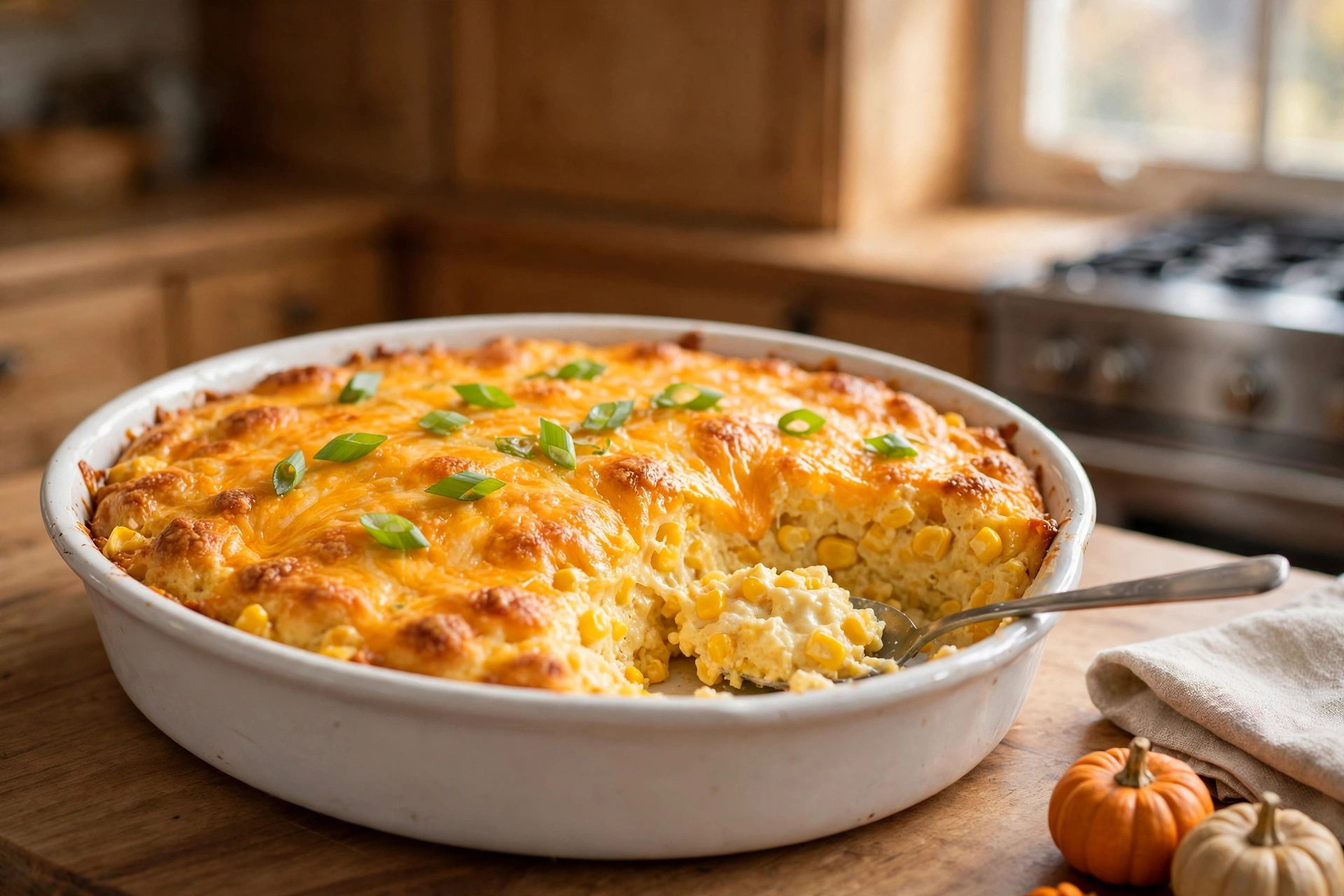
Corn spoon bread is the side dish that disappears first at our Thanksgiving table, a soft and custardy corn bake that you serve with a big spoon, never a knife. It lands somewhere between cornbread and soufflé, with sweet kernels in every bite and a golden cheddar top.
This version is built for the real rhythm of the holiday. The batter stirs together in one bowl, waits in the fridge overnight, then bakes while the turkey rests. What reaches the table is warm, rich and impossibly soft, with crisp edges for the people who hunt for them.
It is also a kind recipe for the cook. No mixer, no special equipment, no last minute frying or whisking on a crowded stove. Just a bowl, a dish and a hot oven, working quietly while everything else asks for your attention.
Why This Corn Spoon Bread Works
Corn spoon bread works because it treats corn three ways at once. Cream style corn melts into the batter and keeps the crumb moist, whole kernels give little pops of sweetness, and fine cornmeal brings the gentle grit and deep corn flavor that flour alone cannot deliver.
Sour cream is the quiet second act. Its tang balances the natural sugar of the corn, and its fat carries the cheddar through every spoonful instead of letting it sit only on top. A modest spoonful of sugar rounds the edges without turning the dish sweet.
The bake matters as much as the batter. A hot oven sets the edges and puffs the top, while the center stays just soft enough to scoop. Ten minutes of rest lets the crumb settle, so each spoonful holds together on the plate beside the turkey.
Nothing here is fussy. There are no egg whites to beat, no water bath, no special pan to buy. One bowl, one dish, one spoon: that is the whole method, and it is why this recipe survives every busy Thanksgiving in our house.
Cheddar and green onions finish the balance. Sharp cheddar brings salt and a gentle bite, while the onions cut through the richness with something green and fresh. Together they keep a sweet corn base from ever tasting flat or one note.
Spoon bread is one of the oldest corn dishes in the American South, a colonial era answer to cornmeal that was too coarse for bread. Cooks poured hot milk over meal to soften it, enriched it with eggs and butter, and baked it soft on purpose.
Corn Spoon Bread Ingredients
Everything here is a pantry or fridge staple, and the list is short on purpose. Use fine or medium grind yellow cornmeal; a coarse grind stays gritty even after baking.
- 1 cup fine yellow cornmeal
- 1 cup all-purpose flour
- 1/4 cup granulated sugar
- 1 tablespoon baking powder
- 1 teaspoon fine sea salt
- 1/2 teaspoon black pepper
- 2 large eggs, at room temperature
- 1 cup sour cream
- 1/2 cup whole milk
- 6 tablespoons unsalted butter, melted, plus more for the dish
- 1 can (14.75 ounces) cream style corn
- 1 can (15 ounces) whole kernel corn, drained well
- 1 1/2 cups shredded sharp cheddar, divided
- 3 green onions, thinly sliced
A note on the cornmeal: stone ground cornmeal gives a deeper, almost nutty flavor and a slightly heartier crumb. Standard fine grind from the baking aisle bakes up smoother. Both work; just avoid coarse polenta grinds, which stay gritty in the finished dish.
Eggs at room temperature whisk in more smoothly and help the bake puff evenly. If yours are fridge cold, set them in a bowl of warm water for ten minutes while you measure everything else. Small habits like this are what make a simple dish reliable.
How to Make Corn Spoon Bread
The batter takes ten quiet minutes, and the oven does the rest. Stir gently once the flour goes in; a few small lumps are fine and far better than a tough, overmixed crumb.
- Heat the oven to 375°F. Butter a 9 by 13 inch baking dish or a 2.5 quart casserole and set it on the counter.
- Whisk the cornmeal, flour, sugar, baking powder, salt and pepper together in a large mixing bowl until evenly combined.
- In a second bowl, whisk the eggs, sour cream, milk and melted butter until smooth and glossy.
- Stir both cans of corn into the egg mixture, the cream style corn first, then the drained kernels.
- Pour the wet mixture into the dry ingredients and stir with a spatula until just combined, with no dry pockets left.
- Fold in 1 cup of the cheddar and all the green onions, keeping a light hand so the batter stays airy.
- Scrape the batter into the prepared dish, smooth the top, and scatter the remaining 1/2 cup of cheddar over it.
- Bake for 40 to 45 minutes, until the edges are deep golden and puffed and the center is set with a slight jiggle.
- Rest for 10 minutes so the crumb settles. Serve warm, scooped straight from the dish with a large spoon.
Bring the whole dish to the table in its baking pan if you can; spoon bread is at its best served family style, with the big spoon passing from hand to hand. What looks rustic is really the point: this is a dish meant to be shared warm, not plated cold.
The Thanksgiving Oven Schedule
Thanksgiving is an oven traffic problem, and this dish is an easy car to park. The turkey needs the hot oven first, then it needs to rest for at least 30 minutes before carving. That resting window is exactly when the spoon bread bakes.
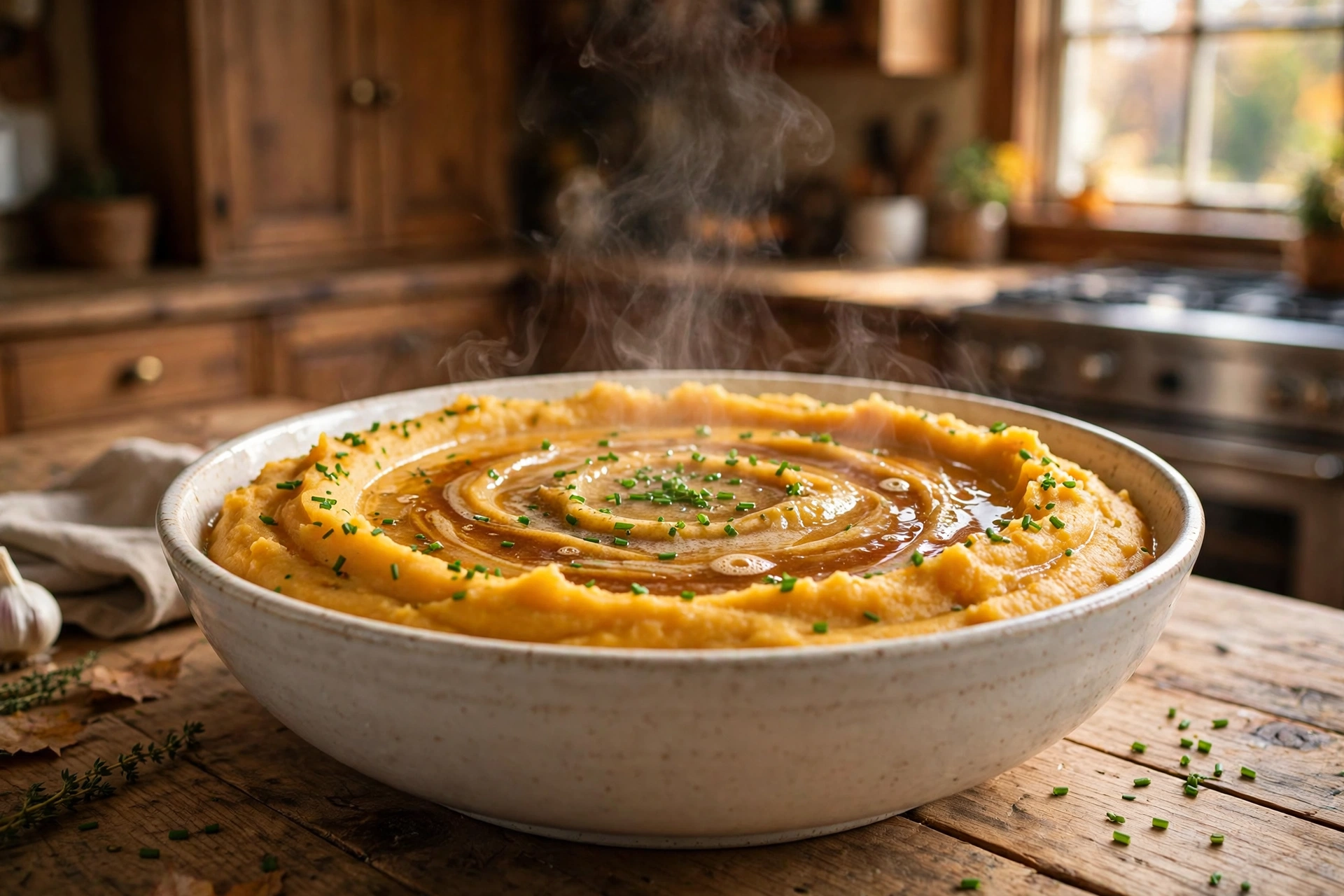
Slide the dish in the moment our herb butter roast turkey comes out, and set a timer for 40 minutes. While it bakes, the gravy goes back on the stove and the make-ahead mashed potatoes reheat in their own pot. Everything lands at the table within the same ten minutes, still steaming.
If the meal runs late, the cooked dish holds well. Cover it loosely with foil and keep it in a 200°F oven for up to 30 minutes. The center stays soft, the cheese stays supple, and nobody has to know dinner slipped a little.
Food safety is part of the schedule too. The USDA advises carving the turkey within two hours of roasting and refrigerating leftovers promptly, and its turkey basics guide is worth a read before the big day. A calm plan keeps the meal relaxed and safe.
One more scheduling gift: this dish forgives. If the turkey needs an extra 15 minutes, hold the raw batter in its dish in the fridge and bake when the oven frees up. Spoon bread does not sulk, and neither will your guests.
For a smaller table, halve the recipe and bake it in an 8 inch square dish or a deep pie plate. The bake shortens to about 30 to 35 minutes, and the center still sets with the same gentle wobble. Leftovers for two are a gift, not a burden.
Texture Notes: Custardy Center, Crisp Cheese Top
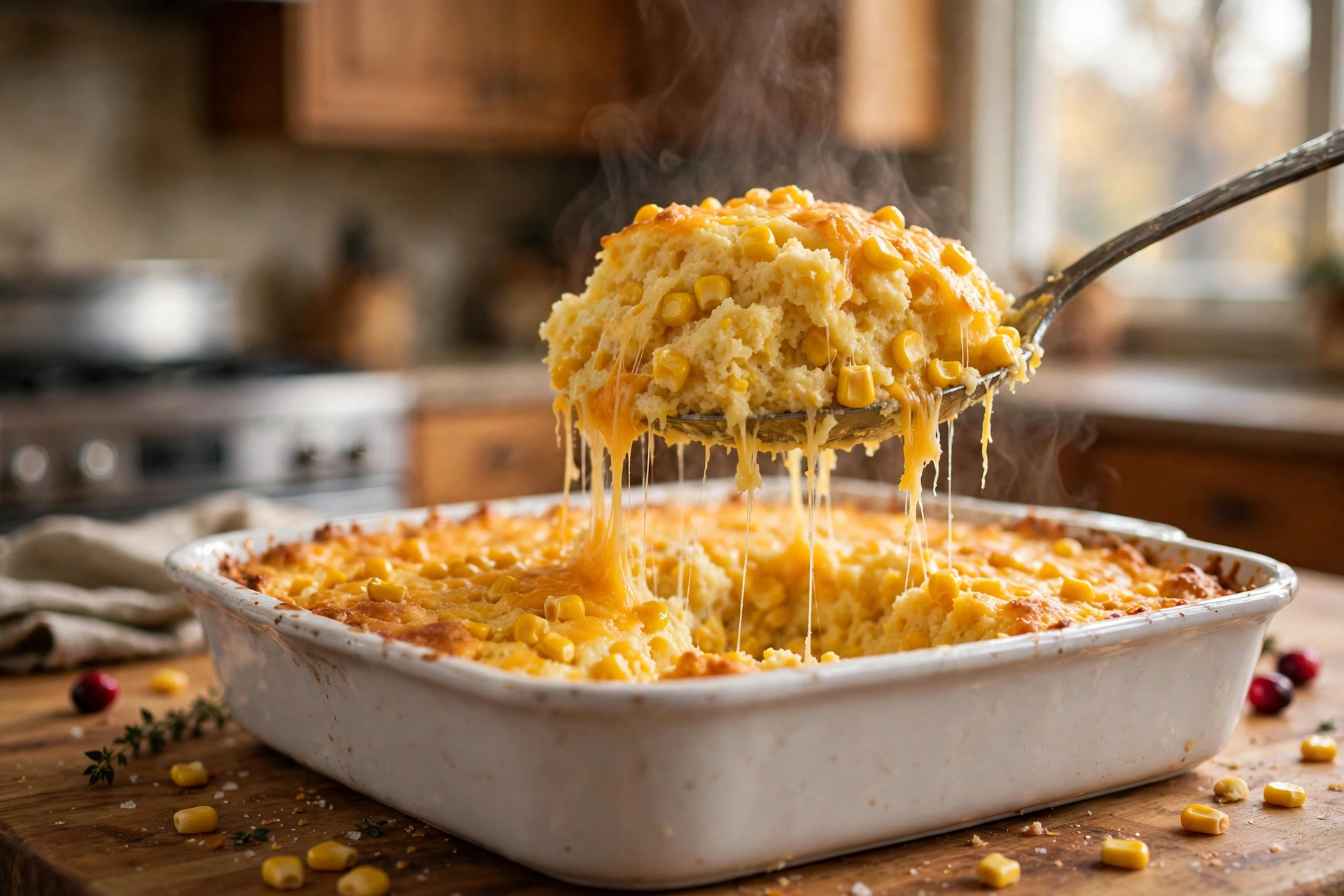
The first spoonful tells you everything. The top gives a little resistance from the cheese, then the spoon sinks into a crumb that is soft, moist and almost pudding like. Kernels burst gently between your teeth, a small sweet pop in the middle of all that richness.
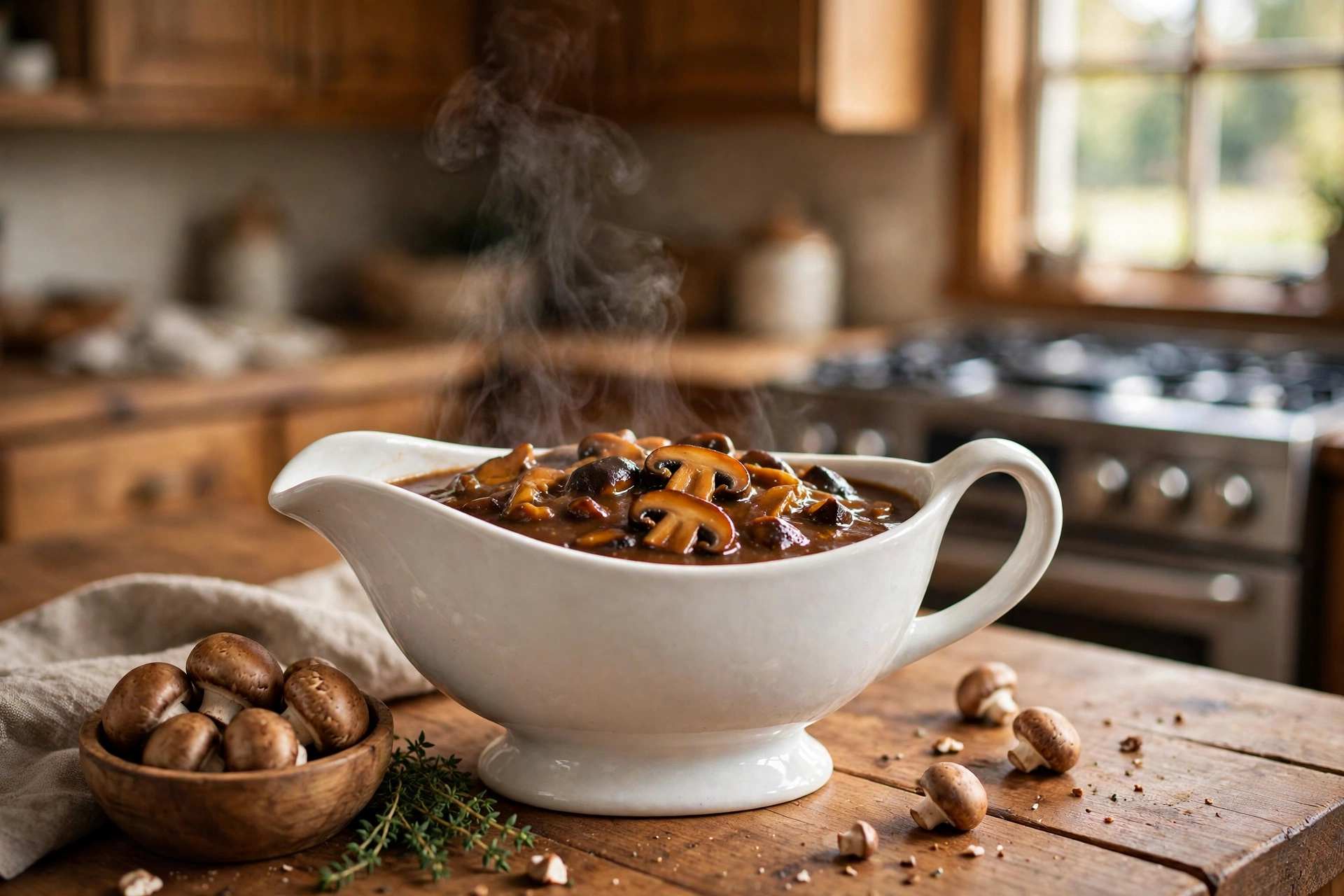
That contrast is the whole point of the dish. Cornbread slices and stands; spoon bread relaxes and pools a little on the plate, ready to mingle with mushroom gravy. Serve it beside something crisp, like green beans almondine, and the softness feels planned rather than heavy.
Watch for the right doneness cue and you will never overbake it. The edges should be set and golden, the center just firm with a gentle wobble when you nudge the dish. A toothpick is too strict a judge here; trust the wobble instead.
Serve it hot enough that the cheese still stretches a little when the spoon lifts. As it cools, the crumb firms and the flavors deepen, which is why a reheated scoop the next morning, under a fried egg, is a cook’s quiet reward.
If your batter looks runny before baking, the corn was not drained well enough; that is the one mistake that follows this dish. Pat the kernels dry on a clean towel next time, and never skip the draining step. The batter should pour slowly, like a thick cake batter.
Make It Ahead, Store It Right
The batter is the make ahead hero of this recipe. Stir it together the night before, cover the bowl, and refrigerate for up to 24 hours. The next day, let it stand at room temperature for 20 minutes, stir once, and bake as written.
Leftovers keep their softness better than most Thanksgiving sides. Cool the dish, cover it tightly, and refrigerate for up to 4 days. The USDA leftovers guide suggests reheating cooked dishes to 165°F, and a splash of milk stirred in before reheating brings back the custardy feel.
Freezing works, with one honest caveat: the center turns slightly less silky after thawing. Wrap portions well and freeze for up to 2 months, then thaw overnight in the fridge. Reheat, covered, at 325°F for 20 to 25 minutes until steaming.
For Thanksgiving week, think in stages. Buy the corn and cheese on your big shop, stir the batter on Wednesday night, and bake on Thursday with zero extra dishes. It is one of the calmest jobs on the whole holiday list.
Single servings reheat kindly in the microwave: 60 to 90 seconds with a teaspoon of milk sprinkled over the top. The steam revives the crumb instead of drying it. It makes a quiet, excellent breakfast the morning after the feast.
Easy Changes for Your Table
Skip the cheese entirely and the dish leans classic and sweet, closer to what many Southern tables know. In that case, serve it with a pat of butter melting on each scoop and keep the green onions for freshness. It pairs quietly with southern cornbread dressing on the same plate.
For gentle heat, fold in a finely diced jalapeño with the seeds removed, or a pinch of cayenne in the dry mix. The heat stays in the background and makes the sweet corn taste even sweeter. A spoonful of honey drizzled at the table is lovely here too.
To make it gluten free, swap the flour for a cup for cup gluten free baking blend and check that your baking powder is certified gluten free. For a lighter dish, plain Greek yogurt replaces the sour cream one to one; the crumb firms up slightly but stays tender.
Cheese swaps are easy territory. Monterey Jack melts milder, Gruyère turns the top nutty and deeply golden, and a crumble of feta adds little salty bursts. Keep the total amount the same, about 1 1/2 cups, so the batter balance never shifts.
For a dairy free table, use a plant based butter, an unsweetened oat based sour cream alternative, and a melty dairy free cheddar style shred. The crumb stays soft and the top still browns; only the flavor leans a little nuttier, which suits the corn well.
A Soft, Golden Finish
Corn spoon bread asks for so little and gives back so much: one bowl, one dish, and a table that goes quiet for the first bite. Make it once for Thanksgiving and it will earn a permanent spot next to the turkey, year after year.
If your table loves it as much as ours does, save room for a second scoop. Something this soft never stays in the dish for long.
Corn Spoon Bread Questions
What is the difference between corn spoon bread, corn pudding and cornbread?
Cornbread is firm enough to slice, while corn pudding is a loose custard with little or no cornmeal. Spoon bread sits between them: a cornmeal batter rich with eggs and dairy, baked until set at the edges and soft in the middle, so it is always served with a spoon.
Can I use frozen corn instead of canned whole kernel corn?
Yes. Thaw 1 1/2 cups of frozen kernels and drain them very well so the batter does not turn watery. Keep the cream style corn as written, because it carries much of the moisture and sweetness in this recipe.
Why did my spoon bread come out dense instead of custardy?
The usual cause is overmixing after the flour goes in, which develops gluten and knocks out air. Stir only until no dry pockets remain, and check that your baking powder is fresh; old baking powder is the second most common culprit.
Can I bake corn spoon bread in a cast iron skillet?
Yes, a 12 inch cast iron skillet works beautifully and gives extra crisp edges. Preheat the skillet with the oven, butter it well, and expect the bake to finish about 5 minutes sooner than in a ceramic dish.
How do I keep spoon bread warm for a late Thanksgiving dinner?
Cover the baked dish loosely with foil and hold it in a 200°F oven for up to 30 minutes. The center stays soft and the cheese stays supple; much longer than that and the edges begin to dry.
Corn Spoon Bread: Soft, Custardy and Golden with Cheddar
A soft, custardy corn spoon bread with sharp cheddar and green onions, baked golden at the edges and scooped straight from the dish. The batter stirs together in one bowl, can rest overnight in the fridge, and bakes while the Thanksgiving turkey rests.
- Total Time: 1 hour
- Yield: 10 servings 1x
Ingredients
1 cup fine yellow cornmeal
1/4 cup granulated sugar
1 tablespoon baking powder
1 teaspoon fine sea salt
1/2 teaspoon black pepper
2 large eggs
1 cup sour cream
1/2 cup whole milk
6 tablespoons unsalted butter, melted
1 can (14.75 ounces) cream style corn
1 can (15 ounces) whole kernel corn, drained
1 1/2 cups shredded sharp cheddar
3 green onions, thinly sliced
Instructions
Heat the oven to 375°F. Butter a 9 by 13 inch baking dish and set it on the counter.
Whisk the cornmeal, flour, sugar, baking powder, salt and pepper together in a large bowl.
In a second bowl, whisk the eggs, sour cream, milk and melted butter until smooth.
Stir both cans of corn into the egg mixture.
Pour the wet mixture into the dry ingredients and stir until just combined, with no dry pockets left.
Fold in 1 cup of the cheddar and all the green onions.
Scrape the batter into the prepared dish, smooth the top, and scatter the remaining 1/2 cup of cheddar over it.
Bake for 40 to 45 minutes, until the edges are golden and puffed and the center is set with a slight jiggle.
Rest for 10 minutes, then serve warm, scooped straight from the dish with a large spoon.
Notes
Batter can be mixed up to 24 hours ahead and refrigerated; let it stand 20 minutes at room temperature before baking. Drain the whole kernel corn very well so the center stays custardy, not watery.
- Prep Time: 15 minutes
- Cook Time: 45 minutes
Nutrition
- Calories: 371
- Sodium: 680
- Saturated Fat: 11
- Protein: 11
- Cholesterol: 87