
In this article:
- Start the day before
- Brown butter is the point
- The day before work
- Almonds go on at the table
- What you need for the beans
- Finishing in five minutes
- If the beans weep
- Starting from frozen beans
- Lighter and dairy-free plates
- Doubling for a full table
- Holding, storing and reheating
- The green plate at a brown table
- Questions about the beans
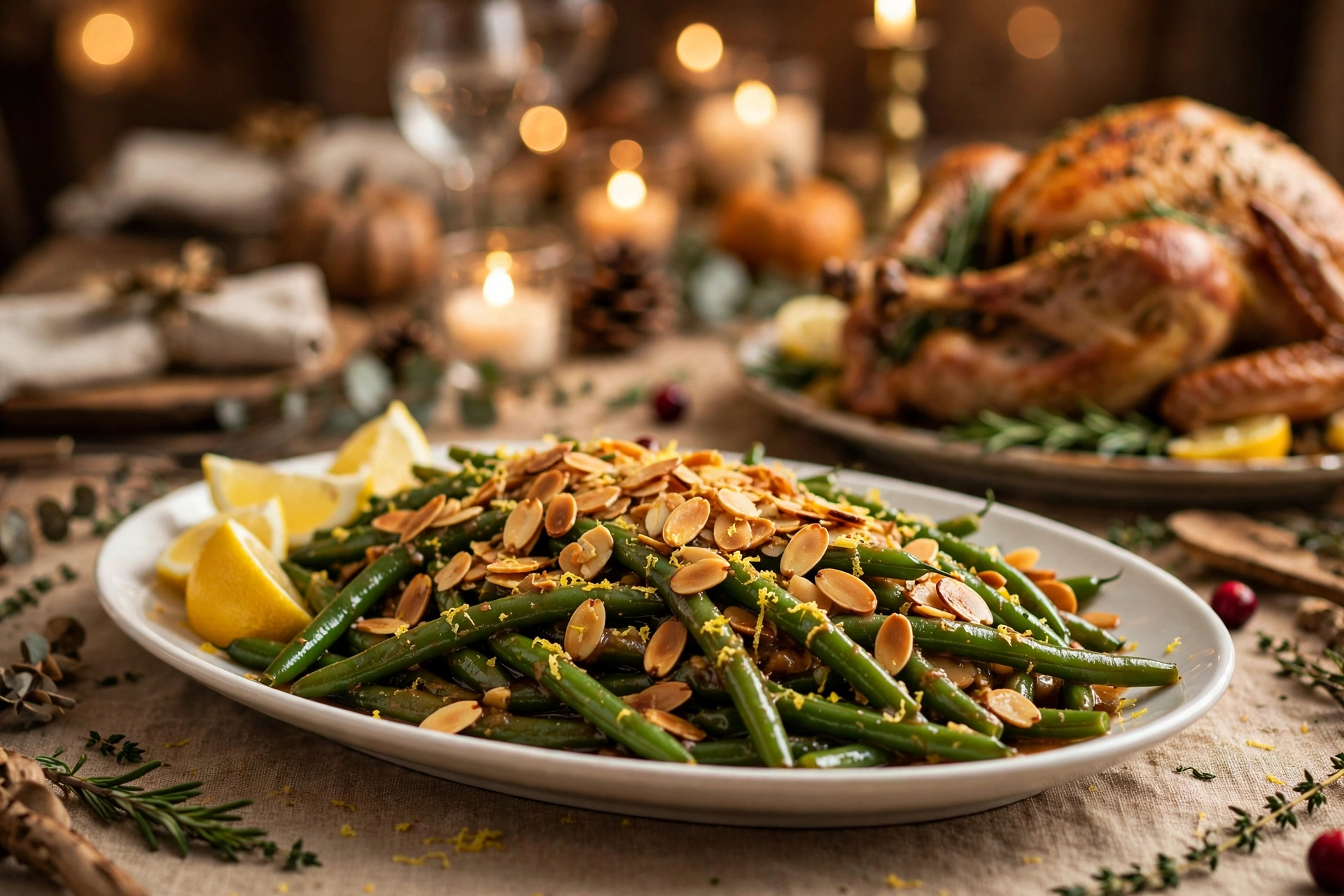
Green beans almondine is the plate of brightness my Thanksgiving table counts on. The beans stay green and snappy, the butter turns nutty and deep, and toasted almonds land on top like a crisp, golden confetti.
What makes this version restful is the calendar. The blanching happens the day before, in a quiet kitchen, and the day itself asks for one skillet and five unhurried minutes while the turkey rests.
Why These Green Beans Almondine Start the Day Before
Green beans almondine lives or dies on texture, and texture is decided long before the skillet. A bean blanched in well salted water and shocked in ice water keeps its color and its snap for a full day in the fridge.
A raw bean sauteed from cold, by contrast, cooks unevenly on a busy stove. The thin ends scorch while the thick middles stay squeaky, and the cook ends up chasing doneness while everything else on the table waits.
Blanching ahead also dries the surface. A bean that enters the brown butter dry takes on a glossy coat in minutes; a wet bean steams, dilutes the butter and turns the whole pan pale and soupy.
The almonds follow the same logic of separation. Toasted in the butter as it browns, then lifted out and held back, they stay crisp until the exact moment they are scattered over the platter at the table.
There is also a quiet economy to the split. Blanching is the only step that needs a watched pot, and it happens on a day when the kitchen is calm; browning butter needs four watched minutes, and it happens when nothing else can go wrong.
Brown Butter Is the Whole Point
Plain melted butter is fine, but brown butter is the reason this dish carries the name almondine with any confidence. As the milk solids toast, the butter takes on the same hazelnut register as the almonds themselves.
The two toasting processes happen together here. The sliced almonds go into the melting butter and color alongside it, so one pan delivers both the nutty fat and the crisp garnish in about four minutes.
Watch for the turn: the foam subsides, the bubbling quiets, and the butter smells like warm hazelnuts rather than hot dairy. The almonds should be deep gold at that moment, because they keep coloring for a few seconds after.
Shallot and garlic enter only after the almonds come out. Brown butter sits close to the edge of burnt, and delicate aromatics added too early would scorch during the browning and turn the whole pan bitter.
One more small discipline: trim the beans before they ever meet water. A trimmed bean blanches evenly from end to end, and a stem left on cooks slower than the bean itself, which is how a batch ends up mixed, some snappy and some raw at the tip.
The Day Before Work, Twenty Calm Minutes
The day before serving, trim the beans and blanch them in a big pot of boiling salted water. Slim beans need three minutes; standard supermarket beans need four to five, until they are bright green and just tender.
Move them straight into a bowl of ice water for three minutes. This is the step that locks in the color; a bean left to cool in its own steam keeps cooking and fades toward olive.
Drain the beans and dry them like you mean it. Spread them on a clean towel, roll the towel up, and let it sit for ten minutes; then unroll and pat the surface once more.
Store the beans in the fridge in a container lined with a dry towel, loosely covered. They hold beautifully for twenty four hours, and this is where the recipe quietly hands the cook a free evening, alongside the make-ahead mashed potatoes doing their own resting.
Choose sliced almonds over slivered for this finish, if the store gives you the choice. Slices toast faster and more evenly, they shatter instead of crunching hard, and their wide faces catch the light on the platter in a way that makes the whole dish look generous.
Almonds Go On at the Table, Not in the Pan
Every version of this dish eventually answers one question: when do the almonds meet the beans? Tossed through at the end of cooking, they drink the butter and soften within ten minutes on a buffet.
Scattered over the platter at the table, they stay shatteringly crisp against the tender beans. The contrast is the dish: soft, glossy green underneath, a crisp golden crunch in every forkful on top.
Hold back a spoonful of almonds for the middle of the meal, too. A platter that gets a fresh scatter halfway through dinner eats like it was just made, which is the oldest hosting trick I know.
A word on the beans themselves: look for firm, smooth pods that snap cleanly instead of bending. The thin French style beans, haricots verts, are lovely here and blanch a minute faster; the standard thicker bean is sturdier and forgives a distracted cook. Both work, as long as they are fresh.
What You Need for the Beans
Two pounds of beans sounds like a lot until they hit the platter; they cook down to a generous but not mountainous eight servings. Everything else is a short, ordinary list:
- 2 pounds fresh green beans, stem ends trimmed
- 1 tablespoon fine salt, for the blanching water
- 5 tablespoons unsalted butter
- 3/4 cup sliced almonds
- 1 large shallot, finely minced (about 1/3 cup)
- 2 garlic cloves, minced
- 1 teaspoon finely grated lemon zest
- 1 tablespoon fresh lemon juice
- 1/2 teaspoon fine salt, for finishing
- 1/2 teaspoon black pepper, freshly ground
- Flaky sea salt, to finish (optional)
- 2 tablespoons chopped flat leaf parsley (optional)
Finishing the Green Beans Almondine in Five Minutes
Day of serving, the work is one skillet and one platter. Bring the beans out of the fridge thirty minutes ahead so they lose their chill; a warm bean reheats in the butter instead of steaming in it:
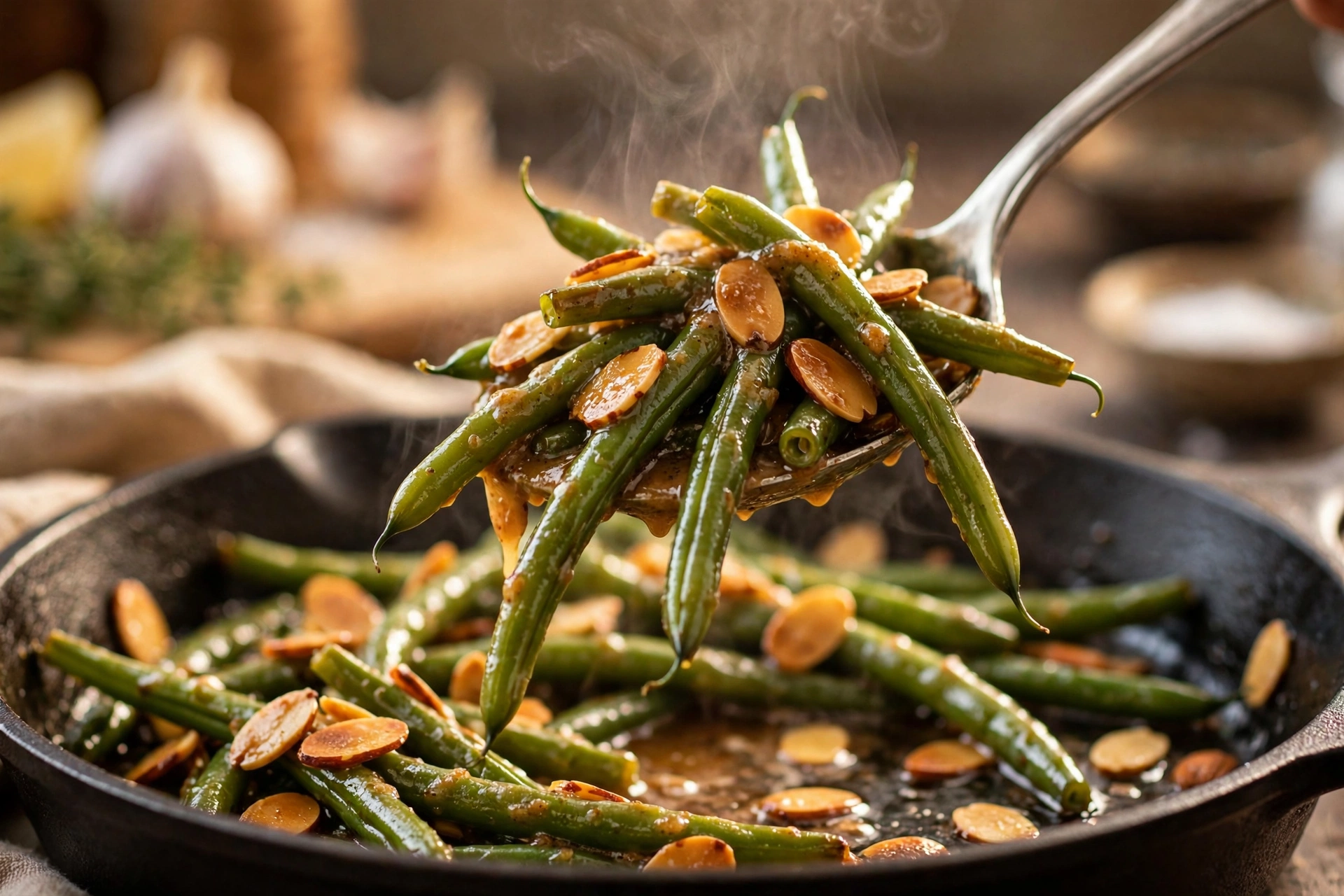
- Set a large skillet over medium heat and add the butter. As it melts, add the sliced almonds and cook, stirring often, until the butter foams, turns amber and smells nutty and the almonds are deep gold, 3 to 4 minutes.
- Lift the almonds out with a slotted spoon onto a small plate, leaving every drop of brown butter in the pan. Work quickly; the butter keeps darkening off the heat of the almonds.
- Add the shallot to the butter and cook for 1 minute, until softened and sweet. Add the garlic and stir for 30 seconds, just until fragrant.
- Add the blanched beans, the finishing salt and the pepper. Toss with tongs for 3 to 4 minutes, until the beans are hot through and glossy with butter.
- Take the pan off the heat. Add the lemon zest and lemon juice and toss once more; the juice goes in off the heat so it stays bright.
- Tip the beans onto a warm serving platter, scraping every bit of shallot and butter over the top.
- Scatter the reserved almonds over the platter, finish with flaky salt and parsley if you like, and carry it straight to the table.
The same logic explains the dull pan at a restaurant buffet. Beans finished an hour early and held in their butter slowly drink it, then leak it back as they cool. It is one more argument for the five minute finish: this dish wants to be last, and it rewards the cook who lets it be last.
If the Beans Weep in the Pan
A puddle in the skillet almost always traces back to water the beans carried in with them. Blanched beans that skip the towel rest steam in the butter, and the sauce thins into a pale, broken pool.
The rescue is heat and patience. Push the beans to one side, let the liquid bubble away for a minute, then toss everything back together; the butter will gloss again once the water is gone.
Prevention is simpler: dry beans, a pan that is properly hot before the beans land, and salt only at the finishing stage. Salt pulls moisture out of vegetables, and early salt in a finishing pan works against you.
Buy the plain frozen beans, not the ones sold in a sauce or a seasoned blend. Anything pre-coated arrives with starch and sugar that fight the brown butter, and the almonds slide off instead of clinging. Plain beans, blanched and dried, behave almost exactly like fresh ones in the pan.
Starting From Frozen Beans
Frozen green beans make a respectable almondine, with two adjustments. Skip the thawing entirely; a thawed bean arrives limp and wet, and no amount of towel work fully brings it back.
Blanch the beans straight from frozen for two minutes, just until they turn vivid green, then ice bath and dry them even more thoroughly than fresh. Frozen beans hold extra surface water, and the towel stage matters double.
From there the recipe runs exactly as written. The texture lands a touch softer than fresh, which most eaters will never notice under brown butter and almonds, especially inside a full Thanksgiving plate.
There is a middle path for a mixed table: finish half the platter in brown butter and half in olive oil, and set them out side by side. Eaters sort themselves out without any announcement, and the cook keeps one method, one timing and one clean skillet philosophy for both.
Lighter and Dairy-Free Plates
For a dairy-free table, olive oil steps in cleanly. Warm a quarter cup of good olive oil, toast the almonds in it until deep gold, and finish exactly the same way; the lemon and shallot carry the dish.
What oil cannot do is brown, so the flavor lands brighter and less nutty. A pinch of lemon zest added with the shallot, rather than at the end, deepens the oil version noticeably.
To lighten the classic, cut the butter to three tablespoons and add one tablespoon of olive oil. The beans gloss a little less, the almonds still crisp, and nobody at the table will file a complaint.
Warm the platter, too, when the table is big. A cold platter under sixteen servings of beans steals the heat in the first five minutes, and the last people served get a lukewarm side. Ten minutes in a low oven while the turkey rests is all a platter needs.
Doubling for a Full Table
Sixteen servings is where a single skillet breaks down. Beans piled too deep steam instead of gloss, and the bottom layer goes dull while the top stays cold.
Blanch the double batch in two pots or two rounds, and brown the butter and almonds in two separate batches as well. Butter browns unevenly in a crowd, and almonds burn in the time a double layer takes to color.
Finish the beans in two skillets if you have them, or in two quick rounds through one pan, holding the first round on a warm platter. It sits comfortably beside the other make-ahead players on the Thanksgiving dinner menu this site plans around.
Do not hold the finished dish in a low oven to wait for stragglers. The beans keep cooking in the residual heat, the green slides toward olive, and the butter pools and separates. Thirty minutes on the counter under foil is the honest limit; beyond that, reheat from cold instead.
Holding, Storing and Reheating
If dinner runs late, the finished beans hold for about thirty minutes on a warm platter under loose foil. Keep the almonds off until serving even then; their crunch is the first casualty of a steamy hold.
Leftovers keep for up to three days in the fridge, sealed, almonds stored separately in a dry jar. The USDA guidance on leftovers and food safety is the reference I plan holiday storage around, and these beans sit comfortably inside it.
Reheat in a dry skillet over medium heat for three to four minutes with a teaspoon of water, never the microwave, which dulls the green. A fresh scatter of almonds makes day two taste deliberate, the same trick that lifts the green bean casserole from scratch when it returns as leftovers.
It also travels better than most of the table. A platter of almondine rides to a potluck under foil and needs only its almonds and a warm minute in the host’s oven to arrive looking freshly made, which is more than can be said for the gravy or the mashed potatoes beside it.
The Green Plate at a Brown Table
Green beans almondine earns its place quietly: one pot of blanching the day before, one skillet the day of, and a platter that arrives green, glossy and crisp on top. It is the fresh note a heavy table leans on.
Make it once on the split schedule and the all-at-once scramble loses its appeal. The beans rest, the butter browns, the almonds wait for their moment, and the cook sits down with everyone else, next to the make-ahead turkey gravy that took the same calm road.
Questions About Green Beans Almondine
Can I blanch the beans for green beans almondine two days ahead?
One day ahead is the sweet spot. At two days the beans are still safe and pleasant, but the color softens and the surface dries at the edges; dry them very well and keep the towel in the container fresh.
Why did my almonds burn before the butter browned?
Sliced almonds color fast, and butter browns suddenly after the foam stage. Keep the heat at medium, stir constantly, and pull the almonds at deep gold; they keep darkening for several seconds from their own heat.
How do I keep the beans bright green instead of olive?
Three things: a full rolling boil before the beans go in, an ice bath the moment they are just tender, and no lid at any point. A covered pot and a slow cool both push the color toward olive.
Can green beans almondine be made without any dairy?
Yes. Toast the almonds in a quarter cup of olive oil instead of butter and finish as written. The result is brighter and less nutty, and extra lemon zest added with the shallot gives it back some depth.
What is the best way to reheat leftover almondine?
A dry skillet over medium heat for three to four minutes, with a teaspoon of water to wake the butter up. Store the almonds separately and scatter fresh ones on top; reheated almonds never crisp again.
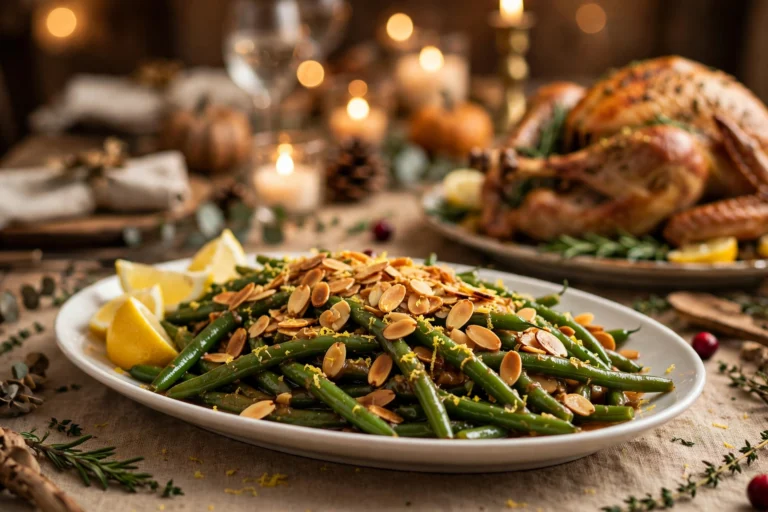
Green Beans Almondine
Green beans almondine on a calm split plan: the beans are blanched and dried the day before, then finished in five minutes with brown butter, almonds toasted in that same butter, shallot, garlic and lemon in two touches. Almonds scatter on at the table so they stay crisp. Bright, glossy and snappy.
- Total Time: About 30 minutes of work, or 8 minutes on serving day if the beans are blanched ahead
- Yield: 8 servings 1x
Ingredients
- 2 pounds fresh green beans, stem ends trimmed
- 1 tablespoon fine salt, for the blanching water
- 5 tablespoons unsalted butter
- 3/4 cup sliced almonds
- 1 large shallot, finely minced (about 1/3 cup)
- 2 garlic cloves, minced
- 1 teaspoon finely grated lemon zest
- 1 tablespoon fresh lemon juice
- 1/2 teaspoon fine salt, for finishing
- 1/2 teaspoon black pepper, freshly ground
- Flaky sea salt, to finish (optional)
- 2 tablespoons chopped flat leaf parsley (optional)
Instructions
- Trim the beans. Blanch them in a big pot of boiling salted water until bright green and just tender, 3 minutes for slim beans and 4 to 5 minutes for standard beans.
- Move the beans straight into a bowl of ice water for 3 minutes, then drain. Spread them on a clean towel, roll it up for 10 minutes, then pat dry once more.
- Store the beans in the fridge in a towel lined container, loosely covered, for up to 24 hours, or continue with the recipe right away.
- Set a large skillet over medium heat and melt the butter. Add the sliced almonds and cook, stirring often, until the butter foams, turns amber and smells nutty and the almonds are deep gold, 3 to 4 minutes.
- Lift the almonds out with a slotted spoon onto a small plate, leaving the brown butter in the pan.
- Add the shallot to the butter and cook for 1 minute. Add the garlic and stir for 30 seconds, just until fragrant.
- Add the blanched beans, the finishing salt and the pepper. Toss with tongs for 3 to 4 minutes, until hot through and glossy.
- Take the pan off the heat. Add the lemon zest and lemon juice and toss once more.
- Tip the beans onto a warm platter, scatter the reserved almonds over the top, finish with flaky salt and parsley if you like, and serve at once.
- Prep Time: 15 minutes, plus optional day-ahead blanching
- Cook Time: 12 minutes
Nutrition
- Serving Size: 3
- Calories: 150
- Sugar: 4
- Sodium: 210
- Fat: 11
- Saturated Fat: 5
- Unsaturated Fat: 6
- Trans Fat: 0
- Carbohydrates: 9
- Fiber: 4
- Protein: 3
- Cholesterol: 19