
In this article:
- Built on a two-day plan
- Glossy edges, tender centers
- Wednesday roast, Thursday finish
- Lighter twists that keep the shine
- What you need for the carrots
- Glazing the carrots, in two short sessions
- When the glaze goes runny
- Maple, orange and a little heat
- Holding them warm while the turkey rests
- The brightest thing on the table
- Questions about making glazed carrots ahead
These honey glazed carrots are the side dish I quietly moved off the Thanksgiving Day list. They roast on Wednesday, rest overnight in their pan juices, and meet their glaze on Thursday in one short, shining pass through a hot skillet.
What you get for that small bit of planning is a carrot that stays distinct: deep orange, edged with caramel, tender at the center without ever going soft. The honey glaze clings instead of pooling, and the whole dish tastes like it was made minutes ago, because the part that matters was.
Why These Honey Glazed Carrots Are Built on a Two-Day Plan
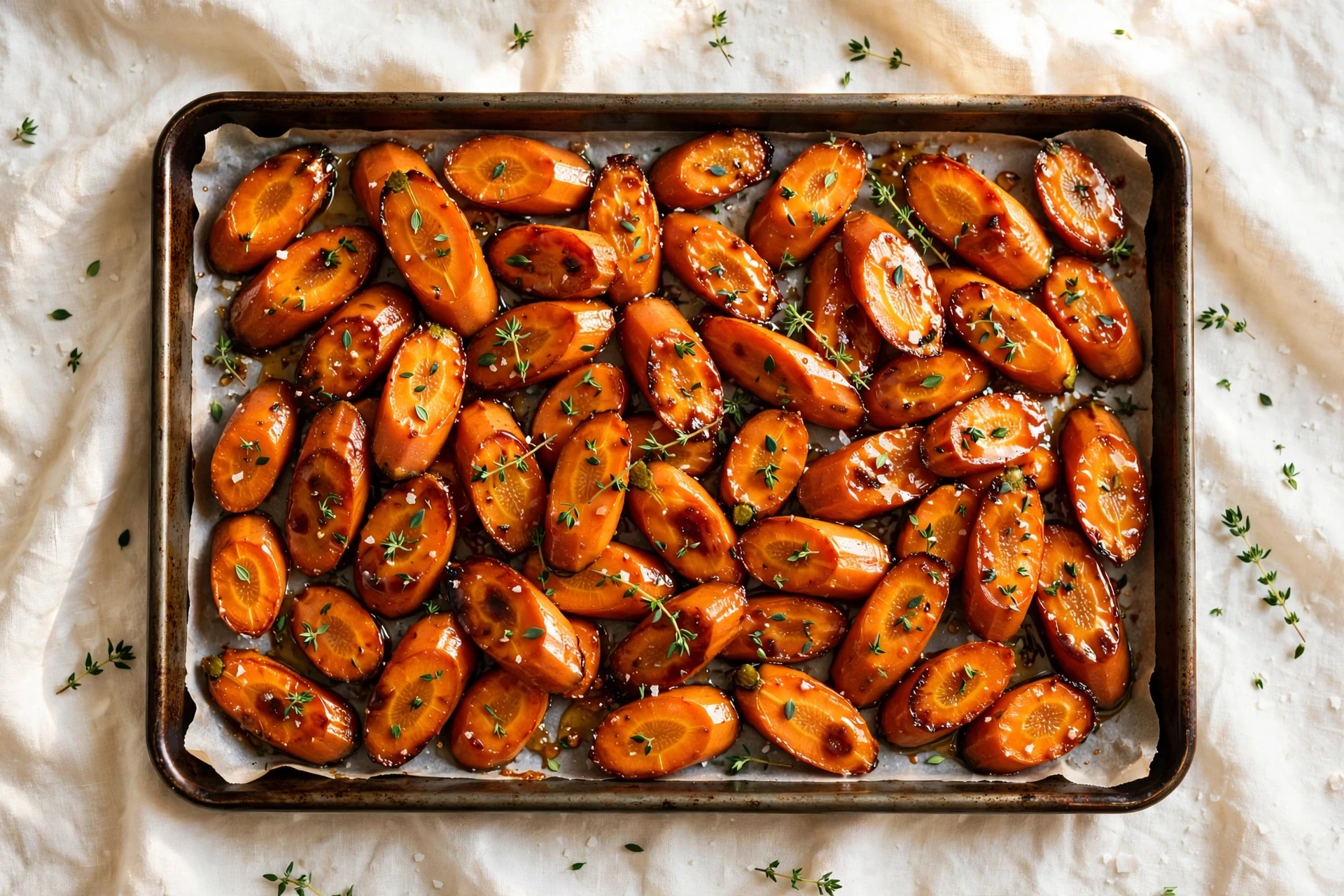
Honey glazed carrots work on a two-day plan because roasting and glazing want different things. Roasting wants dry heat and space, so the edges caramelize; glazing wants a wet, bubbling minute at the end, so the honey turns to lacquer instead of soaking in and disappearing.
When both jobs happen on Thursday, they compete for the same oven hour as the turkey, the stuffing and everything else. Splitting them means Wednesday’s roast can take its time at high heat, and Thursday’s glaze takes four unhurried minutes on the stove while the bird rests.
The overnight rest does quiet work of its own. The carrots cool in their own juices, their flavor concentrates slightly, and their texture firms back up, so the final toss in hot glaze reheats them without pushing them past tender into mush.
The cut is part of the plan, not a detail. Thick diagonal coins, a honest half inch, roast evenly, hold their shape through a night in the fridge, and give the glaze a wide flat surface to grip. Thin rounds overcook; chunks stay raw at the heart.
Finally, the glaze itself is split in spirit: butter and honey built fresh on Thursday, never stored. A glaze made a day ahead separates and turns thin in the fridge, which is exactly the watery puddle this method is designed to avoid.
Glossy Edges, Tender Centers, One Quiet Note of Thyme
The first thing you notice is the color. Properly roasted carrots go a saturated, almost amber orange, darker at the edges where the natural sugars met the hot pan, and the glaze lays a clear shine over all of it.
The bite lands in two beats. First the glazed surface, sweet and faintly sticky, then the center, which should still have a little give, a soft resistance rather than a crunch. A carrot cooked through to baby food softness has lost the plot of this dish.
Honey leads the flavor, but it should never taste like candy. Salt, black pepper and a small splash of apple cider vinegar at the very end pull the sweetness back into balance, so the carrots read as a vegetable in a glaze, not a dessert in disguise.
Garlic goes in grated, almost invisible, and thyme adds a green, savory note that keeps the dish planted on the dinner side of the table. Together they make the sweetness taste intentional, the way a good cranberry sauce tastes intentional next to the turkey.
Served in a warm shallow bowl, the coins overlap like roof tiles and catch the light. It is the brightest dish on a Thanksgiving table full of browns and golds, and it usually needs that brightness by the time the gravy lands.
Temperature matters more than cooks admit. Glazed carrots served merely warm taste flat and overly sweet, because the butter in the glaze has started to set. Served properly hot, straight from the skillet or revived from the oven, the same dish tastes vivid, balanced and almost juicy.
Wednesday Roast, Thursday Finish: the Schedule That Frees Your Oven
Wednesday’s session takes about twenty five minutes, most of it hands off. Peel, cut on the diagonal, toss with oil and salt, and roast hot until the edges color and the centers are almost tender. That is the whole job.
The carrots then cool right in their roasting pan before they are covered and refrigerated. Cooling in the pan matters: the little pool of juices underneath is concentrated carrot and caramel, and it goes into Thursday’s skillet with them.
Thursday’s session is shorter than the time the turkey needs to rest. Butter, honey, brown sugar, garlic and thyme bubble in a skillet for one minute, the cold carrots go in, and four to five minutes of tossing brings everything to a glossy, steaming finish.
Because the finish happens on the stove, the oven stays free for the dishes that truly need it at the end: the stuffing crisping, the rolls warming, the pie taking its turn. These honey glazed carrots simply stop asking the oven for anything on the day itself.
The same split schedule is how the rest of my table runs now. The Thanksgiving dinner menu is built on dishes that wait politely, and the make-ahead mashed potatoes follow the same Wednesday logic as these carrots.
There is also a quieter benefit nobody mentions: carrots are cheap, sturdy and forgiving in a week when the grocery list is long and expensive. If one dish in the plan can be simple, affordable and completely reliable, it should be this one, and it frees the budget for the turkey.
Lighter Twists That Keep the Shine
For a dairy free version, swap the butter for the same amount of a good olive oil and finish with a few drops more at the end. The glaze loses a little of its roundness but keeps its shine, and the carrots roast exactly the same way.
To lower the sugar, cut the brown sugar entirely and reduce the honey to a quarter cup, then lean on the vinegar and a pinch of extra salt for balance. The carrots’ own sweetness, concentrated by roasting, carries more of the dish than most cooks expect.
The recipe is naturally gluten free and vegetarian as written. For a vegan table, maple syrup stands in for the honey one to one, and the method does not change at all; the flavor turns deeper and a little woodsy, which suits the season.
What You Need for the Carrots
Everything is weighed for a full holiday batch. Buy straight, medium carrots if you can; very thick ones need their cores checked for woodiness, and very thin ones roast too fast to share a pan evenly:
- 3 pounds carrots, peeled and cut on a deep diagonal into 1/2 inch thick coins (about 8 cups)
- 2 tablespoons olive oil
- 1 teaspoon fine salt, divided
- 1/2 teaspoon black pepper
- 4 tablespoons unsalted butter
- 1/3 cup honey
- 2 tablespoons light brown sugar
- 2 cloves garlic, grated or very finely minced
- 1 teaspoon fresh thyme leaves, plus extra to serve
- 1 tablespoon apple cider vinegar
- Flaky salt and chopped fresh parsley, to serve (optional)
Glazing the Carrots, in Two Short Sessions
Session one is Wednesday, session two is Thursday, and nothing about either one is fussy. If you are making the carrots all on one day instead, simply rest them twenty minutes between the sessions and carry on:
- Heat the oven to 425°F. Line a large rimmed sheet pan with parchment so the natural sugars cannot weld the carrots to the metal.
- Toss the carrot coins with the olive oil, 3/4 teaspoon of the salt and the black pepper until every piece is lightly filmed. Spread them in a single layer, cut sides down, with a little air between pieces.
- Roast for 18 to 20 minutes, turning once at the halfway mark, until the edges are deeply colored and a knife slides into the thickest coin with clear resistance still at the center. They should be about eighty percent tender.
- Cool the carrots on the pan for 20 minutes. Scrape them, with every spoonful of pan juice, into a container, cover and refrigerate for up to 24 hours.
- On Thursday, melt the butter in a large, wide skillet over medium heat. Stir in the honey, brown sugar, garlic and thyme and let the mixture bubble gently for 1 minute, until it smells fragrant and looks syrupy.
- Add the cold carrots with all their juices. Toss steadily over medium high heat for 4 to 5 minutes, until the liquid reduces, the glaze thickens and every coin turns glossy and steaming hot.
- Take the skillet off the heat. Stir in the apple cider vinegar and the remaining 1/4 teaspoon of salt, then rest the carrots for 2 minutes so the glaze sets into its shine.
- Tip into a warm serving bowl, spoon any glaze left in the skillet over the top, and finish with extra thyme, parsley and a pinch of flaky salt.
When the Glaze Goes Runny: Three Fixes That Work
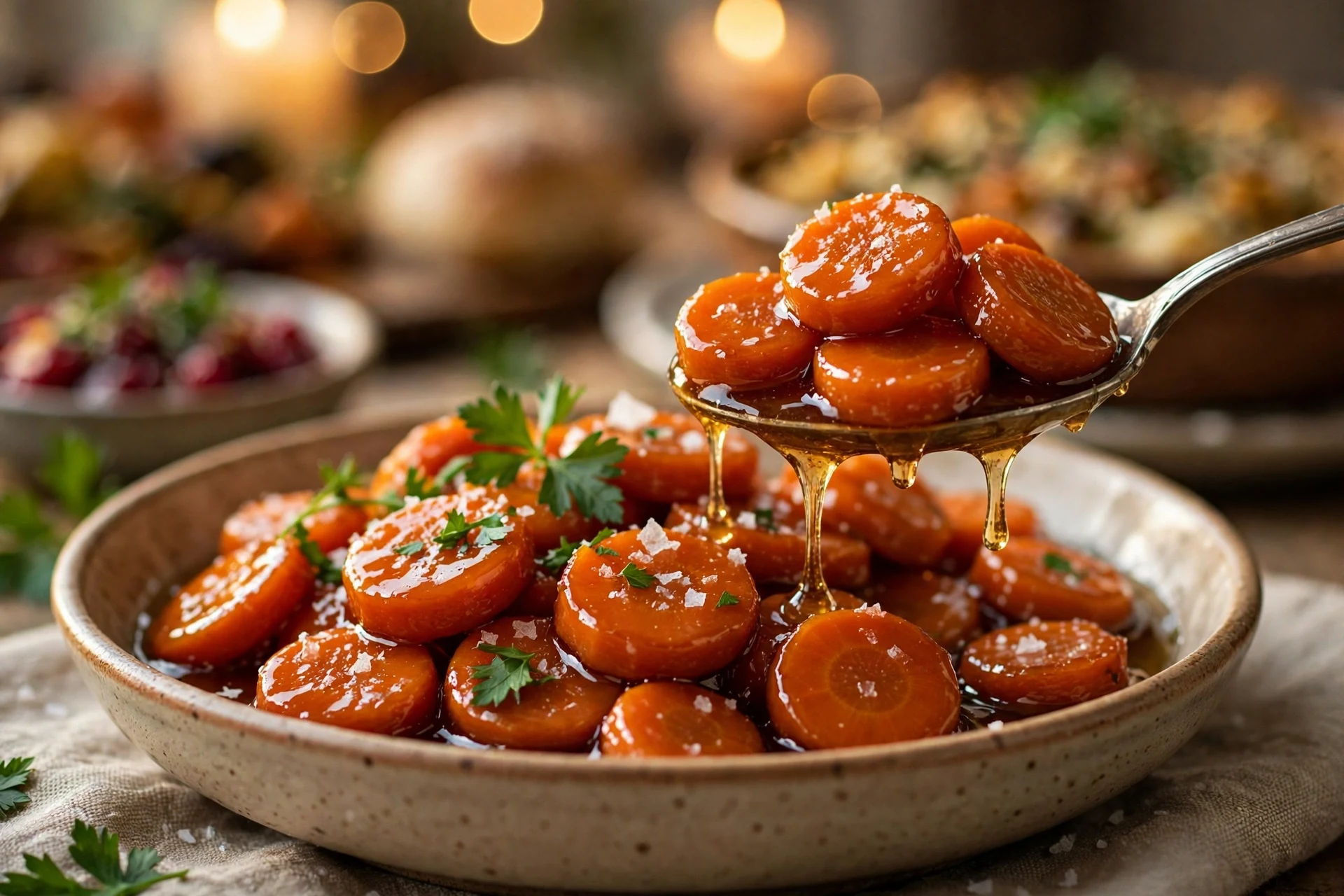
A thin glaze almost always means one thing: carrot juice. Cold carrots release liquid as they warm, and if the skillet is crowded, that liquid steams instead of reducing. The fix is heat and space, so keep tossing over medium high heat until the bubbles turn slow and syrupy.
If the glaze is nearly there but still shy of glossy, a pea sized knob of cold butter swirled in off the heat tightens it instantly. The butter emulsifies the honey mixture into a sauce that coats instead of slides, the same trick used to finish pan sauces.
Glaze that has gone the other way, too thick and sticky, loosens with a tablespoon of hot water and ten seconds of tossing. Add it a spoonful at a time; honey mixtures move from perfect to thin very quickly once extra liquid joins them.
And if the whole dish tastes too sweet at the end, do not add more salt first. Add acid: another half teaspoon of vinegar or a squeeze of lemon wakes up the carrot flavor and makes the sweetness read as balance instead of candy.
Maple, Orange and a Little Heat: Variations Worth Trying
Maple syrup can take the honey’s place one to one, and it pulls the dish toward a deeper, darker sweetness that loves a pinch of smoked paprika. The method stays identical, including the Wednesday roast, so it is an easy second pan for a big table.
For an orange finish, replace the vinegar with a tablespoon of fresh orange juice and add a teaspoon of finely grated orange zest with the thyme. These honey glazed carrots turn brighter and a little festive, a natural partner for the green bean casserole and its savory crunch, or for maple balsamic roasted Brussels sprouts when the table needs a second vegetable with some edge.
A gentle heat suits them too: a pinch of red pepper flakes or a quarter teaspoon of Aleppo pepper in the glaze gives the sweetness something to push against. Keep it low; the goal is warmth at the end of the bite, not a spicy side dish.
Multicolored carrots, the purple and gold bunches at the market, roast beautifully by the same method and look striking in the bowl. Cut them to the same thickness as the orange ones, because color does not change cooking time, but thickness does.
Holding Them Warm While the Turkey Rests
Finished carrots hold gracefully, which is the point of the whole recipe. Move them to a heatproof bowl, cover loosely, and keep them in a 200°F oven for up to 45 minutes while the turkey rests and the gravy comes together.
If the glaze dulls during the hold, revive it at the table: one tablespoon of hot water and a quick toss restores the shine in seconds. The USDA guidance on leftovers and food safety is the reference I use for holding times and storage across the whole holiday table.
Leftovers keep for 3 to 4 days in the fridge, sealed, and reheat best in a skillet over medium heat with a splash of water, which wakes the glaze back up. The microwave works, but the shine does not survive it as well.
Chopped small, leftover glazed carrots are wonderful folded into a grain bowl or a winter salad the next day, somewhere between the turkey sandwiches. Nothing about them needs to be wasted, and their sweetness plays well against sharp greens and a mustardy dressing.
One last storage note: keep the glazed carrots in their own container, not stored on top of other leftovers. Their glaze is a sauce looking for somewhere to go, and it will sweeten everything it touches in the fridge, which is charming on carrots and strange on stuffing.
The Brightest Thing on the Table
These honey glazed carrots earn their place by being useful twice: calm to make, and vivid to eat. Wednesday’s quiet roast and Thursday’s four minute glaze give you a side dish that tastes freshly cooked because, in every way that counts, it is.
Make them once on the two-day plan and the same-day version feels like working without a net. The bowl goes down the table, comes back empty, and the cook was sitting down the whole time. That is the entire ambition of this recipe.
Questions About Making Glazed Carrots Ahead
Can I glaze the carrots completely the day before instead of finishing on Thursday?
You can, but the glaze will thin overnight as the carrots release juice, and reheating gives a softer, duller result. The split method exists for that reason: roast a day ahead, glaze fresh in four minutes, and the dish tastes just cooked.
Do baby carrots work for honey glazed carrots?
Yes, with two adjustments. Halve any thick baby carrots lengthwise so the pieces match in thickness, and check them five minutes early, since they are often cut thinner than hand-cut coins and reach tenderness faster.
How do I keep the honey from burning in the skillet?
Keep the heat at medium while the glaze builds and add the carrots before the honey darkens past amber. The carrot juices then cool the pan, and steady tossing keeps the sugars moving so nothing scorches in one spot.
Can I freeze the roasted carrots after the Wednesday session?
Yes. Cool them fully, freeze flat in a sealed bag for up to two months, and thaw overnight in the fridge before the Thursday glaze. The texture softens slightly after freezing, so give them the full hot glaze time to firm their edges back up.
What can replace honey for a vegan version?
Maple syrup, swapped one to one, with olive oil in place of the butter. The glaze turns a shade darker and tastes woodsy rather than floral, and every timing in the recipe stays exactly the same.
Make-Ahead Honey Glazed Carrots
Honey glazed carrots on a calm two-day plan for Thanksgiving: the coins roast on Wednesday until nearly tender, rest overnight in their pan juices, and finish on Thursday in a four minute butter and honey glaze with garlic and thyme. Glossy, balanced and never watery.
- Total Time: 40 minutes, split over two days, plus overnight chilling
- Yield: 8 servings 1x
Ingredients
- 3 pounds carrots, peeled and cut on a deep diagonal into 1/2 inch thick coins (about 8 cups)
- 2 tablespoons olive oil
- 1 teaspoon fine salt, divided
- 1/2 teaspoon black pepper
- 4 tablespoons unsalted butter
- 1/3 cup honey
- 2 tablespoons light brown sugar
- 2 cloves garlic, grated or very finely minced
- 1 teaspoon fresh thyme leaves, plus extra to serve
- 1 tablespoon apple cider vinegar
- Flaky salt and chopped fresh parsley, to serve (optional)
Instructions
- Heat the oven to 425°F. Line a large rimmed sheet pan with parchment so the natural sugars cannot weld the carrots to the metal.
- Toss the carrot coins with the olive oil, 3/4 teaspoon of the salt and the black pepper until every piece is lightly filmed. Spread them in a single layer, cut sides down, with a little air between pieces.
- Roast for 18 to 20 minutes, turning once at the halfway mark, until the edges are deeply colored and a knife slides into the thickest coin with clear resistance still at the center. They should be about eighty percent tender.
- Cool the carrots on the pan for 20 minutes. Scrape them, with every spoonful of pan juice, into a container, cover and refrigerate for up to 24 hours.
- On serving day, melt the butter in a large, wide skillet over medium heat. Stir in the honey, brown sugar, garlic and thyme and let the mixture bubble gently for 1 minute, until it smells fragrant and looks syrupy.
- Add the cold carrots with all their juices. Toss steadily over medium high heat for 4 to 5 minutes, until the liquid reduces, the glaze thickens and every coin turns glossy and steaming hot.
- Take the skillet off the heat. Stir in the apple cider vinegar and the remaining 1/4 teaspoon of salt, then rest the carrots for 2 minutes so the glaze sets into its shine.
- Tip into a warm serving bowl, spoon any glaze left in the skillet over the top, and finish with extra thyme, parsley and a pinch of flaky salt.
- Prep Time: 15 minutes
- Cook Time: 25 minutes
Nutrition
- Serving Size: 3
- Calories: 165
- Sugar: 20
- Sodium: 330
- Fat: 7
- Saturated Fat: 4
- Unsaturated Fat: 3
- Trans Fat: 0
- Carbohydrates: 27
- Fiber: 4
- Protein: 1
- Cholesterol: 15