
In this article:
This blueberry french toast casserole is the breakfast I assemble on Christmas Eve so that Christmas morning can belong to the people in it, not to the stove. Brioche, cream cheese, a crisp sugar lid and warm berries, from one pan.
Most overnight casseroles ask you to choose: rich or simple, pretty or practical. This one refuses the choice and stacks all three finishes on a single dish, and the sections below show exactly how little work each one actually takes.
Why This Blueberry French Toast Casserole Carries Three Finishes
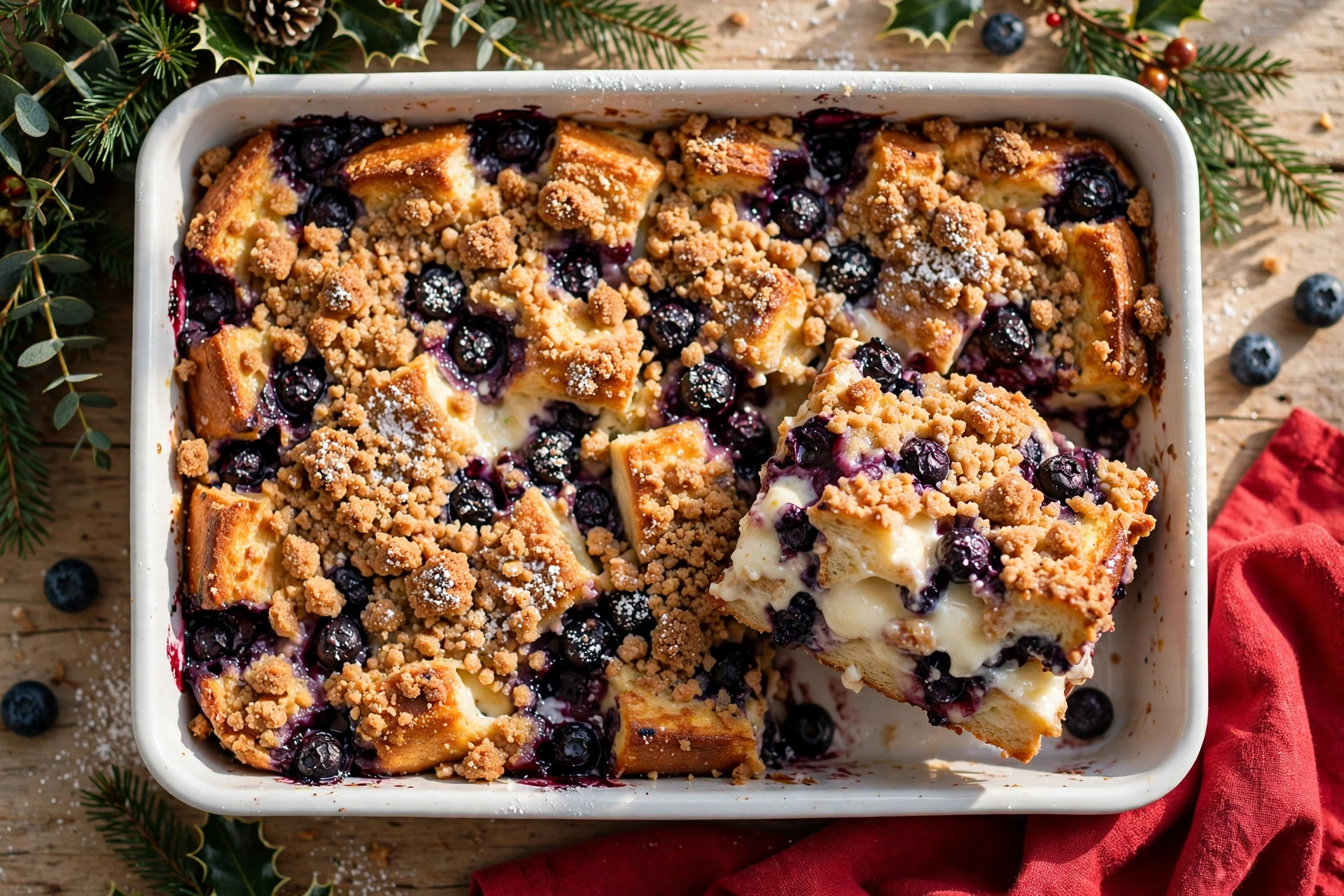
This blueberry french toast casserole works because it refuses to pick just one of the finishes that make the dish memorable. Most recipes give you pockets of cream cheese, or a streusel, or a warm berry sauce. This pan takes all three, in layers.
The cream cheese melts into small pockets inside the custard, so some bites are plain and custardy and others turn rich and faintly tangy. It is the surprise people ask about, and it costs nothing but cutting a block of cheese into cubes.
The streusel is the texture contract. Soft bread and soft berries need one crisp element, and a brown sugar crumb baked on top gives every square a lid that crackles lightly under the fork before the custard gives way.
The warm blueberry sauce is the finish that makes it a holiday dish instead of a weekday one. Six minutes in a small saucepan while the casserole rests, and the plate gets color, shine and a second wave of berry flavor.
Lemon zest is the small print that holds the trio together. It lifts the berries, cuts the richness of the cream cheese and keeps the whole pan tasting bright instead of heavy, even an hour after it leaves the oven.
Christmas Eve In, Christmas Morning Out
The whole dish is built the night before, in about twenty minutes, at whatever hour the evening allows. Cubes in the dish, custard poured over, streusel mixed and parked in its own small bowl in the fridge beside the pan.
The overnight rest is not a convenience trick, it is the recipe. Dry brioche cubes need those hours to drink the custard all the way to their centers, which is why the baked casserole cuts into clean squares instead of collapsing into pudding.
Christmas morning then asks for exactly three gestures. The dish comes out of the fridge while the coffee brews, the streusel goes on, and the pan goes into the oven before the first present is opened.
Forty five unattended minutes later, breakfast is ready at the same moment the living room is. A blueberry french toast casserole timed this way never competes with the morning; it simply waits underneath it, which is the highest praise a holiday recipe can earn.
What You Need for the Casserole
For the casserole, one loaf, one block of cream cheese and the usual custard suspects, plus lemon for the zest:
- 1 loaf (about 1 pound) day-old brioche or challah, cut into 1 inch cubes (about 10 cups)
- 8 ounces cream cheese, cut into small cubes
- 2 cups blueberries, fresh or frozen
- 1 teaspoon flour, for tossing frozen berries
- 8 large eggs
- 1 1/2 cups whole milk
- 1/2 cup heavy cream
- 1/3 cup granulated sugar
- 1/4 cup maple syrup, plus more to serve
- 2 teaspoons vanilla extract
- 1 teaspoon ground cinnamon
- 1 teaspoon lemon zest
- 1/4 teaspoon fine salt
For the streusel lid and the warm sauce, both small, both worth it, and both made from what is already open:
- 1/3 cup packed light brown sugar
- 1/3 cup all-purpose flour
- 1/2 teaspoon ground cinnamon
- 6 tablespoons cold unsalted butter, cubed
- 1 1/2 cups blueberries, for the sauce
- 2 tablespoons granulated sugar, for the sauce
- 1 teaspoon cornstarch, for the sauce
- 1/4 cup water, for the sauce
- 1 teaspoon lemon juice, for the sauce
- Confectioners’ sugar, to serve
From Bread Cubes to Brunch, One Calm Pass
- Dry the bread if it is fresh. Spread the cubes on a sheet pan and bake at 300°F for 10 minutes, until the surfaces feel dry. Cool them while you butter a 9×13 inch baking dish.
- Build the layers. Spread half the bread cubes in the dish. Scatter the cream cheese cubes and half the blueberries over them, then cover with the remaining bread and the rest of the blueberries, tucked between the cubes rather than piled on top.
- Pour the custard. Whisk the eggs, milk, cream, granulated sugar, maple syrup, vanilla, cinnamon, lemon zest and salt until fully combined. Pour it slowly over the bread, then press the top cubes down gently with a spatula so every piece drinks.
- Rest it overnight. Cover the dish tightly and refrigerate for at least 8 hours and up to 24. This rest is the recipe: it is what lets the casserole set into squares.
- Make the streusel. Rub the brown sugar, flour and cinnamon with the cold butter using your fingertips until coarse crumbs form, some pea sized, some smaller. Cover and refrigerate it next to the pan.
- Set up the morning. Take the casserole out of the fridge 30 minutes before baking and heat the oven to 350°F. Scatter the streusel evenly over the top, edge to edge.
- Bake. Cover the dish with foil and bake for 30 minutes. Uncover and bake 20 to 25 minutes more, until the top is deep golden, the center is puffed and set, and a knife in the middle comes out clean of liquid egg; the center should read about 160°F.
- Make the sauce while it bakes. Simmer the sauce blueberries, sugar, cornstarch and water in a small pan for 5 to 6 minutes, stirring, until the berries burst and the sauce turns glossy. Take it off the heat and stir in the lemon juice.
- Rest and serve. Rest the casserole for 10 minutes so the custard settles. Dust with confectioners’ sugar, cut into squares and serve with the warm blueberry sauce spooned over each plate.
What Lands on the Plate
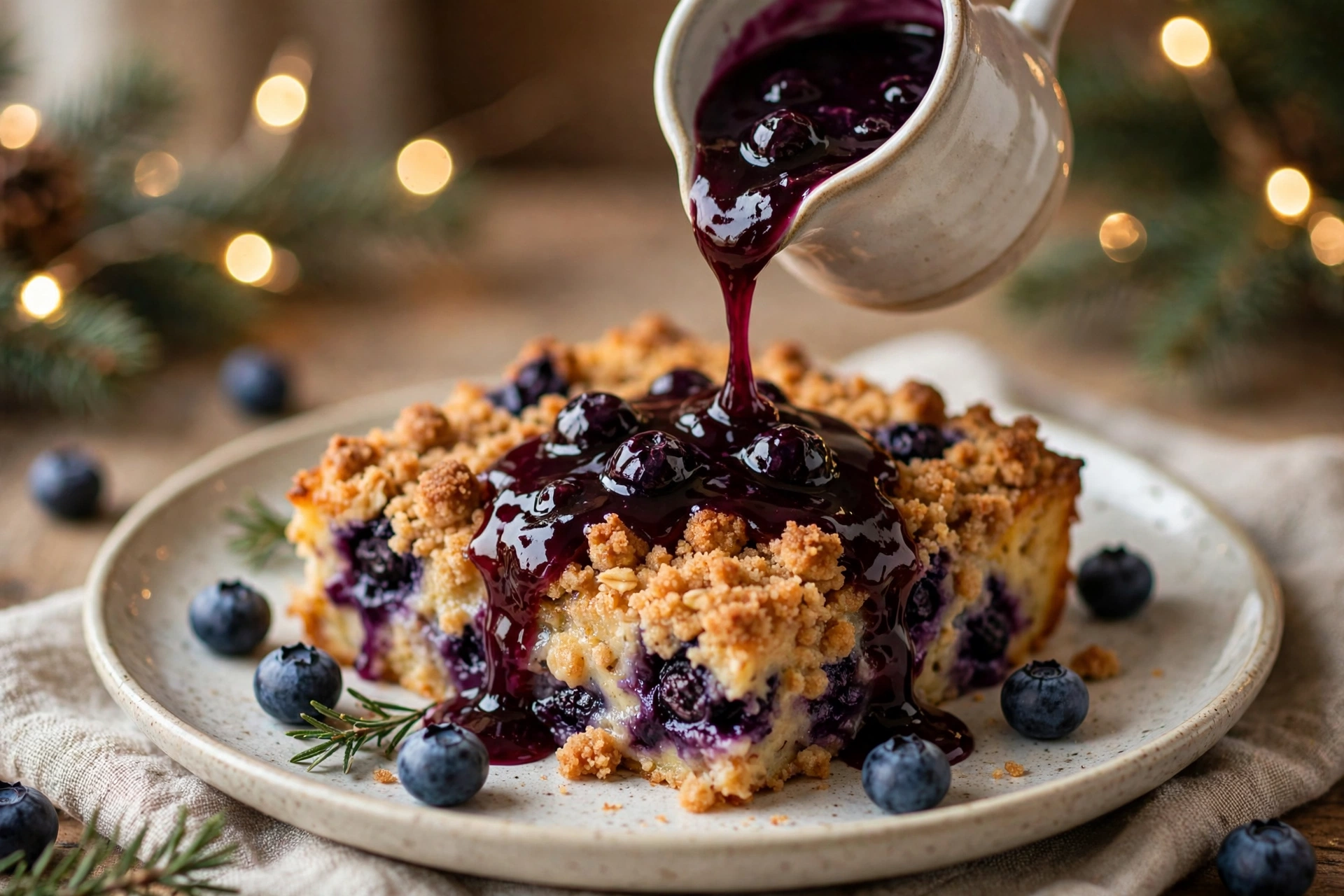
The square that reaches the table has three distinct layers of experience. First the streusel, crisp and warm with cinnamon, then the custard soaked crumb, soft as a bread pudding, then a pocket of cream cheese or a burst berry, arriving like punctuation.
The berries change character in the oven. Fresh ones slump and jam at the edges; frozen ones hold their shape a little longer and bleed more color into the crumb around them. Both are good; they simply draw different maps on the slice.
The sauce doubles everything the berries started. Warm and glossy, it runs into the cuts of the square and makes the plate look like a bakery case piece, although the entire dish came out of one home pan.
It is a forgiving dish about temperature, too. Hot from the oven it is all perfume and steam; at room temperature, an hour later, the flavors settle and the square eats almost like a cake, which the second round of coffee drinkers seem to prefer.
Left plain, without the sauce, a square travels well to a brunch across town, wrapped and still faintly warm. With the sauce in a small jar beside it, the same pan dresses up enough for the good table, the one with the candles still in it from the night before.
Blueberries That Stay Blue, Not Gray
The gray casserole is a known failure, and it has one cause: thawed frozen berries leaking juice into the custard for hours. Use frozen berries straight from the freezer, tossed in a teaspoon of flour, and the juice stays where it belongs, inside the fruit.
Fresh berries need no flour, but they do need dry company. If you washed them, let them drain and pat them dry; surface water thins the custard right where the berries sit, and those spots bake up pale and wet.
Keep the streusel cold until the moment it goes on. Warm streusel melts into the custard and disappears; cold crumbs keep their edges, and the lid stays a lid. Making it the night before, next to the pan, solves this without any morning effort.
Finally, let the baked casserole rest its full ten minutes. The custard is still setting as it stands, and a square cut too early slumps and weeps. Rested, the same pan cuts clean enough to plate with a spatula and confidence.
The Freezer Is Your Second Fridge
The unbaked casserole freezes beautifully for up to 2 months, which turns it into a December insurance policy. Assemble it in a disposable or freezer safe dish, wrap it twice, and freeze the streusel separately in a small bag taped to the lid.
Thaw the pan overnight in the fridge, still wrapped, then give it 30 minutes on the counter while the oven heats. Bake as directed, adding about 10 minutes to the covered stage, since the center starts colder than a merely chilled one.
Baked leftovers keep for 3 days in the fridge. Reheat a square in a skillet with a small knob of butter, cut side down, and the base crisps back to something close to fresh baked, which the oven alone never quite manages.
On the Christmas table, this pan has easy company. It goes in as the cranberry orange Christmas punch is poured, and it serves the same slow morning as our overnight cinnamon roll casserole for the cinnamon loyalists.
It also argues gently with its spiced cousin, the gingerbread French toast casserole, from earlier this month. The values for the berries and bread in this recipe follow USDA FoodData Central, the reference I use for the nutrition card attached to this article.
For the cook who wants one hot dish and one grab and go plate, pair it with the easy Christmas morning casserole on the savory side and a tray of quick cinnamon rolls for anyone who wanders into the kitchen early.
Values for the berries and bread in this recipe follow USDA FoodData Central, the reference I use for the nutrition card below.
Swaps for Other Mornings
Raspberries and blackberries swap in cup for cup, though both bleed more than blueberries and soften faster, so shorten the covered bake by five minutes and lean on the flour toss even with fresh fruit.
Diced peaches with a pinch of nutmeg take the same pan into summer, and a handful of dark chocolate chips folded in with the berries makes a version teenagers describe as dessert, which it nearly is.
For a lighter pan, replace the heavy cream with more whole milk and cut the cream cheese to six ounces scattered a little thinner. The casserole stays generous; it simply stops pretending to be cheesecake, and each square lands closer to an everyday brunch.
Dairy free bakers can build it on oat milk, a plant based cream cheese and coconut oil in the streusel. The custard sets a touch softer, so give it the full rest and cut it with a thin knife rather than a spatula.
The Quietest Dish on the Christmas Table
This blueberry french toast casserole asks for one calm evening and gives back a completely unhurried morning, and that trade is the whole point. The oven does the work while the house does everything else.
Make it once with the full trio of finishes, streusel, cream cheese and warm sauce. If your family votes one of them off the pan for next year, so be it, but in my house all three have survived every vote so far.
Questions About This Casserole
FAQ
Can I use frozen blueberries in a blueberry french toast casserole?
Yes, and in December they are often the better berry. Use them straight from the freezer, never thawed, and toss them in a teaspoon of flour first. Thawed berries leak juice into the custard all night and turn the crumb gray; frozen ones burst in the oven instead.
How far ahead can I assemble it, 24 or 48 hours?
Twenty four hours is the sweet spot: the bread drinks fully and the eggs stay fresh in flavor. At 48 hours the custard can start to taste tired and the crumb oversoftens. For anything longer, freeze the assembled pan and thaw it overnight instead.
My bread is fresh from the bakery. Do I really need to dry it?
Yes, ten minutes is enough. Cubes dried at 300°F for 10 minutes lose the surface moisture that makes fresh bread collapse into pudding. Day-old bread skips the step entirely, which is why the recipe is written around it.
Does it bake the same in a glass dish as in a metal pan?
Nearly. Glass holds heat longer, so pull the casserole when the center is just set; it keeps cooking as it rests. Metal gives slightly crisper edges. Both work at 350°F, and the foil covered first stage matters more than the material.
How do I reheat one square so it tastes fresh baked?
Use a skillet, not the microwave. Warm the square cut side down in a little butter over medium heat for 2 to 3 minutes per side. The base crisps, the custard warms through, and the streusel stays a lid instead of going soft.