
In this article:
- Orange sugar does the heavy lifting
- Tart berries, buttery crumb
- What you need for the bundt
- Baking the cake, batter to bundt
- A glaze that stays on the cake
- Four mini loaves to give away
- Bake in November, glaze in December
- Slices at Christmas brunch
- Keeping the cake fresh
- The cake that perfumes the house
- Questions about this pound cake
This cranberry orange pound cake is the bake I plan my December around. One bundt for the table, glossy with a thick orange glaze, and the same batter poured into mini pans for the neighbors, the teacher, the friend who hosts the cookie swap.
It smells like Christmas before it tastes like it. Orange zest rubbed into the sugar perfumes the whole kitchen while the cake is still a bowl of batter, and the cranberries bake into tart red jewels that cut through all that butter.
Orange Sugar Is Why This Cranberry Orange Pound Cake Smells Like Christmas
This cranberry orange pound cake works because of one small step most recipes skip: the orange zest is rubbed into the granulated sugar with your fingertips before anything else happens. The sugar crystals strip the fragrant oils out of the zest, and that orange sugar then perfumes every crumb of the finished cake evenly.
The second reason is restraint with the mixer. The butter and orange sugar beat until pale and fluffy, the eggs go in one at a time, and the flour folds in gently at the end. A pound cake should be dense, yes, but fine and tender, never tough; overmixing the flour is what turns it into a brick.
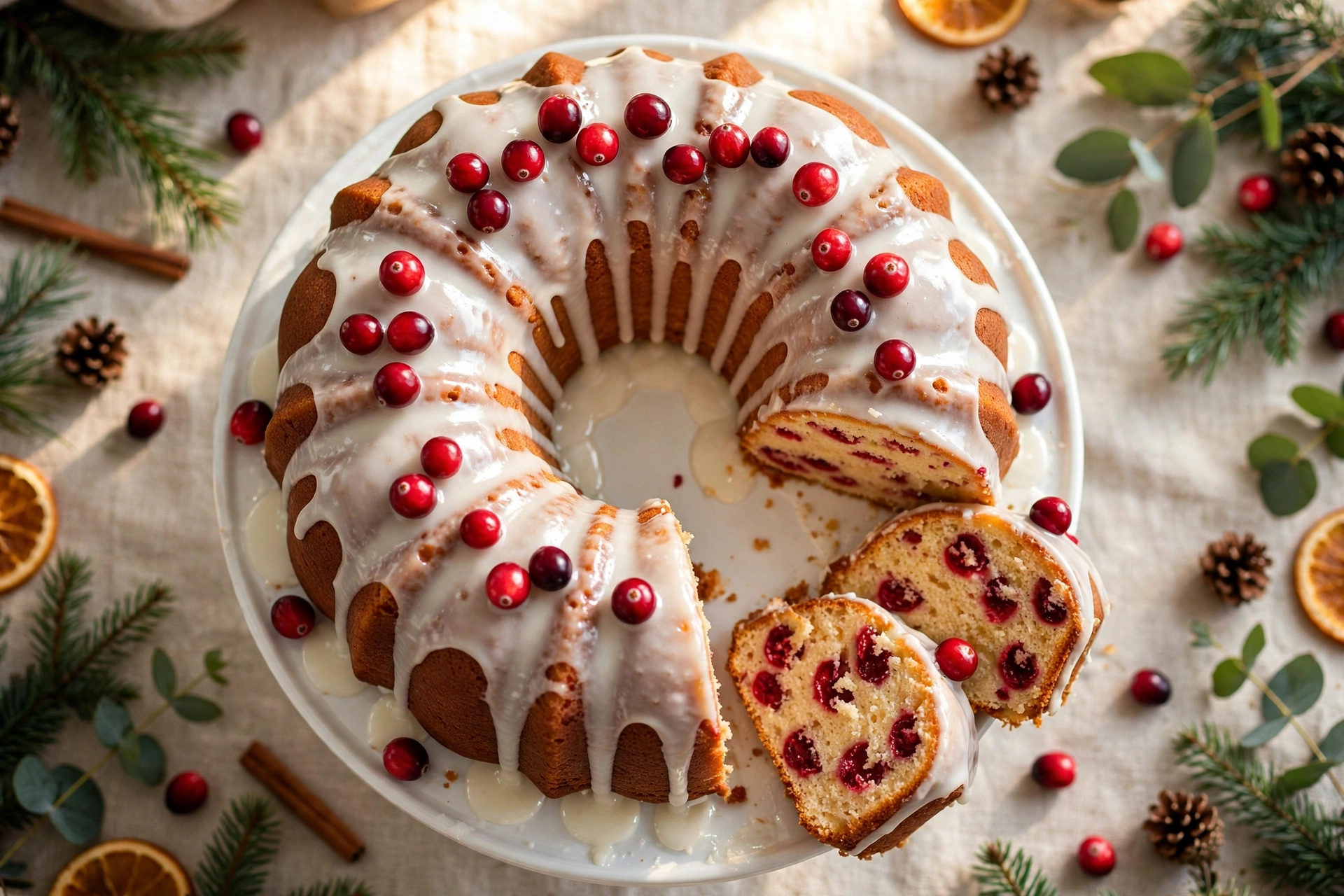
Fresh cranberries, tossed in a spoonful of flour and folded through a batter that is layered into the pan, stay suspended instead of sinking into a soggy line at the bottom. You get berries in every slice, top to bottom, which is exactly what the photos promise and what most versions fail to deliver.
There is a fourth, quieter reason: this batter is forgiving about timing. It waits ten minutes on the counter without harm while the oven finishes something else, and the baked cake keeps improving for two days. December baking is a scheduling puzzle; this is the piece that fits anywhere.
Tart Berries Against a Buttery, Fine Crumb
The crumb is classic pound cake: tight, golden, moist for days thanks to sour cream, with a crust that turns delicately crisp at the edges of the bundt. It tastes rich and plain in the best way, a butter and vanilla background built to carry two loud flavors.
Against that background, the cranberries arrive like little bells. They bake just past tart, juicy and bright, and the orange runs underneath everything, citrus oil in the crumb and a sweeter, sharper note in the glaze. A slice is never cloying, which is rare and welcome on a December table.
Serve it barely warm and the butter flavor blooms. Serve it cold from the fridge and the crumb firms into something almost fudgy, wonderful with coffee. Day two is honestly the peak: the glaze settles, the orange deepens, and the slices cut like a dream.
One more texture note, because bundts can hide it: the bottom of the cake, which becomes the top when you turn it out, should be deeply golden and slightly crisp, while the center stays pale and moist. That contrast is the sign your oven temperature was right and the cake came out at the perfect minute.
What You Need: Fresh Cranberries, Two Oranges and Real Butter
Fresh cranberries are in every store from October on, and they are the right choice here; frozen work too, added straight from the freezer without thawing. Skip the dried kind for this cake, they bake up chewy and sweet where you want tart and juicy. Everything else is a pound cake pantry: butter, eggs, sour cream, flour.
- 3 cups all-purpose flour, plus 1 tablespoon for the cranberries
- 1 teaspoon baking powder
- 1/2 teaspoon fine salt
- 1 cup unsalted butter, at room temperature
- 1 3/4 cups granulated sugar
- Finely grated zest of 2 large oranges, about 2 tablespoons
- 5 large eggs, at room temperature
- 3/4 cup sour cream, at room temperature
- 1/4 cup fresh orange juice
- 2 teaspoons vanilla extract
- 2 cups fresh cranberries, coarsely chopped
- For the glaze: 1 1/2 cups powdered sugar, 3 tablespoons fresh orange juice, 1 teaspoon orange zest, plus a few chopped cranberries to scatter
Baking the Pound Cake, Batter to Bundt
Room temperature ingredients are not a suggestion with pound cake; cold eggs curdle the butter and the crumb suffers. Set everything out an hour ahead. The batter itself comes together in about fifteen minutes, and the oven does the rest.
- Heat the oven to 325°F. Grease a 10 to 12 cup bundt pan thoroughly with butter, dust it with flour and tap out the excess, paying attention to the center tube and every ridge.
- Make the orange sugar. Put the granulated sugar and the orange zest in a large mixing bowl and rub them together with your fingertips for about a minute, until the sugar looks damp and smells intensely of orange.
- Cream the base. Add the butter to the orange sugar and beat for 3 to 4 minutes, until pale and fluffy. Beat in the eggs one at a time, mixing well after each, then the vanilla.
- Whisk the dry ingredients. In a second bowl, whisk the 3 cups of flour, the baking powder and the salt.
- Alternate and finish. Add the flour mixture to the butter bowl in three parts, alternating with the sour cream mixed with the orange juice, beginning and ending with flour. Mix on low only until each addition disappears.
- Fold in the berries. Toss the chopped cranberries with the remaining tablespoon of flour, then fold them through the batter with a spatula.
- Layer into the pan. Spoon half the batter into the bundt pan and smooth it, then add the rest. This layering keeps the berries distributed instead of clustered. Rap the pan on the counter twice to settle it.
- Bake for 55 to 65 minutes, until the top is deep golden, a crack runs along the crown, and a skewer inserted in the thickest part comes out clean.
- Cool with patience. Rest the cake in the pan for 15 minutes, then turn it out onto a rack set over a tray. Cool completely before glazing, at least 1 hour, or the glaze will melt and slide off.
- Glaze in two passes. Whisk the powdered sugar, orange juice and zest into a thick glaze, spoon half over the cold cake, wait 10 minutes, then spoon on the rest. Scatter a few chopped cranberries over the wet glaze.
A Glaze Thick Enough to Stay on the Cake
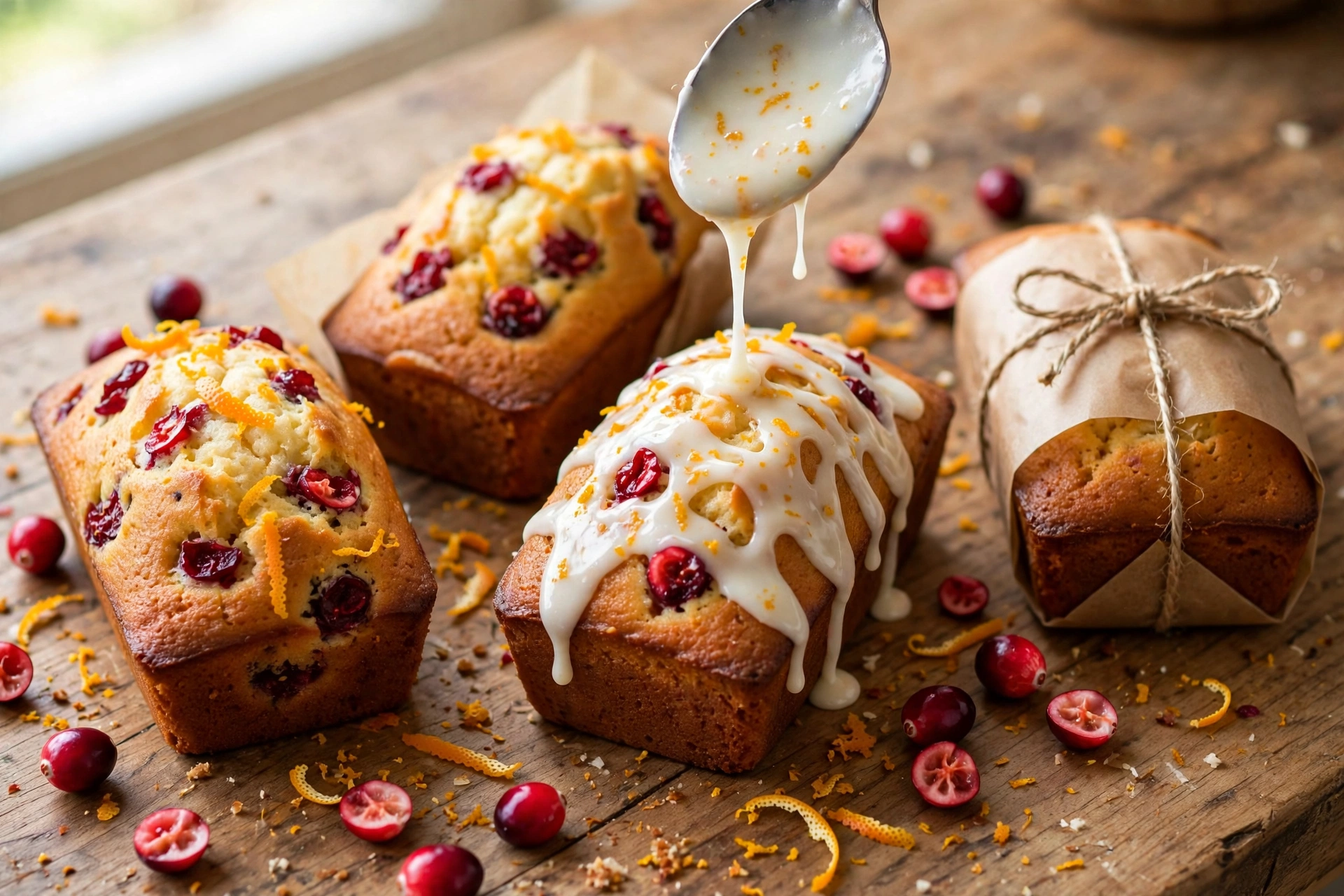
The test for this glaze is the ribbon: lift the whisk and the glaze should fall in a slow ribbon that holds its shape on the surface for about five seconds before melting in.
If it runs off like water, whisk in more powdered sugar two tablespoons at a time. If it sits in clumps, add orange juice half a teaspoon at a time. The glaze thickens as it stands, so judge it after a full minute of whisking, not straight off the spoon.
Two thin passes beat one thick one. The first pass seals the crust and gives the second something to grip, so the finished glaze reads as a white cap with slow drips, not a puddle on the plate. Glaze only a completely cold cake; even a hint of warmth turns the cap transparent.
The Same Batter Makes Four Mini Loaves to Give Away
Divide the same batter between four greased mini loaf pans, about 5 by 3 inches, filling each two thirds full. They bake at the same 325°F for 35 to 40 minutes, and they cool faster, glaze faster, and wrap beautifully in parchment and twine.
A mini loaf with a handwritten note is the December gift I actually manage to give, unlike the ambitious ones I plan in November. Bake them on a quiet weekend, freeze them unglazed, and finish each one the morning it leaves the house. Nobody has ever been disappointed to receive one.
One practical note on the minis: they dome more than the bundt, so fill the pans no more than two thirds and set them on a sheet pan for easy handling. A strip of parchment across the bottom, with the ends sticking up, lifts each little loaf out cleanly once it has cooled for ten minutes.
Bake It in November, Glaze It in December
This is the cake to get ahead of the season with. The unglazed bundt freezes, wrapped in two layers of plastic and a layer of foil, for up to 2 months without losing its fine crumb. Thaw it, still wrapped, overnight in the fridge, then bring it to room temperature and glaze it the day you serve it.
Even a short head start helps. Baked on a Sunday, the cake keeps getting better through Wednesday, which makes it a calm choice for a party later in the week. USDA freezing guidance backs the same approach for baked goods generally: wrap well, freeze unglazed, and the crumb sets while the flavors meld with a day of rest.
Wrap the cooled cake before you freeze it, never after glazing. Glazes crack and weep in the freezer, and a frozen cap never thaws back to glossy. The cake itself, though, thaws as if it were baked that morning, which is the entire point of the November session.
Serving Slices at Christmas Brunch
On Christmas morning this pound cake earns its place next to the savory pans. A thick slice, a spoonful of barely sweetened whipped cream, maybe a few sugared cranberries on the plate, and the brunch table looks finished. It also toasts beautifully on day three, in a dry skillet, for a crisp edged treat with coffee.
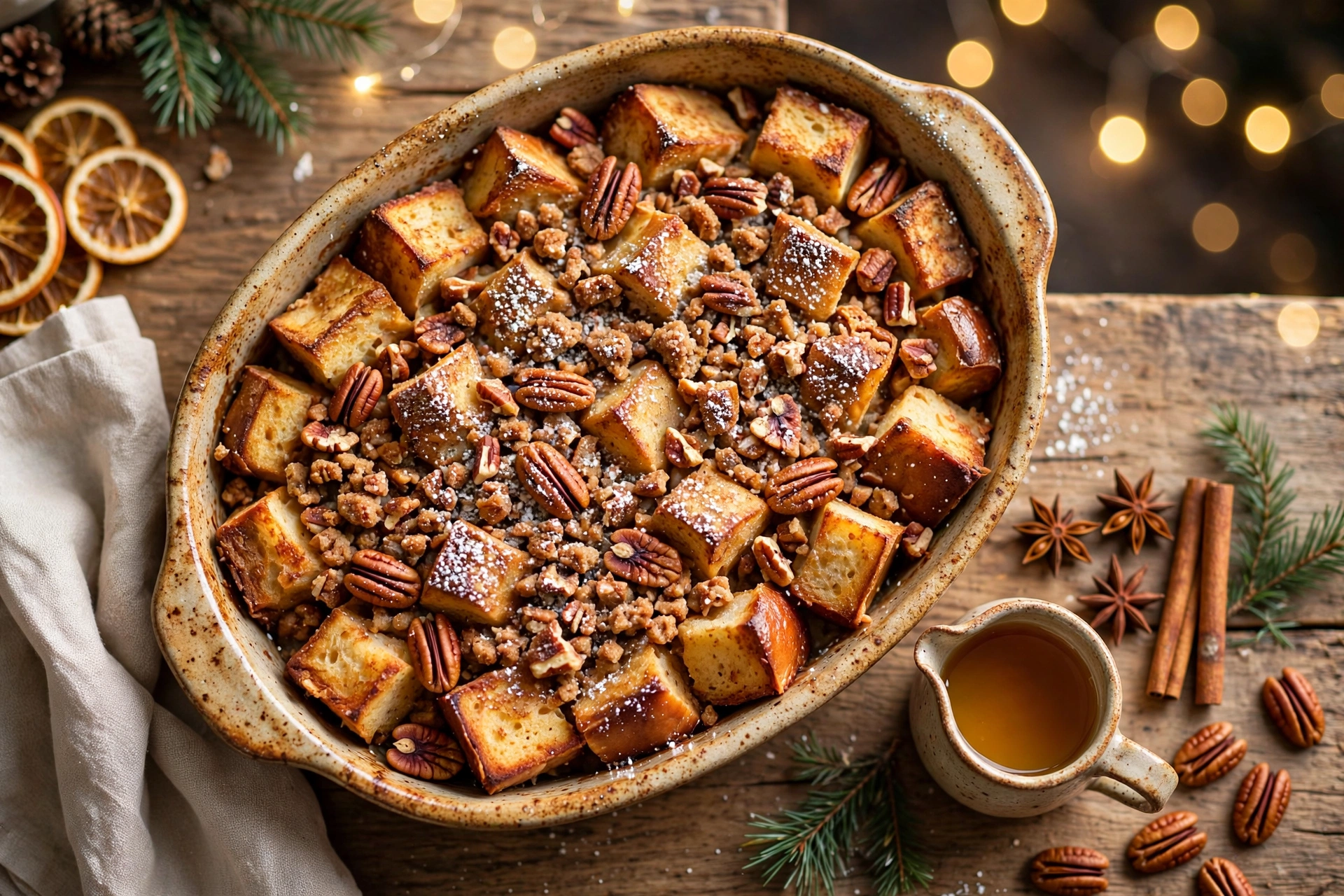
It sits happily in a spread of morning bakes. Put it beside the gingerbread French toast casserole for the spice lovers, and let the cranberry orange shortbread cookies carry the same flavors into the afternoon cookie plate.
Keeping the Cake Fresh, Counter to Freezer
On the counter, the glazed cake keeps under a dome or in an airtight container for 3 days. In the fridge it holds for a week; bring slices to room temperature for twenty minutes before serving so the butter in the crumb softens back to tender.
For clean slices, use a long serrated knife and wipe the blade between cuts, or run the knife under hot water and dry it. The glaze stays white and the crumb stays neat, which matters when the cake is going on a plate for guests.
The white chocolate cranberry blondies and the classic pumpkin roll follow the same make ahead rhythm if you are building a whole dessert table early.
The Cake That Perfumes the Whole House
This cranberry orange pound cake is the rare holiday bake that does three jobs at once: a centerpiece for the table, a gift that leaves the house in parchment, and a quiet promise that December baking can be done early and still taste like you fussed.
Bake the bundt for your people, bake the minis for everyone else, and let the orange sugar do what it does. By the time the glaze sets, the kitchen smells like someone who has Christmas completely under control.
Questions About This Cranberry Orange Pound Cake
FAQ
Can I use frozen cranberries in this pound cake?
Yes. Add them straight from the freezer, still frozen, tossed in the same tablespoon of flour. Thawed cranberries bleed their juice into the batter and turn it pink, and they sink more easily. Frozen berries stay in place and keep their tart pop.
I only have a loaf pan, not a bundt. Does the recipe still work?
It does. Divide the batter between two 9 by 5 inch loaf pans and bake at 325°F for 45 to 55 minutes. The crumb stays the same; you simply trade the bundt ridges for two giftable loaves. Watch the skewer test, since loaf pans bake a little faster at the edges.
Why did my glaze slide off the cake and pool on the plate?
The cake was still warm, or the glaze was too thin. Glaze only a completely cold cake, and check the ribbon: it should hold its shape on the surface for about five seconds. Two thin passes, ten minutes apart, grip far better than one thick pour.
The top of my pound cake cracked. Did I do something wrong?
No, a crack along the crown is the signature of a pound cake, not a flaw. The crust sets while the center is still rising, and it splits along the middle. Once the glaze goes on in two passes, the crack disappears under the white cap.
How do I keep the cranberries from sinking to the bottom?
Three things together: chop the berries so they are light, toss them in flour, and layer the batter into the pan in two additions. Big whole berries in a single pour are the usual cause of the soggy line at the base of the cake.