
In this article:
- A steakhouse side that holds overnight
- Silky sauce, deep green leaves
- The day before plan
- What you need for the pan
- Making the spinach, skillet to dish
- Crispy parmesan shallots on top
- If the sauce turns watery
- Doubling it for a full table
- A lighter pan, same comfort
- Storing and reheating leftovers
- The green dish that balances the table
- Questions about this spinach
This make-ahead creamed spinach is the green dish I refuse to leave to Thanksgiving day. It goes into the oven while the turkey rests, comes out bubbling under a snowfall of crispy parmesan shallots, and tastes like the side a good steakhouse charges extra for.
Most creamed spinach is made in a hurry, in a skillet, minutes before the meal, and it shows: a thin sauce, leaves swimming, a puddle on the plate by the second helping. This version is built the day before, on purpose, so the sauce sets silky and the flavors marry overnight.
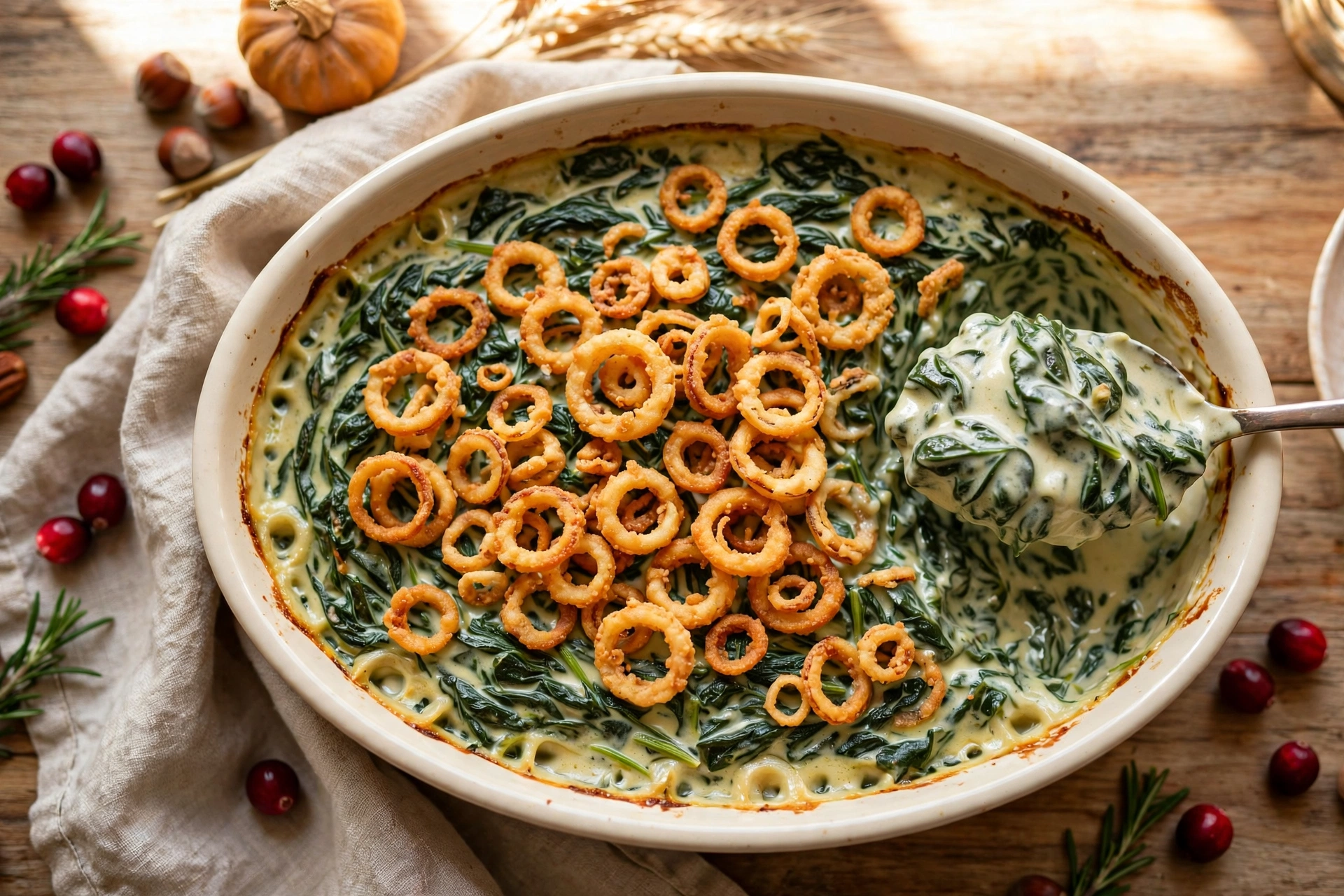
Why This Creamed Spinach Tastes Like a Steakhouse Side
This creamed spinach works because the sauce is a real roux based béchamel, not cream poured over leaves and hoped into thickness. Flour and butter cook first, milk and a little cream follow, and cream cheese melts in at the end as insurance, so the sauce reheats the next day without splitting or going thin.
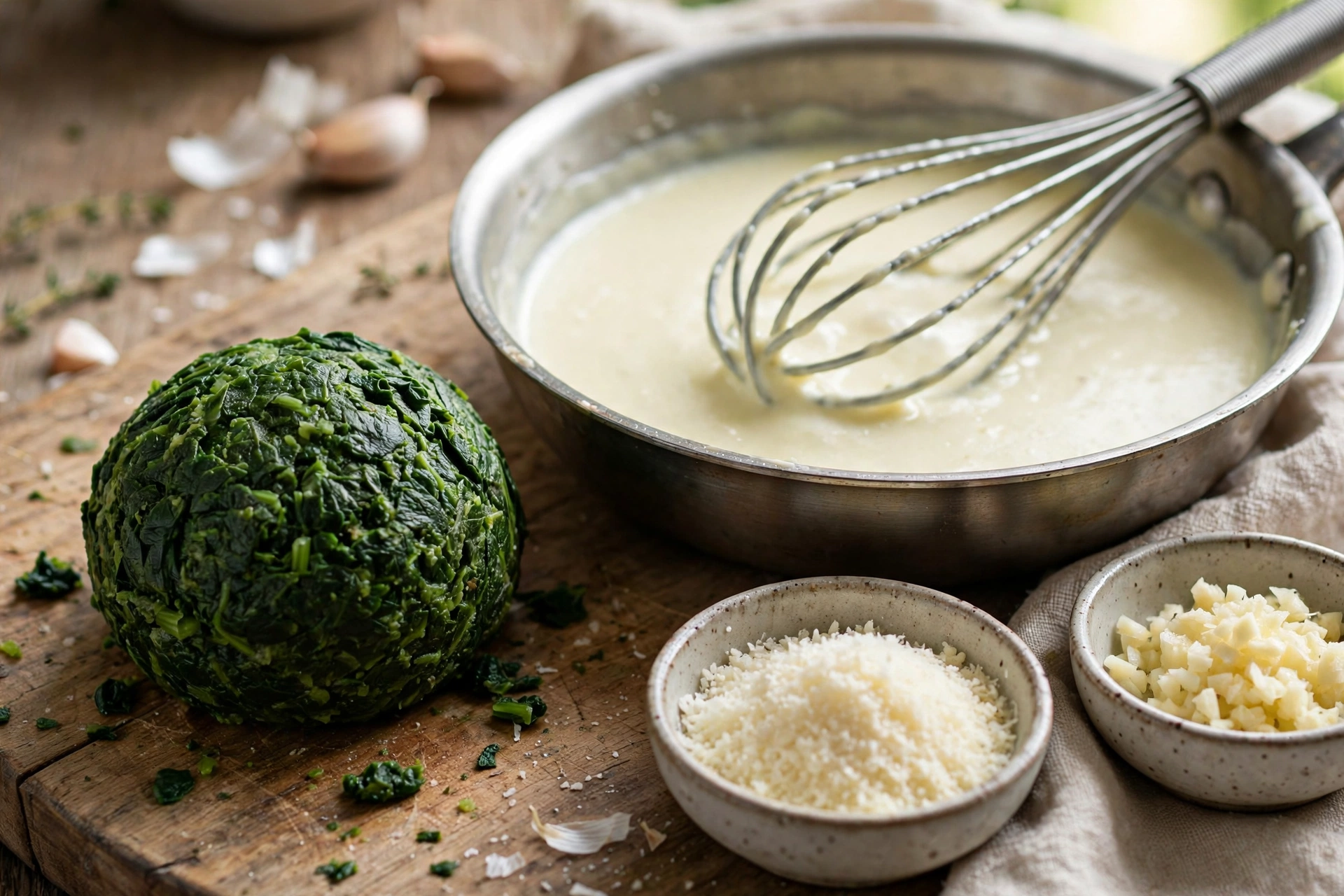
The spinach is blanched and squeezed twice before it ever meets the sauce. That double squeeze is the whole secret: the leaves arrive in the pan nearly dry, so they drink sauce instead of diluting it. Every bite tastes concentrated, green and rich at once, never watery.
And because the pan is assembled a day ahead, the garlic, shallot and nutmeg have a full night to settle into the sauce. Freshly made creamed spinach tastes of its parts. This one tastes of one thing, deep and unified, the way it does at the restaurants people remember.
There is also a quieter advantage nobody mentions: cold spinach in a rich sauce behaves. It slices into neat squares at the table instead of slumping, it reheats evenly because the sauce was built with a roux, and it waits on a warm plate without weeping while everyone settles in.
Silky Sauce, Deep Green Leaves, No Soupy Puddle
The color is the first promise: a deep, glossy green, dark enough to look serious next to golden turkey and pale mashed potatoes. Blanching for thirty seconds only sets that color. Cook the leaves longer and they dull to olive before the sauce even starts.
On the tongue, the sauce coats instead of pooling. It should ribbon off the spoon for a second before falling, thick enough to hold the chopped leaves in a soft mound. The parmesan brings a salty depth, the nutmeg a quiet warmth you notice without naming, and a pinch of cayenne keeps the richness from sitting heavy.
Texture comes from contrast. The base is all silk, so the top has to crackle: shallot rings fried to amber and tossed hot with finely grated parmesan. They shatter a little over the creamy surface, and that small crunch is what makes people take a second spoonful.
The Day Before Plan: Blanch, Squeeze, Sauce, Chill
The Wednesday before Thanksgiving is crowded enough. Blanching two pounds of spinach, building the sauce and filling the baking dish takes about thirty five calm minutes the day before, and then the dish simply waits in the fridge under its wrap.
On the day itself, your only jobs are sliding the dish into a hot oven while the turkey rests and frying the shallots, which take five minutes at the stove. The side that looks the most luxurious demands the least from you at the exact moment everything else peaks.
The timing flexes kindly, too. The assembled dish bakes in twenty to twenty five minutes at 375°F, but it can sit in a turned off warm oven for another fifteen without harm, still glossy when it reaches the table.
The oven choreography is the real gift. Turkey comes out, spinach goes in, and by the time the bird is carved and the gravy is made, the side is bubbling. No skillet on the stove fighting for a burner, no last minute wilting while the kitchen is at its loudest.
What You Need: Two Pounds of Spinach and a Proper Roux
Fresh spinach wilts down to almost nothing, so two pounds is not a typo, it is the right amount for a full baking dish. Frozen spinach works in the same weight once thawed and squeezed, and the method below covers both. Buy real parmesan for grating; the topping and the sauce both depend on it.
- 2 pounds fresh spinach, tough stems removed, or 2 pounds frozen spinach, thawed
- 3 tablespoons unsalted butter
- 2 shallots, finely diced, about 1/2 cup
- 3 garlic cloves, minced
- 3 tablespoons all-purpose flour
- 1 1/4 cups whole milk
- 1/2 cup heavy cream
- 4 ounces cream cheese, cut into cubes
- 1/2 cup finely grated parmesan, plus 2 tablespoons for the shallots
- 1 teaspoon fine salt, plus more for the blanching water
- 1/2 teaspoon black pepper
- 1/4 teaspoon ground nutmeg
- Pinch of cayenne pepper
- For the crispy shallots: 3 large shallots, sliced into thin rings, and 1/2 cup neutral oil
Making the Creamed Spinach, Skillet to Baking Dish
Work in this order and nothing feels rushed: leaves first, sauce second, then the two meet once, briefly, over low heat. The spinach should spend as little time as possible simmering in the sauce, which keeps its color bright and its texture tender instead of tired.
- Blanch the spinach. Bring a large pot of well salted water to a boil and fill a big bowl with ice water. Cook the fresh spinach for 30 seconds, just until wilted and bright, then lift it straight into the ice water to stop the cooking.
- Squeeze it twice. Drain the spinach, press it in handfuls until no more water runs, then wrap it in a clean kitchen towel and twist hard. Chop the squeezed spinach roughly. If using frozen, thaw it fully and do the same towel squeeze.
- Soften the aromatics. Melt the butter in a large skillet over medium heat. Add the diced shallots and cook for 3 to 4 minutes, until soft and translucent. Stir in the garlic for 30 seconds, until fragrant.
- Build the roux. Sprinkle the flour over the shallots and stir for 1 minute; it should smell faintly nutty. Pour in the milk a little at a time, whisking after each addition, then add the cream and bring to a gentle simmer.
- Finish the sauce. Let the sauce simmer for 2 minutes, until it coats the back of a spoon. Lower the heat, stir in the cream cheese until melted, then the 1/2 cup of parmesan, the salt, pepper, nutmeg and cayenne.
- Fold in the spinach. Add the chopped spinach and stir just until every leaf is coated and warmed through, about 2 minutes. Taste and adjust the salt; the parmesan in the topping adds more at the table.
- Pan it for tomorrow. Scrape the spinach into a buttered 2 quart baking dish, smooth the top, cool for 20 minutes, then cover and refrigerate for up to 24 hours.
- Bake on the day. Heat the oven to 375°F. Bake the dish, uncovered, for 20 to 25 minutes, until the edges bubble and the top takes a little color. Rest for 5 minutes while you fry the shallots.
- Fry the shallots. Heat the oil in a small skillet over medium high heat. Fry the shallot rings in two batches for 2 to 3 minutes, until deep golden. Drain on paper towel, toss while hot with the 2 tablespoons of parmesan and a pinch of salt, and scatter over the spinach at the table.
The Crispy Parmesan Shallots Go On at the Table
Fry the shallots as close to serving as you can; their crunch fades under steam. If the day runs tight, fry them in the morning, keep them at room temperature in a loosely covered bowl, and give them three minutes in the hot oven on a small tray to crisp again.
Slice the rings evenly, about as thick as a coin, so they color at the same speed. Rings that are too thin burn before they crisp; rings that are too thick stay chewy in the middle. Pull them when they look one shade lighter than you want, because they keep darkening off the heat.
Save the shallot oil, by the way. Strained and kept in a small jar, it is a finishing oil for the weekend: a spoonful over the leftover turkey soup, or over roasted carrots, carries that sweet fried shallot flavor into the next meal without another minute of frying.
If the Sauce Turns Watery, Do This
A watery sauce almost always means the spinach kept its water. The fix next time is the towel squeeze, done without mercy. For a pan that is already soupy, simmer it uncovered over low heat for three to four minutes, stirring, and let the extra liquid cook off before you chill it.
If the sauce breaks or looks grainy after reheating, take the dish off the heat and whisk in a tablespoon of cold cream cheese. The emulsion comes back together, glossy again, without changing the flavor.
Doubling It for a Full Table
For twelve to sixteen guests, double everything and bake in a 9 by 13 inch dish. The blanching is easier in two batches, and the sauce needs a wide Dutch oven so the roux has room to cook evenly. The bake time grows by about five minutes; look for bubbles all the way to the center.
Leftovers from a big batch are a gift on Friday. This creamed spinach folds into a turkey pot pie filling, tops a baked potato, or slips under a fried egg for the kind of breakfast that makes the long weekend feel planned.
A Lighter Pan, Same Comfort
For a lighter table, swap the heavy cream for half and half and use Neufchâtel in place of the cream cheese; the sauce stays silky and loses a noticeable share of its richness. Whole milk can become 2 percent milk if the roux cooks a full minute longer to keep its body.
The dish also sits naturally beside the brighter plates on our menu. It is vegetarian and gluten free if you trade the flour for the same amount of cornstarch slurry stirred in at the end, a swap I use when my sister in law visits.
Storing and Reheating Leftovers
Refrigerate leftovers in a covered container for up to 3 days. Reheat gently, either in a 325°F oven for 15 minutes or in a skillet over low heat with a spoonful of milk to loosen the sauce; high heat is what makes cream sauces split, a point the USDA leftovers guidance makes for all perishable dishes.
The base freezes well for up to 2 months, before the shallot topping. Thaw it overnight in the fridge, bake as directed, and fry fresh shallots. The texture stays close to the original because the cream cheese stabilizes the sauce through the freeze.
The Green Dish That Balances the Table
This creamed spinach is the deep green a Thanksgiving plate is quietly begging for. The rest of the spread runs gold and brown: turkey, stuffing, potatoes, gravy. The spinach makes the plate look like a meal instead of a pile, and gives every rich mouthful a bite of freshness beside it.
It keeps good company on the table. Spoon it next to the green bean casserole for a green corner of the spread, let it share the oven schedule with the corn casserole, and plan the whole lineup from our Thanksgiving dinner menu. The make-ahead mashed potatoes follow the same calm logic: do the work early, enjoy the day.
Questions About This Make-Ahead Creamed Spinach
FAQ
How dry does the spinach need to be before it goes into the sauce?
Drier than feels reasonable. After the ice bath, press handfuls until the dripping stops, then wrap the spinach in a clean towel and twist until almost nothing comes out. Two pounds of fresh spinach should end as a compact ball of about 2 cups. That squeeze is what keeps the sauce silky instead of soupy.
Can I use frozen spinach for this Thanksgiving creamed spinach?
Yes, and it is the one shortcut I fully endorse here. Thaw 2 pounds of frozen spinach completely, then do the exact same towel squeeze. Frozen spinach holds even more water than fresh, so squeeze twice and do not skip the second pass.
How far ahead can I assemble the dish, really?
The filled baking dish keeps, covered, for up to 24 hours in the fridge, and the sauce actually improves overnight as the garlic and nutmeg settle in. Bake it straight from the fridge at 375°F and add about 5 minutes to the baking time.
My crispy shallots went soft on top of the hot spinach. How do I keep them crisp?
Scatter them at the table, never before the trip from kitchen to dining room, and keep them off the steam. If they were fried hours ahead, refresh them for 3 minutes on a tray in the hot oven; they come back shattering, ready to toss with the parmesan.
Can I make the crispy shallots without a deep fryer?
You only need half a cup of oil in a small skillet, enough to shallow fry the rings in two batches. Keep the heat at medium high and stir often so the rings color evenly. Drain them on paper towel and salt them while they are still hot.