
In this article:
- The Slice Is the Whole Show
- No Raw Egg, Ever: How This Log Holds Together Safely
- Warm, Not Hot: The Temperature Rule That Saves the Colors
- Cathedral Window Cookies Ingredients
- Rolling the Log So Every Slice Shows a Window
- The Cold Knife Protocol for Clean Stained Glass Rounds
- A December Production Plan for Cookie Trays and Gift Boxes
- Peppermint, White Chocolate and Other Windows to Try
- Keeping the Logs Fresh, Fridge and Freezer
- The Cookie Everyone Picks Up First
- Cathedral Window Cookies Questions
Cathedral window cookies are the slice and reveal miracle of the Christmas cookie tray: a plain chocolate log goes into the refrigerator, and what comes out cuts into rounds of dark chocolate set with glowing pink, green, yellow and blue marshmallow panes, like a stained glass window in miniature.
There is no baking, no mixer and no decorating skill involved. Melted chocolate and butter coat a bowl of colored mini marshmallows and chopped walnuts, the mixture is rolled in coconut and chilled, and the knife does all the artistry the next day.
This version keeps the vintage charm and fixes the vintage problems. There is no raw egg hiding in the log, the chocolate cools to a measured temperature so the colors stay jewel bright, and the slicing protocol gives clean rounds instead of crumbled rubble.
The Slice Is the Whole Show
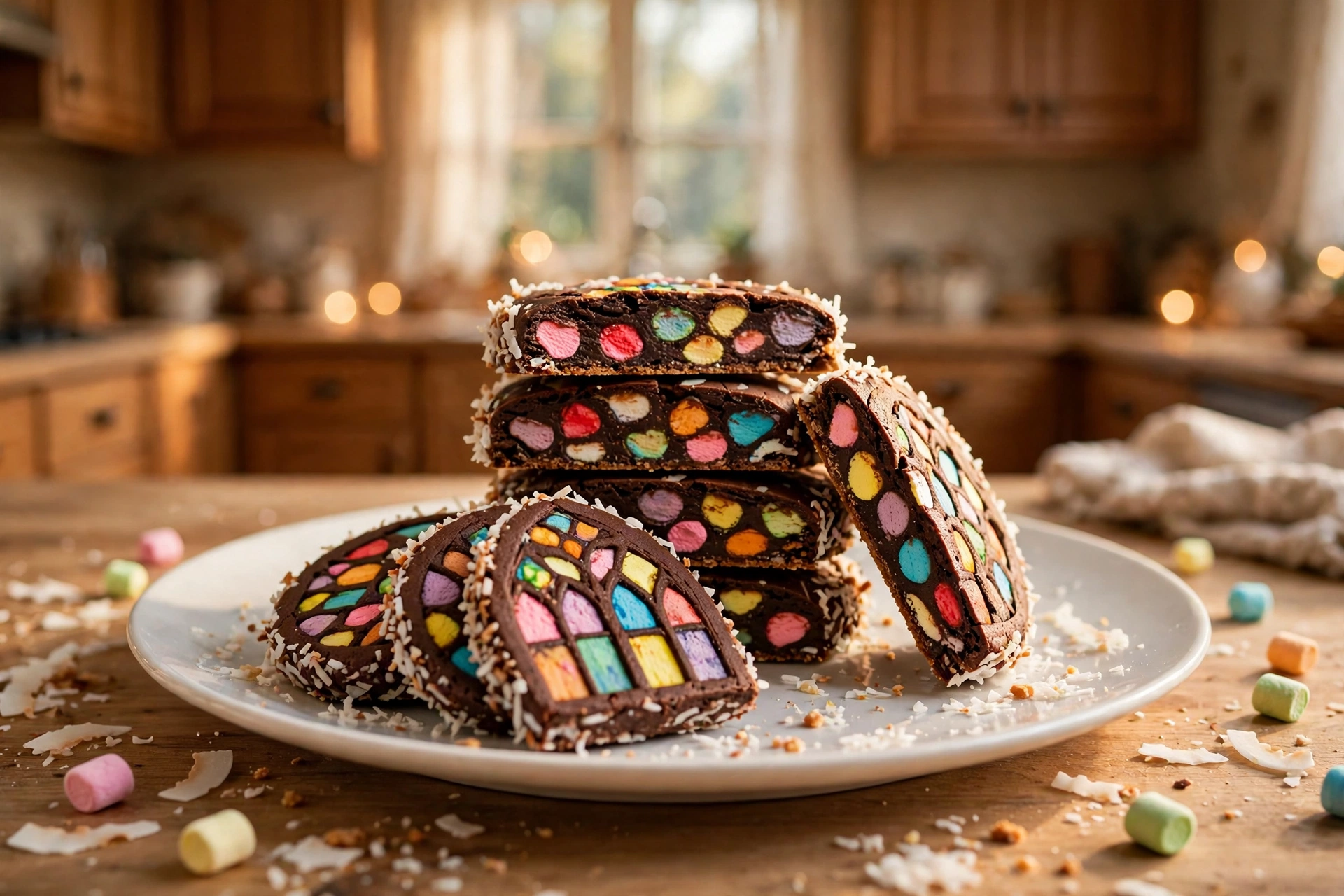
Cathedral window cookies work because of one dramatic contrast: a dark, plain, almost dull exterior against an interior that glows with color. The log itself looks like nothing, a coconut dusted cylinder that could be anything. Then the first slice falls away and the whole tray makes sense at once.
The structure is simple food science. Melted chocolate is the mortar, marshmallows are the glass, and chilling is the kiln. As the chocolate firms in the cold, it locks every marshmallow exactly where it landed, so the pattern inside each slice is random in the way real stained glass never is, and charming for the same reason.
Colored mini marshmallows are not a decoration here, they are the architecture. White marshmallows make a fine cookie, but the pastel and fruit flavored minis are what turn a slice into a window, each color holding its own pane instead of melting into the chocolate around it.
That reveal is also why these cookies survive every era of Christmas baking. They appeared on mid century church supper tables, disappeared into nostalgia, and now circle back every December because a ten second slicing video of this log is genuinely hard to scroll past.
One more quiet virtue: the recipe scales without drama and forgives small errors. A log rolled a little thicker simply slices into fewer, grander rounds, and a log rolled thin gives dainty two bite coins for a crowded tray. The windows show either way, which is all anyone remembers.
No Raw Egg, Ever: How This Log Holds Together Safely
Many vintage versions, including the one currently racing around social media, stir a beaten raw egg into the warm chocolate. The egg was a binder from an era of thinner chocolate and warmer kitchens. In a cookie that is never baked, that raw egg stays raw, all the way to the cookie tray, the school party and the grandparents.
This recipe leaves the egg out entirely, and the log does not miss it. Two full cups of chocolate chips (340 g) melted with butter give more than enough setting power: chocolate firms firmly at refrigerator temperature, and the butter keeps that firmness sliceable instead of brittle.
The trade is honest. An egg based log is a touch more fudge like at room temperature; this one is a touch firmer and cleaner in flavor, with the chocolate tasting like chocolate instead of custard. On a crowded December tray, firm and clean is exactly what you want.
There is a practical bonus for the cook: nothing in this log is fragile. It can sit on a buffet through a long evening, travel in a gift box across town, and wait in the freezer for a month, all without a single food safety calculation. The FDA egg safety guidance exists for good reason; this recipe simply never needs it.
Warm, Not Hot: The Temperature Rule That Saves the Colors
Every failed batch of these cookies fails at the same moment: the marshmallows meet chocolate that is too hot. Freshly melted chocolate can reach 130°F or more, and a mini marshmallow surrenders at far less, slumping into a pastel smear that turns the whole mixture a muddy gray brown.
The rule is warm, not hot. After melting, let the chocolate stand for a full 5 minutes, stirring twice, until it drops below about 110°F. It should feel warm on the inside of your wrist, the way bath water does, never hot. An instant read thermometer settles the question in two seconds if you own one.
Those 5 minutes are not dead time. The chocolate also thickens slightly as it cools, which means it coats each marshmallow in an even shell instead of pooling at the bottom of the bowl. Better color and better structure come from the same pause.
Fold gently once the marshmallows go in, with a spatula and patience, lifting from the bottom rather than stirring in circles. The goal is whole, glossy, separate marshmallows suspended in chocolate, not a swirl. If a few colors kiss the chocolate, that is fine; if the bowl turns uniform, the chocolate was too hot and the batch becomes cook’s treat.
Cathedral Window Cookies Ingredients
- 2 cups (340 g) semi-sweet chocolate chips
- 1/2 cup (113 g) unsalted butter, cut into pieces
- 1 teaspoon (5 ml) vanilla extract
- 1/4 teaspoon (1.5 g) fine sea salt
- 1 (10 ounce) bag colored mini marshmallows (283 g), about 5 1/2 cups
- 1 cup (100 g) chopped toasted walnuts
- 1 cup (85 g) sweetened shredded coconut, for rolling
Buy the marshmallows fresh and check the bag by squeezing it: the minis should feel soft and separate, never fused into one pastel brick. Stale marshmallows slice into chalky panes. Toasting the walnuts for 8 minutes at 350°F is optional and entirely worth it; their flavor deepens and they stay crisper inside the chocolate.
Semi-sweet chocolate is the reliable middle path. Milk chocolate makes a sweeter, softer log that needs the full overnight chill, and dark chocolate above 70 percent can set almost too firm and bitter against the sweet marshmallows. Chips are formulated to melt smoothly here; a chopped bar works if it is real chocolate and not coating.
Rolling the Log So Every Slice Shows a Window
- Lay a sheet of parchment paper about 16 inches long on the counter and sprinkle half of the coconut (about 1/2 cup / 43 g) in a rough rectangle down its center. This will become the outside of the first log.
- Melt the chocolate chips and butter together in a large microwave safe bowl in 30 second bursts, stirring between each, until smooth, about 90 seconds total. Or melt them in a heatproof bowl over barely simmering water, stirring until glossy.
- Take the chocolate off the heat and let it cool for 5 full minutes, stirring twice, until it feels warm rather than hot on your wrist, below about 110°F. Stir in the vanilla and salt.
- Add the marshmallows and walnuts to the bowl. Fold gently with a spatula, lifting and turning, until every marshmallow is coated and the mixture holds together in a shaggy mass.
- Scrape half of the mixture onto the coconut in a rough line. Using the parchment, fold, press and roll it into a tight log about 2 inches thick and 9 inches long, twisting the ends of the paper to compact it.
- Repeat with the second half of the coconut and mixture for the second log. Two shorter logs chill more evenly and slice more cleanly than one giant one.
- Refrigerate the wrapped logs for at least 4 hours, and overnight if you can. The chocolate must be firm all the way to the center before a single slice is cut.
- Unwrap, and slice with a serrated knife using a gentle sawing motion into rounds about 1/2 inch thick. Serve cold or at cool room temperature.
The Cold Knife Protocol for Clean Stained Glass Rounds
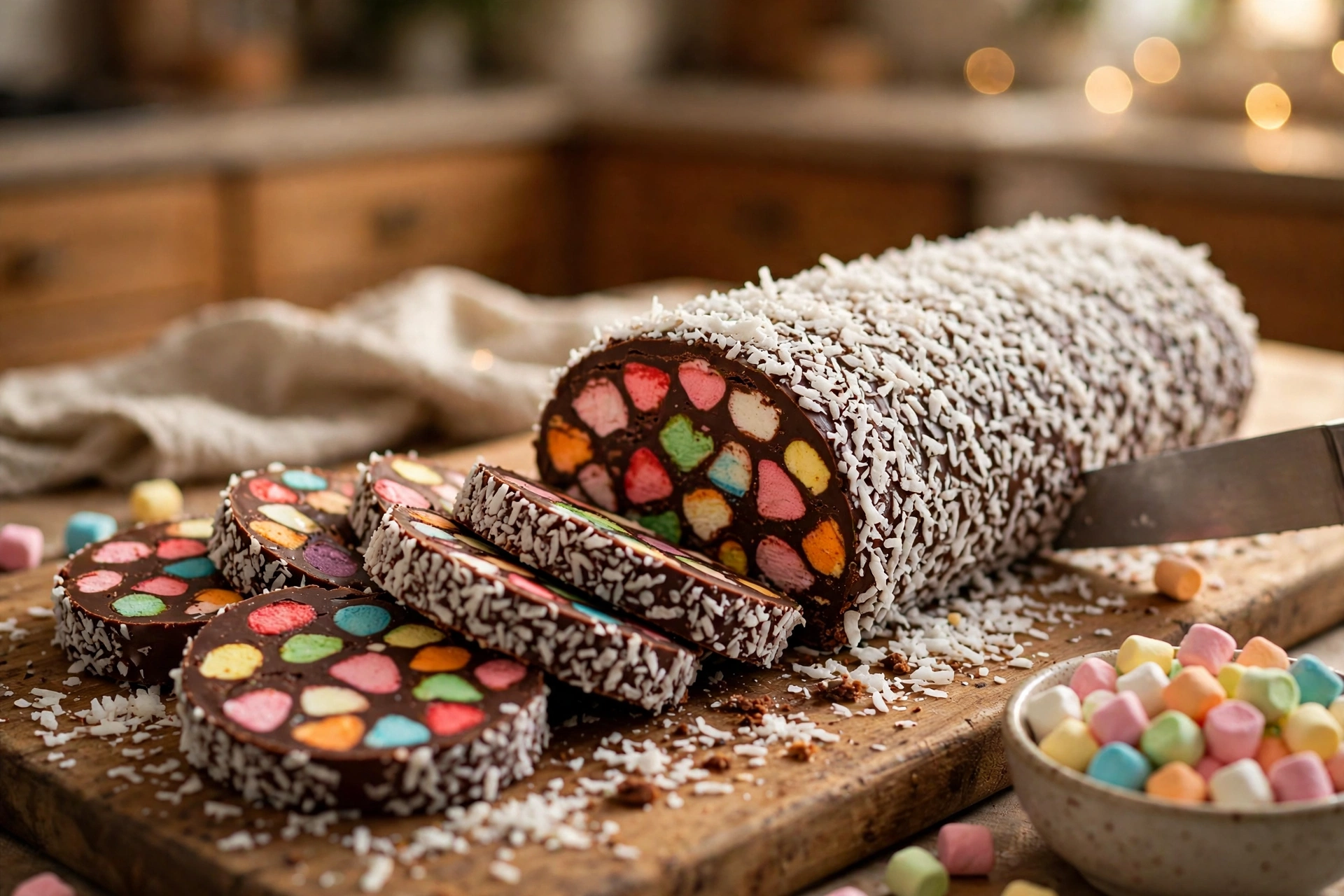
Most cathedral window cookies are ruined at the cutting board, not in the bowl. A warm log, a dull knife and downward pressure will drag the chocolate, smear the colors and crack the panes. Three small habits fix all of it.
First, the log must be cold to the center: 4 hours minimum, overnight for perfection, and if the kitchen is warm, 15 minutes in the freezer firms the surface before slicing. Second, use a serrated knife and saw gently, letting the teeth do the work while the log stays still under your other hand.
Third, run the blade under hot water and wipe it dry between every few cuts. A warm, clean blade glides through chocolate without dragging, and wiping it keeps yesterday’s colors off today’s slice. Rounds of an even 1/2 inch look professional and, just as usefully, they eat in two bites.
If a slice does crumble, do not mourn it. Broken pieces are the cook’s tax, and the crumbs, chopped and folded into vanilla ice cream, might be the best thing this recipe produces all month.
A December Production Plan for Cookie Trays and Gift Boxes
These cookies were made for December logistics. The logs ask for one bowl and twenty minutes in the first week of the month, then they wait in the freezer, whole and patient, while the oven bound cookies fight for your attention in the weeks after.
The rhythm that works: make a double batch of logs on the first weekend of December, wrap them tightly, and freeze. Move one log to the refrigerator the night before any party, tray deadline or gift box session, then slice it cold the next day and arrange. Fresh cut faces, zero day of work.
For gift boxes, the slices are natural dividers: their flat sides stack neatly, their colors brighten a box of beige butter cookies, and they need no glaze or packaging beyond a small glassine sleeve. They sit happily beside our easy Christmas sugar cookies and the swirled crumb of our Italian ricotta Christmas cookies, giving a box three completely different textures.
On the tray itself, place them last and place them proud. Next to the crackle and sparkle of Christmas crack saltine toffee they read as the stained glass chapel window of the whole arrangement, and beside a snowy pile of our no bake coconut cream balls they make each other look more festive.
Peppermint, White Chocolate and Other Windows to Try
The peppermint window is the December favorite variation: swap the colored marshmallows for peppermint mini marshmallows, keep everything else, and add 1/4 teaspoon (1.25 ml) of peppermint extract to the chocolate. Roll this log in crushed candy cane instead of coconut for a red and white frame.
The white chocolate window goes elegant: white chocolate chips in place of semi-sweet, dried cranberries chopped small in place of half the walnuts, and all white mini marshmallows. The panes read as frosted glass with ruby flecks, and the flavor turns creamy and gentle.
For a nut free tray, leave out the walnuts and add 1 cup (30 g) of crisped rice cereal with the marshmallows; the slices keep their structure and gain a delicate crunch. For a coconut free version, roll the logs in powdered sugar or finely crushed vanilla wafers instead, re rolling just before slicing if the coating fades.
One caution governs every variation: change the colors and the extras freely, but never change the ratio of chocolate to marshmallows. That ratio is the mortar formula; thin it and the windows fall out of their frames.
Keeping the Logs Fresh, Fridge and Freezer
Whole logs keep best. Wrapped tightly in parchment and then in a layer of foil or a freezer bag, an unsliced log holds 2 weeks in the refrigerator with no loss of shine, because the coconut coat protects the chocolate from drying and from absorbing fridge odors.
Sliced cookies are more delicate. Layer them between sheets of parchment in an airtight container, keep them refrigerated, and bring them out about 15 minutes before serving so the chocolate loses its fridge hardness but the slices stay neat. At a cool room temperature they hold their shape for a full evening on a tray.
The freezer is where these cookies truly shine. Freeze whole logs for up to 3 months, thaw overnight in the refrigerator still wrapped, then slice. Freezing already cut slices works too, separated by parchment, though their cut faces may bloom faintly white over long storage; the flavor is unaffected and a minute at room temperature softens the look.
The Cookie Everyone Picks Up First
Cathedral window cookies ask for almost nothing: one bowl, one log, one cold night, and no egg, no oven and no decorating. What they give back is the single most colorful slice on the Christmas tray, a little window of pink, green and gold set in dark chocolate.
Make the logs this week, while December is still young, and let the freezer hold your prettiest cookie in reserve. When the tray needs color, you will already own it, one clean slice away.
Cathedral Window Cookies Questions
Why did my marshmallows melt into a pastel smear?
The chocolate was too hot when the marshmallows went in. Melted chocolate can pass 130°F, and mini marshmallows soften far below that. Let the chocolate cool a full 5 minutes, stirring twice, until it feels warm rather than hot on your wrist, below about 110°F, before folding anything in.
Do cathedral window cookies need the raw egg some recipes call for?
No. The egg was a vintage binder, and in a cookie that is never baked it stays raw all the way to the tray. Two cups (340 g) of melted chocolate chips with butter set firmly on their own in the refrigerator, so this recipe skips the egg entirely and the log still slices clean.
Why does my log crumble when I slice it?
It is either not cold enough or the knife is doing damage. Chill the log overnight if you can, use a serrated knife with a gentle sawing motion, and run the blade under hot water and wipe it dry between cuts. Slices of an even 1/2 inch also resist crumbling better than thin ones.
Can I make cathedral window cookies without coconut?
Yes. Roll the logs in powdered sugar, finely crushed vanilla wafers or extra chopped nuts instead of coconut. The coating is there to keep the log from sticking and to frame the slices; any dry, fine coating does the job. If you use powdered sugar, give the log a second light roll just before slicing.
How far ahead can I make the logs for Christmas?
The logs freeze beautifully for up to 3 months, so you can make them in early December or even late November. Thaw a whole log overnight in the refrigerator, still wrapped, and slice it cold the day you need it. Unsliced logs also keep 2 weeks in the refrigerator.
Cathedral Window Cookies
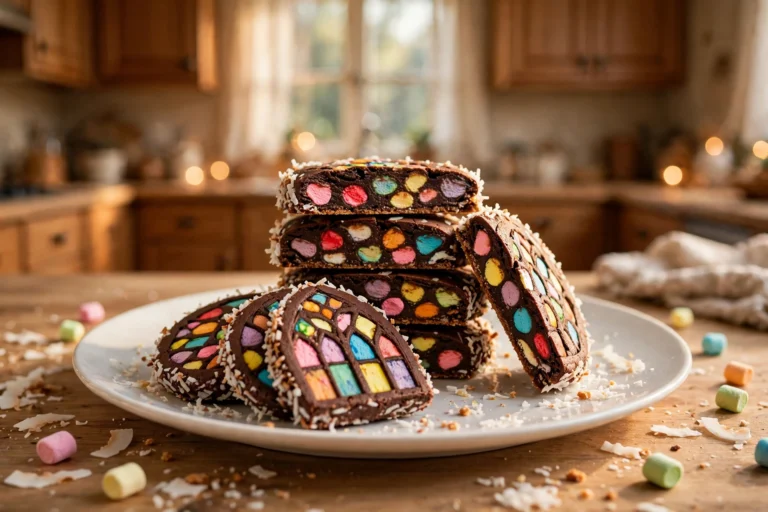
The vintage no bake Christmas log, fixed: colored mini marshmallows and toasted walnuts folded into chocolate that has cooled below 110°F so the colors stay jewel bright, rolled in coconut and chilled overnight. No raw egg, ever, and a cold knife protocol so every slice shows a clean stained glass window.
- Total Time: 4 hours 25 minutes
- Yield: 30 cookies 1x
Ingredients
2 cups (340 g) semi-sweet chocolate chips
1 teaspoon (5 ml) vanilla extract
1/4 teaspoon (1.5 g) fine sea salt
1 (10 ounce) bag colored mini marshmallows (283 g), about 5 1/2 cups
1 cup (100 g) chopped toasted walnuts
1 cup (85 g) sweetened shredded coconut, for rolling
Instructions
Lay a sheet of parchment paper about 16 inches long on the counter and sprinkle half of the coconut (about 1/2 cup / 43 g) in a rough rectangle down its center.
Melt the chocolate chips and butter together in a large microwave safe bowl in 30 second bursts, stirring between each, until smooth, about 90 seconds total. Or melt them in a heatproof bowl over barely simmering water.
Take the chocolate off the heat and let it cool for 5 full minutes, stirring twice, until it feels warm rather than hot on your wrist, below about 110°F. Stir in the vanilla and salt.
Add the marshmallows and walnuts. Fold gently with a spatula, lifting and turning, until every marshmallow is coated and the mixture holds together.
Scrape half of the mixture onto the coconut in a rough line. Using the parchment, fold, press and roll it into a tight log about 2 inches thick and 9 inches long, twisting the ends of the paper to compact it.
Repeat with the second half of the coconut and mixture for the second log.
Refrigerate the wrapped logs for at least 4 hours, or overnight, until firm all the way to the center.
Unwrap and slice with a serrated knife using a gentle sawing motion into rounds about 1/2 inch thick. Serve cold or at cool room temperature.
Notes
Warm, not hot, is the whole recipe: chocolate above 110°F melts the marshmallows into a pastel smear. Run the serrated knife under hot water and wipe it dry between cuts for glass clean slices. Whole logs freeze for up to 3 months; thaw overnight in the refrigerator and slice cold.
- Prep Time: 20 minutes
- Cook Time: 5 minutes
Nutrition
- Calories: 150
- Sodium: 30
- Saturated Fat: 4.5
- Protein: 2
- Cholesterol: 10