
In this article:
- No peeling, no wrestling, no waste
- Amber edges and a supple center
- The half inch cut that roasts evenly
- What goes on the tray
- Roast first, sauce last
- A Thanksgiving plan that stays calm
- Pale, soft or scorched: the fixes
- Lighter plates and nut free trays
- Leftovers, reheated with their edges back
- Roasted delicata squash questions, answered
Roasted delicata squash is the rare holiday side that asks almost nothing from the cook: no peeling, no long braise, and no sauce built hours ahead. The skin turns tender, the flesh goes silky, and the cut edges pick up the kind of amber color that makes a platter look finished.
Delicata has a sweetness closer to roasted chestnut than to candy. That matters on a Thanksgiving table crowded with marshmallow toppings and glossy glazes. A little maple belongs here, but it stays in the finishing sauce, where it reads as warmth rather than dessert.
The method is built around contact. Wide half moons lie flat against hot metal, the oven stays properly hot, and the brown butter waits until the squash can actually receive it. Nothing steams in a heap, and nothing gets lacquered so early that the sugars scorch.
No Peeling, No Wrestling, No Waste
Roasted delicata squash works because the skin is part of the pleasure, not packaging to remove. It softens completely in the oven, holds each half moon together, and gives the bite a gentle frame. You wash the squash, trim the ends, and move straight to slicing.
That one skipped step changes the whole recipe. Butternut demands peeling and hard trimming before the flesh even reaches the tray. Delicata gives back those ten minutes and leaves less waste in the compost, which is no small gift during holiday prep.
The half moon shape is equally practical. Each piece has two broad faces for browning, a curved strip of skin for structure, and enough thickness to stay supple in the middle. A cube can roll and dry out; a half moon stays put and roasts where you placed it.
Seasoning starts savory, not sweet. Olive oil carries kosher salt, black pepper and smoked paprika across the raw squash, so the first impression is roasted and warmly spiced. The maple arrives later with brown butter, after the natural sugars of the squash have already concentrated.
Brown butter is the final argument for the recipe. Its milk solids toast into a nutty sauce that tastes more complex than melted butter alone. Sage crisps in that fat for thirty seconds, long enough to perfume the sauce without turning bitter or black.
A teaspoon of apple cider vinegar keeps the finish balanced. It is not enough to make the dish tangy, and nobody will name it at the table. It simply lifts the butter and maple so the last bite tastes as lively as the first.
Amber Edges and a Supple Center
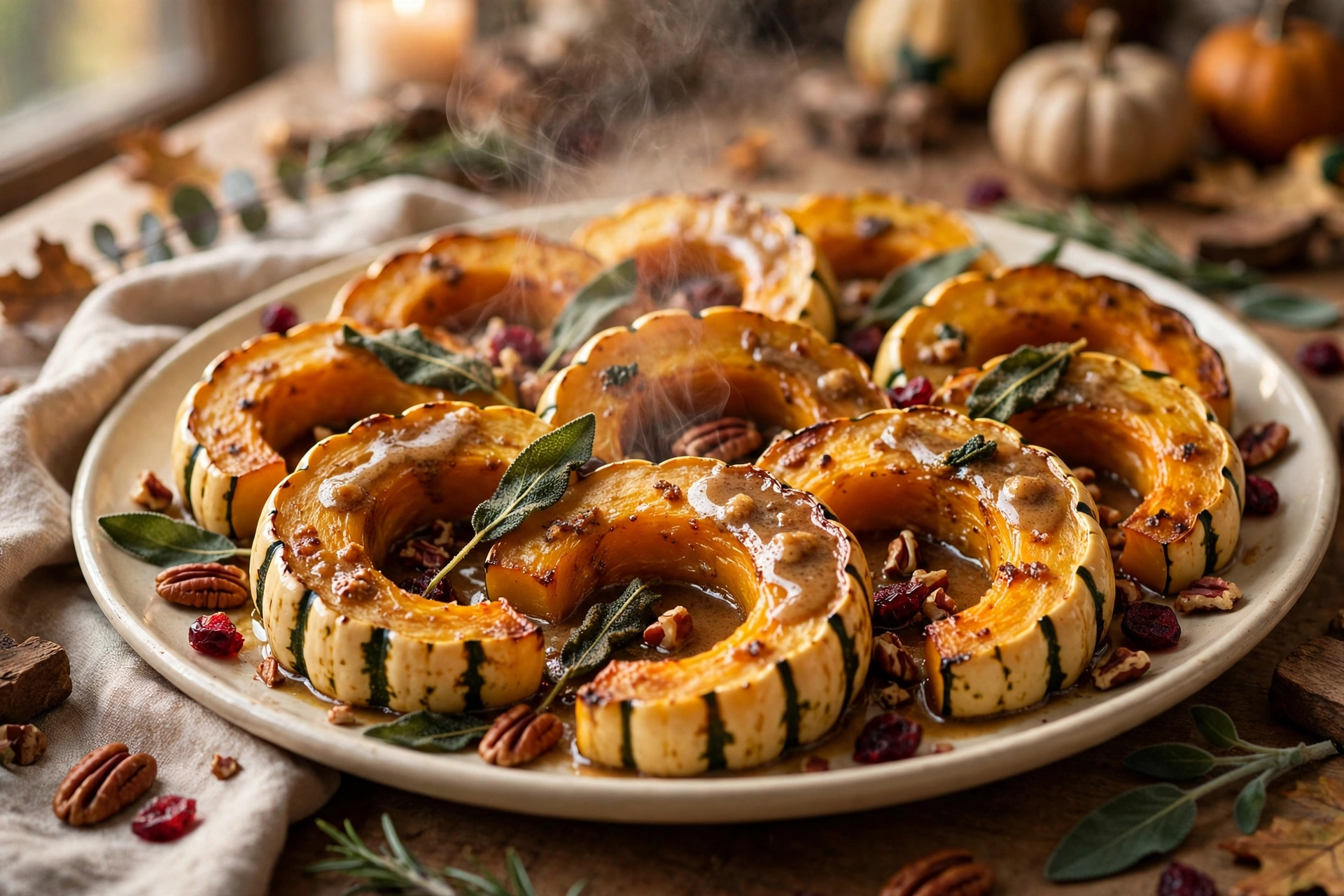
The first thing you notice is the color: deep gold along the cut faces, darker at the thin tips, with the green and cream stripes of the skin still visible underneath. The platter looks striped and burnished before any garnish lands on it.
The texture lands in three layers. The edge is lightly crisp and caramelized, the center yields like roasted custard, and the skin gives a soft chew that keeps the slice from falling apart on the fork. That contrast is why the pieces should never be cut paper thin.
Flavor moves from savory to sweet and back again. Smoked paprika gives a low warmth, the squash brings its own honeyed depth, and the brown butter finishes with toasted nuts and sage. The maple is present as gloss and aroma rather than a sugary coat.
Toasted pecans add the crunch the soft squash cannot provide. They should stay in rough pieces, large enough to notice, and they belong on top at the end. If they roast in the sauce from the beginning, they darken and lose their snap.
Dried cranberries play a different role: small, tart and chewy. A quarter cup is enough to dot the platter with red and wake up the butter. More than that starts pulling the dish toward fruit salad, which is not the goal.
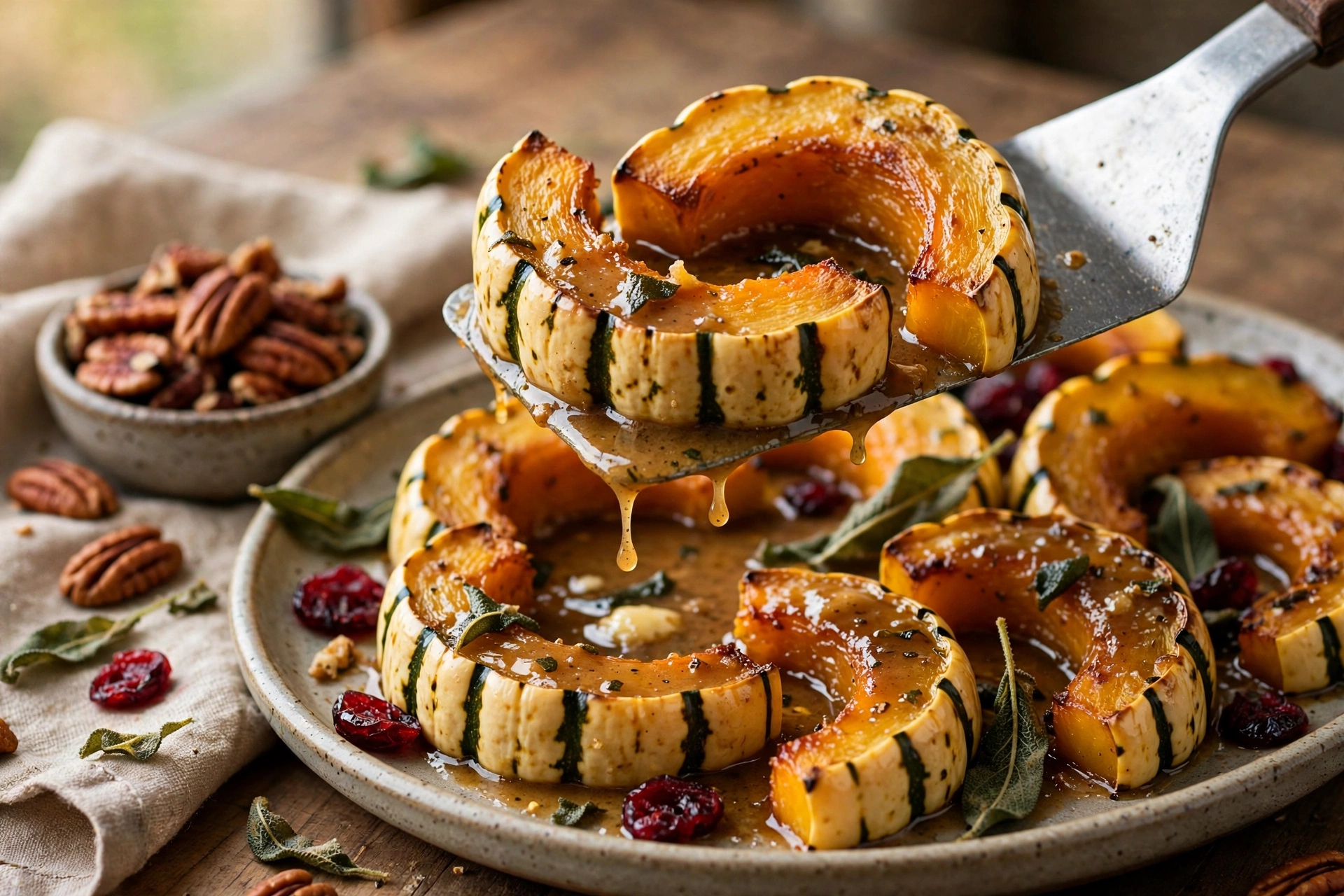
Served warm, the sauce pools lightly in the curve of each half moon. That little crescent is a natural spoon, catching butter and a pecan fragment in every serving. It is a small design advantage delicata has over cubed squash, and this recipe uses it fully.
The Half Inch Cut That Roasts Evenly
Choose squash that feel heavy and firm, with matte cream skin, green stripes and no soft patches. Three medium delicata, about one pound each, give eight generous side servings. Very large squash can have thicker skin and larger seed cavities, so medium is the sweet spot.
Scrub the skin well because you will eat it. A vegetable brush under running water takes off field dirt in seconds. Shave away only a hard brown scar if you find one; the rest of the skin softens exactly as it should.
Cutting is safest on a board that cannot travel. Put a damp towel under the board, trim a thin slice from each end, then halve the squash lengthwise with a steady rocking motion. The flesh is firm but far more cooperative than butternut.
Scoop the seeds with a sturdy spoon and scrape the cavity clean. Stringy fibers left behind roast into tough threads, so one extra pass matters. The seeds can be rinsed, salted and roasted separately, but they are not needed for this platter.
Half inch is the thickness to trust. Thinner pieces scorch at the tips before the center turns supple, while thick slabs brown unevenly and need a longer roast. Even slices also mean the whole tray finishes together, which keeps the sauce timing simple.
Do not season the squash in a wet marinade. Oil and dry spices are enough at this stage, and the surface should look glossy rather than pooled. Excess liquid on the tray is the enemy of browning, especially once two pans share the oven.
What Goes on the Tray
- 3 medium delicata squash, about 1 pound each
- 2 tablespoons olive oil
- 1 teaspoon kosher salt
- 1/2 teaspoon black pepper
- 1/2 teaspoon smoked paprika
- 4 tablespoons unsalted butter
- 12 fresh sage leaves, thinly sliced
- 2 tablespoons pure maple syrup
- 1 teaspoon apple cider vinegar
- 1/3 cup pecans, toasted and roughly chopped
- 1/4 cup dried cranberries
- 1 teaspoon flaky sea salt, for serving
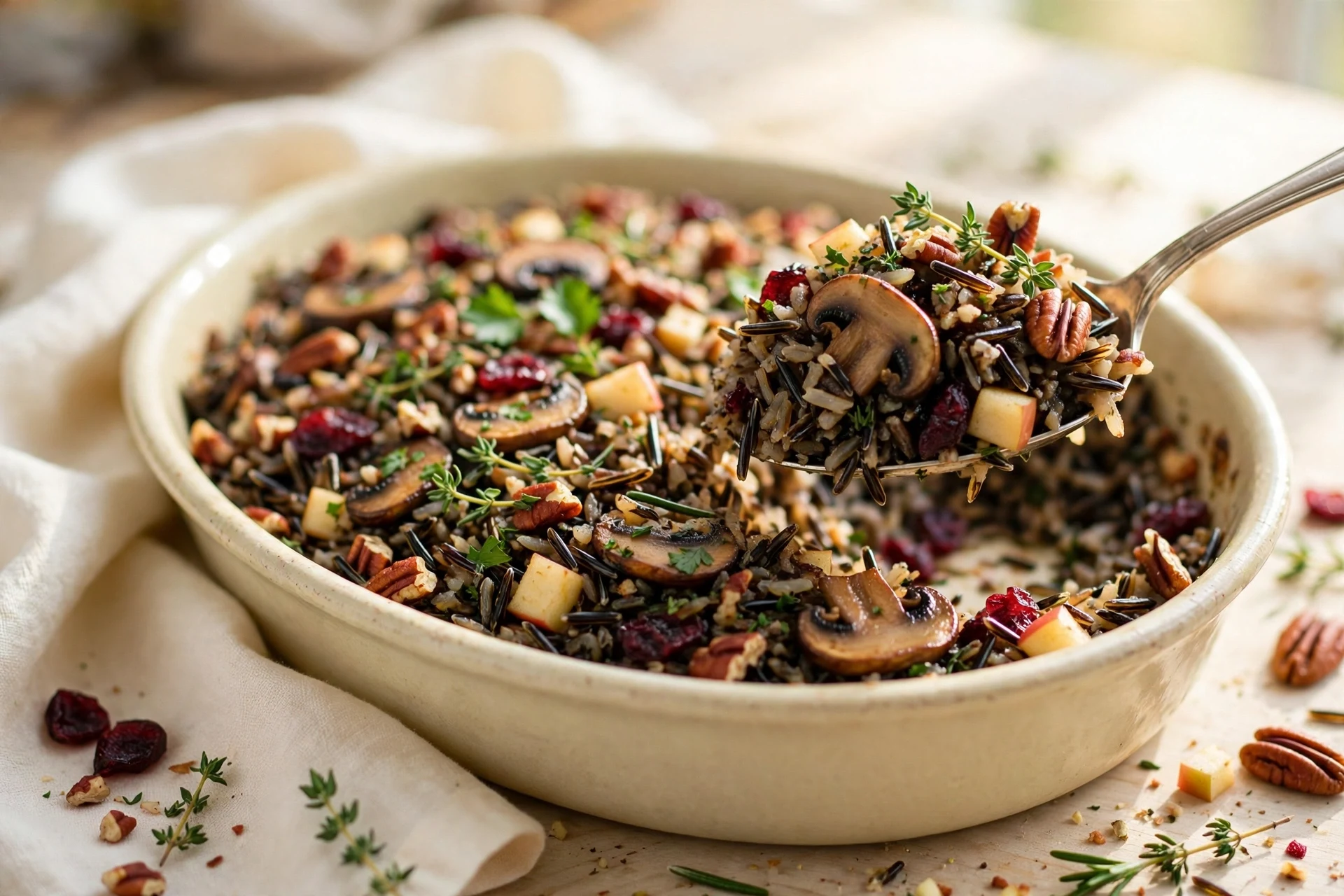
The platter pairs naturally with the bird and the sauce beside it: our make-ahead turkey gravy and a pan of wild rice stuffing give the squash two rich partners that make its brightness useful.
Roast First, Sauce Last
- Heat the oven to 425 degrees F. Line two large rimmed sheet pans with parchment paper.
- Scrub the delicata squash well because the skin stays on. Trim the ends, halve each squash lengthwise, scrape out the seeds, and cut into 1/2 inch half moons.
- Toss the squash with the olive oil, kosher salt, black pepper and smoked paprika until every piece is lightly coated.
- Arrange the half moons in a single layer on the sheet pans with a flat cut side down. Leave space between the pieces so they roast instead of steaming.
- Roast for 15 minutes. Flip each piece, rotate the pans, and roast 10 to 15 minutes more, until tender in the center and deeply golden at the edges.
- While the squash finishes, melt the butter in a small skillet over medium heat. Cook, swirling often, for 3 to 5 minutes, until the foam settles and the milk solids turn amber and smell nutty.
- Add the sage and cook for 30 seconds. Remove the pan from the heat and stir in the maple syrup and apple cider vinegar.
- Transfer the roasted squash to a warm platter. Spoon the maple sage brown butter over the top, scatter with the pecans and dried cranberries, finish with flaky sea salt, and serve warm.
A Thanksgiving Plan That Stays Calm
The make ahead logic is simple: everything except the browning can wait. Wash, seed and slice the squash up to twenty four hours ahead, then keep the half moons in a covered container lined with a clean towel. Season them only when the oven is hot.
Pecans can be toasted three days ahead and kept at room temperature in a sealed jar. The brown butter sauce can also be made ahead, chilled until firm, and melted gently before serving. Keep the cranberries out of the sauce until the platter is assembled.
On Thursday, this roasted delicata squash needs one hot oven window of about thirty minutes. It fits neatly while a rested turkey waits under foil and the hasselback sweet potatoes finish, because the squash asks for no basting and no turning beyond one flip.
Warm the serving platter for five minutes in the cooling oven if you remember. Hot squash on a cold platter loses its gloss quickly, and the brown butter can set at the edges. A warm platter keeps the sauce fluid through the first serving round.
For food safety and quality, cooked leftovers belong in the refrigerator within two hours, in a shallow covered container. The United States Department of Agriculture leftovers and food safety guide gives the same two hour rule and the three to four day window used here.
If oven space collapses at the last minute, roast the squash earlier in the day and hold it uncovered at room temperature for up to one hour. A short return to a hot oven restores the edges far better than a long stay in a low oven.
Pale, Soft or Scorched: The Fixes
Pale squash almost always means a crowded pan. The pieces release moisture as they heat, and touching slices trap that moisture between them. Use two pans without apology, and give every half moon a visible border of parchment around it.
Soft squash with no browning can also come from flipping too early. The first face needs a full fifteen minutes against the hot pan before it releases cleanly. If a slice sticks when you test it, wait two minutes and try again rather than tearing the surface.
Scorched tips happen when slices vary in thickness. Sort the tray as you arrange it: the thinnest pieces go toward the center, where the heat is gentler, and the thickest sit near the edges. Rotate the pans when you flip, not before.
Brown butter turns from nutty to bitter quickly once the foam subsides. Watch the solids, not the clock: pale gold becomes amber, and amber is your signal to add the sage. If the solids reach dark brown, start again; the sauce is small and unforgiving.
If the sauce tastes too sweet after the vinegar, add a pinch of kosher salt before adding anything else. Salt sharpens the squash and the sage, and it usually solves the balance without thinning the butter. A few extra cranberries can also help on the platter.
When the skin feels firmer than expected, the squash was probably oversized or underripe. Serve those pieces sauce side up with an extra spoonful of butter, and choose medium squash next time. The flavor will still be there; only the tenderness of the skin changes.
Lighter Plates and Nut Free Trays
For a lighter finish, cut the butter to two tablespoons and add one extra tablespoon of olive oil to the warm sauce. The result is less rich and more fluid, with the sage still perfuming every slice. The squash itself stays naturally gluten free and vegetarian.
A dairy free version works with a good olive oil finish instead of brown butter. Warm the oil with the sage leaves until they crisp, then add the maple and vinegar off the heat. You lose the toasted milk solids, but the platter keeps its gloss and aroma.
For a nut free tray, replace the pecans with toasted pumpkin seeds. They bring the same crunch and a greener flavor that suits the sage. Sunflower seeds also work, though they soften faster once the warm sauce touches them.
To lean savory, skip the cranberries and double the smoked paprika’s partner: a pinch of chili flakes in the butter. The maple still rounds the sauce, but the finish becomes warmer and less festive. This version sits especially well beside roast chicken in January.
To lean sweeter for a holiday table that loves candied sides, add one extra teaspoon of maple to the sauce and serve the squash beside sweet potato casserole with pecan streusel. The two dishes share pecans and warmth without tasting like copies.
The recipe scales cleanly. Double it on four pans rather than crowding two, and make the sauce in two batches so the butter browns evenly. Half a recipe fits one large pan and serves four beside a weeknight roast.
Leftovers, Reheated With Their Edges Back
Store the squash and any extra sauce separately when you can. The sauce firms in the refrigerator and melts again in seconds, while the squash keeps better without a butter coat soaking into the cut faces overnight.
Reheat the slices on a sheet pan at 400 degrees F for eight to ten minutes. They will not be quite as crisp as the first roast, but the edges wake up and the centers stay supple. A microwave makes them tender and plain; use it only for lunch, not for guests.
Leftovers have a second life in grain bowls and salads. Chop the cold half moons and fold them through farro with herbs, or lay them over greens with goat cheese and a sharp dressing. The skin keeps the pieces intact where cubed squash would crumble.
Freezing is the one storage route to skip. The flesh turns watery as it thaws and the caramelized faces go soft, which removes the whole point of the recipe. This is a make ahead by one day dish, not a freezer dish, and it is better for admitting it.
Roasted delicata squash is at its best when the plan stays modest: slice early, roast hot, sauce warm, garnish last. That small discipline gives Thanksgiving a side dish that looks composed, tastes bright through the butter, and never asks the cook to peel a thing.
Roasted Delicata Squash Questions, Answered
Do you really eat the skin on delicata squash?
Yes. Delicata skin is thin and turns tender in a hot oven, unlike butternut skin. Scrub the squash well before slicing, shave off only a hard brown scar, and roast the half moons skin on so they hold together.
Why are my delicata slices soft instead of caramelized?
The pan is almost certainly crowded, or the slices were flipped before the first face browned. Use two pans, leave space around every piece, and give the first side a full 15 minutes at 425 degrees F.
Can I roast delicata squash a day ahead for Thanksgiving?
Slice it a day ahead and roast it fresh for the best edges. If you must roast ahead, reheat the slices on a sheet pan at 400 degrees F for 8 to 10 minutes and add the sauce and garnish after reheating.
How do I know when brown butter has gone too far?
The solids should be amber and smell nutty, like toasted hazelnuts. If they look dark brown or smell sharp, the butter will taste bitter; the sauce is only 4 tablespoons, so starting again is the honest fix.
What can replace the pecans for a nut free table?
Toasted pumpkin seeds are the closest swap, with the same crunch and a flavor that suits sage. Add them at serving time, exactly like the pecans, so the warm sauce does not soften them.