
In this article:
- Thin cuts, big payoff
- Crisp edges around a custardy middle
- One pan, eight servings, room in the oven
- A savory path with garlic and herbs
- What goes into the pan
- Slicing, roasting and glazing, step by step
- Read the fan, not just the timer
- Roast them the day before
- The side that steals the table
- Hasselback sweet potato questions, answered
Hasselback sweet potatoes are the side dish that makes the whole Thanksgiving table lean in. Each potato is sliced into a thin fan that roasts crisp at the edges and custardy in the middle, then brushed with maple pecan butter that runs down into every cut.
They look like a special occasion project, the kind of thing a restaurant charges extra for. In truth they ask for one sharp knife, two wooden spoons and a single pan, and most of the work happens in the oven while you get on with the turkey.
This version is built for a real holiday kitchen. It serves eight from one dish, roasts in two calm stages, and can be baked the day before and reheated without losing its crisp edges, so Thanksgiving day stays about people instead of pans.
Thin Cuts, Big Payoff
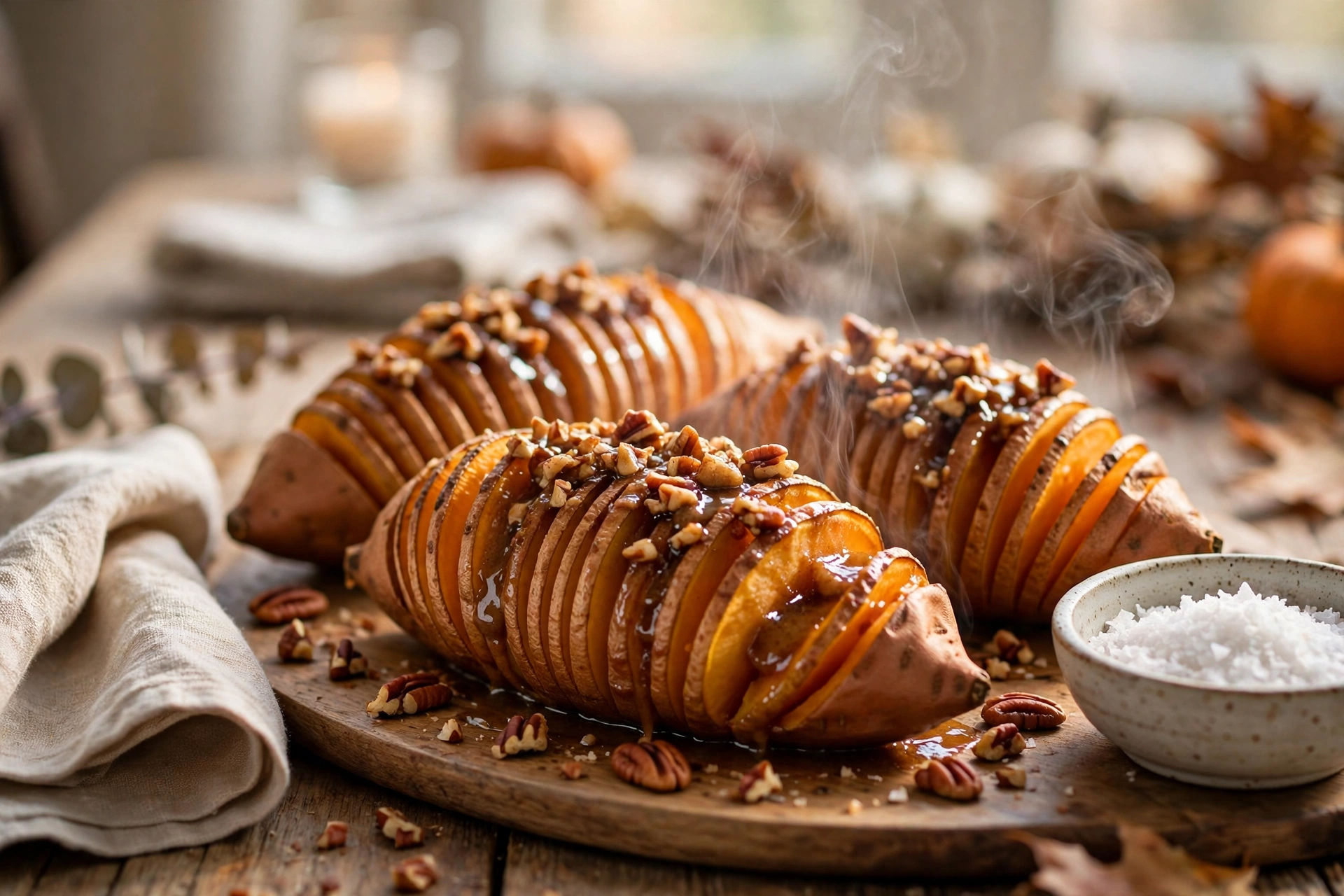
Hasselback sweet potatoes work because the cuts do three jobs at once. They open the dense flesh to the oven heat, they create dozens of thin edges that crisp like chips, and they form little channels that carry seasoned butter all the way to the center.
A plain baked sweet potato seasons only its skin. By the time salt and butter reach the middle of an uncut potato, dinner is over. The fan fixes that geometry: every slice has two faces, and every face gets butter, salt and heat.
The two stage roast is the second half of the design. Covered, the potatoes steam in their own moisture until the centers turn tender and the slices loosen. Uncovered, the same slices dry at the edges and crisp, which is the contrast the dish is famous for.
The glaze obeys the same logic. Maple butter goes on in two passes, once when the fan opens and once near the end, so it caramelizes in layers instead of pooling and burning in the bottom of the dish.
The technique has a pedigree. According to Wikipedia’s history of Hasselback potatoes, the method was created in the 1950s at the Hasselbacken restaurant in Stockholm, where white potatoes were first cut this way and roasted in butter.
Sweet potatoes take to the treatment even better than white ones. Their sugars caramelize at the thin edges, their flesh turns almost pudding soft, and their color alone earns them a place at the center of the table.
Crisp Edges Around a Custardy Middle
The first bite is a study in contrast. The top edges of the slices shatter gently, almost like the corner of a roasted chip, and underneath them the flesh is soft, dense and sweet, closer to a custard than to a mash.
Maple leads the flavor but never takes over. It reads as warmth rather than candy, deepened by butter and cinnamon, and the toasted pecans add a crunch that keeps every bite from feeling like baby food.
Salt matters more here than in most sweet sides. A full teaspoon, split between the first rub and the glaze, keeps the potato’s natural sweetness in balance, and the flaky salt at the end lands like tiny sparks.
Served hot, the fans glisten and the butter pools in the cuts. As they sit, the glaze sets into a shiny coat, so the dish still looks generous when it reaches the table twenty minutes later.
Break a slice off the end and look at it before you serve. The edge should be deep orange and slightly wrinkled, the center glossy and soft. If the center looks pale and firm, the covered stage was cut short.
Beside turkey and gravy, these play the sweet role with restraint. They are richer than plain roasted wedges and lighter than a marshmallow topped casserole, which is exactly the spot a modern Thanksgiving plate leaves open.
One Pan, Eight Servings, Room in the Oven
Everything happens in a single nine by thirteen inch dish. There is no second pot, no mash to keep warm, no marshmallow topping to babysit, and the pan travels straight from oven to table looking like you planned it that way.
The batch is sized for a crowd on purpose. Eight medium potatoes feed eight people as a generous side, and the same dish doubles as the holding vessel while the turkey rests and the other sides come together.
Oven scheduling is where hasselback sweet potatoes quietly win Thanksgiving. The covered stage is forgiving about temperature, so the potatoes can share the oven with my make-ahead mashed potatoes at a lower heat, then crisp while the turkey rests.
The slicing, often feared, takes about ten minutes for the whole batch once the spoon guards are in place. It is rhythmic, forgiving work, and a helper can be trusted with it while you build the glaze.
Cleanup is a single dish and a small saucepan. On a day when the sink fills faster than it empties, a side that leaves almost no trace behind earns real gratitude.
Budget is the last quiet virtue. Sweet potatoes, butter, maple syrup and a handful of pecans cost a fraction of a cheese laden casserole, yet the plate looks like the most expensive thing on the table.
A Savory Path With Garlic and Herbs
Not every table wants a sweet side, and the same fan carries a savory version beautifully. Swap the maple butter for garlic herb butter and the dish steps into a completely different role beside the bird.
Melt the same six tablespoons of butter with two grated garlic cloves, a teaspoon of chopped fresh thyme and a teaspoon of chopped rosemary. Brush it between the slices exactly as written, and finish with grated Parmesan in the last five minutes.
A smoked paprika path sits between the two. Keep the butter plain, add a teaspoon of smoked paprika and a pinch of cayenne to the rub, and skip the maple entirely; the result is smoky, gently hot and excellent with gravy.
For a dairy free table, use olive oil in place of the butter and keep the maple and pecans. The edges crisp a little faster, so check the fan five minutes early and tent with foil if the tips darken.
Whichever path you choose, slice and roast the potatoes the same way. The method is the constant; the butter is the variable, and both versions reheat by the same rules in the storage section below.
What Goes Into the Pan
Choose long, straight sweet potatoes of similar size, about eight ounces each. Straight potatoes slice evenly and sit flat in the dish, and similar sizes mean the whole batch finishes in the same minute.
The glaze is a short list with no fillers: real butter, pure maple syrup, cinnamon, vanilla and pecans. Pancake syrup is mostly flavored corn syrup and will not caramelize the same way, so this is the place to use the real bottle.
Pecans go on late, in the final minutes, which is why they are listed apart from the glaze. Toasted in the maple drippings, they turn glossy and crisp instead of steaming under a lid of foil.
- 8 medium sweet potatoes, about 4 pounds total, long and similar in size
- 2 tablespoons olive oil
- 1 teaspoon fine sea salt, divided
- 1/2 teaspoon black pepper
- 6 tablespoons unsalted butter
- 1/3 cup pure maple syrup
- 1 teaspoon ground cinnamon
- 1/2 teaspoon vanilla extract
- 3/4 cup pecans, roughly chopped
- Flaky sea salt, for finishing
Slicing, Roasting and Glazing, Step by Step
- Heat the oven to 425 degrees. Scrub the sweet potatoes well and dry them completely; wet skins steam instead of crisping, and a dry potato is also safer to slice.
- Set one potato between the handles of two wooden spoons on a cutting board. Slice straight down every 1/8 inch, letting the spoon handles stop the knife about 1/4 inch from the bottom, and repeat with all eight potatoes.
- Rub the potatoes all over with the olive oil, 1/2 teaspoon of the salt and the pepper, working a little into the cuts. Arrange them cut side up in a 9 by 13 inch baking dish and cover the dish tightly with foil.
- Roast covered for 30 minutes, until the slices have loosened and a knife slides into the thickest part with only slight resistance.
- While the potatoes roast, melt the butter in a small saucepan. Whisk in the maple syrup, cinnamon, vanilla and the remaining 1/2 teaspoon of salt, and keep the glaze warm. Keep the pecans aside for now.
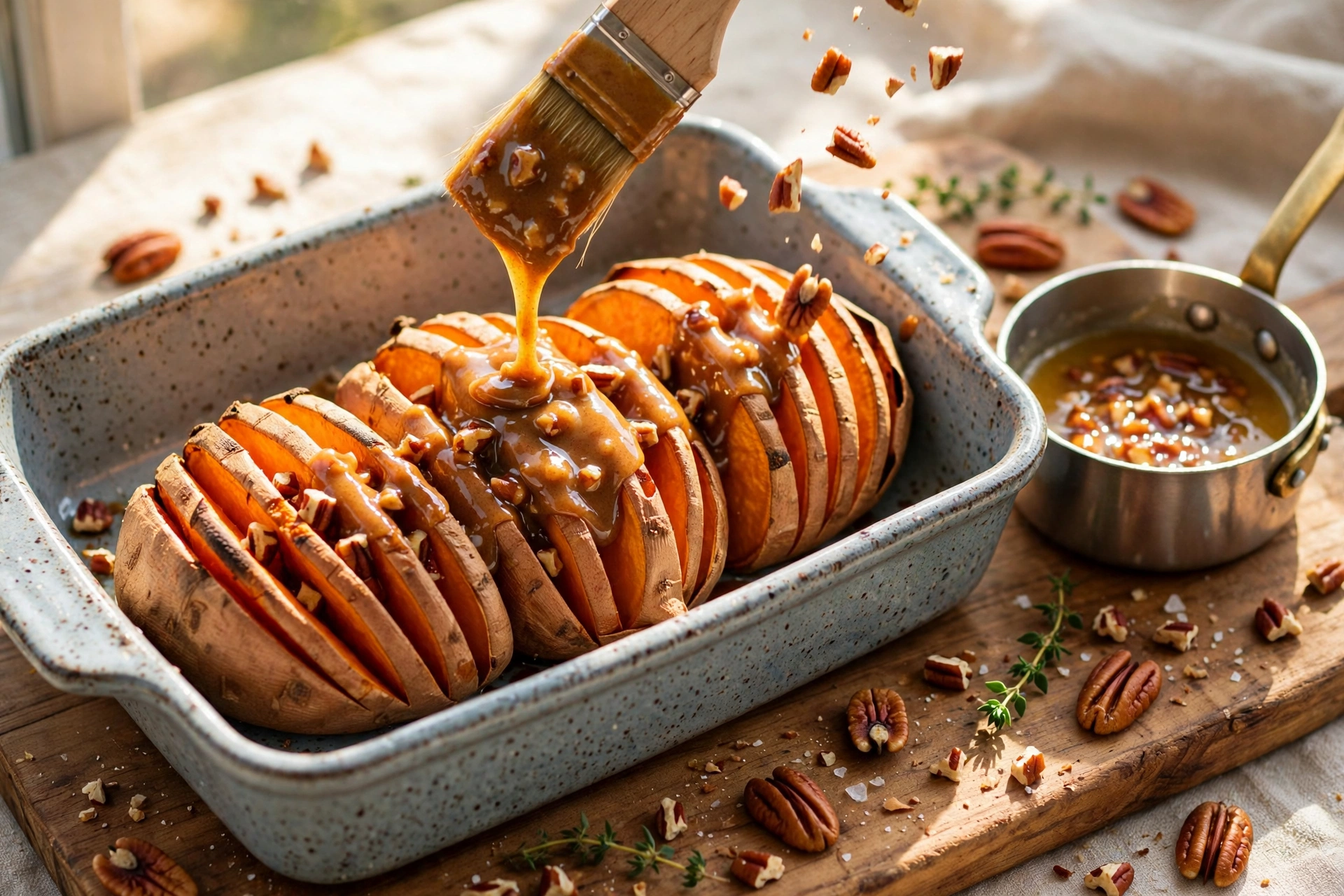
- Remove the foil. Gently press each potato with the back of a fork so the slices fan open, then brush half of the maple butter down between the slices, opening them slightly as you go.
- Roast uncovered for 20 minutes. Brush with the remaining glaze, scatter the pecans over the tops and into the cuts, and roast 8 to 10 minutes more, until the edges are crisp and deep orange and the pecans look toasted.
- Rest the dish for 5 minutes. Spoon the pan juices over each potato, finish with flaky sea salt, and serve warm, one potato per person.
Read the Fan, Not Just the Timer
The fan tells you when the dish is done. Slices that stand apart with a visible gap, edges turned a shade darker than the center, mean the potato is ready for glaze. Slices still pressed shut need ten more covered minutes.
If a slice breaks off while you cut, do not discard it. Tuck it back into the fan before roasting; the butter will hold it in place as it cooks, and no one at the table will ever know.
Uneven potatoes are the usual cause of uneven results. Group the largest potatoes in the center of the dish where the heat is steadiest, and give any true giant an extra five minutes under the foil before the others join it.
Watch the pecans, not the clock, in the final stage. They should smell toasted and look a shade deeper; maple sugar burns quickly at the end, so pull the dish the moment the nuts darken.
A thin bladed knife is non negotiable for clean cuts. Thick blades wedge the slices apart and crack them, while a long, sharp chef’s knife glides down to the spoon handles without forcing.
Roast Them the Day Before
Here is where hasselback sweet potatoes earn their keep in a holiday week. Roast them through the covered stage and the first glaze a day ahead, cool them in the dish, cover and refrigerate right in the pan.
On serving day, let the dish stand at room temperature for 30 minutes, brush the potatoes with two fresh tablespoons of melted maple butter, and reheat uncovered at 375 degrees for 15 to 20 minutes. Add the pecans for the last 8 minutes, exactly as in the main recipe.
The edges come back fully crisp, which is the surprise of the method. Because the potatoes were already tender, the reheat is only about drying and browning the surface, and the fan opens even wider the second time.
Leftovers keep for 4 days in the refrigerator, covered. Reheat single potatoes in a 375 degree oven for 12 minutes or in an air fryer for 6, and save the microwave for emergencies; it softens the edges the dish exists for.
Fully glazed leftovers also freeze respectably for up to 2 months, wrapped individually. Thaw overnight in the refrigerator and reheat as above, and they will still outshine most fresh sides on a busy weeknight.
On my own table they sit between the green bean casserole and the make-ahead honey glazed carrots, and they are the dish guests ask about before dessert is even mentioned.
The Side That Steals the Table
Hasselback sweet potatoes ask for a knife, two spoons and one pan, and they return a side that looks like a centerpiece. Crisp edges, a custardy middle and maple pecan butter in every cut make them the rare holiday dish that is both the easiest and the most admired.
Make them once this season, learn how the fan opens and how the pecans sound when they are toasted, and you will have a Thanksgiving signature that takes less effort than the casserole it replaces.
Hasselback Sweet Potato Questions, Answered
Why do my hasselback sweet potatoes stay closed instead of fanning open?
The cuts are either too shallow or the covered roast was too short. Slice down to the spoon handles so only a thin base holds the potato together, and keep the dish tightly covered for the full 30 minutes; the steam is what loosens the slices so they can fan.
How do I keep slices from breaking off while I cut?
Use the handles of two wooden spoons as guards on both sides of the potato, and let the knife stop on the wood rather than judging the depth by eye. A long, thin, sharp blade also matters: thick blades wedge the slices apart and crack them off.
Can I make hasselback sweet potatoes a day ahead for Thanksgiving?
Yes, and they reheat beautifully. Roast through the first glaze, cool and refrigerate in the dish, then reheat uncovered at 375 degrees for 15 to 20 minutes with a fresh brush of maple butter. Add the pecans only for the last 8 minutes so they stay crisp.
When do the pecans go on so they toast without burning?
In the last 8 to 10 minutes of the uncovered roast, after the second brush of glaze. Pecans are delicate and the maple sugar around them darkens fast; added early, they scorch before the potato edges have time to crisp.
My sweet potatoes are all different sizes. How do I bake them evenly?
Sort them as you slice: put the largest potatoes in the center of the dish, where the heat is steadiest, and start any very large potato 5 minutes earlier under the foil. Similar sizes are best, but grouping by size inside the pan fixes most of the gap.