
In this article:
- Why they earn a seat at Thanksgiving
- Crisp edges, tender centers
- The cut that decides everything
- Parboil first, the four minute head start
- What goes on the tray
- Roasting them, step by step
- The two stage honey trick
- Prepped the day before
- Swaps, add ins and serving ideas
- Leftovers without the sog
- Serve them while the turkey rests
- Questions about the parsnips
Roasted parsnips are the side dish nobody expects and everybody goes back for. Cut into thick batons, parboiled for four minutes, then roasted hot until the edges caramelize, they come out crisp at the tips, tender in the middle, and glossy with honey and thyme.
They also solve a Thanksgiving problem. The oven is crowded, the cook is tired, and most sides demand attention at the worst moment. These parsnips are prepped the day before, roasted in twenty minutes while the turkey rests, and served straight from the tray.
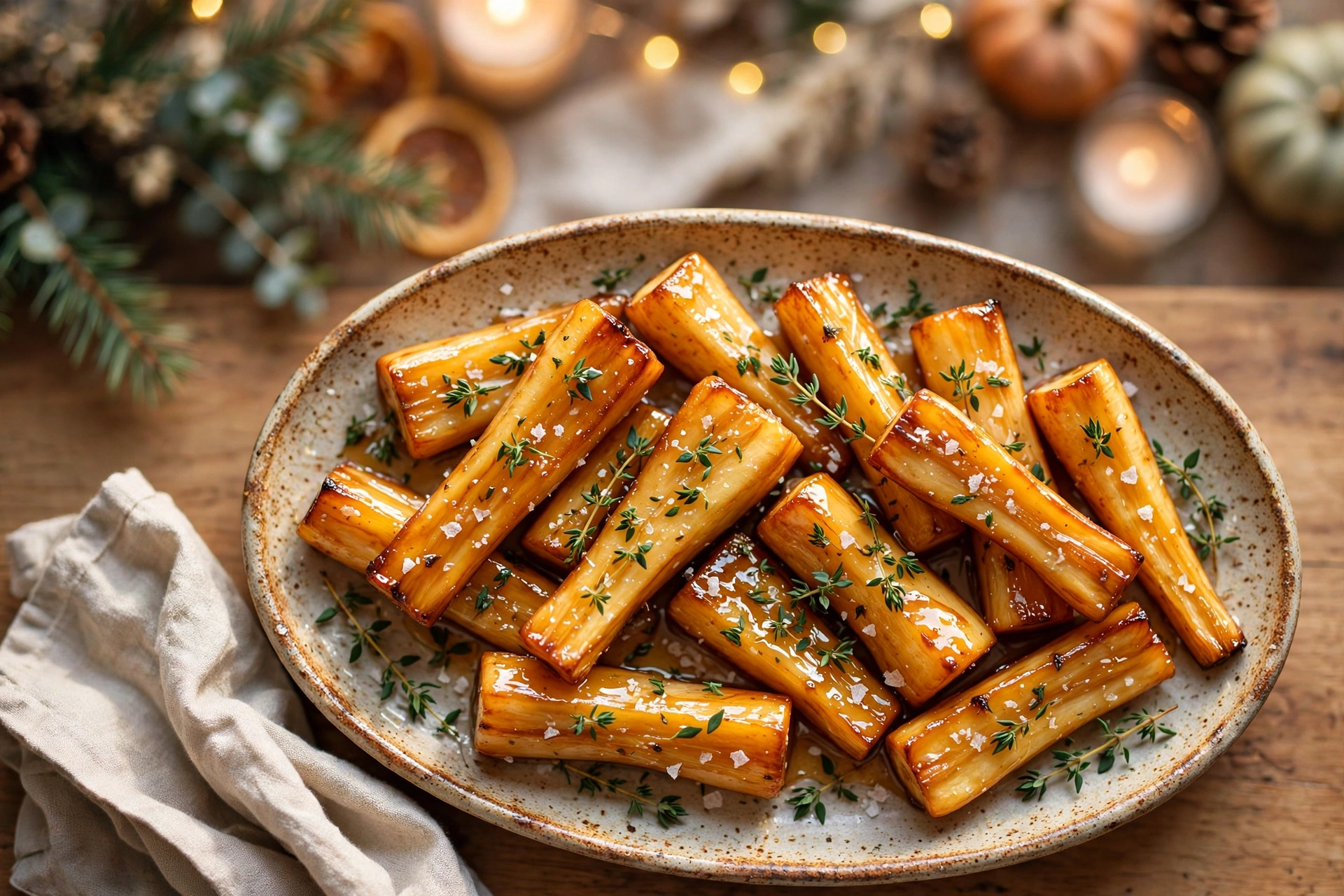
Why Roasted Parsnips Earn a Seat at Thanksgiving
Roasted parsnips work because the vegetable brings its own sugar to the pan. A parsnip is sweeter than a carrot, closer to a sweet potato in spirit, and dry roasting concentrates that sweetness until the surface turns amber and almost candied.
The parboil is the quiet technique underneath everything. Four minutes in salted boiling water seasons the batons to the center and softens the surface, so the oven spends its time browning instead of drying. A dried, roughed up surface is what crisps.
Honey and thyme finish the logic. Honey amplifies the parsnip’s natural sweetness without hiding it, and thyme adds the woodsy, savory note that keeps the dish firmly on the dinner side of the table, next to the turkey and gravy.
If you are planning the full spread, my Thanksgiving dinner menu shows where these fit, between the rich dishes and the bright ones. Every table needs one tray of something golden and simple, and this is that tray.
There is a bit of garden wisdom behind the flavor, too. Parsnips sweeten after cold weather, converting starch to sugar as protection against frost, which is why the roots in stores from late fall onward taste noticeably better than the ones shipped in summer.
Crisp Edges, Tender Centers, Honey That Stays Bright
The first bite gives you three textures in order. The tip crunches, slightly sticky from the glaze. The edge gives way with a caramel chew. Then the center arrives, soft and almost creamy, with the mellow sweetness of a root that has been roasted, not boiled.
The flavor is warmer than a carrot and gentler than a turnip. There is a faint nuttiness underneath, the kind people describe as chestnut like, and the thyme reads as a green, savory whisper rather than a strong herb hit.
Guests who claim not to like parsnips usually met a boiled, waterlogged version. Roasting rewrites the introduction entirely: no mush, no gray, just caramel and salt. Expect at least one skeptic at the table to ask what the golden sticks are, then take seconds.
Temperature matters more than cooks expect. Served hot, the glaze shines and the edges stay crisp. Ten minutes later the honey settles into the surface and the batons turn supple, still delicious, but a different dish, which is why the timing plan below matters.
The aroma does quiet work at the table as well. Warm honey and thyme smell faintly of the holidays without competing with the turkey, and the deep amber color fills the one pale gap most Thanksgiving plates share, between the white potatoes and the white meat.
The Cut That Decides Everything: Batons, Cores and Tips
Choose parsnips that feel heavy and firm, with smooth, unblemished skin. Small to medium roots, about an inch thick at the top, are the sweetest and most tender. Giant parsnips look impressive and cook like firewood, so leave them for soup.
Peel them, then trim both ends. Cut each root into batons about three inches long and a generous half inch thick, as even as you can manage. Even thickness is not fussiness; it is the whole difference between a tray that browns together and a tray of mixed results.
Two small repairs make the tray. First, snip off the skinny tail tips, which scorch before the thick ends cook; save them for stock. Second, on any parsnip wider than an inch at the top, cut out the pale woody core in a wedge, because it stays tough no matter how long it roasts.
Buy the roots a few days ahead without worry. Wrapped in a barely damp towel inside a bag, parsnips keep two weeks in the crisper and even improve slightly in sweetness. Avoid any that feel rubbery, sprout green shoulders, or smell sharp; those are old and will roast bitter.
Parboil First: the Four Minute Head Start
Parboiling sounds like an old fashioned extra step, and for this vegetable it is the step that guarantees the texture. The batons enter the oven already seasoned and tender inside, so a shorter, hotter roast can focus entirely on color.
Four minutes in well salted boiling water is the number. Less, and the centers stay firm and fibrous. More, and the batons start to fray and drink up water, which steams in the oven and fights the browning you want.
The drain matters as much as the boil. Tip the batons into a colander, then spread them on the tray and let the steam escape for five full minutes. Shake the tray once so the surfaces rough up slightly. Those roughed edges are where the crisp, lacy bits form.
Salt the boiling water generously, like pasta water. A parsnip seasoned only on the surface tastes sweet first and salty second; a parsnip seasoned through the parboil tastes complete, and the glaze then reads as a finish instead of a rescue.
What Goes on the Tray for Roasted Parsnips
- 2 pounds parsnips, peeled and cut into thick batons
- 2 tablespoons olive oil
- 1 teaspoon fine sea salt, plus flaky salt to finish
- 1/2 teaspoon black pepper
- 3 tablespoons honey, divided
- 1 tablespoon fresh thyme leaves, plus a few sprigs to serve
- 1 teaspoon apple cider vinegar
The vinegar is the ingredient nobody notices and everybody tastes. A teaspoon whisked into the finishing honey keeps the glaze bright and stops the sweetness from sitting flat on the palate. It does not make the dish sour; it makes it vivid.
Roasting the Parsnips, Step by Step
- Heat the oven to 425 degrees Fahrenheit with a large rimmed baking sheet inside it. A hot tray gives the batons a head start on browning.
- Bring a large pot of well salted water to a boil. Add the parsnip batons and cook for 4 minutes, until they just begin to soften at the edges.
- Drain the batons and spread them on a clean towel or the hot tray. Let them steam dry for 5 minutes, shaking once to rough up the surfaces.
- Toss the batons with the olive oil, salt, pepper, half the thyme and 1 tablespoon of the honey. Spread them in a single layer with space between the pieces.
- Roast for 15 minutes. Turn each baton with tongs so the pale side faces down, then roast 5 to 10 minutes more, until deeply golden at the edges and tender all the way through.
- Whisk the remaining 2 tablespoons of honey with the vinegar. Drizzle it over the hot parsnips, toss once on the tray, and shower with the remaining thyme and a pinch of flaky salt. Serve immediately.
Watch the tray, not the clock, in the last five minutes. The batons color quickly once the surface sugars wake up, moving from pale gold to deep amber in about two minutes. Pull them when most edges are amber and a few are dark mahogany; that spread of color is flavor, not a mistake.
The Two Stage Honey Trick
Honey burns faster than almost anything else in a hot oven. Put the full amount on at the start and the glaze turns bitter and dark before the parsnips are tender, which is the single most common way this dish disappoints.
The fix is to split it. One tablespoon goes on before roasting, just enough to help the edges caramelize and take color. The remaining two tablespoons, loosened with vinegar, go on after the tray leaves the oven, where the residual heat melts the honey into a glossy coat without scorching a drop.
The result looks like the parsnips were glazed by a pastry chef and tastes clean and bright. If your honey has crystallized in the jar, warm the jar in a bowl of hot water for ten minutes; liquid honey drizzles evenly and coats instead of clumping.
The same logic protects any sweet finish on roasted vegetables. Sauces and glazes with sugar belong at the end of a hot roast, brushed on warm food rather than baked onto it. Remember that once, and a whole family of side dishes gets easier and better looking.
Prepped the Day Before: the Thanksgiving Plan
Here is the schedule that makes roasted parsnips the calmest dish on the holiday table. The day before, peel, cut and parboil the batons. Drain, steam dry, cool completely, then refrigerate on a parchment lined tray, loosely covered, for up to twenty four hours.
On the day, the batons go straight from the refrigerator onto the hot tray with their oil and seasoning. Cold batons need two or three extra minutes; the edges still crisp because the surfaces were dried the day before. Roast while the turkey rests and the gravy comes together.
The same plan travels well to the rest of the menu. My make ahead honey glazed carrots follow the same parboil and roast rhythm, and the make ahead mashed potatoes free the stovetop entirely. Three sides prepped ahead, one oven, no drama.
If the oven is running cooler for the turkey, the parsnips adapt without complaint. At 375 degrees they need about ten extra minutes and lose a little edge crispness; at 450 they race and need watching. The 425 degree roast in the method is simply the sweet spot between the two.
Swaps, Add Ins and Ways to Serve Them
The formula welcomes small changes. Maple syrup replaces the honey one for one and leans the dish toward a deeper, darker caramel. A pinch of smoked paprika or a few grinds of nutmeg in the oil gives the tray a warmer, older fashioned flavor.
For texture, scatter a quarter cup of chopped toasted pecans over the finished dish, the same finish that works on my roasted butternut squash and Brussels sprouts. A crumble of tangy goat cheese, added at the table, turns the tray into something close to a warm salad.
A second tray trick helps on very busy days: roast the batons on two smaller sheets instead of crowding one large one. The trays swap racks at the turning point, everything browns evenly, and nobody waits for a second batch while the turkey cools.
Beyond Thanksgiving, serve the batons under roast chicken, alongside lentils and a yogurt sauce for a meatless dinner, or chopped cold into a grain bowl the next day. According to USDA FoodData Central, parsnips bring real fiber, potassium and vitamin C to the plate, which is more than most holiday sides can claim.
The recipe is naturally gluten free and easy to keep plant based: the honey is the only animal product, and maple syrup steps in without changing a single time or temperature. Dairy never enters the tray at all, which makes this a safe dish to carry to a mixed table.
Leftovers and Reheating Without the Sog
Store leftover parsnips in a covered container in the refrigerator for up to four days. The glaze will soften them overnight; that is expected, and the flavor actually deepens as the thyme settles into the surface.
Reheat on a tray in a 400 degree oven for eight to ten minutes, spread out and untouched, until the edges crisp again. The microwave turns them soft and steamy, and a skillet works only in a single layer with patience. The oven is the answer.
Chopped leftovers disappear happily into a turkey soup, a hash with a fried egg, or a root vegetable mash. Freeze them only if you must; thawed parsnips lose their crisp edges for good, though they stay fine for soups and mashes for up to two months.
One serving note from experience: pile the batons high on a warm platter rather than spreading them in a cold bowl. The mound keeps the bottom layer steaming hot, the top layer crisp, and the honey glossy until the last portion is taken, which rarely takes long.
Serve Them While the Turkey Rests
Roasted parsnips ask for almost nothing: one tray, a short boil, a hot oven and honey added at the right moment. In return they bring the color, sweetness and calm that a Thanksgiving plate is usually missing. Make them once this year, and watch them become the side people request by name, year after year, long after the menu has changed around them.
FAQ
Do I have to peel parsnips before roasting them?
For this recipe, yes. Parsnip skin turns tough and slightly bitter in a hot oven, and peeling gives the honey a smooth surface to cling to. Young, thin parsnips can be scrubbed and roasted unpeeled, but thick batons roast more evenly without the skin.
Why did my roasted parsnips come out soft instead of crisp?
The usual causes are wet batons, a crowded tray, or an oven that was not fully hot. Steam dry the parboiled batons for five full minutes, spread them with space between the pieces, and roast at 425 degrees on a preheated tray.
Can I roast the parsnips entirely the day before and reheat them?
You can, and they will still be good, though the edges never fully recover. The better plan is to parboil and refrigerate the day before, then roast fresh in about twenty minutes while the turkey rests.
What can I use instead of honey on roasted parsnips?
Maple syrup is the closest swap and goes on in the same two stages. For a less sweet tray, skip the finishing drizzle and add a teaspoon of grainy mustard to the oil instead; the parsnips caramelize on their own sugars.
How do I know when roasted parsnips are done?
The tip of a small knife should slide into the thickest baton with no resistance, and the edges should be deep amber with a few darker, candied spots. Pale and firm means five more minutes; dark and shriveled means the tips were cut too thin.