
In this article:
Make ahead dinner rolls are the answer to the one job Thanksgiving cooks dread most: hot, fresh bread landing on the table at the exact minute everything else does. These are mixed and shaped weeks early, frozen raw, then thawed overnight in their own baking pan.
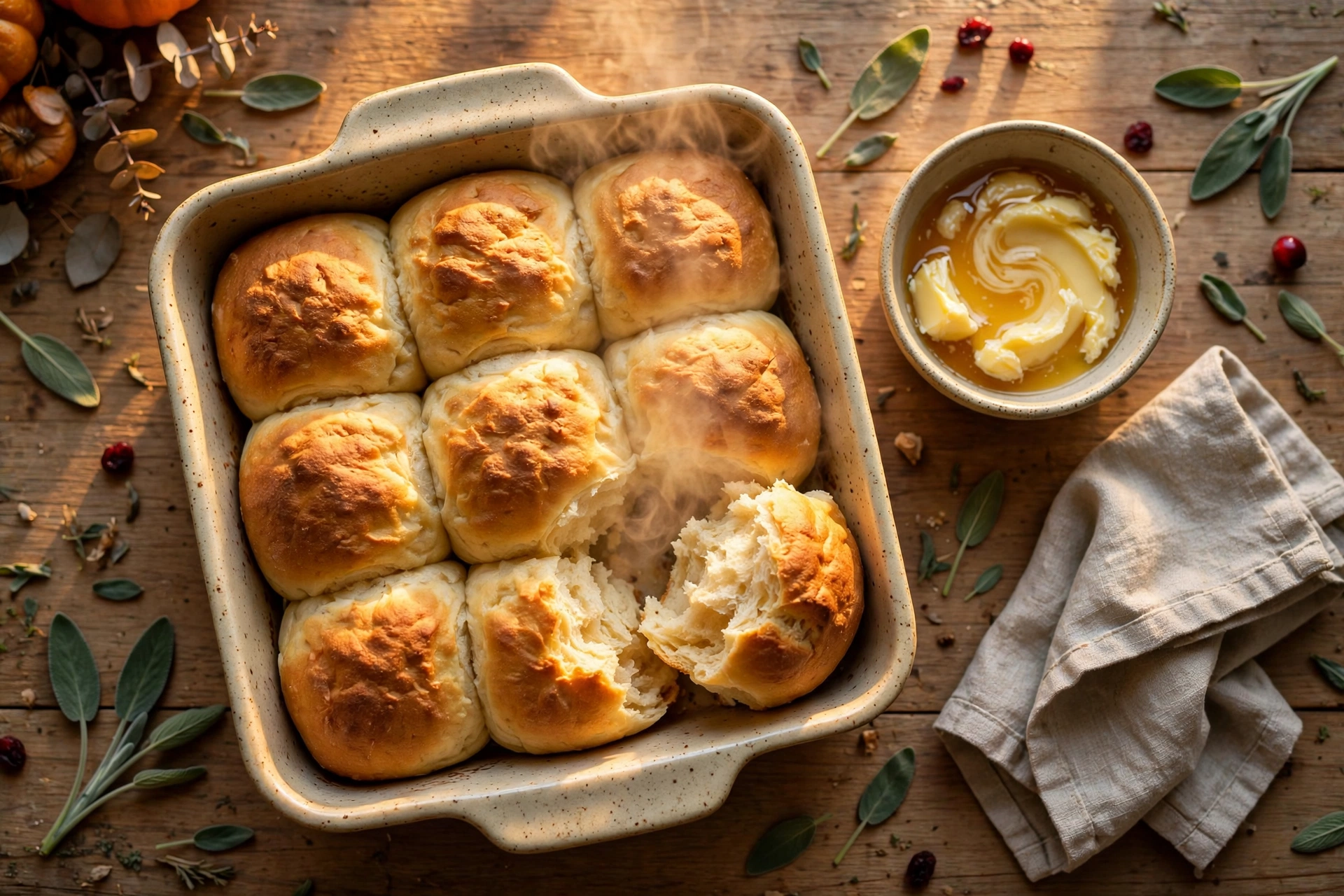
That is the beauty of make ahead dinner rolls: on the day itself there is no flour on your hands and no dough to babysit. The pan comes out of the refrigerator, the rolls proof while the turkey roasts, and they bake during the bird’s rest, arriving at the table steaming, golden and brushed with honey butter.
Why Raw Frozen Dough Beats Every Other Make Ahead Method
Most make ahead dinner rolls advice sends you down one of two roads: bake the rolls partway and freeze them, or keep dough in the refrigerator for a few days. Both work, and both quietly tax the result. Par baked rolls reheat into something good but never quite fresh, and refrigerated dough keeps fermenting until it sours.
Freezing the shaped rolls raw stops the clock completely. The yeast sleeps, the dough holds its shape, and nothing about the flavor drifts. When the rolls finally bake, they bake once, from raw dough, exactly like rolls made the same morning.
That single bake is the whole secret. A roll baked once has a thin, tender crust and a crumb that steams when you tear it. A roll baked twice, however gently the first bake went, gives up moisture it never gets back.
There is also a quiet flavor dividend. Dough that rests cold develops a deeper, more bready taste, the gentle work of slow fermentation before the freeze and during the overnight thaw. Your guests will not name it, but they will reach for a second roll.
Freeze Raw or Par Bake: the Honest Comparison
The par bake method has one real advantage: speed on the day. Rolls baked until pale, frozen, then finished in a hot oven need only ten minutes before serving. If your Thanksgiving oven schedule is truly impossible, that speed is worth something.
Its costs are texture and timing discipline. Par baked rolls must be frozen the day they are baked and eaten the day they are finished. Held a second day after finishing, they stale faster than any other bread on the table.
Freezing raw asks a little more of your morning: an overnight thaw in the refrigerator, then forty five to sixty minutes of proofing at room temperature. In exchange, the rolls bake when you say so, in any quantity, and taste indistinguishable from fresh.
My verdict, after many holiday trials: freeze your make ahead dinner rolls raw for Thanksgiving, when quality matters most and the turkey gives you a natural proofing window. Keep par baking for busy weeknights, when ten minutes flat is the entire point.
One more consideration decides it for many cooks: quantity control. A bag of individually frozen rolls lets you bake twelve for the holiday and six for a quiet Sunday, all from one mixing session. A par baked batch, once thawed and finished, is committed in full.
The Warm Milk Window Where Yeast Wakes Up
Yeast is a living ingredient with a narrow comfort zone, and the milk temperature is where this recipe is won or lost. Between 105 and 110 degrees Fahrenheit, active dry yeast wakes up hungry and reliable. Above 120 degrees, it begins to die.
Warm the milk until it feels like a hot bath on the inside of your wrist, then check with a thermometer until the gesture is familiar. Stir in the sugar and yeast, and wait. Within five to ten minutes the surface should foam and smell faintly like bread itself.
No foam means no rise, and it is far better to learn that at the mixing bowl than after shaping twenty four rolls. Start again with fresh yeast and cooler milk; the ten minutes lost here save the whole batch.
If you bake with instant yeast instead, the same amount works. Skip the foaming step, mix it straight into the flour, and warm the milk to the same window so the dough still rises on schedule.
What Goes Into the Dough
These make ahead dinner rolls use a short, pantry honest list. The egg and butter make the crumb rich enough for a holiday table, while the sugar stays modest, feeding the yeast and helping the tops brown without turning the rolls sweet.
- 1 cup warm whole milk, 105 to 110 degrees Fahrenheit
- 2 1/4 teaspoons active dry yeast, 1 standard packet
- 1/4 cup granulated sugar
- 1/4 cup unsalted butter, melted and cooled slightly, plus more for the pan
- 1 large egg, at room temperature
- 1 teaspoon fine sea salt
- 3 1/2 to 4 cups all-purpose flour, spooned and leveled
- 2 tablespoons melted butter mixed with 1 tablespoon honey, for finishing
The flour range is deliberate. Dough should be soft and slightly tacky, never stiff; start with three and a half cups and add the rest a spoonful at a time only if the dough sticks to the bowl in ribbons. Soft dough is what bakes into soft rolls.
Room temperature egg matters more than it sounds. A cold egg chills the warm milk mixture on contact and slows the first rise, which throws off every timing that follows in a recipe built around the freezer.
Mixing, Rising and Shaping the Rolls
Work in this order and the dough behaves: proof the yeast, build the dough, knead until smooth and elastic, then let it rise once before shaping. The shaped rolls go straight from the tray into the freezer.
- Stir the yeast and sugar into the warm milk and let it foam for 5 to 10 minutes. Whisk in the melted butter and the egg.
- Add the salt and 3 1/2 cups of flour. Mix until a shaggy dough forms, then knead by machine or by hand for 7 to 8 minutes, adding flour a spoonful at a time until the dough is smooth, elastic and slightly tacky.
- Cover the bowl and let the dough rise in a warm spot for about 1 hour, until doubled.
- Turn the dough onto a lightly floured counter and divide it into 24 equal pieces, about 40 grams each if you weigh.
- Shape each piece into a tight ball: tuck the edges underneath, then roll it under a cupped palm against the counter until the surface is smooth and taut.
- Set the balls on a parchment lined baking sheet with a little space between them. At this point the rolls wait for nobody: the tray goes into the freezer.
The tight shaping is not fussiness. A smooth, taut surface is what lets each roll expand upward in the oven instead of slumping outward, and it is the difference between a bakery dome and a flat bun.
Flash Freezing the Shaped Rolls So They Never Stick Together
Slide the tray into the freezer uncovered for about two hours, until the rolls are hard all the way through. Freezing them in the open first is what keeps them separate later; bagged too early, soft dough balls freeze into one solid brick.
Once the rolls are rock hard, move them into a freezer bag, press out as much air as you can, and seal. Write two things on the bag: the date, and the baking instructions. Future you, standing in a busy holiday kitchen, will be grateful for both.
Four weeks in the freezer is the sweet spot, where the yeast wakes up as lively as the day it was frozen. Six weeks is the honest outer limit; beyond that, the rise slows and the odd roll bakes up pale and tired.
Short on freezer space? Freeze the rolls arranged in their buttered baking pan instead, wrapped tightly once solid. The pan then moves straight from freezer to refrigerator on the night before baking, which is the calmest version of all.
Thanksgiving Morning, Hour by Hour
Here is the schedule that makes these make ahead dinner rolls the calmest dish of the day. It assumes dinner in the late afternoon; shift the whole plan to match your table, keeping the gaps between steps the same.
The night before, arrange the frozen rolls in their buttered pan, cover the pan well, and refrigerate it. Overnight, the rolls thaw gently and begin the slowest, most flavorful part of their rise while you sleep.
About two hours before serving, set the covered pan on the counter. The rolls need forty five to sixty minutes at room temperature to finish proofing: look for balls that have swelled, pressed softly against each other, and spring back slowly when poked.
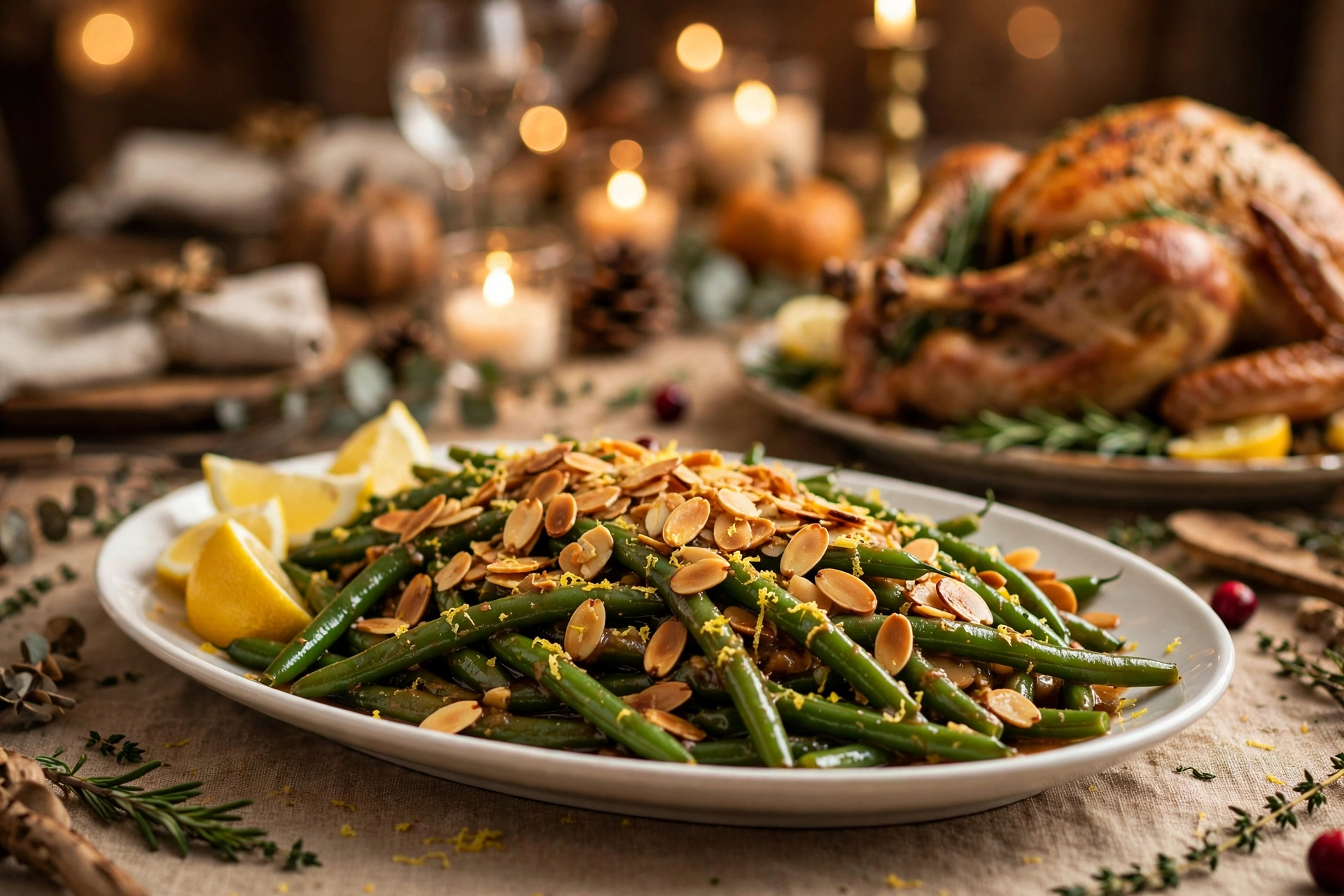
While the turkey rests, the oven is yours. Bake the rolls, brush them with honey butter, and carry the pan straight to the table next to the make-ahead mashed potatoes and the green beans almondine, two more dishes built to wait gracefully.
Baking From Thawed: Golden Tops and the 190 Degree Test
Heat the oven to 375 degrees Fahrenheit with the rack in the middle. Rolls baked from a cold pan placed in a properly hot oven spring best, so resist sliding them in while the oven climbs.
Bake for 18 to 22 minutes, until the tops are deep golden and the rolls sound faintly hollow when the largest one is tapped. If your oven browns unevenly, rotate the pan once, halfway through, with a calm hand.
The reliable test is temperature: an instant read thermometer pushed into the center roll should read 190 degrees Fahrenheit. At that point the crumb is fully set, steamy and tender, with no gumminess hiding in the middle.
If the tops race ahead of the centers, tent the pan loosely with foil for the last five minutes. Rolls forgive this completely, and pale bottoms are cured by two extra minutes on a lower rack.
For a smaller table, bake the rolls in two eight inch pans instead of one large one, and freeze the second pan of baked rolls for the weekend. Two pans also solve the crowded oven problem: one fits beside the turkey on almost any rack arrangement.
The Honey Butter Finish
While the rolls bake, stir the honey into the melted butter. The moment the pan leaves the oven, brush every top generously; the heat drinks the butter in and leaves a glossy, faintly sweet finish that needs nothing else.
Serve the rolls in their pan, wrapped in a clean towel to hold the warmth, and let people tear their own. A basket works too, but the pan keeps the bottoms steaming softly against each other.
Set out the make-ahead turkey gravy within reach of the rolls. Somebody at every Thanksgiving table uses a torn roll to chase the last of the gravy, and that person is having the best meal of anyone.
Leftovers That Stay Soft on Friday
Cool leftover rolls completely before bagging them; trapped steam is what turns a tender crumb gummy overnight. Stored airtight at room temperature, they stay genuinely soft for two days, which covers the whole leftover weekend.
To reheat, wrap the rolls in foil and warm them at 300 degrees Fahrenheit for 8 to 10 minutes. The crumb steams back to life inside the foil, and the tops stay tender instead of crisping into crackers.
Day two is where the leftovers earn their keep. Halved and toasted, the rolls carry the classic day after turkey sandwich, sturdy enough for cranberry sauce and a layer of stuffing without falling apart in your hands. Tear a few into cubes and they become the bread in a savory breakfast strata, or toast them into croutons for the soup pot on the coldest night of the weekend. Sliced, buttered and griddled, they stand in for garlic toast beside any pasta bake. That is also why I shape a double batch of make ahead dinner rolls in October, while the kitchen is calm and the freezer still has room: one pan for the holiday, one bag in reserve for whatever December brings.
Baked rolls also freeze well for a month, thawed overnight in the refrigerator and reheated the same way. For safe storage windows on the whole holiday spread, the USDA leftovers and food safety guidance is the reference I keep bookmarked every November.
Warm Rolls, Calm Cook
That is the entire promise of make ahead dinner rolls done this way: the mixing, kneading and shaping happen on a quiet weekend, and Thanksgiving itself asks only for a thaw, a short proof and twenty minutes of oven time you were not using anyway.
Make the full batch even for a small table. The freezer does not charge by the roll, and a bag of shaped dough in reserve turns any ordinary Sunday supper into warm bread with almost no notice. Start with the full Thanksgiving dinner menu if you are planning the whole table around them. Your future self, standing in a calm kitchen on Thanksgiving morning, will be grateful.
Questions About Make-Ahead Dinner Rolls
How far ahead can I freeze the shaped rolls?
Four weeks is the sweet spot: the yeast wakes up lively and the rolls bake tall and golden. Six weeks is the honest outer limit. Past that, the rise slows and the odd roll comes out pale, so bake the oldest bags first and date every bag you freeze.
Can I thaw the rolls on the counter instead of in the refrigerator?
Yes. Arrange the frozen rolls in their buttered pan, cover well, and leave them at room temperature for 4 to 5 hours, until thawed and puffy. The refrigerator overnight thaw is easier to time around a holiday, but the counter method works when the plan changes.
My rolls barely rose after thawing. What went wrong?
The usual causes are milk that was hot enough to hurt the yeast, yeast past its prime, or a cold kitchen slowing the proof. Give the pan more time in the warmest spot you have, near the oven as it preheats. Rolls that rose even a little still bake into good eating.
Can I bake half the batch and keep the rest frozen?
That is exactly what the flash freeze is for. Because the rolls freeze as separate balls, you can move any number into a pan the night before and leave the rest in the freezer. A smaller batch in a smaller pan bakes in about the same time.
Can I make these make ahead dinner rolls with instant yeast?
Yes, using the same 2 1/4 teaspoons. Skip the foaming step and mix the instant yeast directly into the flour, keeping the milk in the same warm window. The rise, freezing and baking all proceed exactly as written.
Make-Ahead Dinner Rolls
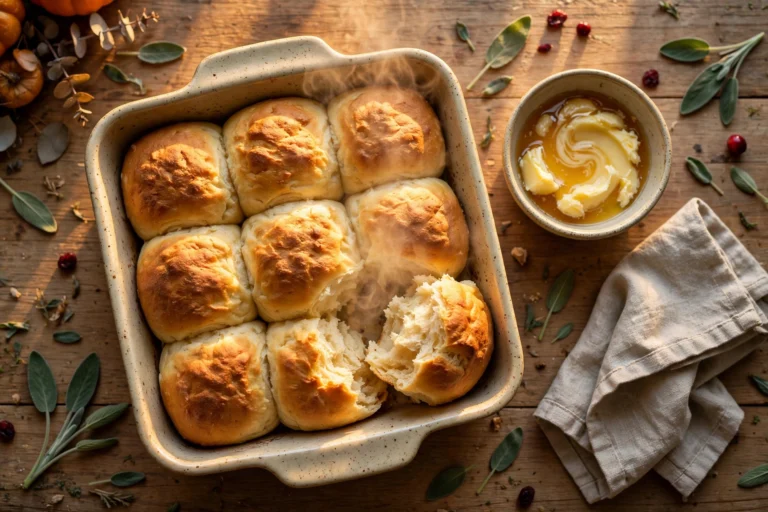
Soft dinner rolls mixed, kneaded and shaped weeks ahead, flash frozen raw, thawed overnight in their baking pan and baked fresh on Thanksgiving, brushed with honey butter. All of the work happens on a quiet weekend; the holiday itself asks for a short proof and twenty minutes of oven time.
- Total Time: 2 hours 15 minutes
- Yield: 24 rolls 1x
Ingredients
- 1 cup warm whole milk, 105 to 110 degrees Fahrenheit
- 2 1/4 teaspoons active dry yeast, 1 standard packet
- 1/4 cup granulated sugar
- 1/4 cup unsalted butter, melted and cooled slightly, plus more for the pan
- 1 large egg, at room temperature
- 1 teaspoon fine sea salt
- 3 1/2 to 4 cups all-purpose flour, spooned and leveled
- 2 tablespoons melted butter mixed with 1 tablespoon honey, for finishing
Instructions
- Stir the yeast and sugar into the warm milk and let it foam for 5 to 10 minutes. Whisk in the melted butter and the egg.
- Add the salt and 3 1/2 cups of flour. Mix until a shaggy dough forms, then knead for 7 to 8 minutes, adding flour a spoonful at a time until the dough is smooth, elastic and slightly tacky.
- Cover the bowl and let the dough rise in a warm spot for about 1 hour, until doubled.
- Turn the dough onto a lightly floured counter and divide it into 24 equal pieces.
- Shape each piece into a tight ball, tucking the edges underneath and rolling it under a cupped palm until the surface is smooth and taut.
- Set the balls on a parchment lined baking sheet and freeze uncovered for about 2 hours, until rock hard.
- Move the frozen rolls to a freezer bag, press out the air, seal, date the bag and freeze for up to 4 weeks.
- The night before baking, arrange the frozen rolls in a buttered 9×13 inch pan, cover well and refrigerate overnight to thaw.
- Set the covered pan on the counter for 45 to 60 minutes, until the rolls are puffy and pressed softly against each other.
- Bake at 375 degrees Fahrenheit for 18 to 22 minutes, until deep golden and the center roll reads 190 degrees Fahrenheit. Brush the hot tops with the honey butter and serve warm.
- Prep Time: 30 minutes
- Cook Time: 20 minutes
Nutrition
- Serving Size: 1
- Calories: 145
- Sugar: 4
- Sodium: 150
- Fat: 3
- Saturated Fat: 2
- Unsaturated Fat: 1
- Trans Fat: 0
- Carbohydrates: 24
- Fiber: 1
- Protein: 4
- Cholesterol: 20