
In this article:
- Made on Sunday, perfect on Thursday
- Tart first, then the gloss
- Twenty minutes on the stove, none on the day
- Sweetness at your setting
- What goes into the pot
- Cooking the sauce, step by step
- Read the berries, not the clock
- Orange first, then ginger, apple and spice
- Keeping the sauce until the feast
- The red jewel of the table
- Questions from the sauce pot
Make-ahead cranberry orange sauce is the one dish on the Thanksgiving table that improves in the waiting. Cooked on Sunday, rested in its jar, it arrives at Thursday’s turkey glossy, settled and brighter than the day it was made.
The contrast is the whole point. Everything else on the plate is soft, brown and rich, and then this sauce cuts through with cold tartness and a deep red shine that makes the whole spread look awake.
It asks for one pot, one bag of berries and twenty minutes. There is no roux, no gelatin and no candy thermometer, only fruit, citrus and the natural pectin the cranberries bring with them.
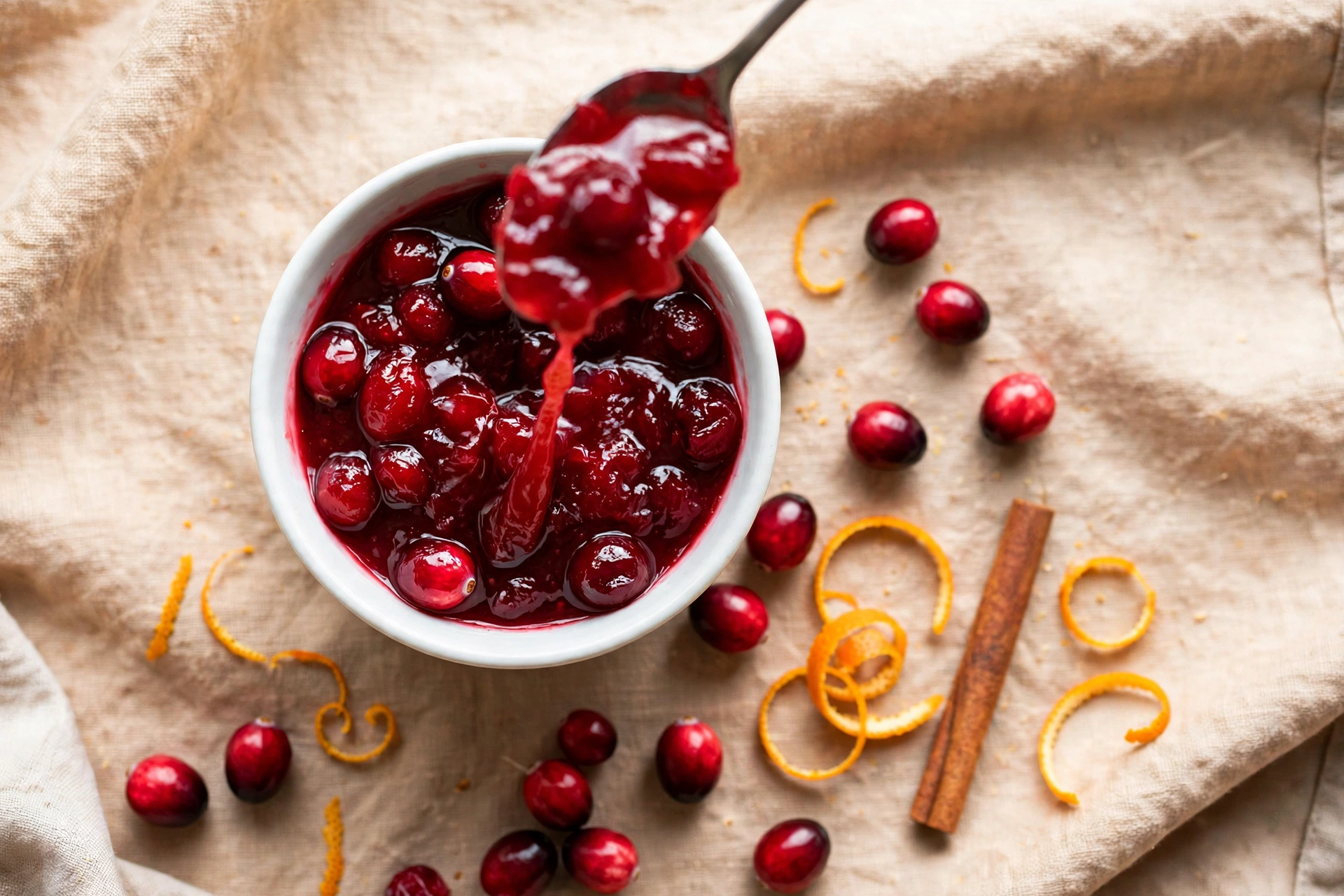
Made on Sunday, Perfect on Thursday
Make-ahead cranberry orange sauce works because cranberries are built for it. The berries carry more natural pectin than almost any other fruit, so the sauce sets itself as it cools, with no starch and no gelatin to cloud the flavor.
Resting is not a compromise here, it is the technique. A night in the refrigerator lets the orange zest perfume the whole jar, softens the sharpest edge of the fruit and turns a loose, syrupy pot into a spoonable sauce with a clean, glossy set.
The two texture decision happens at the stove. About two thirds of the berries are cooked until they burst and thicken the sauce, while the rest stay whole, so every spoonful holds both a smooth base and a bright pop of fruit.
The orange is added in two acts for a reason. The juice cooks with the berries and mellows, while the zest goes in off the heat, where its oils stay fresh and aromatic instead of turning bitter in the boil.
Cranberries also bring serious nutrition to a rich table. According to USDA FoodData Central, fresh cranberries are low in calories and rich in fiber and vitamin C, which is a welcome profile next to buttered everything.
On my own menu this jar sits at the center of the make-ahead plan. It is the first recipe I cook from my Thanksgiving dinner menu, because finishing it on Sunday makes the rest of the week feel possible.
Tart First, Then the Gloss
The first spoonful should wake the mouth, not sweeten it. Cranberry leads with a clean, firm tartness, the kind that resets the palate between bites of turkey, stuffing and gravy.
Orange follows a second later. The juice rounds the fruit with a soft citrus sweetness, and the fresh zest lifts the finish, so the sauce tastes like cranberry in bright light rather than cranberry in syrup.
The texture holds two registers at once. The base is smooth and jammy, thick enough to coat a spoon, while the whole berries give a small, satisfying burst that keeps the sauce from ever reading as plain jelly.
Served cold or at room temperature, the sauce sharpens the contrast further. Against hot turkey and warm sides, that cool, tart spoonful is the bite everyone goes back for, the one that makes a heavy plate feel balanced.
The color does quiet work too. On a table of golds and browns, a bowl of deep ruby sauce is the single vivid note, and it makes even a simple weeknight plate of leftovers look deliberate.
It also keeps its character at any temperature on the plate. Chilled, the tartness stands forward and the set feels firm; after half an hour on the counter, the sauce relaxes, the orange rounds out and the berries taste almost candied at the edges.
Twenty Minutes on the Stove, None on the Day
The active work is genuinely small. Five minutes of sorting and zesting, fifteen minutes at a gentle simmer, and the sauce is done, days before the oven schedule becomes a negotiation.
That timing changes Thanksgiving itself. On Thursday there is no pot to watch, no sugar to dissolve and no berries popping beside the turkey; the jar simply moves from refrigerator to table while everything else demands attention.
It also travels and gifts well. A small jar of this sauce, tied with string, is the easiest thing to hand a host, and it survives the drive without sloshing, wilting or losing its shine.
For a double batch, use a wider pot rather than a deeper one. The berries need surface area to burst evenly, and a wide pot keeps the cooking time close to the single batch instead of stretching it.
It belongs to the same peaceful category as my make-ahead mashed potatoes: dishes finished early, reheated or served without drama, and better for the rest they were given.
The pot itself is forgiving about timing. The sauce can simmer while something else roasts, wait off the heat while the kitchen is reset, or be reheated gently if the day rearranges itself, and none of those detours cost it any gloss.
Sweetness at Your Setting
The sugar here is a dial, not a rule. Three quarters of a cup gives a sauce that stays honestly tart; if your table prefers it softer, go to a full cup, and if the berries will meet very sweet sides, pull back slightly.
For a lower sugar jar, replace up to half the sugar with a monk fruit or stevia baking blend made for cooking. The set stays the same because the pectin does the work, though the finish will taste a little leaner.
Honey and maple syrup both work as full substitutes, each at three quarters of a cup. Maple leans the sauce toward the classic sweet potato casserole it will sit beside, while honey keeps the citrus in front.
The recipe is naturally gluten free, dairy free and vegan, with no adjustment at all. It is the one dish on the table that every guest can take without a single question, which is its own kind of convenience.
Taste the berries before you sweeten. A bag from a good harvest can be noticeably milder than a tart late season one, and the juice of the oranges swings the balance too, so the first spoonful from the pot is worth more than any fixed number.
What Goes Into the Pot
- 12 ounces fresh or frozen cranberries, sorted and rinsed (about 3 cups)
- 3/4 cup granulated sugar
- 1/2 cup fresh orange juice, from about 2 oranges
- 1/2 cup water
- 1 tablespoon finely grated orange zest, plus a little more to finish
- 1 cinnamon stick
- 1 pinch fine sea salt
- 1/2 teaspoon vanilla extract
Cooking the Sauce, Step by Step
- Sort the cranberries into a colander. Discard any that are soft, shriveled or discolored, keep only the firm berries that bounce when dropped on the counter, then rinse and drain well.
- Add the sugar, orange juice, water, cinnamon stick and salt to a medium saucepan. Set over medium heat and stir until the sugar has fully dissolved, about 2 minutes.
- Add the cranberries and bring the pot to a boil. As soon as it boils, lower the heat to a lively simmer; the berries will begin to pop within a few minutes.
- Simmer for 10 to 12 minutes, stirring now and then. When about two thirds of the berries have burst, press a few more against the side of the pot with a spoon and leave the rest whole.
- Take the pot off the heat while the sauce still looks a little loose and syrupy. It thickens as it cools, and an extra two minutes of cooking now becomes a stiff jelly later.
- Remove the cinnamon stick. Stir in the orange zest and the vanilla, both off the heat so their perfume stays fresh.
- Cool the sauce in the pot for 30 minutes, then transfer to a jar or serving bowl, cover and refrigerate. Rest at least 4 hours, and ideally 2 to 5 days, before serving.
Read the Berries, Not the Clock
The pop is your timer. Cranberries burst when their skins split from the steam inside, and a pot where two thirds have popped and one third hold their shape is a pot at exactly the right texture.
Sorting matters more than any other step. One soft, fermented berry can lend a flat, winey note to the whole jar, so the two minutes spent picking over the bag is the cheapest insurance in the recipe.
If the sauce is still runny after a full night in the refrigerator, it was pulled too early. Return it to a simmer for 3 minutes, mashing more berries this time, then chill again; the pectin will finish the job.
If it sets too firm, the fix runs the other way. Warm the sauce gently and whisk in water or orange juice a spoonful at a time until it loosens to a soft, spoonable set.
Always taste it cold before serving, never from the warm pot. Cold dulls both sweetness and acid, so the sauce that seemed balanced at the stove may want a teaspoon of sugar or a squeeze of orange on the day.
Frozen cranberries go in exactly as they are, with no thawing. Add two minutes to the simmer, and expect the same set; the fruit freezes so well that even seasoned cooks rarely taste the difference.
Watch the sugar at the start. Undissolved sugar can catch on the bottom of the pot once the berries go in, so stir the syrup until it runs clear and glossy before the fruit joins, and scrape the corners as it comes to the boil.
A cold saucer tells the truth about the set. Drop a spoonful onto a chilled plate, wait one minute, and push it with a fingertip: a sauce that wrinkles slightly and holds a soft ridge is a sauce that will spoon beautifully on the day.
Orange First, Then Ginger, Apple and Spice
Ginger is the closest variation. Stir in a teaspoon of finely grated fresh ginger with the zest, off the heat, and the sauce gains a warm hum that pairs beautifully with roast turkey and every rich side around it.
For an apple cranberry version, replace the water with apple cider and add half a finely diced sweet apple at the simmer. The apple melts into the base, softens the tartness and stretches the jar for a bigger table.
A spiced version swaps the cinnamon stick for a star anise and two whole cloves, removed before jarring. Keep the hand light: the sauce should taste of cranberry and orange first, with the spice felt rather than named.
For a deeper, darker jar, replace the water with pomegranate juice and finish with a teaspoon of balsamic vinegar at the end. The color turns almost burgundy, and the flavor gains a quiet richness that suits the darkest roast on the table.
The leftovers may be the best argument for a double batch. This cranberry orange sauce turns the day after sandwich into the meal people quietly prefer, layered with turkey and a smear of soft cheese.
Beyond the sandwich, spoon it over Greek yogurt, swirl it into oatmeal, or warm it as a sauce for the make-ahead creamed corn and green bean casserole from scratch plate it started beside. A jar rarely survives the weekend.
Keeping the Sauce Until the Feast
In the refrigerator, the sauce keeps for up to 10 days in a clean, sealed jar, and its flavor peaks between day two and day five. That window is the whole strategy: cook it the weekend before Thanksgiving, without any rush.
Freezing works beautifully for up to 3 months. Freeze it flat in a zip bag or in a rigid container with headspace, thaw it overnight in the refrigerator, and stir well before serving to restore the gloss.
Serve it cold, straight from the jar, or at room temperature after 30 minutes on the counter. Never serve it warm from a reheated pot unless you loosen it first; heat melts the set you waited days to build.
If you are gifting jars, fill small glass jars while the sauce is still warm, seal, cool and refrigerate. Tell the recipient the honest timeline: two weeks in the refrigerator, three months in the freezer, endless gratitude at the table.
One jar is the right scale for most tables, about two and a half cups for ten generous spoonfuls. For a crowd, or for a cook who plans around the day after sandwich, a double batch in two jars keeps one sealed and pristine for the feast.
The Red Jewel of the Table
Make-ahead cranberry orange sauce asks for almost nothing: one pot, one bag of berries, and the patience to let it rest. In return it gives the table its brightest color, its cleanest flavor and its calmest cook.
Put a jar in the refrigerator this Sunday. When Thursday grows loud and the oven fills beyond reason, that quiet red jar will be the one thing already perfect, waiting for its spoon.
FAQ
Why is my cranberry orange sauce still runny after a night in the refrigerator?
It was pulled from the heat a little early, before enough berries burst to release their pectin. Return it to a simmer for 3 minutes, mashing more berries against the pot, then chill it fully. Judge the set cold, never warm.
Can I make this sauce with frozen cranberries?
Yes, and there is no need to thaw them. Add the frozen berries straight to the syrup and give the simmer two extra minutes. The set and flavor are the same, since cranberries freeze exceptionally well.
How do I fix a cranberry sauce that set too firm, like canned jelly?
It cooked a few minutes too long. Warm it gently in a small pot and whisk in water or orange juice one spoonful at a time until it loosens to a soft, spoonable sauce, then chill it again briefly.
Why is the orange zest added off the heat?
Zest carries delicate oils that turn bitter and flat when boiled. Stirred in off the heat, the zest keeps its fresh perfume, which is the bright top note that makes this sauce taste like orange and not just sweet.
My sauce tastes too tart now that it is cold. Can I still fix it?
Yes. Cold dulls sweetness, so stir in sugar a tablespoon at a time, letting each addition dissolve, or warm the sauce briefly with the sugar and rechill. Taste again cold before serving, since that is how it will be eaten.