
In this article:
- A stuffing built on chew, not bread
- Nutty grains, browned mushrooms, tart cranberry
- The two liquid rules for perfect wild rice
- What goes into the stuffing
- Brown, simmer, fold, bake
- Cooked Tuesday, baked Thursday
- If the rice is firm or the pan is soupy
- Apple, chestnut and squash variations
- Wild rice stuffing questions, answered
Wild rice stuffing is the side dish that gives the Thanksgiving table something to chew on: grains that stay distinct and nutty, mushrooms browned until they taste almost meaty, tart cranberries and toasted pecans folded through at the very end.
It also solves a quiet problem with the classic bread version. Bread stuffing waits for no one; it dries at the edges while it sits and turns heavy by the second helping. Wild rice holds its texture through a long afternoon of grazing, and it reheats on Friday as well as it served on Thursday.
The design here is the calendar, once again. The rice cooks up to two days ahead, the mushroom base the day before, and on Thanksgiving the whole dish needs twenty minutes in the oven while the turkey rests. Nothing about Thursday feels rushed.
A Stuffing Built on Chew, Not Bread
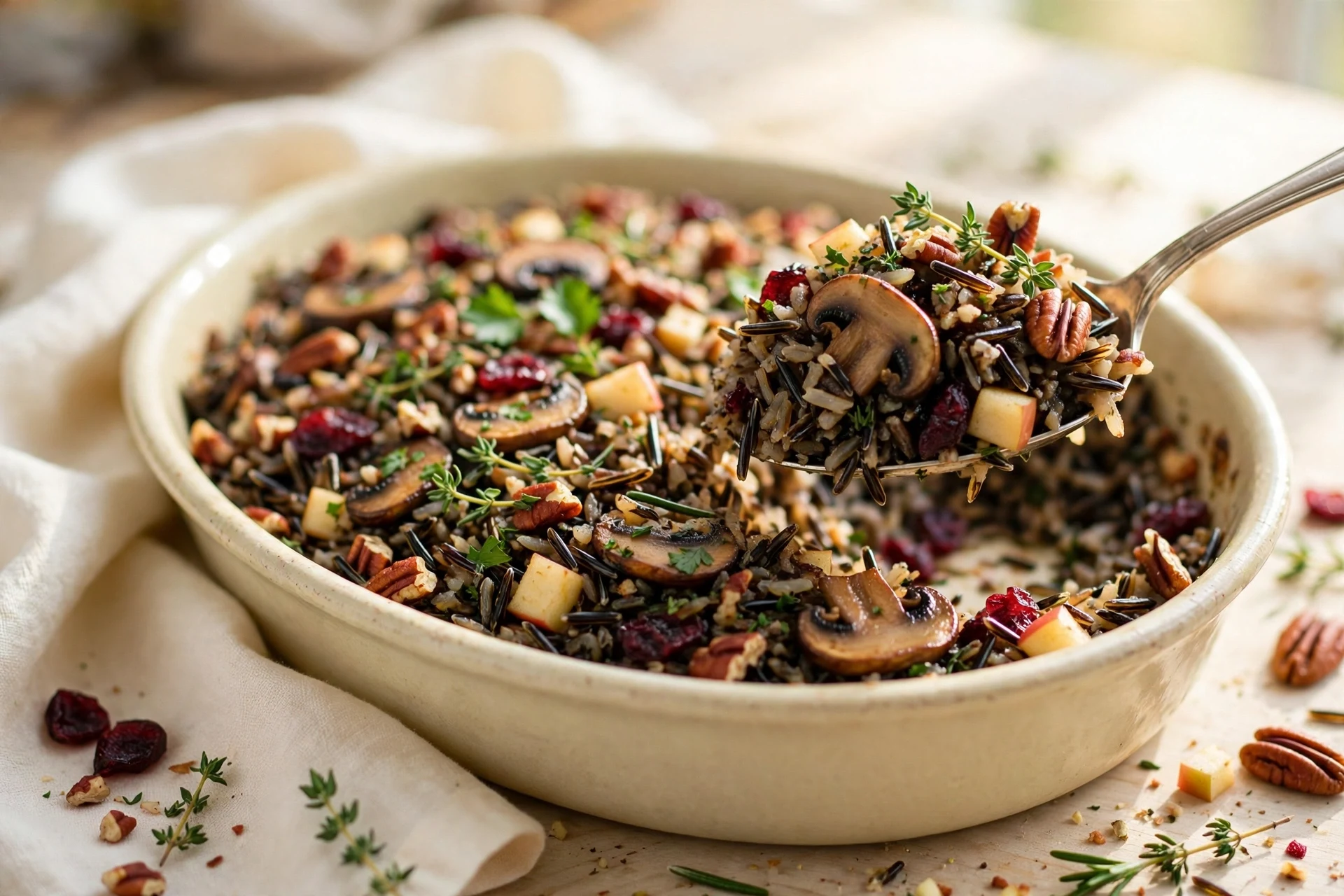
Wild rice stuffing works because it is built on contrast rather than softness. Each grain keeps its own shape and a gentle resistance, so the dish eats like a pilaf with a stuffing’s seasoning instead of a pan of seasoned porridge.
The flavor base does the heavy lifting. Onion and celery soften first, then the mushrooms cook undisturbed in a single layer until their edges brown. That browning is where the deep, savory, almost roasted flavor comes from, and it cannot be rushed by stirring.
Sage and thyme go in with the garlic, after the mushrooms have colored. Fresh herbs added to a hot, nearly dry pan bloom in the fat for one minute and perfume the whole dish, instead of steaming into the background the way they do in a wet pan.
The finish is deliberately last minute. Apple, cranberries, pecans, parsley and lemon juice are folded through the hot baked stuffing right before serving, so the apple stays crisp, the cranberries stay bright and the pecans keep the crunch they earned in the oven.
One more structural point: this wild rice stuffing is naturally free of bread, which puts a genuine stuffing on the table for the guest who cannot eat gluten. It is not a substitute dish. It is the one people ask about.
Nutty Grains, Browned Mushrooms, Tart Cranberry
Wild rice is not rice at all; it is the seed of a North American grass, and it cooks like one. The grains stay firm at the center, split open as they finish, and carry a tea like, almost smoky nuttiness that brown rice only hints at.
Cremini mushrooms are the right partner. Browned hard, they give the dish its savory depth and a chew that echoes the grains. Sliced thick, they stay visible in the finished pan instead of melting into the background.
The apple is not decoration. A firm, sweet tart apple, diced and folded in raw at the end, gives a cool crunch and a little acidity against the rich, buttery base. It softens only slightly from the heat of the grains.
Dried cranberries bring the tart pop that keeps a rich side from feeling heavy, and they hold their shape instead of bleeding color through the dish. Toasted pecans add the final texture: a clean, buttery crunch in almost every spoonful.
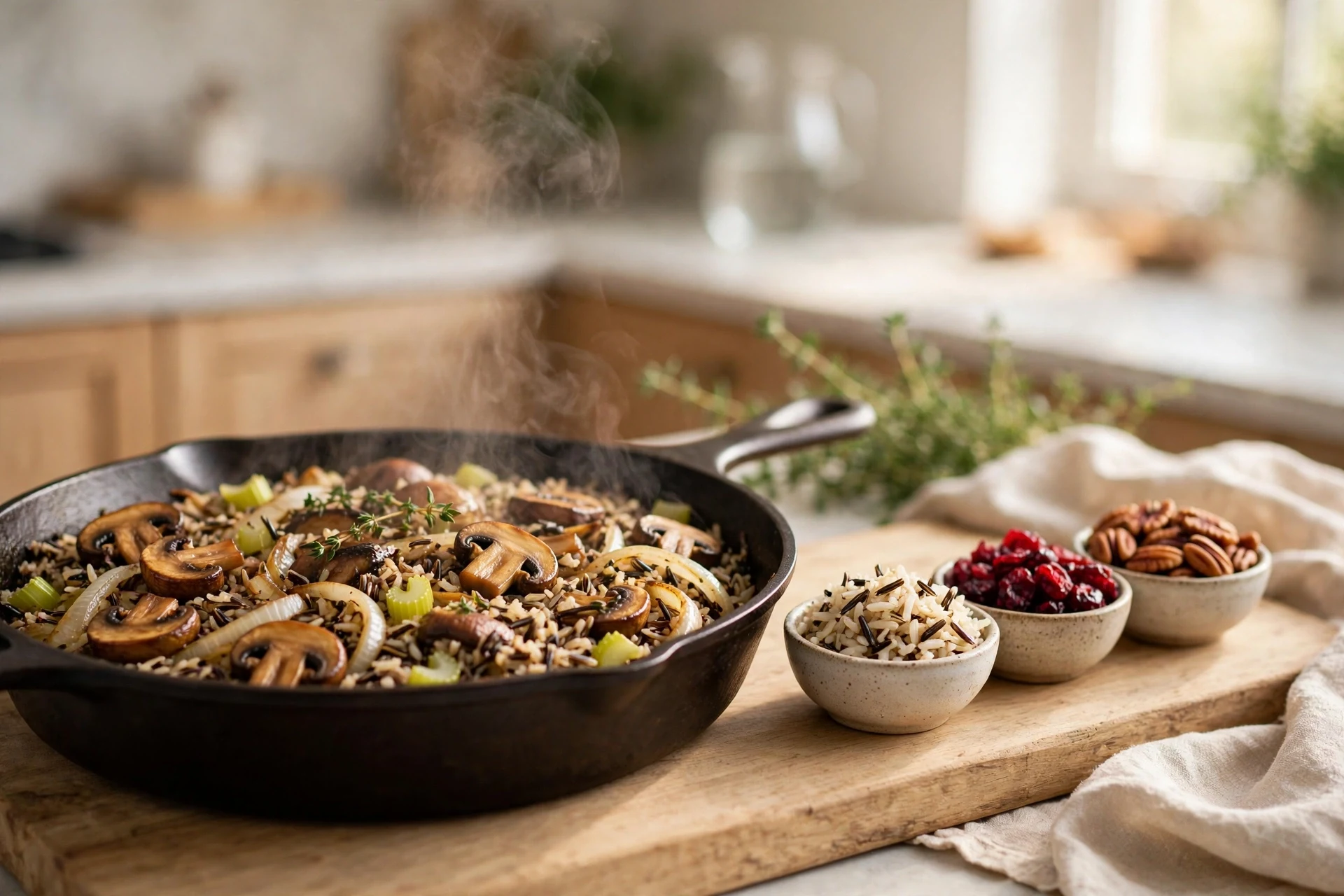
Served warm, the stuffing smells like the whole holiday at once: sage, butter, toasted nuts and something faintly woodsy from the rice. Next to the turkey and a spoonful of make ahead turkey gravy, it looks like the dish the table was missing.
The Two Liquid Rules for Perfect Wild Rice
Most wild rice stuffing recipes fail at the rice, and the failure is almost always liquid. Rule one: pure wild rice cooks at one part rice to three parts liquid. Blends need less, which is why recipes written for blends leave pure wild rice crunchy.
Rule two: the cooking stops at the visual cue, not the clock. A finished grain of wild rice has split along its length and curled slightly, showing a pale interior, and it chews tender with a gentle bounce. Start checking at forty minutes.
If a little liquid remains when the grains are done, drain it off and stop. Prolonging the simmer to absorb the last spoonful of broth is how wild rice turns to mush. The grains should leave the pot distinct, steaming and just damp.
Then rest the pot, covered and off the heat, for ten minutes. The grains finish absorbing at the surface, firm up slightly, and separate when fluffed with a fork. Rice rested this way folds into the mushroom base without breaking.
One warning that saves the whole dish: do not salt the rice water heavily at the start. Broth reduces as it simmers and concentrates. Season the finished stuffing instead, after everything is combined, when you can actually taste what you are salting.
What Goes Into the Stuffing
Buy pure wild rice, not a blend, and check the label: some blends are mostly brown rice with a scattering of wild grains, and they cook by different rules. Pure wild rice costs more and earns it; a cup and a half makes a generous pan. Wild rice nutrition figures are easy to confirm at USDA FoodData Central. Readers who love the bread version will find our old fashioned bread stuffing and southern cornbread dressing built on the same make ahead logic.
- 1 1/2 cups wild rice, rinsed well
- 3 cups low sodium chicken broth or vegetable broth
- 3 tablespoons unsalted butter
- 1 tablespoon olive oil
- 1 large yellow onion, finely diced
- 3 celery stalks, finely diced
- 12 ounces cremini mushrooms, thickly sliced
- 3 cloves garlic, minced
- 2 tablespoons fresh sage, finely chopped
- 2 teaspoons fresh thyme leaves
- 1 teaspoon fine salt, plus more to taste
- 1/2 teaspoon black pepper
- 1 firm sweet tart apple, cored and diced
- 3/4 cup dried cranberries
- 3/4 cup pecans, toasted and coarsely chopped
- 1/4 cup fresh parsley, chopped
- 1 tablespoon fresh lemon juice
Brown, Simmer, Fold, Bake
- Combine the rinsed wild rice and the broth in a medium saucepan. Bring to a boil, cover, and simmer on low for 40 to 45 minutes, until most grains have split and curled and chew tender. Rest, covered and off the heat, for 10 minutes, then drain any remaining liquid and fluff with a fork.
- Heat the oven to 350 degrees F. Butter a 9 by 13 inch baking dish or a shallow 2 1/2 quart dish.
- Melt the butter with the olive oil in a large, deep skillet over medium heat. Add the onion and celery and cook 5 minutes, until softened and translucent at the edges.
- Add the mushrooms in a single layer and leave them undisturbed for 3 minutes, until the undersides brown. Stir and cook 4 to 5 minutes more, until the mushrooms are deeply colored and their liquid has cooked off.
- Stir in the garlic, sage and thyme and cook 1 minute, until fragrant. Add the cooked wild rice, salt and pepper, and fold everything together until the grains are glossy and evenly mixed.
- Transfer to the prepared dish and smooth the top. Bake 20 minutes if the mixture is warm, or 30 to 35 minutes from the refrigerator with the first 20 minutes covered in foil, until steaming hot throughout.
- While the stuffing bakes, toast the pecans on a small sheet pan at 350 degrees F for 6 to 8 minutes, until fragrant. Watch them closely; they go from toasted to dark in the last minute.
- Fold the diced apple, cranberries, toasted pecans, parsley and lemon juice through the hot stuffing. Rest 5 minutes, taste for salt, and serve warm.
Cooked Tuesday, Baked Thursday
The rice is the long pole in this recipe, so it goes first on the calendar. Cooked wild rice keeps, refrigerated in its container, for up to two days, and its texture actually improves: the grains firm up and separate, exactly what a stuffing wants.
The mushroom base can be built on Wednesday and refrigerated in the same skillet mixture, folded with the cold rice or kept apart. Assemble the full dish Thursday morning, cover it, and hold it in the refrigerator until the turkey comes out of the oven.
From the refrigerator, the stuffing bakes 30 to 35 minutes at 350 degrees F, the first twenty minutes covered so the top does not dry before the center is hot. Assembled and baked the same day, twenty minutes uncovered is enough.
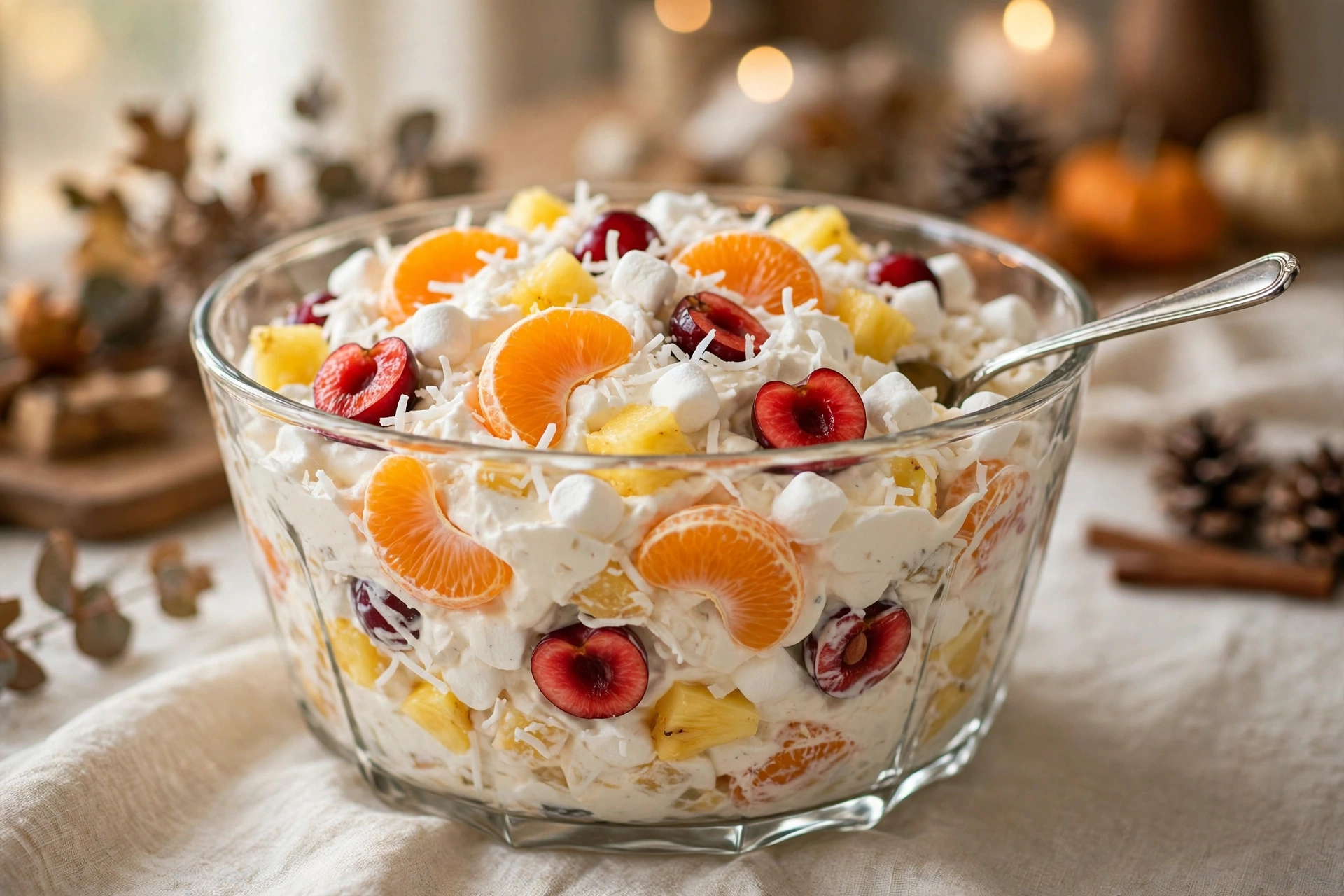
It also shares a table gracefully with the rest of the make ahead plan: the cauliflower gratin from Wednesday and a bright cranberry fluff salad cover the creamy and the fresh, while this pan covers the hearty.
Leftovers keep four days refrigerated and reheat in a covered dish at 325 degrees F with a spoonful of broth per cup of stuffing. The grains absorb as they sit, and that small addition brings the texture back.
If the Rice Is Firm or the Pan Is Soupy
If the grains are still firm at forty five minutes, they are not ruined and they are not done. Add a quarter cup of hot water or broth, cover, and give them ten more minutes. Wild rice varies by harvest, and the split and curl cue matters more than any timer.
If the finished stuffing looks wet, the rice went in undrained or the mushrooms released liquid late. Spread the mixture in the dish, bake it uncovered ten minutes longer than planned, and let the rest do the remaining work. Steam leaves a resting pan quickly.
If the stuffing tastes flat, the answer is usually acid, not salt. A second teaspoon of lemon juice, folded through at the end, wakes up the mushrooms and the sage without changing the character of the dish.
And if the pecans have gone in early and softened, the fix is simple: toast a small extra handful and scatter them over the top at serving. Crunch on the surface reads as crunch in every bite.
Apple, Chestnut and Squash Variations
For a chestnut version, fold in a cup of roasted, peeled and crumbled chestnuts with the apple. They bring a soft, sweet earthiness that suits the rice, and the dish leans toward a northern Italian holiday table.
Roasted butternut squash makes the pan heartier: fold in two cups of small roasted cubes before baking. The squash should be roasted separately and well colored, never steamed in the pan, or it will soften into the grains instead of holding its edges.
A fully vegetarian wild rice stuffing needs only the broth swap, vegetable for chicken, and it loses nothing. The mushrooms carry the savory weight either way, which is why the hard browning in the skillet matters so much.
For a smaller table, halve everything and bake in an 8 by 8 inch dish for 18 to 20 minutes. For a crowd, double the recipe across two shallow dishes rather than one deep one, so every portion gets the toasted top layer.
However you vary it, protect the two moves that make this wild rice stuffing itself: grains cooked to the split and curl, and the crisp, bright finish folded in at the very end.
Wild Rice Stuffing Questions, Answered
Is wild rice stuffing the same as using a wild rice blend?
No, and the difference is the liquid. Pure wild rice needs about three cups of liquid per cup and a half of rice and 40 to 45 minutes of simmering. Most blends are largely brown rice, cook faster with less liquid, and give a softer result. If you use a blend, follow its package liquid ratio and start checking ten minutes early.
Can I cook this stuffing inside the turkey?
It is safer and better baked in its own dish. A rice based stuffing packs densely, and the center can sit in the temperature danger zone while the bird cooks. Baked separately, it gets a toasted top, exact seasoning, and a food safe temperature throughout. Spoon a little turkey drippings over the pan if you want the roasted flavor.
How much wild rice stuffing should I make per person?
Plan on about 3/4 cup of finished stuffing per person when several sides share the table, and a full cup when it is one of only two or three sides. This recipe makes roughly 8 cups, which serves 8 generously beside a full Thanksgiving spread.
Can wild rice stuffing be frozen?
Yes. Bake it first, cool it completely, and freeze it in a covered dish for up to 2 months, without the apple and pecans. Thaw overnight in the refrigerator, reheat covered at 325 degrees F until hot, then fold in freshly diced apple and newly toasted pecans so the finish stays crisp.
Why did my wild rice stay hard after an hour of cooking?
Old wild rice is the usual cause; grains stored for a long time dry out and resist softening. Add hot liquid a quarter cup at a time and keep simmering, checking every 10 minutes. Soaking the rice in cold water for 2 hours before cooking also helps an old batch cook evenly.