
In this article:
- Christmas morning smells like gingerbread
- Crisp edges, soft centers, real spice
- Whipped whites do the heavy lifting
- What goes into the batter
- Whisk, fold and let the iron do the work
- Keep every waffle crisp while the batch cooks
- Freeze them now, toast on Christmas morning
- Small waffles, sandwiches and other mornings
- A topping bar worth waking up for
- Gingerbread waffle questions, answered
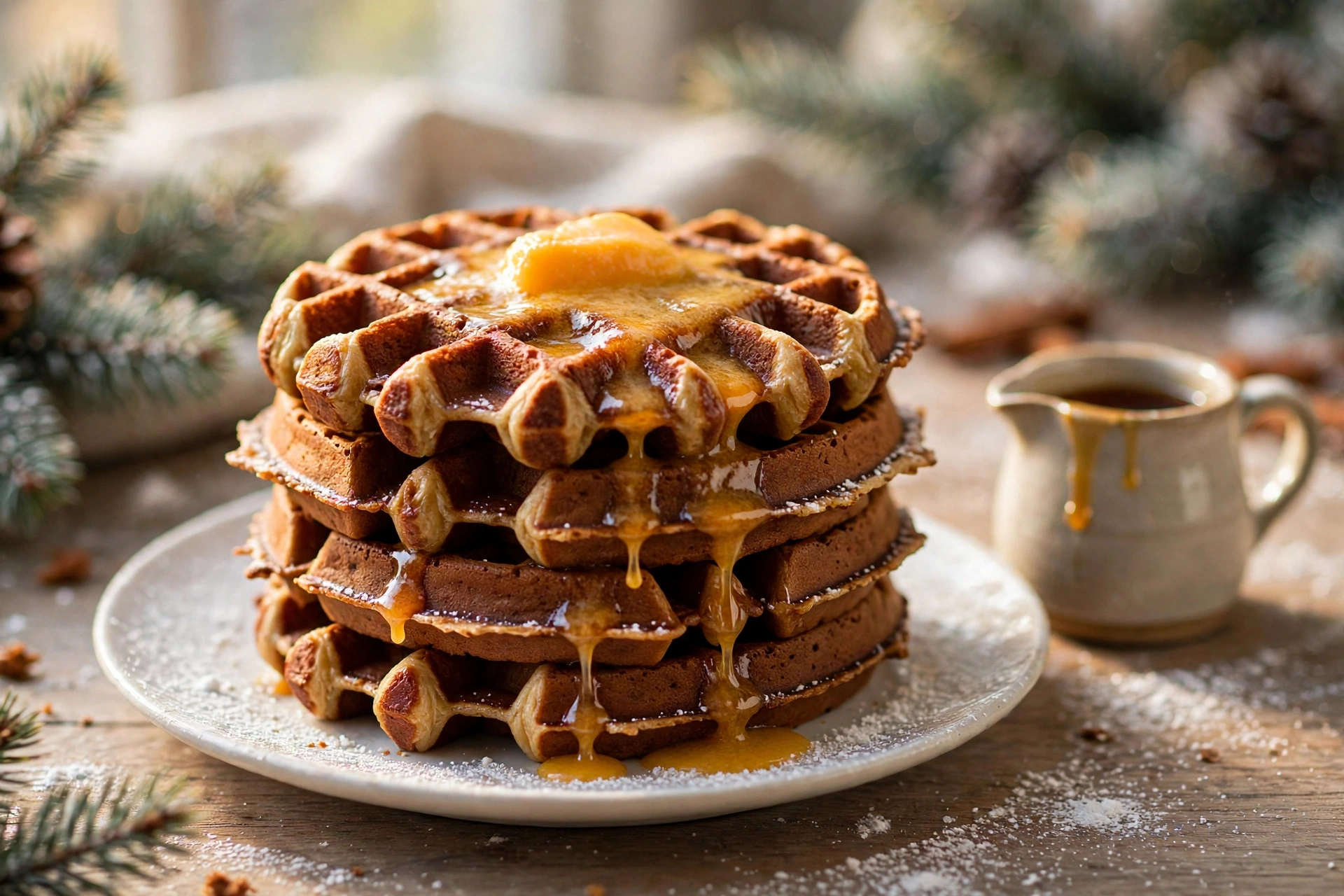
Gingerbread waffles are how Christmas morning announces itself in this house: the iron hissing softly, molasses and ginger warming the whole kitchen, and a stack of deep golden waffles waiting for orange maple butter to melt down their crisp edges.
They carry all the flavor of the cookie in a form built for a slow morning. The batter mixes in minutes, the iron does the work in batches, and nobody has to choose between opening presents and eating breakfast while it is hot.
Two decisions make these waffles what they are. The egg whites are whipped and folded in, which is where the crisp edges and lofty centers come from, and the cooked waffles can wait, properly, without going soft.
Christmas Morning Smells Like Gingerbread
Gingerbread is older than the Christmas tree it now keeps company with. Spiced honey cakes were festival food in Europe centuries ago, and the molasses dark version that crossed the Atlantic became the flavor American Decembers are measured against.
The waffle iron is a natural home for it. A gingerbread cookie gives you spice and snap; a gingerbread waffle gives you spice, snap and a soft, steaming middle, plus a grid of deep pockets engineered by history to hold melted butter.
Cooking them on Christmas morning has one practical virtue nobody mentions: the iron works in a corner, at its own pace, without touching the oven. The oven stays free for everything else the day demands, and the waffles arrive in waves as people surface.
There is a second, quieter virtue. Children who are too excited to sit for a formal breakfast will still stop for a waffle they can carry, and the smell alone slows the morning down to the speed it deserves.
Crisp Edges, Soft Centers, Real Spice
A good waffle is a study in contrast, and gingerbread batter is built to deliver it. The sugars in the molasses and brown sugar caramelize against the hot iron, so the edges come out dark, crisp and almost toffee like at the corners.
The center stays soft and open, closer to a spiced cake than to bread. That contrast is the whole pleasure: the crisp shell gives way, the middle breathes out ginger and cinnamon steam, and the butter melts into the grid instead of sliding off.
The spice blend is measured to be warm rather than hot. Ginger leads, cinnamon rounds it, and nutmeg and cloves stay in the background where they read as depth. Orange zest, one teaspoon, lifts the whole thing so the molasses never tastes heavy.
Color tells you most of what you need to know. These waffles bake up a deep mahogany, darker than plain waffles, and that is correct. Pale gingerbread waffles are underdone waffles, no matter what the timer on the iron says.
Whipped Whites Do the Heavy Lifting
Most waffle batters lean entirely on baking powder for lift, and they eat accordingly: fine, but dense at the center. Separating the eggs and whipping the whites changes the structure of the whole waffle, the way it does in a good sponge cake.
The yolks go in with the buttermilk and molasses, where their fat keeps the crumb tender. The whites are beaten separately to soft peaks and folded through at the end, trapping air that expands in the iron and sets into that lofty, open middle.
Two habits protect the lift. First, stir the batter itself only until the flour disappears; small lumps are welcome, because every extra stir develops gluten and toughens the crumb. Second, fold the whites in two additions, the first to lighten, the second to finish.
Then let the batter rest for five minutes before the first waffle goes in. The flour hydrates, the baking powder wakes up, and the batter pours thicker and cooks more evenly. Five quiet minutes is the cheapest upgrade in the recipe.
What Goes Into the Batter
The list is pantry standard, with two ingredients doing the signature work: unsulphured molasses for the deep, clean sweetness, and real buttermilk for tang and tenderness. Molasses varies more than people expect, so it is worth checking the numbers once on USDA FoodData Central and then buying the same jar all season.
- 2 1/2 cups all-purpose flour (300 grams)
- 1 tablespoon baking powder
- 1/2 teaspoon baking soda
- 1 teaspoon fine salt
- 2 teaspoons ground ginger
- 2 teaspoons ground cinnamon
- 1/2 teaspoon ground nutmeg
- 1/4 teaspoon ground cloves
- 1/4 cup dark brown sugar, packed
- 1 3/4 cups buttermilk, well shaken
- 1/2 cup unsulphured molasses
- 2 large eggs, separated, at room temperature
- 6 tablespoons unsalted butter, melted, plus more for the iron
- 1 teaspoon vanilla extract
- 1 teaspoon finely grated orange zest
- For the orange maple butter: 1/2 cup unsalted butter, softened
- 2 tablespoons pure maple syrup
- 1 teaspoon finely grated orange zest
- 1 pinch flaky salt
Room temperature eggs are worth the small planning step here. Cold whites whip more slowly and cold yolks can seize the melted butter into little flecks. Set the eggs in a bowl of warm water for ten minutes if they come straight from the refrigerator.
Whisk, Fold and Let the Iron Do the Work
- Heat the oven to 200 degrees and set a wire rack on a baking sheet inside it. Preheat the waffle iron to medium high while you mix the batter.
- Whisk the flour, baking powder, baking soda, salt, ginger, cinnamon, nutmeg, cloves and brown sugar in a large bowl until the spices are evenly distributed.
- In a second bowl, whisk the egg yolks, buttermilk, molasses, melted butter, vanilla and orange zest until smooth and dark.
- In a clean, dry bowl, beat the egg whites with a hand mixer until they hold soft peaks, about 2 minutes.
- Pour the wet mixture into the dry and stir with a spatula until the flour just disappears. A few small lumps are fine. Rest the batter for 5 minutes.
- Fold in the beaten whites in two additions, turning the bowl and cutting down through the center, until no white streaks remain.
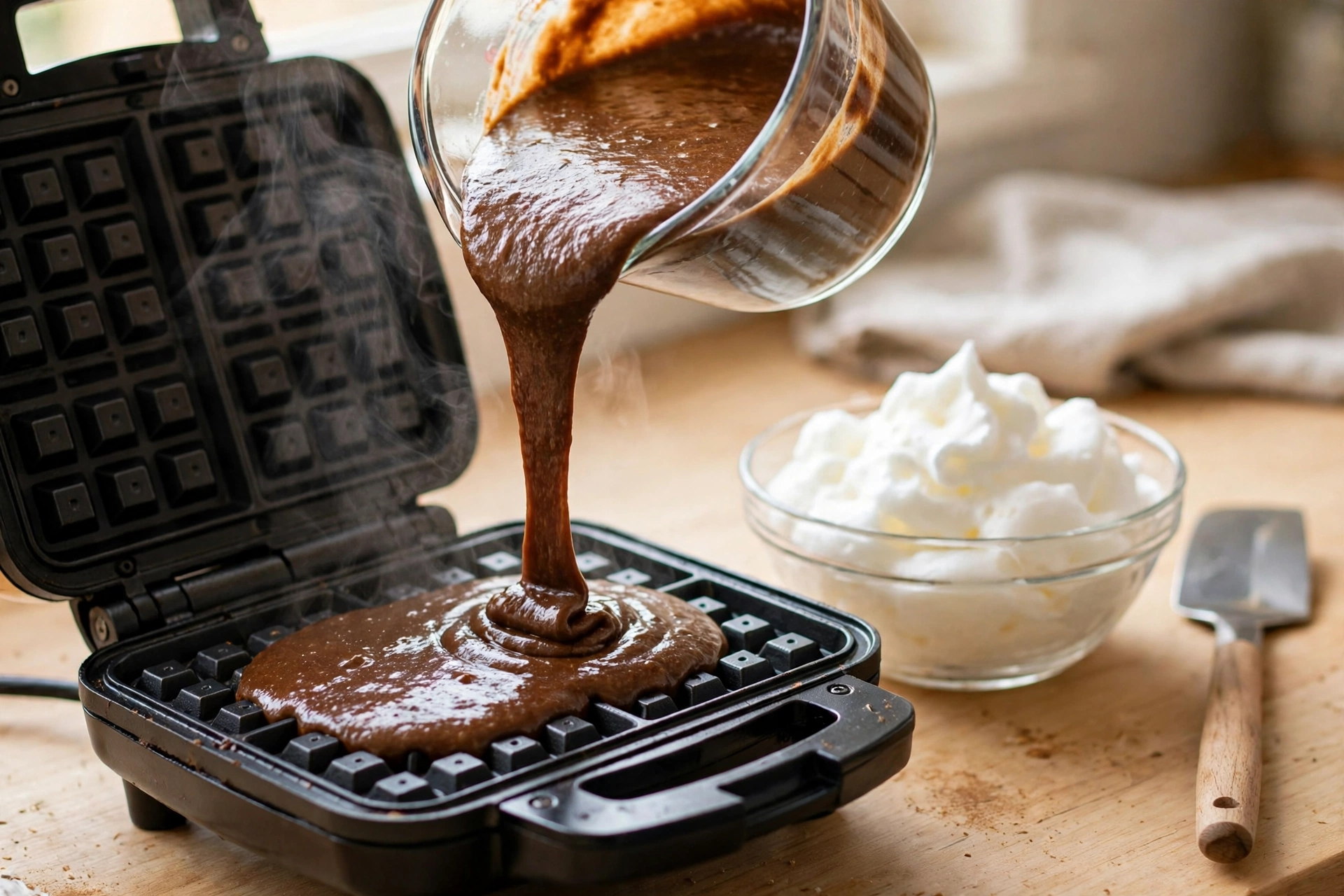
- Brush the hot iron lightly with melted butter. Add about 2/3 cup of batter per waffle, spread it gently toward the edges and close the lid.
- Cook until the steam pouring from the iron slows to a wisp, 4 to 5 minutes. The waffle should be deep mahogany and crisp. Do not open the iron early to check.
- Lift each finished waffle straight onto the wire rack in the warm oven, in a single layer, never stacked. Repeat with the remaining batter, brushing the iron with butter as needed.
- Stir the softened butter, maple syrup, orange zest and flaky salt together for the topping. Serve the waffles hot with the orange maple butter melting over them.
Keep Every Waffle Crisp While the Batch Cooks
The saddest waffle at any brunch is the first one, cooked perfectly and then steamed into softness under a towel while its brothers finish. Waffles release steam for minutes after they leave the iron, and trapped steam is exactly what crispness cannot survive.
The oven solves it. A wire rack set over a baking sheet, in a 200 degree oven, holds each finished waffle in warm, moving air. The surface stays dry, the edges stay crisp, and the whole batch reaches the table in the same condition.
Never stack them, and never park them on a cold plate. A stack steams itself from the inside, and a cold plate sweats against the hot crust. One layer, on a rack, with space between waffles, is the entire rule.
The iron has a rule of its own: patience. The lid stays closed until the steam slows to a wisp, because opening early tears the half set crust and tells you nothing the color of the finished waffle would not say better.
Freeze Them Now, Toast on Christmas Morning
Here is the version of this recipe that changes Christmas morning entirely. Cook the full batch on a quiet December evening, cool the waffles completely on a rack, and freeze them flat in a single layer before bagging them.
Frozen, they keep for up to 2 months, and they reheat from frozen better than almost any breakfast food. The toaster, on a medium setting, brings back genuinely crisp edges in about 3 to 4 minutes, no thawing and no oven required.
For a crowd, the oven handles the volume: frozen waffles in a single layer on a rack at 375 degrees for 8 to 10 minutes come out hot through and crisp at the edges, all at the same moment, which no waffle iron can promise.
The batter itself splits the difference for cooks who want fresh cooked without the morning work. Mix the dry ingredients and the yolk mixture the night before and refrigerate them separately; in the morning, beat the whites, combine, fold and cook. The whites must always be whipped fresh, it is the one step that refuses to be scheduled.
Small Waffles, Sandwiches and Other Mornings
The same batter makes excellent mini waffles for small hands: two tablespoons of batter in a mini iron, two minutes of cooking, and a plate of waffles a child can hold whole. Gingerbread waffles in miniature also freeze well and toast again beautifully for weekday breakfasts.
Day old waffles make a fine breakfast sandwich. Toast two until crisp, fold in a soft scrambled egg and a slice of sharp cheddar, and the spice of the waffle does the seasoning work that plainer bread leaves to everything else.
For a dessert leaning batch, fold half a cup of mini chocolate chips into the batter after the whites and serve the waffles warm with whipped cream. The chips melt into the pockets and the waffle crosses the line from brunch to dessert without changing its method at all.
Buttermilk can be swapped for kefir in the same measure, with no other change. For a dairy free table, use an unsweetened oat drink with a teaspoon of lemon juice stirred in and replace the butter with melted coconut oil; the spice stays, the edges stay crisp, and only the richness softens slightly.
A Topping Bar Worth Waking Up For
Brunch is a format, not just a meal, and waffles are its best excuse for a topping bar. Set out the orange maple butter, a pitcher of warm maple syrup, lightly sweetened whipped cream and a bowl of sugared cranberries, and let the table dress its own.
Build the rest of the spread from the make ahead end of the Kozina kitchen. A gingerbread French toast casserole covers the guests who want their spice in custard form, and a pan of quick cinnamon rolls keeps the sweet end of the table honest.
For the cooks who plan the whole week of Christmas breakfasts, the rotation writes itself: these waffles on the 25th, cinnamon roll pancakes for the weekend, and an eggnog pancake bake when the house fills up again.
Gingerbread waffles ask very little of the cook for what they give back. A bowl of batter, a hot iron and twenty quiet minutes, and the kitchen smells like the entire season before anyone has finished their first coffee.
Gingerbread Waffle Questions, Answered
Why did my gingerbread waffles come out soft instead of crisp?
Almost always the holding, not the batter. Waffles stacked or covered while the batch finishes steam themselves soft. Hold them in a single layer on a wire rack in a 200 degree oven, and cook each one until the steam from the iron slows to a wisp before opening the lid.
Can I make the batter the night before?
Mostly. Mix the dry ingredients and the yolk, buttermilk and molasses mixture the night before and refrigerate them separately. In the morning, beat the egg whites fresh, combine everything and fold the whites in last. Whites whipped ahead lose their air and the waffles lose their lift.
How do I freeze and reheat these waffles?
Cool them completely on a rack, freeze flat in a single layer, then bag for up to 2 months. Reheat from frozen in a toaster on medium for 3 to 4 minutes, or on a rack in a 375 degree oven for 8 to 10 minutes for a crowd. Both restore the crisp edges.
My waffles keep sticking to the iron. What is wrong?
The iron was not fully hot, or it needed fat. Preheat until the ready light cycles, brush the plates lightly with melted butter before the first waffle and as needed after, and resist opening the lid early, since a half set waffle tears and leaves half of itself behind.
Can I use regular molasses, or a milder substitute?
Use unsulphured molasses, the standard baking kind, for the deep color and clean flavor here. Blackstrap is stronger and noticeably bitter, so swap in only half and make up the rest with dark brown sugar dissolved in a spoonful of warm milk if blackstrap is what you have.