
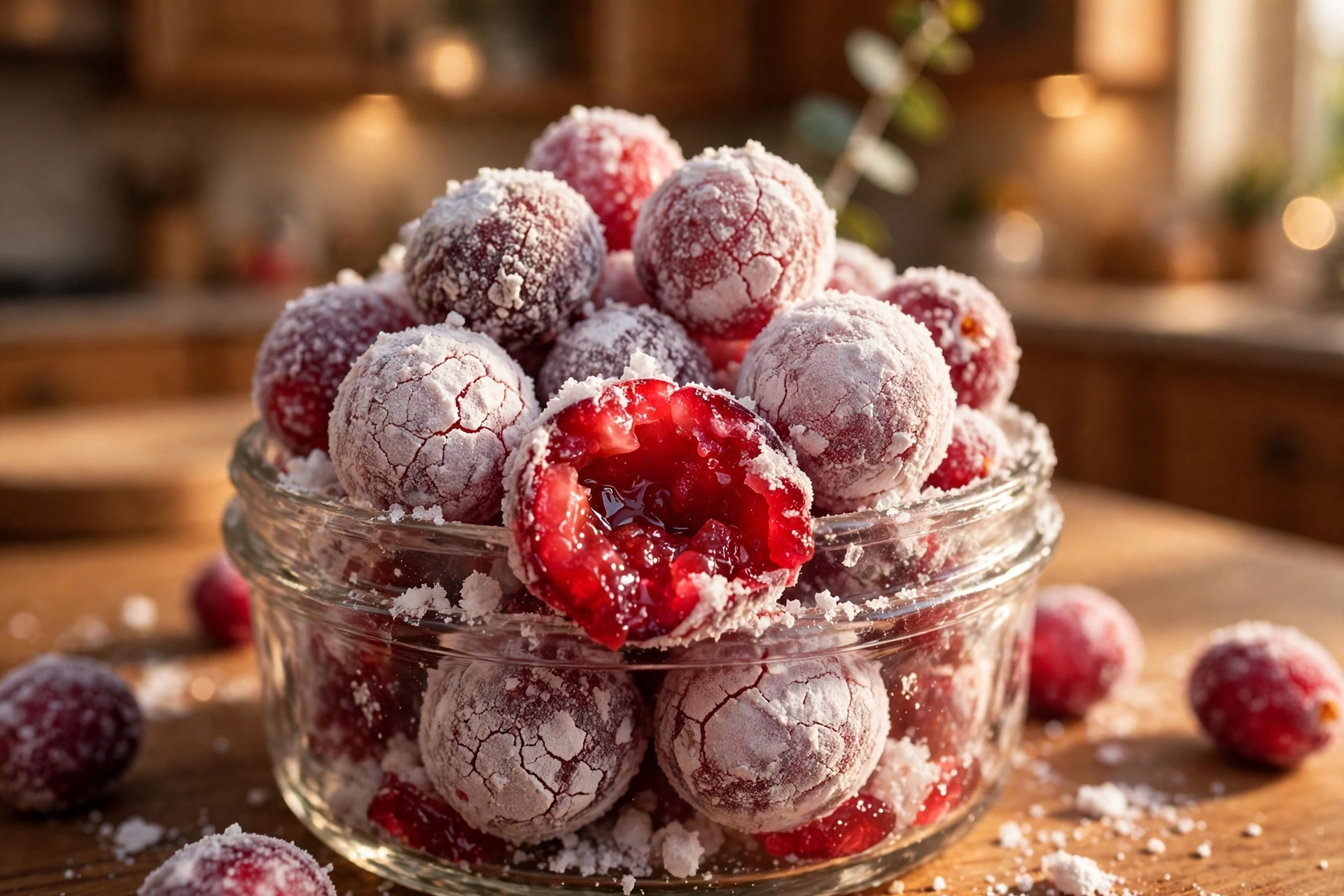
Some recipes earn their fame. These little red jewels exploded all over every feed this week, and the numbers are not subtle: the original video of cranberries soaked in lemon-lime soda and orange juice, shaken in powdered sugar and set in a low oven, passed 44 million views, and its remixes passed 34 million and 11 million more. Our own inbox filled with the same question from readers: do they really pop? Yes. Bite one and the thin matte shell cracks, then the berry bursts, sweet first and tart right behind it. It is the most fun Christmas candy we have made in years, and it takes four ingredients.
It is also a recipe with a hundred conflicting versions. One site bakes at 200 degrees, the next at 250. One uses a single cup (120 g) of powdered sugar, another uses two full cups (240 g). Soak times wander from a quick dip to two days. We worked through the disagreements, kept what actually matters, and landed on one ratio that gives you a shell that stays put, berries that stay whole, and that clean popping bite every single time. This page gives you the soak, the shake, the short oven finish, and the fixes for every failed batch we saw in the comment sections.
In this article:
- Why the Soda Soak Makes Cranberries Pop
- Sorting Cranberries With the Bounce Test
- What Goes Into the Viral Popping Batch
- The Overnight Soak and the Powdered Sugar Coat
- Five Ways to Serve Candied Cranberries
- When the Shell Slides Off: Fixes for Failed Batches
- Storing Candied Cranberries Without Losing the Snap
- Frequently Asked Questions
Why the Soda Soak Makes Cranberries Pop
A fresh cranberry is basically a tiny drum: firm skin, air pockets inside, and juice that is far too tart to eat raw. The overnight soak changes the berry from the inside. The soda and orange juice are sweet, and sweetness slowly moves through the skin while the berries rest in the fridge. Twelve hours takes the raw edge off. Twenty-four hours makes them noticeably sweeter, while the skin stays firm enough to hold everything in.
The pop itself comes from contrast. After draining, the berries go into powdered sugar while their skins are still sticky from the soak. That sticky film is the glue. A short stay in a low oven dries the coating into a matte white shell without cooking the berry inside. Cool the berries and the shell turns crisp while the inside stays juicy and raw-fresh. Your teeth crack the shell, the skin gives way, and the juice bursts. Shell, skin, juice: three textures in one bite, which is exactly why the videos are so satisfying to watch.
Heat is the enemy of the whole trick. Cranberries burst when they get hot, the same way they do in a sauce pan. That is why this recipe holds the oven at 200°F (95°C) and the timer at 6 minutes. Higher temperatures, the 250°F some versions call for, dry the shell a little faster but split far more berries. A split berry leaks, the leak dissolves the shell, and the pop is gone. Low and short wins.
A word about the older classic, because readers ask every year. Traditional sugared cranberries are dipped in hot syrup and rolled in granulated sugar, which gives a sparkly, crunchy coat. They are beautiful, and they are a different candy: crunchy outside, still fully tart inside, because a two-minute dip sweetens nothing. The viral powdered version soaks overnight, so the berry itself turns sweet-tart all the way through, and the shell is smooth and matte instead of sparkly. If you want garnish sparkle for a cake, make the classic. If you want a candy people eat by the handful straight from the bowl, the one they keep filming, this overnight soak is the recipe.
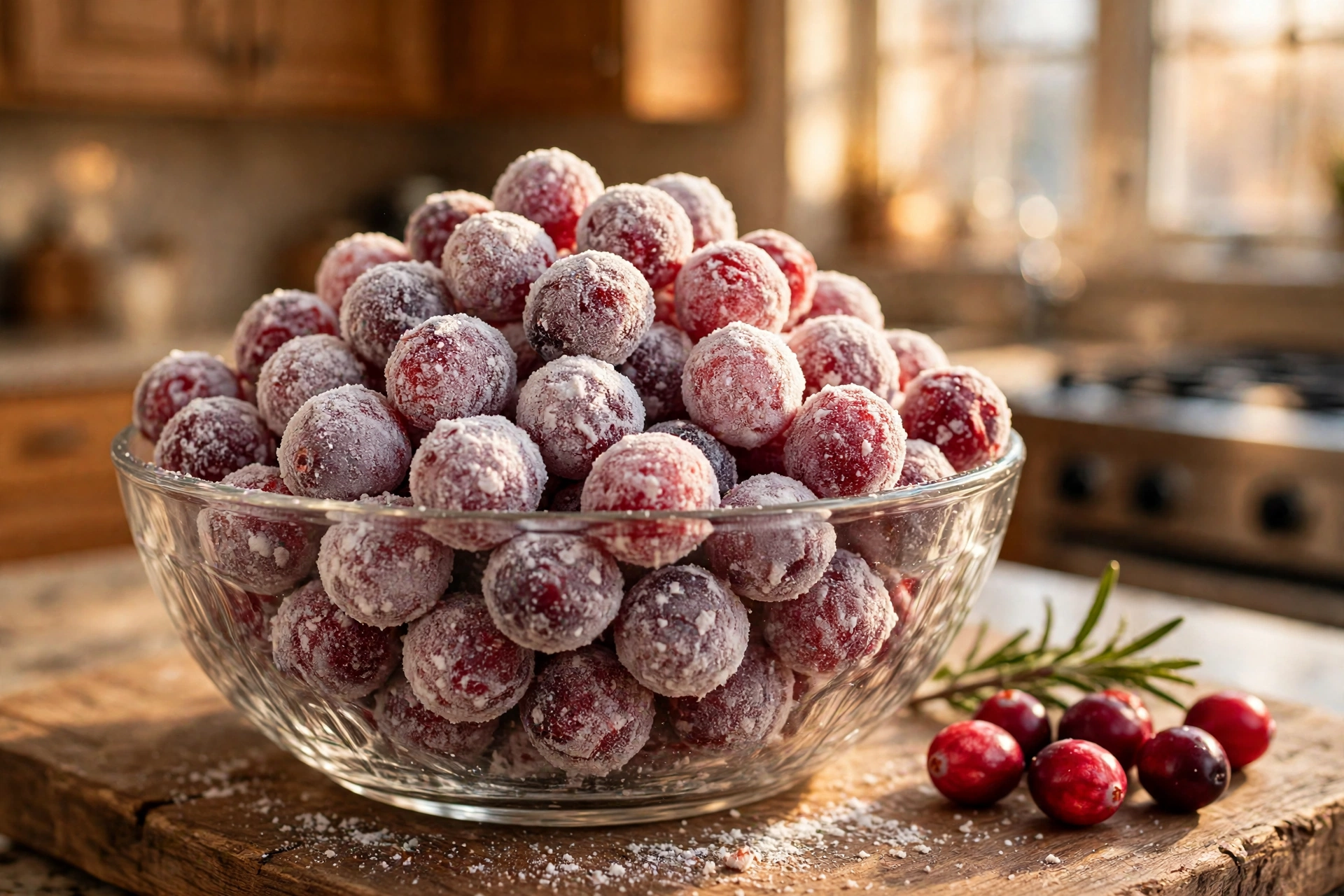
Sorting Cranberries With the Bounce Test
Everything depends on starting with firm berries, and cranberries come with a built-in quality test that packers have used for generations: a fresh, firm cranberry bounces. Drop each berry onto the counter from a few inches up. Berries that bounce go in the bowl. Berries that land with a dull thud are soft inside, and soft berries collapse during the soak, leak into the sugar, and ruin the coating for their neighbors. Throw them out without guilt; a standard 12 oz (340 g) bag always hides a few.
Rinse the keepers under cool water and pat them dry before the soak. This rinse is the only one they get. After the soak, rinsing is forbidden, and the reason is simple: the soak leaves the skins tacky, and that tackiness is what the powdered sugar grabs. Rinse it away and the sugar slides off in the oven, which is the single most common failure in the viral videos’ comments. Sort first, rinse once, then hands off.
One more sorting note: size matters a little. Very small berries coat and dry faster than large ones, so a bag of mixed sizes gives you a mix of snappy and softer shells. It is not a problem worth fixing, but if you are making a batch for a special table, it is worth picking out the biggest, roundest berries for the prettiest bowl.
What Goes Into the Viral Popping Batch
Fresh cranberries, 12 oz (340 g). One standard bag. Fresh is non-negotiable here; frozen berries have split skins from ice crystals and they weep as they thaw, which dissolves the shell before it sets. Save the frozen bag for sauce.
Lemon-lime soda, 1 1/2 cups (355 ml). Any lemon-lime soda works; it brings sugar, gentle acid and a little fizz that seasons the berries as they soak. Use it flat or fizzy, cold from the fridge. Diet soda does not coat the same way and leaves an aftertaste, so this is the moment for the real thing.
Orange juice, 1/2 cup (120 ml). The juice rounds out the soda with real fruit flavor and a deeper sweetness. Bottled or fresh-squeezed both work. Together, soda and juice should just cover the berries in a snug container; if your bowl is wide, add a splash more soda rather than leaving the top layer dry.
Powdered sugar, 2 cups (240 g), plus more if needed. Powdered sugar, not granulated, is what makes this version different from classic sugared cranberries. It melts into the sticky skin film and dries into a smooth matte shell instead of a sparkly crunch. Two cups (240 g) sounds like a lot, but the berries need a thick coat with no red showing through; thin patches turn translucent in the oven and never crisp.
The Overnight Soak and the Powdered Sugar Coat
- Sort and rinse. Bounce-test the cranberries, keep the firm ones, rinse them under cool water and pat dry.
- Start the soak. Tip the berries into a bowl or a container with a lid. Pour the lemon-lime soda and the orange juice over them and press the berries down so as many as possible sit under the liquid. Cranberries float, so a snug container matters more than extra liquid.
- Chill 12 to 24 hours. Cover and refrigerate. Twelve hours keeps a lively tart snap; twenty-four hours gives the sweetest result. Give the container a gentle shake once or twice so the floaters take their turn in the soak.
- Heat the oven and line the pan. When the soak is done, heat the oven to 200°F (95°C) and line a baking sheet with parchment paper.
- Drain, never rinse. Pour the berries into a colander and let them drain for a full minute. Shake off the drips, but leave the skins tacky. Do not rinse, do not pat dry.
- Shake in the sugar. Put the powdered sugar in a large container with a lid, add the drained berries, close the lid and shake well until every berry is thickly white. Look them over: any red patch gets another spoonful of sugar and another shake.
- Spread in a single layer. Tip the coated berries onto the prepared sheet and spread them out with a little space between each one. Berries that touch fuse together as the shells dry.
- Bake 6 minutes. Bake just until the coating looks dry and matte. Stay close; this is a drying step, not a cooking step, and hot berries burst.
- Cool 30 minutes, untouched. Leave the berries on the sheet for a full 30 minutes. The shells crisp as they cool, and moving them early smears the finish. Then serve, or move them to a container with a spoon.
Five Ways to Serve Candied Cranberries
As a snacking bowl. The simplest and the way most batches disappear. Set out a bowl at room temperature and watch people drift past it all evening. A 12 oz (340 g) bag makes about 3 cups (about 360 g) of finished candy, which sounds like plenty until it is on the table.
As a drink garnish. Drop three or four into glasses of sparkling water, lemonade or ginger ale and they look like frosted jewels while they slowly sweeten the drink. They are also the prettiest finish we know for a pitcher of our cranberry orange Christmas punch, floated on top just before serving.
On a cheese board. Their sweet-tart pop cuts through rich cheese better than grapes do. Scatter a handful over the board next to the Christmas tree cheese ball and the red and white against the green coating is pure holiday.
On top of desserts. A small pile crowns a cheesecake, a trifle or a frosted cake without any piping skill at all. They turn our Christmas cheesecake into a centerpiece in about ten seconds, and they hold their shells for hours on cold desserts.
In gift jars. Spoon them into small glass jars the day you make them, tie on a ribbon, and you have the easiest homemade gift of the season. Pair a jar with a batch of white chocolate cranberry cookies for a cranberry lover’s box. If your bag of berries was bigger than the recipe, the extras are spoken for too: our cranberry curd tart takes the rest beautifully.
When the Shell Slides Off: Fixes for Failed Batches
The sugar slid off in the oven. The berries were rinsed after soaking, or patted dry, or drained so long that the tacky film dried out. Next batch, go straight from colander to sugar within a minute or two, and shake while the skins still look wet.
Half the berries burst. The oven was too hot or the berries stayed in too long. Confirm your oven with a thermometer if you have one; many home ovens run 25 degrees hot at low settings, and at this temperature that gap is the whole recipe. Pull the sheet at 6 minutes even if a few shells still look slightly damp; they finish as they cool.
The coating is patchy. Not enough sugar, or the berries went in crowded and steaming. Use the full 2 cups (240 g), shake in two rounds if your container is small, and spread the berries with space between them.
They taste too tart. The soak was short or the top berries never sat in the liquid. Extend the soak toward 24 hours and shake the container a few times during the day so every berry gets submerged.
The shells went soft by evening. Humidity is the culprit; powdered sugar drinks moisture from the air. A 3-minute return to the 200°F (95°C) oven crisps them again. Let them cool before serving and the snap comes right back.
Storing Candied Cranberries Without Losing the Snap
Store the cooled berries in an airtight container in a single layer if you can, or separated by parchment if you must stack. On a cool counter they keep their snap for about 3 days. In the fridge they last up to 5 days, but bring them back to room temperature for 20 minutes before serving so the shells firm up again; cold shells taste softer than they are. The general storage guidance at FoodSafety.gov is worth a look for holiday food timelines in general, especially when treats sit out at parties.
Do not freeze them. Frozen and thawed berries weep, the shells dissolve into pink syrup, and the pop is gone for good. This is a make-it-this-week candy, which honestly suits it: the soak is overnight, the work is ten minutes, and a fresh batch always beats a stored one. For a party on Saturday, start the soak on Friday morning and coat the berries Saturday afternoon, close to serving, for the loudest crackle.
Scaling up is easy, with one caution. A double batch, 24 oz (680 g) of berries, soaks happily in the same container with 3 cups (710 ml) of soda and 1 cup (240 ml) of orange juice. The coating step is where big batches go wrong: shake the berries in two rounds with 2 cups (240 g) of powdered sugar each, never one giant round, or the bottom berries get crushed and the top ones stay bare. Spread the finished berries across two sheets so the single layer rule still holds, and bake the sheets one at a time. Six minutes each, thirty minutes of cooling, and you have a party quantity with the same snap as a single batch.
Frequently Asked Questions
Do candied cranberries really pop when you bite them?
Yes, when the shell is fully set. The crisp powdered sugar shell cracks first, then the firm skin of the raw berry gives way and the juice bursts out. Berries that were soft to start with, or shells that went humid and soft, give a much weaker pop, which is why the bounce test and the cooling time matter.
Can I use frozen cranberries for the viral popping recipe?
It is not a good idea. Freezing splits the skins with ice crystals, and thawed berries leak juice as they sit. The leaking juice dissolves the powdered sugar before it can set into a shell. Use fresh cranberries for this recipe and save frozen ones for sauce or baking.
What is the shortest soak that still works?
About 8 hours gives a lightly sweetened berry with a strong tart snap, and some people love them that way. Twelve hours is the sweet spot for balance, and 24 hours is the sweetest version. Under 8 hours the center of the berry still tastes fully raw and sharp.
Why did my powdered sugar coating turn clear and sticky?
The berries were too wet or the layer was too thin. A thick coat over tacky, well-drained skins dries matte and white. If red patches show through the sugar before baking, they will turn translucent in the oven. Add more sugar and shake again until no red shows at all.
Can I make candied cranberries without the oven step?
You can air-dry them on the counter for about 2 hours instead, and the shells will set, just more softly and less evenly. The short, low bake gives a firmer, more reliable shell and a louder pop. If you skip the oven, spread the berries on parchment and leave them completely undisturbed while they dry.
Candied Cranberries
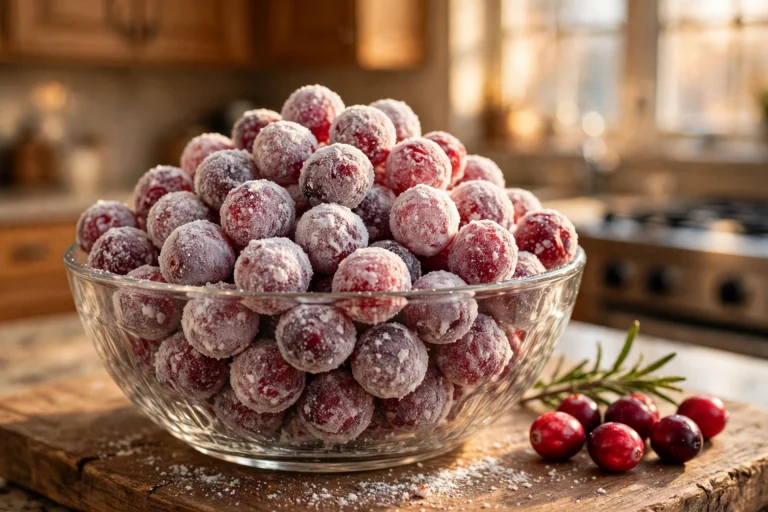
Fresh cranberries soak overnight in lemon-lime soda and orange juice, then get shaken in powdered sugar and set in a low oven until the shell turns matte and crackly. Sweet on the outside, tart and juicy inside, and they pop when you bite them.
- Total Time: 12 hours 21 minutes
- Yield: 3 cups 1x
Ingredients
12 oz (340 g) fresh cranberries
1/2 cup (120 ml) orange juice
2 cups (240 g) powdered sugar, plus more if needed
Instructions
Sort the cranberries with the bounce test: drop each berry on the counter from a few inches up and keep only the ones that bounce. Discard soft, shriveled or bruised berries, then rinse the firm ones and pat dry.
Add the cranberries to a bowl or container with a lid. Pour the lemon-lime soda and orange juice over them, pressing the berries down so as many as possible sit under the liquid.
Cover and refrigerate for 12 to 24 hours. Twelve hours keeps a lively tart snap; 24 hours gives the sweetest berry.
Heat the oven to 200°F (95°C) and line a baking sheet with parchment paper.
Drain the cranberries in a colander for a full minute. Do not rinse them; the sticky soak left on the skins is what grabs the sugar.
Put the powdered sugar in a large container with a lid, add the drained cranberries, close the lid and shake until every berry is thickly coated white. Add more sugar if any red patches show through.
Spread the coated berries in a single layer on the prepared sheet, with a little space between them.
Bake for 6 minutes, just until the coating looks dry and matte. Stay close; the berries burst if they get hot.
Cool on the sheet for 30 minutes without touching them. The shell crisps as it cools. Serve, or store in an airtight container.
Notes
Firm berries only: the bounce test never lies. Never rinse after the soak, or the sugar will not stick. Spread the coated berries in a single layer so the shells dry instead of steaming. Soft shells crisp again with 3 minutes back in the low oven.
- Prep Time: 15 minutes
- Cook Time: 6 minutes
Nutrition
- Calories: 55
- Sodium: 5
- Saturated Fat: 0
- Protein: 0
- Cholesterol: 0