
In this article:
Why You Will Love This Pecan Pie Recipe
Classic Pecan Pie earns its place at the Thanksgiving table because it fixes the three flaws that ruin most homemade versions. First, browned butter replaces plain melted butter, adding deep nutty and caramel notes that plain butter simply cannot give. Second, the pecans get toasted before they go into the filling, which wakes up their natural oils and makes every bite taste more intensely of pecan. Third, and most important, this recipe attacks the dreaded soggy bottom with a preheated baking sheet and a low oven rack, so the crust bakes up golden and crisp instead of pale and limp. The filling sets to a glossy, gooey custard that slices cleanly once fully cooled, never runny, never rubbery. An egg wash and a thirty minute chill give you a crust with real structure and beautiful color. This is the pie that makes people go quiet at the dessert table.
Classic Pecan Pie is more than a dessert, it is the centerpiece of the Thanksgiving dessert table and the slice everyone reaches for first. The combination of buttery crust, caramel-like filling, and crunchy toasted pecans hits every craving at once: sweet, salty, rich, and nutty. It belongs on the table next to garlic herb roasted turkey breast and all the classic sides. It looks stunning with almost no decorating effort, just a simple spiral of pecan halves on top. Unlike fussy layer cakes, it actually improves when made a day ahead, which makes it a strategist’s dream during the chaotic holiday week. One pie serves eight to ten people generously, stretching further than almost any other holiday dessert. If you have ever been disappointed by a runny filling or a pale, soggy crust, this recipe was written for you.
Taste and Texture Profile
The crust shatters delicately under your fork. Thanks to the egg wash, the hot baking sheet, and the low rack position, the bottom bakes to a deep golden brown with real crispness, while the crimped edge turns flaky and almost cookie-like.
Then comes the filling, and this is where browned butter changes everything. Regular versions taste sweet and a little one-note, but browned butter adds layers of toasted hazelnut, butterscotch, and warm caramel. It tastes like the difference between plain sugar and real caramel.
The texture of a properly baked filling is pure luxury. It should be gooey and glossy, holding its shape in a clean slice while still trembling just slightly at the very center when it leaves the oven. That tremble firms up as it cools, which is exactly why patience matters.
Toasted pecans deliver the crunch. Raw pecans taste flat and a little waxy, but eight minutes in the oven transforms them: the oils warm, the flavor deepens, and each nut turns crisp and fragrant. The halves arranged on top toast further during baking and become almost candied at the edges.
Salt is the quiet hero. Half a teaspoon might seem like a lot for a sweet pie, but it sharpens every other flavor and keeps the considerable sweetness from becoming cloying. Without it, the pie tastes flat no matter how good the pecans are.
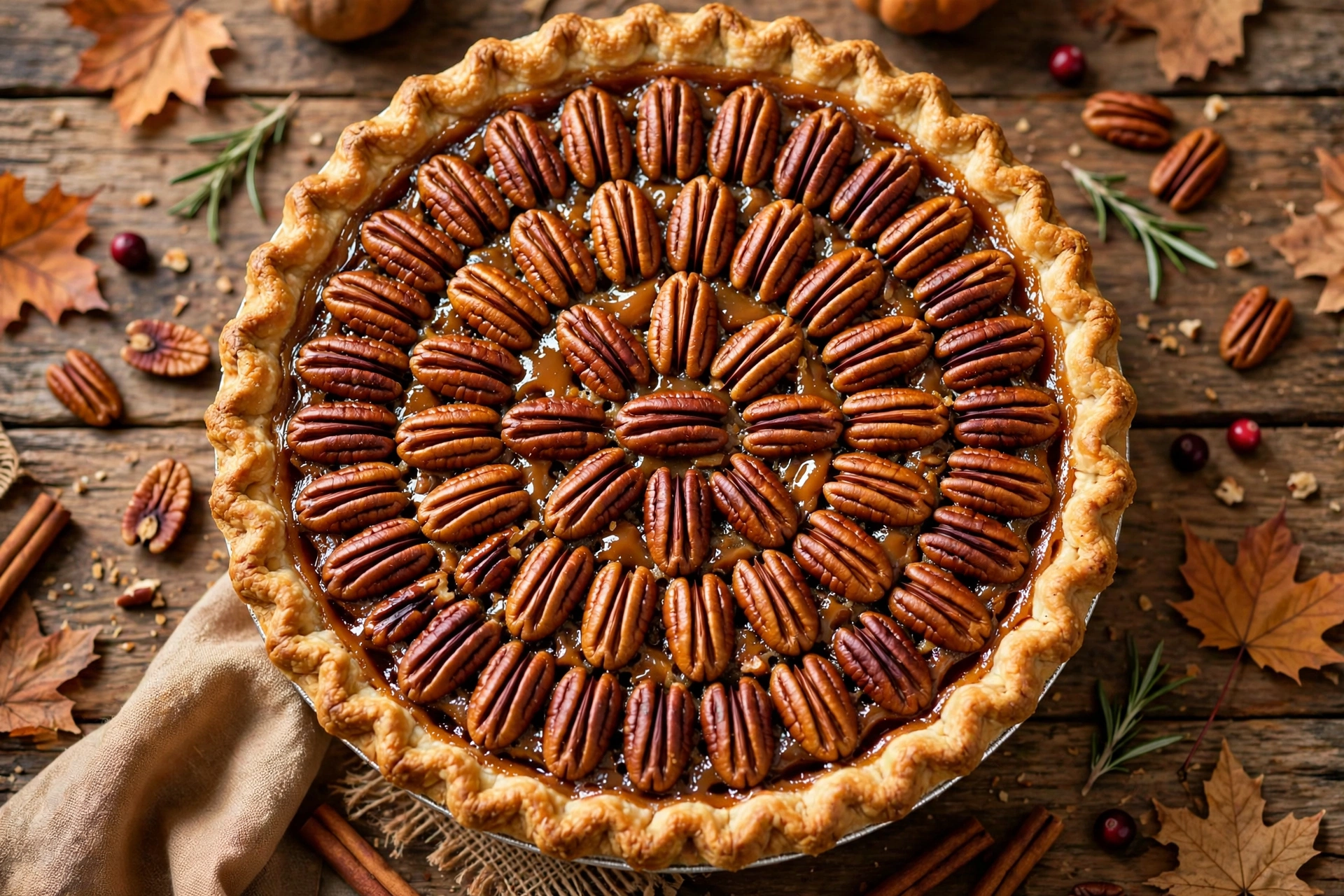
Visually, it is a showstopper with minimal effort. The glossy amber filling, the concentric rings of mahogany pecan halves, the deeply golden crimped crust: it photographs beautifully and needs no garnish, though a cloud of whipped cream never hurts. For a complete Thanksgiving dessert table, serve it alongside our classic pumpkin roll.
Quick and Easy Preparation
Do not let the ingredient list intimidate you, because the actual work here is about twenty five minutes. Most of that is browning butter and whisking the filling, both of which are hard to get wrong if you watch the pan.
The crust is the only part that asks for a little technique, and even that is forgiving. If you use a quality store-bought deep dish crust, you skip rolling entirely and go straight to the egg wash and chill. Homemade crust tastes better, but nobody at the table will complain about the shortcut version.
Baking is almost entirely hands-off. Ten minutes at high heat, then you turn the oven down and walk away for forty five to fifty minutes. The pie tells you when it is done with visual cues you will learn to read: puffed and deeply browned edges, a center that still trembles slightly.
Cooling takes longer than baking, which surprises first-timers. Two hours on a wire rack plus two hours in the refrigerator sounds excessive until you cut into a fully set pie and see that perfect glossy slice. Plan the timing backwards from dessert and you will be fine.
Make-ahead friendliness is this pie’s superpower. It keeps beautifully for days and freezes for months, which means Thanksgiving dessert can be completely finished before the turkey even goes into the oven, while sides like green bean casserole from scratch bake. Few holiday recipes give you that kind of freedom.
Lighter and Diet Adaptations
A lighter version will never be health food, but small tweaks trim it meaningfully. Replacing half the brown sugar with a monk fruit or erythritol brown sugar blend cuts a noticeable amount of sugar without changing the structure, since the corn syrup still provides the gooey body.
For a gluten free version, use your favorite gluten free pie crust, homemade or store-bought. The filling itself contains only two tablespoons of flour, which you can swap for a gluten free all-purpose blend or even cornstarch with no texture change.
Dairy free bakers can brown a good vegan butter stick exactly like dairy butter: it foams, the milk solids toast, and the nutty aroma develops the same way. Pair it with a vegan crust and the pie is fully dairy free.
If corn syrup concerns you, a version made with pure maple syrup or honey works, though the texture will be slightly less gooey and the flavor more pronounced. Use the same volume and add five extra minutes to the bake, watching the jiggle test closely.
Ingredients
- 1 homemade 9-inch pie crust, or 1 store-bought deep-dish pie crust
- 1 large egg, beaten with 1 tablespoon water (for egg wash)
- 6 tablespoons (85 g) unsalted butter
- 3/4 cup (150 g) light brown sugar, packed
- 3/4 cup (180 ml) dark corn syrup
- 3 large eggs, at room temperature
- 2 tablespoons all-purpose flour
- 1/2 teaspoon fine sea salt
- 2 teaspoons pure vanilla extract
- 2 cups (200 g) pecan halves, divided (1 1/2 cups chopped, 1/2 cup halves reserved for the top)
Step by Step Instructions
- Spread the pecans on a rimmed baking sheet and toast at 350°F for 7 to 8 minutes, until fragrant and a shade darker. Let them cool completely, then roughly chop 1 1/2 cups and leave the remaining halves whole for decorating the top.
- Fit the pie crust into a 9-inch deep-dish pie plate, trim the overhang to one inch, and crimp the edge decoratively. Brush the entire crust generously with egg wash and refrigerate for 30 minutes. Meanwhile, place a heavy rimmed baking sheet on the lowest oven rack and preheat the oven to 400°F.
- Brown the butter: melt it in a light-colored saucepan over medium heat, then keep cooking, swirling occasionally, until it foams, the foam subsides, and brown specks appear on the bottom with a nutty aroma, 4 to 5 minutes. Pour it immediately into a large mixing bowl, bits and all, and let it cool for 5 minutes.
- Whisk the brown sugar into the warm browned butter until it looks like wet sand. Whisk in the corn syrup, then the eggs one at a time, then the flour, salt, and vanilla until completely smooth.
- Stir the chopped toasted pecans into the filling. Arrange the reserved pecan halves in concentric circles over the surface later, after pouring, or simply scatter them; either looks beautiful.
- Pour the filling into the chilled crust and arrange the pecan halves on top in neat rings. Set the pie plate directly on the preheated baking sheet in the oven and bake at 400°F for 10 minutes.
- Reduce the oven temperature to 350°F and continue baking for 45 to 50 minutes. If the crust edge browns too quickly, tent it loosely with foil. The pie is done when the edges are puffed and deeply browned and the center still trembles slightly when nudged, or when an instant-read thermometer registers 200°F in the center.
- Cool the pie on a wire rack for 2 hours, then refrigerate for at least 2 more hours before slicing. Cut with a sharp knife dipped in hot water and wiped clean between cuts for the glossiest slices.
Pro Tips for a Perfect Pecan Pie
Brown the butter with your nose, not just your eyes. The visual cue is amber liquid with brown specks, but the real signal is the aroma shifting from buttery to intensely nutty, almost like hazelnuts roasting. King Arthur Baking’s take on the classic uses plain melted butter, which is exactly why this browned butter version stands out. Pull it the moment that smell peaks, because it goes from perfect to burnt in under a minute.
Toast the pecans even if the bag says they are fresh. Eight minutes at 350°F drives off the slight staleness that bagged nuts always carry and blooms their natural oils. Taste one before and after and you will never skip this step again.
The preheated baking sheet is the single biggest upgrade in this recipe. A screaming hot sheet under the pie plate blasts heat into the bottom crust from the first second, which is exactly what prevents the dreaded soggy bottom. Use your heaviest sheet pan and give it the full preheat time.
Chill the egg-washed crust for the full thirty minutes. Cold pastry hitting a hot oven sets its structure before the butter can melt out, which means flakier layers and a crimped edge that holds its shape instead of slumping.
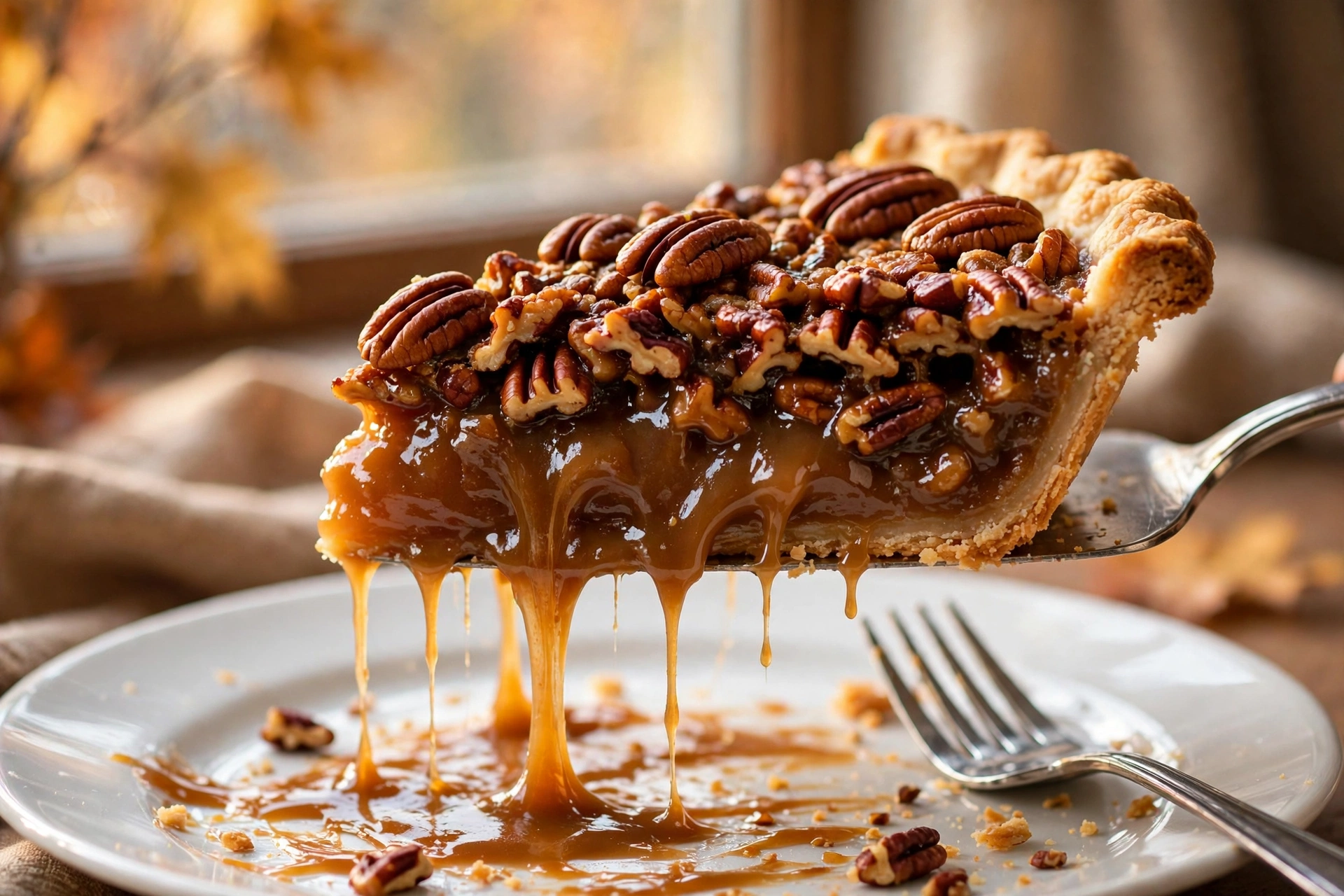
Learn the jiggle test and trust it. A done pie looks almost alarming: the center, about two inches across, should still wobble like gelatin when you nudge the pan. It firms up completely during the long cooling rest thanks to carryover cooking, and pulling it at this stage is what keeps the filling gooey instead of rubbery.
The 200°F internal temperature is your objective backup. If the jiggle makes you nervous, an instant-read thermometer in the center does not lie. At 200°F the egg proteins have set enough to hold a slice but not so much that the filling turns firm.
Tent the crust edge with foil or a pie shield the moment it reaches deep golden brown, even if the filling needs more time. Burnt crust edges taste bitter and ruin the look, while foil costs nothing. Check at the thirty minute mark and then every ten minutes.
Cool it completely, no exceptions. Cutting a warm pie gives you a runny puddle no matter how perfectly you baked it, because the filling needs the full four hour rest to set its structure. This is the hardest step and the most skipped, so plan dessert timing backwards from the meal.
Easy Swaps and Tasty Variations
Dark versus light corn syrup is a real flavor choice. Dark corn syrup, used here, has a touch of molasses character that deepens the filling. Light corn syrup gives a milder, cleaner sweetness that lets the pecans dominate. Either works with identical technique, so choose by taste.
Brown sugar versus white sugar changes the caramel depth. This recipe uses light brown sugar for its molasses notes, but dark brown sugar pushes the flavor even deeper, almost like butterscotch. White sugar alone makes a paler, simpler pie that some traditionalists actually prefer.
Store-bought crust is a legitimate shortcut. A quality deep-dish frozen crust, thawed just enough to crimp, produces a genuinely good pie when combined with this filling. Brush it with the egg wash and chill it like homemade, and nobody will interrogate you.
Chocolate lovers can scatter half a cup of dark chocolate chips over the crust before pouring in the filling. They melt into a thin chocolate layer at the bottom that pairs beautifully with pecans. It is not traditional, but it disappears fast at potlucks.
A bourbon-free flavor boost comes from an extra teaspoon of vanilla and a pinch of espresso powder whisked into the filling. The espresso does not make the pie taste like coffee; it deepens the caramel and chocolate notes the way salt sharpens sweetness.
For individual servings, divide the filling among six to eight par-baked tartlet shells and reduce the baking time to about 25 minutes. Mini pecan pies make adorable place settings at the Thanksgiving table and they cool much faster.
Maple version swaps the corn syrup for pure maple syrup one to one. Expect a slightly less gooey texture and a distinct maple flavor that is delicious in its own right. Add five minutes to the bake and watch the jiggle test, since maple sets a touch differently.
How to Store and Make Ahead
The baked pie keeps at room temperature for one day, loosely covered, which makes it perfect for baking the day before Thanksgiving. Beyond that, refrigerate it for up to four days, covered tightly with plastic wrap or in an airtight pie container.
For longer storage, freeze the whole baked pie for up to two months. Cool it completely, wrap it tightly in two layers of plastic wrap followed by a layer of foil, and freeze it flat. Thaw overnight in the refrigerator, still wrapped, then bring to room temperature for an hour before serving.
Reheating individual slices brings back the just-baked magic. Ten minutes in a 300°F oven warms the filling back to silky and re-crisp the crust edge. Avoid the microwave, which makes the crust soggy and the filling rubbery.
The unbaked filling can be mixed a day ahead and refrigerated in a sealed container. Whisk it briefly before pouring, since the heavier ingredients settle. Do not assemble the pie more than a few hours before baking, or the liquid filling will start softening the raw crust.
Conclusion
Classic Pecan Pie deserves its permanent spot on the Thanksgiving table, and this version earns it with browned butter, toasted pecans, and a crust that actually stays crisp. Round out the feast with sweet potato casserole with pecan streusel for the full pecan-forward menu. The techniques here are simple but they fix every common complaint: no soggy bottom, no runny filling, no flat flavor. Bake it a day or two ahead, let it rest properly, and serve it with confidence. This is the pie people will talk about on the drive home.
FAQ
Why is my pecan pie runny in the center even after the full baking time?
It was either underbaked or cut too soon, and cutting too soon is the more common culprit. The center should still tremble slightly when the pie leaves the oven, then firm up during the full 4-hour cooling rest. If you slice before that rest is complete, the unset filling floods the plate no matter how well you baked it.
How do I keep the bottom crust of my pecan pie from getting soggy?
Bake the pie on a preheated heavy baking sheet set on the lowest oven rack, which blasts heat into the bottom crust from the first minute. Brushing the crust with egg wash and chilling it for 30 minutes before filling adds a moisture barrier. Together these two steps give you a crisp, golden bottom instead of a pale, limp one.
Can I use light corn syrup instead of dark corn syrup?
Yes, with identical technique and timing. Dark corn syrup adds subtle molasses notes that deepen the filling, while light corn syrup gives a cleaner sweetness that lets the toasted pecans dominate. Choose based on the flavor you prefer; the texture and baking behavior are the same.
Should the pecans go on top of the filling or mixed into it?
Both, which is what this recipe does. The chopped pecans stirred into the filling distribute nutty crunch through every bite, while the halves arranged on top toast during baking and create the classic beautiful finish. Together these two steps give you a crisp, golden bottom instead of a pale, limp one.
Can I freeze a whole baked pecan pie for Thanksgiving?
Absolutely, and it is one of the best make-ahead strategies for the holiday. Cool the pie completely, wrap it in two layers of plastic wrap plus a layer of foil, and freeze flat for up to 2 months. Thaw it overnight in the refrigerator still wrapped, then bring it to room temperature for an hour before serving.
Classic Pecan Pie
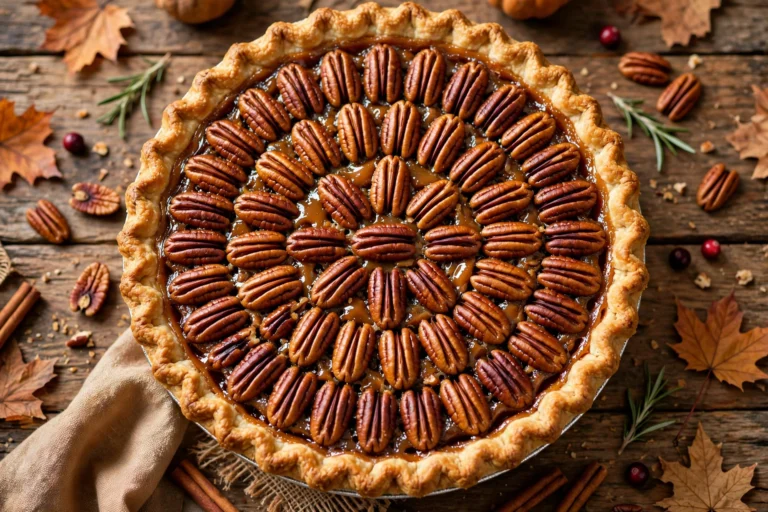
Classic pecan pie with nutty browned butter, toasted pecans, and a crisp golden crust baked on a preheated sheet for zero soggy bottom. Gooey, glossy, and make-ahead friendly for Thanksgiving.
- Total Time: 1 hour 20 minutes
- Yield: 8 to 10 slices 1x
Ingredients
- 1 homemade 9-inch pie crust, or 1 store-bought deep-dish pie crust1 large egg, beaten with 1 tablespoon water (for egg wash)6 tablespoons (85 g) unsalted butter3/4 cup (150 g) light brown sugar, packed3/4 cup (180 ml) dark corn syrup3 large eggs, at room temperature2 tablespoons all-purpose flour1/2 teaspoon fine sea salt2 teaspoons pure vanilla extract2 cups (200 g) pecan halves, divided (1 1/2 cups chopped, 1/2 cup halves for the top)
Instructions
- Spread the pecans on a rimmed baking sheet and toast at 350 degrees F for 7 to 8 minutes until fragrant and a shade darker. Cool completely, then chop 1 1/2 cups and keep the rest as halves.Fit the crust into a 9-inch deep-dish pie plate, trim to 1 inch overhang, and crimp the edge. Brush generously with egg wash and refrigerate 30 minutes. Place a heavy baking sheet on the lowest oven rack and preheat to 400 degrees F.Brown the butter in a light-colored saucepan over medium heat, swirling, until it foams, the foam subsides, and brown specks appear with a nutty aroma, 4 to 5 minutes. Pour into a large bowl and cool 5 minutes.Whisk the brown sugar into the warm browned butter until like wet sand. Whisk in the corn syrup, then the eggs one at a time, then the flour, salt, and vanilla until smooth.Stir the chopped toasted pecans into the filling.Pour the filling into the chilled crust and arrange the reserved pecan halves on top in concentric rings. Set the pie on the preheated baking sheet and bake at 400 degrees F for 10 minutes.Reduce to 350 degrees F and bake 45 to 50 minutes, tenting the crust edge with foil if browning too fast. Done when edges are puffed and deep brown and the center (about 2 inches) still trembles slightly, or reads 200 degrees F inside.Cool on a wire rack 2 hours, then refrigerate at least 2 more hours before slicing. Cut with a hot, dry knife wiped clean between cuts.
- Prep Time: 25 minutes
- Cook Time: 55 minutes