
In this article:
- Why a from scratch sauce changes everything
- Cheddar, sour cream and the golden crunch
- The two day make ahead timeline
- What you need for the casserole
- Building the sauce and assembling the dish
- The hash brown rule against watery bakes
- Swaps for the cheese, cream and crunch
- A lighter pan, same comfort
- Storing, freezing and reheating
- While the turkey rests
- Questions about this casserole
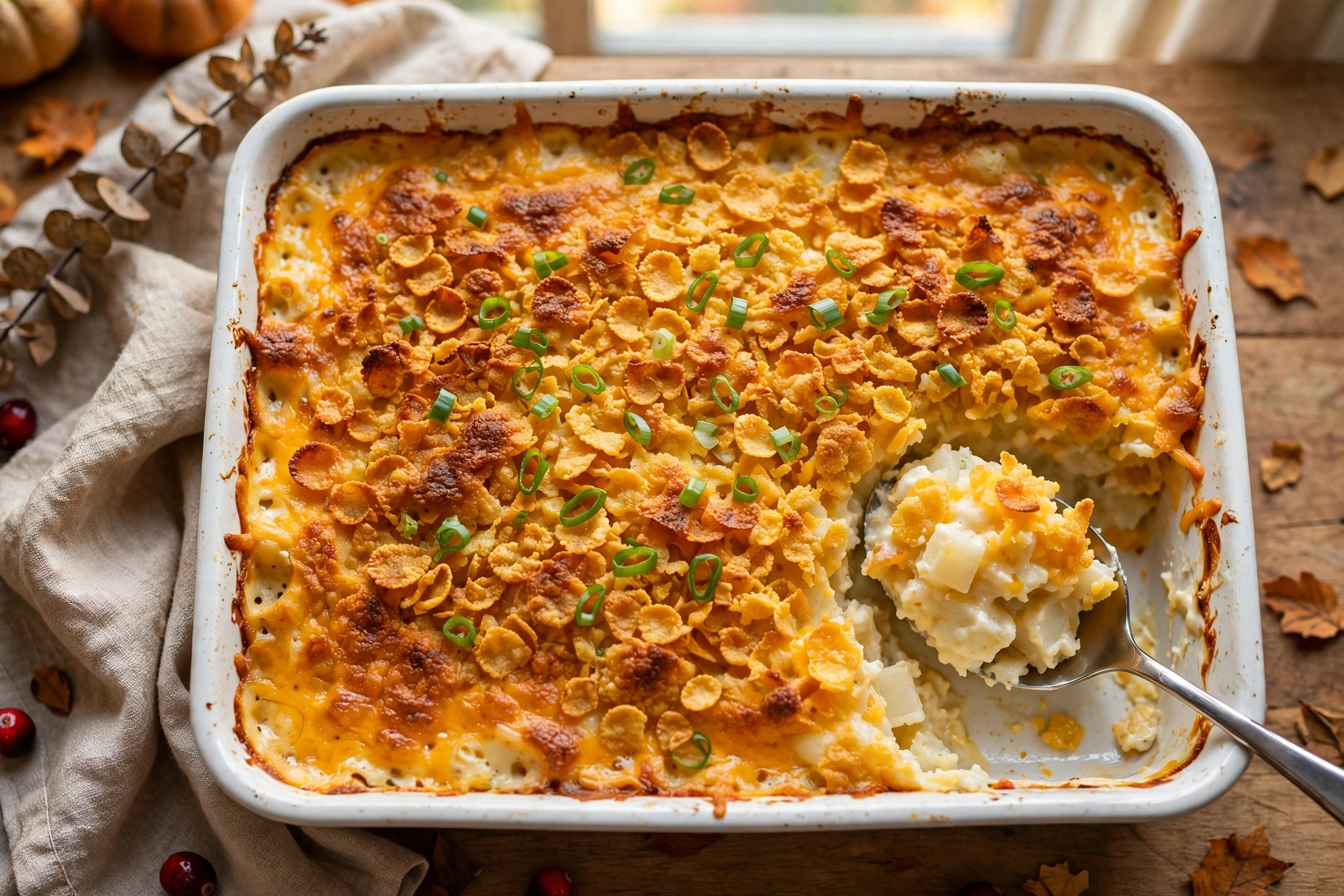
These make ahead funeral potatoes are the Thanksgiving side I assemble on Tuesday, when the kitchen is quiet and the turkey is still in the refrigerator. Shredded potatoes fold into a real cheese sauce, sharp with cheddar and bright with sour cream. The dish waits, patient and unbaked, until the day it is needed. A buttered cornflake topping goes on at the last minute and bakes into a deep golden crunch.
Funeral potatoes earned their name at church suppers and family gatherings, where a hot pan of cheesy potatoes could feed a crowd and comfort it at the same time. The version below keeps that generosity and fixes the two problems that follow the dish around: a sauce that tastes like a can, and a topping that goes soft before it reaches the table.
Why a From Scratch Cheese Sauce Changes These Funeral Potatoes
Make ahead funeral potatoes stand or fall on their sauce, because the sauce is what the potatoes drink during two days in the refrigerator. A sauce built on a light roux, milk and broth stays silky when it is reheated. It coats every shred instead of pooling at the bottom of the dish. Canned soup shortcuts cannot do this; they set into a gel in the cold and melt unevenly in the oven.
The roux takes four minutes and asks for nothing exotic. Butter, flour, milk and broth, whisked in that order, give you a base you can season precisely. Dijon mustard sharpens the cheddar without announcing itself. Smoked paprika adds a low warmth that reads as depth rather than heat.
Sour cream goes in off the heat, at the very end. Boiled sour cream can grain and split, but folded into a hot sauce it stays smooth and brings the gentle tang that keeps a rich dish from feeling heavy. That tang is the difference between a side people taste once and a side they ask about.
The sauce also seasons more honestly than a can. You taste and adjust before the potatoes go in, while the salt can still reach everything. With a canned base, seasoning is guesswork layered on top of salt that is already there, and the pan often lands bland in the middle and salty at the edges.
Sharp Cheddar, Tangy Sour Cream and One Golden Crunch
The first bite is creamy and familiar: tender potato, melted cheddar, a soft onion sweetness underneath. Sharp cheddar matters here, because mild cheese disappears into the sauce during a long bake. A well aged cheddar keeps its voice even after fifty minutes in the oven.
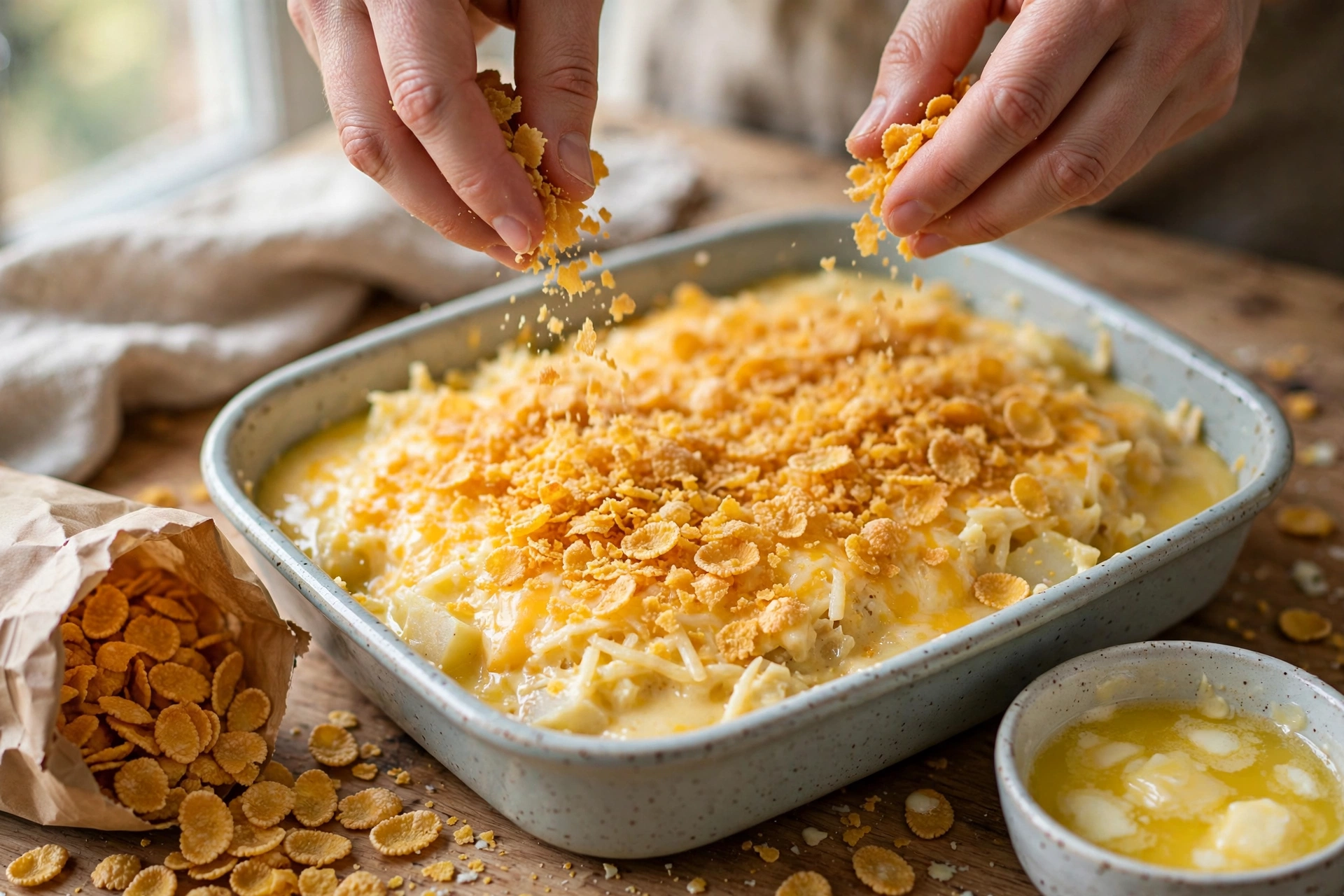
The topping is not decoration. Buttered cornflakes bake into a crisp, almost caramelized shell that contrasts with everything beneath it. Crushing them lightly, so pieces stay pea sized, gives crunch in every spoonful instead of a dusty crumb.
Green onions appear twice, once inside for a mild onion backbone and once scattered fresh at serving. The fresh handful wakes the whole pan up. It is a small move, borrowed from loaded baked potatoes, and it makes the casserole taste finished rather than merely hot.
Serving temperature shapes the flavor more than cooks expect. Straight from the oven the sauce is loose and the cheddar tastes sharp; after a ten minute rest it thickens into a scoopable cream and the flavors merge. Plan the rest into your timeline, because this pan is at its best in that window, not a minute before.
The Two Day Make Ahead Timeline for a Calm Thanksgiving
Two days before serving, make the sauce and assemble the casserole without its topping. Cover the dish tightly and refrigerate it. The potatoes absorb seasoning as they rest, which is why a rested pan tastes more unified than one baked within the hour.
One day before serving, do nothing to the casserole at all. Use the day for pies and cranberry sauce. If the freezer is your plan instead, the assembled unbaked dish freezes well for up to one month; move it to the refrigerator the night before baking so it thaws slowly and evenly.
On serving day, set the dish on the counter for thirty minutes while the oven heats. Scatter the buttered cornflakes over the top only now, never earlier. Bake until the edges bubble and the topping is deep golden, then rest the pan ten minutes so the sauce settles into a scoopable cream.
The timeline bends without breaking. If the turkey needs the oven at the same hour, bake the casserole earlier in the day and hold it, covered, in a low oven at 200°F for up to an hour. The topping stays crisp and the sauce stays silky, which is more than can be said for most sides competing for that oven.
What You Need: Hash Browns, Sharp Cheddar and a Box of Cornflakes
Frozen shredded hash browns are the working base, and they are non negotiable for texture: hand grated potatoes oxidize and weep. Everything else is a short, ordinary list. Shred the cheddar from a block if you can, because pre shredded cheese carries anti caking starches that dull the sauce.
A note on the dish itself: ceramic and glass hold heat gently and keep the edges from scorching during the long bake, which suits a make ahead pan. A metal pan works, but watch the last ten minutes, because the topping colors faster against metal and the corners can run ahead of the center.
- 30 ounces frozen shredded hash browns, thawed
- 4 tablespoons butter, for the sauce
- 1 cup finely diced yellow onion
- 2 garlic cloves, minced
- 1/4 cup all purpose flour
- 1 1/2 cups whole milk
- 1 cup chicken broth or vegetable broth
- 1 teaspoon Dijon mustard
- 1 teaspoon fine salt, plus more to taste
- 1/2 teaspoon black pepper
- 1/4 teaspoon smoked paprika
- 2 1/2 cups shredded sharp cheddar, about 10 ounces, divided
- 1 cup sour cream, at room temperature
- 3 green onions, thinly sliced, plus more for serving
- 2 1/2 cups cornflakes, lightly crushed
- 3 tablespoons butter, melted, for the topping
Building the Sauce and Assembling the Casserole
The work is front loaded and calm: dry the potatoes, build the sauce, fold everything together. From there the refrigerator or the oven takes over, which is exactly the rhythm a holiday side should have.
One practical note before you start: this fills a 9 by 13 inch dish generously, which is the right scale for twelve side servings. For a smaller table, halve the recipe into an 8 inch square dish and trim five minutes from the bake; the timeline and the topping rule stay exactly the same.
- Thaw the hash browns overnight in the refrigerator, or for one hour on the counter in a colander. Tip them into a clean kitchen towel and squeeze hard over the sink until no more water drips; expect about a cup of liquid.
- Butter a 9 by 13 inch baking dish, including the corners. If you are baking today, heat the oven to 350°F.
- Melt the 4 tablespoons of butter in a large pot over medium heat. Cook the onion for 4 to 5 minutes until soft and sweet, then stir in the garlic for 30 seconds.
- Sprinkle the flour over the onion and stir for 1 full minute. Pour in the milk slowly while whisking, then the broth, and simmer 3 to 4 minutes until the sauce thickly coats a spoon.
- Take the pot off the heat. Whisk in the mustard, salt, pepper and smoked paprika, then stir in 2 cups of the cheddar until fully melted.
- Fold in the sour cream and the green onions, then the squeezed hash browns, turning until every shred is coated in sauce.
- Spread the mixture into the prepared dish and smooth the top. For the make ahead route, cover tightly and refrigerate for up to 48 hours.
- On baking day, rest the dish on the counter for 30 minutes. Toss the cornflakes with the melted butter and the remaining 1/2 cup of cheddar, and scatter the mixture evenly over the top.
- Bake uncovered for 45 to 55 minutes, a few minutes longer from refrigerator cold, until the edges bubble and the topping is deep golden. Rest 10 to 15 minutes, scatter fresh green onions, and serve.
Thawed and Squeezed Dry: The Hash Brown Rule Against Watery Bakes
Every watery pan of funeral potatoes traces back to one skipped step: the squeeze. Frozen hash browns hold a surprising amount of water, roughly a cup in a 30 ounce bag, and that water has nowhere to go in a covered sauce except into your finished dish. Squeezing is not optional garnish work; it is the recipe.
Work in two batches inside a clean towel, twisting until the shreds feel dry and slightly fluffy. If the squeezed potatoes clump, loosen them with your fingers before they meet the sauce. Dry shreds drink sauce; wet shreds dilute it.
The same rule explains why this casserole tolerates two days in the refrigerator so well. With the free water removed at the start, there is nothing left to leak out during the rest. The sauce you built on Tuesday is the sauce you serve on Thursday, at the same consistency.
Shredded potatoes are the right cut for this treatment. Diced hash browns hold more surface water and bake up chunkier, while shredded strands knit into the sauce and slice cleanly at serving. If diced is what you have, squeeze them the same way and add five minutes to the bake.
Swaps for the Cheese, the Cream and the Crunch
Colby Jack melts sweeter and milder than sharp cheddar, and a half and half blend of cheddar and Gruyere turns the pan almost fondue like. Whatever you choose, keep the total at two and a half cups and shred it cold from a block for the smoothest melt.
Greek yogurt can stand in for up to half of the sour cream, adding tang and a little protein; replace all of it and the sauce tastes lean. For the topping, buttered panko or crushed buttery crackers both work, while canned fried onions give a different, more retro finish that many families swear by.
If your table already has make ahead mashed potatoes on it, this pan still earns its place: the textures are opposites, one smooth and one crunchy, and guests treat them as two different dishes entirely.
A Lighter Pan Without Losing the Comfort
Low fat sour cream and a two percent milk hold up well in this sauce, because the roux and the cheese do the structural work. That pair of swaps trims the pan noticeably while the top stays exactly as crisp and golden as the original.
You can also stretch the potatoes with a cup of finely chopped cauliflower folded into the shreds. It disappears into the sauce during the bake, and even committed cauliflower skeptics rarely find it under the cheddar and cornflakes.
What I would not lighten is the topping. A crisp, buttered crust is the identity of this dish, and diet toppings slide off a creamy casserole in a way that feels like an apology. Keep the crunch honest and let the sauce carry the savings instead.
Storing, Freezing and Reheating Funeral Potatoes
Leftover make ahead funeral potatoes keep in the refrigerator for 3 to 4 days, in line with the USDA guidance on leftovers. Cover the dish tightly once it has cooled, and keep the topping side up so it stays as crisp as possible.
Reheat a full pan, covered with foil, at 350°F for 20 to 25 minutes, then uncover for 5 minutes to revive the crunch. Single portions reheat well in the microwave at reduced power, though the topping softens; a few minutes in a hot skillet or air fryer brings the crisp back.
For the freezer, assemble without the topping, wrap the dish in two layers, and freeze for up to one month. Thaw overnight in the refrigerator, add the buttered cornflakes, and bake as directed with about 10 extra minutes. Alongside make ahead turkey gravy and make ahead wild rice pilaf, it completes a trio of sides that ask nothing of you on the day itself.
The Side Dish That Waits Patiently While the Turkey Rests
Make ahead funeral potatoes solve the real Thanksgiving problem, which is not cooking but timing. Turkey rests, gravy reduces, and someone always needs the oven for rolls. This pan bakes once, holds gracefully, and serves straight from its dish without a sauce to whisk at the last second.
It also travels better than almost any side on the table. If your assignment is one dish for a family potluck or a church supper, the original home of this casserole, bring this one. Set it next to the classic sweet potato casserole and watch two different kinds of comfort disappear at the same speed.
There is a quiet satisfaction in a side dish that was finished two days ago and still gets the loudest compliments at the table. Make the sauce once, squeeze the potatoes well, and guard the topping until baking day. The rest of Thanksgiving can be as chaotic as it likes.
Questions About These Make-Ahead Funeral Potatoes
Can I really assemble funeral potatoes two full days ahead?
Yes, and the dish improves for it. Build the sauce, fold in the squeezed hash browns, cover the dish tightly and refrigerate for up to 48 hours. Keep the buttered cornflakes off until baking day, rest the pan 30 minutes on the counter, then bake as directed.
Why did my cornflake topping turn soft before baking?
The topping drinks steam and moisture from the sauce while it waits in the refrigerator. That is why it goes on at the last minute in this recipe. If yours already sat overnight, recover it with 8 to 10 uncovered minutes at 375°F at the end of the bake, watching closely.
My thawed hash browns released a lot of water. Did I ruin them?
No, that water is exactly what the squeeze removes. About a cup from a 30 ounce bag is normal. Twist the shreds in a clean towel until they feel dry and fluffy; skipping this step is the most common cause of a watery bake.
Can I freeze the assembled casserole before baking it?
Yes. Assemble without the topping, wrap the dish in two layers and freeze for up to one month. Thaw it overnight in the refrigerator, add the buttered cornflakes and cheddar, and bake with about 10 extra minutes.
What can I use instead of cornflakes on top?
Buttered panko keeps a fine crunch, crushed buttery crackers give a richer finish, and canned fried onions make the retro version many families grew up with. Use the same 3 tablespoons of melted butter to coat any of them so they toast evenly.