
In this article:
Why would anyone put black pepper in a Christmas cookie, and then hide the whole batch in a tin for a week before eating it? Because that is exactly what pfeffernusse cookies ask of you, and the bakers who have made them for two hundred years are not wrong.
These little spice balls come out of the oven firm, dark and a bit stern. Then time does the baking that the oven cannot: the spices marry, the crumb softens, and the cookie that seemed plain on day one becomes the one everyone reaches for on day four.
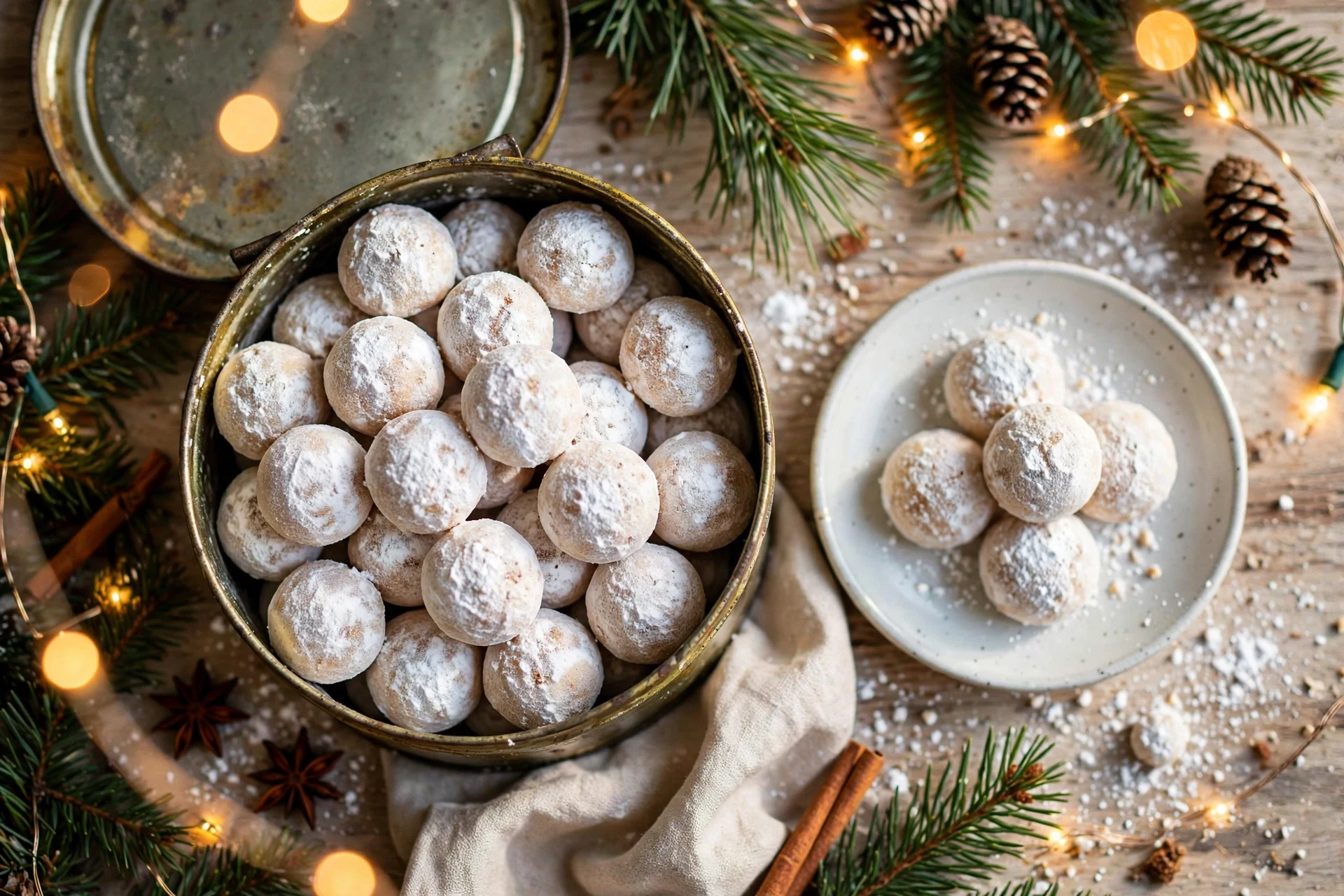
What Makes Pfeffernusse Cookies Unlike Every Other Christmas Cookie
Pfeffernusse cookies work on a principle most Christmas baking ignores: they are designed to improve after baking. The molasses and brown sugar hold moisture in reserve, and the dense, low fat crumb slowly relaxes as the spice oils move through it.
The pepper is not a stunt. Half a teaspoon of freshly ground black pepper in a batch of three dozen cookies reads as warmth rather than heat, the same way it does in gingerbread, and it sharpens every other spice around it.
The spice blend is the architecture: cinnamon in front, cardamom for brightness, allspice, nutmeg, cloves and ginger in support. Each one is dosed to be noticed in sequence, so the cookie tastes layered instead of simply brown and sweet.
The double roll in confectioners’ sugar is the final piece of engineering. The first coat melts slightly into the warm surface and seals it; the second stays powdery and white, giving the cookie its snowball look and protecting the crumb underneath.
And because the dough must chill and the cookies must ripen, this is a recipe with no day-of panic built into it at all. The work happens in short, calm sessions spread across a week, which is precisely how December baking should feel.
Small, Dark and Snowy: the Bite, the Warmth, the Finish
A pfeffernusse is a one or two bite cookie, about an inch across, domed like a little nut. The name means pepper nut in German, and the size is the point: it is a cookie you eat slowly with coffee, not a soft bakery round you finish in the car.
Fresh from the oven, the texture is firm at the edges with a dense, cake-like center. After two or three days in the tin, that center turns tender and almost chewy, and the whole cookie eats like a miniature spice cake wearing a sugar coat.
The flavor arrives in order. First the white sweetness of the coating, then molasses depth, then the spices in a slow wave, and last of all the pepper, felt as a gentle warmth at the back of the throat rather than a burn.
The anise, used lightly here, adds the traditional licorice whisper that German bakers expect. It stays in the background in this version; if your family runs from anise, the variation further down removes it cleanly and rebalances the blend.
Visually, a plate of these is all contrast: white domes against every red and gold cookie around them. On a crowded Christmas plate they are the ones people pick up first, mostly to ask what they are, and then again because of the answer.
They are dunking cookies by design. The dense crumb drinks coffee, tea or hot chocolate without falling apart, softening in the cup the way biscotti does, and the spices bloom in the warmth. A pfeffernusse eaten dry is good; a pfeffernusse dunked is the full argument for the recipe.
The Ripening Calendar: Day One, Day Three, Week Two
Day one, the cookies are at their firmest and their plainest. The spices taste separate, the crumb is tight, and the whole batch can seem like a disappointment if nobody warned you. Consider yourself warned: day one is not the cookie.
By day three, stored in a tin lined with parchment and kept at cool room temperature, the transformation is well under way. The crumb has softened evenly, the pepper and cardamom have blended into the molasses, and the cookie finally tastes like itself.
Week two is the peak most German bakers aim for, which is why these pfeffernusse cookies are traditionally baked in late November. The texture settles into a tender chew, the spice flavor is at its fullest, and the sugar coat, refreshed with a light second dusting, still looks snowy.
The tin matters more than people think. Airtight metal or glass keeps the moisture the cookie needs; a plastic bag or a loose lid lets them dry toward hardness. Keep different cookie types in separate tins, because these spices will perfume anything stored beside them.
They hold this way for three to four weeks, which no soft cookie on the Christmas plate can claim. That long, calm keeping is the whole reason the recipe exists, and it is why so many families bake a double batch without a second thought.
The tradition behind the calendar is older than the tin itself. Pepper was once the generic word for expensive imported spice, and these cookies were a way for ordinary households to taste the whole spice trade in one small, keeping biscuit at the darkest point of the year. The ripening was practical before it was romantic: a cookie baked for Saint Nicholas Day in early December still had to be good at Christmas.
The Spice List and Everything Else You Need
Grind the pepper fresh if you possibly can; pre-ground pepper that has sat open for a year gives dust instead of warmth. Everything else is a standard December pantry, measured for a batch of about three dozen cookies:
- 2 1/4 cups all-purpose flour (280 g), spooned and leveled
- 1 teaspoon ground cinnamon
- 1/2 teaspoon ground cardamom
- 1/2 teaspoon freshly ground black pepper
- 1/4 teaspoon ground allspice
- 1/4 teaspoon ground nutmeg
- 1/4 teaspoon ground cloves
- 1/4 teaspoon ground ginger
- 1/2 teaspoon baking soda
- 1/2 teaspoon fine salt
- 1/2 cup unsalted butter, at room temperature
- 3/4 cup packed dark brown sugar
- 1/4 cup unsulfured molasses (not blackstrap)
- 1 large egg, at room temperature
- 1 teaspoon vanilla extract
- 1/2 teaspoon anise extract
- 1 cup confectioners’ sugar, for the double roll
Mixing, Chilling and Rolling the Little Dough Balls
The dough comes together in ten minutes and then insists on a rest, which you should give it without negotiation. A chilled dough rolls into clean balls and keeps its domes in the oven; a warm one slumps into discs:
- Whisk the flour, cinnamon, cardamom, black pepper, allspice, nutmeg, cloves, ginger, baking soda and salt together in a medium bowl until the spice color is even throughout.
- Beat the butter, brown sugar and molasses with a mixer on medium speed for about 3 minutes, until the mixture lightens and turns fluffy at the edges.
- Beat in the egg, vanilla and anise extract until fully combined, scraping the bowl once. The mixture may look slightly curdled; the flour will bring it back together.
- Add the flour mixture in two additions, mixing on low just until no dry streaks remain. The dough will be soft, dark and sticky, closer to a thick batter than a roll-out dough.
- Scrape the dough onto a sheet of plastic, pat it into a thick disk, wrap well and refrigerate for at least 4 hours, or overnight. It keeps, chilled, for up to 3 days.
- Heat the oven to 350°F and line two baking sheets with parchment. Scoop tablespoon portions of the cold dough and roll them quickly between your palms into 1 inch balls, about 36 in total.
- Set the balls on the sheets about 1 1/2 inches apart. Bake for 13 to 15 minutes, until the tops are set with fine cracks and the bottoms are golden; the centers should still feel faintly soft when pressed.
- Cool the cookies on the sheet for 5 minutes. While they are still warm, roll them in confectioners’ sugar to coat completely, then move them to a rack to cool fully.
- Roll every cookie in fresh confectioners’ sugar a second time for the full snowy coat. Rest the batch in a parchment lined tin for at least 24 hours before serving; they are at their best from day three.
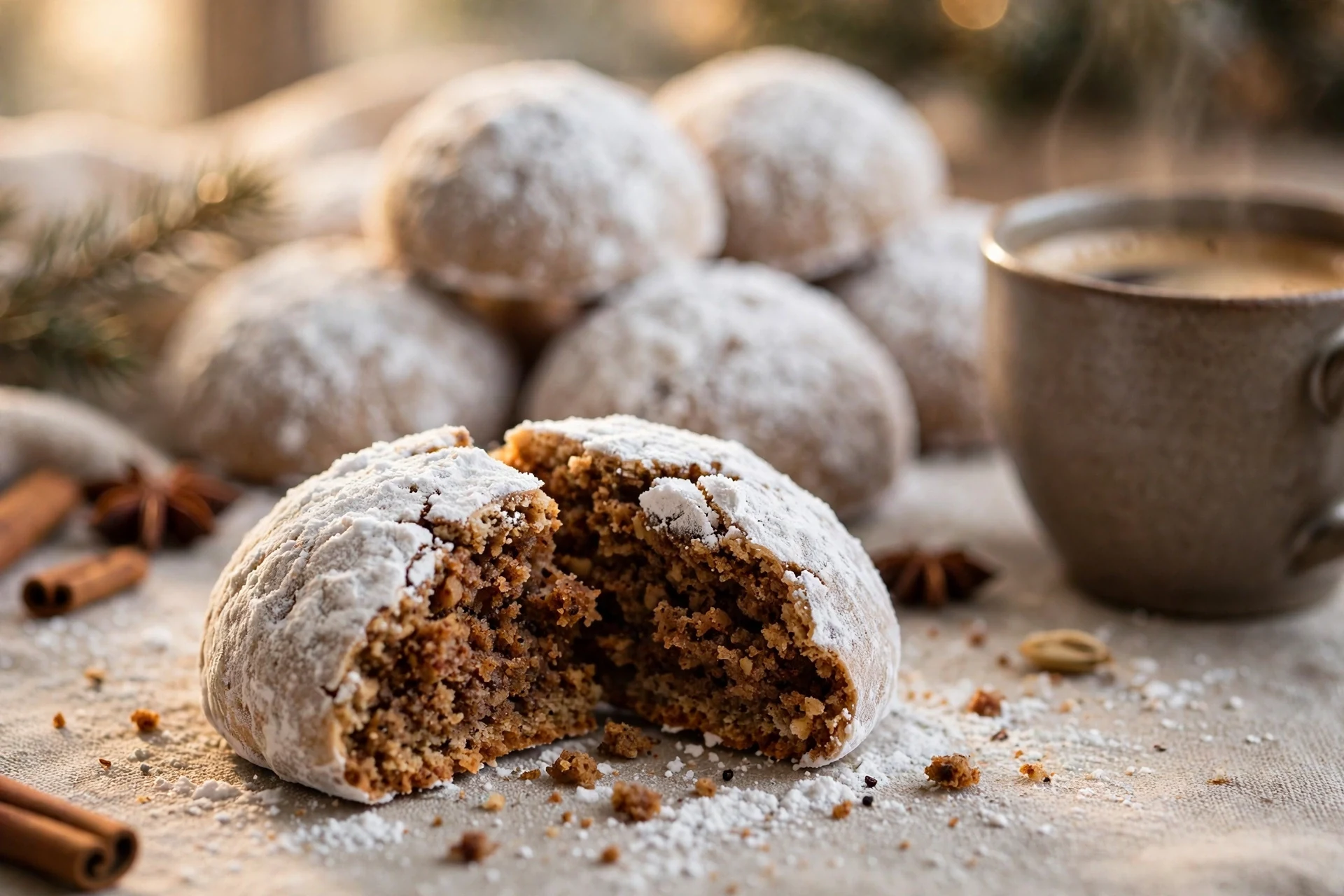
Too Hard on Day One? Read This Before You Worry
Firmness on day one is the design, not a failure. These cookies were baked for a season when they had to travel in tins and wait for Christmas, and their keeping quality comes from exactly the density that feels stubborn when they are fresh.
If a batch is still properly hard on day three, the traditional rescue works every time: tuck a fresh apple slice or a small piece of plain bread into the tin, seal it, and wait 24 hours. The cookies draw the moisture in and soften without turning soggy.
The usual cause of a truly rock hard batch is the oven, not the recipe. Two extra minutes past set tops and golden bottoms dries the crumb past what ripening can repair, so pull them while the centers still feel faintly soft; they firm as they cool.
Warm dough causes the opposite complaint, flat cookies with spread edges. If your kitchen is warm and the balls feel soft as you roll them, slide the filled sheet into the fridge for ten minutes before it meets the oven.
One more day one surprise worth knowing: the sugar coat will look patchy an hour after rolling, as the first layer drinks into the warm surface. That is the plan working, not failing. The second roll, done once the cookies are completely cool, is the one that stays white, so never judge the batch by its first coat.
The No-Anise Version My Family Actually Eats
Anise is traditional, but it is also the flavor that splits families. For the version served most often in my house, leave out the anise extract and add 1 teaspoon of finely grated orange zest with the egg, then raise the cardamom to 3/4 teaspoon.
The orange does the brightening work anise used to do, and the extra cardamom fills the aromatic gap, so nothing about the cookie tastes like a compromise. These pfeffernusse cookies simply lean citrus and floral instead of licorice, and children tend to vote for them.
For a softer, more gingerbread leaning batch, swap the molasses down to 3 tablespoons and add 1 tablespoon of honey. The crumb bakes a little lighter and the ginger steps forward, which pairs well with the gingerbread cookies already in the December rotation.
For gifting, the sugar coat beats a glaze on every practical measure. A lemon glaze looks elegant for a day, then turns sticky in a tin and glues the cookies together; the double sugar roll stays dry, travels well and survives the mail, which is why the classic Christmas spritz cookies and these share the same box so happily.
Why a Cookie That Waits Fits a Busy December
Most Christmas cookies create a deadline. These create a window. The dough waits up to three days in the fridge, the baked cookies wait three weeks in a tin, and at no point does the recipe ask you to drop everything and perform.
That makes them the natural first bake of the season, somewhere in late November, before the calendar fills. One quiet evening of mixing and rolling, one tin on the counter, and a whole category of December obligation is already finished.
They also ship better than almost anything else on the plate. The dense crumb does not shatter, the sugar coat protects the surface, and a week in the mail counts as ripening rather than staling, which makes them the rare cookie that arrives better than it left.
Nutritionally they are modest little things, around 95 calories each with real spice doing the flavor work instead of fat; the values published by USDA FoodData Central for molasses and the spice blend are what I used to calculate the card below. Two cookies and a coffee is a reasonable December pleasure.
The Cookie That Anchors the Box
Every Christmas cookie box needs one member that can be baked first, wait patiently, and hold the whole assortment together at the end. In my boxes that job belongs to these pfeffernusse cookies, snowy against the snowball cookies and the cranberry orange shortbread, and always the last ones left, because somebody is saving them.
Ship a box across the country and the same patience pays off twice. The cookies travel without crumbling, the sugar coat keeps them looking fresh for weeks, and they arrive tasting like they were baked the day before the party, not the week before the flight.
Write the bake date on the tin lid, and the person who opens it will understand exactly why you sent them so early.
Bake them in late November, let the tin do its slow work, and by the time the box is assembled the firm little spice balls of day one will be gone. In their place: the oldest Christmas cookie on the plate, and somehow also the freshest tasting one.
Questions About Pfeffernusse, Answered Plainly
Does the black pepper make pfeffernusse cookies spicy?
No. Half a teaspoon across three dozen cookies registers as warmth at the back of the throat, not heat. Freshly ground pepper gives the roundest flavor; if you want them gentler, drop to 1/4 teaspoon and the blend still works.
How long do pfeffernusse cookies actually keep?
Three to four weeks in an airtight tin at cool room temperature, and they improve for the first two of those weeks. Keep them away from other cookie types, because the spices will perfume anything stored in the same container.
Can I skip the overnight chill and bake the dough right away?
The chill is doing two jobs: firming a very sticky dough so it rolls into balls, and hydrating the flour so the cookies keep their domes. Four hours is the honest minimum; warm dough spreads into flat, pale discs.
Why did my pfeffernusse come out hard as rocks?
Almost always overbaking. Pull them at 13 to 15 minutes, while the centers still feel faintly soft; they firm as they cool. If a hard batch is already baked, 24 hours in a sealed tin with a fresh apple slice softens it reliably.
Can I freeze pfeffernusse dough or the baked cookies?
Both. Roll the chilled dough into balls, freeze them solid on a tray, then bag them for up to two months; bake from frozen with two extra minutes. Baked cookies freeze for the same period, and the sugar coat can be refreshed after thawing.

Pfeffernusse Cookies
Traditional German pfeffernusse cookies: little molasses spice balls with cinnamon, cardamom and a measured warmth of black pepper, rolled twice in confectioners’ sugar. They are baked to ripen in a tin for up to four weeks, so they can be made in late November, gifted and shipped.
- Total Time: 35 minutes, plus at least 4 hours chilling and 24 hours ripening
- Yield: 36 cookies 1x
Ingredients
- 2 1/4 cups all-purpose flour (280 g), spooned and leveled
- 1 teaspoon ground cinnamon
- 1/2 teaspoon ground cardamom
- 1/2 teaspoon freshly ground black pepper
- 1/4 teaspoon ground allspice
- 1/4 teaspoon ground nutmeg
- 1/4 teaspoon ground cloves
- 1/4 teaspoon ground ginger
- 1/2 teaspoon baking soda
- 1/2 teaspoon fine salt
- 1/2 cup unsalted butter, at room temperature
- 3/4 cup packed dark brown sugar
- 1/4 cup unsulfured molasses (not blackstrap)
- 1 large egg, at room temperature
- 1 teaspoon vanilla extract
- 1/2 teaspoon anise extract
- 1 cup confectioners’ sugar, for the double roll
Instructions
- Whisk the flour, cinnamon, cardamom, black pepper, allspice, nutmeg, cloves, ginger, baking soda and salt together in a medium bowl until the spice color is even throughout.
- Beat the butter, brown sugar and molasses with a mixer on medium speed for about 3 minutes, until the mixture lightens and turns fluffy at the edges.
- Beat in the egg, vanilla and anise extract until fully combined, scraping the bowl once. The mixture may look slightly curdled; the flour will bring it back together.
- Add the flour mixture in two additions, mixing on low just until no dry streaks remain. The dough will be soft, dark and sticky, closer to a thick batter than a roll-out dough.
- Scrape the dough onto a sheet of plastic, pat it into a thick disk, wrap well and refrigerate for at least 4 hours, or overnight. It keeps, chilled, for up to 3 days.
- Heat the oven to 350°F and line two baking sheets with parchment. Scoop tablespoon portions of the cold dough and roll them quickly between your palms into 1 inch balls, about 36 in total.
- Set the balls on the sheets about 1 1/2 inches apart. Bake for 13 to 15 minutes, until the tops are set with fine cracks and the bottoms are golden; the centers should still feel faintly soft when pressed.
- Cool the cookies on the sheet for 5 minutes. While they are still warm, roll them in confectioners’ sugar to coat completely, then move them to a rack to cool fully.
- Roll every cookie in fresh confectioners’ sugar a second time for the full snowy coat. Rest the batch in a parchment lined tin for at least 24 hours before serving; they are at their best from day three.
- Prep Time: 20 minutes
- Cook Time: 15 minutes
Nutrition
- Serving Size: 1
- Calories: 95
- Sugar: 10
- Sodium: 55
- Fat: 3
- Saturated Fat: 2
- Unsaturated Fat: 1
- Trans Fat: 0
- Carbohydrates: 16
- Fiber: 1
- Protein: 1
- Cholesterol: 10