
In this article:
- A Cookie Older Than the Cookie Tin
- Vanilla Sugar, Made at Home Two Ways
- Almond Crescent Cookies Ingredients
- The Dough Is Supposed to Look Shaggy
- Shaping Crescents That Do Not Break
- Warm Cookies Get the Sugar, Cold Cookies Get It Again
- The Tin Is Part of the Recipe
- Almonds, Walnuts, and Other Swaps
- Questions Bakers Ask About Crescent Cookies
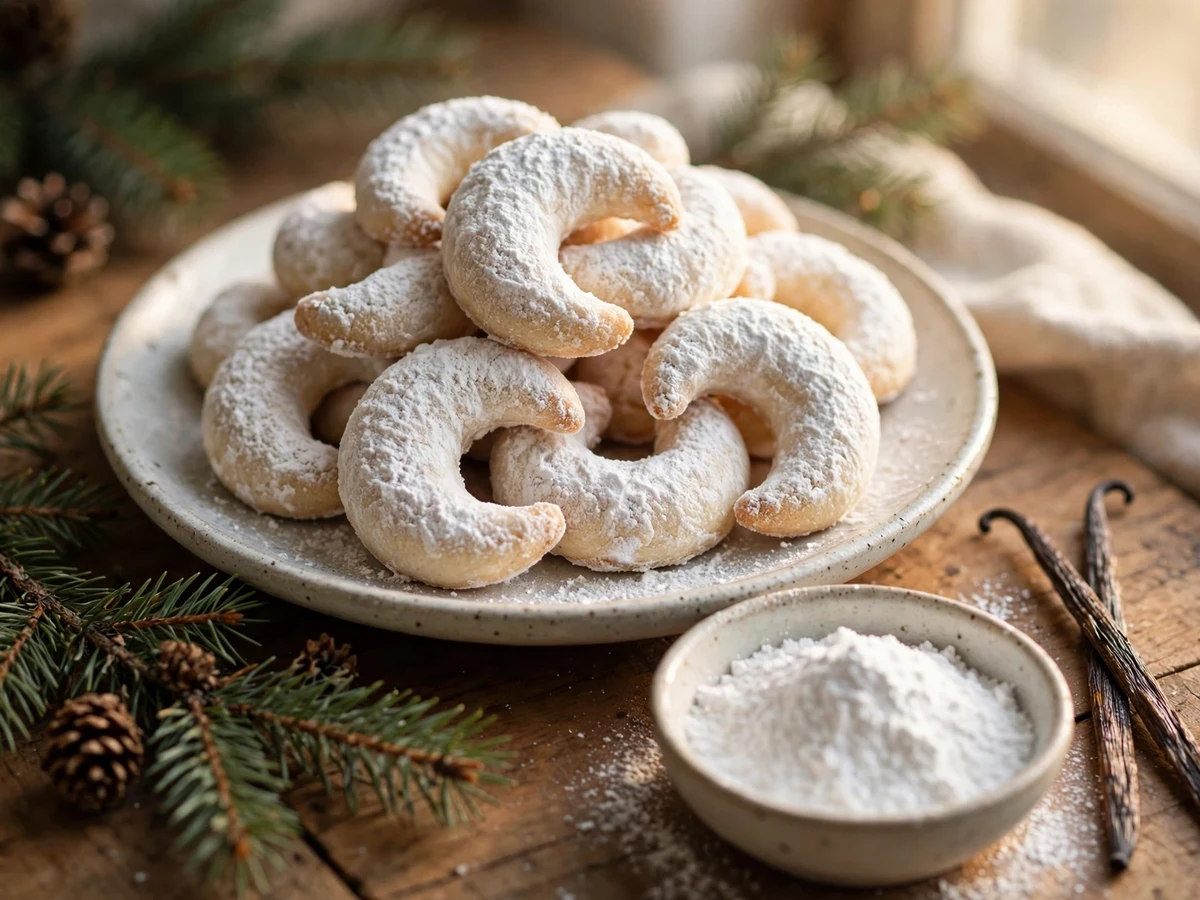
Some Christmas cookies announce themselves. These do the opposite. Almond crescent cookies are pale, small and quiet, dusted so thickly with vanilla sugar that they look like they were left out in the snow. Then you bite one, and the whole thing gives way at once: tender, sandy, intensely buttery, with almond all through the crumb and vanilla sitting on top like a scent. There is no crunch to fight through and no chew to finish. The cookie simply melts, and your hand is already reaching for the next one.
In Austria and Germany these are Vanillekipferl, and they have been on Christmas plates for centuries. The method in this recipe follows the old way closely: a cold butter dough with finely ground almonds, one egg yolk to hold it together, pieces weighed so every crescent bakes at the same speed, the shaped tray chilled before the oven, and a double roll in vanilla sugar, once while the cookies are warm and once when they are cold. None of that is fussy. It is just the handful of small decisions that separate a crescent that shatters into dust from one that melts.
A Cookie Older Than the Cookie Tin
The crescent shape is the point of the cookie, and bakers in Vienna have been forming it by hand since long before cookie cutters existed. A popular story says the shape marked a famous victory centuries ago and copied the crescent on a flag; historians treat the tale kindly but loosely. What is certain is that by the time home baking books were being printed, the Vanillekipferl was already a fixed part of Advent, made in the weeks before Christmas and kept in tins to be offered to every visitor who came through the door.
That keeping quality shaped the recipe itself. There is no milk in the dough, no leavening to go stale, and nothing perishable on the outside but butter and sugar. A crescent cookie is built to wait, and it does more than wait: it improves. Fresh from the oven the crumb is delicate but plain. After three days in the tin, the almond and vanilla have settled into each other and the texture turns silkier. This is a cookie designed by people who baked once for the whole season, and it still rewards that rhythm.
Vanilla Sugar, Made at Home Two Ways
Vanilla sugar is the flavor of this cookie, and it is the ingredient most North American bakers cannot buy. European shops sell it in little packets. Here, you make it, and it takes almost no effort either way.
The patient way: bury two or three spent vanilla bean pods, the ones left after scraping them for another recipe, in a jar of powdered sugar. Seal it and wait a week, shaking once or twice. The sugar pulls the vanilla out of the pods slowly and comes out fragrant all the way through. This is the version to make in early December if you bake a lot.
The same day way: split two fresh vanilla beans, scrape the seeds into a cup of powdered sugar, and whisk for a full minute, rubbing any clumps of seeds between your fingers until the sugar is evenly speckled grey. Spread it in a shallow dish while you make the dough. It will not be quite as deep as the week old jar, but on a warm cookie it blooms beautifully, and nobody will ask which method you used.
Vanilla extract cannot replace the coating. Extract flavors the dough, and there is some in this one, but the signature of a crescent cookie is the vanilla you meet first, on the surface, before the crumb. That only comes from real vanilla sugar.
Almond Crescent Cookies Ingredients
- 2 cups all-purpose flour (250 g)
- 1 cup finely ground blanched almonds (100 g)
- 1/2 cup powdered sugar (60 g)
- 1/4 teaspoon fine sea salt
- 1 cup unsalted butter, cold and cubed (226 g)
- 1 large egg yolk
- 2 teaspoons vanilla extract
- 1 cup powdered sugar, for the vanilla sugar coating (120 g)
- 2 vanilla beans, split and seeds scraped, for the coating
A word on the almonds: blanched ground almonds keep the crescents pale, which is part of their look. Almond flour from the baking aisle works exactly the same, since it is the same thing ground a little finer. Unblanched almond meal gives a darker, speckled cookie with a deeper nut flavor; it is not wrong, it is just a different branch of the family.
The Dough Is Supposed to Look Shaggy
- Make the vanilla sugar first: whisk the 1 cup powdered sugar with the vanilla bean seeds in a shallow dish until evenly speckled, and set it aside to dry a little while you work.
- Whisk the flour, ground almonds, 1/2 cup powdered sugar and salt in a large bowl.
- Rub the cold butter into the flour mixture with your fingertips until it looks like coarse crumbs with a few pea size pieces left.
- Add the egg yolk and vanilla extract. Press and fold the dough together just until it holds in one mass. It should look shaggy, not smooth.
- Form the dough into a flat disc, wrap it, and chill for 1 hour, until firm but not rock hard.
New bakers often panic at step 4 and keep working the dough until it turns smooth and cooperative. That smoothness is the enemy. Every extra fold warms the butter and develops the flour, and the reward is a cookie that spreads and toughens. A crescent dough should look barely held together, with visible streaks. The cold rest does the real work of bringing it together, in the fridge, where the butter stays cold.
The single egg yolk is a deliberate middle path. Recipes without any egg are the most traditional and the most fragile; the shaped crescents can crumble if you look at them firmly. Recipes with a whole egg are sturdier but bake up harder. One yolk adds just enough binding to make shaping calm, while the crumb still falls apart on the tongue the way it should.
Shaping Crescents That Do Not Break
- Heat the oven to 325 degrees F. Line two baking sheets with parchment paper.
- Pinch off pieces of dough of about 12 g, a scant tablespoon each. Roll each piece under your palms into a 2 1/2 inch rope with slightly thinner ends, then bend it into a crescent.
- Set the crescents on the sheets 1 inch apart, then chill the filled sheets for 15 minutes so the shapes stay sharp in the oven.
- Bake one sheet at a time for 11 to 13 minutes, until the tips are just golden and the centers still look pale.
- Cool on the sheet for 5 minutes, until the cookies are warm and firm enough to lift without breaking.
Weighing the pieces sounds fussy until you have baked one tray where the small cookies scorch while the big ones are still raw in the middle. Twelve grams each, give or take one, and a whole sheet finishes at the same minute. A scant tablespoon scoop gets you close if you do not own a scale.
Roll the ropes on the counter or between your palms, never on a floured board. Extra flour on the surface is the main reason shaped crescents crack as they bend: the outside dries, the inside stretches, and the cookie splits along the curve. A plain cool counter and quick hands keep the dough supple. Bend each rope into a slightly exaggerated curve, more horseshoe than banana. The cookies relax a little as they bake, and the finished shape lands right.
The 15 minute chill after shaping is the step most recipes skip and the one that saves the most cookies. Cold dough entering a moderate oven holds its crescent, keeps its tapered tips, and barely spreads. It also means you can shape the whole batch, chill both trays, and bake them one at a time without rushing.
Warm Cookies Get the Sugar, Cold Cookies Get It Again
- Roll each warm crescent gently in the vanilla sugar until well coated, then move to a rack to cool completely.
- Once cold, dust the crescents with a second light coat of vanilla sugar. Store in a tin, layered between sheets of parchment.
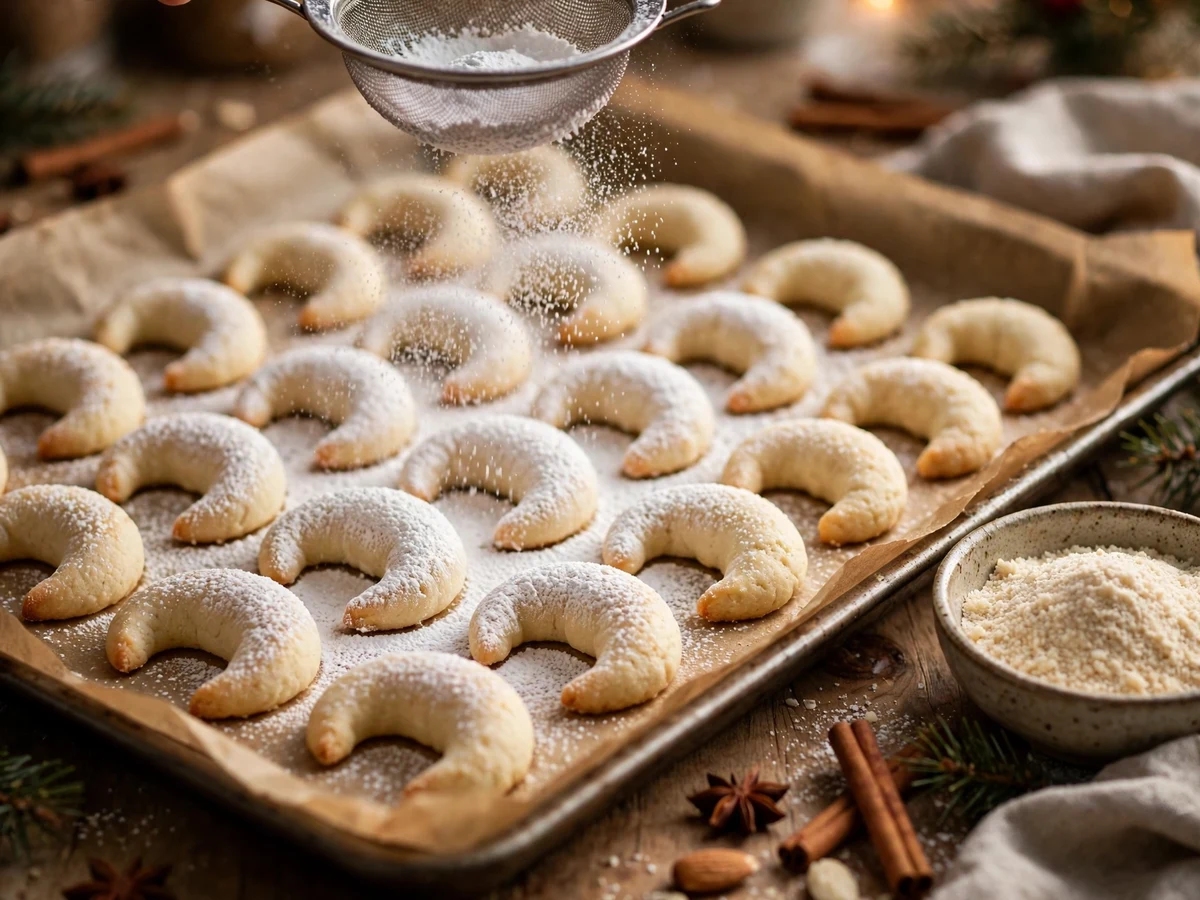
Timing is everything in this step. Cookies straight from the oven are at their most fragile and their surfaces are too hot: the sugar melts into a glaze and the first crescent you lift snaps in the middle. Wait five minutes and the same cookie is warm, firm enough to handle, and tacky enough for the sugar to grip in a thick coat. Roll, do not press, and let your fingers be gentle.
The second coat, dusted on once the cookies are fully cold, is what gives Vanillekipferl their snowy finish in photographs and bakery windows. The first coat flavors. The second coat dresses. Sift it over the top rather than rolling again, so the cold cookies stay whole.
The Tin Is Part of the Recipe
Store the crescents in a metal tin or an airtight container, layered between sheets of parchment so the sugar coats stay intact. Keep them at room temperature, away from other strong flavors: a butter cookie absorbs the smell of whatever shares its tin, so crescents get a tin of their own.
- Best days: day 3 through day 14, when the crumb has turned silky and the almond and vanilla have merged.
- Full keeping time: 3 weeks at room temperature, easily.
- Freezing baked cookies: freeze them uncoated in a sealed container for up to 2 months. Thaw at room temperature, warm for 5 minutes in a 300 degree oven, then give them their sugar coats.
- Freezing shaped dough: freeze the shaped, unbaked crescents on their tray, then bag them. Bake from frozen at the same temperature, adding 2 minutes.
For safe storage times on butter and eggs in general baking, the USDA food safety guidance is a sensible reference to keep bookmarked through the holiday season.
Almonds, Walnuts, and Other Swaps
Walnuts: the oldest versions of this cookie were made with ground walnuts, and Vienna bakeries still argue about it. Swap them in one for one for a darker cookie with a slight, pleasant bitterness. The method does not change.
Hazelnuts: toasted, skinned and ground fine, they push the cookie toward a chocolate free praline flavor. Wonderful next to coffee.
No egg yolk: leave it out for the most traditional, most delicate version. Add a teaspoon of very cold water if the dough refuses to hold, and handle the shaped cookies as little as possible.
A chocolate dip: not traditional, but dipping one tip of each cold crescent in melted dark chocolate is a modern bakery touch that works. Let the chocolate set before the tin.
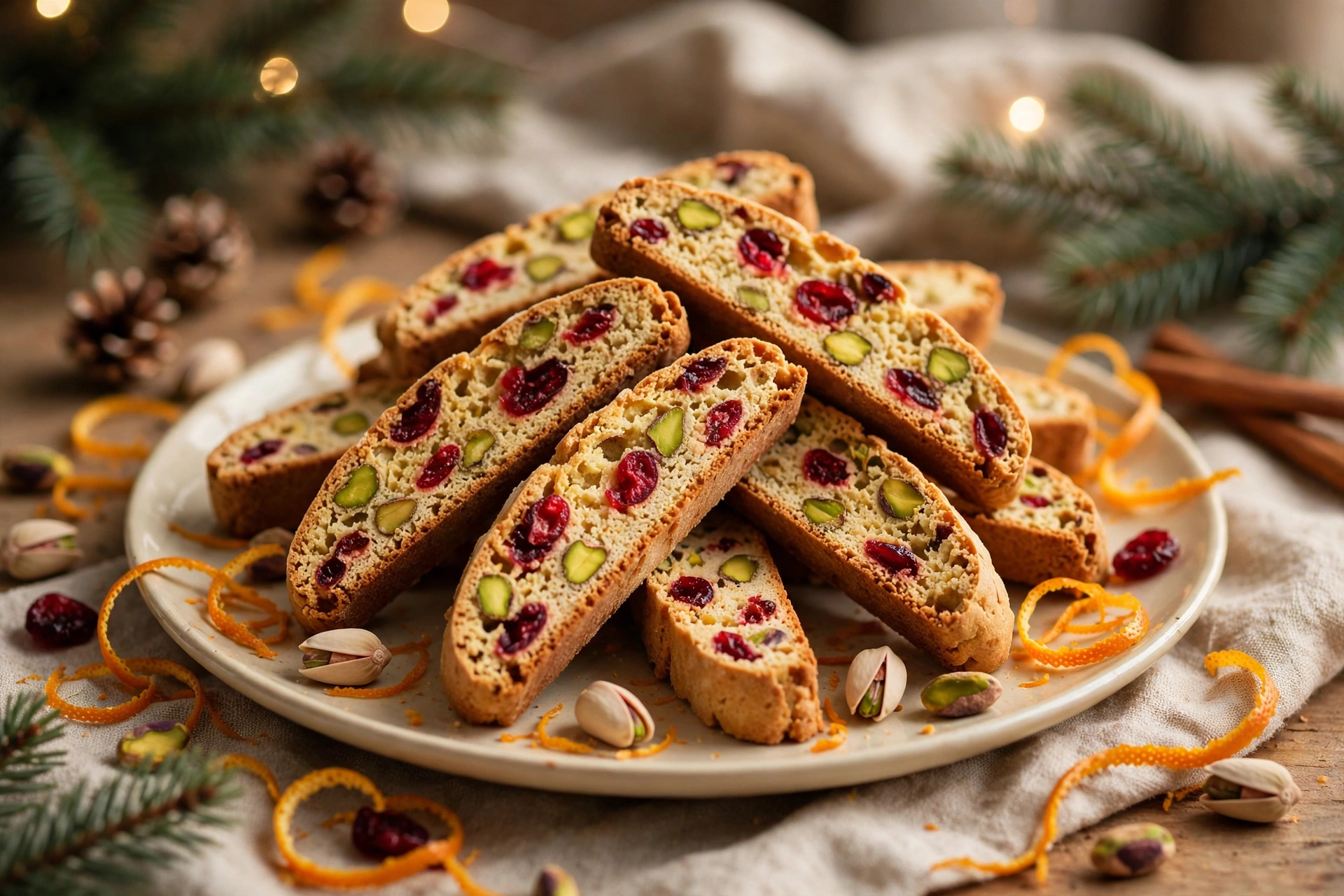
On a full Christmas baking day, these crescents share the oven schedule happily with our cranberry pistachio biscotti, which want the oven twice at a similar gentle heat, and they sit beautifully in a mixed tin beside iced cherry almond linzer cookies and a few dark pfeffernusse cookies, as long as each kind gets its own layer and the strong spices stay at the bottom.
Questions Bakers Ask About Crescent Cookies
Why did my crescents spread flat in the oven?
The butter got too warm before baking. Either the dough was worked until smooth, the kitchen is hot, or the shaped tray skipped its chill. Fifteen minutes in the fridge for the filled tray fixes nearly every case, and a moderate 325 degree oven does the rest.
Why do the cookies crack when I bend them?
The surface of the dough has dried or picked up extra flour. Roll the ropes on a clean, unfloured counter with quick hands, and if the dough has been sitting out, knead one piece briefly in your palms to warm its surface before shaping it.
Can I use almond flour instead of ground almonds?
Yes, they are interchangeable here. Blanched almond flour gives the palest cookie. If you grind your own almonds, pulse them with a spoonful of the recipe flour so they turn to powder instead of almond butter.
How far ahead can I make almond crescent cookies?
They are one of the best make ahead cookies of the season. Baked and tinned, they keep 3 weeks and taste best after day 3. The shaped dough also freezes for a month, ready to bake the week of Christmas, much like the make ahead doughs in our christmas pinwheel cookies.
The tips browned but the centers look raw. What went wrong?
The pieces were uneven sizes, or the oven runs hot at the back. Weigh the pieces, rotate the sheet once at the halfway mark, and remember that the centers should still look pale when the cookies come out. They finish setting as they cool.
Why did my almond crescent cookies spread flat?
The butter was too warm before baking. Keep the dough shaggy and cold, roll the ropes without flour, and chill the shaped tray for 15 minutes before it goes into a 325 degree F oven.
Can I use almond flour instead of ground almonds?
Yes. Blanched almond flour and finely ground blanched almonds are interchangeable in this dough and both keep the cookies pale. Unblanched almond meal gives a darker, speckled cookie.
How long do almond crescent cookies keep?
In an airtight tin at room temperature they keep 3 weeks and taste best from day 3 onward, once the almond and vanilla flavors have settled into the crumb.
Can I freeze the crescent dough?
Yes. Freeze the shaped, unbaked crescents on their tray, then bag them for up to a month. Bake from frozen at 325 degrees F, adding about 2 minutes to the baking time.
Almond Crescent Cookies
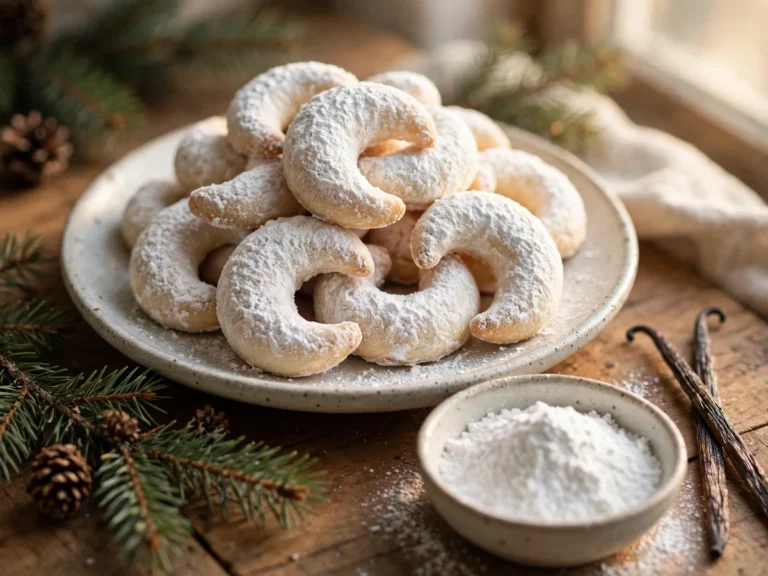
Tender, sandy almond crescents in the Vanillekipferl way: a shaggy butter dough with ground almonds and one egg yolk, pieces weighed so they bake evenly, the shaped tray chilled before the oven, and a double roll in homemade vanilla sugar, once warm and once cold.
- Total Time: 1 hour 45 minutes
- Yield: 40 cookies 1x
Ingredients
- 2 cups all-purpose flour (250 g)
- 1 cup finely ground blanched almonds (100 g)
- 1/2 cup powdered sugar (60 g)
- 1/4 teaspoon fine sea salt
- 1 cup unsalted butter, cold and cubed (226 g)
- 1 large egg yolk
- 2 teaspoons vanilla extract
- 1 cup powdered sugar, for the vanilla sugar coating (120 g)
- 2 vanilla beans, split and seeds scraped, for the coating
Instructions
- Make the vanilla sugar first: whisk the 1 cup powdered sugar with the vanilla bean seeds in a shallow dish until evenly speckled, and set it aside to dry a little while you work.
- Whisk the flour, ground almonds, 1/2 cup powdered sugar and salt in a large bowl.
- Rub the cold butter into the flour mixture with your fingertips until it looks like coarse crumbs with a few pea size pieces left.
- Add the egg yolk and vanilla extract. Press and fold the dough together just until it holds in one mass. It should look shaggy, not smooth.
- Form the dough into a flat disc, wrap it, and chill for 1 hour, until firm but not rock hard.
- Heat the oven to 325 degrees F. Line two baking sheets with parchment paper.
- Pinch off pieces of dough of about 12 g, a scant tablespoon each. Roll each piece under your palms into a 2 1/2 inch rope with slightly thinner ends, then bend it into a crescent.
- Set the crescents on the sheets 1 inch apart, then chill the filled sheets for 15 minutes so the shapes stay sharp in the oven.
- Bake one sheet at a time for 11 to 13 minutes, until the tips are just golden and the centers still look pale.
- Cool on the sheet for 5 minutes, until the cookies are warm and firm enough to lift without breaking.
- Roll each warm crescent gently in the vanilla sugar until well coated, then move to a rack to cool completely.
- Once cold, dust the crescents with a second light coat of vanilla sugar. Store in a tin, layered between sheets of parchment.
- Prep Time: 30 minutes
- Cook Time: 12 minutes
Nutrition
- Serving Size: 1
- Calories: 95
- Sodium: 15
- Saturated Fat: 3
- Protein: 1
- Cholesterol: 17