
In this article:
- Why the Dates Disappear and the Caramel Takes Over
- First, the Soak: What Baking Soda Does to a Bowl of Dates
- Dark Sugar and Warm Ginger: The Flavor Inside the Sponge
- Sticky Toffee Pudding Ingredients
- How to Make Sticky Toffee Pudding
- Grainy, Thin, or Scorched: Toffee Sauce Fixes
- One Pan or Little Ramekins: Choose Your Shape
- Bake It Ahead, Sauce It on Christmas Day
- Questions Cooks Ask About Sticky Toffee Pudding
Sticky toffee pudding is the Christmas dessert that arrives at the table still warm, dark as mahogany, and shining under a pour of hot toffee sauce. The sponge is soft enough to sigh under a spoon. The sauce pools in every cut edge and soaks deep into the crumb.
It is a British classic that has quietly become a North American holiday habit, and one taste explains the migration. Nothing about it is fussy or decorated. The whole dessert rests on dates, brown sugar, butter, and cream, treated with patience and served without delay.
Best of all for December, the pudding welcomes a head start. The sponge bakes days ahead or freezes for a month, and the sauce waits in a jar in the refrigerator. Christmas Day asks only for a warm oven, a small saucepan, and ten unhurried minutes.
Why the Dates Disappear and the Caramel Takes Over
Sticky toffee pudding works because the dates dissolve. Soaked in boiling water and mashed into the batter, they stop being fruit and become structure: moisture, body, and a deep caramel sweetness that no extract can imitate. Guests who swear they dislike dates eat two squares and ask for the recipe.
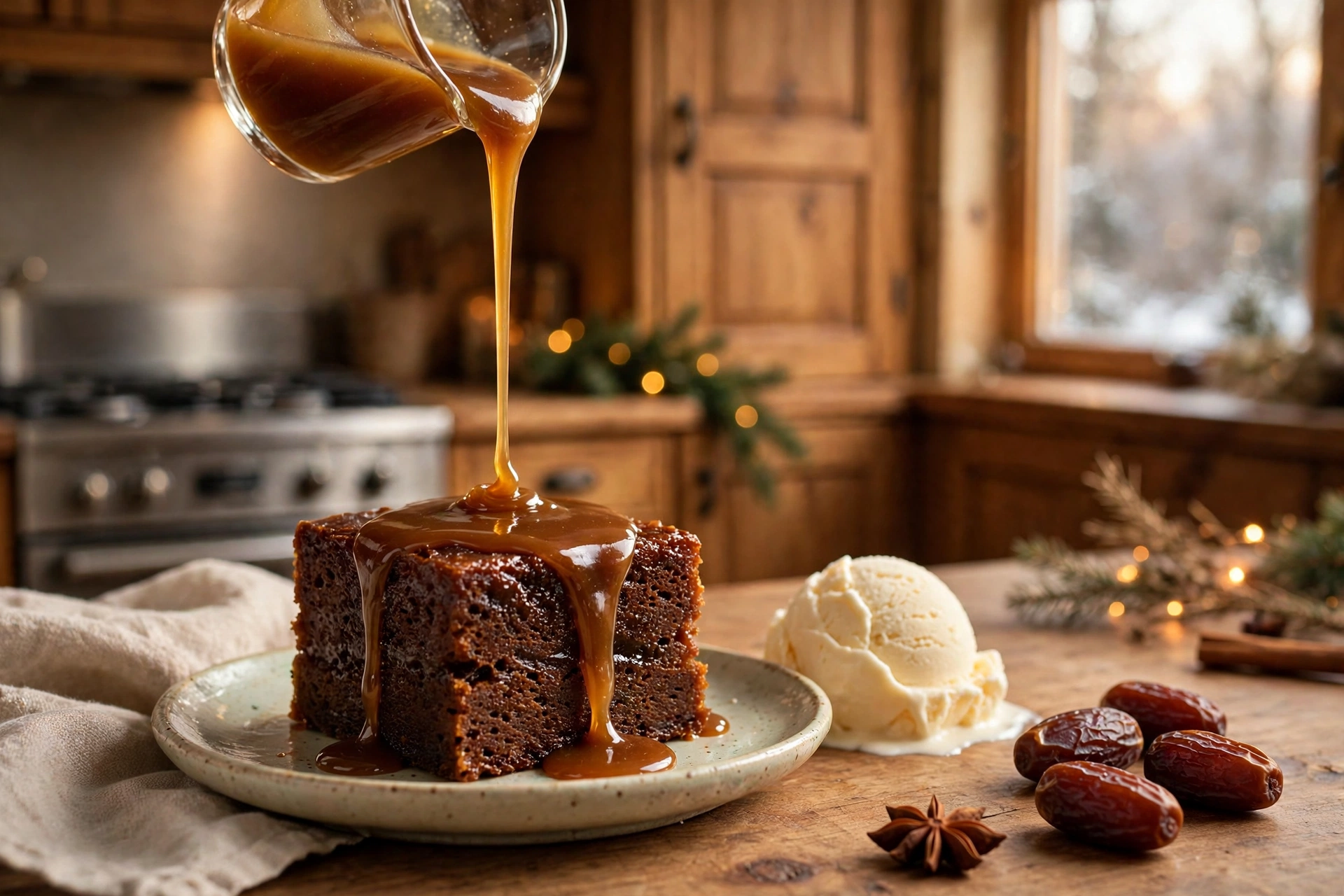
The two stage saucing is the second secret. Half the hot sauce goes over the warm, pierced sponge and sinks to the bottom of the pan, so the lower crumb turns almost fudge like. The rest is poured at the table, glossy and fresh, over each warm square.
Contrast finishes the design. Warm cake against cold vanilla ice cream, dark sponge against pale cream, soft crumb against the slight chew of a sauced edge. A dessert this simple survives on contrast alone, and this one is built from it at every level.
First, the Soak: What Baking Soda Does to a Bowl of Dates
The soak is where this recipe is won. Chopped dates go into boiling water for fifteen minutes, which softens them past the point of holding their shape. Stirred and mashed with a fork, they become a thick, dark paste that folds through the batter without a single chewy piece left behind.
The teaspoon of baking soda in the water does three jobs at once. It helps the date skins break down so the paste turns smooth, it deepens the color of the sponge toward walnut brown, and it keeps the crumb tender. The mixture foams when the soda goes in; that small volcano is the sign it is working.
Use the soaking liquid, every drop. It carries dissolved date sugar and color that the sponge needs, and throwing it away flattens the whole dessert. The batter will look loose when the warm paste goes in. That looseness is correct, and it is exactly what bakes into the moist crumb.
Medjool dates give the richest result, soft and almost fudgy before they ever meet water. Firmer Deglet Noor dates work too, chopped smaller and soaked five minutes longer. Dates also carry fiber and potassium along with their sweetness, as the listings at USDA FoodData Central show.
Dark Sugar and Warm Ginger: The Flavor Inside the Sponge
Dark brown sugar is the right sugar here, in the sponge and the sauce alike. Its molasses content echoes the dates and pushes the flavor from merely sweet toward toffee before the sauce ever arrives. Light brown sugar makes a paler, simpler pudding that tastes unfinished by comparison.
A half teaspoon of ground ginger warms the crumb without announcing itself. It sits behind the caramel the way a low note sits under a melody, and it is an old British habit in this dessert that American versions often skip. Nobody will name it. Everybody will notice if it is gone.
The sauce itself is only four ingredients, and its flavor is a matter of time rather than technique. Four to five minutes of gentle simmering melts the sugar fully and marries the butter and cream into one glossy pour. Rushed sauce tastes of raw sugar; sauce boiled hard turns heavy and greasy.
Salt is the last quiet ingredient: a quarter teaspoon in the sauce, off the heat with the vanilla. It does not make the sauce taste salty. It stretches the caramel flavor longer across the tongue and keeps a very sweet dessert balanced enough for a second helping.
Serving temperature is part of the recipe, not a detail. The sponge should be warm enough that the sauce stays liquid on contact, and the cream or ice cream beside it should be properly cold. A lukewarm pudding tastes merely sweet; a warm one with a cold contrast tastes like toffee.
Sticky Toffee Pudding Ingredients
For the date sponge:
- 8 ounces pitted dates, roughly chopped (about 1 1/3 cups)
- 1 cup boiling water
- 1 teaspoon baking soda
- 6 tablespoons unsalted butter, softened, plus more for the pan
- 3/4 cup packed dark brown sugar
- 2 large eggs, at room temperature
- 1 teaspoon vanilla extract
- 1 1/2 cups all-purpose flour
- 1 1/2 teaspoons baking powder
- 1/2 teaspoon ground ginger
- 1/2 teaspoon fine sea salt
For the toffee sauce:
- 1 cup packed dark brown sugar
- 8 tablespoons unsalted butter
- 3/4 cup heavy cream, plus a little more as needed
- 1 teaspoon vanilla extract
- 1/4 teaspoon fine sea salt
- Vanilla ice cream or lightly sweetened whipped cream, to serve (optional)
How to Make Sticky Toffee Pudding
- Heat the oven to 350 degrees F. Butter an 8 inch square baking pan and line the bottom with a square of parchment paper.
- Put the chopped dates in a heatproof bowl and pour the boiling water over them. Stir in the baking soda; the mixture will foam. Let it soak for 15 minutes, until the dates are completely soft.
- Mash the dates with a fork into a thick, dark paste, soaking liquid included. A few small pieces are fine, but no firm chunks should remain.
- In a large bowl, beat the softened butter and dark brown sugar together for about 2 minutes, until the mixture lightens in color and turns fluffy at the edges.
- Beat in the eggs one at a time, mixing well after each, then stir in the vanilla. The batter may look slightly curdled; the flour will bring it back together.
- Whisk the flour, baking powder, ginger, and salt in a separate bowl. Fold the dry ingredients into the butter mixture in two additions, mixing only until no dry streaks remain.
- Fold in the warm date paste until the batter is evenly dark. It will be loose and pourable; that is correct. Scrape it into the prepared pan and smooth the top.
- Bake for 30 to 35 minutes, until the top springs back when pressed lightly and a skewer inserted in the center comes out with a few moist crumbs, not wet batter.
- While the pudding bakes, make the sauce. Combine the sugar, butter, and cream in a medium saucepan over medium heat. Stir until the butter melts and the sugar dissolves, then simmer gently for 4 to 5 minutes, until glossy and slightly thickened. Off the heat, stir in the vanilla and salt.
- Let the pudding rest for 5 minutes. Poke it all over with a skewer, then pour half the warm sauce slowly over the top so it sinks in. Rest 10 to 15 minutes. Cut into 8 squares and serve warm, with the remaining sauce reheated and poured at the table, plus ice cream or whipped cream if you like.
Grainy, Thin, or Scorched: Toffee Sauce Fixes
A grainy sauce means some sugar never dissolved. Return the pan to the lowest heat, stir in a tablespoon of cream, and stir slowly until the grains melt out. A brush of water around the inside of the pan while the sugar first melts prevents the crystals that cause the trouble.
A thin sauce usually needs nothing but two more minutes of gentle simmering; it also thickens noticeably as it cools, so judge it on a cold spoon rather than in the pan. A sauce that went too far and pours like fudge takes the opposite fix: whisk in hot cream one tablespoon at a time.
The one accident that cannot be repaired is a scorched bottom. Sugar catches in the seconds a cook looks away, and one burnt patch turns the whole pot bitter. If you smell it, pour the sauce into a clean pan without scraping, and leave the dark layer behind. What you save will taste clean.
This is also where sticky toffee pudding earns its reputation for forgiveness. The sponge hides under sauce, the sauce forgives small errors, and the whole dessert is served warm, which covers a multitude of small imperfections. It is a kind dessert to make while a house is full.
One Pan or Little Ramekins: Choose Your Shape
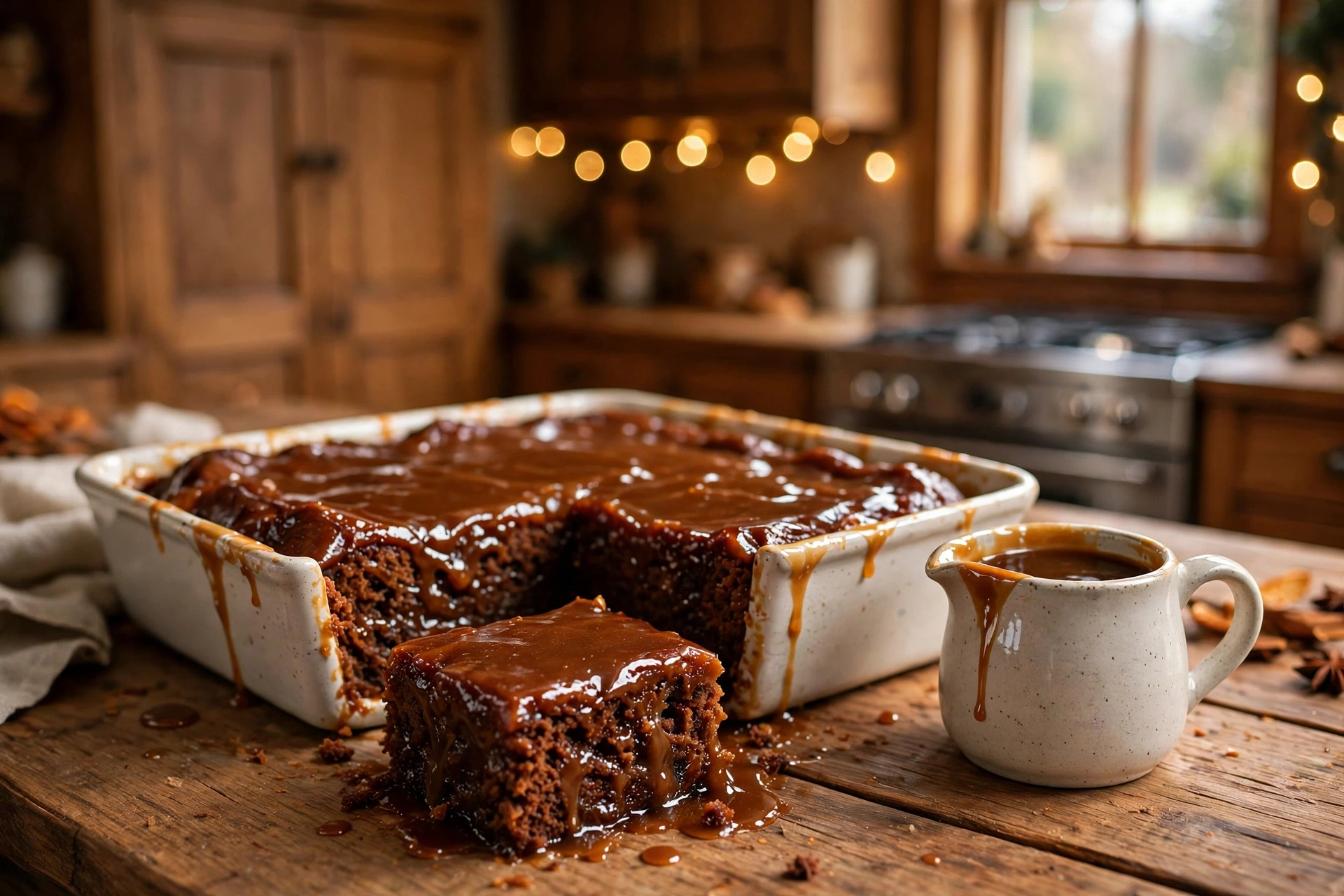
The family pan is the honest classic: one 8 inch square, eight generous squares, sauce poured over the whole surface at once. It travels well, reheats in its own pan, and cuts cleanly once the soak has rested. For a Christmas buffet, it is the shape that asks the least of the cook.
Individual ramekins are the restaurant version, and they behave beautifully. Divide the batter among six buttered 6 ounce ramekins, filled two thirds full, and bake for 18 to 22 minutes at the same temperature. Poke and soak each one with a spoonful of sauce, and serve them in their dishes, still warm.
For a crowd, multiply the batter by one and a half and bake it in a 9 by 13 inch pan for 28 to 32 minutes. The crumb bakes a little thinner, which means a higher ratio of sauced edge in every square. Some cooks plan it that way on purpose.
Ramekins also unmold cleanly if you prefer plates to dishes: run a thin knife around each warm pudding, turn it onto the plate, and spoon the sauce over the top so it runs down the sides. Give the sauce a full minute to settle before the ice cream goes on, or the scoop will slide.
Bake It Ahead, Sauce It on Christmas Day
The sponge, unsauced, keeps wrapped at room temperature for 1 day, in the refrigerator for 3 days, and in the freezer for up to 1 month. Bake it whenever December gives you a quiet afternoon. The sauce keeps separately in a jar in the refrigerator for up to 5 days.
To serve, warm the sponge covered with foil at 300 degrees F for 15 to 20 minutes, until it feels warm in the center. Reheat the sauce gently in a small pan, whisking in a splash of cream if it has set firm. Then poke, soak, rest, and serve exactly as on the first day.
The FoodKeeper guidance is worth a glance for the cream based desserts sharing the refrigerator that week. Sauced leftovers, if any survive, keep 3 days refrigerated and reheat in short bursts in the microwave under a loose cover.
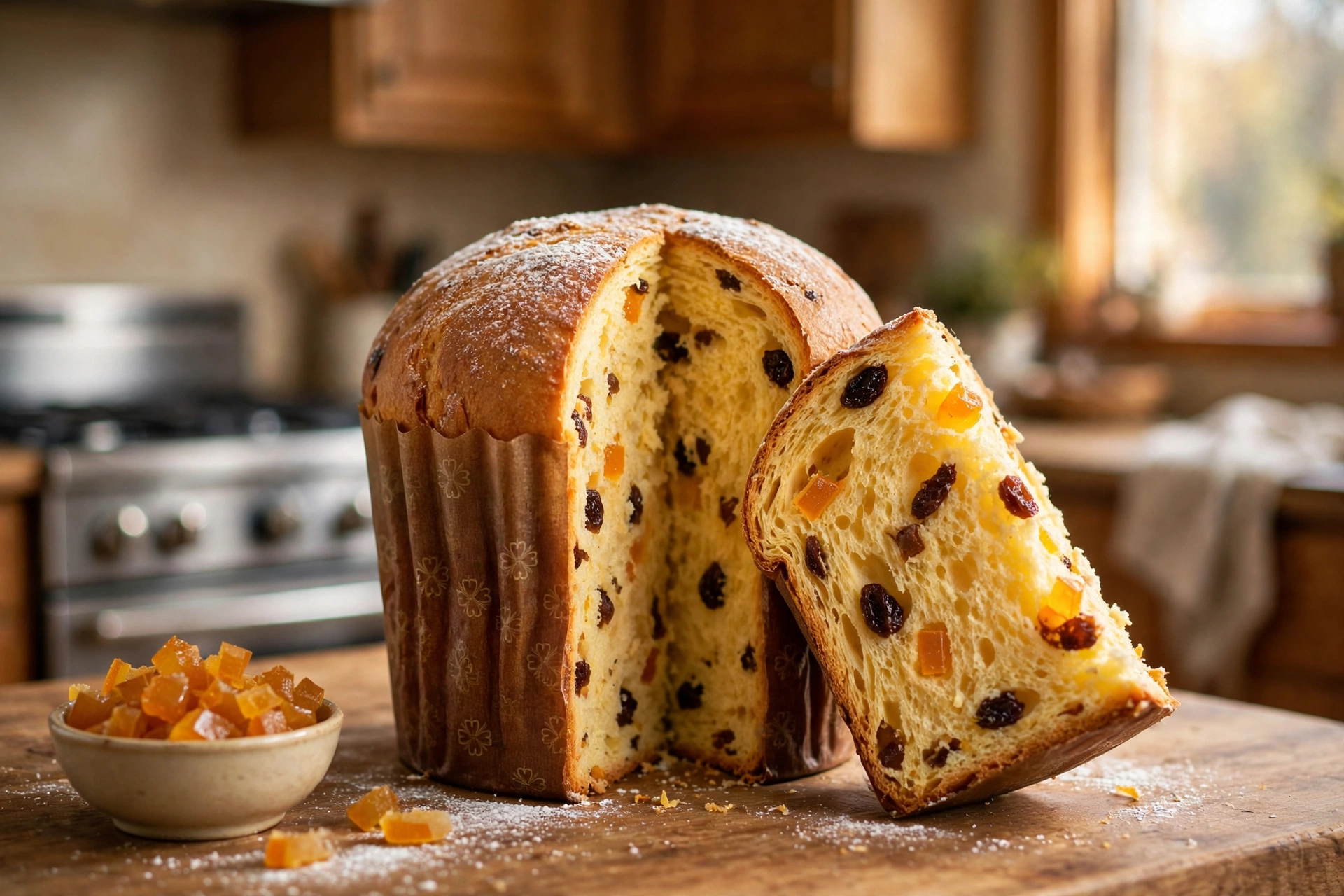
On a Christmas dessert table, this pudding pairs naturally with the yule log for the chocolate loyalists, a plate of lebkuchen for the cookie takers, and slices of panettone for the morning after. It also turns the next day’s brunch into an event beside an eggnog french toast casserole.
Sticky toffee pudding asks for no decorating skill, no special pan, and no courage. It asks for soft dates, dark sugar, and the patience to let warm sauce sink into warm cake. Serve it once at Christmas and it stops being a recipe you tried. It becomes the dessert your table expects.
Questions Cooks Ask About Sticky Toffee Pudding
I do not like dates. Will I taste them in this pudding?
No. The soaked, mashed dates melt completely into the sponge and read as caramel and brown sugar, not as fruit. There are no chewy pieces and no date flavor to identify. This is the dessert that converts people who avoid dates on principle.
Why did my toffee sauce turn out grainy?
Some sugar crystals survived on the side of the pan and seeded the whole sauce. Warm it over the lowest heat with a tablespoon of cream and stir slowly until it turns smooth again. Next time, stir until the sugar fully dissolves before the sauce begins to simmer.
Can I freeze sticky toffee pudding for Christmas?
Yes, and it freezes very well unsauced. Wrap the cooled sponge tightly and freeze it for up to 1 month. Thaw it overnight in the refrigerator, warm it covered at 300 degrees F for 15 to 20 minutes, then poke, soak with freshly warmed sauce, and serve.
How do I bake this in individual ramekins?
Butter six 6 ounce ramekins and fill them two thirds full. Bake at 350 degrees F for 18 to 22 minutes, until the tops spring back. Poke each pudding, spoon warm sauce over it, rest 10 minutes, and serve in the ramekin with extra sauce at the table.
My toffee sauce set hard in the refrigerator. Is it ruined?
Not at all. A sauce of butter, sugar, and cream firms up when cold; that is its nature. Warm it gently in a small pan or in short microwave bursts, whisk in a splash of cream, and it will pour like new.
Sticky Toffee Pudding
The British Christmas classic, built for a calm December: a dark date sponge with warm ginger, baked ahead and kept in the freezer, then pierced and soaked with half its toffee sauce and served warm with the rest poured at the table. The dates disappear completely; only the caramel remains.
- Total Time: 1 hour
- Yield: 8 servings 1x
Ingredients
- 8 ounces pitted dates, roughly chopped (about 1 1/3 cups)
- 1 cup boiling water
- 1 teaspoon baking soda
- 6 tablespoons unsalted butter, softened, plus more for the pan
- 3/4 cup packed dark brown sugar
- 2 large eggs, at room temperature
- 1 teaspoon vanilla extract
- 1 1/2 cups all-purpose flour
- 1 1/2 teaspoons baking powder
- 1/2 teaspoon ground ginger
- 1/2 teaspoon fine sea salt
- 1 cup packed dark brown sugar, for the sauce
- 8 tablespoons unsalted butter, for the sauce
- 3/4 cup heavy cream, plus a little more as needed, for the sauce
- 1 teaspoon vanilla extract, for the sauce
- 1/4 teaspoon fine sea salt, for the sauce
- Vanilla ice cream or lightly sweetened whipped cream, to serve (optional)
Instructions
- Heat the oven to 350 degrees F. Butter an 8 inch square baking pan and line the bottom with a square of parchment paper.
- Put the chopped dates in a heatproof bowl and pour the boiling water over them. Stir in the baking soda; the mixture will foam. Let it soak for 15 minutes, until the dates are completely soft.
- Mash the dates with a fork into a thick, dark paste, soaking liquid included. A few small pieces are fine, but no firm chunks should remain.
- In a large bowl, beat the softened butter and dark brown sugar together for about 2 minutes, until the mixture lightens in color and turns fluffy at the edges.
- Beat in the eggs one at a time, mixing well after each, then stir in the vanilla. The batter may look slightly curdled; the flour will bring it back together.
- Whisk the flour, baking powder, ginger, and salt in a separate bowl. Fold the dry ingredients into the butter mixture in two additions, mixing only until no dry streaks remain.
- Fold in the warm date paste until the batter is evenly dark. It will be loose and pourable; that is correct. Scrape it into the prepared pan and smooth the top.
- Bake for 30 to 35 minutes, until the top springs back when pressed lightly and a skewer inserted in the center comes out with a few moist crumbs, not wet batter.
- While the pudding bakes, make the sauce. Combine the sugar, butter, and cream in a medium saucepan over medium heat. Stir until the butter melts and the sugar dissolves, then simmer gently for 4 to 5 minutes, until glossy and slightly thickened. Off the heat, stir in the vanilla and salt.
- Let the pudding rest for 5 minutes. Poke it all over with a skewer, then pour half the warm sauce slowly over the top so it sinks in. Rest 10 to 15 minutes. Cut into 8 squares and serve warm, with the remaining sauce reheated and poured at the table, plus ice cream or whipped cream if you like.
- Prep Time: 25 minutes
- Cook Time: 35 minutes
Nutrition
- Serving Size: 1 square with sauce
- Calories: 605
- Sodium: 340
- Saturated Fat: 18 g
- Protein: 5 g
- Cholesterol: 105