
In this article:
- The Crackle Is a Measurement, Not a Talent
- Silky Custard, Warm Spice and a Glassy Top
- The Water Bath Does the Gentle Work
- Creme Brulee Sweet Potatoes Ingredients
- How to Make Creme Brulee Sweet Potatoes, Step by Step
- Torch or Broiler, the Top Done Right
- Built for the Thanksgiving Schedule
- Variations Once the Classic Is Yours
- Storage, Chilling and the Two Day Rule
- The Spoon Crack Everyone Waits For
- Creme Brulee Sweet Potatoes Questions
Creme brulee sweet potatoes are individual ramekins of silky, cinnamon warmed custard with roasted sweet potato folded through, finished with a glassy caramelized sugar top that cracks under the spoon.
They bring the best moment of a French dessert to the Thanksgiving table, in the colors of the season. The custard is orange, the top is amber, and the contrast between the cold silk below and the warm crackle above is the whole pleasure of the dish.
This version makes eight ramekins, bakes them gently in a water bath, and chills them a full day ahead if you like. On the day itself, the only job left is one teaspoon of sugar per top and thirty seconds with a torch.
The Crackle Is a Measurement, Not a Talent
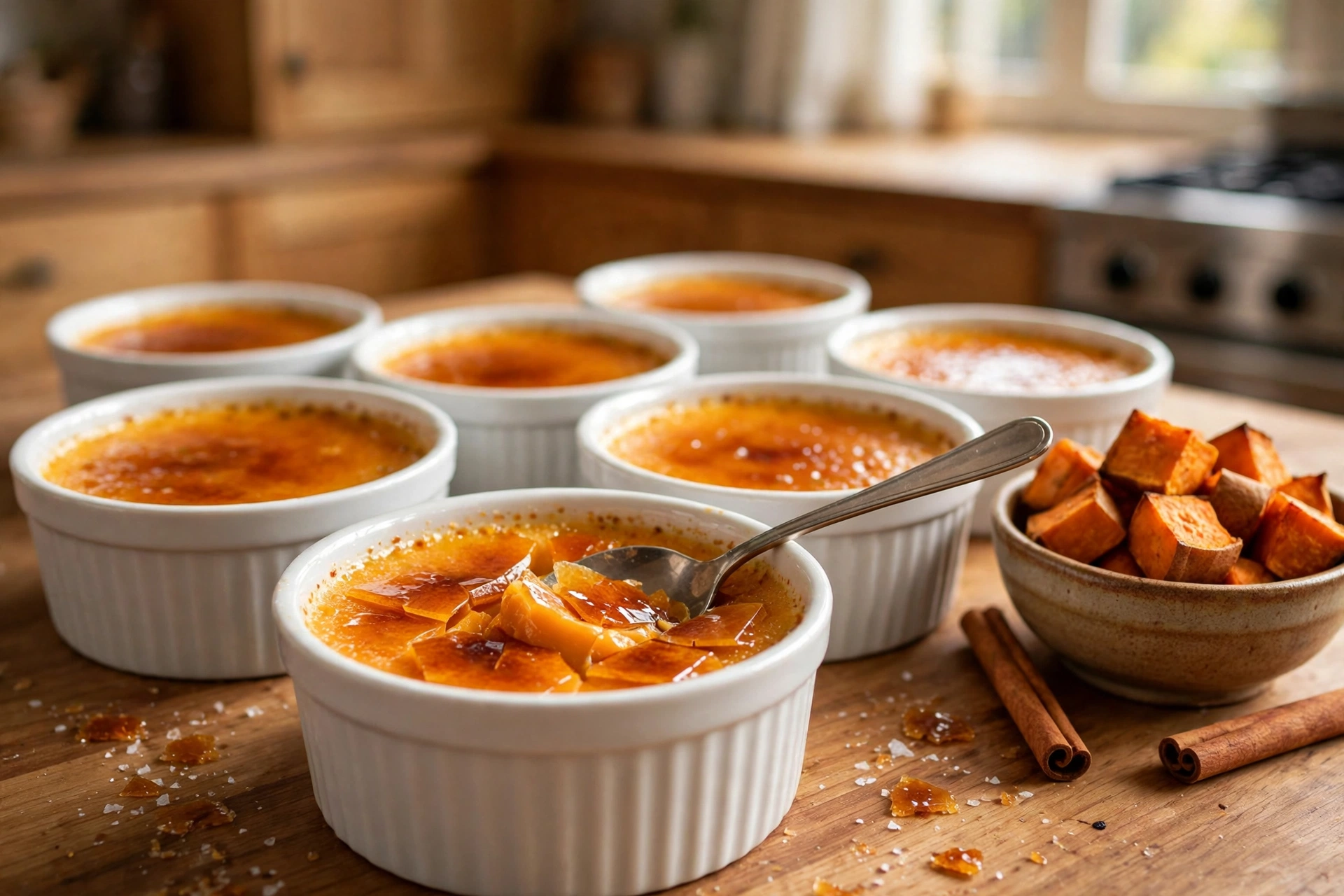
Creme brulee sweet potatoes work because every fragile step is replaced by a number. The sugar on top is measured, exactly 1 teaspoon (4 g) per ramekin, so the crust is thin enough to shatter and never thick enough to fight the spoon.
The custard itself is a true baked custard, yolks, cream and milk, with the sweet potato whisked in after roasting. Roasting first matters: the dry oven heat concentrates the potato and deepens its flavor in a way boiling never does.
Straining is the quiet step that separates a silky result from a grainy one. The sieve catches the fibrous threads of the potato and any stray fleck of cooked yolk, and what reaches the ramekins pours like thick cream.
The jiggle test is the last number. The centers should move like soft jelly when the pan is nudged, because the custard finishes setting in the cold. Pull them out firm and they chill into rubber; pull them out trembling and they chill into silk.
Silky Custard, Warm Spice and a Glassy Top
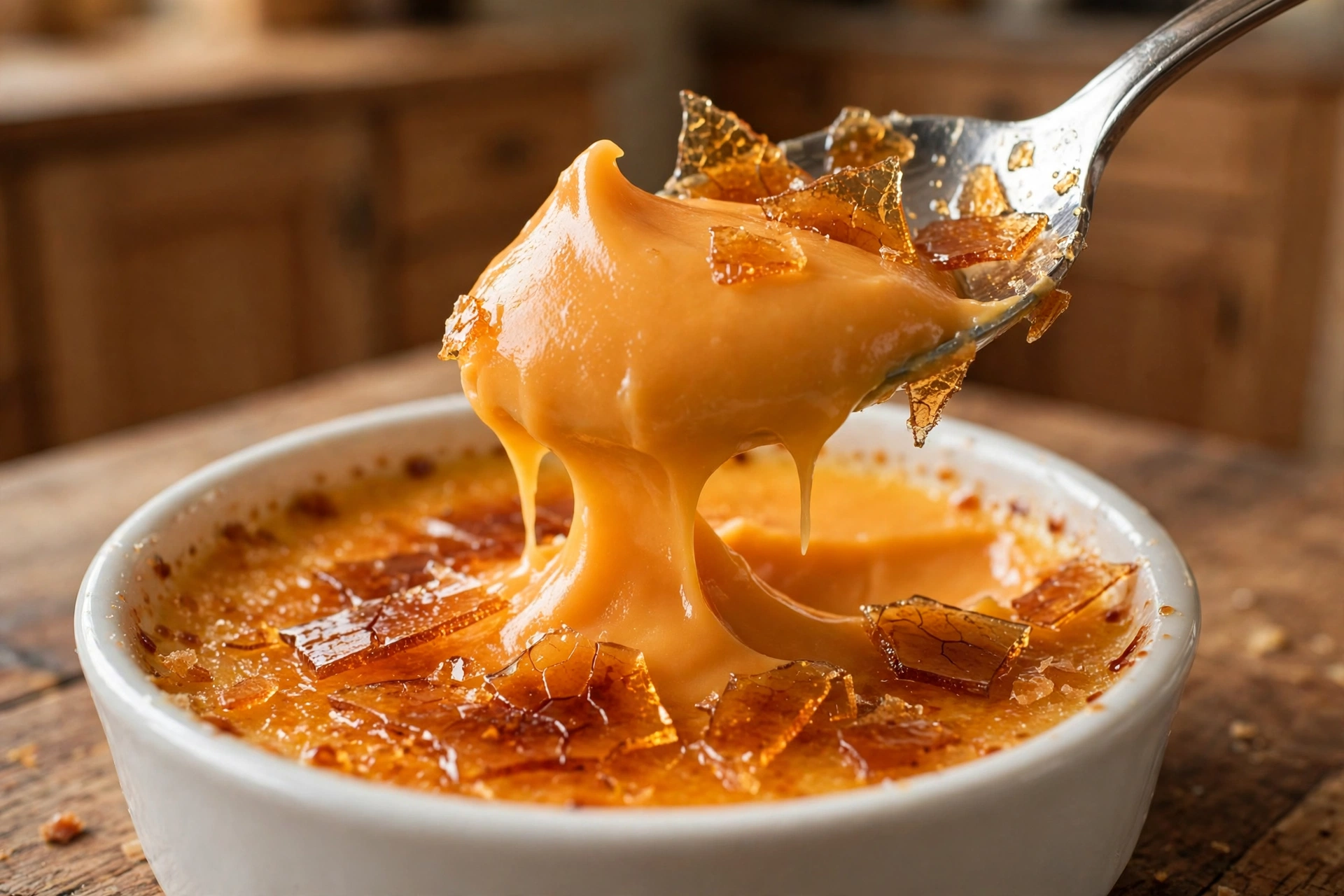
The first spoonful is a small sequence of events. The spoon taps, the amber sheet gives way with a clean crack, and the shards ride on top of a custard that is cool, dense and almost impossibly smooth.
Sweet potato changes the custard in two ways. Its natural sugars round out the flavor, so the custard needs less added sugar than a plain brulee, and its starch gives the set a gentle body that holds the spoon marks.
Cinnamon is kept to 1/2 teaspoon (1 g), a warmth in the background rather than a headline. The vanilla does the aromatic work, and the salt, only 1/4 teaspoon (1.5 g), keeps the sweetness from reading flat.
Temperature is part of the texture. The custard is served cold from the refrigerator while the torched top is still warm from the flame, and that contrast, warm glass over cold silk, is what guests remember.
Serve the ramekins on small plates with the spoon already resting beside them. A brulee waits for no one: the top begins to soften within the hour, so the cracking should happen at the table, in front of an audience.
The portion size is deliberate. A 4 ounce ramekin is rich enough to satisfy after a large meal without tipping anyone into excess, and the small format means the sugar top stays proportionally generous in every single bite, from the first crack to the last scrape of custard.
The Water Bath Does the Gentle Work
A water bath is not fussiness; it is insurance. Custard curdles when it gets too hot too fast, and the water around the ramekins holds the temperature steady and low, so the edges and the centers cook at nearly the same pace.
Fill the pan after the ramekins are in place, pouring hot water from a kettle until it reaches halfway up their sides. Adding the water last, with the pan already on the oven rack, avoids the risky walk across the kitchen with a sloshing tray.
Use ramekins of the same size so they finish together. Eight 4 ounce ramekins fit neatly in a large roasting pan, and their small size means a shorter bake and a faster chill than one big dish would need.
If a few drops of water splash into a custard, do not panic. Blot the surface gently with the corner of a paper towel before chilling; the torched sugar will hide the spot completely.
The same gentle logic explains the cooling order: thirty minutes on the counter, then the refrigerator. A hot ramekin wrapped and chilled at once sweats under its cover, and those droplets soften the surface you later need dry for torching.
Creme Brulee Sweet Potatoes Ingredients
- 2 medium sweet potatoes, about 1 1/4 pounds (570 g), scrubbed
- 2 cups (480 ml) heavy cream
- 1/2 cup (120 ml) whole milk
- 1 vanilla bean, split and scraped, or 2 teaspoons (10 ml) vanilla extract
- 6 large egg yolks (about 110 g)
- 1/3 cup (67 g) granulated sugar, for the custard
- 1/2 teaspoon (1 g) ground cinnamon
- 1/4 teaspoon (1.5 g) fine sea salt
- 8 teaspoons (32 g) granulated sugar, for the crackly tops
Orange fleshed sweet potatoes give the classic color and the sweetest result. Japanese sweet potatoes, with their pale flesh and chestnut flavor, also work and make a paler, nuttier custard; the method and the times stay the same.
How to Make Creme Brulee Sweet Potatoes, Step by Step
- Heat the oven to 400°F. Prick the sweet potatoes all over with a fork, set them on a lined baking sheet and roast for 45 to 55 minutes, until completely soft and collapsing when squeezed. Cool until you can handle them, then scoop out the flesh and mash it very smooth; you need 1 1/2 cups (330 g).
- Lower the oven to 325°F. Warm the cream, the milk and the vanilla bean with its seeds in a saucepan over medium heat until steaming at the edges. Take off the heat and rest for 10 minutes; remove the bean pod.
- Whisk the egg yolks, the 1/3 cup (67 g) of sugar, the cinnamon and the salt in a large bowl until pale and slightly thick. Pour the warm cream in a slow, thin stream, whisking the whole time so the yolks never scramble.
- Whisk the mashed sweet potato into the custard until completely smooth, then strain everything through a fine mesh sieve into a large measuring jug, pressing gently with a spatula.
- Divide the custard among eight 4 ounce ramekins and set them in a deep roasting pan. Pour in hot water until it comes halfway up the sides of the ramekins.
- Bake for 30 to 35 minutes, until the edges look set and the centers still jiggle like soft jelly when the pan is nudged. The custards finish setting as they chill.
- Lift the ramekins out of the water, cool for 30 minutes at room temperature, then cover and refrigerate for at least 4 hours, or up to 2 days.
- Just before serving, blot any moisture from the tops with a paper towel. Sprinkle exactly 1 teaspoon (4 g) of sugar over each top and shake the ramekin to spread it edge to edge. Torch in slow circles until the sugar melts into a deep amber sheet, or broil the ramekins only, 6 inches from the element, for 1 to 2 minutes, watching without blinking. Rest for 1 full minute so the top hardens, then serve.
Torch or Broiler, the Top Done Right
A kitchen torch is the reference tool because it heats only the sugar. Hold the flame a few inches above the surface and keep it moving in slow circles; parked in one spot, it scorches a bitter patch before the rest melts.
Granulated sugar behaves better than superfine here. The larger crystals melt into an even sheet with a deeper amber color, and the measured teaspoon spreads edge to edge with one shake of the ramekin.
No torch is not a dead end. The broiler works on ramekins only: set them on a cold baking sheet, 6 inches (15 cm) from the element, and watch continuously for 1 to 2 minutes. Sugar goes from pale to perfect to burnt in seconds at that distance.
One safety rule from hard experience: never put sweet potato shells under the broiler, because dry skins can catch. This recipe lives in ramekins precisely so both finishing methods stay safe.
Whatever the tool, rest the finished tops for 1 full minute before serving. The molten sheet needs that minute to set into glass; serve too early and the spoon pushes through syrup instead of cracking a crust.
Built for the Thanksgiving Schedule
The custards improve with a night in the refrigerator, which makes this the rare holiday dessert that asks for nothing on the day. Roast, bake and chill on Tuesday or Wednesday, and Thanksgiving itself holds only the torching.
That schedule also protects the texture. A custard chilled for a full day sets cleaner than one chilled for the minimum 4 hours, and the flavors of cinnamon and vanilla settle into the potato instead of sitting on top of it.
For a lighter plate, swap half the cream for whole milk and drop the custard sugar to 1/4 cup (50 g); the set stays silky, though the mouthfeel turns a little leaner. The torched top is non negotiable in every version, since it carries the contrast.
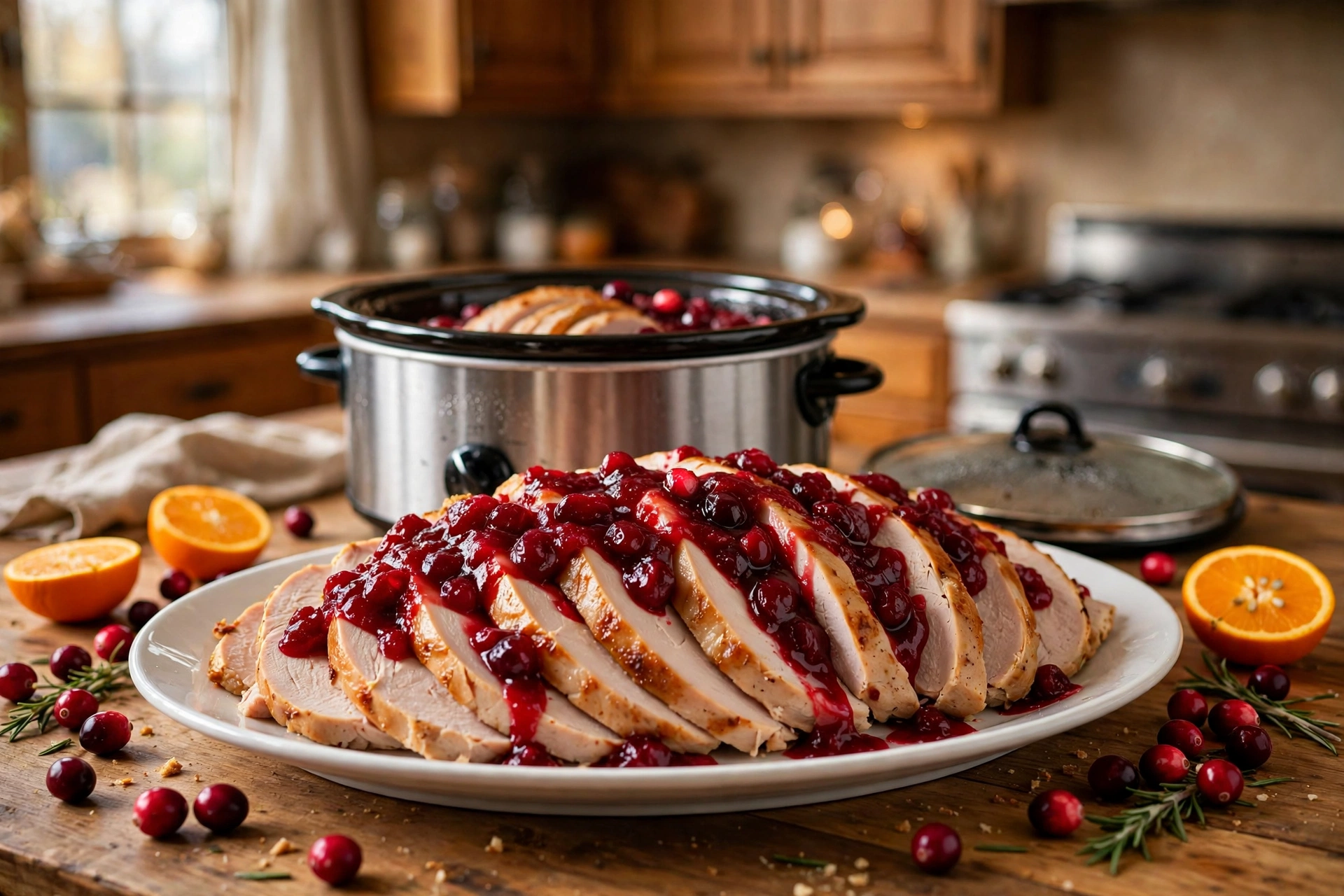
The recipe doubles cleanly for a crowd. Sixteen ramekins need two roasting pans and the same water bath, and the bake time grows by only about 5 minutes; check the jiggle, not the clock. Our full menu plan lives in the Thanksgiving dinner menu, where this dessert closes the meal after the slow cooker turkey breast with cranberry sauce.
If sweet potato casserole is already on your table, these ramekins still earn their place: they are a plated dessert, not another scoop on the plate. Readers who want the casserole too will find ours in the sweet potato casserole with a crunchy pecan streusel, and the savory side of the spread is covered by the french onion mashed potatoes from earlier this week.
Variations Once the Classic Is Yours
A pinch of ground ginger, 1/4 teaspoon (0.5 g), sharpens the spice profile and flatters the potato. A teaspoon of orange zest whisked into the cream brightens the whole custard without changing its set.
For a maple reading, replace half the custard sugar with 2 tablespoons (30 ml) of maple syrup and keep the torched tops plain; the maple perfumes the custard while the crackle stays clean.
The custard also bakes in a single shallow dish for a family style service, though the bake stretches to about 45 minutes and the portions lose their individual crackle. The ramekins remain the better party trick.
Leftover roasted sweet potato from another dish works here, as long as it was roasted plain, without butter or sugar. Weigh out the same 1 1/2 cups (330 g) and warm it slightly so it whisks into the custard without lumps.
A tiny pinch of ground clove suits readers who like their holiday spice darker, but add it with restraint: clove multiplies in a chilled custard and can dominate the potato by the second day. When in doubt, season the classic batch first and experiment on a winter weekend, not on the holiday itself.
Storage, Chilling and the Two Day Rule
Untorched custards keep 2 days in the refrigerator, covered, and that window is the storage rule to plan around. The texture is at its silkiest inside those 2 days; beyond them, the surface weeps and the set loosens.
Always torch after chilling, never before. A torched top stored overnight absorbs moisture from the custard and turns leathery, so the sugar and the flame belong to the serving hour, as the USDA reminds home cooks for chilled egg dishes in its safe temperature chart: keep cold foods at 40°F (4 °C) or below.
Freezing is not recommended for the finished custard; the thaw breaks the emulsion and the silk turns grainy. If you must work further ahead, freeze the roasted mashed potato for up to 3 months and build the custard fresh.
At the table, ramekins can sit out for the length of a relaxed dessert course. Return any uneaten custards to the refrigerator within 2 hours, and eat them the next day, knowing the tops will need a fresh teaspoon of sugar and a second torching.
The Spoon Crack Everyone Waits For
Creme brulee sweet potatoes end the meal with a sound: eight spoons tapping eight amber tops around the table. The recipe is simple on paper, cream, yolks and potato, but the crackle turns it into a small ceremony.
Make them once for the technique, the measured sugar, the water bath, the jiggle test, and the second time they will feel like an old habit. Thanksgiving desserts rarely get both elegance and ease; this one does.
Creme Brulee Sweet Potatoes Questions
Why did the top of my creme brulee sweet potatoes go soft?
The sugar layer was torched too early or the custard surface was wet. Blot the chilled custard dry, sprinkle the measured teaspoon of sugar at serving time, and torch to order; a finished top softens within about an hour as it drinks moisture from the custard.
Can I make creme brulee sweet potatoes without a torch?
Yes. Broil the ramekins only, never potato shells, on a cold baking sheet 6 inches from the element for 1 to 2 minutes, watching without looking away. The sugar moves from pale to burnt in seconds, so turn the sheet once halfway for an even amber.
How far ahead can I bake the custards?
Bake and chill them up to 2 days ahead, covered, and they actually improve overnight. Keep them untorched in the refrigerator at 40°F (4 °C) or below, then dry the tops, add the sugar and torch them in the serving hour.
My custard stayed runny after baking. What went wrong?
It was probably pulled too early or the water bath ran shallow. The centers should jiggle like soft jelly, not slosh, and the water should reach halfway up the ramekins. Give them 5 more minutes, then chill the full 4 hours before judging the set.
Can I use Japanese sweet potatoes instead of orange ones?
Yes, and the result is lovely: paler, denser and a little nutty, almost like chestnut. Use the same weight, 1 1/4 pounds (570 g), roast until fully collapsing, and keep every other measurement and time exactly the same.
Creme Brulee Sweet Potatoes
A true creme brulee custard with roasted sweet potato folded through it, baked gently in a water bath in individual ramekins, chilled until silky, then finished with one measured teaspoon of sugar per top, torched to a deep amber crackle at serving time. Made for the Thanksgiving table, and made to be finished the day before.
- Total Time: 5 hours 50 minutes
- Yield: 8 servings 1x
Ingredients
2 medium sweet potatoes, about 1 1/4 pounds (570 g), scrubbed
1/2 cup (120 ml) whole milk
1 vanilla bean, split and scraped, or 2 teaspoons (10 ml) vanilla extract
6 large egg yolks (about 110 g)
1/3 cup (67 g) granulated sugar, for the custard
1/2 teaspoon (1 g) ground cinnamon
1/4 teaspoon (1.5 g) fine sea salt
8 teaspoons (32 g) granulated sugar, for the crackly tops
Instructions
Heat the oven to 400°F. Prick the sweet potatoes all over with a fork, set them on a lined baking sheet and roast for 45 to 55 minutes, until completely soft and collapsing when squeezed. Cool until you can handle them, then scoop out the flesh and mash it very smooth; you need 1 1/2 cups (330 g).
Lower the oven to 325°F. Warm the cream, the milk and the vanilla bean with its seeds in a saucepan over medium heat until steaming at the edges. Take off the heat and rest for 10 minutes; remove the bean pod.
Whisk the egg yolks, the 1/3 cup (67 g) of sugar, the cinnamon and the salt in a large bowl until pale and slightly thick. Pour the warm cream in a slow, thin stream, whisking the whole time so the yolks never scramble.
Whisk the mashed sweet potato into the custard until completely smooth, then strain everything through a fine mesh sieve into a large measuring jug, pressing gently with a spatula.
Divide the custard among eight 4 ounce ramekins and set them in a deep roasting pan. Pour in hot water until it comes halfway up the sides of the ramekins.
Bake for 30 to 35 minutes, until the edges look set and the centers still jiggle like soft jelly when the pan is nudged. The custards finish setting as they chill.
Lift the ramekins out of the water, cool for 30 minutes at room temperature, then cover and refrigerate for at least 4 hours, or up to 2 days.
Just before serving, blot any moisture from the tops with a paper towel. Sprinkle exactly 1 teaspoon (4 g) of sugar over each top and shake the ramekin to spread it edge to edge. Torch in slow circles until the sugar melts into a deep amber sheet, or broil the ramekins only, 6 inches from the element, for 1 to 2 minutes, watching without blinking. Rest for 1 full minute so the top hardens, then serve.
Notes
The total time includes at least 4 hours of chilling; the custards keep 2 days in the refrigerator, which is the whole point for Thanksgiving. Torch the sugar at the table if you can: the crack is the show, and it softens within the hour.
- Prep Time: 25 minutes
- Cook Time: 1 hour 30 minutes
Nutrition
- Calories: 360
- Sodium: 90
- Saturated Fat: 15
- Protein: 4
- Cholesterol: 200