
In this article:
- Why These Gochujang Brussels Sprouts Work
- Charred Edges, Tender Hearts, Sticky Heat
- The Glaze Waits, the Sprouts Roast Last
- Lighter Glaze, Same Deep Char
- Gochujang Brussels Sprouts Ingredients
- How to Make Gochujang Brussels Sprouts, Step by Step
- The Dry Sprout Rule for Real Char
- Glazes and Sprouts to Swap In
- Roast Ahead, Recrisp in Five Minutes
- The Side That Wakes Up the Table
- Gochujang Brussels Sprouts Questions
Why These Gochujang Brussels Sprouts Work
Gochujang Brussels sprouts work because high heat and a sticky glaze pull in opposite directions, and the sprout wins both ways. The cut faces char against a screaming hot pan while the glaze, added only at the end, stays glossy instead of burning.
Gochujang is the right kind of heat for a holiday table. The fermented chili paste brings a slow, rounded warmth with real depth, closer to a savory jam than to a hot sauce, so it flatters roasted vegetables instead of shouting over them.
Honey and butter finish the glaze the way a Thanksgiving cook would. The honey caramelizes at the edges in the last minutes, and the butter softens the chili into something the whole table can eat, including the person who claims they do not like spicy food.
There is also a quieter reason this pairing works so well. Brussels sprouts carry a faint bitterness and a natural sweetness that only shows up under hard roasting. A fermented, gently sweet heat meets both halves of that personality at once, which is why the first bite tastes complete rather than dressed up.
Gochujang Brussels sprouts are the bowl that wakes up a heavy table: mahogany edges, tender green hearts, and a red glaze that pools just slightly on the warm platter.
Everything around them at Thanksgiving is soft and beige in the best way, potatoes, stuffing, gravy. These sprouts bring the color and the contrast, crisp where the rest is creamy, bright where the rest is mellow.
The method is weeknight simple even though the result tastes planned. One pan of sprouts, one small bowl of glaze, and a finish of sesame and green onion that takes ten seconds and looks like a garnish from a restaurant kitchen.
Charred Edges, Tender Hearts, Sticky Heat
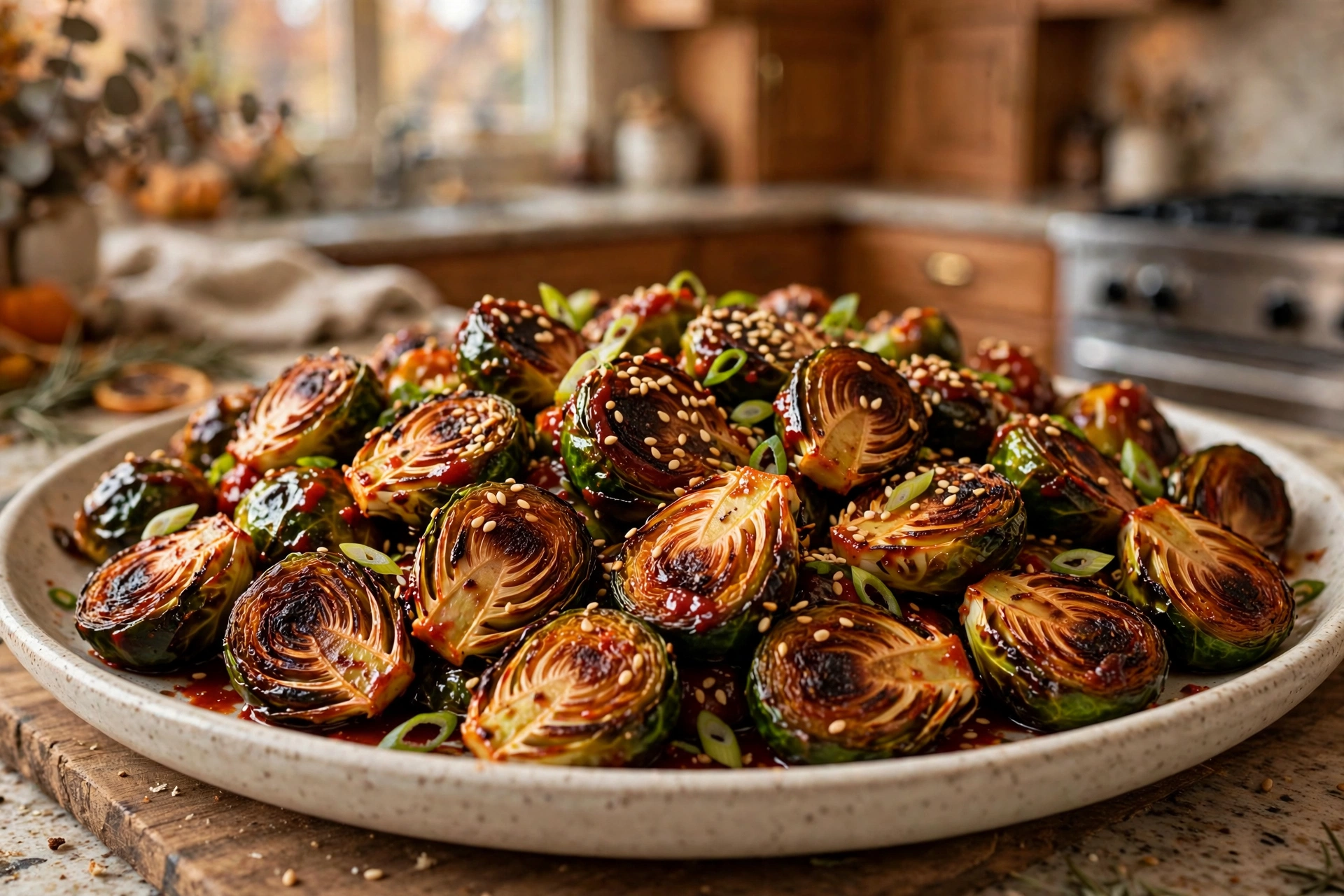
The first bite is all texture. The flat cut side shatters a little at the edges, the outer leaves have gone crisp and almost lacy, and the center stays dense and tender, cooked through without a trace of the sulfur smell that ruins sprouts.
That char matters more than the glaze. Roasting at 450 degrees drives the natural sugars of the sprout to the surface, so the faces turn deep brown and sweet before any sauce touches them. The glaze lands on flavor that is already built.
The glaze itself walks a line. Gochujang brings fermented depth and a warmth that builds slowly, honey rounds it with sweetness, rice vinegar keeps it from cloying, and a little sesame oil at the end adds a toasted note you smell before you taste.
Garlic goes in raw, grated fine, and the heat of the sprouts takes its raw edge off in the bowl. It stays present but gentle, the way garlic should in a glaze that is warmed by the vegetables instead of cooked on its own.
Sesame seeds and green onions are not decoration here. The seeds add a tiny crunch against the sticky surface, and the green onions cut the richness with something fresh and sharp, which is exactly what a plate of turkey and gravy needs beside it.
Served straight from the pan onto a warm platter, the sprouts glisten deep red against the green. They look like the most modern dish on the table, and they disappear at the speed of the most traditional one.
Temperature plays its part as well. The sprouts hold their heat better than most vegetables, dense little cabbages that stay warm under their glaze while the plates are passed. The last serving is nearly as good as the first, which cannot be said of every dish on that table.
And then there is the gravy question, because someone always pours gravy over everything. It works. The glaze and the gravy share a savory backbone, and the heat of the sprouts cuts straight through the richness, so the accidental combination ends up tasting deliberate.
The Glaze Waits, the Sprouts Roast Last
The glaze is the make ahead gift of this recipe. Whisk it together up to five days early and keep it in a jar in the refrigerator; the flavors meld, the garlic mellows, and one whole task leaves your Thanksgiving list.
The sprouts themselves can be trimmed and halved the day before. Keep them in a container lined with a dry towel, uncovered or loosely covered, and they will roast even better than fresh cut ones, because the cut faces dry slightly overnight.
On the day, the sprouts need one hot oven and twenty five unattended minutes. They roast while the turkey rests, which is the emptiest oven window of the whole afternoon, and they glaze in the serving bowl in under a minute.
This is why the recipe earns its place in our Thanksgiving dinner menu planning. A side that asks for nothing at the last minute except a hot pan and a spoon is a side that actually arrives at the table hot.
For a crowd, the recipe doubles cleanly on two pans. Rotate the pans between racks halfway through, and glaze both batches in one big bowl so every sprout gets the same glossy coat.
Even the shopping splits kindly. Sprouts keep for a week in the refrigerator drawer, gochujang keeps for months once opened, and the rest of the glaze is pantry stock. Nothing on the list is a special trip, and nothing spoils if the menu changes at the last minute.
Lighter Glaze, Same Deep Char
For a lighter pan, swap the honey for the same amount of maple syrup and cut the butter to one tablespoon, finishing with the sesame oil alone. The glaze stays sticky, the char does the heavy lifting, and each serving drops noticeably.
The sprouts themselves are already a nutritional bright spot on the table. According to USDA FoodData Central, a cup of Brussels sprouts brings strong fiber, vitamin C and vitamin K for very few calories, which is rare among holiday sides.
Gluten free cooks only need one check: use a gluten free soy sauce or tamari in the glaze, and confirm the gochujang brand in your market lists no wheat. Everything else in the recipe is naturally gluten free.
Gochujang Brussels Sprouts Ingredients
- 2 pounds (900 g) Brussels sprouts, trimmed and halved
- 3 tablespoons (45 ml) avocado oil or another neutral high heat oil
- 1 teaspoon (6 g) fine sea salt
- 1/2 teaspoon (1 g) black pepper
- 3 tablespoons (54 g) gochujang, Korean fermented chili paste
- 2 tablespoons (42 g) honey
- 2 tablespoons (28 g) unsalted butter, melted
- 1 tablespoon (15 ml) soy sauce
- 1 tablespoon (15 ml) rice vinegar
- 1 teaspoon (5 ml) toasted sesame oil
- 2 cloves garlic (6 g), finely grated
- 2 teaspoons (6 g) toasted sesame seeds, to finish
- 2 green onions (30 g), thinly sliced, to finish
How to Make Gochujang Brussels Sprouts, Step by Step
- Heat the oven to 450°F (230°C) with a large rimmed baking sheet inside on the middle rack. A hot pan is the first char the sprouts meet.
- Trim the stem ends, peel away any yellowed outer leaves, and halve each sprout through the stem so the halves hold together.
- Dry the sprouts thoroughly in a clean towel. Spread them in a big bowl, toss with the oil, salt and pepper until every face is glossy.
- Tip the sprouts onto the hot pan and arrange them cut side down in a single layer, with a little space between the halves. Crowding steams them; space chars them.
- Roast for 22 to 25 minutes without turning, until the cut sides are deep mahogany and the outer leaves are crisp at the edges.
- While the sprouts roast, whisk the gochujang, honey, melted butter, soy sauce, rice vinegar, sesame oil and grated garlic into a smooth glaze.
- Tip the hot sprouts into a large warm bowl. Pour the glaze over and toss for 30 seconds, until every sprout is coated and shining.
- Pile onto a warm platter, scatter the sesame seeds and green onions over the top, and serve at once.
The Dry Sprout Rule for Real Char
Water is the enemy of char. A sprout that goes into the oven damp will steam in its own moisture for the first ten minutes, and steamed sprouts turn olive colored and soft before they ever think about browning.
Dry them like you mean it. After halving, roll the sprouts in a clean kitchen towel, then let them sit cut side up on the towel for ten minutes while the oven heats. The cut faces should look matte, not shiny, before the oil goes on.
The second rule is contact. Cut side down, flat against the hot metal, and then leave them alone. Turning sprouts feels attentive, but every turn breaks the contact that builds the crust. One face, deeply browned, beats two faces politely golden.
Size matters too. Sprouts of a similar size finish together, so sort as you trim: the rare giant gets quartered, the tiny ones stay whole. A pan of even pieces is a pan with no burnt dwarfs and no raw giants.
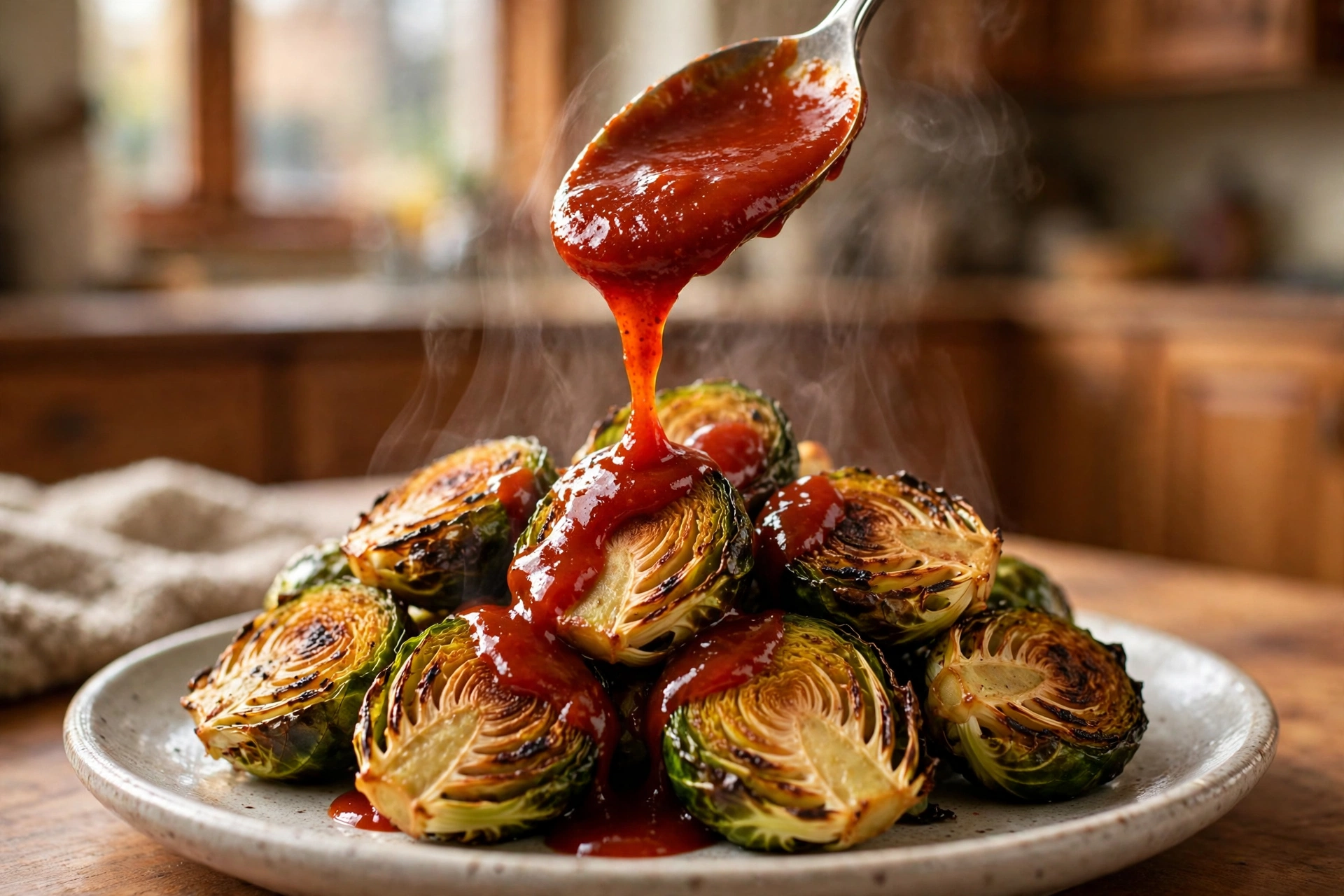
Finally, glaze off the pan. Gochujang and honey both scorch fast at roasting heat, and a glaze that goes into the oven comes out bitter at the edges. In the bowl, the residual heat warms it to glossy without burning a thing.
One last detail separates good pans from great ones: the oil goes on before the salt has time to draw water out. Toss, season and roast in quick succession. Sprouts salted and left standing will weep into the bowl, and that liquid is exactly what you dried them to avoid.
Glazes and Sprouts to Swap In
The heat scale is yours to set. For a mild, kid friendly batch, use 2 tablespoons of gochujang and add an extra tablespoon of honey. For the table that asks for more, go to 4 tablespoons and finish with a pinch of chili flakes over the platter.
If gochujang is hard to find, a mix of 2 tablespoons of tomato paste, 1 tablespoon of white miso and 1 teaspoon of chili garlic sauce gets you close in spirit: fermented depth, gentle heat, good color. It will not be identical, but it will be delicious.
The same glaze flatters other vegetables from the same oven. Cauliflower florets, halved and roasted the same way, take the glaze beautifully, and so do thick carrot batons given ten extra minutes. Sweet potato wedges with this glaze are a weeknight dinner waiting to happen.
For a sweeter, calmer pan from the same family, our maple balsamic roasted Brussels sprouts prove how well the sprout takes a glaze. Cook both for Thanksgiving and the table gets to choose its own adventure.
The glaze also keeps a second life after the holiday. Stir a spoonful through fried rice, brush it over roasted salmon in the last two minutes, or whisk it into mayonnaise for a sandwich spread with real personality. A jar in the door of the refrigerator earns its space.
Roast Ahead, Recrisp in Five Minutes
Leftovers keep for 3 to 4 days in the refrigerator, but keep them unglazed if you can. Sprouts stored in their glaze soften as they sit; sprouts stored plain recrisp almost like new.
To recrisp, spread the sprouts on a dry pan in a 425°F (220°C) oven for 5 to 7 minutes, until the edges crackle again. Warm a spoonful of glaze separately and toss at the table. The air fryer does the same job in 4 minutes at 400°F (200°C).
For the air fryer as the main method, cook the oiled sprouts at 400°F (200°C) for 14 to 16 minutes, shaking the basket once, until the faces are deep brown. Glaze in a warm bowl exactly as written.
Do not freeze the finished dish. The sprouts thaw limp and the glaze separates. If you must get ahead, freeze the raw trimmed sprouts on a tray, then roast from frozen with 8 extra minutes and glaze as usual.
The Side That Wakes Up the Table
Gochujang Brussels sprouts earn their place because they do the one job no other Thanksgiving side is doing: they bring heat, color and crunch to a table built on soft and savory. Beside the turkey, under a little gravy that wandered over, they are the bite people talk about on the drive home.
Make the full pan even for a small table, and plan on the leftovers. A cold sprout, eaten straight from the container the next morning, is the cook’s reward, and it is a very good one. If your menu still has a gap, they sit happily next to our crispy stuffing cups from earlier this week.
Gochujang Brussels Sprouts Questions
Why did my Brussels sprouts come out soft instead of charred?
Almost always, moisture or crowding. The sprouts must go in dry, cut side down, with space between the halves on a hot pan. A crowded or damp pan steams them, and steamed sprouts never catch up to a char, no matter how long they roast.
How spicy are gochujang Brussels sprouts, really?
With 3 tablespoons of gochujang balanced by honey and butter, the heat is a warm medium that builds slowly rather than biting. For a mild batch, drop to 2 tablespoons and add a tablespoon of honey; for real heat, use 4 tablespoons and add chili flakes at the end.
Can I make the gochujang glaze ahead of time?
Yes, and you should. The glaze keeps for up to 5 days in a sealed jar in the refrigerator, and the garlic mellows as it sits. Let it stand at room temperature for 20 minutes before using, so it pours and coats evenly.
Is this recipe gluten free?
It can be. Use tamari or a gluten free soy sauce, and check the gochujang label, since some brands use wheat in the paste. Everything else in the recipe, sprouts, honey, butter, vinegar and sesame, is naturally gluten free.
Can I roast the sprouts ahead and reheat them for dinner?
Roast them unglazed up to a day ahead and refrigerate. Recrisp on a dry pan at 425°F (220°C) for 5 to 7 minutes, then toss with warmed glaze and the sesame and green onion finish. They come back crisp at the edges and taste freshly made.
Gochujang Brussels Sprouts
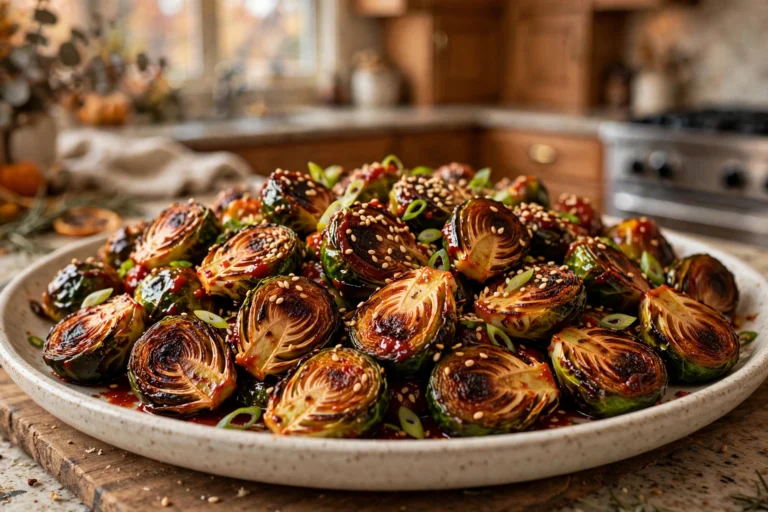
Gochujang Brussels sprouts are the side that wakes up the Thanksgiving table: halved sprouts roasted at high heat until the cut sides turn deep mahogany, then tossed in a warm bowl with a sticky glaze of gochujang, honey and melted butter. Sesame seeds and green onions finish the platter. The glaze waits up to 5 days in the refrigerator, the sprouts trim a day ahead, and the heat dials from kid friendly to fiery with one spoon.
- Total Time: 40 minutes
- Yield: 8 servings 1x
Ingredients
2 pounds (900 g) Brussels sprouts, trimmed and halved
1 teaspoon (6 g) fine sea salt
1/2 teaspoon (1 g) black pepper
3 tablespoons (54 g) gochujang, Korean fermented chili paste
2 tablespoons (42 g) honey
2 tablespoons (28 g) unsalted butter, melted
1 tablespoon (15 ml) soy sauce
1 tablespoon (15 ml) rice vinegar
1 teaspoon (5 ml) toasted sesame oil
2 cloves garlic (6 g), finely grated
2 teaspoons (6 g) toasted sesame seeds, to finish
2 green onions (30 g), thinly sliced, to finish
Instructions
Heat the oven to 450°F (230°C) with a large rimmed baking sheet inside on the middle rack.
Trim the stem ends, peel away any yellowed outer leaves, and halve each sprout through the stem.
Dry the sprouts thoroughly in a clean towel, then toss with the oil, salt and pepper until every face is glossy.
Tip the sprouts onto the hot pan and arrange them cut side down in a single layer, with space between the halves.
Roast for 22 to 25 minutes without turning, until the cut sides are deep mahogany and the outer leaves are crisp at the edges.
While the sprouts roast, whisk the gochujang, honey, melted butter, soy sauce, rice vinegar, sesame oil and grated garlic into a smooth glaze.
Tip the hot sprouts into a large warm bowl, pour the glaze over, and toss for 30 seconds until every sprout is coated and shining.
Pile onto a warm platter, scatter the sesame seeds and green onions over the top, and serve at once.
Notes
Make the glaze up to 5 days ahead and refrigerate it in a jar. Trim and halve the sprouts the day before and keep them in a towel lined container. For mild heat, use 2 tablespoons of gochujang and an extra tablespoon of honey.
- Prep Time: 15 minutes
- Cook Time: 25 minutes
Nutrition
- Calories: 150
- Sodium: 470
- Saturated Fat: 3
- Protein: 4
- Cholesterol: 8