
In this article:
- What Makes These Peppermint Crinkle Cookies Different
- A Pink Crumb, Like the Inside of a Candy Cane
- The Double Sugar Coat Is the Whole Trick
- Peppermint Crinkle Cookies Ingredients
- How to Make Peppermint Crinkle Cookies, Step by Step
- Chill the Dough, or Lose the Crinkles
- Peppermint Dosage, Tested Three Ways
- Freeze the Coated Balls, Bake from Frozen
- Boxing Them for a Cookie Exchange
- A Cookie That Looks Like December
- Peppermint Crinkle Cookies Questions
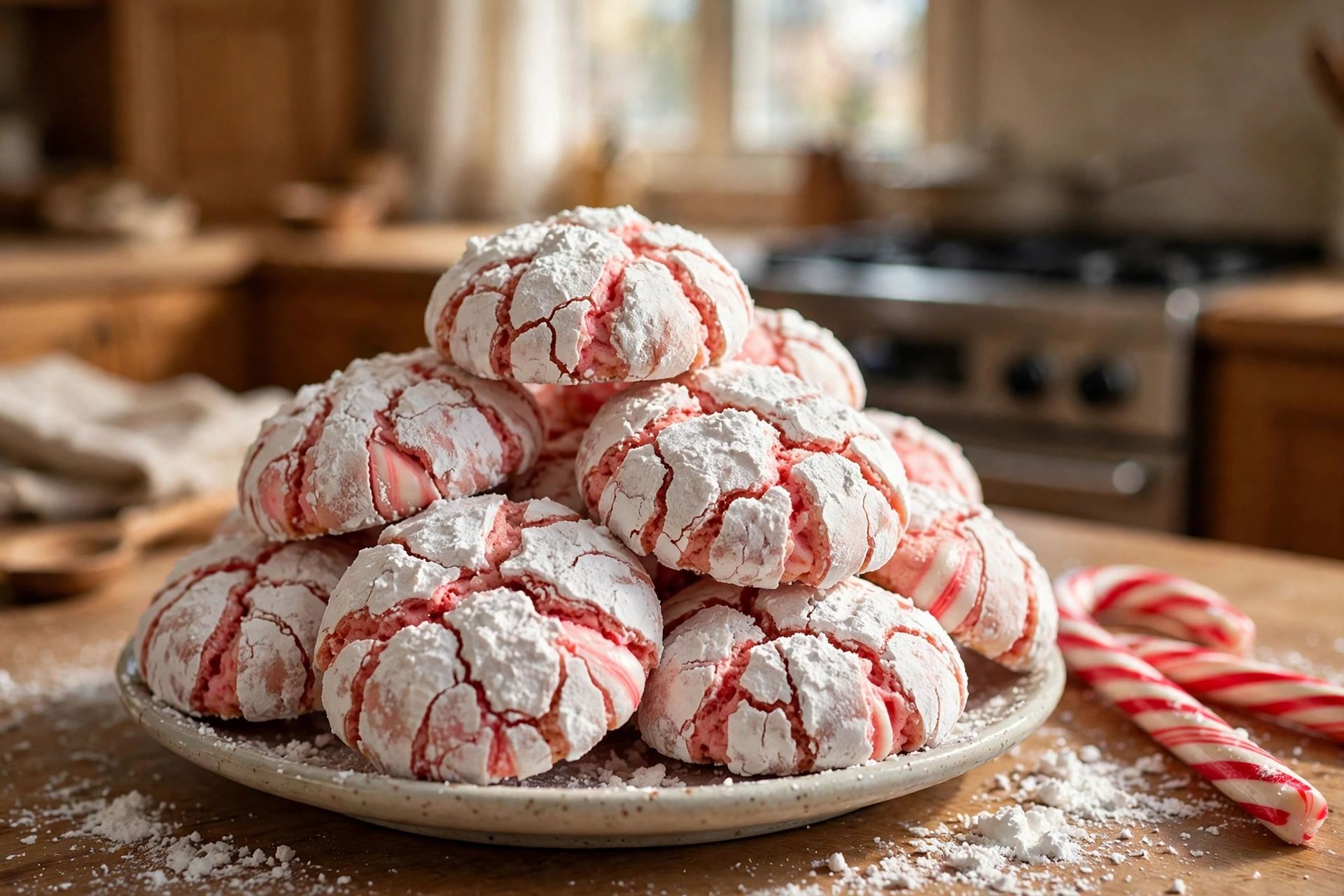
Peppermint crinkle cookies are soft white chocolate cookies with a pale pink crumb, rolled twice in sugar so they bake up under a thick white crust that cracks into deep, dramatic fissures as they spread.
Most crinkle cookies on the internet are chocolate, dark and fudgy. These go the other way: the dough itself is pink, the crust is snow white, and every crack shows the candy cane color underneath. They look like December in a way a brown cookie never quite manages.
The method has two non negotiable points, and both are easy. The dough chills for a full 2 hours, and each ball is rolled in granulated sugar before the powdered sugar. Skip either one and the famous cracks melt into a faint white haze.
What Makes These Peppermint Crinkle Cookies Different
Peppermint crinkle cookies start with melted white chocolate beaten straight into the dough, not chips folded in at the end. That one choice changes everything: the crumb stays soft and almost fudgy for days, and the white chocolate carries the peppermint cleanly.
Because the base is white chocolate instead of cocoa, the crumb can take color. A few drops of red gel turn the dough the exact pink of a candy cane’s stripe, so the cracks that open in the oven read pink against white, stripe against snow.
The texture contrast is the pleasure of the cookie. The crust is dry, sweet and faintly crisp, like the outside of a meringue, while the center stays tender and rich. It is a cookie that crunches once, quietly, and then melts.
They also keep. Where a chocolate crinkle stales by the second day, the white chocolate base holds its softness for 4 to 5 days in a tin, which is why this is the cookie to bake on Sunday for a Friday exchange.
The size is deliberate too. Balls of 1 1/2 tablespoons (22 ml) bake into cookies of about 3 inches (7.5 cm), big enough for the cracks to open into wide white plates, small enough that two fit in a gift box layer without a fight.
A Pink Crumb, Like the Inside of a Candy Cane
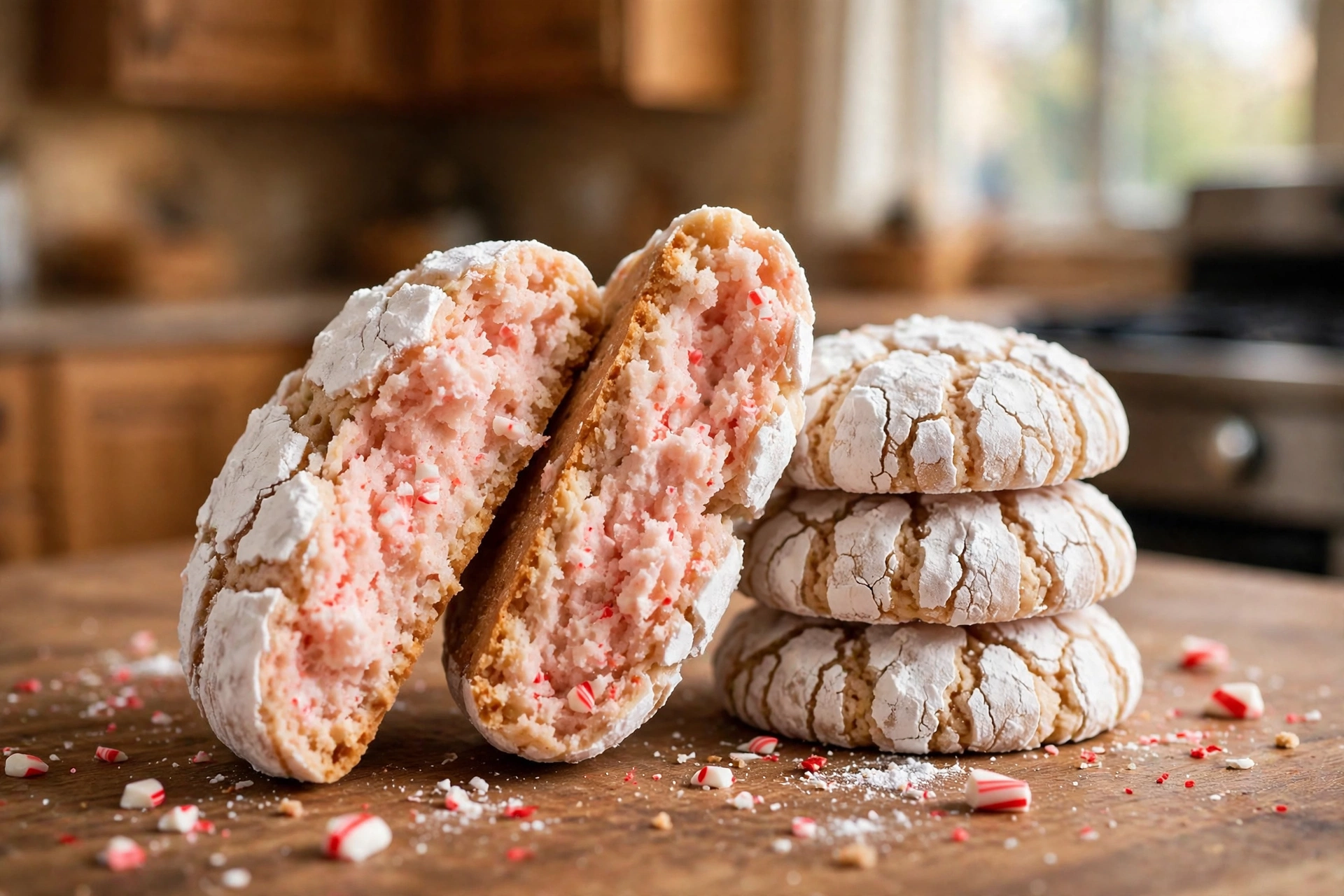
The color comes from gel food coloring, and the choice matters. Liquid coloring adds water to a dough that is already soft, and the extra moisture works against the cracks. Gel is concentrated, so 8 to 10 drops give a strong pink with almost no added liquid.
Add the gel with the extracts, before the flour, so it beats evenly through the wet dough. The raw dough will look darker than the baked cookie; the color lightens a shade in the oven, so aim one step deeper pink than your target.
If you prefer no coloring at all, the cookies still work beautifully as a plain white on white crinkle, elegant and snowy. The pink is theater, not structure. But the pink is also the reason people reach for these first on a mixed tray.
Work quickly once the gel goes in, and scrape the bowl well. Gel coloring likes to hide in the butter at the bottom of the bowl, and one unmixed streak will bake into a single deep pink ribbon through an otherwise even batch of dough.
For a deeper red, closer to a candy cane stripe, push to 12 drops and accept a slightly stronger flavor from the gel. Past that point the color stops improving and the crumb can taste faintly bitter, so twelve is the honest ceiling.
The Double Sugar Coat Is the Whole Trick
Every failed crinkle cookie fails in the same place: the powdered sugar disappears. Powdered sugar is thirsty, and a soft dough drinks it as it warms. By the time the cookie spreads, the white coat has melted into the surface and the cracks show nothing.
The fix is a barrier. Each chilled ball is rolled first in plain granulated sugar, which the dough cannot absorb, and only then, heavily, in powdered sugar. The granulated layer keeps the powdered layer dry, and the dry layer is what splits into those thick white plates.
Be generous to the point of excess. A properly coated ball looks like a snowball, with no pink showing anywhere. Thin spots in the coating become thin spots in the crust, and the cracks will find exactly those weak places to skip.
The same double coat protects the cookies of our chocolate crinkle cookies, and it is the single technique worth stealing for every crinkle variation you ever bake. One extra bowl of sugar, and the whole look of the cookie changes.
Sift the powdered sugar before it goes into its bowl. Lumpy powdered sugar coats in patches, and every patch becomes a bald spot in the crust. A quick pass through a sieve takes twenty seconds and pays for itself on every single cookie.
Peppermint Crinkle Cookies Ingredients
- 6 ounces (170 g) white chocolate baking bar, finely chopped
- 1/2 cup (115 g) unsalted butter, softened
- 3/4 cup (150 g) granulated sugar
- 2 large eggs (100 g), at room temperature
- 1 teaspoon (5 ml) peppermint extract
- 1 teaspoon (5 ml) vanilla extract
- 8 to 10 drops red gel food coloring
- 2 1/4 cups (285 g) all-purpose flour, spooned and leveled
- 2 teaspoons (8 g) baking powder
- 1/2 teaspoon (3 g) fine sea salt
- 1/2 cup (100 g) granulated sugar, for the first coat
- 1 1/2 cups (180 g) powdered sugar, sifted, for the second coat
Use a white chocolate baking bar rather than chips if you can. Chips carry stabilizers that keep them from melting smoothly, while a bar melts into silk; the cookie guides at King Arthur Baking make the same point about bar chocolate in tender doughs.
How to Make Peppermint Crinkle Cookies, Step by Step
- Melt the chopped white chocolate in a heatproof bowl in 20 second bursts in the microwave, stirring between each, until smooth, about 60 to 75 seconds total. Set it aside for 10 minutes to cool until it no longer feels warm.
- Beat the butter and the 3/4 cup (150 g) of granulated sugar for 2 minutes, until pale and fluffy. Beat in the eggs one at a time, then the peppermint extract, the vanilla and the gel coloring, until the dough base is evenly pink.
- Beat in the cooled white chocolate on low speed, about 20 seconds, just until it disappears into the mixture. The batter will look glossy and a little loose; that is correct.
- Whisk the flour, baking powder and salt together and fold them in until no dry flour remains. Press plastic wrap directly against the surface of the dough and refrigerate for at least 2 hours, or overnight.
- Heat the oven to 350°F (175°C) and line two baking sheets with parchment. Put the 1/2 cup (100 g) of granulated sugar in one shallow bowl and the sifted powdered sugar in another.
- Scoop the cold dough into balls of about 1 1/2 tablespoons (22 ml) each. Roll each ball first in the granulated sugar until fully coated, then in the powdered sugar until it looks like a snowball with no pink showing.
- Set the balls 2 inches (5 cm) apart on the prepared sheets and bake one sheet at a time for 10 to 11 minutes, until the edges look set, the crust has cracked deeply, and the centers still look slightly soft.
- Cool on the pan for 5 minutes, then move the cookies to a rack. The crust firms as they cool; a cookie lifted too early will shed its white plates.
Chill the Dough, or Lose the Crinkles
The 2 hour chill is not a suggestion written to fill space; it is half the recipe. Warm dough spreads before the crust can set, and a cookie that spreads fast has no tension left to crack the sugar coat open.
Cold dough also protects the coating. A firm ball holds its double layer of sugar through the rolling and the trip to the oven, while a soft ball sweats butter into the powdered sugar and turns it to paste before the pan is even full.
If your kitchen is warm, work in two batches and keep the second half of the dough in the refrigerator while the first sheet bakes. Rolled balls can also wait, coated, on a plate in the cold for up to an hour without harm.
Overnight is even better. The flour hydrates fully, the peppermint settles into the crumb instead of sitting on top of it, and the dough scoops like firm ice cream. This is a dough that rewards being made a day ahead.
Do not try to hurry the chill in the freezer. A half hour in the freezer firms the outside of the bowl while the center stays soft, and the scooped balls then bake unevenly: some crack wide, some slump. The refrigerator’s slow, even cold is the point.
Peppermint Dosage, Tested Three Ways
Peppermint extract is the easiest way to ruin this cookie. At 2 teaspoons (10 ml), the crumb tastes like toothpaste and the white chocolate disappears. Several popular recipes call for exactly that, and their comment sections are full of regret.
At 1/2 teaspoon (2.5 ml), the mint is a rumor: pleasant, but tasters asked what the flavor was supposed to be. The cookie reads as a plain white chocolate crinkle, which is lovely and also not the point of a candy cane cookie.
One teaspoon (5 ml) is the balance point this recipe uses. The mint arrives clearly, stays cool rather than medicinal, and leaves room for the white chocolate and vanilla. If your extract is a fresh, strong bottle, start at 3/4 teaspoon (4 ml) the first time.
Extracts vary more than most bakers expect. A bottle that has sat open since last December will taste softer than a new one, and oil based extracts run stronger than alcohol based ones. When in doubt, taste the raw dough: it should taste one notch bolder than the cookie you want.
Freeze the Coated Balls, Bake from Frozen
These cookies freeze at their best moment: after rolling, before baking. Set the coated balls on a parchment lined tray, freeze them solid for 1 hour, then move them to a freezer bag, where they keep for up to 2 months.
Bake them straight from frozen at the same 350°F (175°C), adding 1 to 2 minutes. The cracks open a little wider from frozen, because the crust sets before the center has finished spreading, and many bakers end up preferring the frozen batch.
Baked cookies also freeze, layered with parchment, for up to a month, though the crust loses a little of its crispness on thawing. A 5 minute refresh in a 300°F (150°C) oven brings most of it back before serving.
One caution: do not freeze the dough uncoated and plan to coat later. Thawed dough sweats as it warms, and the double coat slides on the damp surface. Coat first, freeze second, and the sugar layers stay exactly where you put them.
Boxing Them for a Cookie Exchange
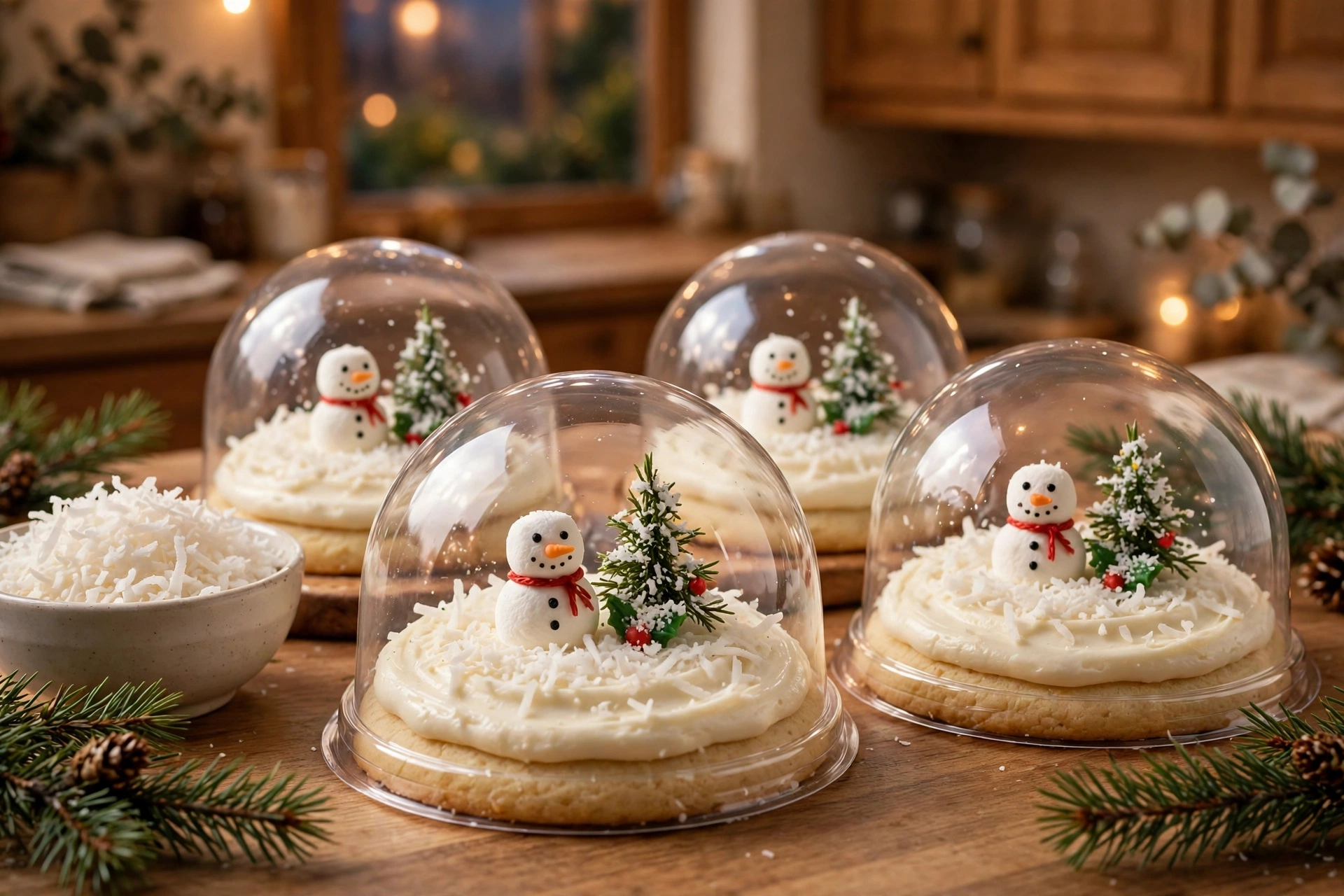
On a mixed tray, these sit happily beside our melting snowman cookies and a stack of peppermint meltaway cookies; the pink crinkles are the color that makes the whole box look planned. A few shards of classic peppermint bark tucked into the gaps finish the theme.
Box them in a single layer if you can, or layer with parchment and no more than two layers deep. The powdered crust is sturdy once cool, but a heavy stack will polish the white plates off the cookies at the bottom.
At room temperature in an airtight tin, the cookies stay soft for 4 to 5 days and the crust stays white for 3. If the box will travel by mail, bake them a touch firmer, 11 full minutes, and pack the tin tight with crumpled parchment.
Label the box if it leaves your kitchen. Peppermint reads as decoration to some people and as a strong flavor to others, and a small card that says what the pink cookies are saves the surprise for the right person. It also makes the box look like it came from a bakery.
A Cookie That Looks Like December
Peppermint crinkle cookies earn their place on the December tray: pink crumb, white cracked crust, a cool mint finish over soft white chocolate. They are the first cookie guests ask about and the one the box is remembered by.
Bake them once with the full chill and the double coat, and the method becomes yours for every crinkle after. The tray looks like it took all day. It took one bowl, two sugars, and a little patience.
Peppermint Crinkle Cookies Questions
Why did the powdered sugar disappear on my peppermint crinkle cookies?
The dough drank it. Roll each ball in granulated sugar first as a barrier, then very heavily in powdered sugar, and make sure the dough is fully chilled after 2 hours in the refrigerator. Warm or single coated balls are the two causes behind almost every faded crinkle.
Can I use liquid food coloring instead of gel in peppermint crinkle cookies?
You can, but expect a paler pink and a slightly softer dough, because liquid coloring adds water. You will need roughly 1/2 teaspoon (2.5 ml) of liquid for the same color, and the full 2 hour chill becomes even more important so the cracks still open cleanly.
My cookies taste like toothpaste. What went wrong?
Too much peppermint extract. This recipe uses 1 teaspoon (5 ml) for the whole batch; many recipes double that and overwhelm the white chocolate. With a fresh, strong bottle of extract, drop to 3/4 teaspoon (4 ml) and let the vanilla carry more of the flavor.
How long do peppermint crinkle cookies stay soft?
Four to five days in an airtight tin at room temperature, thanks to the melted white chocolate in the dough. Keep them away from strong flavored neighbors like gingerbread, because the white chocolate crumb picks up other spices as it sits.
Can I freeze peppermint crinkle cookie dough after coating?
Yes, and it is the best way to freeze them. Freeze the coated balls solid on a tray, bag them for up to 2 months, and bake from frozen at 350°F (175°C) with 1 to 2 extra minutes. The cracks often open even wider from frozen.
Peppermint Crinkle Cookies
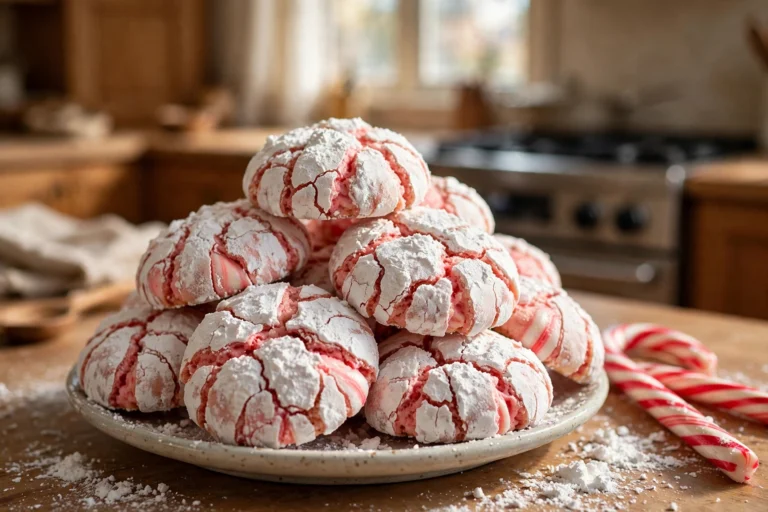
Soft white chocolate cookies with a pale pink crumb, rolled first in granulated sugar and then heavily in powdered sugar, so the crust cracks into deep white plates over the pink as they bake. The dough chills for a full 2 hours and the peppermint is dosed at 1 teaspoon (5 ml), cool and clear without the toothpaste effect. Makes 30 cookies for the exchange box.
- Total Time: 2 hours 40 minutes
- Yield: 30 cookies 1x
Ingredients
6 ounces (170 g) white chocolate baking bar, finely chopped
3/4 cup (150 g) granulated sugar
2 large eggs (100 g), at room temperature
1 teaspoon (5 ml) peppermint extract
1 teaspoon (5 ml) vanilla extract
8 to 10 drops red gel food coloring
2 1/4 cups (285 g) all-purpose flour, spooned and leveled
2 teaspoons (8 g) baking powder
1/2 teaspoon (3 g) fine sea salt
1/2 cup (100 g) granulated sugar, for the first coat
1 1/2 cups (180 g) powdered sugar, sifted, for the second coat
Instructions
Melt the white chocolate in a heatproof bowl in 20 second microwave bursts, stirring between each, until smooth, 60 to 75 seconds total. Cool for 10 minutes, until it no longer feels warm.
Beat the butter and the 3/4 cup (150 g) of granulated sugar for 2 minutes, until pale and fluffy. Beat in the eggs one at a time, then the peppermint extract, the vanilla and the gel coloring, until evenly pink.
Beat in the cooled white chocolate on low speed, about 20 seconds, just until it disappears. The batter will look glossy and a little loose; that is correct.
Whisk the flour, baking powder and salt together and fold them in until no dry flour remains. Press plastic wrap directly against the dough and refrigerate for at least 2 hours, or overnight.
Heat the oven to 350°F (175°C) and line two baking sheets with parchment. Put the 1/2 cup (100 g) of granulated sugar in one shallow bowl and the sifted powdered sugar in another.
Scoop the cold dough into balls of about 1 1/2 tablespoons (22 ml). Roll each ball first in the granulated sugar until fully coated, then in the powdered sugar until it looks like a snowball with no pink showing.
Set the balls 2 inches (5 cm) apart and bake one sheet at a time for 10 to 11 minutes, until the edges look set, the crust has cracked deeply, and the centers still look slightly soft.
Cool on the pan for 5 minutes, then move to a rack. The crust firms as the cookies cool; lifting them too early sheds the white plates.
Notes
The total time includes the 2 hour dough chill, which is not optional: warm dough spreads before the crust sets and the cracks melt away. Coated balls freeze for up to 2 months and bake from frozen with 1 to 2 extra minutes.
- Prep Time: 25 minutes
- Cook Time: 11 minutes
Nutrition
- Calories: 150
- Sodium: 65
- Saturated Fat: 4
- Protein: 1.6
- Cholesterol: 30