
In this article:
- Why This Cajun Butter Turkey Works
- A Slow Burn, Not a Fire
- The Night Before, Salt Does the Quiet Work
- Heat Levels and Lighter Plates
- Cajun Butter Turkey Ingredients
- How to Make Cajun Butter Turkey, Step by Step
- The Cheesecloth Rules That Keep the Skin Golden
- Swaps for the Bird and the Blend
- Storing a Big Bird, and Reheating It Gently
- The Turkey That Wakes Up the Table
- Cajun Butter Turkey Questions
Why This Cajun Butter Turkey Works
Cajun butter turkey works because three separate techniques protect the meat at three different moments. The overnight dry brine seasons the bird to the bone and dries the skin. The spiced compound butter bastes it from directly under that skin. And the butter soaked cheesecloth shields the breast through the long second half of the roast.
Most roast turkeys fail in one of two places: bland meat under beautiful skin, or juicy meat under skin that never crisped. The brine solves the first problem a full day early, and the dry, uncovered rest in the refrigerator solves the second before the oven even heats.
The Cajun blend itself is built at home, from single spices you can weigh and adjust. Smoked paprika brings the deep red color, garlic and onion bring the savory base, thyme and oregano bring the herbal note, and cayenne stays dosed for warmth rather than bravado.
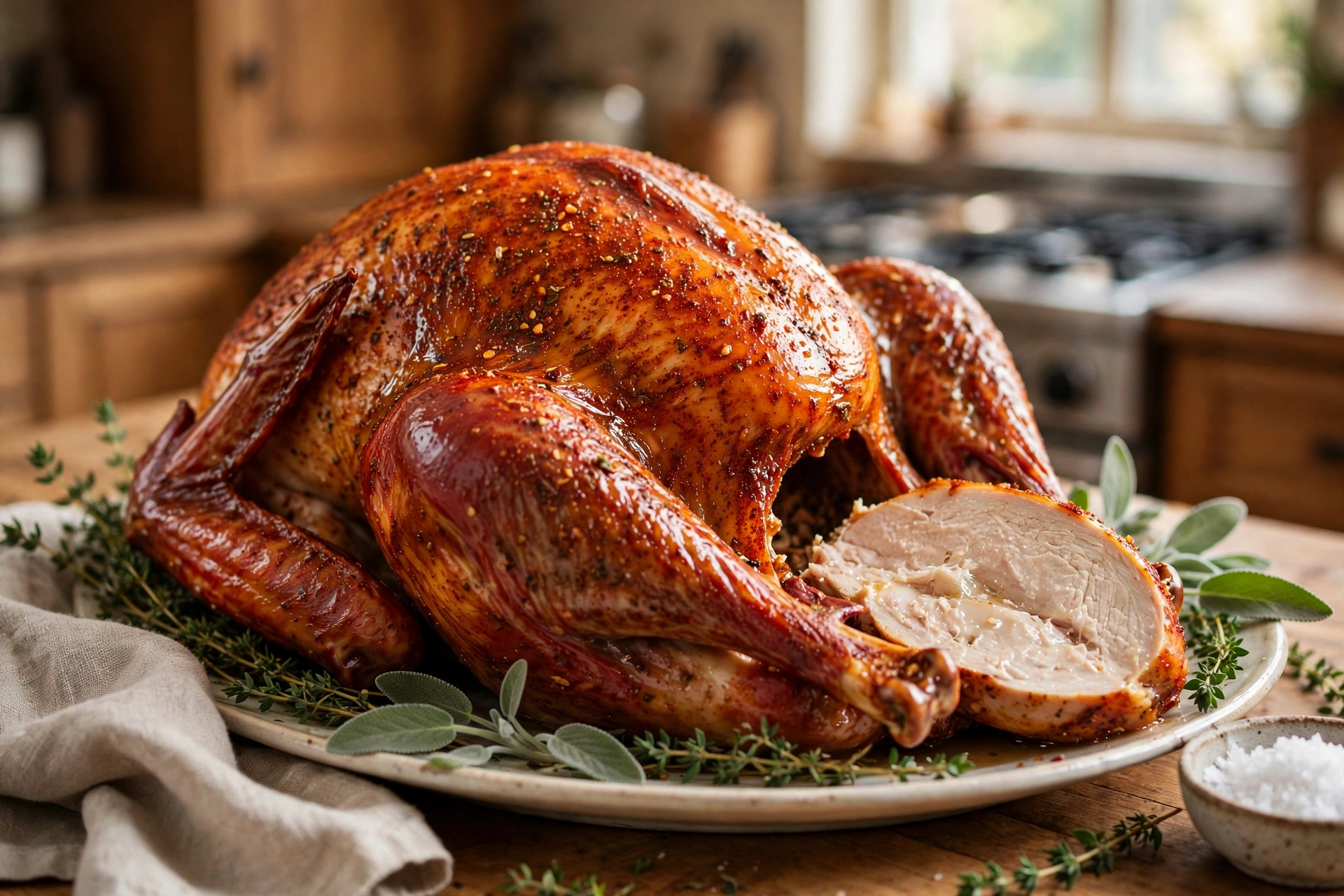
Cajun butter turkey is the bird that arrives at the table already glowing: deep red gold skin, a gentle heat that builds slowly, and slices that stay juicy all the way to the thin end of the breast. It smells like a Louisiana kitchen met a Thanksgiving table and both sides won.
The first bite is butter and smoke, then the herbs, then a slow warmth that never shouts. The skin shatters a little at the edges of each slice. The dark meat comes away silky, almost confit tender from its hours under the buttered cloth.
Nothing about the method is fussy once the bird is brined. There is no injector to buy, no store blend with a mystery salt level, and no basting schedule that chains you to the oven door. The cheesecloth does the basting for you, quietly, while you make everything else.
A Slow Burn, Not a Fire
The flavor of a Cajun butter turkey should read in layers, the way a good gumbo does. First comes the butter, rich and round. Then the smoked paprika, which colors the drippings a deep brick red and perfumes the whole kitchen before the bird is even carved.
Garlic powder and onion powder melt into the butter and disappear as separate notes; what they leave behind is depth, the sense that the meat itself is more savory than turkey usually manages. Dried thyme and oregano, the classic Cajun pair, keep the blend from tasting like a steak rub.
Cayenne is the dial, not the engine. At 1/2 teaspoon (1 g) in the whole blend, the heat registers as a glow at the back of the throat. At a full teaspoon (2 g), it speaks up clearly but still lets the herbs through. The skin carries most of it, so a carved slice is always milder than the rub smells.
Texture matters as much as spice here. The breast slices stay firm and moist, never chalky, because the brine changed how the meat holds its water. The skin, dried overnight and roasted hot at the start, turns thin and crisp enough to hear when the knife goes through.
The Night Before, Salt Does the Quiet Work
The active work on this cajun butter turkey is under an hour, but it is spread across two days on purpose. The salt needs its overnight shift: 3 tablespoons (54 g) of kosher salt for a 12 to 14 pound (5.4 to 6.4 kg) bird, worked over every surface and into the cavity.
Thawing is the real planning step. A frozen bird of this size needs about 24 hours in the refrigerator for every 4 to 5 pounds (1.8 to 2.3 kg), so three days for most turkeys, and the brine takes the last of those days. Buy the bird the weekend before Thanksgiving and the calendar handles itself.
Roasting day itself is calm: an hour at room temperature, 45 minutes of high heat, then a long, low finish under the cheesecloth while the sides cook. The bird rests for 30 to 45 minutes, which is exactly the window the gravy and the last casseroles need.
If your refrigerator is crowded, the brining bird can sit on a rimmed sheet pan instead of a roasting rack over the pan. What matters is air on the skin and nothing stacked on top of it.
Heat Levels and Lighter Plates
The blend is written for a mixed table. For children and heat shy guests, drop the cayenne to 1/4 teaspoon (0.5 g) and lean on the smoked paprika; the color and most of the character stay. For a table that likes it hot, the full teaspoon (2 g) plus a pinch of black pepper on the skin is plenty.
Skinless slices are the lightest plate here: the breast meat itself is lean, and most of the butter lives in the skin and the drippings. A serving of carved breast without skin keeps the Cajun flavor, because the brine and the under skin butter seasoned the meat directly.
The compound butter can be cut to 3/4 cup (170 g) with 1/4 cup (60 ml) of olive oil whisked in; the blend stays put under the skin and the skin still crisps. The cheesecloth, though, wants real melted butter: oil alone soaks unevenly and the cloth can stick.
For a dairy free table, replace both butters with a plant based butter that melts cleanly and holds at oven heat. The method does not change, but check the cloth at the first baste; some plant butters brown faster and the bird may want a loose foil tent for the last 30 minutes.
Cajun Butter Turkey Ingredients
- 1 whole turkey, 12 to 14 pounds (5.4 to 6.4 kg), fully thawed, neck and giblets removed
- 3 tablespoons (54 g) kosher salt, for the dry brine
- 2 tablespoons (14 g) smoked paprika
- 1 tablespoon (9 g) garlic powder
- 1 tablespoon (7 g) onion powder
- 2 teaspoons (2 g) dried thyme
- 2 teaspoons (2 g) dried oregano
- 1 teaspoon (2 g) black pepper
- 1/2 to 1 teaspoon (1 to 2 g) cayenne pepper
- 1 cup (227 g) unsalted butter, softened, for the compound butter
- 1/2 cup (113 g) unsalted butter, melted, for the cheesecloth
- 1 tablespoon (3 g) finely chopped fresh sage
- 1 tablespoon (3 g) fresh thyme leaves
- 1 tablespoon (15 ml) fresh lemon juice
- 2 medium yellow onions (300 g), quartered
- 4 celery stalks (240 g), cut in chunks
- 2 lemons, halved
- 1 cup (240 ml) low sodium chicken or turkey broth, for the pan
- Cheesecloth, about 1 yard (1 m), folded into layers
- Kitchen twine
The salt rule behind the brine is simple: about 1 tablespoon (18 g) of kosher salt for every 5 pounds (2.3 kg) of bird. It is the same patient salting we use in our herb butter roast turkey, where the seasoning has a full day to travel to the center of the breast.
Check the label before you salt. A turkey marked as basted, self basting or enhanced has already been salted in solution; for those birds, cut the dry brine salt in half and let the Cajun blend carry the seasoning. A natural or kosher style turkey takes the full amount happily.
How to Make Cajun Butter Turkey, Step by Step
- The day before, pat the turkey very dry with paper towels, inside and out. Rub the kosher salt over every surface, into the cavity and under the skin of the breast where your fingers reach. Set the bird breast side up on a rack over a rimmed pan and refrigerate, uncovered, for 24 hours, or at least 8.
- Stir the smoked paprika, garlic powder, onion powder, dried thyme, dried oregano, black pepper and cayenne together in a small bowl. Set aside 1 tablespoon (7 g) of the blend for the melted butter; the rest goes into the compound butter.
- Mash the softened butter with the remaining blend, the sage, the fresh thyme and the lemon juice until it is a deep, even orange red. The compound butter can be made while the bird brines and held, covered, in the refrigerator.
- Take the turkey out of the refrigerator 1 hour before roasting and heat the oven to 400°F (205°C). Scatter the onions and celery in a roasting pan, pour in the broth, and set the bird on a rack above them. Loosen the skin over the breast and thighs, spread two thirds of the compound butter under the skin, and rub the rest over the whole bird. Tuck the lemon halves in the cavity and tie the legs with twine.
- Roast for 45 minutes at 400°F (205°C), until the skin has taken on deep color and the butter is sizzling in the pan.
- Melt the remaining 1/2 cup (113 g) of butter with the reserved tablespoon (7 g) of blend. Soak the folded cheesecloth in it until saturated, let it drip for a few seconds, and lower the oven to 325°F (165°C). Drape the cloth snugly over the whole bird, breast, legs and wings, pressing it to the surface.
- Roast for 2 to 2 1/2 hours more, basting over the cloth with the pan juices every 45 minutes. Plan on 13 to 15 minutes per pound (450 g) in total, but let the thermometer, not the clock, call the finish.
- Pull the turkey when the thickest part of the breast reads 160°F (71°C) and the thigh reads 170°F (77°C). Move it to a board, tent loosely with foil, and rest for 30 to 45 minutes; the breast will coast to 165°F (74°C) as the juices settle.
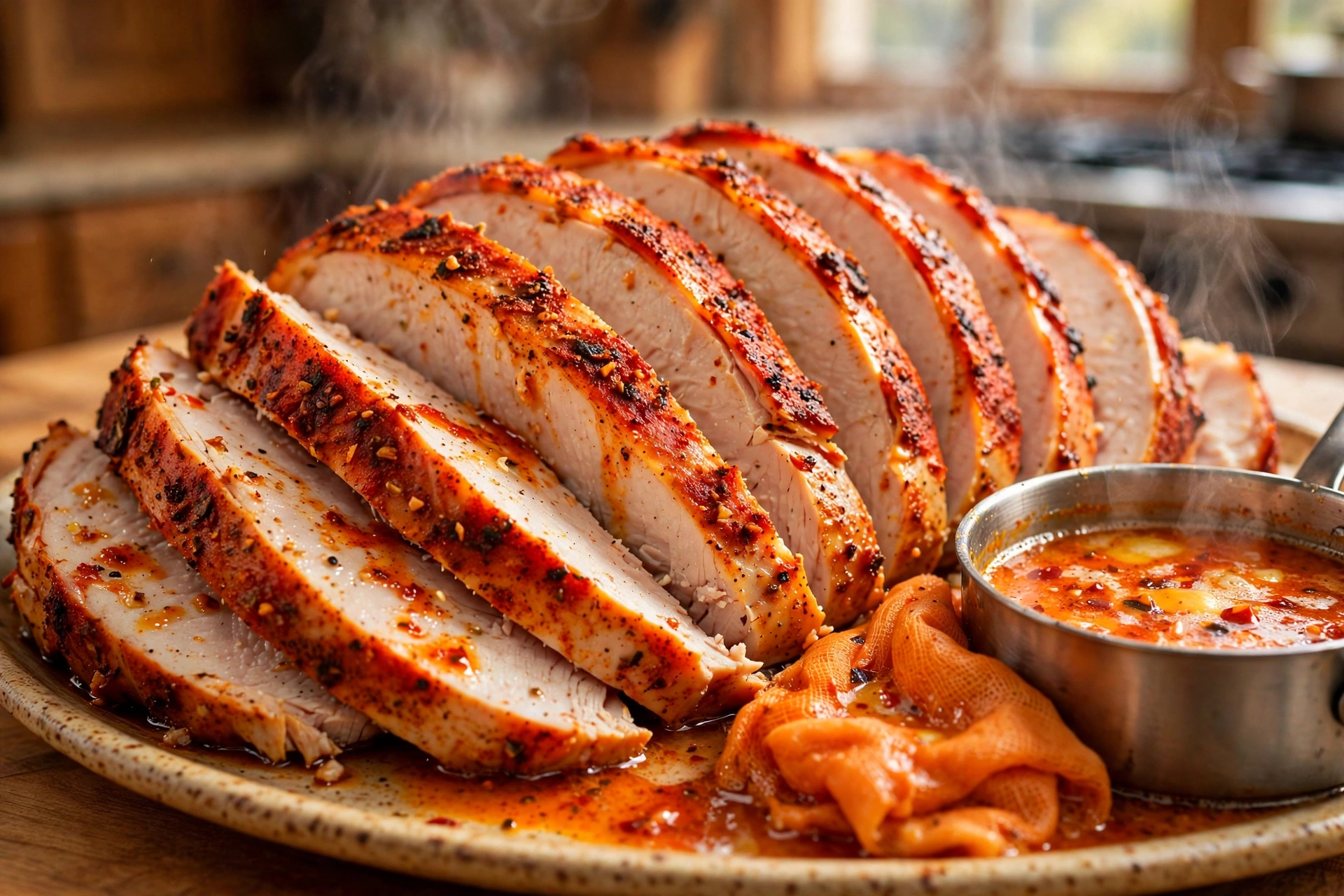
- Peel the cheesecloth away gently; it releases cleanly from buttered skin. Carve the breast in thick slices against the grain and arrange the dark meat around them, spooning a little of the brick red pan juice over the platter.
- Strain the pan juices for gravy, or follow our make ahead turkey gravy with these drippings whisked in at the end; the Cajun butter turns a classic gravy a deep, savory gold.
The Cheesecloth Rules That Keep the Skin Golden
The cheesecloth is not a garnish; it is a self basting blanket. Saturated with melted Cajun butter, it holds fat and spice against the breast for hours, so the leanest part of the bird bastes itself while the legs finish cooking. That is the whole trick behind the juicy slices.
Fold the cloth into at least two layers before soaking. A single layer dries at the edges and can scorch against the skin; a double layer stays supple and peels away in one piece. Trim it so it covers the wings but does not hang into the pan juices, where it would wick them up and away.
The United States Department of Agriculture puts the safe temperature for turkey at 165°F (74°C), measured in the thickest part of the breast and the inner thigh; the full chart lives at foodsafety.gov. Pulling at 160°F (71°C) and resting under foil lands there without overshooting.
If the skin under the cloth is darkening faster than the meat is cooking, usually in the first hour, lay a loose sheet of foil over the cloth, not under it. The cloth keeps basting, the foil slows the color, and the skin finishes deep red gold instead of brown.
Swaps for the Bird and the Blend
A smaller bird changes only the salt and the clock. For an 8 to 10 pound (3.6 to 4.5 kg) turkey, use 2 tablespoons (36 g) of kosher salt and start checking the temperature 30 minutes earlier. The blend and both butters stay exactly as written; there will simply be a little extra butter for the pan juices.
No cheesecloth in the house is not a crisis. Skip it and baste with the melted spiced butter every 30 minutes, opening the oven as briefly as you can. The skin colors faster without the cloth, so drop the first stage to 30 minutes at 400°F (205°C) and watch the breast.
An injector, if you own one and like it, can carry 1/2 cup (120 ml) of the melted Cajun butter into the breast and thighs before the cloth goes on. It is a variation, not a requirement: the brine plus the under skin butter already season the meat through, which is why this version was written without one.
For a gentler blend with the same silhouette, trade the cayenne for 1 teaspoon (2 g) of sweet paprika and add 1 teaspoon (4 g) of brown sugar to the rub. The skin lacquers a shade darker and the heat drops to a whisper, a good trade for a kids table. If a smaller Thanksgiving suits you better, our sheet pan Thanksgiving dinner and the slow cooker turkey breast with cranberry sauce carry the same holiday flavors to a table of four to six.
Storing a Big Bird, and Reheating It Gently
Carve what the table will eat and leave the rest of the cajun butter turkey on the frame; meat stored on the bone keeps its moisture far better than a platter of slices. Refrigerate within 2 hours of serving, in shallow covered containers, and plan on 3 to 4 days for the cooked meat.
Reheat slices the gentle way: lay them in a baking dish with a splash of broth, cover tightly with foil, and warm at 325°F (165°C) for 15 to 20 minutes, until just hot. The microwave works for a single plate at half power, but the oven keeps the spiced skin worth eating.
The frame is an asset, not a chore. Simmered with onion, celery and bay, it gives a broth with a faint Cajun warmth that makes an extraordinary gumbo style soup the next day. The skin crisped in a skillet over the top of a bowl of that soup is the cook’s reward.
Cooked turkey freezes well for 2 to 3 months, sliced and packed flat with a spoonful of pan juice in each bag. Thaw overnight in the refrigerator and reheat as above.
The Turkey That Wakes Up the Table
Cajun butter turkey earns its place at the center of the table: a bird that looks dramatic, slices juicy, and tastes seasoned all the way through instead of only on the skin. The work is mostly patience, salt, butter and one buttered cloth.
Make the blend once and you will keep a jar of it: roast chicken in January, shrimp in the spring, and this turkey again next November, when someone at the table asks for the red one.
Cajun Butter Turkey Questions
My turkey is already brined or enhanced. Can I still dry brine it?
Yes, but cut the kosher salt in half, to about 1 1/2 tablespoons (27 g) for a 12 to 14 pound (5.4 to 6.4 kg) bird. Enhanced turkeys carry salt in their solution already; the overnight rest still dries the skin beautifully, and the Cajun blend seasons the surface.
The skin is getting very dark under the cheesecloth. What do I do?
Lay a loose sheet of foil over the cloth and keep roasting; the cloth continues to baste while the foil slows the color. Paprika rich butter darkens faster than plain butter, so a deep red brown is normal, but the breast should read 160°F (71°C) before the skin goes past mahogany.
Will the cheesecloth stick to the skin or leave fibers?
Not when it is fully saturated with melted butter and folded in at least two layers. Butter is the release agent here. Peel the cloth away slowly right after the rest, while it is still warm; if a corner resists, spoon warm pan juice over it and wait a minute.
How spicy is this cajun butter turkey for kids?
Milder than it looks. Most of the cayenne rides on the skin, and carved breast slices taste warm rather than hot. For a young table, use 1/4 teaspoon (0.5 g) of cayenne in the blend and lean on the smoked paprika; the color and the Cajun character stay, the heat nearly disappears.
Can I use the drippings for gravy even with all that butter and spice?
Yes, and you should. Strain the juices, skim all but 2 tablespoons (30 ml) of the fat, and build the roux with that fat; the paprika turns the gravy a deep gold and the herbs are already in balance. Taste before salting, because the dry brine seasons the drippings too.
Cajun Butter Turkey
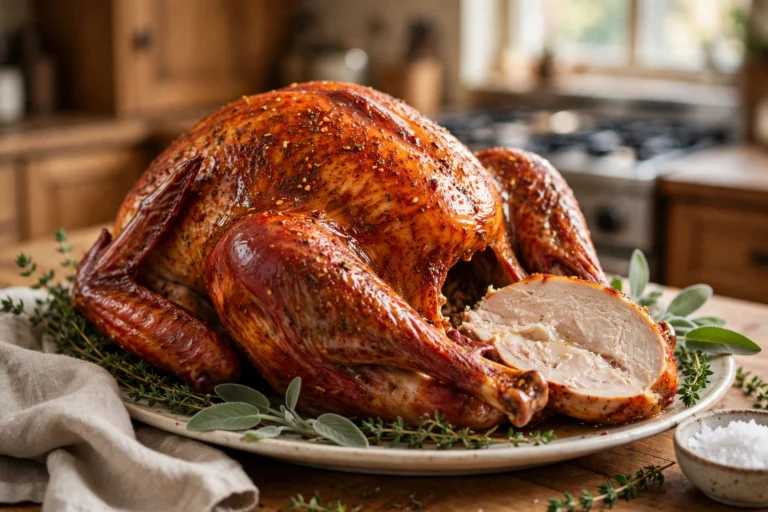
A whole turkey dry brined overnight, rubbed with a homemade Cajun blend, basted from under the skin with spiced compound butter and roasted under a butter soaked cheesecloth. Deep red golden skin, juicy slices and a slow, warm heat.
- Total Time: 28 hours
- Yield: 12 servings 1x
Ingredients
1 whole turkey, 12 to 14 pounds (5.4 to 6.4 kg), fully thawed, neck and giblets removed
2 tablespoons (14 g) smoked paprika
1 tablespoon (9 g) garlic powder
1 tablespoon (7 g) onion powder
2 teaspoons (2 g) dried thyme
2 teaspoons (2 g) dried oregano
1 teaspoon (2 g) black pepper
1/2 to 1 teaspoon (1 to 2 g) cayenne pepper
1 cup (227 g) unsalted butter, softened, for the compound butter
1/2 cup (113 g) unsalted butter, melted, for the cheesecloth
1 tablespoon (3 g) finely chopped fresh sage
1 tablespoon (3 g) fresh thyme leaves
1 tablespoon (15 ml) fresh lemon juice
2 medium yellow onions (300 g), quartered
4 celery stalks (240 g), cut in chunks
2 lemons, halved
1 cup (240 ml) low sodium chicken or turkey broth, for the pan
Cheesecloth, about 1 yard (1 m), folded into layers
Kitchen twine
Instructions
The day before, pat the turkey very dry with paper towels, inside and out. Rub the kosher salt over every surface, into the cavity and under the skin of the breast where your fingers reach. Set the bird breast side up on a rack over a rimmed pan and refrigerate, uncovered, for 24 hours, or at least 8.
Stir the smoked paprika, garlic powder, onion powder, dried thyme, dried oregano, black pepper and cayenne together in a small bowl. Set aside 1 tablespoon (7 g) of the blend for the melted butter; the rest goes into the compound butter.
Mash the softened butter with the remaining blend, the sage, the fresh thyme and the lemon juice until it is a deep, even orange red. The compound butter can be made while the bird brines and held, covered, in the refrigerator.
Take the turkey out of the refrigerator 1 hour before roasting and heat the oven to 400°F (205°C). Scatter the onions and celery in a roasting pan, pour in the broth, and set the bird on a rack above them. Loosen the skin over the breast and thighs, spread two thirds of the compound butter under the skin, and rub the rest over the whole bird. Tuck the lemon halves in the cavity and tie the legs with twine.
Roast for 45 minutes at 400°F (205°C), until the skin has taken on deep color and the butter is sizzling in the pan.
Melt the remaining 1/2 cup (113 g) of butter with the reserved tablespoon (7 g) of blend. Soak the folded cheesecloth in it until saturated, let it drip for a few seconds, and lower the oven to 325°F (165°C). Drape the cloth snugly over the whole bird, breast, legs and wings, pressing it to the surface.
Roast for 2 to 2 1/2 hours more, basting over the cloth with the pan juices every 45 minutes. Plan on 13 to 15 minutes per pound (450 g) in total, but let the thermometer, not the clock, call the finish.
Pull the turkey when the thickest part of the breast reads 160°F (71°C) and the thigh reads 170°F (77°C). Move it to a board, tent loosely with foil, and rest for 30 to 45 minutes; the breast will coast to 165°F (74°C) as the juices settle.
Peel the cheesecloth away gently; it releases cleanly from buttered skin. Carve the breast in thick slices against the grain and arrange the dark meat around them, spooning a little of the brick red pan juice over the platter.
Strain the pan juices for gravy, or build a quick roux gravy with 2 tablespoons (30 ml) of the skimmed fat and the strained juices; the Cajun butter turns it a deep, savory gold.
Notes
Salt rule: about 1 tablespoon (18 g) of kosher salt per 5 pounds (2.3 kg) of turkey. If the bird is labeled enhanced or self basting, halve the brine salt. Total time includes the 24 hour dry brine and the rest.
- Prep Time: 40 minutes
- Cook Time: 3 hours 15 minutes
Nutrition
- Calories: 490
- Sodium: 890
- Saturated Fat: 11
- Protein: 58
- Cholesterol: 175