
I’m Chef Rita, and this perfect parmesan garlic bread is my go-to recipe when I want to impress without fussy techniques. The secret lies in overnight fermentation, which develops subtle flavor depth and creates that signature open crumb structure. You’ll fold freshly grated parmesan and minced garlic directly into the dough, so each bite delivers savory bursts rather than a single cheesy layer. A hot Dutch oven creates steam that lifts the crust to a crackling, golden-brown finish while the interior stays pillowy and tender. The contrast is stunning: crisp edges give way to a silky center that feels almost custardy on the tooth. Most of the work happens while you sleep, so hands-on time is minimal. Shape it gently, bake it confidently, and you’ll have an artisan loaf that tastes like it came from a professional bakery.
Pro Tips from Chef Rita
- Use freshly grated parmesan cheese, not pre-grated. Anti-caking agents in pre-grated varieties interfere with melting and texture.
- Keep the dough sticky during mixing. Resist adding extra flour; the tacky consistency creates that desirable open crumb.
- Pat and fold gently when shaping rather than kneading aggressively. Light handling preserves air pockets for maximum oven spring.
- A preheated Dutch oven traps steam effectively. If you don’t have one, place a shallow pan of water on the lower oven rack during the first half of baking.
Table of Contents
Introduction
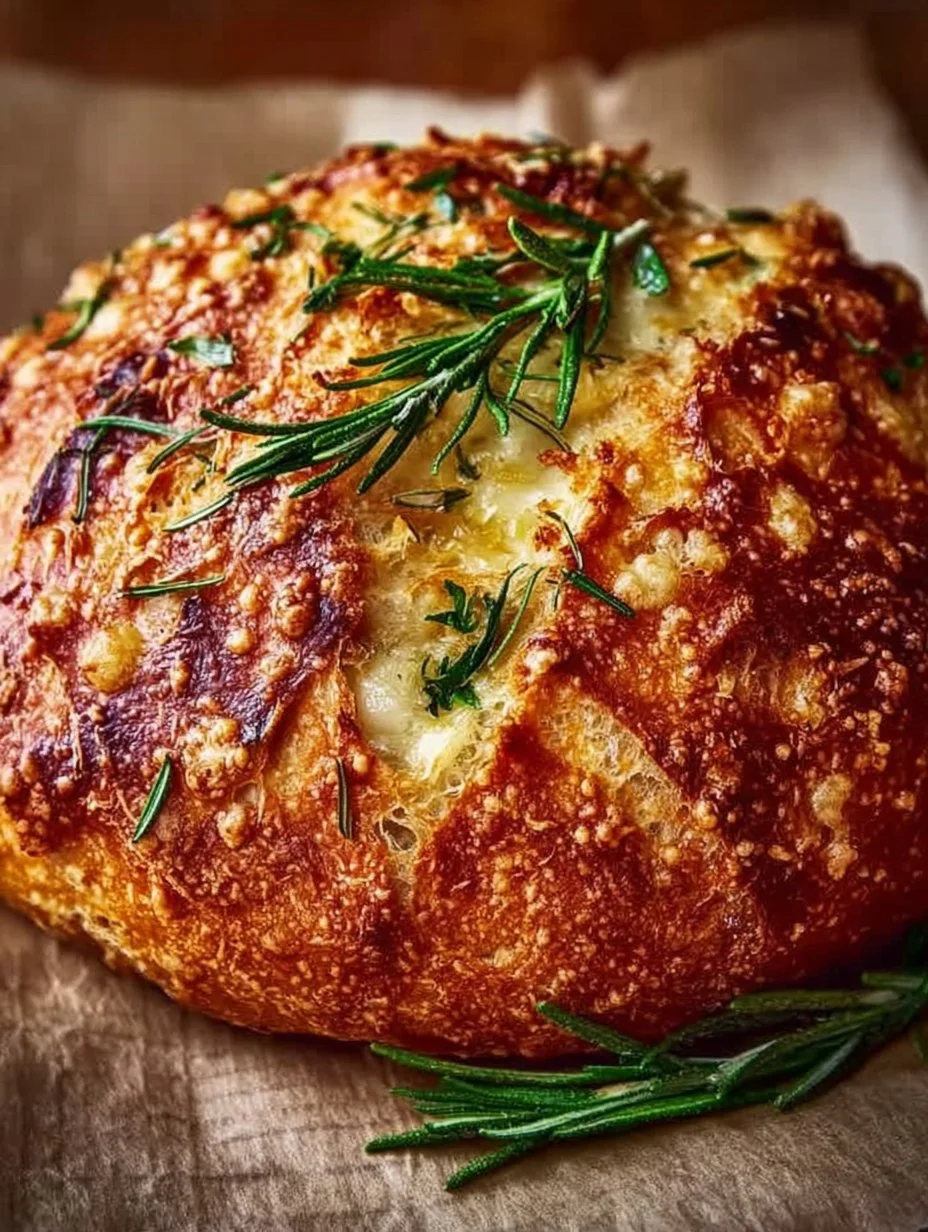
Perfect Parmesan Garlic Bread Recipe Easy Artisan Style arrives as a study in contrast: a bronzed, crackling crust gives way to a tender, open crumb flecked with salty parmesan and fragrant garlic. The technique is quiet long overnight fermentation and a hot, steamy bake but the result feels deliberate and special. Textures play against each other: crisp edges, silky interior, a toasted, savory surface that perfumes the kitchen. Serve warm, tear by hand, and notice how the cheese melts into pockets of flavor.
Why This Recipe Works
Perfect Parmesan Garlic Bread Recipe Easy Artisan Style relies on a slow, overnight rise to develop subtle fermentation flavors and a fragile, open crumb. The long rest gives gluten time to relax so you can shape without exhausting the dough, preserving air pockets.
High heat and a covered bake create steam that lifts the crust, and finishing uncovered pushes the surface to a deep, nutty brown that contrasts the silky interior. Freshly grated parmesan folds into the dough, offering savory bursts rather than a single cheesy layer.
Flavor and Texture
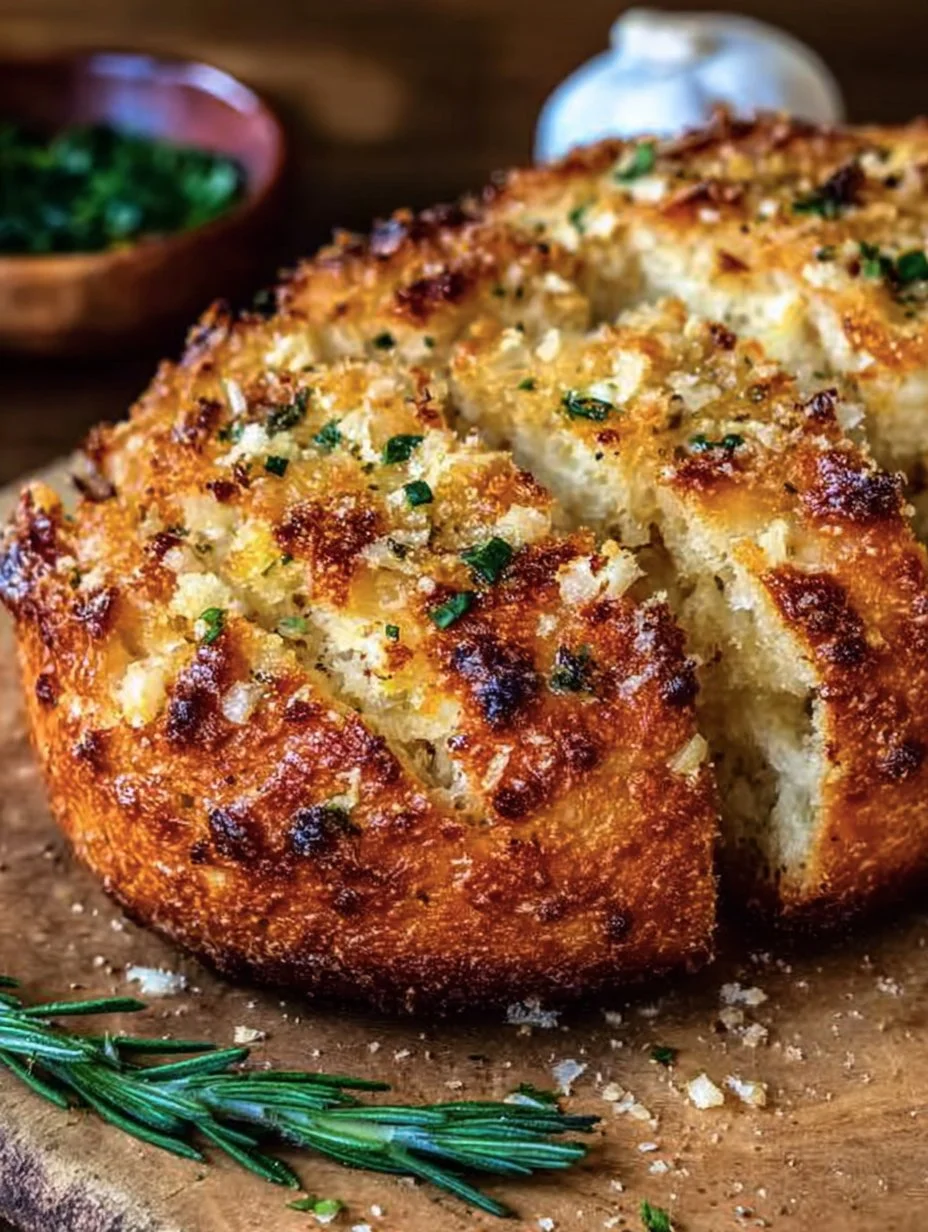
The first bite is a crisp snap, sudden and pleasing, followed by a pillowy, moist interior that feels almost custardy against the tooth. Parmesan contributes a dry, umami salinity that lingers, while raw garlic folded into the dough blooms gently rather than shouting.
A quick sprinkle of chopped rosemary or parsley before baking brightens the loaf, providing a green, resinous counterpoint to the nutty cheese. Visually, the scored top opens like a flower; the exposed crumb caramelizes and shows flecks of melted cheese.
Convenience and Time
This recipe’s hands-on time is minimal; most of the work happens while the dough rests overnight. Mixing takes five to ten minutes, and shaping is a gentle, single motion that keeps air in the loaf. Baking requires only one hot interval and a brief finish uncovered for color.
Plan ahead: mix in the evening, bake the next day. The long rise replaces multiple kneading sessions, so the process feels effortless yet yields artisan results that read as intentional.
Diet Friendly Options
You can keep the loaf’s character while adjusting ingredients for different needs. Use a dairy-free hard cheese alternative with a similar salt and texture if avoiding dairy, and swap olive oil for another neutral oil at the same ratio. Reduce salt slightly for sensitive palates.
Without altering the fermentation or bake, the bread will retain its crust-to-crumb contrast. Small substitutions won’t change the visual identity of the loaf, just the flavor profile.
Ingredients
- 3 1/4 cups (390g) all-purpose flour
- 2 teaspoons (10g) salt
- 1 teaspoon (5g) granulated sugar
- 2 teaspoons (7g) active dry yeast
- 1 1/2 cups (360ml) warm water (around 110°F/43°C)
- 2 tablespoons (30ml) olive oil
- 1 cup (100g) freshly grated parmesan cheese
- 2, 3 cloves of minced garlic
- 1 tablespoon (15g) chopped fresh rosemary or parsley (optional)
Step by Step Instructions
- In a large mixing bowl, combine 3 1/4 cups (390g) of all-purpose flour, 2 teaspoons (10g) of salt, and 1 teaspoon (5g) of granulated sugar.
- In a small bowl, dissolve 2 teaspoons (7g) of active dry yeast in 1 1/2 cups (360ml) of warm water (around 110°F/43°C). Let it sit for about 5 minutes until it gets foamy.
- Pour the yeast mixture into the dry ingredients. Add 2 tablespoons (30ml) of olive oil and mix everything together with a wooden spoon until combined. The dough will be sticky, that’s perfect!
- Fold in 1 cup (100g) of freshly grated parmesan cheese and 2, 3 cloves of minced garlic. If desired, add 1 tablespoon (15g) of chopped fresh rosemary or parsley.
- Cover the bowl with a clean kitchen towel or plastic wrap. Let the dough rise in a warm place for 12, 18 hours or overnight. It should double in size and be bubbly.
- Once the dough has risen, transfer it to a floured surface. Gently shape it into a round loaf. Avoid overworking it to maintain its airy texture.
- Place the shaped dough onto a piece of parchment paper and let it rest for another 30 minutes while preheating your oven to 450°F (230°C). If using a Dutch oven, place it inside the oven to preheat as well.
- After resting, score the top of your dough with a sharp knife or lame to allow it to expand while baking.
- Carefully place the parchment paper with the dough into the hot Dutch oven. Cover with the lid and bake for 30 minutes.
- Remove the lid and bake for an additional 15 minutes, or until the top is golden brown and the bread sounds hollow when tapped.
- Let the bread cool on a wire rack for at least 30 minutes before slicing. This helps the texture set.
Tips and Tricks for Success
Use freshly grated parmesan; pre-grated cheese often contains anti-caking agents that change melting behavior. A coarse grate distributes flavor without weighing the dough down, creating pockets of umami rather than a uniform layer.
Keep the dough sticky; resist the urge to add more flour while mixing. The tacky texture is what yields the open crumb. When shaping, use light hands pat and fold rather than knead.
A preheated Dutch oven traps steam and produces a crisp, blistered crust. If you don’t have one, place a shallow pan of water in the oven to create humidity for the first half of the bake.
Ingredient Swaps
Swap all-purpose flour for a 50/50 mix of bread flour to increase chew and oven spring, but expect a slightly different crumb. For dairy-free diets, a firm, grated plant-based parmesan alternative works in a pinch if the salt level is comparable.
If garlic rawness is a concern, roast the garlic first and fold the softened paste into the dough for a sweeter, caramelized note.
Pairings and Serving Suggestions
Serve slices warm with an herb oil or a simple tomato salad to cut through the richness. A soft, spreadable ricotta with lemon zest pairs beautifully, as does a bowl of fragrant, slightly acidic marinara for dipping.
For an internal reference that explores similarly comforting, simple loaves, try this Moist Easy Libby’s Pumpkin Bread Recipe which offers texture contrasts worthy of the same attention.
Storage and Make Ahead Tips
Cool completely before wrapping; trapped steam will soften the crust. Store at room temperature in a paper bag for up to two days, then slice and refrigerate in an airtight container for another one to two days. Reheat slices under a broiler or in a hot oven to restore crunch.
You can shape and retard the dough in the refrigerator for up to 24 hours to compress the schedule. Allow the chilled dough to come closer to room temperature before baking for a better oven spring.
Nutrition and Health Benefits
This bread delivers satisfying calories from flour and olive oil, plus protein and calcium from parmesan. Olive oil contributes heart-healthy fats, and using moderate cheese keeps salt in check while providing savory depth.
For specific dietary needs, please consult a qualified health professional.
Mistakes to Avoid
Don’t skimp on the overnight rise; an under-fermented dough yields a tight crumb and dull flavor. Adding too much flour during handling will give a dense loaf instead of the intended open texture.
Avoid over-scoring; shallow, decisive cuts let the loaf bloom while preserving internal structure. And resist slicing too early cooling sets the crumb and prevents a gummy interior.
Personal Closing Thought and Call to Action
The beauty of this loaf is its quiet precision: a few honest ingredients, time, and a hot oven yield a bread that reads artisan but feels achievable. If you bake once with this rhythm a slow rise and a confident bake you’ll notice the way simple technique elevates every bite.
Share your results and variations; small differences in cheese, herbs, and bake times make each loaf personal.
Conclusion
Perfect Parmesan Garlic Bread Recipe Easy Artisan Style stands as a dependable method for producing a restaurant-quality loaf at home, marrying a crackling crust with a tender, cheese-kissed interior in a single, calm process.
FAQ
What is the preparation time for this recipe?
The preparation time usually takes about 15 to 20 minutes depending on experience and equipment.
Can I substitute any ingredients?
Yes, simple substitutions are possible depending on dietary needs or availability.
Is this recipe suitable for specific diets?
This recipe can be adapted with small changes depending on preferences.
How should leftovers be stored?
Store leftovers in an airtight container in the refrigerator and consume within two to three days.
Can I prepare this recipe in advance?
Many steps can be prepared ahead of time to simplify busy cooking days; for example, the dough can be mixed and refrigerated overnight to develop flavor in the Perfect Parmesan Garlic Bread Recipe Easy Artisan Style.
Perfect Parmesan Garlic Bread Recipe Easy Artisan Style
A golden artisan loaf speckled with parmesan and fresh herbs, sliced to show an airy crumb and crisp crust.
Total Time: 60 minutes
Yield: 1 loaf 1x
Ingredients
Scale
- 3 1/4 cups (390g) all-purpose flour
- 2 teaspoons (10g) salt
- 1 teaspoon (5g) granulated sugar
- 2 teaspoons (7g) active dry yeast
- 1 1/2 cups (360ml) warm water (around 110°F/43°C)
- 2 tablespoons (30ml) olive oil
- 1 cup (100g) freshly grated parmesan cheese
- 2, 3 cloves of minced garlic
- 1 tablespoon (15g) chopped fresh rosemary or parsley (optional)
Instructions
- In a large mixing bowl, combine the flour, salt, and granulated sugar.
- In a small bowl, dissolve the active dry yeast in warm water and let it sit until foamy.
- Pour the yeast mixture into the dry ingredients, add olive oil, and mix until combined.
- Fold in parmesan cheese and garlic, adding herbs if desired.
- Cover and let the dough rise in a warm place for 12, 18 hours.
- Shape the risen dough into a round loaf and let it rest while preheating the oven.
- Score the top of the dough and bake in a preheated Dutch oven for 30 minutes, covered.
- Remove the lid and bake for an additional 15 minutes until golden brown.
- Cool on a rack for at least 30 minutes before slicing.
Notes
Use freshly grated parmesan for best results. Keep dough sticky to achieve desired texture.
- Prep Time: 15 minutes
- Cook Time: 45 minutes
- Category: Bread
- Method: Baking
- Cuisine: Italian
- Diet: Vegetarian
Nutrition
- Serving Size: 1 slice
- Calories: 250
- Sugar: 1g
- Sodium: 400mg
- Fat: 8g
- Saturated Fat: 3g
- Unsaturated Fat: 5g
- Trans Fat: 0g
- Carbohydrates: 34g
- Fiber: 1g
- Protein: 9g
- Cholesterol: 10mg
Frequently Asked Questions
Can I make this parmesan garlic bread without a Dutch oven?
Yes. Place a shallow pan of water on the lower oven rack during the first 30 minutes of baking to create steam. This mimics the Dutch oven’s effect on crust development. Your loaf may not achieve quite the same crackling finish, but the crumb structure will remain excellent.
How long does this bread stay fresh?
Store the cooled loaf in a paper bag at room temperature for up to two days. After that, slice and refrigerate in an airtight container for one to two additional days. Reheat slices under the broiler or in a hot oven to restore the crispy crust.
What if I want to use roasted garlic instead of raw?
Roast garlic cloves until soft, then fold the caramelized paste into the dough. This creates a sweeter, less pungent flavor. Use about the same amount as raw garlic. The fermentation will continue normally, and texture won’t be affected.
Can I refrigerate the dough before baking?
Absolutely. After shaping, place the dough on parchment paper, cover it, and refrigerate for up to 24 hours. Let it come closer to room temperature before baking. This compressed schedule works well for busy weekdays.
Why does my bread have a dense crumb instead of an open one?
Dense crumb usually means under-fermentation or too much flour added during handling. Ensure the dough rises fully overnight until doubled and bubbly. Avoid adding extra flour while shaping. Light, confident hands and a full fermentation period prevent density.
Final Thoughts
This recipe proves that great bread doesn’t require complicated steps or special equipment. The long fermentation does most of the work while you focus on other meals. Once you master this technique, try pairing it with hearty dishes like Chicken Enchiladas with Sour Cream White Sauce for a complete dinner. Or serve it alongside our Bok Choy Mushroom Stir Fry for a lighter meal. The crispy crust and savory interior work beautifully with nearly any main course.