
Dans cet article :
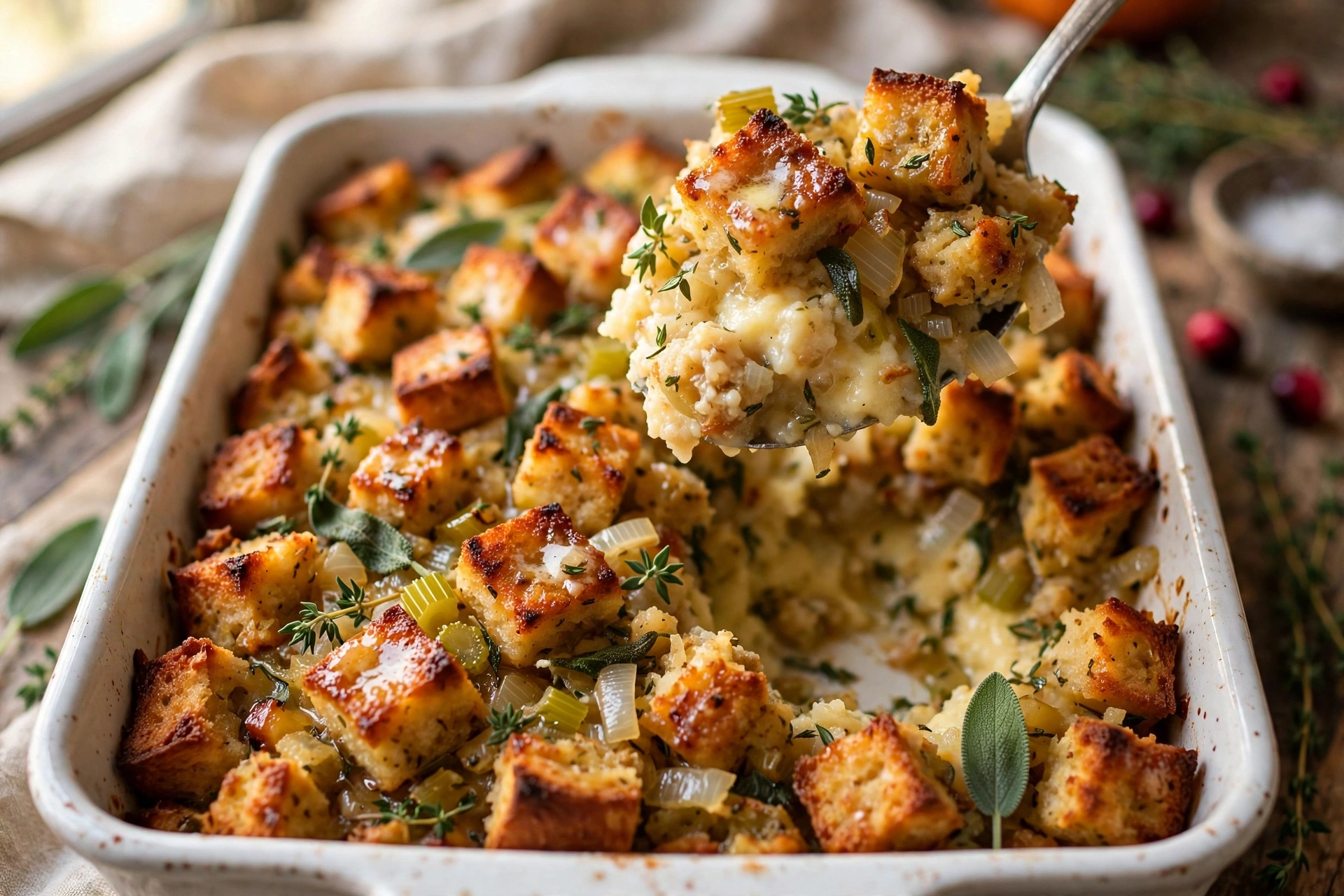
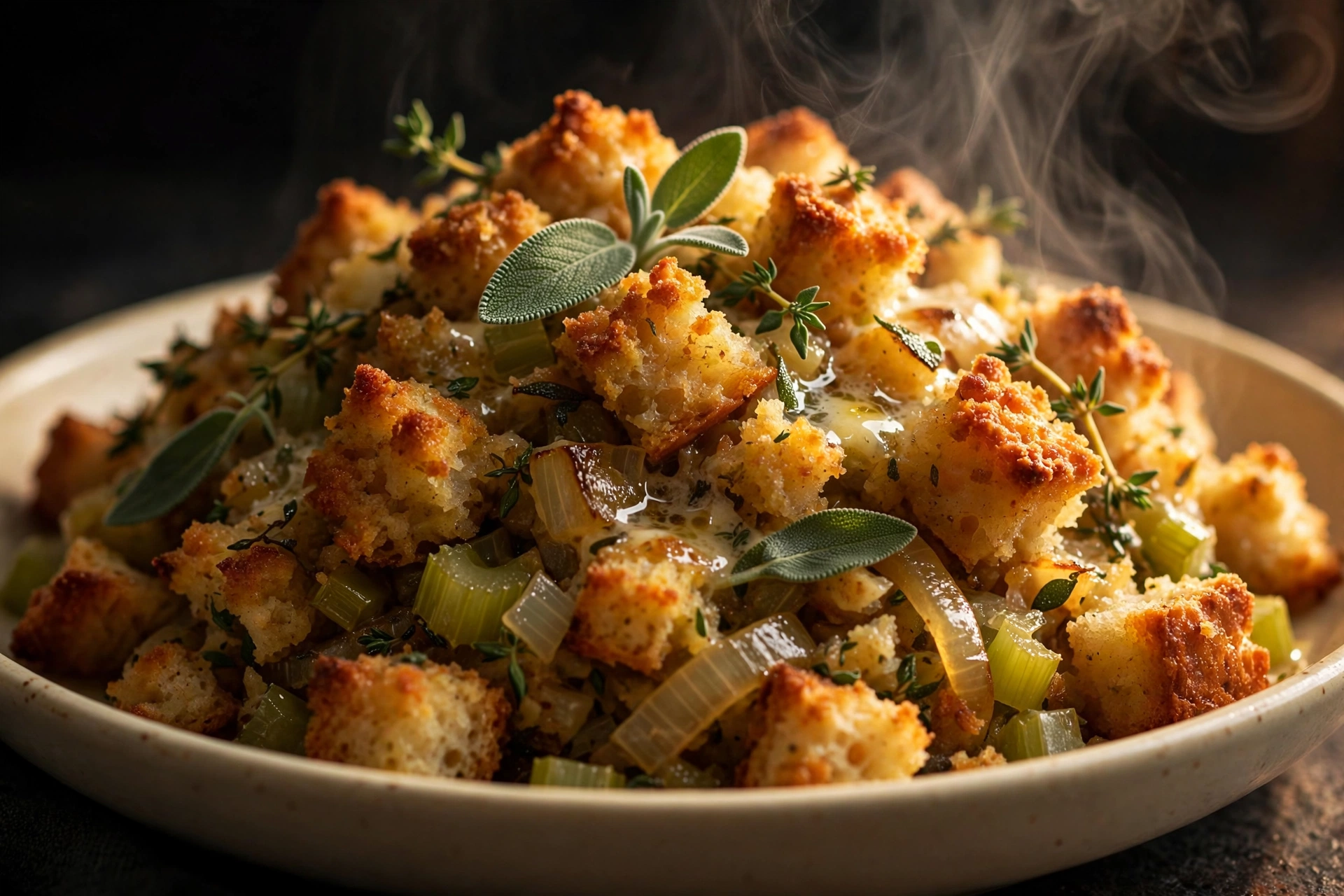
Old-fashioned bread stuffing is the side dish that turns a good Thanksgiving table into a legendary one. Picture a baking dish of golden cubes with crisp, buttery edges, steam rising as your spoon breaks through to the soft, savory center.
Sage and thyme perfume the whole kitchen while it bakes, and that first spoonful tastes like every holiday memory at once. This version keeps everything classic: real butter, sweet onion and celery, fresh herbs, and bread dried just enough to drink up warm turkey broth.
Nothing fancy, nothing fussy, just the contrast everyone fights over at the table. Whether you bake it beside your turkey or bring it to a cozy Friendsgiving, it fits the day perfectly. It is the dish my family asks about first every single November, before anyone even mentions the turkey.
Why This Old-Fashioned Bread Stuffing Recipe Works
Old-fashioned bread stuffing works because of one perfect contrast: a crackling golden crust over a soft, custardy center. The key technique is drying the bread first, so every cube soaks up warm broth like a sponge instead of collapsing into paste.
Butter does the heavy lifting for flavor: half of it melts into the onion and celery, and the rest dots the top so the crust turns deep golden in the oven. Two beaten eggs quietly bind everything together, giving you stuffing that scoops cleanly instead of crumbling apart on the plate.
Fresh sage and thyme go into the skillet at the very end of the saute, so their aroma stays bright rather than cooking away. And the foil-on, foil-off bake gives you both textures in one dish: steamy softness first, then a crisp, buttery lid to finish. No shortcuts, just the buttery herb-bread combination that made this dish famous on holiday tables in the first place.
Flavor and Texture
The first bite is all contrast. The top layer shatters gently, those butter-crisped cubes giving way to a center that is soft, savory, and almost creamy from the egg-enriched broth.
Sage brings its warm, piney note while thyme adds a quiet earthiness, and poultry seasoning ties them together into that unmistakable holiday perfume. The onion and celery melt down in butter until they are sweet and silky, disappearing into the bread rather than standing out as vegetables.
Warm turkey broth seeps into every dried cube, carrying salt and richness deep into the dish, so it tastes far richer than its simple ingredient list suggests. The pepper is subtle but essential, waking up the richness without ever announcing itself.
Texture depends entirely on the bake. Covered, the stuffing steams into a tender, spoonable scoop that holds together beautifully. Uncovered for the last stretch, the top dries and crisps into golden, buttery edges with real crunch.
That is the bite everyone reaches for, and there is always a friendly argument over who gets the corner pieces. The edges where the stuffing meets the dish turn the deepest brown, and those caramelized bits are pure gold.
Butter is the quiet hero here, rounding every edge and leaving a rich, lingering finish that broth alone could never deliver. The middle stays soft and custardy, which makes each serving feel generous and comforting.
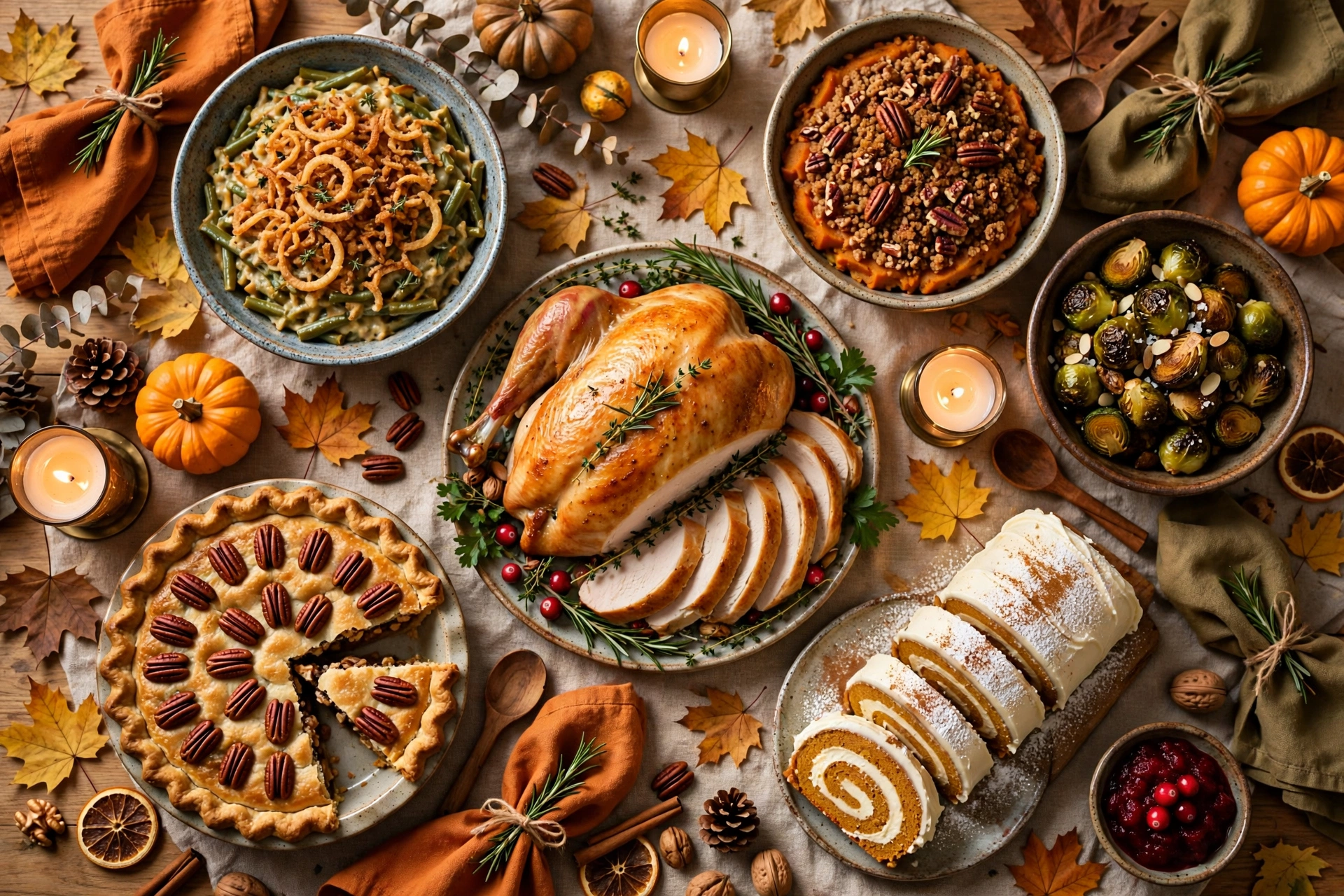
Visually, it is pure Thanksgiving: deep amber cubes flecked with green herbs, served steaming in its baking dish. Ladled over with gravy, it becomes the best bite on the plate, especially next to slices of garlic herb roasted turkey breast .
I always make more than I think I need, because the top layer disappears before the turkey is even carved. This is the kind of dish that looks as good as it tastes, with zero garnish required.
Convenience and Time
Thanksgiving morning is chaos, and this recipe respects that. The bread cubes can be dried up to three days ahead and kept in a paper bag on the counter.
You can also saute the onion, celery, and herbs the day before and refrigerate them in a covered container. On the big day, all that is left is tossing everything with broth and eggs and sliding the dish into the oven.
Active work runs about twenty minutes, and the oven does the rest: thirty minutes covered, fifteen to twenty uncovered, then a short rest before serving. That hands-off bake is your window to warm the rolls, finish the side vegetables, and actually talk to your guests. Because the dish reheats beautifully, it is also a strong candidate for Friendsgiving potlucks or a low-stress practice run the weekend before.
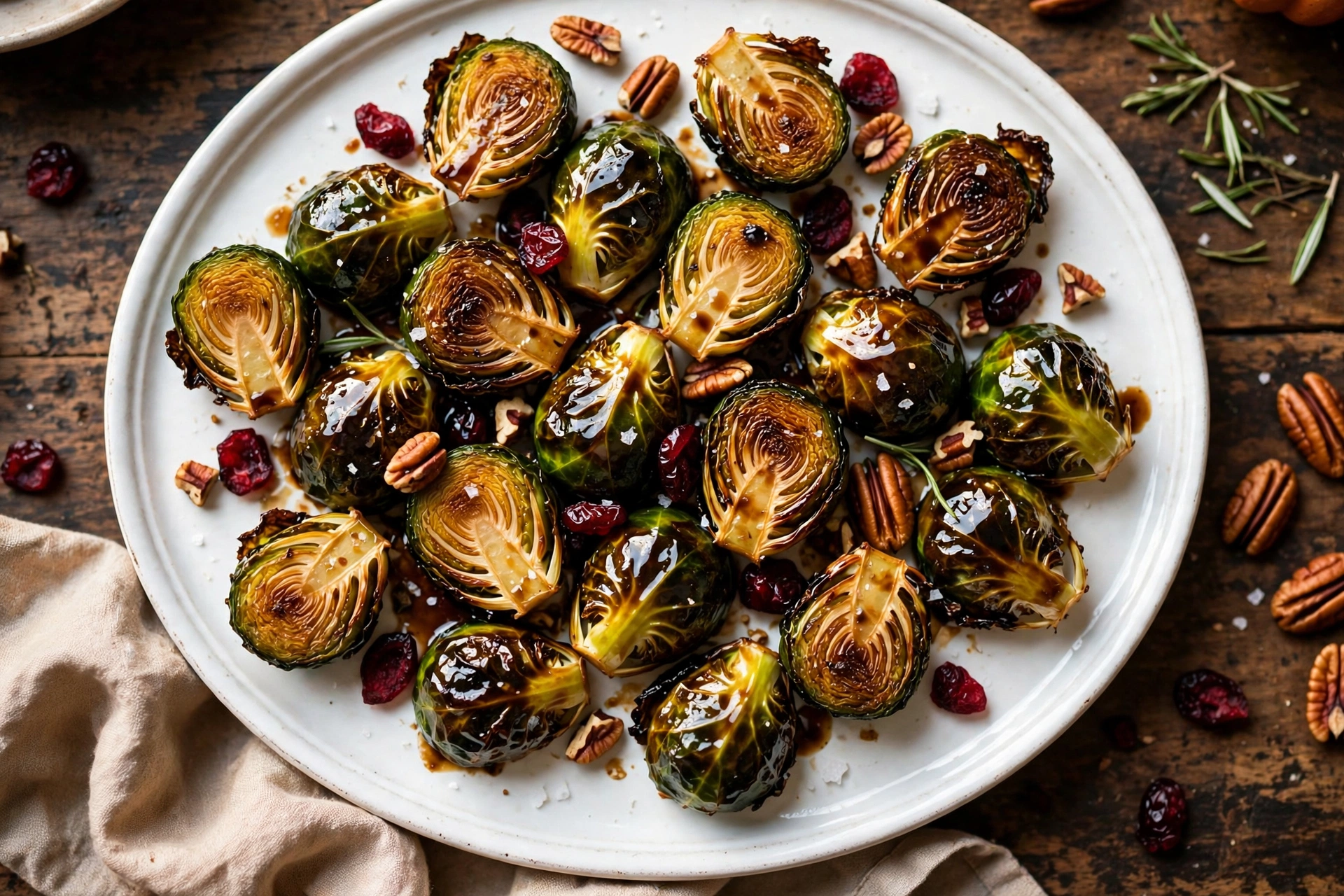
Here is the timing trick the calm cooks use: bake the stuffing while the turkey rests. The oven is already hot and free, the temperature is close to what you need, and the stuffing lands on the table steaming. Pair it with a gravy you made ahead, like a make-ahead turkey gravy , plus a tray of maple balsamic roasted brussels sprouts , and the whole side course practically serves itself.
Diet Friendly Options
A classic recipe should flex for every table, and this one does it gracefully. For gluten-free guests, swap in your favorite gluten-free bread and dry it the same way; the eggs and broth keep the texture exactly right.
Dairy-free is easy too: use a firm vegan butter or a good olive oil in place of the butter, and the herbs still carry all the flavor. The dish turns naturally vegetarian when you moisten it with vegetable broth instead of turkey or chicken broth, with no change to the method at all.
Watching sodium? Choose a low-sodium broth and unsalted butter, then season at the very end so you control every pinch.
For a lighter version, trim the butter to half a cup total and lean on extra fresh herbs for aroma. None of these swaps change how the dish looks in its baking dish, so guests never feel like they received the alternative version.
Everyone gets the same golden, herby comfort. If eggs are off the table too, simply skip them and serve the stuffing a little looser, straight from the dish with a spoon.
Ingredients
- 1 lb (about 16 cups) day-old white or French bread, cut into 3/4-inch cubes
- 3/4 cup (1 1/2 sticks) unsalted butter, divided
- 2 cups diced yellow onion (about 2 medium)
- 1 1/2 cups diced celery (about 4 stalks)
- 2 garlic cloves, minced
- 2 tablespoons chopped fresh sage (or 2 teaspoons dried)
- 1 tablespoon chopped fresh thyme (or 1 teaspoon dried)
- 1 tablespoon chopped fresh flat-leaf parsley
- 1 teaspoon poultry seasoning
- 1 1/2 teaspoons kosher salt, plus more to taste
- 1/2 teaspoon freshly ground black pepper
- 2 large eggs, lightly beaten
- 2 1/2 to 3 cups warm low-sodium turkey or chicken broth
Step by Step Instructions
- If your bread is fresh, spread the cubes in a single layer on two rimmed baking sheets. Dry them in a 300 F oven for 25 to 30 minutes, until firm and lightly toasted, then let them cool completely.
- Preheat the oven to 375 F. Generously butter a 9×13 inch baking dish and set it aside.
- Melt 1/2 cup of the butter in a large skillet over medium heat. Add the onion and celery with a pinch of salt and cook, stirring often, for 10 to 12 minutes until soft, sweet, and translucent. Stir in the garlic, sage, and thyme and cook 1 minute more, just until fragrant.
- Place the dried bread cubes in your largest mixing bowl. Sprinkle over the poultry seasoning, salt, pepper, and parsley, and toss well to distribute the seasoning evenly.
- Pour the hot onion and celery mixture over the bread. Toss gently but thoroughly, so every cube picks up butter and aromatics.
- Whisk the beaten eggs with 2 1/2 cups of the warm broth in a large measuring cup or bowl. Pour it over the bread mixture and toss gently until evenly moistened. Let it rest for 5 minutes; if the cubes still look thirsty, add more broth a quarter cup at a time.
- Transfer the mixture to the prepared baking dish, spreading it into an even layer without packing it down. Cut the remaining 1/4 cup of butter into small pieces and dot them over the top.
- Cover the dish tightly with aluminum foil and bake for 30 minutes. Uncover and bake 15 to 20 minutes more, until the top is deep golden and crisp at the edges.
- Rest for 10 minutes before serving so the stuffing sets and slices cleanly. Serve warm, with plenty of gravy alongside.
Tips and Tricks for Success
Dry bread is non-negotiable. Fresh, soft bread collapses into paste when it meets broth, while properly dried cubes keep their shape and soak up flavor like a sponge.
If you forgot to leave the loaf out on the counter, a 300 F oven for 25 to 30 minutes fixes it completely. Season in layers: salt the vegetables as they saute, then taste the mixture before it goes into the oven, because flavors concentrate as the stuffing bakes.
Do not drown the bread. Start with 2 1/2 cups of warm broth and add more by the quarter cup only if the cubes still look thirsty.
The squeeze test never lies: press a small handful gently, and it should hold together without dripping liquid. Warm broth matters too, because cold liquid makes the melted butter seize and the mixture turns uneven.
Resist the urge to pack the dish. A loose, even layer lets steam circulate, which is what gives you a custardy center instead of a dense brick.
Dot the cold butter pieces generously across the top, since they are responsible for that shattering golden crust. Finally, let the stuffing rest for ten minutes out of the oven; it sets up, slices cleanly, and the top stays crisp. These small moves are what separate good stuffing from the kind people talk about in January.
Ingredient Swaps and Variations
Once you master the base, old-fashioned bread stuffing welcomes gentle variations without losing its soul. Swap half the white bread for sourdough cubes to add a tangy backbone, or use cornbread for a sweeter, more crumbly Southern-leaning dish. Dried cranberries or finely diced apple fold in beautifully, adding a festive sweet-tart note that loves the sage.
For extra richness, saute sliced mushrooms with the onion and celery until deeply golden. Toasted pecans or walnuts, folded in at the end, bring welcome crunch without changing the bake time.
If you like a heartier dish, browned ground turkey can be stirred in for extra savoriness. Serve the spread next to green bean casserole from scratch for the full classic lineup.
Herb swaps work wonderfully too. Rosemary in place of thyme gives a bolder, woodsier perfume, while marjoram softens the whole profile into something more delicate.
Dried herbs can stand in for fresh at a simple ratio: one teaspoon of dried for every tablespoon of fresh. Whatever you change, keep the backbone ratios the same, about 16 cups of dried bread to 2 1/2 to 3 cups of broth with two eggs.
That structure is what makes every version work. A pinch of smoked paprika, used sparingly, adds a quiet warmth that some families now consider essential.
Storage and Make Ahead
Old-fashioned bread stuffing is one of the most forgiving make-ahead sides on the Thanksgiving table. Assemble the whole dish up to one day ahead, cover it tightly with foil, and refrigerate; then bake straight from the fridge, adding about ten extra minutes to the covered stage.
Leftovers keep in an airtight container in the refrigerator for 3 to 4 days. The USDA food safety guidelines remind us to refrigerate cooked sides promptly and reheat them until steaming hot all the way through.
To reheat, warm the stuffing in a 350 F oven covered with foil, adding a splash of broth to bring back the moisture. Remove the foil for the last ten minutes if you want the top crisp again.
It also freezes well for up to one month: cool it completely, wrap tightly, and thaw overnight in the refrigerator before reheating. Never leave the dish sitting out on the counter for more than two hours.
Leftover stuffing is a genuine gift. Press it into a hot buttered skillet for crispy stuffing cakes with fried eggs, or layer it into a turkey sandwich with cranberry sauce and a spoonful of gravy. Some cooks swear the leftovers, reheated until the edges re-crisp, are even better than the first serving.
Conclusion
Old-fashioned bread stuffing earns its place on the table the old way: butter, herbs, and patience. Crisp on top, soft and custardy in the middle, and perfumed with sage, it is the side dish that makes the whole meal feel like Thanksgiving.
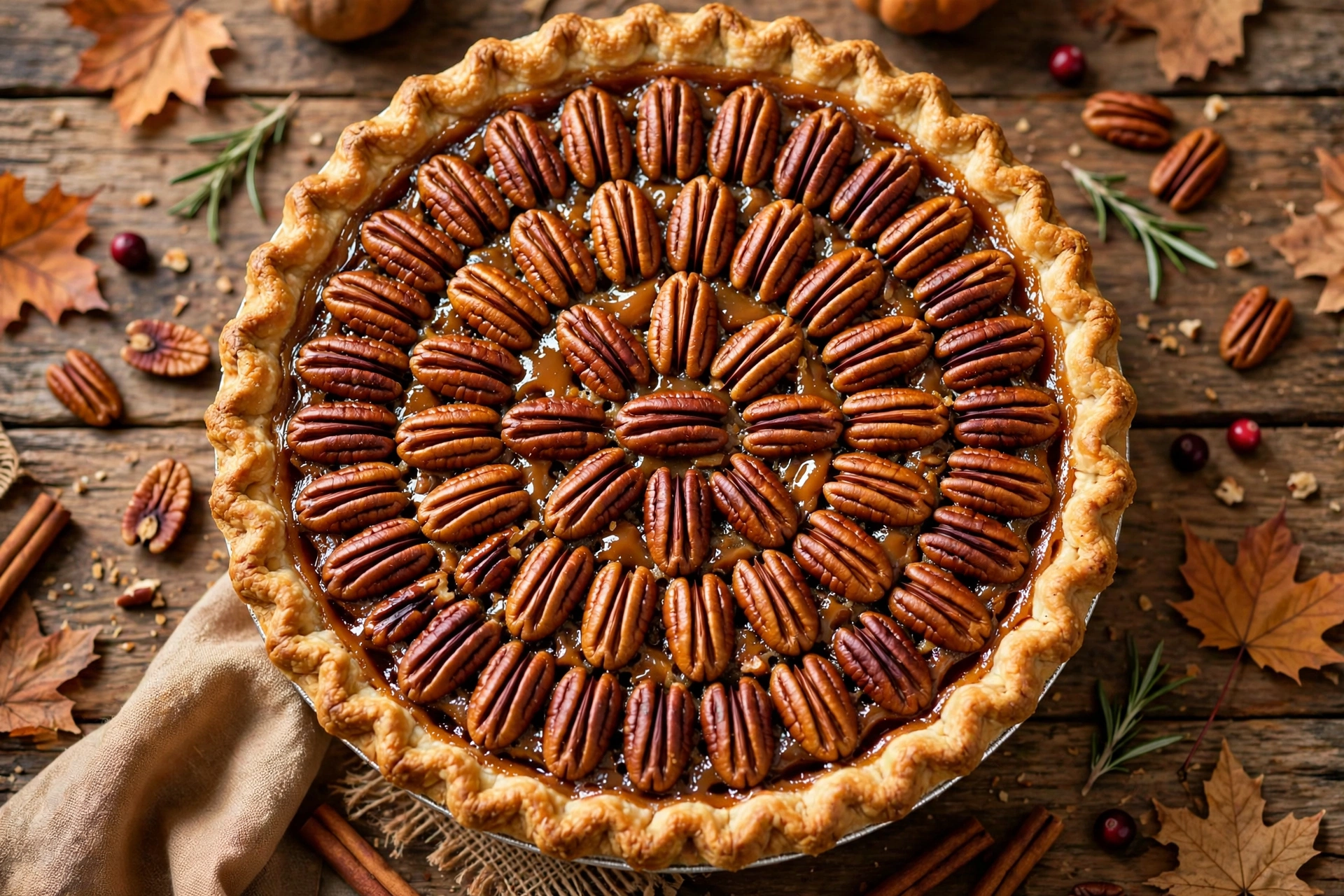
Bake it while the turkey rests, watch the corner pieces vanish first, and save room for classic pecan pie afterward. Some recipes become traditions because they simply work, and this is one of them. Make a double batch, because the leftovers never survive the weekend.
FAQ
Do I really need to dry the bread first, or can I use fresh bread for old-fashioned bread stuffing?
Drying is the single most important step. Fresh, soft bread collapses into a gummy paste when it meets broth, while dried cubes hold their shape and absorb flavor evenly. If your loaf is fresh, cube it and bake at 300 F for 25 to 30 minutes, or simply leave the cubes out on sheet pans overnight.
How do I know if I added enough broth? My stuffing always comes out dry or soggy.
Start with 2 1/2 cups of warm broth and use the squeeze test: press a small handful gently, and it should hold together without dripping liquid. Add more broth a quarter cup at a time only if the cubes still look thirsty, and toss in extra dried bread if you see broth pooling in the bottom of the bowl.
Why does this recipe use eggs? Can I leave them out?
The two beaten eggs act as a gentle binder, turning the center soft and custardy and helping each serving hold together when scooped. You can leave them out for an egg-free version, but the stuffing will be looser and more crumbly, so handle it gently and serve it with a spoon rather than expecting clean slices.
Can I stuff this inside the turkey instead of baking it in a dish?
You can, but bake it separately for the best and safest result. Stuffing cooked inside the bird must reach 165 F at its center to be safe, which often means overcooking the turkey itself. Baked in its own dish, the stuffing gets the crisp golden top that makes this recipe special, with none of the food-safety guesswork.
My stuffing top came out pale and soft instead of golden and crisp. What went wrong?
The top was likely covered too long or the oven was not hot enough. Bake covered for the first 30 minutes so the center steams, then uncover for a full 15 to 20 minutes at 375 F with cold butter dotted on top. Make sure the cubes sit in a loose layer, since crowded, packed stuffing steams instead of crisping.
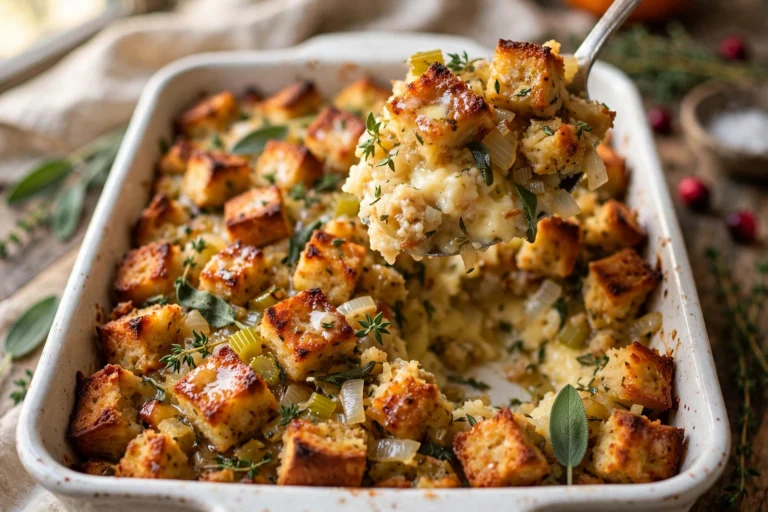
Old-Fashioned Bread Stuffing
Old-fashioned bread stuffing with buttery toasted bread cubes, sage, thyme, and sweet sauteed onion and celery. Baked until the top is golden and crisp while the center stays soft and custardy.
- Total Time: 1 hour 5 minutes
- Yield: 10 servings 1x
Ingredients
- 1 lb (about 16 cups) day-old white or French bread, cut into 3/4-inch cubes
- 3/4 cup (1 1/2 sticks) unsalted butter, divided
- 2 cups diced yellow onion (about 2 medium onions)
- 1 1/2 cups diced celery (about 4 stalks)
- 2 garlic cloves, minced
- 2 tablespoons chopped fresh sage (or 2 teaspoons dried)
- 1 tablespoon chopped fresh thyme (or 1 teaspoon dried)
- 1 tablespoon chopped fresh flat-leaf parsley
- 1 teaspoon poultry seasoning
- 1 1/2 teaspoons kosher salt, plus more to taste
- 1/2 teaspoon freshly ground black pepper
- 2 large eggs, lightly beaten
- 2 1/2 to 3 cups warm low-sodium turkey or chicken broth
Instructions
- If your bread is fresh, spread the cubes on two rimmed baking sheets and dry them in a 300 F oven for 25 to 30 minutes, until firm and lightly toasted. Let cool completely.
- Preheat the oven to 375 F. Generously butter a 9×13 inch baking dish.
- Melt 1/2 cup of the butter in a large skillet over medium heat. Add the onion and celery with a pinch of salt and cook, stirring often, for 10 to 12 minutes until soft and sweet. Stir in the garlic, sage, and thyme and cook 1 minute more, until fragrant.
- Place the dried bread cubes in your largest mixing bowl. Sprinkle over the poultry seasoning, salt, pepper, and parsley, and toss to distribute evenly.
- Pour the hot onion and celery mixture over the bread and toss gently so every cube picks up some butter.
- Whisk the beaten eggs with 2 1/2 cups of the warm broth, then pour over the bread. Toss gently until evenly moistened. Let rest 5 minutes; if the bread looks dry, add more broth 1/4 cup at a time.
- Transfer the mixture to the prepared baking dish, spreading it into an even layer without packing it down. Cut the remaining 1/4 cup of butter into small pieces and dot over the top.
- Cover tightly with aluminum foil and bake 30 minutes. Uncover and bake 15 to 20 minutes more, until the top is deep golden and crisp.
- Rest 10 minutes before serving so it sets and slices cleanly. Serve warm with gravy.
- Prep Time: 20 minutes
- Cook Time: 45 minutes