
In this article:
- The day by day plan
- What you need for the pilaf
- Cooking wild rice so grains stay separate
- Searing mushrooms that stay meaty
- Assembling without turning it gummy
- Reheating so it tastes freshly made
- Wild rice, thyme and orange flavor logic
- Leftovers and freezing a second batch
- Where this pilaf sits on the table
- Ready before the turkey
- Questions about this pilaf
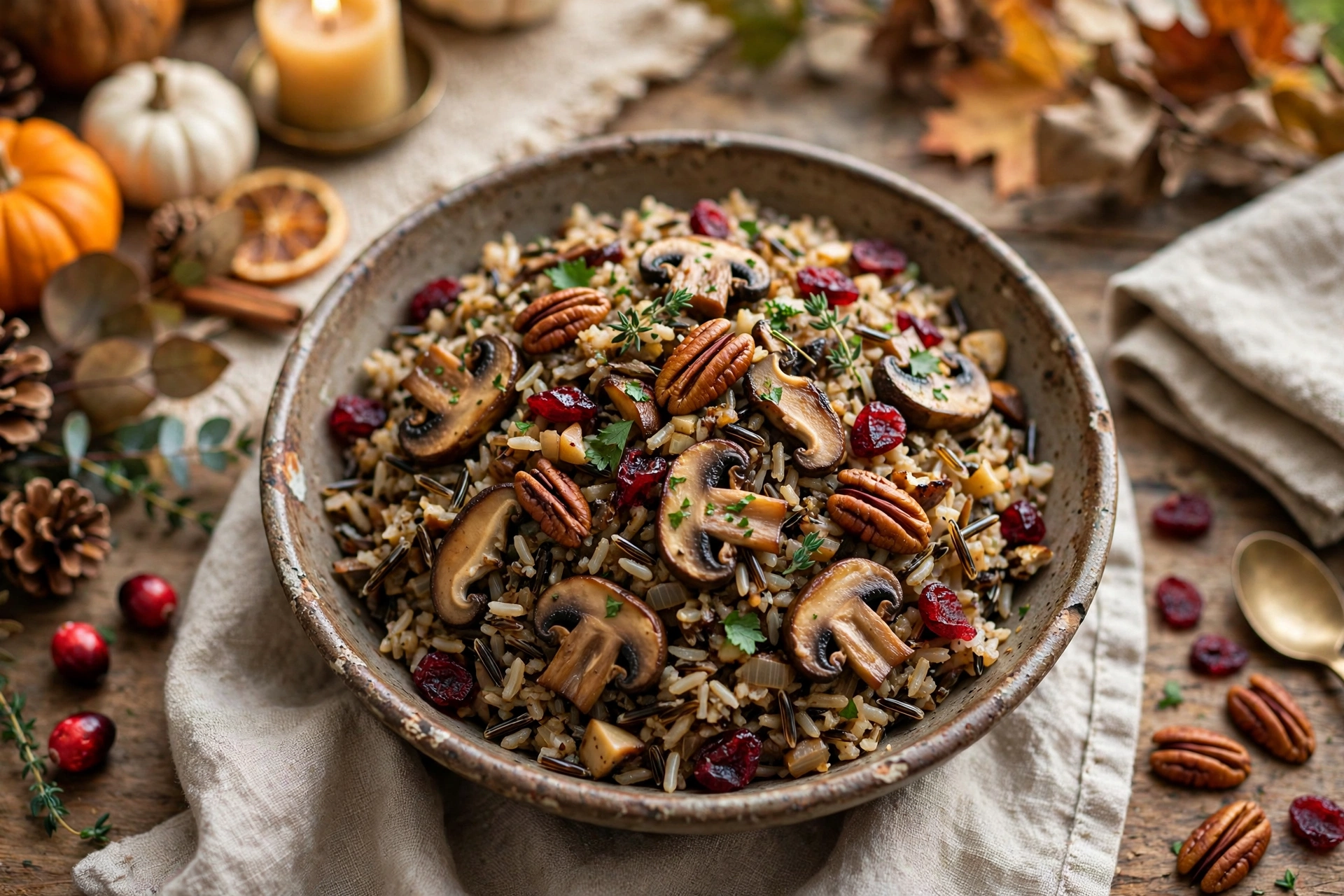
This make-ahead wild rice pilaf is the Thanksgiving side I finish before the turkey even goes into the oven, and it has saved more holiday dinners than any other dish on my table. Wild rice brings a nutty chew, brown rice rounds it out, and mushrooms, pecans and cranberries layer in the flavors everyone expects in November. It reheats like it was made an hour ago. That is the whole promise of this recipe, and the plan below keeps it true.
Most pilafs fail on Thanksgiving for one simple reason: they are cooked once, cooled badly and reheated without a plan. The grains split, the mushrooms weep and the pecans go soft. This version treats each component on its own schedule, then brings them together at the last moment, still warm and distinct.
{image_1}The Day by Day Plan That Makes This Pilaf a Calm Host Move
A structured make-ahead wild rice pilaf starts three days out, not the night before in a panic. On day minus three, shop and toast the pecans, then store them in a sealed jar at room temperature. On day minus two, cook both rices separately, cool them fast on sheet pans and refrigerate them in shallow containers.
On day minus one, sear the mushrooms, cook the shallots and celery, and refrigerate that mixture on its own. Keep the cranberries, herbs, orange zest and toasted pecans completely separate. Nothing soft touches anything crisp until serving day, which is the single rule that protects the final texture.
On Thanksgiving itself, your only jobs are reheating the rice with a measured splash of stock, folding in the warm mushroom mixture, and finishing with pecans and herbs. Twenty five minutes, one pot, no stove traffic. While the pilaf warms, the oven stays free for the turkey resting period and the last casserole.
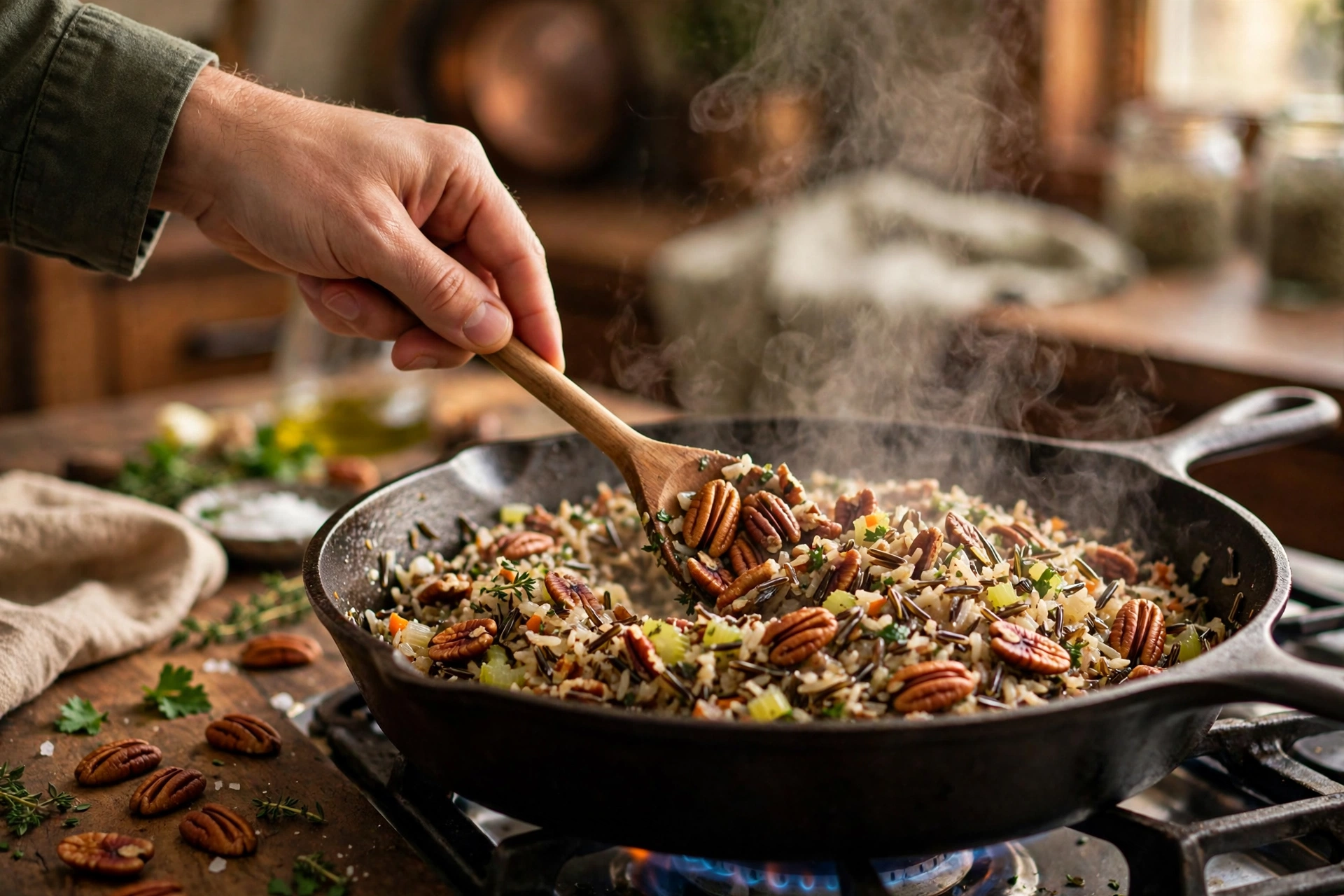
What You Need: Two Rices, Mushrooms, Pecans and Cranberries
True wild rice is the backbone here, and it needs a partner. On its own it can read austere and grassy for guests who expect comfort. Blending it with long grain brown rice softens the chew, stretches an expensive ingredient and gives the pilaf the body of a proper holiday side.
- 1 cup wild rice, rinsed well
- 1 cup long grain brown rice, rinsed
- 4 1/2 cups low sodium vegetable stock, divided, plus more for reheating
- 2 tablespoons olive oil
- 3 tablespoons butter, divided
- 1 pound cremini mushrooms, sliced thick
- 2 large shallots, finely diced
- 2 celery stalks, finely diced
- 3 garlic cloves, minced
- 1 teaspoon fresh thyme leaves, plus more to serve
- 1/2 teaspoon fine salt, plus more to taste
- 1/2 teaspoon black pepper
- 3/4 cup dried cranberries
- 1 cup pecan halves, toasted
- 1 teaspoon orange zest
- 2 tablespoons fresh parsley, chopped
- 2 green onions, thinly sliced
Buy wild rice that lists a cook time near 45 minutes, not the quick cooking kind, which splits and turns starchy in a pilaf meant to hold. Thick sliced mushrooms matter too: thin slices vanish into the rice, while thick ones stay meaty enough to notice in every forkful.
Cooking Wild Rice So Every Grain Stays Separate and Tender
- Simmer the wild rice in 3 cups of stock, covered, for 40 to 45 minutes, until the grains curl and split slightly with a tender chew. Drain any excess liquid well and spread the rice on a sheet pan to cool fast.
- Simmer the brown rice separately in the remaining 1 1/2 cups of stock, covered, for 35 to 40 minutes. Rest it off the heat for 10 minutes, then spread it on a second sheet pan and fluff with a fork.
- Refrigerate both rices once they stop steaming, in shallow covered containers. Cooling them spread out, rather than packed hot into a deep tub, is what keeps the grains separate instead of clumped and gummy.
- Heat the olive oil and 1 tablespoon of butter in a wide skillet over medium high heat. Sear the mushrooms in two batches without crowding, leaving them undisturbed for 3 minutes per side, until deeply browned. Season lightly and set aside.
- In the same skillet, melt the remaining butter and soften the shallots and celery for 5 minutes. Add the garlic and thyme for the final minute, then fold this mixture in with the mushrooms and refrigerate separately.
- On serving day, combine both rices in a large pot with 1/2 cup of stock. Cover and warm over low heat for 15 to 18 minutes, stirring twice, until steaming hot throughout.
- Fold in the mushroom mixture and cranberries for the final 5 minutes of warming, so they heat through without leaking moisture into the rice.
- Off the heat, rest the pilaf covered for 5 minutes. Fold in the orange zest, parsley and green onions, then shower the toasted pecans over the top and serve immediately.
Searing the Mushrooms Dry Enough to Stay Meaty
Soggy mushrooms are the most common complaint about pilaf, and they are almost never the mushroom’s fault. They come from crowding the pan, salting too early and stirring constantly, three habits that pull water out faster than heat can evaporate it. A wide pan, two batches and patience fix all three.
Lay the slices in a single layer and leave them alone for a full three minutes. The first side should come up deeply browned, almost crisp at the edges. That browning is flavor the rice will borrow later, and it is also insurance: a well seared mushroom reheats firmly, while a steamed one collapses into the grains.
Salt goes on at the end of searing, never at the start. If your mushrooms still release liquid in the pan, raise the heat slightly and let it cook off before removing them. Any liquid left behind becomes steam in the storage container, and steam is exactly what softens everything it touches overnight.
Assembling the Pilaf Without Turning It Gummy
Order is protection in this dish. Rice first, warmed with its measured stock until the grains loosen and shine. Mushrooms and cranberries second, folded in gently with a wide spoon rather than stirred hard. Herbs, zest and pecans last, after the pot leaves the heat, so nothing wilts or softens before the first serving.
Resist the urge to assemble everything the night before to save ten minutes. A fully mixed pilaf sitting overnight lets the cranberries bleed color into pale grains and lets the rice absorb mushroom moisture until the texture turns uniform and dull. The components keep beautifully on their own. Together, the clock starts ticking.
If you must hold the finished pilaf before serving, keep it covered in a low oven at 200°F for up to 45 minutes, with the pecans still held back. Stir once halfway and add a spoonful of stock if the surface looks dry. Add the pecans only when the dish moves to the table.
Reheating the Pilaf So It Tastes Freshly Made
The reheating step decides whether a make-ahead wild rice pilaf tastes planned or merely stored, so treat it as cooking, not warming leftovers. Low heat, a tight lid and exactly half a cup of stock for this quantity restore the steam the cold rice lost in the refrigerator. Rush it over high heat and the bottom scorches while the top stays cold.
Check the grains at the 12 minute mark. They should taste tender with a gentle chew, not chalky at the core. If they read dry, add stock two tablespoons at a time and give the pot five more covered minutes. If they read wet, crack the lid for the final minutes and let the excess steam escape before folding anything in.
For food safety at a long holiday table, serve the pilaf steaming and do not let the finished dish sit out beyond two hours. The USDA guide to Thanksgiving leftovers advises reheating leftovers to 165°F and refrigerating them promptly, advice worth following when the same pot may be warmed again the next day.
Wild Rice, Thyme and Orange: The Flavor Logic of This Pilaf
Wild rice tastes of the lake and the forest floor, earthy and faintly smoky, and it asks for both richness and brightness around it. Butter and browned mushrooms supply the richness. Cranberries bring a tart chew that cuts through turkey gravy, and orange zest lifts the whole dish without announcing itself.
Thyme is the right herb here because it survives reheating. Delicate herbs fade after a night in the refrigerator, but thyme deepens, and fresh parsley added at the end restores the green note. Green onions do similar work, staying sharp because they never see the storage container.
The pecans are not garnish, they are structure. Every other element in the bowl is soft or chewy, so the crisp nut is the contrast that keeps each bite interesting. Toast them until fragrant and slightly darkened, because pale pecans taste raw against cooked rice no matter when you add them.
Keeping Leftovers Safe, and Freezing a Second Batch
Stored separately as directed, the components of this make-ahead wild rice pilaf keep for four days in the refrigerator, and the finished dish keeps for three. Cool everything in shallow containers within two hours of cooking, and label the mushroom mixture so it is not mistaken for a finished side on a busy morning.
Freeze the cooked rices on their own for up to two months, portioned flat in bags so they thaw overnight in the refrigerator without clumping. Mushrooms freeze less gracefully and turn spongy, so cook those fresh for a frozen batch. Pecans, of course, simply wait in the pantry until serving day, which is one more reason they go on last.
To reheat leftovers the day after Thanksgiving, use the same low and covered method with a fresh splash of stock, and bring the pilaf back to steaming hot throughout. A handful of fresh parsley and a few reserved pecans on top make day two leftovers look intentional rather than reheated, which at a holiday table is half the battle.
Where This Pilaf Sits on the Thanksgiving Table
This pilaf belongs in the center of the side dish lineup, where its dark grains make the paler dishes around it look better. I plan it as part of the full spread in my Thanksgiving dinner menu of 6 easy recipes, because it is the one side that asks for nothing on the day itself.
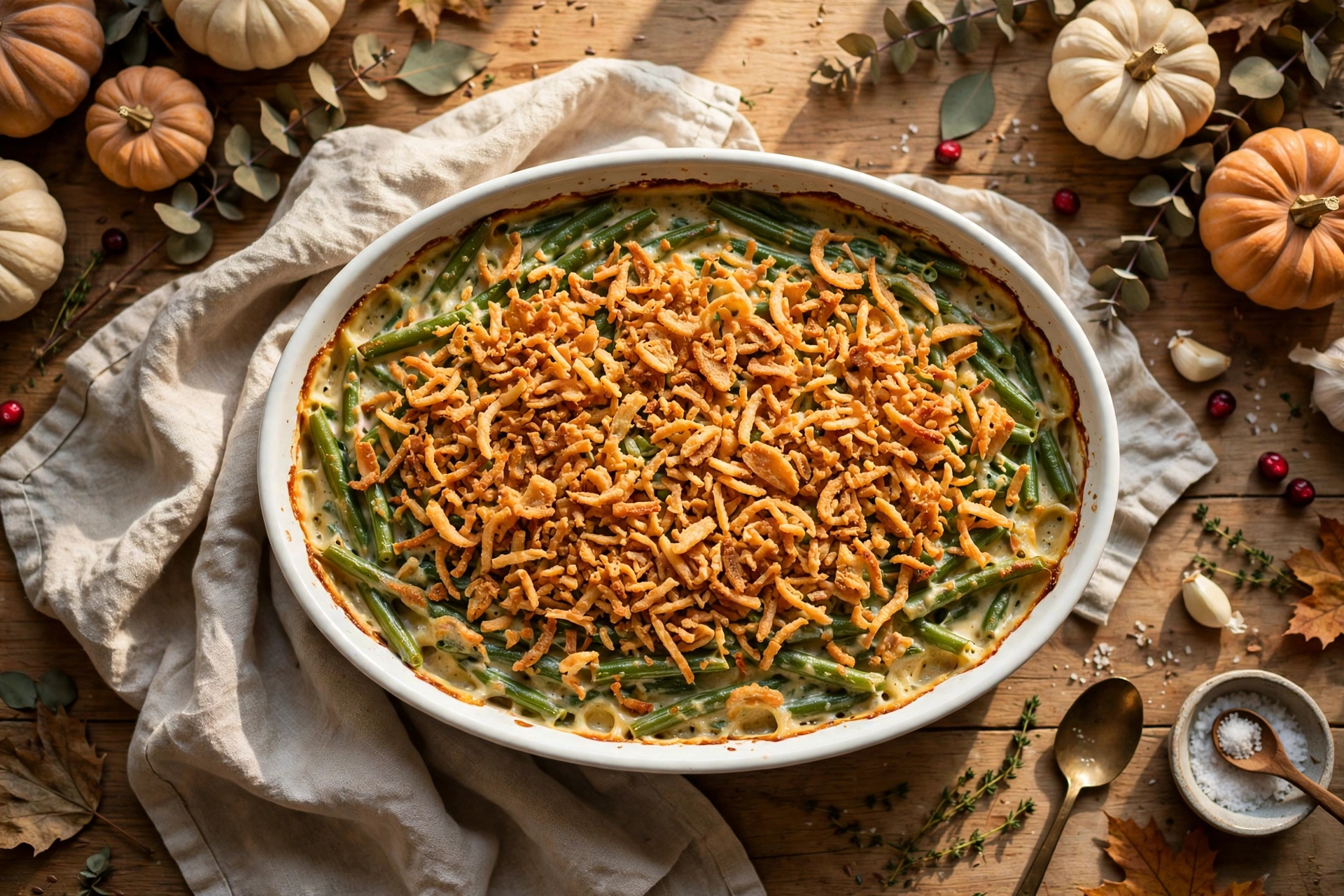
Next to it, make-ahead mashed potatoes handle the comfort note, while a classic green bean casserole brings the creamy crunch most families expect. The pilaf’s job is contrast: chewy, nutty and bright against all that softness, and it does that job without a single minute of oven time.
For color, maple balsamic roasted Brussels sprouts echo the pilaf’s sweet and tart balance in vegetable form. And if your table skips a whole bird, the pilaf pairs beautifully with a cranberry orange glazed turkey breast, since the orange zest in the rice quietly mirrors the glaze. Serve the pilaf in a wide, shallow bowl rather than a deep one. A wide bowl keeps the pecans visible on top and stops the bottom layer from steaming itself soft while it waits for everyone to sit down.
One Quiet Side Dish, Ready Before the Turkey
This make-ahead wild rice pilaf is my answer to the loudest hour of Thanksgiving, the one where every burner is spoken for and the turkey needs attention. Cook the parts early, reheat with care, and add the crisp things at the very end. The result tastes deliberate and freshly made, calm rather than rushed. Set it on the table, and let the quietest dish be the one everyone asks about.
Questions About This Make-Ahead Wild Rice Pilaf
Why did my wild rice stay hard after 45 minutes of simmering?
Wild rice varies by harvest and age, and older grains can need 10 to 15 extra minutes plus a splash more stock. Keep it covered and test for a tender chew with slight curling. Drain it as soon as it is tender, since sitting in hot liquid keeps cooking it toward mush.
Can I cook both rices together in one pot to save time?
It is tempting, but their timings differ enough that one usually splits while the other stays chalky. Cooking them separately and combining them cold is the step that protects the pilaf texture through reheating. The extra pot is worth it for a dish built days ahead.
My reheated pilaf came out dry. What went wrong?
The rice likely reheated uncovered or with too little stock, so the steam escaped instead of rehydrating the grains. Use half a cup of stock for this quantity, cover tightly, and warm over low heat. Add stock two tablespoons at a time if the grains still taste firm at 12 minutes.
When exactly should the pecans go on if I am transporting this dish?
Carry the toasted pecans in a separate small container and add them at the destination, right before serving. Even 30 minutes sitting on warm rice softens their edges. This single habit keeps the crunch that makes the dish memorable.
Can I swap the brown rice for white rice in this pilaf?
You can, but white rice turns softer after refrigeration and reheating, so the pilaf loses its sturdy chew. If you use it, cook it slightly firm, cool it spread out on a pan, and shorten the reheating time by about 5 minutes.