
In this article:
- Baked once, baked twice, gone by Friday
- Fluffy centers, crisp edges, one long cheddar pull
- The cold potato trick behind clean cubes
- What goes into the dish
- Bake, chill, cube, fold
- The crunch on top, no bacon required
- Wednesday potatoes, Thursday casserole
- Half batch, full batch, twenty at the table
- Lighter twists and dairy swaps
- Twice baked potato casserole questions, answered
Twice baked potato casserole takes everything people line up for in a loaded baked potato, the fluffy flesh, the sharp cheddar, the tang of sour cream, and spreads it into one dish that feeds the whole Thanksgiving table at once.
There are no skins to stuff, no dozen little boats to fill one by one while the turkey rests. One pan goes into the oven, one pan comes out bubbling, and the cook actually sits down with everybody else.
The casserole also solves the holiday’s quiet scheduling problem. The potatoes can be baked the day before, while the oven is already on for pies, then chilled overnight, which turns out to be the secret to clean cubes and a Thursday assembly that takes fifteen quiet minutes.
Baked Once, Baked Twice, Gone by Friday
Twice baked potato casserole works because it respects the potato twice over. Baking whole russets first concentrates their flavor and dries their flesh, so the mash that follows tastes like potato rather than paste.
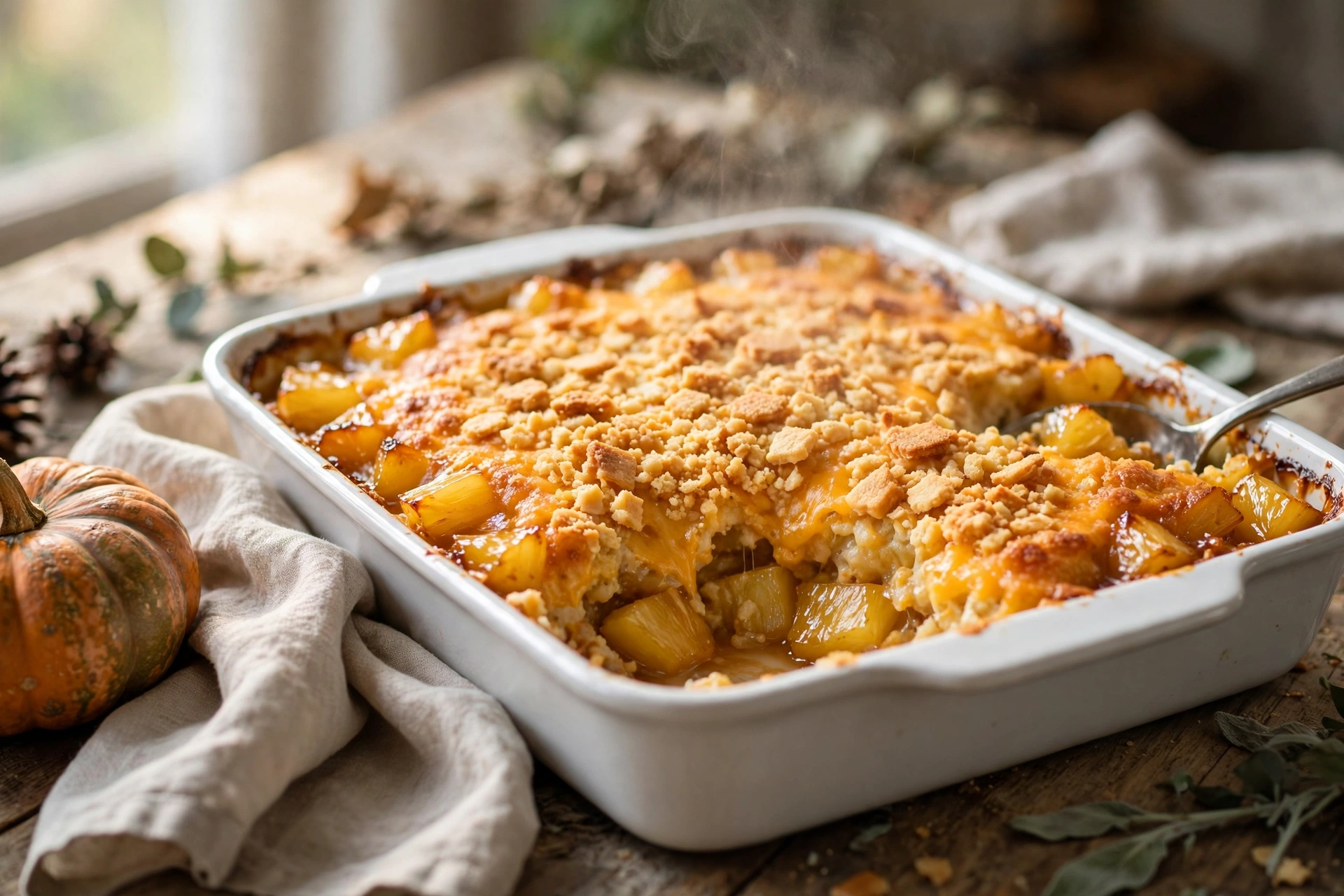
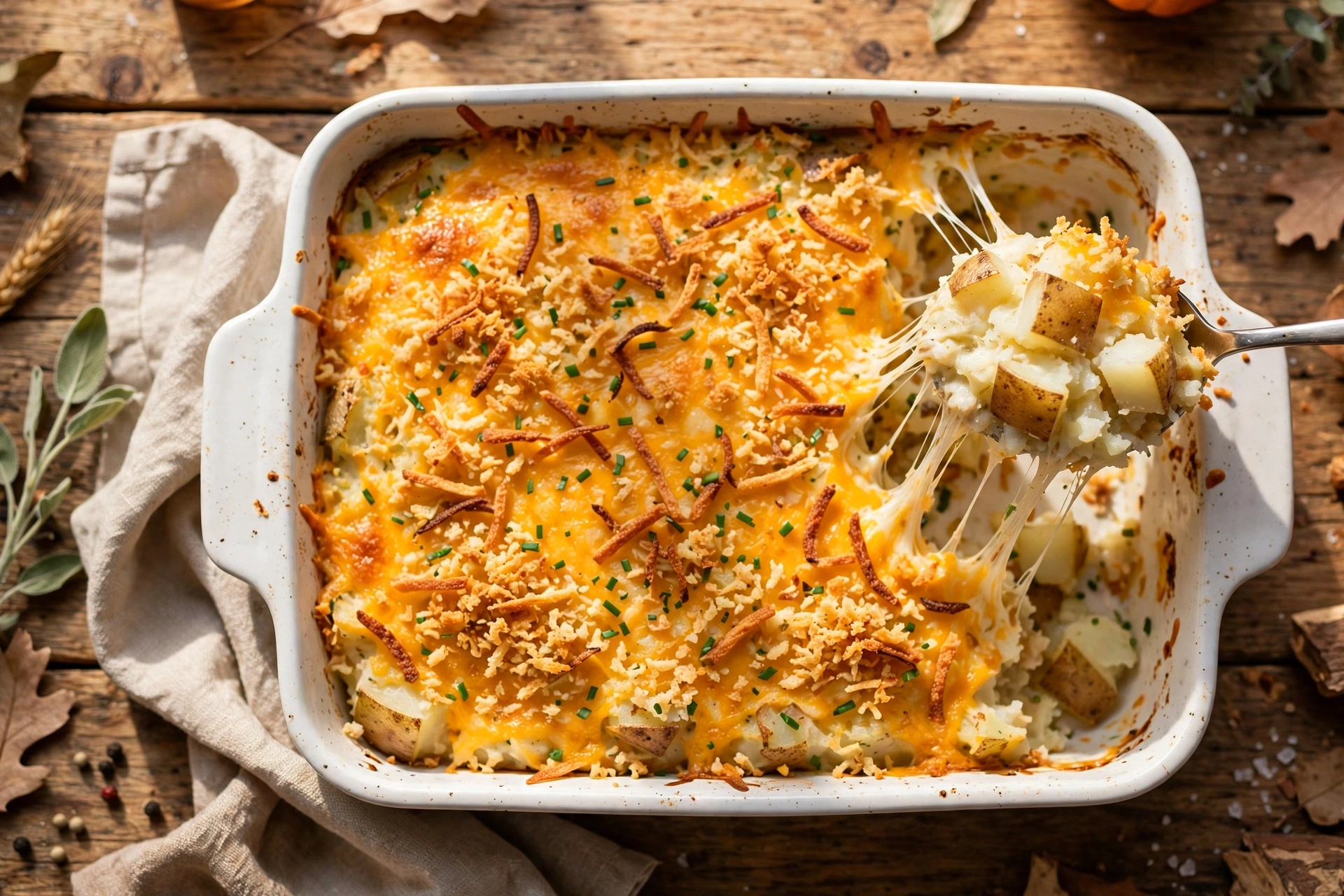
The second bake is where the dish becomes a casserole instead of a side of mashed potatoes. The top sets, the cheddar melts into every seam, and the edges against the dish turn golden and faintly crisp.
Half the potatoes are mashed into the dairy base and half are folded in as cubes, and that split is the whole design. Every spoonful carries both textures: cloud soft base, distinct pieces that still feel like a baked potato.
The format itself is an act of mercy toward the cook. Stuffing individual potato skins means splitting, scooping and refilling a dozen shells while everything else competes for the oven. The casserole keeps the same flavors and removes the fiddliest hour of the job.
It also travels well, which matters at Thanksgiving. The dish holds its heat under a towel for the trip across town, reheats without drying out, and returns home empty often enough that cooks learn to make it in the good pan they do not mind leaving behind.
Fluffy Centers, Crisp Edges, One Long Cheddar Pull
The first bite is steam and softness, potato folded with sour cream and cream cheese until it eats like the inside of the best baked potato you have had, only warmer and richer.
Then the cubes make their case. Skin on, edges intact, they hold a gentle chew against the mash, and a bite that catches one tastes more like a roasted potato than a casserole at all.
Sharp cheddar is doing quiet structural work here. It seasons as much as it enriches, and when the dish is cut hot, it pulls in long strands between the serving spoon and the pan.
On top, the contrast the whole dish needs: buttered panko and crispy shallots, toasted in the last ten minutes so they stay shattering. That crunch is the role bacon usually plays, handled here with a pantry staple and a garnish.
Garlic powder, rather than fresh garlic, is a deliberate choice in the base. It disperses evenly through a dense mash where minced garlic would land in pockets, and it never scorches during the long first bake of the potatoes themselves.
Serve it very hot, straight from its ten minute rest. Potato dishes wait for no one, and this one is at its best while the cheese is still glossy and the top still crackles when the spoon goes in.
The Cold Potato Trick Behind Clean Cubes
Warm baked potatoes crumble. That is the plain fact every version of this casserole works around, usually by mashing everything and giving up on texture altogether.
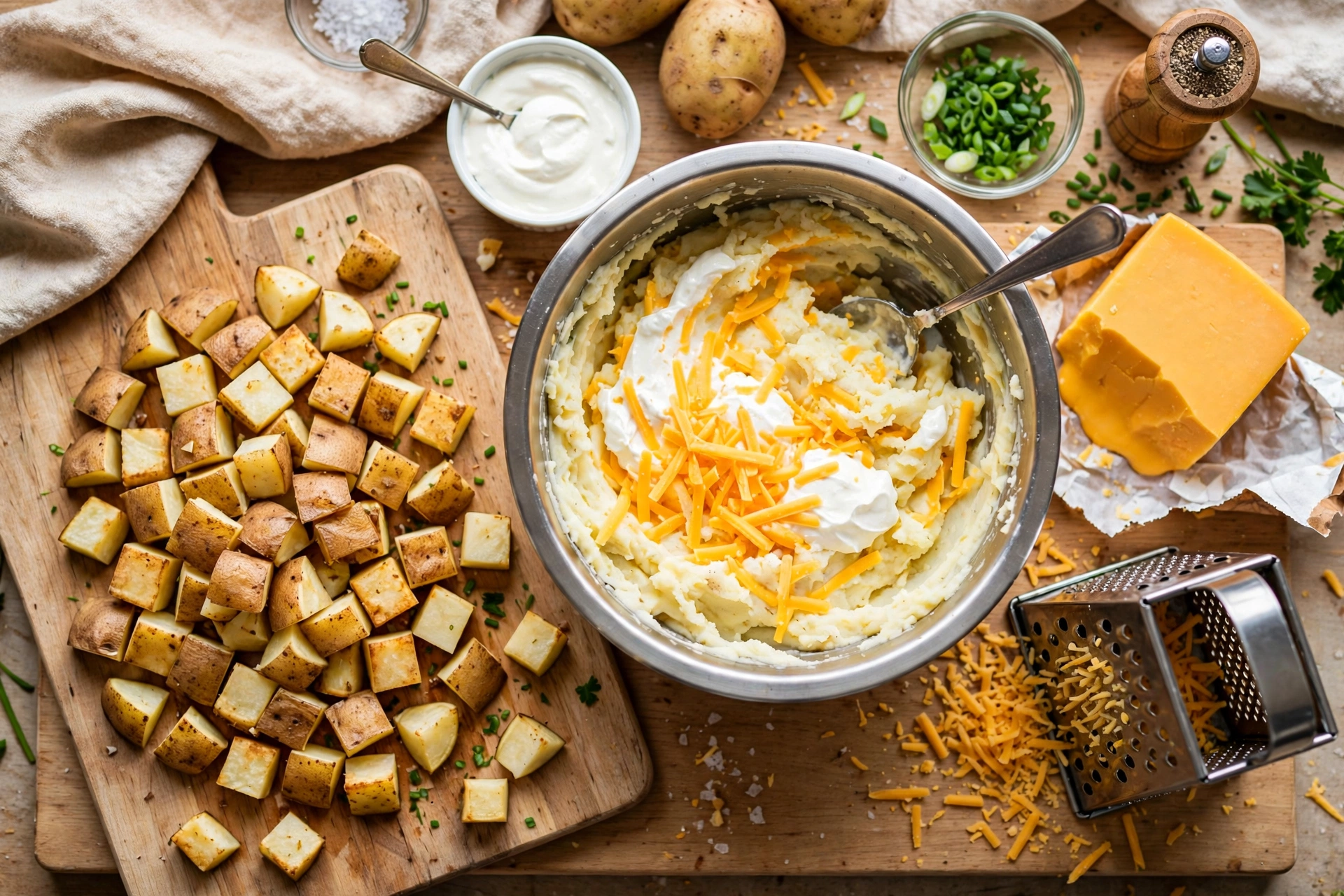
A baked potato that has been refrigerated behaves completely differently. The starch firms as it chills, so a cold russet slices into neat three quarter inch cubes that keep their corners through folding, baking and serving.
Two hours of chilling is enough to feel the difference, and overnight is better still. This is why the recipe is written the way it is: the Wednesday bake is not just scheduling, it is the technique.
If you are making the casserole in a single day, bake the potatoes in the morning and chill them while the rest of the menu takes shape. The cubes will still cut cleaner than any warm potato ever will.
Keep the skins on the cubed half. Russet skin turns faintly chewy in the bake, adds the roasted flavor people associate with a steakhouse potato, and saves the peeling step entirely.
What Goes Into the Dish
Russets are nonnegotiable here; waxy potatoes mash gluey and their cubes go slippery in the sauce. Everything else is a supermarket staple, and the one shopping note that matters is the cheese: shred it yourself, because pre-shredded cheddar is coated with starch that melts grainy. Dairy fat figures for the base are easy to check against USDA FoodData Central.
- 4 pounds russet potatoes (about 8 medium)
- 1 tablespoon olive oil
- 1 teaspoon fine salt, plus more for the base
- 6 tablespoons unsalted butter, melted, plus 1 tablespoon for the topping
- 1 cup sour cream
- 4 ounces cream cheese, softened
- 1/2 cup whole milk, warmed
- 2 cups freshly shredded sharp cheddar cheese, divided
- 1 teaspoon garlic powder
- 1/2 teaspoon black pepper
- 3/4 cup panko breadcrumbs
- 1/2 cup crispy fried shallots
- 1/4 cup snipped fresh chives or sliced green onions
The fried shallots come from a store bought tub, the same garnish sold for green bean casserole, and they are worth seeking out. Panko alone gives crunch; panko with shallots gives crunch and a sweet, toasty onion depth.
Bake, Chill, Cube, Fold
- Heat the oven to 400 degrees F. Scrub the potatoes, dry them well, prick each one several times with a fork and rub with the olive oil and a pinch of salt.
- Bake directly on the oven rack for 55 to 60 minutes, until a knife slides in with no resistance. Cool until you can handle them. For the cleanest cubes, refrigerate the baked potatoes at least 2 hours or overnight.
- Cut half the potatoes into 3/4 inch cubes, skin on, and set aside. Scoop the flesh of the remaining potatoes into a large bowl, leaving the skins behind.
- Add the melted butter, sour cream, cream cheese, warm milk, garlic powder, 1 teaspoon salt and the pepper to the scooped potato flesh. Mash until mostly smooth, with a few small lumps.
- Fold in 1 1/2 cups of the cheddar, then fold in the potato cubes gently so they keep their shape.
- Scrape into a greased 9 by 13 inch baking dish and smooth the top. At this point the casserole can be covered and refrigerated up to 24 hours.
- Heat the oven to 350 degrees F. Scatter the remaining 1/2 cup cheddar over the top, cover the dish loosely with foil and bake 25 minutes, or 35 minutes if baking straight from the refrigerator.
- Meanwhile, toss the panko with the remaining 1 tablespoon melted butter. Uncover the casserole, scatter the panko and the crispy shallots over the top and bake 10 minutes more, until the cheese bubbles at the edges and the top is deep gold.
- Rest 10 minutes. Shower with the chives and serve hot.
The Crunch on Top, No Bacon Required
Every recipe on the first page of search results finishes this casserole with bacon, and bacon does bring salt and crunch. It is not the only way to get there, and for plenty of tables it cannot be the way at all.
Buttered panko supplies the crunch in a more even layer, and it toasts in the same ten minutes the casserole needs uncovered. It never goes leathery the way reheated bacon bits can on day two.
The crispy shallots supply what panko cannot: depth. They carry the sweet, caramelized note that makes a bite taste finished, the same reason they have crowned green bean casserole for seventy years.
Add both toppings after the foil comes off, never before. Ten minutes of direct heat is all they need, and the chives go on after the rest, raw and bright against the gold.
Wednesday Potatoes, Thursday Casserole
The schedule is the recipe’s second gift. Wednesday, whenever the oven is free, the potatoes bake for an hour and go into the refrigerator whole, still in their skins. Active work: five minutes.
Thursday, the cold potatoes cube in minutes, the base mashes in one bowl, and the dish assembles faster than the turkey comes up to temperature. It joins the other make ahead dishes on the Wednesday shelf, next to the ambrosia salad and the make-ahead mashed potatoes some families serve alongside.
Baking from cold costs ten extra minutes under the foil, already written into the steps. What it must not do is sit at room temperature for hours; cold dishes belong at 40 degrees or below until they bake, the standard FoodSafety.gov guidance.
Leftovers keep four days, covered, in the refrigerator, and reheat in a 325 degree oven until the center is hot, about 20 minutes. A splash of milk worked in before reheating brings the base back to its first day softness.
The assembled, unbaked casserole also freezes for up to a month. Thaw it overnight in the refrigerator and bake as directed; add the panko and shallots fresh, since toppings frozen in place thaw soggy.
Half Batch, Full Batch, Twenty at the Table
As written, the recipe fills a 9 by 13 inch dish and serves ten as a side, at about a cup a person. Potato casseroles shrink at the table, so that estimate assumes a full Thanksgiving spread beside it, the kind laid out in our Thanksgiving dinner menu.
For a small gathering, halve everything and bake in an 8 by 8 inch dish. The covered time stays 25 minutes; the uncovered finish may take a minute or two less, so watch the color rather than the clock.
For twenty, double the recipe and split it between two 9 by 13 dishes rather than one deep one. A doubled batch in a single roasting pan heats unevenly, with scorched edges and a cool center.
If potatoes are the main event rather than a side, count a cup and a half per person. The same math guides its closest cousins on the table, the make-ahead funeral potatoes and the scalloped potatoes.
One more planning note for a crowded oven: this dish is flexible about temperature. It bakes happily at 325 degrees alongside a slow roasting bird, needing about ten extra minutes covered, which saves the usual Thanksgiving negotiation over oven space.
To hold the baked casserole for a buffet, keep it in a 200 degree oven, uncovered, for up to 45 minutes. A lid traps steam and softens the top you worked for; a low oven does not.
Lighter Twists and Dairy Swaps
Greek yogurt can replace up to half the sour cream without changing the method. The base stays tangy and rich, the texture barely moves, and the casserole reads a little fresher against a heavy plate.
For a sharper profile, swap half the cheddar for shredded Gruyere. It melts silkier and brings a nutty note that pairs well with the shallots, though the classic cheddar pull softens a little.
A loaded vegetable version folds in a cup of steamed broccoli florets or defrosted peas with the cubes. Add them cold and dry, so they steam in the bake instead of watering the base.
Twice baked potato casserole, in the end, is a forgiving dish. Bake the potatoes a day early, keep the cubes cold and the cheese freshly shredded, and Thursday takes care of itself.
Twice Baked Potato Casserole Questions, Answered
Why do the potato cubes in my casserole fall apart?
The potatoes were warm when you cut them. Warm baked russets crumble at the knife, while chilled ones slice into firm cubes. Bake the potatoes ahead and refrigerate them at least 2 hours, ideally overnight, before cubing.
Why did the cheese on top turn grainy?
Pre-shredded cheese is coated with anti-caking starch, which melts into a grainy layer. Shred a block of sharp cheddar yourself and melt it in two stages, covered first, then uncovered, and the top stays smooth and glossy.
How far ahead can I assemble twice baked potato casserole?
The potatoes can be baked 2 days ahead and kept whole in the refrigerator. The assembled casserole holds, covered, for 24 hours before baking. From the refrigerator it needs 35 minutes covered at 350 degrees, then 10 minutes uncovered with its toppings.
Can I freeze the assembled casserole unbaked?
Yes, for up to a month, tightly wrapped. Thaw overnight in the refrigerator and bake as directed. Leave the panko and shallot topping off before freezing and add it fresh at the uncovered stage, because frozen toppings thaw soggy.
Should I peel the potatoes for this casserole?
Only the mashed half gets peeled, by scooping. The cubed half keeps its skin, which turns faintly chewy in the bake, holds the cubes together and adds roasted flavor. Peeling everything gives a softer, paler casserole with less texture.