
In this article:
- Why This Broccoli Cheese Casserole Never Turns Watery
- Sharp Cheddar, Silk Sauce, and a Crumb That Crackles
- Assembled Wednesday, Baked Thursday
- Lighter Plates and Dairy Swaps That Still Melt
- Broccoli Cheese Casserole Ingredients
- How to Make Broccoli Cheese Casserole
- Small Mistakes That Ruin a Cheese Sauce
- Fresh or Frozen, Cheddar or Gruyere: the Swap Table
- Leftovers, Fridge and Freezer
- Questions Cooks Ask About Broccoli Cheese Casserole
Broccoli cheese casserole carries a reputation it does not deserve. Too many versions arrive at the table swimming: a thin sauce, broccoli gone olive and soft, and a spoonful that leaves a small puddle on the plate. The idea is sound. Tender broccoli under a sharp cheddar sauce with a crisp crumb top should be the easiest win on the Thanksgiving table. It fails, almost every time, for one quiet reason. The broccoli brings its own water to the dish, and nobody planned for it.
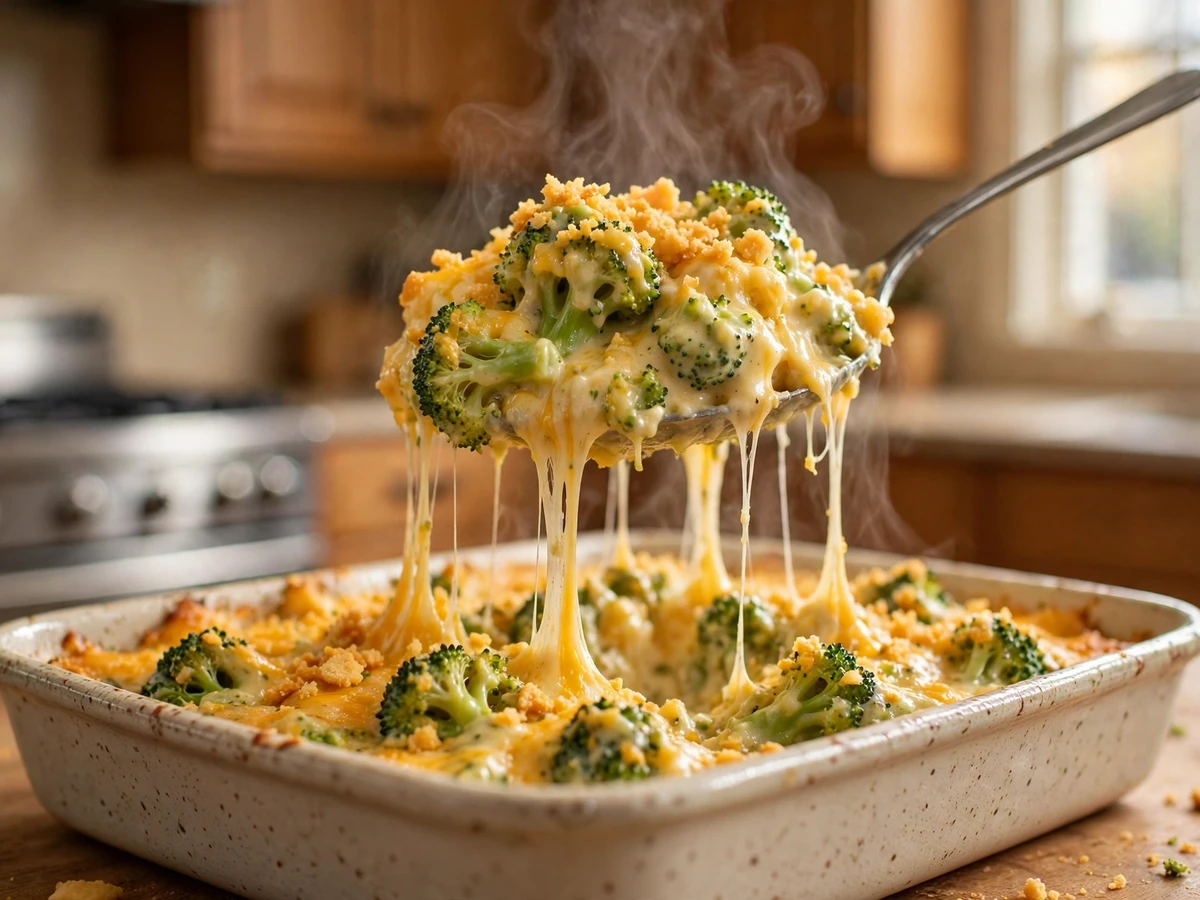
This version plans for it. The broccoli is blanched for exactly two minutes, shocked cold, and then dried on a towel like it matters, because it does. The sauce is a real sauce, built on a roux and finished with sharp cheddar and a little cream cheese, mixed a touch thicker than you think it should be. By the time the casserole bubbles, the broccoli has given up the last of its water into a sauce that was ready to receive it, and what you serve is glossy, thick, and clean on the spoon.
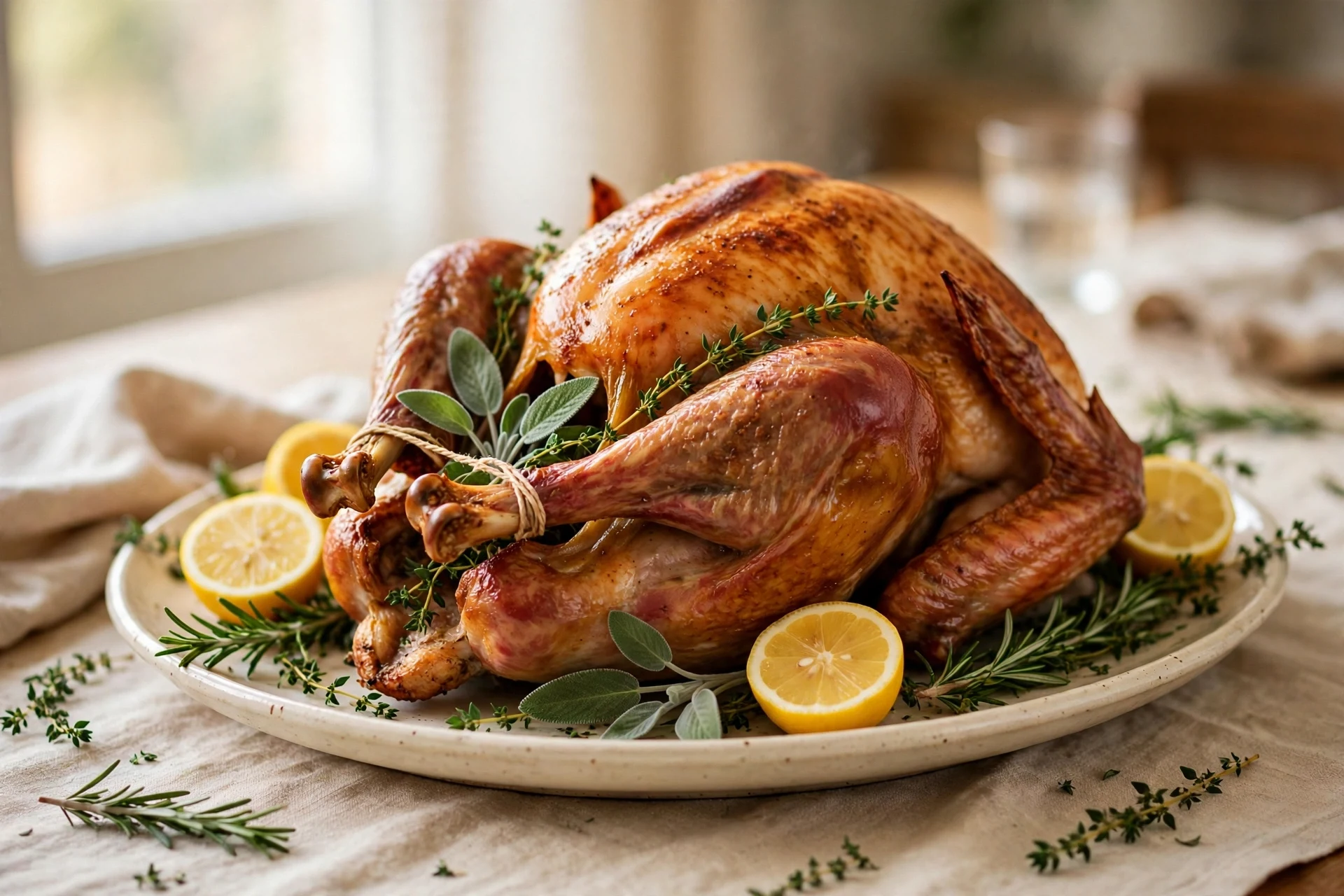
It is also built for the way Thanksgiving actually happens. The whole dish assembles two days ahead, waits in the fridge under plastic, and bakes on Thursday while the herb butter roast turkey rests. The crumb topping stays in its own container until baking day, so it comes out of the oven crackling instead of steamed soft. One pan, no canned soup, no mayonnaise, and no puddle.
Why This Broccoli Cheese Casserole Never Turns Watery
Broccoli cheese casserole goes wrong in the water, so that is where this recipe starts. A floret is a small tree with thousands of tiny branches, and it holds water in every one of them. Raw broccoli folded straight into a sauce releases that water slowly in the oven, thinning everything around it while the florets overcook. The fix is to take the water out on your own terms, before the dish is assembled.
Two minutes in boiling salted water does three jobs at once. It seasons the broccoli from the inside, sets the color to a deep green that survives the oven, and drives off the first wave of moisture. The ice bath stops the cooking at crisp tender, so the florets reach the table with some bite left. Then comes the step most recipes skip: ten minutes spread out on a clean towel. Surface water is still water, and a casserole has no way to forgive it.
The sauce is engineered to match. It starts thicker than a sauce you would pour over pasta, because it is not finished when it leaves the stove. In the oven it loosens slightly as the broccoli settles, landing exactly where a casserole sauce should be: coating the back of a spoon, holding soft peaks at the edge of the dish. The spoonful of cream cheese is insurance, not flavor. It keeps the cheddar emulsion stable through a long bake and a reheat, so the sauce stays silk instead of splitting into grease.
Sharp Cheddar, Silk Sauce, and a Crumb That Crackles
The flavor here is a triangle. Sharp cheddar brings the salt and the tang, the kind of aged bite that stands up to a green vegetable. Dijon mustard and a little smoked paprika sit underneath it, too quiet to name, doing the work of making the cheddar taste more like itself. Sweet onion, cooked slowly in the butter before the flour goes in, rounds off every sharp edge.
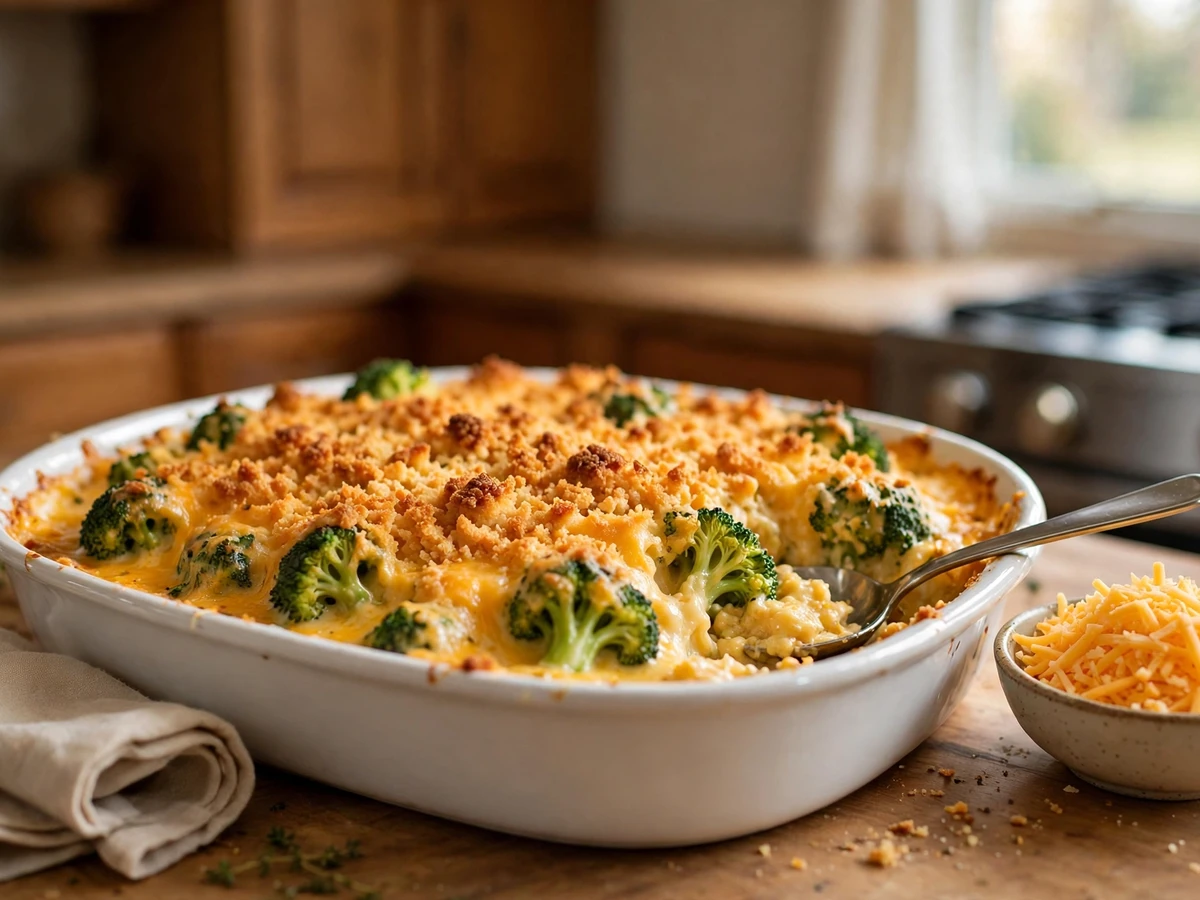
Texture matters just as much. The florets stay distinct, each one coated rather than drowned, with the sauce pooling in the branches. Against that creaminess, the topping is deliberately rough: crushed buttery crackers and panko, tossed in melted butter, baked to a deep gold that crackles when the spoon goes through. A casserole without that contrast reads as baby food. With it, people go back for the corner pieces.
Buy a block of cheddar and grate it yourself. Pre shredded cheese is dusted with anti caking starch, and that starch follows it into the sauce, where it turns the melt grainy and dull. Two minutes with a box grater is the cheapest upgrade in the whole recipe. If the cheddar is very sharp, the sauce can take it; if it is mild, add a pinch more salt and another half teaspoon of Dijon.
Assembled Wednesday, Baked Thursday
The Thanksgiving oven is a traffic jam, and this casserole is happy to stay out of it until the last hour. Assemble the broccoli and sauce in the dish on Tuesday or Wednesday, press plastic wrap directly against the surface, and refrigerate for up to two days. Mix the crumb topping and keep it in a sealed container at room temperature; crumbs that sit on a wet sauce overnight go soft, and no oven time fully brings them back.
On Thursday, the dish goes in cold, covered with foil, for twenty minutes at 375 degrees. The foil buys the center time to heat through without the top racing ahead. Then the foil comes off, the crumbs go on, and fifteen to eighteen uncovered minutes finish the job: bubbling at the edges, deep gold on top. It rests ten minutes on the counter, which is exactly the window when the turkey is being carved, and the sauce sets to its final thickness as it sits.
It shares the table well with green bean casserole; one green dish in mushroom cream, one in sharp cheddar, different enough that nobody minds both. It also tolerates being baked an hour early and held covered in a warm spot, if the oven is crowded.
Lighter Plates and Dairy Swaps That Still Melt
A lighter broccoli cheese casserole is possible without turning it into a different dish. Swap half the cheddar for a reduced fat sharp cheddar and keep the cream cheese, which protects the texture. Use 2 percent milk instead of whole and give the sauce an extra minute at a simmer; a slightly longer cook replaces the body the fat was providing. The crumb can shrink to panko alone with a teaspoon of olive oil, still crisp, less rich.
Gluten free is easy: a rice flour roux behaves almost identically, and gluten free panko keeps the top intact. Cauliflower can take half the broccoli’s place for a milder pan; our loaded cauliflower broccoli casserole leans into that combination fully.
Broccoli Cheese Casserole Ingredients
- 2 1/2 pounds fresh broccoli, cut into bite size florets (about 10 cups)
- 4 tablespoons unsalted butter
- 1 small yellow onion, finely diced
- 2 cloves garlic, minced
- 1/4 cup all-purpose flour
- 2 cups whole milk, warmed
- 4 ounces cream cheese, cut into cubes
- 1 teaspoon Dijon mustard
- 1/2 teaspoon smoked paprika
- 1 teaspoon kosher salt
- 1/2 teaspoon black pepper
- 3 cups shredded sharp cheddar cheese (about 12 ounces), divided
- 1 cup finely crushed buttery round crackers (about 24 crackers)
- 1/2 cup panko bread crumbs
- 2 tablespoons unsalted butter, melted, for the topping
Warm the milk before it meets the roux. Cold milk hitting hot butter and flour is the classic route to lumps, and whisking them out costs you the smooth base this sauce depends on. A minute in the microwave or a small pan on a back burner is all it takes.
How to Make Broccoli Cheese Casserole
- Heat the oven to 375 degrees F. Butter a 9 by 13 inch baking dish. Bring a large pot of well salted water to a boil and set a big bowl of ice water beside the stove.
- Add the broccoli and blanch for exactly 2 minutes, until bright green and just tender at the stem. Drain, move straight into the ice water for 2 minutes, then drain again.
- Spread the broccoli on a clean kitchen towel in a single layer and let it dry for 10 minutes. Pat the tops with a second towel. The florets should feel dry to the touch.
- Melt the 4 tablespoons of butter in a large saucepan over medium heat. Cook the onion for 4 to 5 minutes, until soft and sweet. Add the garlic and cook 30 seconds more.
- Whisk in the flour and cook, whisking, for 1 minute. Slowly pour in the warm milk, whisking constantly, and simmer 3 to 4 minutes, until the sauce thickly coats the back of a spoon.
- Lower the heat. Stir in the cream cheese until fully melted, then the Dijon, smoked paprika, salt and pepper. Take the pan off the heat and stir in 2 1/2 cups of the cheddar until smooth.
- Fold the dry broccoli into the sauce until every floret is coated. Tip into the prepared dish and spread level. At this point the dish can be covered and refrigerated for up to 2 days.
- Toss the cracker crumbs and panko with the melted butter. Scatter over the casserole with the remaining 1/2 cup of cheddar.
- Bake until bubbling at the edges and deep golden on top: 25 to 30 minutes uncovered if baking right away, or covered with foil for 20 minutes then uncovered for 15 to 18 minutes if baking from the fridge. Rest 10 minutes before serving.
Small Mistakes That Ruin a Cheese Sauce
Heat is the first trap. Cheddar added to a boiling sauce breaks, turning oily and grainy in seconds. The pan comes off the heat, the sauce should be steaming but still, and the cheese goes in by the handful, each one melted before the next. If a sauce does break, a splash of warm milk and hard whisking off the heat brings it back more often than not.
The second trap is a timid roux. Flour that cooks for only a few seconds leaves a raw, pasty taste under the cheese, and a sauce that never quite thickens. Give it a full minute of whisking in the butter; it should smell faintly nutty. The third trap is wet broccoli, already covered, but worth repeating: every shortcut around the drying step shows up in the finished dish as a pale, thin sauce.
Finally, salt in layers. The blanching water seasons the broccoli, the sauce carries its own salt, and the crackers bring more. Taste the sauce before the broccoli goes in; it should be very slightly too salty on its own, because the vegetables will balance it in the dish.
Fresh or Frozen, Cheddar or Gruyere: the Swap Table
Frozen broccoli works when fresh is out of reach, with adjustments. Skip the blanch entirely; thaw the florets, then press them in a towel, firmly and twice. Frozen broccoli holds more water than fresh, so dry it like you mean it, and expect a slightly softer bite in the finished dish.
Gruyere for half the cheddar moves the casserole toward a fondue mood, nutty and elegant, good beside beef. Monterey Jack melts beautifully but tastes mild; keep at least half sharp cheddar for character. Aged white cheddar is a straight upgrade when the budget allows, with crumbs kept plain so the cheese stays the story.
Rice is the famous fork in the road. This version leaves it out, because rice drinks the sauce and turns a vegetable side into a starch. If your family’s tradition demands it, fold in 2 cups of cooked rice and add 1/2 cup more milk to the sauce; the pan will serve twelve and eat like a main dish.
Leftovers, Fridge and Freezer
Leftover broccoli cheese casserole keeps for three to four days in the fridge, in the dish or a sealed container. The USDA leftovers guidance is the reference for the basics: refrigerate within two hours of serving and reheat until hot all the way through. A covered dish at 350 degrees for 15 to 20 minutes restores it well; a splash of milk over the top before reheating replaces what the sauce lost overnight.
It freezes better than most cheese sauces, thanks to the cream cheese holding the emulsion. Freeze the assembled, unbaked casserole without its crumb for up to two months, thaw overnight in the fridge, add fresh crumbs, and bake from cold as directed. Baked leftovers also freeze for a month; the broccoli softens further but the flavor holds. Portions reheat happily beside a bowl of make ahead mashed potatoes for the easiest Friday lunch of the year.
Questions Cooks Ask About Broccoli Cheese Casserole
Why is there a puddle of liquid at the bottom of my casserole?
The broccoli went in wet. Blanching drives water out of the florets, but it has to be drained, shocked, and dried on a towel before it meets the sauce. Ten unhurried minutes on a towel is the difference between a glossy sauce and a soupy one.
Can I assemble broccoli cheese casserole two days before Thanksgiving?
Yes, that is how this recipe is designed to be used. Assemble the broccoli and sauce, cover tightly, and refrigerate up to two days. Keep the buttered crumbs separate at room temperature and add them just before the dish goes into the oven, then bake covered first as directed.
How do I keep the cheese sauce from turning grainy?
Three habits: grate the cheddar from a block instead of using pre shredded cheese, warm the milk before it meets the roux, and add the cheese off the heat, a handful at a time. Boiling is what breaks a cheddar sauce; steaming is hot enough to melt it.
My broccoli turned olive green and mushy. What happened?
It cooked twice for too long. Two minutes of blanching is all it needs, because the oven adds another half hour of heat. Set a timer, use the ice bath, and choose florets of similar size so the small ones are not done before the large ones start.
Can I make this in a slow cooker for oven space?
You can, on low for 2 1/2 to 3 hours with the dried broccoli and finished sauce, but the topping must be toasted separately in a skillet and added at serving. The sauce holds well; only the crisp top needs the dry heat of an oven or pan.
Why is there a puddle of liquid at the bottom of my broccoli cheese casserole?
The broccoli went in wet. Blanch it for 2 minutes, shock it in ice water, then spread it on a clean towel for 10 minutes and pat it dry before it meets the sauce. A sauce mixed slightly thicker than usual absorbs the last of the moisture in the oven.
Can I assemble broccoli cheese casserole two days before Thanksgiving?
Yes. Assemble the broccoli and sauce in the dish, cover tightly and refrigerate up to 2 days. Keep the buttered crumb topping in a separate container at room temperature, add it just before baking, and bake covered for 20 minutes, then uncovered for 15 to 18 minutes.
How do I keep the cheese sauce from turning grainy?
Grate cheddar from a block rather than using pre shredded cheese, warm the milk before it meets the roux, and stir the cheese in off the heat, a handful at a time. A boiling sauce breaks; a steaming one melts cheddar smoothly.
Why did my broccoli turn olive green and mushy?
It was cooked too long before the bake. Two minutes of blanching plus an ice bath keeps the color and a little bite, because the oven adds another half hour of heat. Cut florets of a similar size so they finish together.
Can I freeze broccoli cheese casserole?
Yes. Freeze it assembled and unbaked, without the crumb topping, for up to 2 months. Thaw overnight in the fridge, add fresh buttered crumbs, and bake from cold, covered for 20 minutes and then uncovered until bubbling and golden.