
In this article:
- What Makes Lebkuchen Different From Gingerbread
- The Lebkuchen Spice Blend, Mixed Once and Used All Season
- Lebkuchen Ingredients
- How to Make Lebkuchen
- Lemon Glaze, Chocolate Dip, or Plain: Choosing the Finish
- Why Lebkuchen Taste Better After Two Weeks
- Sticky Dough and Four More Lebkuchen Fixes
- Nut Free, Peel Free, and Other Lebkuchen Swaps
- Bake in November, Mail in December: The Gift Tin Plan
- Questions Cooks Ask About Lebkuchen
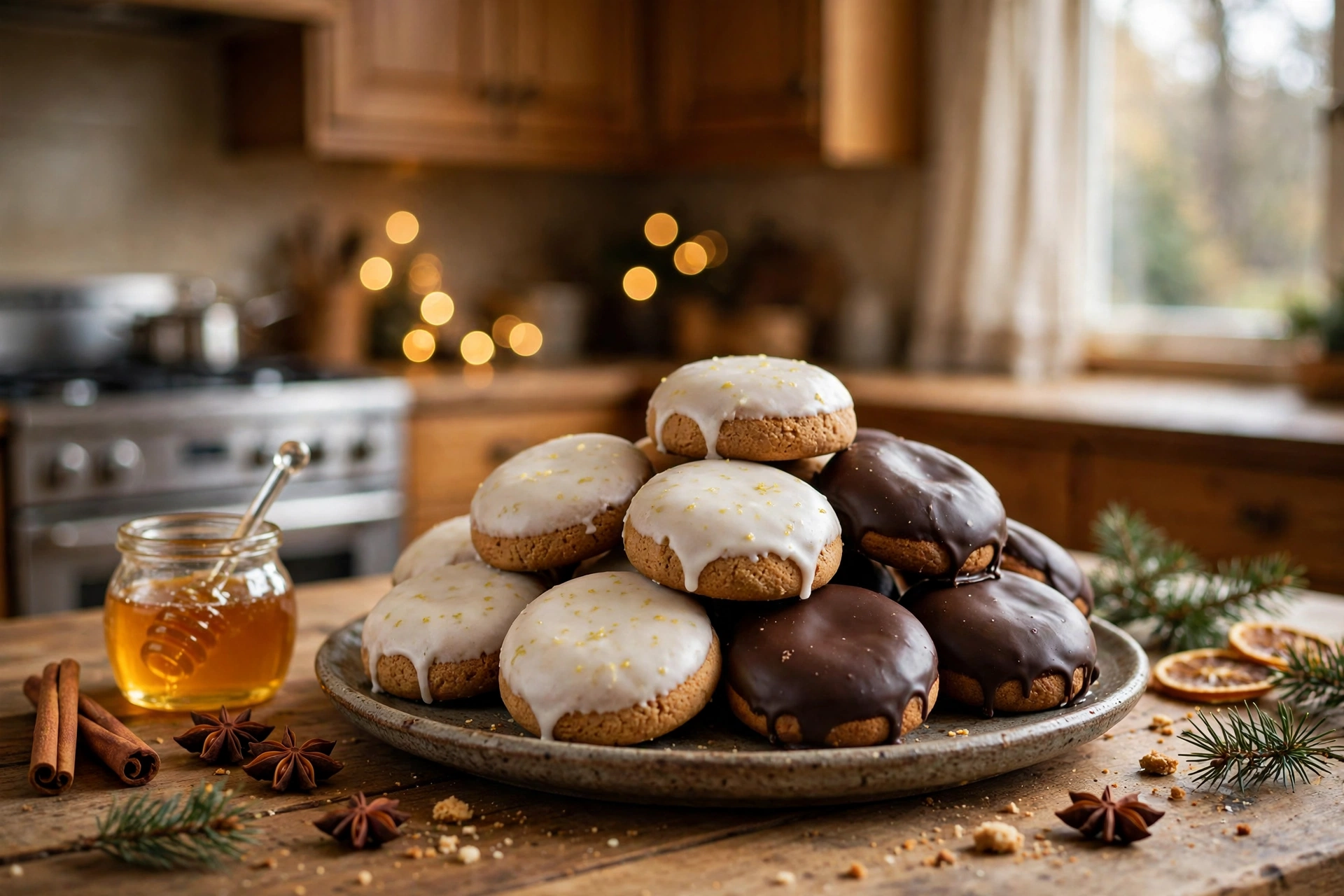
Lebkuchen are the soft German Christmas cookies that fill market stalls in Nuremberg every December, round and cake like, scented with honey and a whole choir of warm spices. They are not crisp, not snappy, and never in a hurry. A good lebkuchen is baked weeks before Christmas and eaten slowly, at the moment its flavor has quietly become more than the sum of its parts.
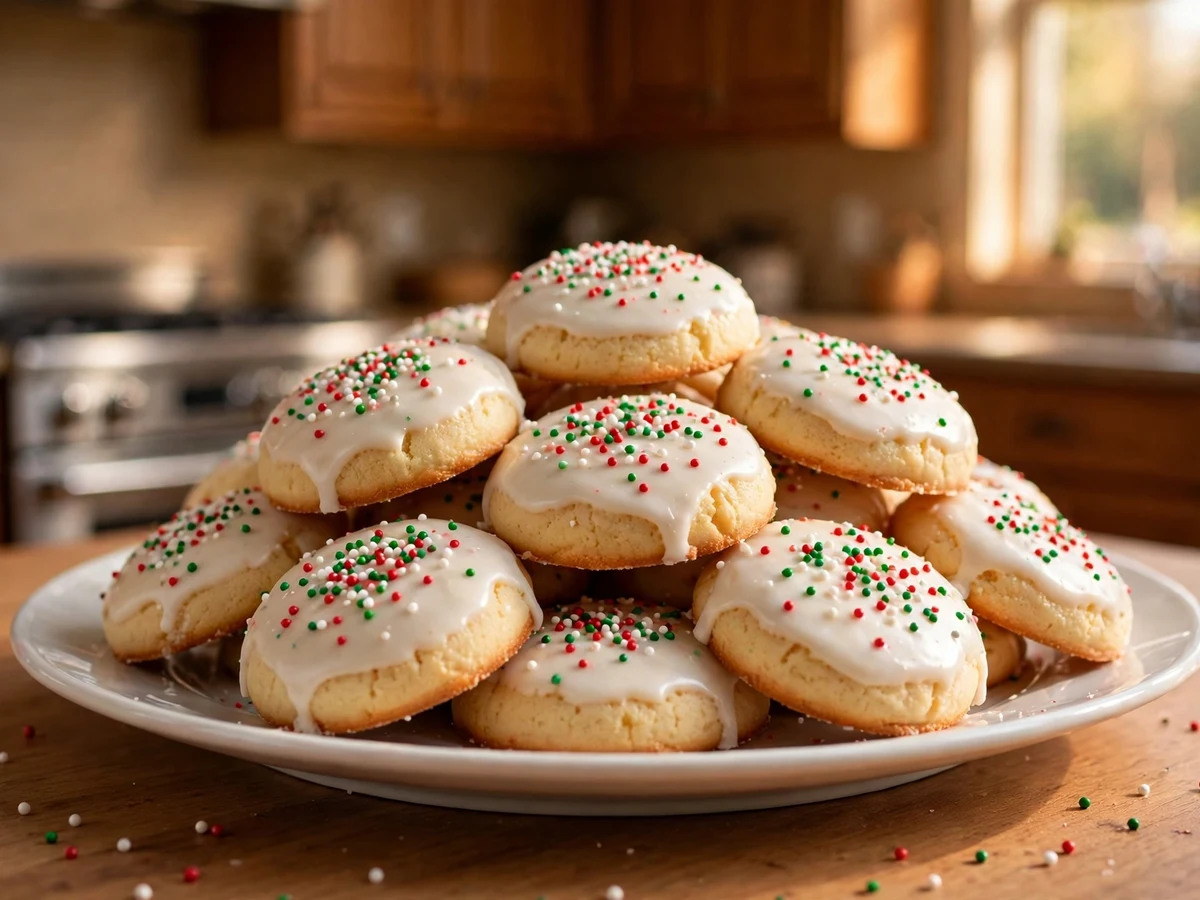
The texture surprises anyone expecting a gingerbread cookie. The crumb is tender and slightly chewy, closer to a small honey cake than to a biscuit, with ground almonds keeping it moist and tiny pieces of candied orange peel flashing citrus through the spice. A thin lemon glaze crackles over the top, and the first bite tastes like the whole season at once.
That patience is also the practical gift of this recipe. Lebkuchen dough rests overnight, the baked cookies rest for days, and the finished tin sits happily on a shelf until the cookie exchange, the school concert, and the gift mailing are all behind you. Christmas baking rarely gets this forgiving.
What Makes Lebkuchen Different From Gingerbread
Lebkuchen begin where gingerbread ends. Gingerbread leans on molasses and ginger for a dark, sharp flavor and is often rolled thin and baked crisp. Lebkuchen are sweetened mainly with honey, spiced with a blend in which cinnamon leads and ginger is only one voice among many, and baked thick so the center stays soft.
Ground almonds are the second difference. They replace part of the flour, which keeps the crumb tender for weeks instead of days and gives the cookies their gentle chew. It is the same family trick that keeps their cousins, the pfeffernusse cookies, pleasant long after baking day, though lebkuchen are larger, softer, and glazed rather than rolled in sugar.
The third difference is time itself. Gingerbread is often best the week it is baked. Lebkuchen are designed to age: the honey holds moisture, the spices trade sharp edges for warmth, and the crumb relaxes into something almost cake like. A cookie built for December is deliberately baked in November.
The Lebkuchen Spice Blend, Mixed Once and Used All Season
Every lebkuchen recipe hides its real secret in the spice list. Mixed separately, in the right proportions, the blend becomes a small jar of Christmas that you can measure in seconds and give away in prettier jars. Mix this batch once and it will carry the whole recipe with plenty left over.
For the blend, combine two tablespoons of ground cinnamon, two teaspoons of ground ginger, one teaspoon of ground cloves, one teaspoon of ground allspice, half a teaspoon of ground nutmeg, half a teaspoon of ground coriander, half a teaspoon of ground cardamom, and a quarter teaspoon of ground anise seed. The dough below uses two tablespoons of the blend. The rest keeps for a year in a dark cupboard and is wonderful in oatmeal, hot chocolate, and spiced apple cider.
Two proportions matter more than the rest. Cinnamon must lead, because it is the flavor people recognize as lebkuchen before they can name it. And the cloves must stay modest, because clove grows stronger as the cookies rest and will bully the whole tin by week two if it starts too loud.
Lebkuchen Ingredients
Nothing here is hard to find in a North American grocery store. The one specialty item in old recipes, the thin baking wafer called oblaten, is optional in this version; parchment does the job.
- 3/4 cup honey
- 1/2 cup packed dark brown sugar
- 4 tablespoons unsalted butter
- 1 large egg, at room temperature
- 1 tablespoon fresh orange juice
- 1 teaspoon finely grated orange zest
- 2 3/4 cups all-purpose flour, plus a little more for shaping
- 1 cup finely ground almonds (almond flour)
- 2 tablespoons lebkuchen spice blend (from the section above)
- 1 teaspoon baking soda
- 1/2 teaspoon baking powder
- 1/2 teaspoon fine sea salt
- 1/3 cup finely chopped candied orange peel
- For the lemon glaze: 1 cup powdered sugar and 2 tablespoons fresh lemon juice
- For the chocolate dip (optional): 6 ounces dark chocolate, chopped, and 1 teaspoon coconut oil
How to Make Lebkuchen
- Mix the spice blend first, following the proportions in the section above, and set aside two tablespoons for the dough. Store the rest in a small sealed jar away from light.
- Put the honey, brown sugar, and butter in a medium saucepan over low heat. Stir until the butter melts and the sugar dissolves into a smooth, glossy syrup, about 3 minutes. Take the pan off the heat and let the syrup cool for 10 minutes; it should feel warm, not hot.
- Whisk the egg, orange juice, and orange zest into the cooled syrup until the mixture is even and shiny.
- In a large bowl, whisk together the flour, ground almonds, the two tablespoons of spice blend, the baking soda, baking powder, and salt. Stir the chopped candied orange peel through the dry mixture so the pieces are coated and stay separate.
- Pour the honey mixture over the dry ingredients and stir with a sturdy spoon until a thick, sticky dough forms and no dry flour remains. The dough will look too soft. That is correct at this stage.
- Scrape the dough onto a piece of plastic wrap, pat it into a flat disk, wrap it well, and refrigerate overnight, at least 8 hours and up to 3 days. The rest firms the dough and lets the spices bloom into the flour.
- Heat the oven to 350 degrees F and line two baking sheets with parchment paper. With lightly damp hands, roll the cold dough into balls of about one and a half tablespoons. Place them two inches apart on the sheets and flatten each gently to a round about half an inch thick.
- Bake for 11 to 13 minutes, one sheet at a time, until the edges look set and the centers still seem slightly soft. The cookies will feel underdone; they firm as they cool. Leave them on the sheet for 5 minutes, then move them to a rack to cool completely.
- For the lemon glaze, whisk the powdered sugar and lemon juice into a smooth, slowly dripping glaze and brush it over the warm cookies. Let the glaze set for about 1 hour. For the chocolate finish, melt the chocolate with the coconut oil, dip the bottom of each cooled cookie, and set them chocolate side up on parchment until firm.
- Layer the finished cookies in a tin with parchment between the layers and rest them at least 3 days before serving. They are good on day three, better at one week, and at their best around two weeks.
Lemon Glaze, Chocolate Dip, or Plain: Choosing the Finish
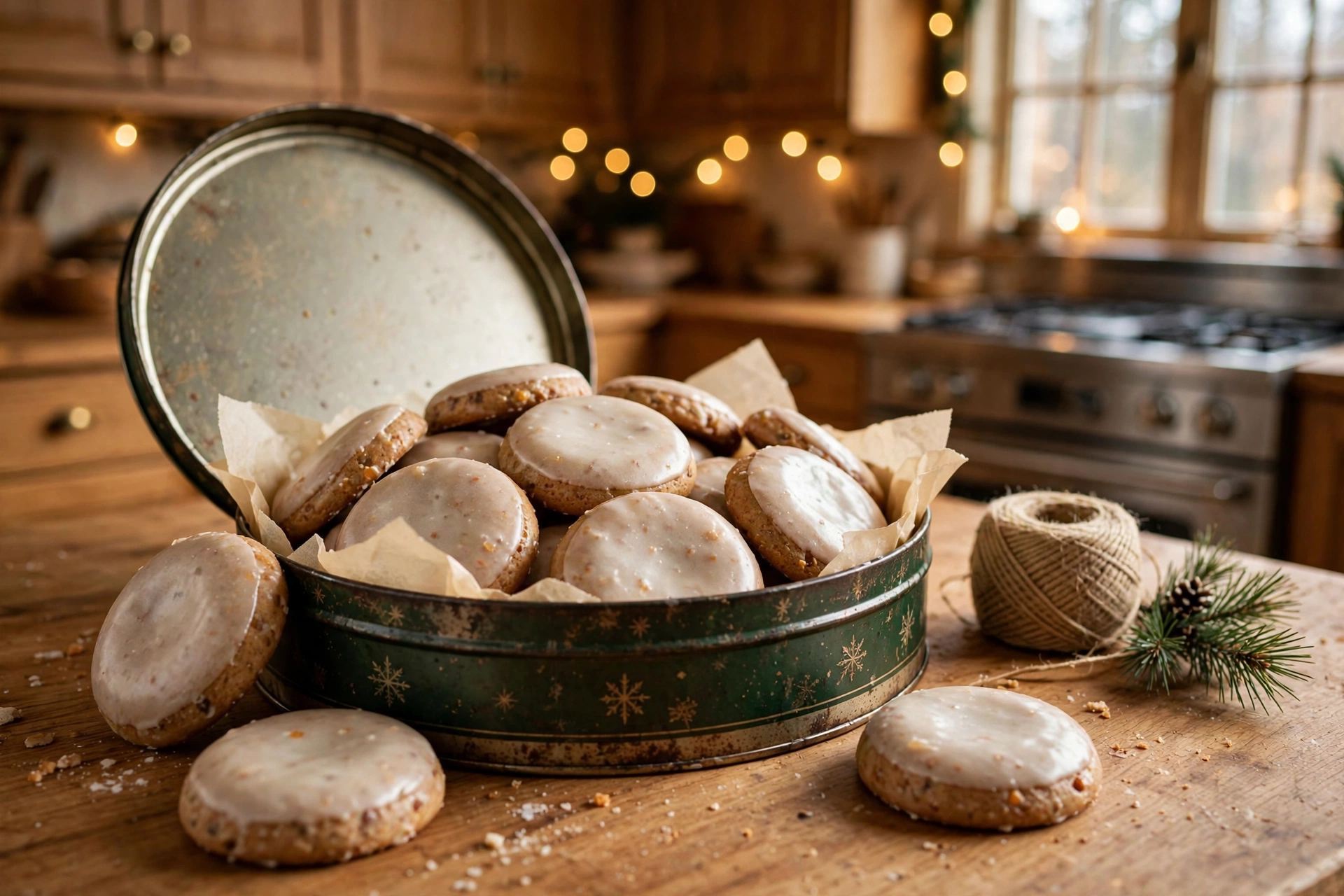
The lemon glaze is the classic market finish and the brightest to eat. It dries into a thin, crackly shell that snaps softly against the tender crumb, and its acidity keeps the honey sweetness in balance. Glaze the cookies while they are still warm so the sugar melts into a smooth coat instead of sitting on top.
The chocolate dip is the gift finish. A dark base looks handsome in a tin, protects the cookie bottom from drying, and adds a bitter edge that suits the spices. Dip bottoms only, the way many Nuremberg bakers do, so the spiced top still shows and the chocolate never overwhelms the honey.
Plain is the honest finish for bakers who plan to eat the first cookies young, with coffee. A resting tin will keep unglazed lebkuchen moist without help, and a light dusting of powdered sugar at serving time gives them a finished look in five seconds. Choose one finish per tin so the flavors inside do not trade places during the rest.
Why Lebkuchen Taste Better After Two Weeks
Fresh from the oven, these cookies taste good but slightly unfinished: the clove sits apart, the crumb is a little firm, and the honey flavor is loud in a simple way. Resting is not storage here. It is the final step of the recipe, the same patience that makes a christmas fruitcake worth baking in the first place.
During the first week in the tin, moisture moves from the honey rich center toward the drier edges until the whole cookie is evenly tender. The spices trade their sharp top notes for a warmer, rounder blend, and the almond flavor steps forward. By the second week the cookies reach the balance that market bakers in Germany plan their whole season around.
If a tin ever does dry out, lay a slice of fresh apple or a piece of soft bread on the top layer of parchment overnight. The cookies will pull moisture from it and soften again by morning. Remove the apple slice after a day so the fruit flavor stays where it belongs.
Sticky Dough and Four More Lebkuchen Fixes
The dough is supposed to be sticky; honey doughs are. The fix is cold and time, not extra flour. If the dough still smears after a full night in the refrigerator, chill it one more hour and shape it with damp hands, rewetting them as needed. Work fast and get the tray into the oven while the dough is still cold.
Cookies that spread into each other were shaped from dough that had warmed up, or the balls were flattened too thin. Chill shaped trays for 15 minutes before baking if your kitchen is warm, and keep the rounds a honest half inch thick. A test cookie, baked alone for the first tray, tells you everything before the whole batch is committed.
A glaze that cracks and flakes off in sheets went onto cookies that were too hot, so it boiled microscopically instead of setting. Warm is right, steaming is too much. Wait until you can hold a cookie comfortably in your palm, then glaze in one confident pass and leave it alone.
Dry, bready cookies were simply overbaked, the one mistake the resting tin cannot fully forgive. Pull the tray when the centers still look slightly soft and pale compared with the edges. An extra minute in the oven costs more tenderness than a minute too few ever will.
Nut Free, Peel Free, and Other Lebkuchen Swaps
For a nut free tin, replace the ground almonds with an equal weight of all-purpose flour plus one tablespoon of cornstarch. The cookies will be a little less tender and will dry a day sooner, so glaze them and serve them inside the first week. Everything else in the recipe stays exactly the same.
If candied orange peel is not your taste, leave it out and double the fresh orange zest, or fold in a third of a cup of finely chopped dried apricots for the same chewy flashes. Raisins work too, though they pull the flavor toward fruitcake. Keep the pieces small, so they slice through the crumb instead of tearing it.
Honey is the soul of lebkuchen and should stay if it possibly can; its flavor is the recipe. In a pinch, dark corn syrup plus two tablespoons of molasses approximates the sweetness and color, with a flatter spice. Maple syrup makes a softer, gentler cookie that some families prefer, though it is no longer quite the market original.
Bake in November, Mail in December: The Gift Tin Plan
Sturdy, moist, and better with age, lebkuchen are close to the perfect mailing cookie. Bake them in the last week of November, rest them in their tins for a week, and mail them in the first week of December. They will arrive in the second week of December at almost exactly their peak, which no crisp cookie can promise.
Pack the tin tightly with parchment between the layers and a final sheet crumpled on top so nothing shifts. A tin that does not rattle is a tin that arrives whole. Slip in a note with the bake date; people enjoy knowing the cookies were planned for them weeks ahead, and the date quietly proves it.
For a mixed box, pair the lebkuchen with sturdy company: a batch of kolaczki cookies for color and jam, and keep delicate meringues and thin wafers in a tin of their own. The FoodKeeper storage guidance covers the rest of the holiday baking that stays home.
Lebkuchen ask for one sticky evening in November and then reward you for a month. Mix the spice blend once, let the dough sleep overnight, and let the tin do the slow work while December gets busy around it. When the lid finally comes off, the season tastes exactly the way it should.
Questions Cooks Ask About Lebkuchen
Do I need the oblaten wafers under lebkuchen?
No. The thin wafers keep the sticky dough from spreading on market baking sheets and make the cookies easy to move, but parchment paper and a cold, well rested dough do the same job at home. If you do use wafers, press each dough round gently onto one before baking and trim nothing.
Why is my lebkuchen dough still too sticky to roll after chilling?
Honey doughs stay softer than butter doughs, and a warm kitchen undoes the chill quickly. Shape the cookies with damp hands instead of rolling, and chill the filled trays for 15 minutes before baking. If the dough still smears after a full night of rest, work in one tablespoon of flour, no more.
How long do lebkuchen actually keep?
In a sealed tin at room temperature they keep four to six weeks and improve for the first two. Keep them away from heat and from crisp cookies, which they will soften. For longer storage, freeze the baked and glazed cookies for up to 3 months and thaw them in the closed tin overnight.
Can I make the lebkuchen spice blend in a bigger batch?
Yes, and it is worth doing. The proportions in this recipe scale cleanly: multiply everything by four and you have about three quarters of a cup of blend, enough for several batches of cookies plus spiced drinks all season. Stored in a sealed jar away from light, it stays lively for about a year.
My lebkuchen came out hard. Can I rescue the tin?
Usually, yes. Lay a slice of fresh apple or soft bread on the parchment above the cookies, close the tin, and wait 24 hours. The cookies draw in moisture and soften noticeably. Replace the apple slice if you need a second day, and next time pull the tray a minute earlier.

Lebkuchen
Soft German Christmas cookies sweetened with honey and dark brown sugar, ground almonds for tenderness, candied orange peel, and a homemade lebkuchen spice blend in which cinnamon leads. Brushed with a crackly lemon glaze or dipped in chocolate, then rested in a tin, where they quietly reach their best at about two weeks.
- Total Time: 12 hours 45 minutes
- Yield: About 36 cookies 1x
Ingredients
- 3/4 cup honey
- 1/2 cup packed dark brown sugar
- 4 tablespoons unsalted butter
- 1 large egg, at room temperature
- 1 tablespoon fresh orange juice
- 1 teaspoon finely grated orange zest
- 2 3/4 cups all-purpose flour, plus a little more for shaping
- 1 cup finely ground almonds (almond flour)
- 2 tablespoons lebkuchen spice blend (see note)
- 1 teaspoon baking soda
- 1/2 teaspoon baking powder
- 1/2 teaspoon fine sea salt
- 1/3 cup finely chopped candied orange peel
- 1 cup powdered sugar (for the lemon glaze)
- 2 tablespoons fresh lemon juice (for the lemon glaze)
- 6 ounces dark chocolate, chopped, plus 1 teaspoon coconut oil (optional, for the chocolate dip)
Instructions
- Mix the spice blend first: 2 tablespoons ground cinnamon, 2 teaspoons ground ginger, 1 teaspoon ground cloves, 1 teaspoon ground allspice, 1/2 teaspoon ground nutmeg, 1/2 teaspoon ground coriander, 1/2 teaspoon ground cardamom, and 1/4 teaspoon ground anise seed. Set aside 2 tablespoons for the dough and store the rest in a sealed jar.
- Put the honey, brown sugar, and butter in a medium saucepan over low heat. Stir until the butter melts and the sugar dissolves into a smooth, glossy syrup, about 3 minutes. Take the pan off the heat and let the syrup cool for 10 minutes.
- Whisk the egg, orange juice, and orange zest into the cooled syrup until the mixture is even and shiny.
- In a large bowl, whisk together the flour, ground almonds, the 2 tablespoons of spice blend, the baking soda, baking powder, and salt. Stir the chopped candied orange peel through the dry mixture so the pieces are coated and stay separate.
- Pour the honey mixture over the dry ingredients and stir with a sturdy spoon until a thick, sticky dough forms and no dry flour remains. The dough will look too soft; that is correct at this stage.
- Scrape the dough onto a piece of plastic wrap, pat it into a flat disk, wrap it well, and refrigerate overnight, at least 8 hours and up to 3 days.
- Heat the oven to 350 degrees F and line two baking sheets with parchment paper. With lightly damp hands, roll the cold dough into balls of about 1 1/2 tablespoons. Place them 2 inches apart on the sheets and flatten each gently to a round about 1/2 inch thick.
- Bake for 11 to 13 minutes, one sheet at a time, until the edges look set and the centers still seem slightly soft. Leave the cookies on the sheet for 5 minutes, then move them to a rack to cool completely.
- For the lemon glaze, whisk the powdered sugar and lemon juice into a smooth, slowly dripping glaze and brush it over the warm cookies. Let the glaze set for about 1 hour. For the chocolate finish, melt the chocolate with the coconut oil, dip the bottom of each cooled cookie, and set them chocolate side up on parchment until firm.
- Layer the finished cookies in a tin with parchment between the layers and rest them at least 3 days before serving. They are good on day three, better at one week, and at their best around two weeks.
- Prep Time: 30 minutes
- Cook Time: 12 minutes
Nutrition
- Serving Size: 1 cookie
- Calories: 118
- Sodium: 58
- Saturated Fat: 1 g
- Protein: 2 g
- Cholesterol: 11