
In this article:
- Why Italian Anise Cookies Taste Like Christmas at Nonna’s Table
- Cake Soft Middles Under a Thin White Shell
- Mixed, Baked, and Glazed Inside One Calm Hour
- Vanilla, Lemon, and a Gluten Free Batch
- Italian Anise Cookies Ingredients
- How to Make Italian Anise Cookies
- The Anise Dose and the Glaze Spoon Test
- Knots, Twists, and the Sprinkle Palette
- Their Own Tin: Anise Perfumes Everything It Touches
- Questions Bakers Ask About Italian Anise Cookies
Italian anise cookies are the soft, round, white glazed cookies that anchor every Italian American Christmas cookie tray, the ones with the rainbow sprinkles and the gentle taste of sweet licorice. They are cake soft inside, snowy outside, and unmistakably festive before you even take a bite. On a crowded December tray, they are always the first ones I reach for.
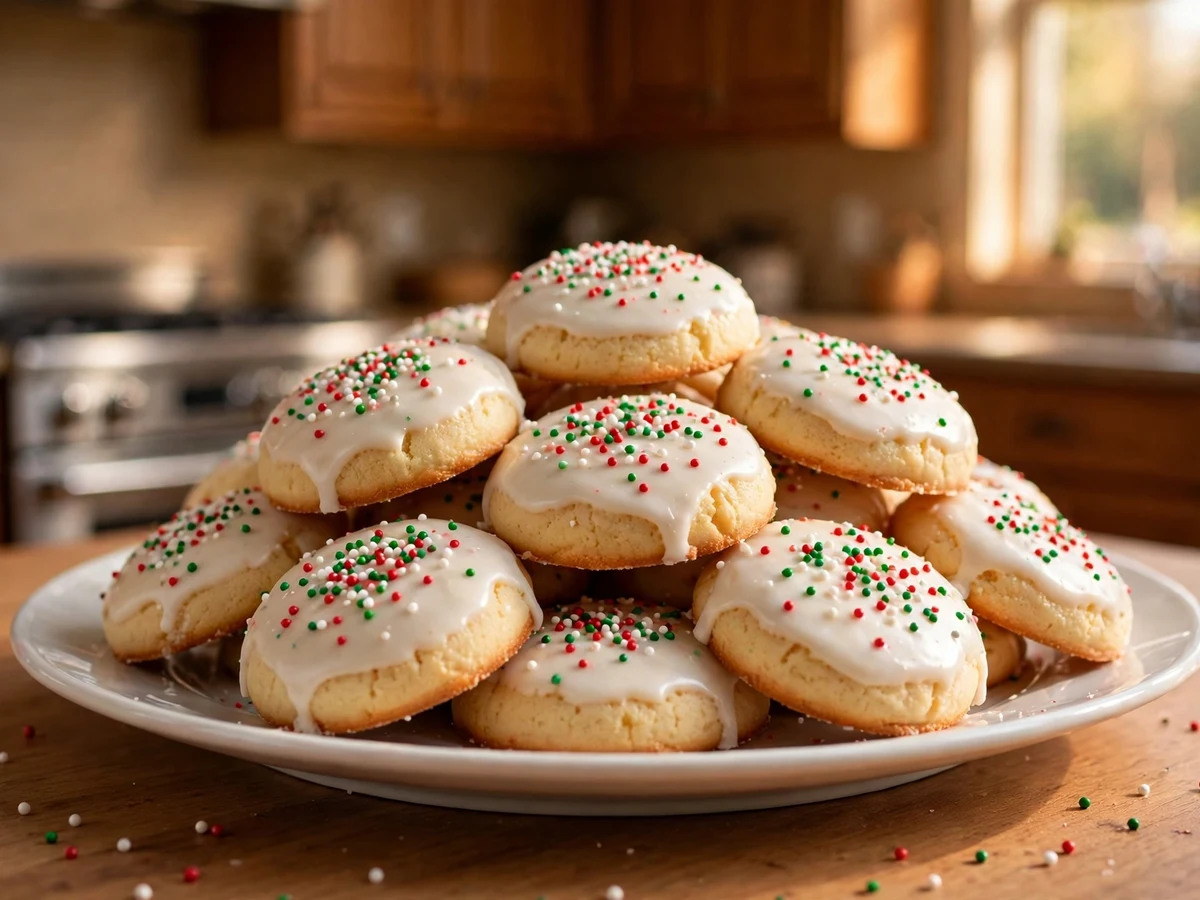
Their charm is the contrast. The crumb is tender and pale, almost like a small tea cake, while the glaze sets into a thin, firm shell that cracks delicately when you bite through it. The anise runs through both layers, in the dough and in the glaze, so the flavor arrives twice: once warm from the cookie, once cool and sweet from the icing.
This batch makes thirty six, a cookie box sized number. The dough asks for no chilling, the baking takes twelve minutes, and the dipped tops dry while you wash the bowls. It is the calmest cookie of the season, and it was born for gifting.
Why Italian Anise Cookies Taste Like Christmas at Nonna’s Table
Italian anise cookies work because anise is doing something no other extract on the tray can do. Its flavor is sweet before it is spicy, closer to fennel honey than to black candy licorice, and it makes a simple butter and egg dough taste like a bakery secret. Vanilla rounds the edges, and the result is a cookie that smells like a holiday before the tray even leaves the kitchen.
The texture is engineered just as carefully. A full tablespoon of baking powder lifts the dough into soft domes, and a short, gentle bake keeps the tops pale and the centers moist. These are not crisp cookies and they are not meant to be. Their softness is the point, and it is what sets them apart from the snaps and crunches around them.
Then there is the ritual of the glaze. Dipping each cooled cookie, letting the excess fall back into the bowl, and showering the wet tops with sprinkles is the part children ask to help with and grandmothers refuse to delegate. The cookies carry that feeling with them. Served plain, with coffee or sweet tea, they taste like somebody’s family December, even on your first batch.
Cake Soft Middles Under a Thin White Shell
Bite one and the glaze gives way first, a fine crackle against the teeth, sweet and cool. Underneath, the crumb is soft, fine, and moist, with no crisp edge anywhere except the faintest golden ring at the bottom. The cookie eats like a frosted miniature cake, two bites and gone, leaving the anise to linger gently at the end.
The tops should stay pale. A properly baked anise cookie is set and dry on top, sometimes with tiny cracks, and only lightly golden underneath. Browning the tops dries the crumb and flattens the domes, so the color check happens on the bottom of one sacrificed cookie, never by waiting for the tops to color.
Temperature changes the experience more than you would expect. Straight from the tin at room temperature, the glaze is firm and the anise is bright. Warmed for five seconds in the microwave, the crumb turns almost steamy and the licorice note deepens. On a tray beside crisp speculoos cookies, that softness is a genuine contrast, and trays are better for having both.
Mixed, Baked, and Glazed Inside One Calm Hour
No chilling, no rolling, no cutters. The dough mixes in ten minutes, rolls into balls with damp hands, and bakes in two quick rounds while the first tray cools. By the time the second tray leaves the oven, the first is ready for the glaze bowl. An unhurried hour after you start, thirty six glazed cookies are drying on the rack.
That speed makes them the December safety net. When a cookie exchange invitation lands late, or a tray needs one more color, this is the batch that fits into an evening. They also travel well once the glaze is fully dry, stacked between parchment in a tin, which is why they have ridden in more gift boxes than almost any other cookie on this site, cranberry pistachio biscotti included.
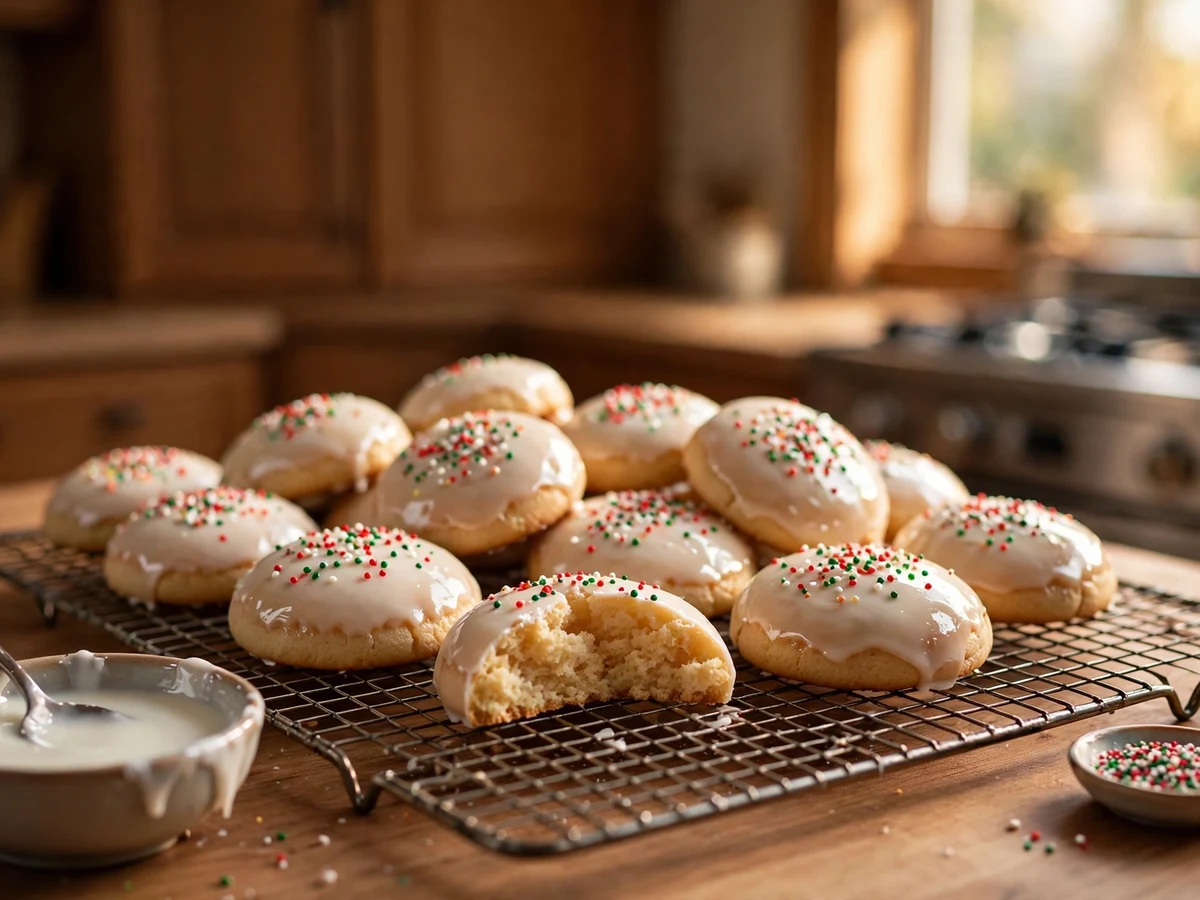
Set the glazing up like a small production line and it goes even faster: rack of cooled cookies on the left, glaze bowl in the middle, sprinkle dish and a parchment lined tray on the right. Dip, drip, sprinkle, slide. One person can finish the whole batch in fifteen minutes, and two people, one dipping and one sprinkling, turn it into the kind of kitchen job that ends with everyone eating the broken ones.
Vanilla, Lemon, and a Gluten Free Batch
Anise has devoted fans and polite avoiders, and this dough welcomes both. Replace the anise extract with vanilla and a teaspoon of lemon zest and the cookie turns bright and gentle, a version children tend to claim. Almond extract gives a bakery style flavor that loves a white glaze and red sprinkles. Keep the amounts identical; only the extract changes.
For a gluten free batch, use a one to one gluten free flour blend with xanthan gum and rest the mixed dough for 15 minutes before rolling, so the flour hydrates and the balls hold together. The crumb bakes slightly denser, the glaze hides everything, and nobody at the exchange will know unless you tell them.
A lighter glaze is the honest lever for sweetness. Dip only half of each cookie, or drizzle the glaze in lines instead of coating the tops, and the sugar per cookie drops while the look stays festive. The cookie itself is modestly sweet; most of the sugar lives in that white shell, which makes it easy to adjust without touching the dough.
Italian Anise Cookies Ingredients
- 3 cups all-purpose flour (360 g)
- 1 tablespoon baking powder
- 1/2 teaspoon fine sea salt
- 1/2 cup unsalted butter (1 stick), softened
- 3/4 cup granulated sugar
- 3 large eggs, at room temperature
- 2 teaspoons anise extract
- 1 teaspoon vanilla extract
- 2 tablespoons whole milk
- 2 cups powdered sugar (240 g), sifted
- 3 to 4 tablespoons whole milk, for the glaze
- 1/2 teaspoon anise extract, for the glaze
- 3 tablespoons rainbow nonpareils
How to Make Italian Anise Cookies
- Heat the oven to 350 degrees F. Line two baking sheets with parchment paper.
- Whisk the flour, baking powder, and salt in a medium bowl until well combined.
- Beat the butter and granulated sugar in a large bowl for 2 to 3 minutes, until pale and fluffy. Beat in the eggs one at a time, then the anise extract and the vanilla.
- Add the flour mixture in two additions, alternating with the 2 tablespoons of milk, and mix just until a soft, slightly sticky dough forms.
- With lightly damp hands, roll the dough into balls of about 1 tablespoon each and place them 2 inches apart on the prepared sheets. You should have about 36 balls.
- Bake for 10 to 12 minutes, rotating the sheet halfway, until the tops are set and dry and the bottoms are pale gold. Do not let the tops brown.
- Cool on the sheet for 5 minutes, then move the cookies to a rack and cool completely before glazing.
- Whisk the powdered sugar, 3 tablespoons of milk, and the glaze anise extract in a wide bowl until smooth. The glaze should coat the back of a spoon and smooth out its own trail within a few seconds; add the last tablespoon of milk only if it feels too thick.
- Dip the top of each cookie into the glaze, let the excess drip back into the bowl, and return the cookie to the rack set over parchment. Sprinkle with nonpareils immediately, while the glaze is wet.
- Let the glazed cookies dry undisturbed for at least 2 hours, until the glaze is fully hard, before stacking or boxing them.
The Anise Dose and the Glaze Spoon Test
Anise extract varies in strength between bottles, so treat the two teaspoons as the classic middle, not a law. For a gentle cookie that converts the hesitant, use one and a half teaspoons in the dough and keep the glaze dose as written. For the bold, old style cookie, go to a full tablespoon in the dough. Taste the raw dough the first time you make these and write your number on the recipe; it will be yours forever.
One warning matters more than the rest: anise oil is not anise extract. The oil is several times stronger, and measuring it like extract will produce a cookie that tastes like medicine. If oil is what you have, use a few drops, a quarter teaspoon at most, and add it to the glaze first, where you can taste and adjust safely.
The glaze has its own test. It should coat the back of a spoon in an opaque layer and smooth out its trail within a few seconds. Thinner than that, it soaks into the crumb and turns translucent and sticky. Thicker, it sits in ridges and cracks as it dries. Work quickly once dipping starts, and stir in a teaspoon of milk whenever the bowl begins to skin over.
Knots, Twists, and the Sprinkle Palette
The ball is classic, but this dough shapes kindly. Rolled into short ropes and tied into loose knots, it becomes the knotted anisette of wedding trays, elegant under a plain white glaze. Small twists and simple S shapes bake in the same time as the balls, as long as the thickness stays even. Brush any shaped cookie with the lightest touch of milk before baking if the surface looks dry.
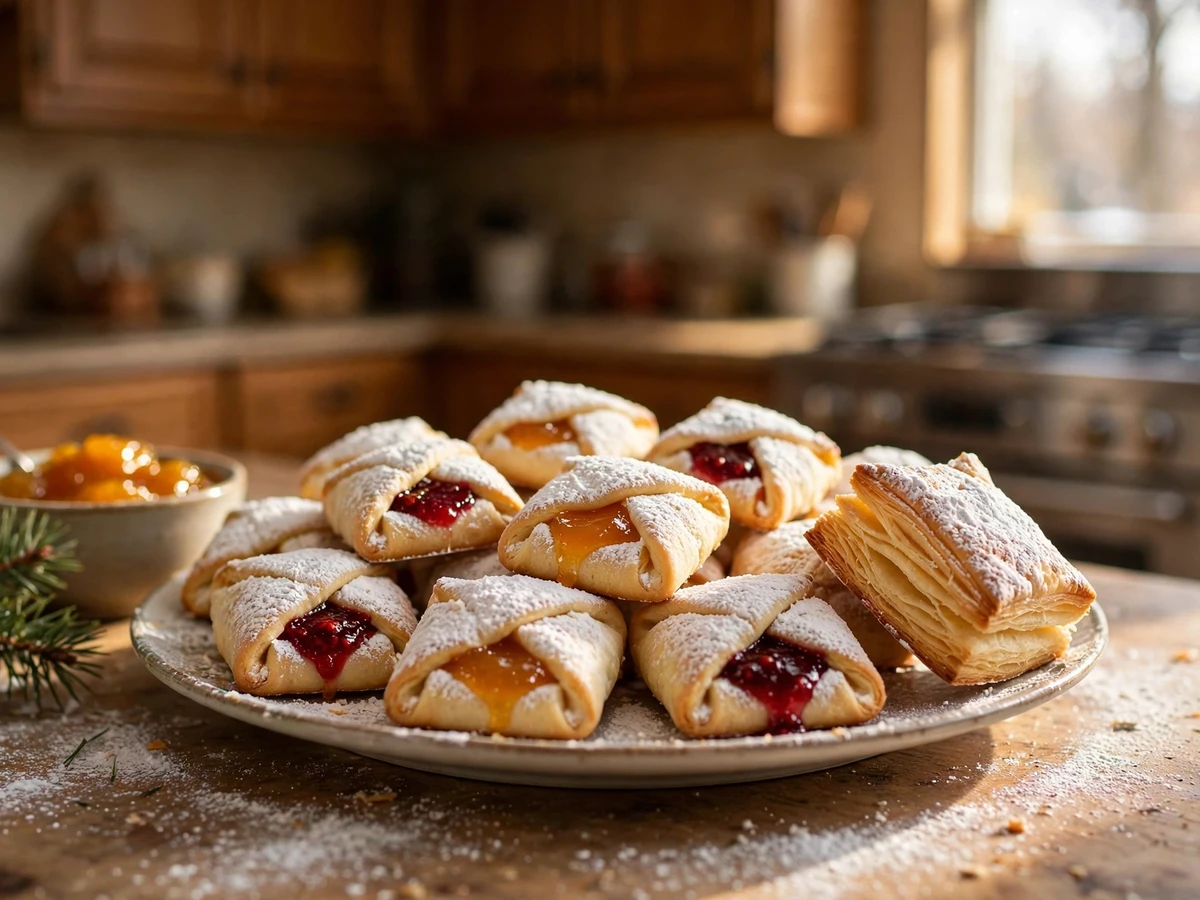
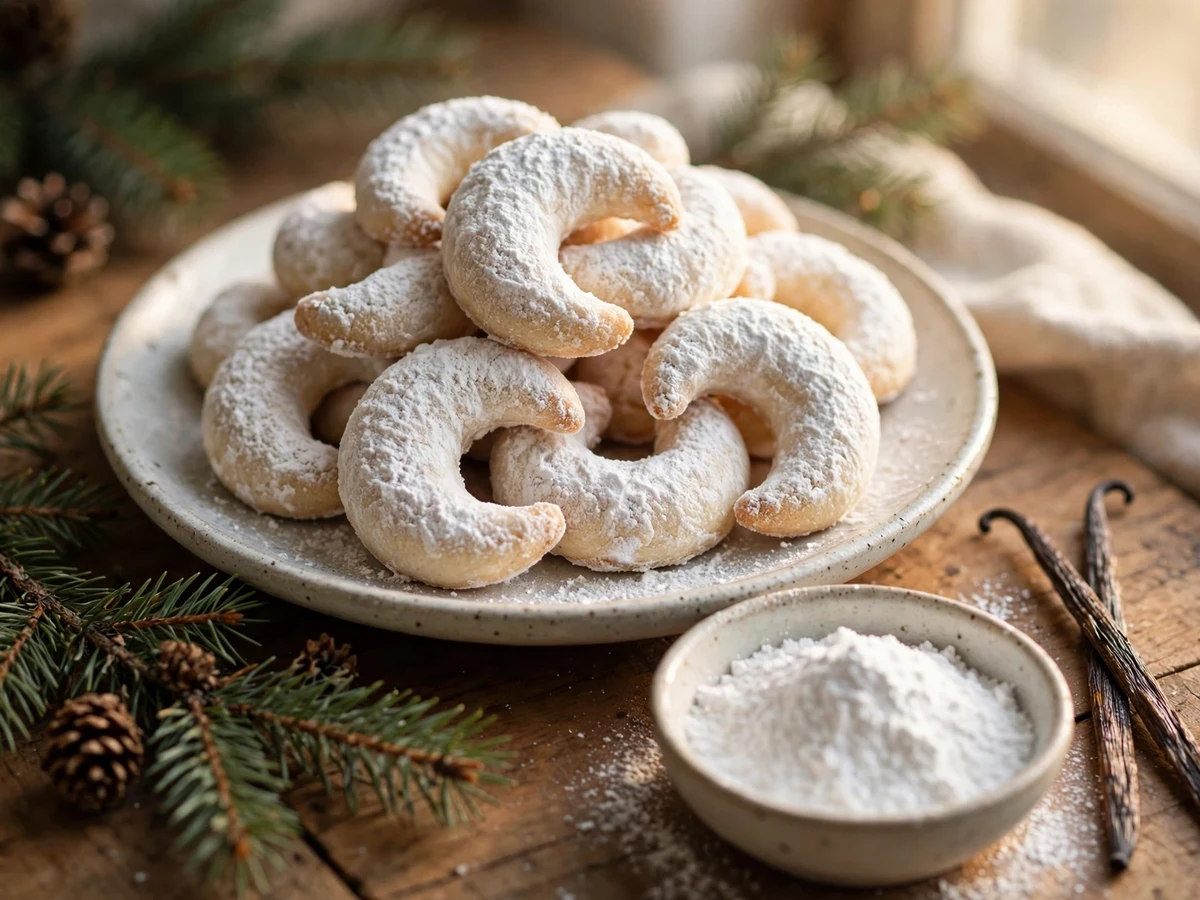
The sprinkle palette is where the tray gets personal. Red, green, and white nonpareils are the Christmas standard. All white reads like a wedding, gold sanding sugar turns the same cookie into a New Year sweet, and pastel nonpareils carry the identical recipe to Easter without changing a single ingredient. Beside kolaczki cookies and almond crescent cookies, these glazed domes give a cookie box its color and its soft bite.
For a plated dessert instead of a tray cookie, skip the sprinkles, glaze with a lemon version, and serve two cookies beside fresh berries and whipped cream. The cake soft crumb carries the fruit beautifully, and the anise reads as a quiet surprise rather than a headline.
Their Own Tin: Anise Perfumes Everything It Touches
Store these cookies in their own container, always. Anise is generous with its perfume, and a mixed tin will come out tasting faintly of licorice in every layer, including the cookies that never asked for it. In their own tin, layered between parchment with the glaze fully dry, they keep for 2 weeks at room temperature and stay soft for most of it. The FoodKeeper guidance is the reference bakers here use for holiday storage times, and soft glazed cookies sit comfortably inside its windows.
Freezing is even better, in both directions. Unglazed baked cookies freeze for 2 months and glaze beautifully after thawing, which keeps December flexible. Raw dough balls also freeze for 1 month on a tray, then bagged; bake them from frozen with 1 to 2 extra minutes, cool, and glaze. A freezer holding a bag of anise dough balls in November is a calm December waiting to happen.
Questions Bakers Ask About Italian Anise Cookies
Why did my glaze turn sticky and never set?
The glaze was too thin, or the cookies were still warm when dipped. The glaze should coat a spoon opaquely and smooth out its trail in a few seconds. Dip only fully cooled cookies, and give them at least 2 undisturbed hours at room temperature before stacking.
My cookies spread flat instead of puffing into domes. What happened?
Check the baking powder first: this recipe leans on a full tablespoon, and old powder will not lift the dough. Warm butter also melts the dough early. Use butter that is soft but still cool to the touch, and roll with damp, cool hands.
Can I use anise seeds instead of extract?
You can, but the flavor lands differently: seeds give small bursts rather than an even perfume. If you try it, grind 2 teaspoons of seeds very fine and add them with the flour, and keep a little extract in the glaze so the cookie still smells like itself.
The sprinkles bled color into my white glaze. How do I stop it?
Use nonpareils rather than jimmies, sprinkle the second the cookie leaves the glaze, and do not close the tin until the glaze is fully dry. Sprinkles added to a half dried glaze slide and bleed; sprinkles on wet glaze set cleanly.
How far ahead can I bake these for a cookie exchange?
The glazed cookies keep 2 weeks in their own tin, so a week ahead is comfortable. For the freshest crumb, freeze the baked cookies unglazed and dip them the day before the exchange; the glaze takes one hour of active time at most, including drying setup.
Why did my anise cookie glaze turn sticky and never set?
The glaze was too thin, or the cookies were still warm when dipped. The glaze should coat a spoon opaquely and smooth out its trail in a few seconds. Dip only fully cooled cookies and give them at least 2 undisturbed hours before stacking.
Why did my anise cookies spread flat instead of puffing?
Check the baking powder first: this recipe leans on a full tablespoon, and old powder will not lift the dough. Warm butter also melts the dough early. Use butter that is soft but still cool to the touch, and roll with damp, cool hands.
Can I use anise seeds instead of anise extract?
You can, but the flavor lands differently: seeds give small bursts rather than an even perfume. Grind 2 teaspoons of seeds very fine and add them with the flour, and keep a little extract in the glaze so the cookie still smells like itself.
How do I stop sprinkles from bleeding into the glaze?
Use nonpareils rather than jimmies, sprinkle the second the cookie leaves the glaze, and do not close the tin until the glaze is fully dry. Sprinkles added to a half dried glaze slide and bleed; on wet glaze they set cleanly.
How far ahead can I bake Italian anise cookies for an exchange?
The glazed cookies keep 2 weeks in their own tin, so a week ahead is comfortable. For the freshest crumb, freeze the baked cookies unglazed and dip them the day before the exchange.
Italian Anise Cookies
Soft, cake like Italian Christmas cookies with anise in the dough and the glaze, dipped and showered with rainbow nonpareils. No chilling, twelve minutes of baking, and a dough ball freeze plan that makes December glazing a one hour job.
- Total Time: 1 hour 30 minutes
- Yield: 36 cookies 1x
Ingredients
- 3 cups all-purpose flour (360 g)
- 1 tablespoon baking powder
- 1/2 teaspoon fine sea salt
- 1/2 cup unsalted butter (1 stick), softened
- 3/4 cup granulated sugar
- 3 large eggs, at room temperature
- 2 teaspoons anise extract
- 1 teaspoon vanilla extract
- 2 tablespoons whole milk
- 2 cups powdered sugar (240 g), sifted
- 3 to 4 tablespoons whole milk, for the glaze
- 1/2 teaspoon anise extract, for the glaze
- 3 tablespoons rainbow nonpareils
Instructions
- Heat the oven to 350 degrees F. Line two baking sheets with parchment paper.
- Whisk the flour, baking powder, and salt in a medium bowl until well combined.
- Beat the butter and granulated sugar for 2 to 3 minutes, until pale and fluffy. Beat in the eggs one at a time, then the anise extract and the vanilla.
- Add the flour mixture in two additions, alternating with the 2 tablespoons of milk, and mix just until a soft, slightly sticky dough forms.
- With lightly damp hands, roll the dough into balls of about 1 tablespoon each and place them 2 inches apart on the prepared sheets, about 36 balls.
- Bake for 10 to 12 minutes, rotating the sheet halfway, until the tops are set and dry and the bottoms are pale gold. Do not let the tops brown.
- Cool on the sheet for 5 minutes, then move the cookies to a rack and cool completely before glazing.
- Whisk the powdered sugar, 3 tablespoons of milk, and the glaze anise extract in a wide bowl until smooth. The glaze should coat the back of a spoon and smooth out its own trail within a few seconds.
- Dip the top of each cookie into the glaze, let the excess drip back into the bowl, and return the cookie to the rack set over parchment. Sprinkle with nonpareils immediately, while the glaze is wet.
- Let the glazed cookies dry undisturbed for at least 2 hours, until the glaze is fully hard, before stacking or boxing them.
- Prep Time: 25 minutes
- Cook Time: 12 minutes
Nutrition
- Serving Size: 1
- Calories: 105
- Sodium: 75
- Saturated Fat: 2
- Protein: 2
- Cholesterol: 20