
In this article:
- Why Speculoos Dough Rests Before It Rolls
- Seven Spices, One Warm and Caramel Deep Flavor
- Baked in November, Still Crisp at Christmas
- Gluten Free, Dairy Free, and Lower Sugar Roads
- Speculoos Cookies Ingredients
- How to Make Speculoos Cookies
- Thin Dough, Cold Trays, and Other Crisp Secrets
- Shapes, Spice Swaps, and a Chocolate Dip
- The Cookie Tin Rules: Three Weeks of Crunch
- Questions Bakers Ask About Speculoos Cookies
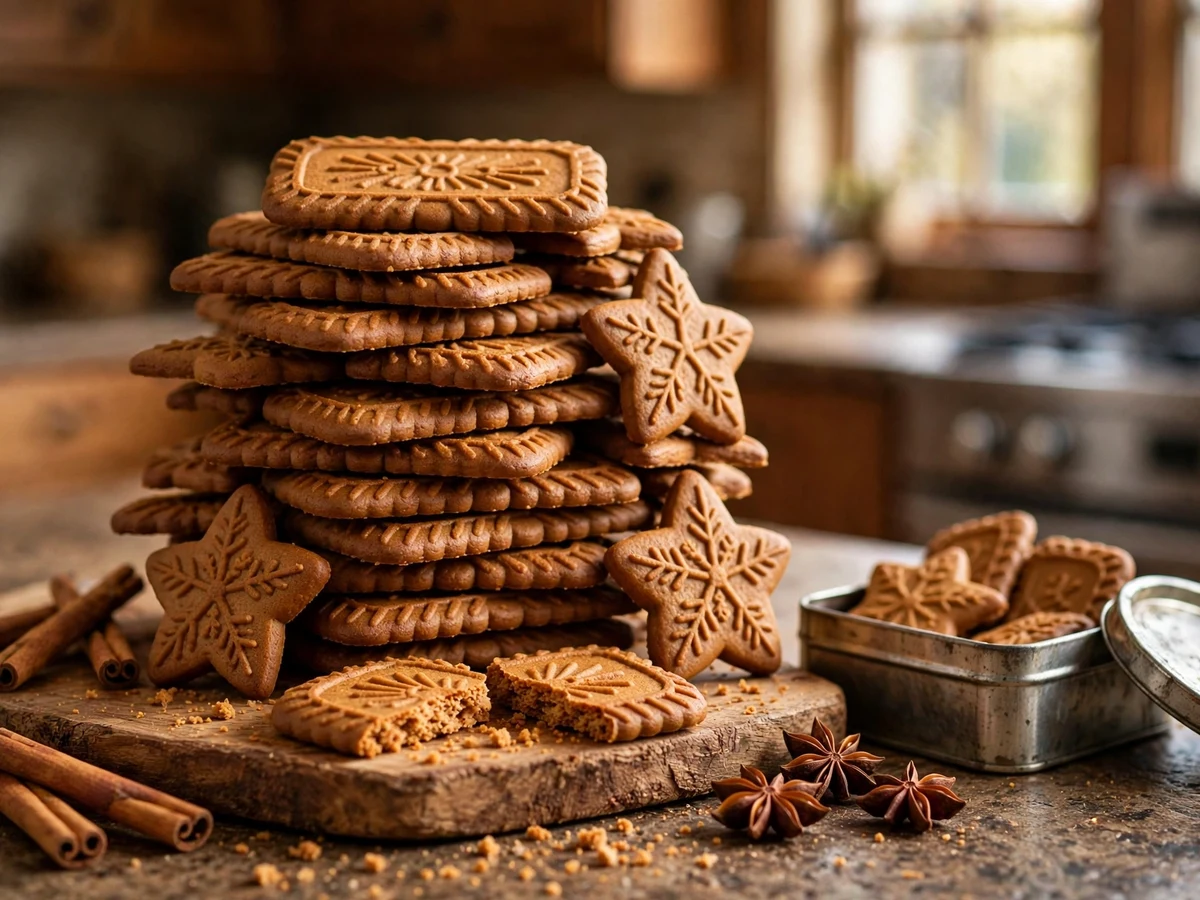
Speculoos cookies are the thin, dark, fiercely spiced biscuits of Belgium, baked for Saint Nicholas and eaten all winter long. They are not soft cookies and they do not apologize for it. A good speculoos snaps cleanly, tastes of caramel first and warm spice second, and perfumes the whole kitchen from a single tray. It is the cookie that was designed, centuries ago, to wait in a tin until it is wanted.
That waiting starts with the dough itself. This dough rests overnight before it rolls, and that rest is not a suggestion. The flour hydrates, the brown sugar melts into the butter, and the seven spices stop tasting like seven separate powders and start tasting like one warm idea. Rolled thin the next day, the dough cuts like a dream and bakes into an even, deep caramel sheet of crunch.
Bake them in November and they are still crisp at Christmas, which makes them the backbone of a calm holiday baking season. They travel in tins, they stack in kolaczki cookies boxes beside softer things, and they were born to be dunked in coffee. One batch, forty eight cookies, and one whole corner of the holiday handled weeks early.
Why Speculoos Dough Rests Before It Rolls
Speculoos dough is a low moisture dough, and low moisture doughs lie to you on day one. Freshly mixed, it feels crumbly at the edges and sticky in the middle, and it fights the rolling pin. The flour has not finished absorbing the butter and honey, so the dough tears when it is rolled thin, and thin is the entire point of this cookie.
Two hours of chilling fixes the rolling. A full night does something better: it marries the spices. Cinnamon, ginger, cardamom, nutmeg, cloves, coriander, and white pepper are all fat soluble to some degree, and given a night in a butter rich dough, they bloom. Bakers notice it in the raw dough first, which smells noticeably warmer the second day, and then in the baked cookie, where no single spice stands up and introduces itself.
The rest also protects the snap. A rested dough rolls to an even 3 millimeters without springing back, and even thickness means even baking: no pale thick centers, no scorched thin edges. If you take one idea from this recipe, take this one. The dough does the work while you sleep, and the cookies come out of the oven tasting like they came from a bakery that has made them for a hundred years.
Seven Spices, One Warm and Caramel Deep Flavor
The speculoos blend looks long on paper, but each spice has a job. Cinnamon leads, sweet and woody, at two full teaspoons. Ginger follows with a slow warmth that builds at the back of the tongue. Cardamom adds the floral, almost citrus note that makes people ask what is in these. Nutmeg deepens the middle, cloves darken the edges, and coriander, the quiet one, rounds everything with a soft lemony warmth that keeps the blend from tasting flat.
White pepper is the spice nobody expects and everybody tastes without naming. At an eighth of a teaspoon it does not make the cookie spicy; it makes the finish warm, the way a good gingerbread lingers. Skip it and the cookie is still fine. Include it and the cookie tastes like the ones from the old bakeries, which is to say, like itself.
Underneath the spices sits the caramel foundation: dark brown sugar and a spoonful of honey. Dark brown sugar brings molasses, and molasses brings the deep, almost burnt sugar flavor that defines this cookie family. The baked color should be a true caramel brown, several shades darker than a sugar cookie. If your speculoos come out pale, they are not done, no matter what the timer says.
Baked in November, Still Crisp at Christmas
Most Christmas cookies are a December problem. These are a November pleasure. Speculoos keep for three weeks in a tin at room temperature, and their flavor honestly improves across the first week as the spices settle. A batch baked on a quiet November weekend is still snapping at Christmas, which frees December for the fragile things: the frosted, the filled, the gingerbread cookies that want decorating day.
The dough is just as cooperative. Disks keep for five days in the fridge, and sliced or shaped dough freezes for two months, ready to bake from frozen with one extra minute in the oven. A baker can mix on Sunday, roll on Wednesday, and bake on Saturday without ever feeling rushed, or mix a double batch and freeze half against a cookie exchange emergency.
For gifting, the tin is the whole presentation. Stack the cookies in neat rows with parchment between the layers, close the lid, and tie it with string. No frosting to smudge, no glaze to crack, nothing fragile. Next to delicate danish butter cookies and powdered chocolate crinkle cookies, a tin of speculoos is the box that arrives exactly as beautiful as it left.
Gluten Free, Dairy Free, and Lower Sugar Roads
For a gluten free batch, use a one to one gluten free flour blend with xanthan gum, and add one extra tablespoon of honey. Gluten free doughs roll drier, so roll between two sheets of parchment and chill the cut shapes for 15 minutes before baking. The spice blend carries the cookie, and the snap survives the swap completely.
Dairy free works with a firm plant based baking stick in place of the butter, used straight from the fridge and creamed a little less. The flavor leans slightly more on the spices, which is no hardship here. Coconut oil makes a harder, greasier dough and a less clean snap; the baking stick is the better road.
Lower sugar asks for honesty: the brown sugar is structural in this cookie, not just sweetness. It melts, spreads the dough, and sets the crunch. Cutting it by a quarter is safe and barely noticed. Cutting it in half produces a dry, pale biscuit that tastes like a cracker with ambitions. Reduce gently, and let the deep bake do the flavor work instead.
Speculoos Cookies Ingredients
- 2 1/2 cups all-purpose flour (300 g), plus more for rolling
- 1 teaspoon baking soda
- 1/2 teaspoon fine sea salt
- 2 teaspoons ground cinnamon
- 1/2 teaspoon ground ginger
- 1/2 teaspoon ground cardamom
- 1/4 teaspoon ground nutmeg
- 1/4 teaspoon ground cloves
- 1/4 teaspoon ground coriander
- 1/8 teaspoon ground white pepper
- 3/4 cup unsalted butter (1 1/2 sticks), softened
- 1 cup dark brown sugar, packed
- 2 tablespoons honey
- 1 large egg, at room temperature
- 1 teaspoon vanilla extract
How to Make Speculoos Cookies
- Whisk the flour, baking soda, salt, cinnamon, ginger, cardamom, nutmeg, cloves, coriander and white pepper in a medium bowl until the spices are spread evenly through the flour.
- Beat the butter and brown sugar in a large bowl for 3 to 4 minutes, until pale and fluffy. Beat in the honey, then the egg and the vanilla, until smooth.
- Add the flour mixture in two additions and mix just until a soft dough forms and no dry streaks remain. Divide the dough in half, shape into flat disks, wrap well, and chill for at least 2 hours or overnight.
- Heat the oven to 325 degrees F. Line two baking sheets with parchment paper.
- Roll one disk on a lightly floured surface to 1/8 inch (3 mm) thick. Cut rectangles of about 2 by 3 inches, or shapes with a deep cookie cutter, and lift them onto the sheet with a thin spatula, leaving 1 inch between cookies.
- Bake for 12 to 14 minutes, rotating the sheet halfway, until the cookies are a deep, even caramel brown and firm at the edges. They will still feel slightly soft at the center, which is correct.
- Cool on the sheet for 5 minutes, then move to a rack and cool completely. Wait 24 hours before judging the crunch: the cookies turn fully crisp as they rest. Repeat with the second disk of dough.
Thin Dough, Cold Trays, and Other Crisp Secrets
Thickness is destiny. At 3 millimeters, speculoos bake through before they can stay soft, and the whole cookie sets into one crisp plane. At 6 millimeters, the center keeps a cake like softness forever, and no amount of extra baking fixes it without burning the edges. Roll thinner than feels safe, use a light hand with the flour, and check the thickness at the edges of the sheet of dough, where it quietly grows.
Cold dough and a cool tray are the second secret. Warm dough spreads and loses its cut edges, and a hot tray from the previous batch starts melting the butter on contact. Run the tray under cold water between batches if you only own one, and return cut shapes to the fridge for 10 minutes whenever the kitchen is warm. Sharp edges are not vanity; they bake more evenly than soft ones.
The third secret is the color call. These cookies should leave the oven a deep caramel brown, darker than instinct suggests. Pale speculoos taste raw in the middle no matter how long they rested. Trust the edges: firm, dark, and fragrant means done. And trust the cooling rack too. The snap finishes there, over the first hour, as the last steam leaves the crumb.
Shapes, Spice Swaps, and a Chocolate Dip
Traditional speculoos are pressed in carved wooden molds, windmills and figures of Saint Nicholas. Most of us do not own the molds, and the cookie does not mind. Deep metal cookie cutters give a clean stamped look, especially stars and hearts at Christmas, and a fluted pastry wheel cutting simple rectangles is the bakery classic. Chill shaped dough before baking and the details hold.
The spice blend bends politely. For a warmer, darker cookie, double the ginger and add a pinch of black pepper beside the white. For a gentler, bakery sweet version, cut the cloves to a pinch and raise the cinnamon to a full tablespoon. An orange version, with a teaspoon of finely grated orange zest beaten into the butter, is beautiful in December boxes and changes nothing about the method.
For a finish, dip half of each cooled cookie in melted dark chocolate and let it set on parchment. The bitterness suits the caramel spice perfectly, and the two tone look needs no other decoration. Sliced almonds pressed lightly into the dough before baking are the Dutch bakery variation; add them to one tray and keep the rest plain for the purists.
The Cookie Tin Rules: Three Weeks of Crunch
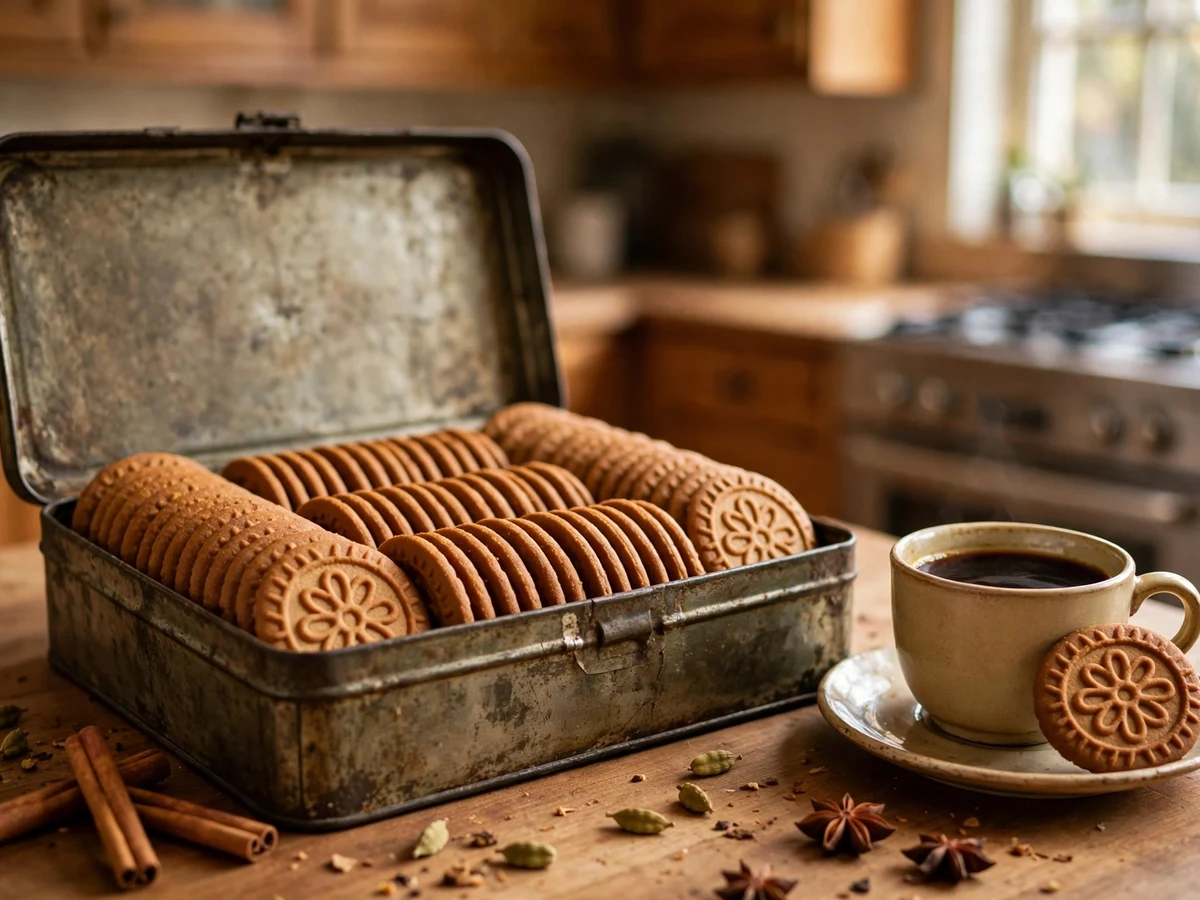
The tin matters as much as the recipe. Metal with a tight lid, parchment between the layers, room temperature, away from the stove. Speculoos keep for three weeks this way, and the flavor deepens across the first one. Keep them away from soft cookies in the same container; crisp and soft cookies trade moisture until both are mediocre, so the tin holds one kind only.
The FoodKeeper guidance from the federal food safety agencies is the reference for storage times across the holiday table, and it agrees with the bakers: dry biscuits are among the longest keeping things you will make this season. If a cookie does soften, five minutes in a 300 degree oven and a full cool on the rack brings the snap back almost completely.
Questions Bakers Ask About Speculoos Cookies
My speculoos came out soft the next day. What happened?
They were either rolled too thick or underbaked. At 3 millimeters and a deep caramel color, the cookie sets fully crisp as it cools and rests. Soft cookies can be rescued: 5 minutes in a 300 degree oven, then a complete cool on the rack.
The dough sticks to my rolling pin. How do I roll it cleanly?
The dough is too warm. Chill it until firm, roll between two sheets of parchment with the lightest dusting of flour, and lift the top sheet once halfway through to release it. Rested overnight dough rolls the cleanest of all.
Can I freeze speculoos dough?
Yes, very well. Freeze the wrapped disks for up to 2 months, or roll, cut, and freeze the shapes on a tray before bagging them. Bake shapes from frozen at the same temperature with about 1 extra minute.
My spices taste harsh and separate. Did I measure wrong?
Probably not; the dough likely skipped its rest. The spices need a night in the butter to marry, and old ground spices taste dusty instead of warm. Check the freshness of the cloves and cardamom first, and always rest the dough.
Do I need a wooden mold to make real speculoos?
No. The molds are tradition, not chemistry. Deep cookie cutters or a fluted wheel give you the same thin, crisp, deeply spiced cookie. Chill the cut shapes before baking and the edges stay sharp and detailed.
Why did my speculoos cookies come out soft the next day?
They were either rolled too thick or underbaked. At 3 millimeters and a deep caramel color, the cookie sets fully crisp as it cools and rests. Soft cookies can be rescued with 5 minutes in a 300 degree oven, then a complete cool on the rack.
How do I roll speculoos dough without it sticking?
Chill the dough until firm, then roll between two sheets of parchment with the lightest dusting of flour, lifting the top sheet once halfway through to release it. Dough rested overnight rolls the cleanest of all.
Can I freeze speculoos cookie dough?
Yes, very well. Freeze the wrapped disks for up to 2 months, or roll, cut, and freeze the shapes on a tray before bagging them. Bake shapes from frozen at the same temperature with about 1 extra minute.
Why do my speculoos spices taste harsh and separate?
The dough likely skipped its rest. The spices need a night in the butter to marry into one warm flavor. Old ground spices also taste dusty instead of warm, so check the freshness of the cloves and cardamom first.
Do I need a wooden mold to make real speculoos?
No. The molds are tradition, not chemistry. Deep cookie cutters or a fluted pastry wheel give the same thin, crisp, deeply spiced cookie. Chill the cut shapes before baking and the edges stay sharp and detailed.
Speculoos Cookies
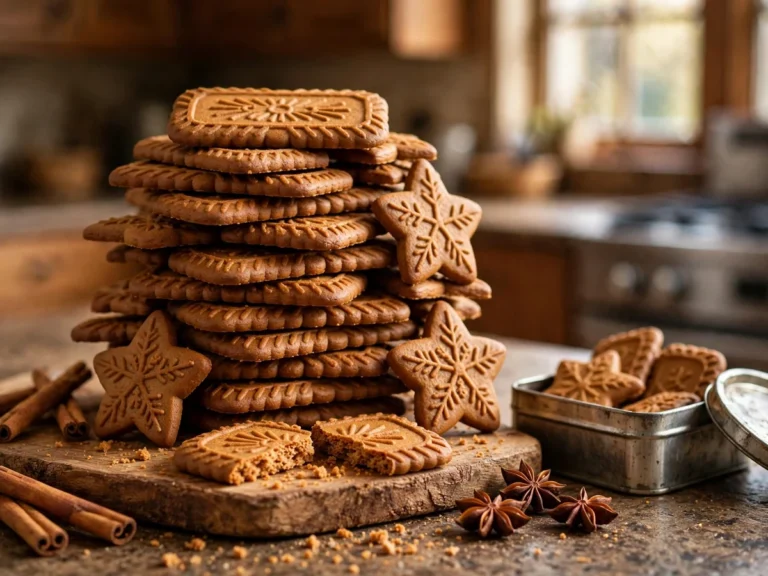
Thin Belgian spice cookies with a seven spice blend built on cinnamon, dark brown sugar for a deep caramel note, and a dough rested overnight so it rolls at 3 millimeters and bakes to a real snap. They keep crisp for three weeks in a tin, ready for coffee and Christmas cookie boxes.
- Total Time: 2 hours 45 minutes
- Yield: 48 cookies 1x
Ingredients
- 2 1/2 cups all-purpose flour (300 g), plus more for rolling
- 1 teaspoon baking soda
- 1/2 teaspoon fine sea salt
- 2 teaspoons ground cinnamon
- 1/2 teaspoon ground ginger
- 1/2 teaspoon ground cardamom
- 1/4 teaspoon ground nutmeg
- 1/4 teaspoon ground cloves
- 1/4 teaspoon ground coriander
- 1/8 teaspoon ground white pepper
- 3/4 cup unsalted butter (1 1/2 sticks), softened
- 1 cup dark brown sugar, packed
- 2 tablespoons honey
- 1 large egg, at room temperature
- 1 teaspoon vanilla extract
Instructions
- Whisk the flour, baking soda, salt, cinnamon, ginger, cardamom, nutmeg, cloves, coriander and white pepper in a medium bowl until the spices are spread evenly through the flour.
- Beat the butter and brown sugar in a large bowl for 3 to 4 minutes, until pale and fluffy. Beat in the honey, then the egg and the vanilla, until smooth.
- Add the flour mixture in two additions and mix just until a soft dough forms and no dry streaks remain. Divide the dough in half, shape into flat disks, wrap well, and chill for at least 2 hours or overnight.
- Heat the oven to 325 degrees F. Line two baking sheets with parchment paper.
- Roll one disk on a lightly floured surface to 1/8 inch (3 mm) thick. Cut rectangles of about 2 by 3 inches, or shapes with a deep cookie cutter, and lift them onto the sheet with a thin spatula, leaving 1 inch between cookies.
- Bake for 12 to 14 minutes, rotating the sheet halfway, until the cookies are a deep, even caramel brown and firm at the edges. They will still feel slightly soft at the center, which is correct.
- Cool on the sheet for 5 minutes, then move to a rack and cool completely. Wait 24 hours before judging the crunch: the cookies turn fully crisp as they rest. Repeat with the second disk of dough.
- Prep Time: 30 minutes
- Cook Time: 14 minutes
Nutrition
- Serving Size: 2
- Calories: 130
- Sodium: 95
- Saturated Fat: 4
- Protein: 1
- Cholesterol: 20