
In this article:
- Why These Creamed Pearl Onions Start in a Hot Pan
- Sweet Onion, Silk Sauce, and a Crumb That Browns
- Cooked Wednesday, Reheated Thursday Without Splitting
- Lighter Cream, Dairy Free, and Other Gentle Versions
- Creamed Pearl Onions Ingredients
- How to Make Creamed Pearl Onions
- Peeling Secrets and Sauce Rescues
- Fresh, Frozen, or Jarred: What Changes
- Fridge, Freezer, and the Day Two Reheat
- Questions Cooks Ask About Creamed Pearl Onions
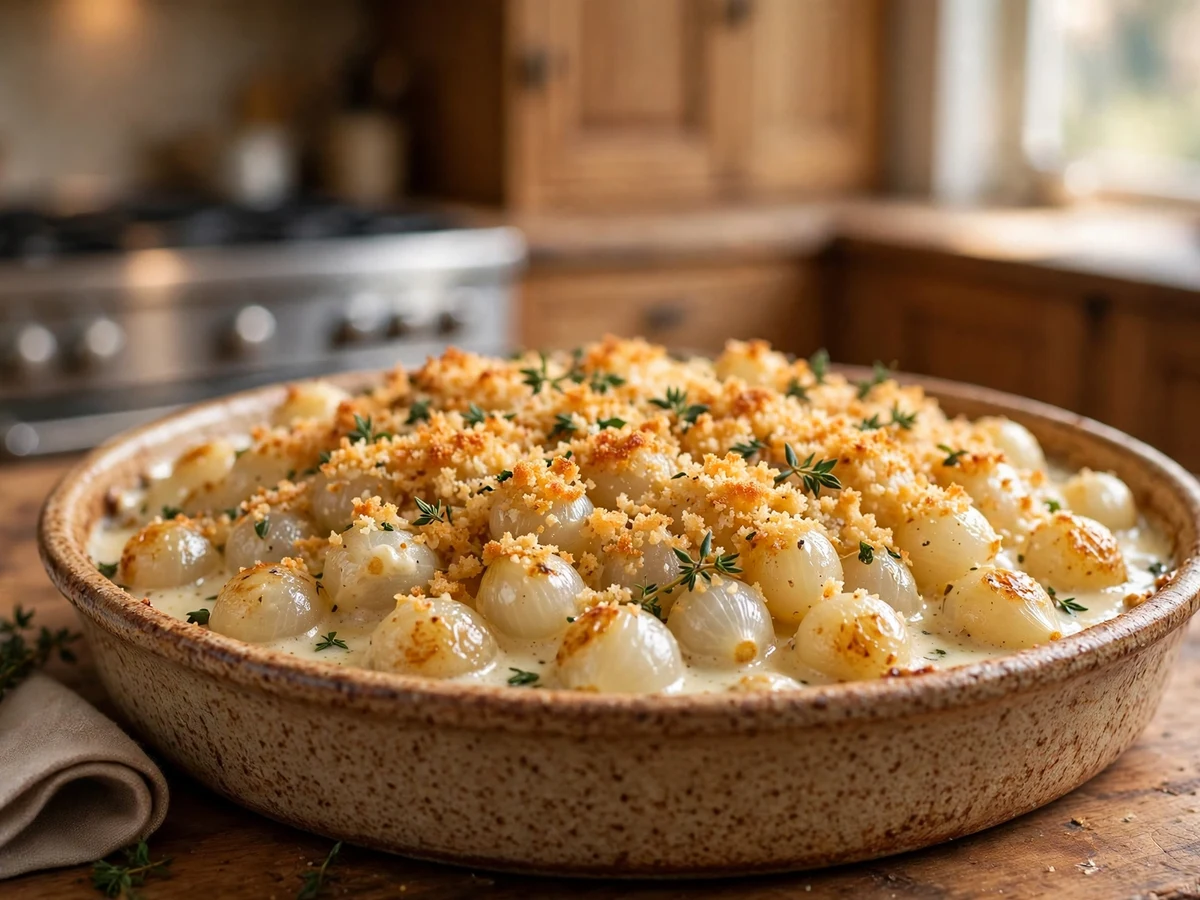
Creamed pearl onions are the quiet classic of the Thanksgiving table, the dish that looks modest and disappears early. Small whole onions, tender all the way through, held in a pale cream sauce that tastes faintly of nutmeg and thyme. When they are made lazily, they are pale in every sense: boiled onions in a thin sauce, sweet and soft and forgettable. The onions deserve better, and better turns out to be simple.
This version gives the onions a first life in a hot pan before they ever meet the cream. A short blanch loosens the skins, a real drying on a towel sets them up, and five minutes of searing in butter paints them gold and wakes up their sugars. Only then do they simmer in the sauce, so the finished dish tastes roasted and creamed at once, not just boiled and poured over.
It is also built for the real shape of the holiday. The whole dish cooks on Wednesday, waits in the fridge in its baking dish, and reheats on Thursday while the herb butter roast turkey rests. Two minutes under the broiler at the end, and a Parmesan crumb goes crisp over the top. It takes one burner on Wednesday and almost none of your attention on Thursday.
Why These Creamed Pearl Onions Start in a Hot Pan
Creamed pearl onions fail in one predictable way: raw, wet onions dropped straight into a cream sauce. They steam instead of cooking, the sauce stays thin and pale, and the onion flavor reads as boiled. The sauce cannot fix what the pan never did. Searing is not decoration here, it is the whole flavor plan.
Heat does two things to a pearl onion. First, it drives off the surface water that would otherwise dilute the sauce and stop any browning before it starts. Second, it caramelizes the natural sugars at the cut faces and curves, giving the onions a deep, sweet, almost roasted note that cream alone never provides. That golden edge survives the simmer and shows up in every bite.
The blanch before the sear is its own small piece of engineering. Sixty seconds in boiling water loosens the skins so they slip off between your fingers, and it seasons the onions lightly from the outside. The ice bath stops the cooking, and the towel does the quiet critical work. A dry onion browns; a wet onion steams. Ten minutes of patience here decides the dish.
Sweet Onion, Silk Sauce, and a Crumb That Browns
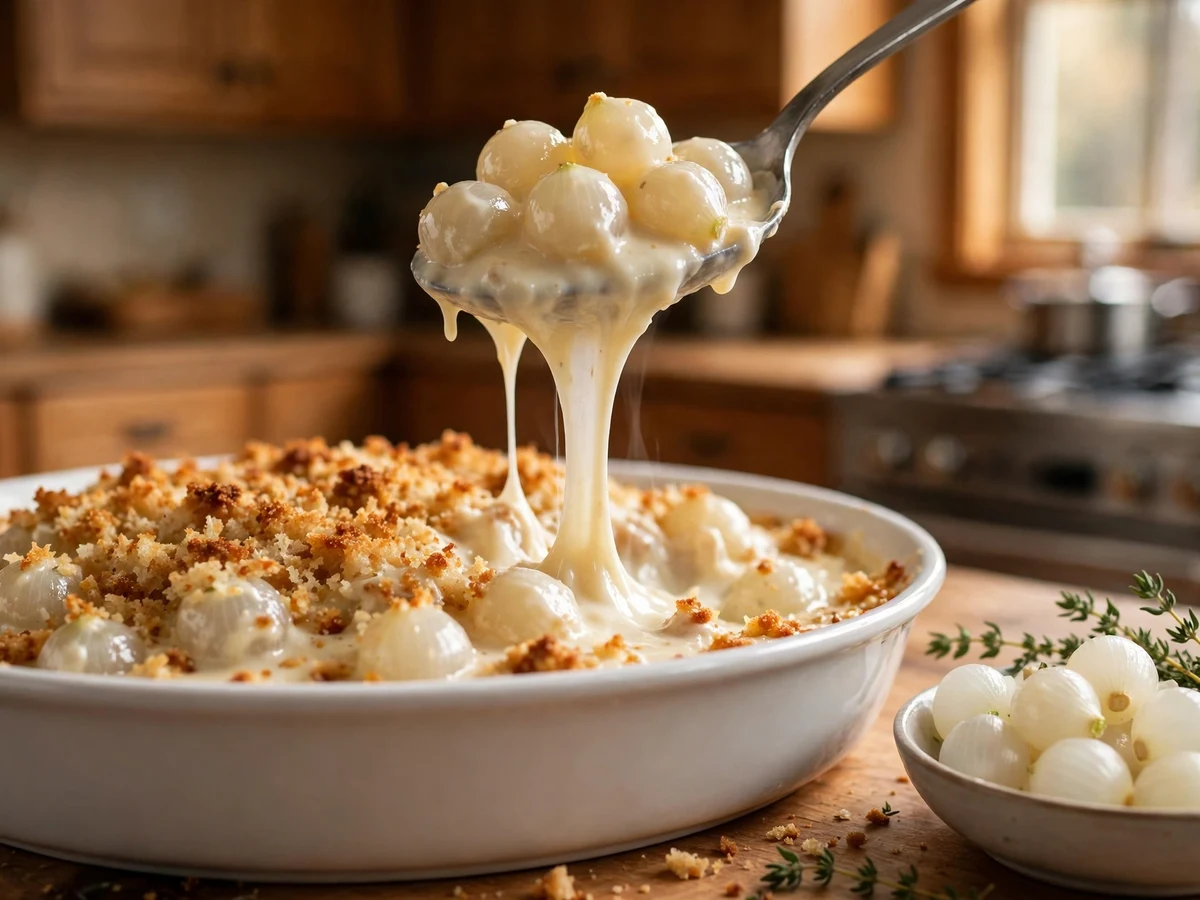
A pearl onion is mostly sugar waiting for an invitation. Raw, it bites; simmered gently, it turns mellow and almost fruity, with a texture that gives under the fork and then melts. Against that sweetness, the sauce stays deliberately restrained: butter, a light roux, broth, cream, and milk, so it coats instead of drowning. The onions should look glazed, not submerged.
The seasoning is the old fashioned one, and it earns its place. Freshly grated nutmeg is the spice this dish was built around, warm and faintly woody, used at a quarter teaspoon so it perfumes rather than shouts. Thyme adds a green, savory line underneath, and a bay leaf rounds the sauce while it simmers. Black pepper at the end keeps the sweetness honest.
Then there is the finish, which most versions skip entirely. A scatter of panko and Parmesan goes under the broiler for two minutes, until it turns deep gold and crisp at the edges. That crackle against the silk of the sauce is the contrast the dish has been missing for a century. Spoon through the crumb, and every serving carries a little of both worlds.
Cooked Wednesday, Reheated Thursday Without Splitting
Thanksgiving cooking is a scheduling problem wearing an apron. The oven belongs to the turkey, the burners belong to the gravy and the green bean casserole from scratch, and the cook belongs to everyone at once. A side dish that finishes on Wednesday and only reheats on Thursday is not a shortcut, it is a strategy, and creamed pearl onions are unusually good at it.
Here is the split. On Wednesday, do everything through the simmer: peel, sear, sauce, and cook the onions until just tender. Tip the whole pan into the baking dish, but keep the panko and Parmesan mixture in a small container at room temperature. The crumb goes on cold and soggy if it waits in the fridge, so it stays out of the dish until serving day.
On Thursday, the dish reheats covered at 325 degrees for about 20 minutes, until the sauce bubbles gently at the edges. Cream sauces split when they are rushed at high heat, so gentle is the rule; if the sauce looks tight, stir in a spoonful of milk as it warms. Then the crumb goes on, two minutes under the broiler, and the dish reaches the table beside the make ahead mashed potatoes looking freshly made, because the part anyone notices, the crisp top, literally is.
Lighter Cream, Dairy Free, and Other Gentle Versions
The sauce is flexible because the roux does most of the work. For a lighter plate, replace the heavy cream with half and half and keep the milk; the sauce will be a touch thinner, so simmer it one minute longer and lean on the Parmesan at the end. Whole milk alone also works, with the same longer simmer, and the onions carry the dish more than the cream does.
For a dairy free version, sear in olive oil, build the roux with the same oil, and use a full fat oat cooking cream with vegetable broth. The nutmeg and thyme stay, and a spoonful of white miso, whisked in off the heat, returns some of the savory depth that butter usually provides. Skip the Parmesan crumb and use panko tossed with olive oil and a pinch of salt instead.
Vegetarian tables are already covered: the broth in this recipe is vegetable, and the dish sits happily next to roasted vegetables and the broccoli cheese casserole without anyone feeling like a side note. One caution for every version: the sear is not the place to save effort. Lighter sauces forgive almost anything except a pale onion.
Creamed Pearl Onions Ingredients
- 2 pounds fresh pearl onions (about 60), or 2 pounds frozen peeled pearl onions, thawed
- 3 tablespoons unsalted butter, divided
- 2 tablespoons all-purpose flour
- 1 cup low sodium vegetable broth
- 1 cup heavy cream
- 1/2 cup whole milk
- 1 bay leaf
- 1 teaspoon fresh thyme leaves, plus more for serving
- 1/4 teaspoon freshly grated nutmeg
- 3/4 teaspoon kosher salt, plus more for the blanching water
- 1/2 teaspoon black pepper
- 1/4 cup finely grated Parmesan cheese, divided
- 1/3 cup panko bread crumbs
- 1 tablespoon chopped fresh parsley
How to Make Creamed Pearl Onions
- For fresh onions, cut a small X in the root end of each one. Blanch in boiling salted water for 60 seconds, move to a bowl of ice water, and slip the skins off with your fingers. Spread on a clean towel and pat completely dry. Frozen onions only need thawing and the same thorough drying.
- Heat a large, deep skillet over medium high heat. Add 2 tablespoons of the butter and, when it foams, add the onions in a single layer. Sear for 5 to 6 minutes, shaking the pan now and then, until golden on several sides. Tip the onions onto a plate.
- Lower the heat to medium. Add the remaining 1 tablespoon of butter and whisk in the flour. Cook for 1 minute, whisking constantly, until it smells faintly nutty.
- Pour in the broth slowly, whisking to a smooth sauce, then whisk in the cream and the milk. Add the bay leaf, thyme, nutmeg, salt and pepper. Simmer for 3 to 4 minutes, until the sauce coats the back of a spoon.
- Return the onions to the pan and stir in half of the Parmesan. Simmer gently for 8 to 10 minutes, until a paring knife slides into the largest onion with only slight resistance. Fish out the bay leaf.
- Heat the broiler. Tip the onions and all of the sauce into a shallow baking dish. Toss the panko with the remaining Parmesan and scatter it over the top.
- Broil for 2 to 3 minutes, watching closely, until the crumb is deep golden. Rest 5 minutes, scatter with the parsley and extra thyme, and serve warm.
Peeling Secrets and Sauce Rescues
The peel comes off easily when three things line up: a small X cut at the root end, a full 60 seconds in the boil, and cold water right after. Squeeze each cooled onion gently at the stem end and it slides out of its skin. If a skin clings, that onion needed ten more seconds in the water; set it aside and give the stubborn ones a second short dip together.
Buy onions of a similar size whenever you can. Pearl onions cook by diameter, and a pan of mixed sizes finishes unevenly, the small ones collapsing while the large ones stay firm at the center. If the bag is mixed, sort as you peel and give the largest onions a two minute head start in the simmer before the rest go in.
Sauce rescues are simple once you know the rules. Too thin: simmer two more minutes uncovered, or whisk a teaspoon of flour into a spoonful of cold milk and stir it in. Too thick: milk, a tablespoon at a time, off the boil. Grainy after reheating: it boiled; take it off the heat, whisk in a splash of cold cream, and warm it gently without letting it bubble again. Almost every failure is a temperature failure, and temperature is the one thing fully in your control.
Fresh, Frozen, or Jarred: What Changes
Fresh pearl onions are the first choice in November, when markets stock them for the holidays. They sear the best, hold their shape, and taste the sweetest. Their only cost is the peeling, and the blanch method in this recipe turns that into about ten relaxed minutes for two pounds. Buy them a few days ahead; they keep well in a cool, dry spot.
Frozen peeled pearl onions are the honest weeknight answer and a very good holiday one. They are blanched before freezing, so they need no peeling at all, but they carry more surface water than fresh. Thaw them fully, drain them, and dry them longer than feels reasonable, a full 15 minutes on towels. A dry frozen onion sears almost as well as a fresh one; a damp one never will.
Jarred onions are the emergency option, and they come with a salt warning. They sit in brine, so they arrive seasoned, sometimes firmly. Drain them well, skip the salt in the sauce at first, taste after the simmer, and only then adjust. Their texture is softer, so cut the simmer to about 5 minutes. The dish still works; it simply asks for a lighter hand at the end.
Fridge, Freezer, and the Day Two Reheat
Leftovers keep for three to four days in the fridge, in the baking dish or a sealed container. The USDA leftovers guidance gives the basics: refrigerate within two hours of serving and reheat until hot all the way through. A covered dish at 325 degrees for 15 to 20 minutes treats the sauce kindly; stir once halfway and add a spoonful of milk if it has tightened.
Freezing is the one place this dish says no, or at least not happily. Cream sauces tend to separate as they thaw, and pearl onions soften toward mush. If you must freeze, freeze the seared onions without the sauce for up to a month, then build a fresh sauce on serving day. The onions were the work; the sauce is ten minutes, and the dish tastes made to order.
Questions Cooks Ask About Creamed Pearl Onions
My sauce split while reheating. Can it be saved?
Usually, yes. Take the dish off the heat, whisk in a splash of cold cream or milk, and warm it gently without letting it boil. The split came from high heat, so a low, patient reheat with a little fresh dairy almost always brings the sauce back together.
The onions are tender outside but firm in the middle. What went wrong?
They were large, or the simmer was short. Pearl onions cook by size, so test the biggest one with a paring knife before serving. Five more gentle minutes in the sauce fixes it, and sorting by size at peeling time prevents it.
Can I skip the broiler and the crumb?
You can, and the dish will still be good, but the crumb is the contrast that makes people ask for the recipe. If the broiler is busy, toast the panko and Parmesan in a dry skillet for 3 minutes and scatter them on at the table.
How far ahead can I make creamed pearl onions?
Two days is the sweet spot. Cook through the simmer on day one, refrigerate in the baking dish, and keep the crumb separate. Reheat covered at 325 degrees for about 20 minutes on serving day, then crumb and broil.
Can I make the sauce with only milk, no cream?
Yes. Use 1 1/2 cups of whole milk in place of the cream and milk, and simmer the sauce one extra minute so the roux sets it properly. Stir in the Parmesan at the end for body, and keep the reheat gentle.
My sauce split while reheating creamed pearl onions. Can it be saved?
Usually, yes. Take the dish off the heat, whisk in a splash of cold cream or milk, and warm it gently without letting it boil. The split came from high heat, so a low, patient reheat with a little fresh dairy almost always brings the sauce back together.
Why are my pearl onions tender outside but firm in the middle?
They were large, or the simmer was short. Pearl onions cook by size, so test the biggest one with a paring knife before serving. Five more gentle minutes in the sauce fixes it, and sorting by size at peeling time prevents it.
Can I skip the broiler finish on creamed pearl onions?
You can, and the dish will still be good, but the Parmesan crumb is the contrast that makes people ask for the recipe. If the broiler is busy, toast the panko and Parmesan in a dry skillet for 3 minutes and scatter them over at the table.
How far ahead can I make creamed pearl onions?
Two days is the sweet spot. Cook through the simmer on day one, refrigerate in the baking dish, and keep the crumb mixture separate at room temperature. Reheat covered at 325 degrees for about 20 minutes on serving day, then add the crumb and broil.
Can I make the sauce with only milk and no cream?
Yes. Use 1 1/2 cups of whole milk in place of the cream and milk, and simmer the sauce one extra minute so the roux sets it properly. Stir in the Parmesan at the end for body, and keep any reheat gentle.
Creamed Pearl Onions
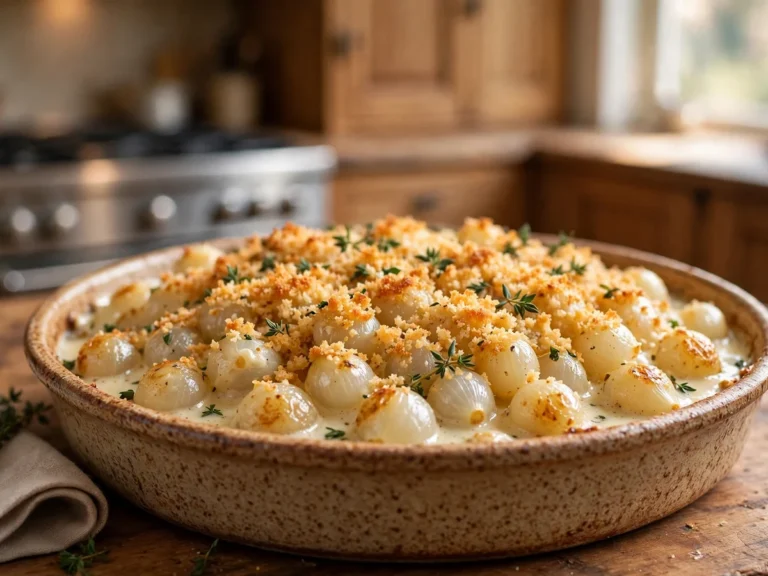
Fresh pearl onions peeled with a 60 second blanch, dried well and seared golden in butter, then simmered in a light roux cream sauce with nutmeg and thyme and finished under the broiler with a Parmesan panko crumb. Built for the Wednesday cook and the Thursday table, with a reheat that keeps the sauce smooth.
- Total Time: 50 minutes
- Yield: 8 servings 1x
Ingredients
- 2 pounds fresh pearl onions (about 60), or 2 pounds frozen peeled pearl onions, thawed
- 3 tablespoons unsalted butter, divided
- 2 tablespoons all-purpose flour
- 1 cup low sodium vegetable broth
- 1 cup heavy cream
- 1/2 cup whole milk
- 1 bay leaf
- 1 teaspoon fresh thyme leaves, plus more for serving
- 1/4 teaspoon freshly grated nutmeg
- 3/4 teaspoon kosher salt, plus more for the blanching water
- 1/2 teaspoon black pepper
- 1/4 cup finely grated Parmesan cheese, divided
- 1/3 cup panko bread crumbs
- 1 tablespoon chopped fresh parsley
Instructions
- For fresh onions, cut a small X in the root end of each one. Blanch in boiling salted water for 60 seconds, move to a bowl of ice water, and slip the skins off with your fingers. Spread on a clean towel and pat completely dry. Frozen onions only need thawing and the same thorough drying.
- Heat a large, deep skillet over medium high heat. Add 2 tablespoons of the butter and, when it foams, add the onions in a single layer. Sear for 5 to 6 minutes, shaking the pan now and then, until golden on several sides. Tip the onions onto a plate.
- Lower the heat to medium. Add the remaining 1 tablespoon of butter and whisk in the flour. Cook for 1 minute, whisking constantly, until it smells faintly nutty.
- Pour in the broth slowly, whisking to a smooth sauce, then whisk in the cream and the milk. Add the bay leaf, thyme, nutmeg, salt and pepper. Simmer for 3 to 4 minutes, until the sauce coats the back of a spoon.
- Return the onions to the pan and stir in half of the Parmesan. Simmer gently for 8 to 10 minutes, until a paring knife slides into the largest onion with only slight resistance. Fish out the bay leaf.
- Heat the broiler. Tip the onions and all of the sauce into a shallow baking dish. Toss the panko with the remaining Parmesan and scatter it over the top.
- Broil for 2 to 3 minutes, watching closely, until the crumb is deep golden. Rest 5 minutes, scatter with the parsley and extra thyme, and serve warm.
- Prep Time: 25 minutes
- Cook Time: 25 minutes
Nutrition
- Serving Size: 3
- Calories: 185
- Sodium: 320
- Saturated Fat: 8
- Protein: 3
- Cholesterol: 40