
In this article:
- What Makes a Macaroon Chewy, Not Dry
- Coconut Macaroon Ingredients
- Making Coconut Macaroons
- Whipping the Whites: Soft Peaks, Gentle Folds
- The Chocolate Bottom, and When to Skip It
- Cookie Tins, Gifting and Keeping Them Fresh
- Flavor Twists for the Next Batch
- Small Cookies, Big Coconut
- Coconut Macaroon Questions
Coconut macaroons are the Christmas cookie with the shortest road from bowl to glory: crisp, deeply golden strands outside, a soft and chewy center inside, and a dark chocolate bottom under it all. No flour, no chilling, no mixer gymnastics.
The whole recipe leans on one ratio. Plenty of sweetened coconut, just enough sweetened condensed milk to bind it, and whipped egg whites to hold the little mounds tall. Get that balance right and the cookies bake up like small, toasty haystacks.
They also happen to be the cookie tin hero of December. They keep for a week, travel without crumbling into dust, and freeze beautifully. Bake them once and your gifting is half done.
One naming note before we start, because December party guests always ask. These are macaroons, the coconut mounds, not the pastel French macarons with almond flour and filling. Both are lovely. Only one of them can be stirred together in ten minutes by a tired cook in December.
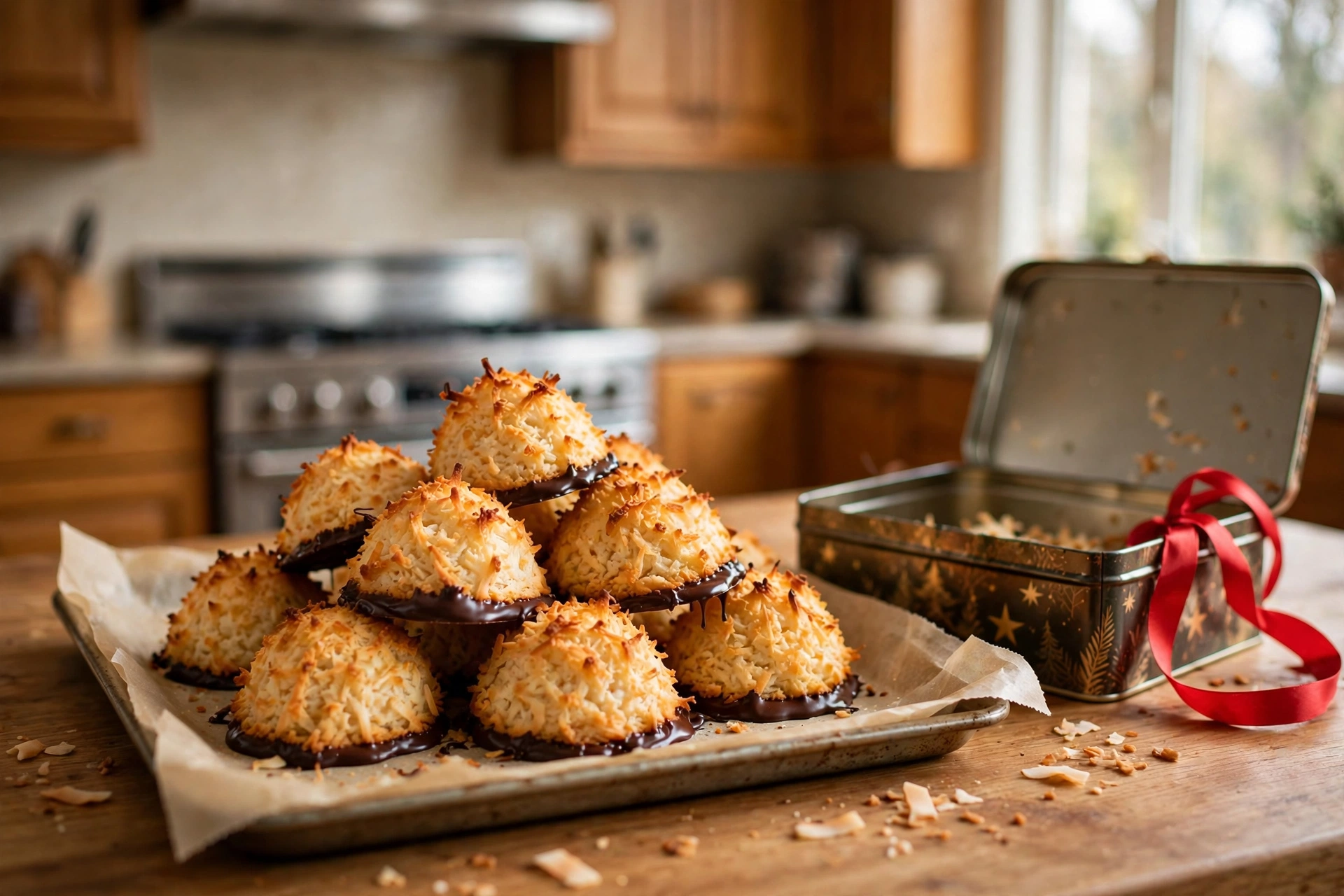
What Makes a Macaroon Chewy, Not Dry
Coconut macaroons turn chewy when the condensed milk is measured with respect. Too much and the mounds slump, spread and stay wet in the middle. Too little and the coconut bakes into sweet, dry shreds that shatter instead of yielding.
Our ratio is settled: 397 g of sweetened shredded coconut to 234 g of sweetened condensed milk. The mixture should feel like wet sand that holds a squeeze. Press a handful; it should clump and keep the shape of your fist for a moment.
Sweetened coconut is doing quiet work here. Its syrup coating feeds the chew and helps the strands toast evenly. Unsweetened or desiccated coconut drinks the milk differently and bakes drier, so save it for curries and granola.
Scoop size is the second lever. A packed 1 1/2 tablespoon scoop gives a mound with enough mass to stay moist in the middle while the outside toasts. Half sized scoops bake through before they brown, and double sized ones toast outside while the center stays raw and sticky.
Freshness of the coconut matters more than brand. A bag that has sat open in the pantry for months dries out, and dry coconut drinks more milk than the ratio allows. Rub a pinch between your fingers; it should feel pliable and smell faintly sweet, never dusty.
It is a rich little cookie, and the numbers explain why. Databases such as USDA FoodData Central list sweetened shredded coconut near 480 calories per 100 g, most of that from the coconut itself. A small, satisfying cookie is the whole point.
A low oven finishes the job. At 325°F the edges toast slowly while the centers set without drying, and the sugars in the milk deepen into a gentle caramel note. Rush them hotter and the tips scorch before the middle sets.
Rack position plays a quiet role too. The middle rack gives the most even toast; the lowest rack browns the bottoms fast and suits the undipped version. If your oven runs hot at the back, turn the sheet once, halfway through, and the whole tray finishes the same color.
Color is your doneness cue, not the clock alone. Look for deep gold on the tips and edges, with paler gold between the strands. The centers will feel slightly soft under a fingertip and firm up as they cool. Pale and glossy means give them three more minutes.
Coconut Macaroon Ingredients
Five ingredients build the cookie, and two more finish it. Everything is a supermarket staple, and the one specialty item, sweetened shredded coconut, sits in the baking aisle all year.
- 5 1/3 cups (397 g) sweetened shredded coconut
- 3/4 cup (234 g) sweetened condensed milk
- 1 teaspoon (5 g) vanilla extract
- 1/4 teaspoon (1 g) almond extract
- 1/4 teaspoon (1 g) fine sea salt
- 2 large egg whites, at room temperature (about 66 g)
- 4 ounces (113 g) semisweet chocolate, chopped
- 1 teaspoon (5 g) coconut oil
Condensed milk is not evaporated milk, and the swap fails quietly until the cookies spread into lace. The can should feel heavy and the milk should pour in a slow ribbon. You will use about two thirds of a standard 14 ounce (397 g) can.
Room temperature egg whites whip faster and taller. Separate the eggs while they are cold, since the yolks part cleanly then, and let the whites sit out for 30 minutes. Save the yolks for tomorrow’s scrambled eggs or a small custard.
For the chocolate, choose a bar or chips you would happily eat plain. Semisweet in the 55 to 65 percent range balances the sweet coconut without turning bitter. Milk chocolate works for children and very sweet palates, but it sets softer and melts faster in warm rooms.
Making Coconut Macaroons
The method is short, but the order matters. Coconut and milk first, whites whipped separately, then a gentle fold that keeps the air where it belongs.
- Heat the oven to 325°F. Line two baking sheets with parchment paper.
- Stir the coconut, condensed milk, vanilla, almond extract and salt together in a large bowl until every strand looks coated and glossy.
- In a clean, dry bowl, whisk the egg whites until they hold firm but still glossy peaks.
- Fold half the whites into the coconut mixture to loosen it, then fold in the rest until no white streaks remain.
- Scoop the mixture with a 1 1/2 tablespoon cookie scoop, packing it firmly, and set the mounds 1 inch apart on the prepared sheets. You should get about 24.
- Bake one sheet at a time for 20 to 24 minutes, until the tips and edges are deep golden and the centers feel set.
- Cool the macaroons on the sheet for 10 minutes, then move them to a rack to cool completely.
- Melt the chocolate and coconut oil together in short microwave bursts, stirring between each, until smooth.
- Dip the bottom of each cooled macaroon into the chocolate, let the excess drip off, and set it back on parchment until the chocolate is firm, about 20 minutes.
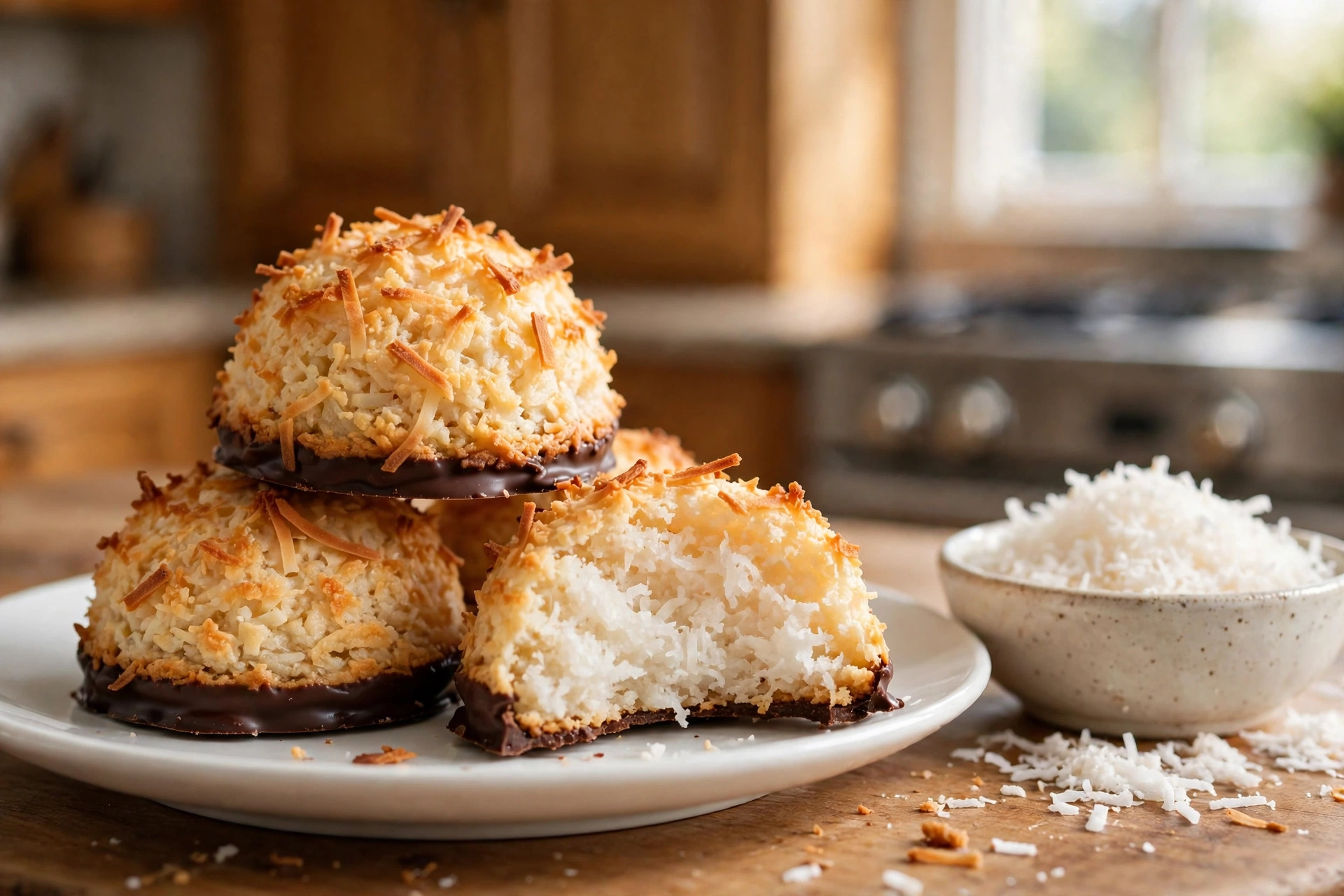
A finished macaroon should feel light for its size, with a bottom that snaps faintly when you bite through the chocolate. Serve them the same day if you can; the contrast between crisp edge and soft center is at its best.
If a test cookie spreads more than you like, the mixture needs two things: a firmer pack in the scoop and ten quiet minutes of rest before baking, which lets the coconut drink in the milk. Bake one test cookie first whenever you change brands of coconut.
Whipping the Whites: Soft Peaks, Gentle Folds
Recipes argue about egg whites more than any other part of this cookie. Some skip them, some stir them in raw, and some whip them to a foam. Each choice bakes a different cookie, so it helps to know what you are choosing.
Raw or absent whites give a dense, candy like mound that spreads a little and eats like coconut fudge. Pleasant, but heavy. Whipped whites fold air into the mixture, so the mounds stand tall and the center stays soft instead of compacted.
We whip to firm, glossy peaks, then fold in two additions. The first loosens the thick coconut base; the second disappears with a few slow turns of the spatula. Stop as soon as the streaks vanish, because every extra fold spends air you just made.
The bowl and whisk must be truly clean. A trace of grease, a speck of yolk, even butter residue from an earlier recipe will keep the whites low and foamy instead of tall. Wipe the bowl with a paper towel dampened with a little vinegar if you suspect any film.
One caution from the FDA egg safety guidance: whip and bake in the same session, and never leave the raw mixture sitting out while you run errands. These cookies reward a cook who finishes what she starts.
The Chocolate Bottom, and When to Skip It
The chocolate bottom is our signature on this cookie, a thin dark layer that snaps against the chew. It also has a practical gift: it seals the base, so the macaroons release cleanly from paper and stack in tins without sticking together.
Keep the layer thin. Dip, let the excess drip back into the bowl, and give the cookie a small shake. A thick shell overwhelms the coconut and cracks away in sheets. A thin one clings and eats like part of the cookie.
Set the dipped cookies on fresh parchment, chocolate side down, and leave them alone until firm. Room temperature takes about 20 minutes; the fridge takes 10 but can dull the shine. Either way, do not stack them until the chocolate has fully set.
If you prefer a saucepan to the microwave, melt the chocolate in a heatproof bowl set over barely simmering water, keeping the bowl dry. A single drop of water can seize the whole batch into grainy paste. The coconut oil keeps the set chocolate supple enough to bite cleanly.
White chocolate works for a sweeter, prettier finish, and a drizzle over the tops looks festive on a cookie tray. Skip chocolate entirely and the macaroons stay classic and a little lighter. The recipe forgives all three choices.
For a party tray, do both finishes in one batch: dip half the cookies, drizzle the other half with thin zigzags from a fork. The two styles side by side look like a bakery box, and guests enjoy choosing. A few red and green sprinkles on the wet drizzle mark them as Christmas at a glance.
Cookie Tins, Gifting and Keeping Them Fresh
Few Christmas cookies keep as graciously as these. In a sealed tin at room temperature, coconut macaroons stay chewy for up to a week, and the flavor deepens by day two. Separate the layers with parchment so the chocolate bottoms stay neat.
For gifting, pack them the day after baking, once the chocolate is fully firm. They travel beside sturdy neighbors like our snowball cookies and cranberry pistachio biscotti without complaint. Our Free Recipe Cards hub holds the printable cards to tuck into each tin.
Freezing is where they shine. Freeze the undipped cookies solid on a tray, then bag them for up to 3 months. Thaw at room temperature for an hour and dip them in chocolate the day you plan to give or serve them.
Day two deserves a mention of its own. Overnight, the coconut drinks in a little more of the milk, the flavors marry, and the center turns even softer while the toasted edges keep their crunch. Many bakers quietly prefer them on the second day, and we count ourselves among them.
Refrigeration is the one storage route to avoid. The cold dries the coconut and turns the chew leathery within two days. If your kitchen runs warm, a cool pantry corner beats the fridge every time.
Mailing them works better than most cookies. Pack the tin snugly so nothing rattles, cushion it inside the shipping box, and choose the fastest reasonable service. Avoid mailing in a warm spell if the chocolate bottoms matter to you; a week of cool December weather is their friend.
Flavor Twists for the Next Batch
A spoonful of lime or orange zest folded into the base brightens the whole batch, and a pinch of cinnamon leans it toward the holidays. Keep additions dry; wet fruit and juices loosen the mixture and flatten the mounds.
For an almond joy direction, press a whole roasted almond into the top of each mound before baking, then dip as written. For a mocha batch, stir 1 teaspoon (2 g) of instant espresso powder into the condensed milk first.
Chocolate can also move inside the cookie. Fold 1/2 cup (85 g) of mini chocolate chips into the mixture and skip the dip. The chips melt into pockets and the tops toast a shade darker.
One last direction for citrus lovers: replace the almond extract with 1 teaspoon (2 g) of finely grated orange zest and dip the bottoms in white chocolate. The result tastes like the holidays in a warmer climate, bright on top of all that toasted coconut.
A peppermint version suits the season: swap the almond extract for 1/4 teaspoon (1 g) of peppermint extract and finish the dipped bottoms with a pinch of crushed candy cane while the chocolate is wet. The mint stays gentle and the red flecks do the decorating for you.
Build the tin around contrast. These soft mounds sit happily next to the crisp snap of kolaczki cookies and the rich peanut butter of buckeye candy. One tin, three textures, zero leftovers.
Small Cookies, Big Coconut
Coconut macaroons ask for five ingredients and half an hour, and they pay you back in gold tipped, chocolate bottomed cookies that taste like you fussed. That trade never gets old in December.
Bake a batch for the tin and a batch for the house. The second one is not greed. It is experience talking.
Coconut Macaroon Questions
What is the difference between a macaroon and a macaron?
A macaroon is a mound of shredded coconut bound with condensed milk and egg white, baked until golden. A macaron is a French sandwich cookie made from almond flour and meringue, filled with ganache or buttercream. Different cookies, different spellings, endless confusion.
Why did my coconut macaroons spread out flat?
The mixture was too wet, usually from extra condensed milk or whites folded in raw and runny. Measure the milk by weight, whip the whites to firm peaks, and pack the scoop firmly so each mound starts compact.
Can I use unsweetened coconut instead of sweetened?
You can, but the cookies bake drier and less chewy, because sweetened coconut carries syrup that feeds the soft center. If unsweetened is all you have, add 2 tablespoons (25 g) of granulated sugar to the base and expect a firmer bite.
Can I swap evaporated milk for sweetened condensed milk?
No. Evaporated milk is thin and unsweetened, so the mixture will not bind and the mounds will spread and crumble. Sweetened condensed milk is both the glue and most of the sweetness in this recipe.
Should I dip the macaroons in chocolate the same day I bake them?
Yes, once they are fully cool. Dipping seals the bottoms and keeps the centers moist for days. Let the chocolate set completely before tinning them, about 20 minutes at room temperature.
Coconut Macaroons: Chewy, Golden, Dipped in Chocolate
Chewy coconut macaroons made from sweetened shredded coconut, sweetened condensed milk and whipped egg whites, baked at 325°F until the tips turn deep golden, then dipped in dark chocolate. Naturally flourless, five base ingredients, and made for Christmas cookie tins.
- Total Time: 45 minutes
- Yield: 24 cookies 1x
Ingredients
5 1/3 cups (397 g) sweetened shredded coconut
1 teaspoon (5 g) vanilla extract
1/4 teaspoon (1 g) almond extract
1/4 teaspoon (1 g) fine sea salt
2 large egg whites, at room temperature (about 66 g)
4 ounces (113 g) semisweet chocolate, chopped
1 teaspoon (5 g) coconut oil
Instructions
Heat the oven to 325°F. Line two baking sheets with parchment paper.
Stir the coconut, condensed milk, vanilla, almond extract and salt together in a large bowl until every strand looks coated and glossy.
In a clean, dry bowl, whisk the egg whites until they hold firm but still glossy peaks.
Fold half the whites into the coconut mixture to loosen it, then fold in the rest until no white streaks remain.
Scoop the mixture with a 1 1/2 tablespoon cookie scoop, packing it firmly, and set the mounds 1 inch apart on the prepared sheets. You should get about 24.
Bake one sheet at a time for 20 to 24 minutes, until the tips and edges are deep golden and the centers feel set.
Cool the macaroons on the sheet for 10 minutes, then move them to a rack to cool completely.
Melt the chocolate and coconut oil together in short microwave bursts, stirring between each, until smooth.
Dip the bottom of each cooled macaroon into the chocolate, let the excess drip off, and set it back on parchment until the chocolate is firm, about 20 minutes.
Notes
Measure the condensed milk by weight (234 g); too much is the main cause of macaroons that spread and stay wet. Freeze undipped cookies for up to 3 months and dip them after thawing, the day you serve or gift them.
- Prep Time: 15 minutes
- Cook Time: 22 minutes
Nutrition
- Calories: 139
- Sodium: 60
- Saturated Fat: 6
- Protein: 2
- Cholesterol: 3