
In this article:
- Candied Yams Are Not Sweet Potato Casserole, and That Is the Point
- Yams or Sweet Potatoes? What the Grocery Label Really Means
- Candied Yams Ingredients
- Choosing Sweet Potatoes That Candy Properly
- How to Make Candied Yams in One Baking Dish
- The Halfway Baste and the Uncovered Finish
- The Marshmallow Question, Answered Honestly
- Make-Ahead Candied Yams for a Calmer Thanksgiving
- A Lighter Pan: Cutting the Sugar Without Losing the Glaze
- Storing and Reheating Without a Watery Glaze
- Serving Candied Yams at the Thanksgiving Table
- The Side Dish That Eats Like Dessert
- FAQ
Candied Yams Are Not Sweet Potato Casserole, and That Is the Point
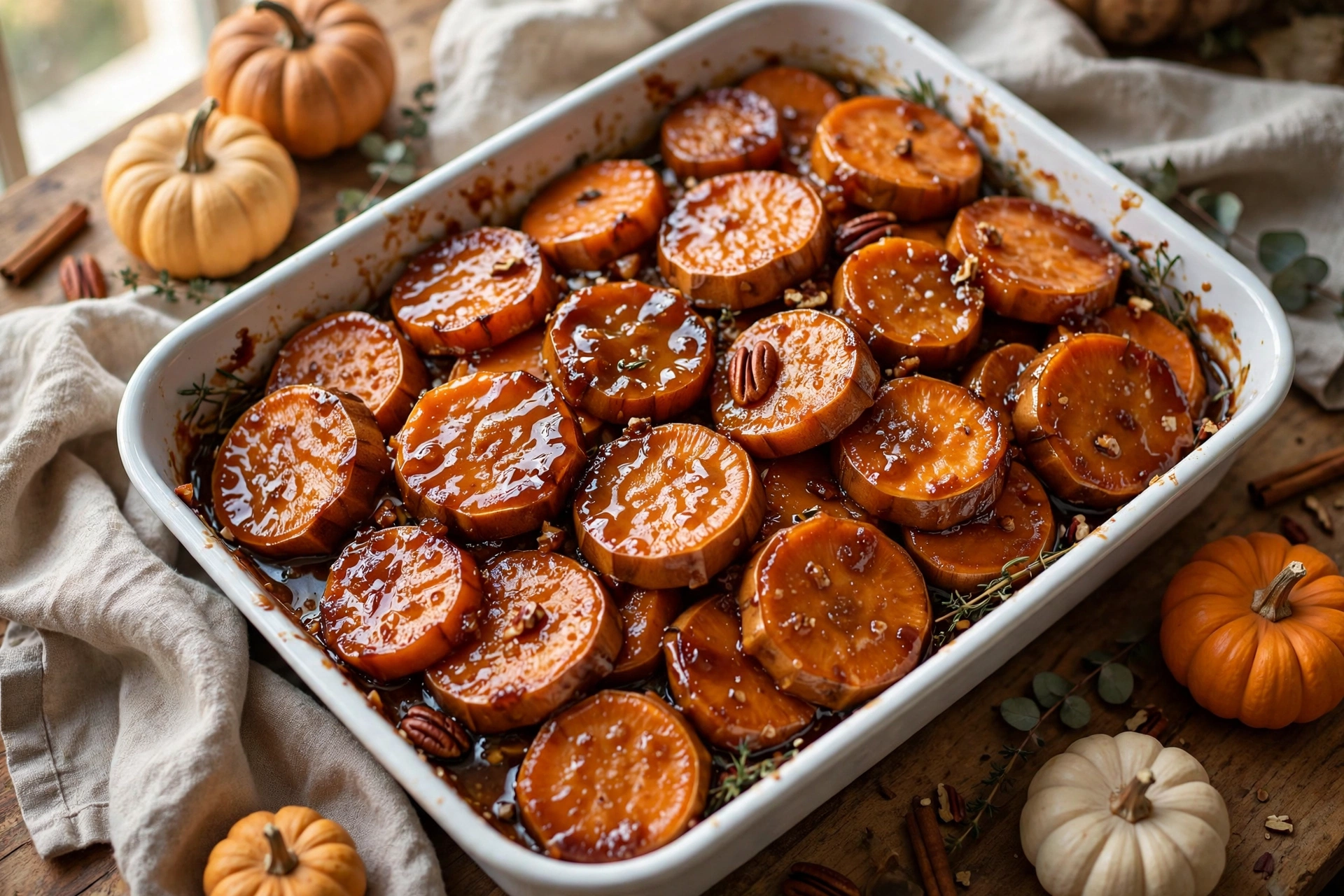
Candied yams keep the sweet potato in slices, so every serving is a neat, glazed round with caramelized edges. The texture stays distinct: tender centers, sticky tops, and a glaze you can see. Our classic sweet potato casserole is a wonderful thing, all soft mash and gooey top, but it eats like a dessert wearing a side dish costume. Candied yams sit closer to the turkey, sweet but structured, ready to share a fork with gravy. That structure is also why the dish travels and reheats so well. Slices hold their shape in a way mashed casserole never will, and the glaze re-shines in a warm oven instead of splitting. The flavor leans on the potato itself. Garnet sweet potatoes bring their own deep, almost honeyed sweetness, so the glaze can be rich without being the whole story.Yams or Sweet Potatoes? What the Grocery Label Really Means
Here is the open secret of this recipe: the “yams” in an American grocery store are sweet potatoes. True yams are a starchy, rough-skinned tropical tuber that most of us will never meet, as Mississippi State University Extension explains in its guide to the two vegetables. Decades ago, orange-fleshed sweet potatoes were marketed as yams to set them apart from the paler varieties, and the name simply stuck to the holiday dish. The USDA even requires cans labeled yams to admit they are sweet potatoes. So buy sweet potatoes, specifically the orange-fleshed Garnet or Jewel types with reddish skins. They cook up moist, sweet and deeply colored, exactly what a brown sugar glaze wants to coat. Avoid the tan-skinned, white-fleshed sweet potatoes for this dish. They are drier and starchier, closer to a regular potato, and the glaze cannot rescue them into candy. Choose firm potatoes with tight, unblemished skins, and pick ones of similar width so your rounds come out the same size and cook at the same pace.Candied Yams Ingredients
The glaze is built from pantry spices and two sugars; the dark brown sugar brings molasses depth, while a little white sugar keeps the syrup clear and shiny rather than muddy.- 3 1/2 pounds Garnet or Jewel sweet potatoes (about 5 medium), peeled and cut into 1/2 inch rounds
- 6 tablespoons unsalted butter, cut into pieces, plus more for the dish
- 3/4 cup packed dark brown sugar
- 1/4 cup granulated sugar
- 1 teaspoon ground cinnamon
- 1/2 teaspoon ground ginger
- 1/4 teaspoon freshly grated nutmeg
- 1 pinch of ground cloves
- 3/4 teaspoon fine sea salt
- 2 tablespoons fresh orange juice
- 1 teaspoon orange zest
- 1 teaspoon vanilla extract
- 1 1/2 cups mini marshmallows, optional, for the final minutes
- 1/3 cup chopped toasted pecans, optional, for serving
Choosing Sweet Potatoes That Candy Properly
Start with potatoes of similar girth, about 2 to 2 1/2 inches across. Uniform rounds are not a vanity project; they are how every slice reaches tenderness in the same minute. Squeeze each one. A potato for candying should feel rock firm, with no soft spots, no sprouting eyes and no wrinkles at the ends. Soft spots cook into gray, watery patches that break the glaze around them. Buy them three or four days ahead and store them loose in a cool, dark cupboard, never in the fridge. Cold storage turns their starch grainy and dulls the sweetness this dish depends on; the counter or a pantry basket is the right home. Peel them as close to cooking as you can. If the morning demands a head start, hold the peeled rounds in cold water for up to 2 hours, then drain and pat them very dry before the glaze goes on, because surface water thins the syrup before it ever reaches the oven. Weigh your pile if you are unsure: 3 1/2 pounds fills a 9 by 13 dish in the snug double layer this recipe is built on. Much less and the glaze spreads too thin; much more and the center slices steam instead of candying.How to Make Candied Yams in One Baking Dish
Even slices are the quiet hero of this recipe. A half inch round cooks through at the same moment as its neighbor, so no pan of half-crunchy, half-collapsed potatoes ever reaches the table.- Heat the oven to 375°F (190°C). Butter a 9 by 13 inch baking dish well, including the corners.
- Arrange the sweet potato rounds in the dish in snug, slightly overlapping rows. A little overlap is good; it keeps the slices bathed in glaze as they bake.
- In a small saucepan over medium heat, melt the butter with the brown sugar, granulated sugar, cinnamon, ginger, nutmeg, cloves, salt and orange juice. Stir until the sugar dissolves and the mixture simmers for 1 minute into a smooth syrup.
- Take the pan off the heat and stir in the vanilla and orange zest. Spoon and brush the hot glaze over every round, nudging it between the slices.
- Cover the dish tightly with foil and bake for 30 minutes, until the rounds have softened at the edges.
- Remove the foil and baste thoroughly: tilt the dish, spoon the pooled glaze over the tops, and turn any pale slices toward the center.
- Bake uncovered for 15 to 20 minutes more, basting once more halfway, until the rounds are fork-tender and the glaze has reduced to a glossy, syrupy shine with caramelized edges.
- Rest the dish for 10 minutes before serving. The glaze thickens as it stands and turns properly lacquered. Scatter the pecans over the top if you are using them.
- For the marshmallow finish, scatter the mini marshmallows over the rested dish and return it to the oven for 4 to 5 minutes, watching closely, until puffed and golden in spots.
The Halfway Baste and the Uncovered Finish
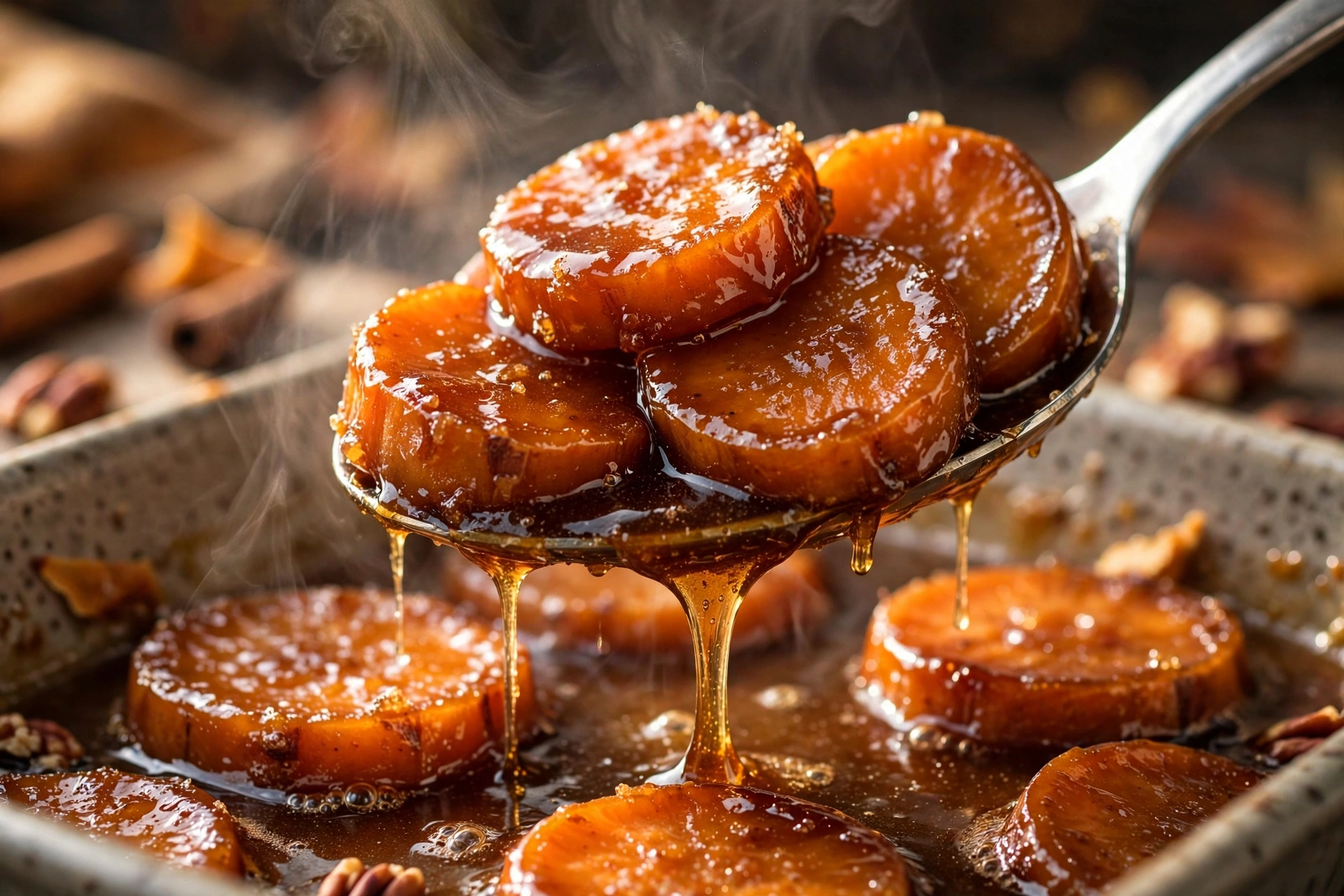
Most candied yams fail in the last fifteen minutes, when a thin, watery syrup gets carried straight to the table. The fix is not more sugar or a spoonful of starch; it is evaporation, given time to work. The covered bake is for tenderness. Steam builds under the foil, the slices soften, and the sweet potatoes release some of their own juices into the pan. The uncovered finish is for the glaze. With the foil off, that extra moisture cooks away, the sugars concentrate, and the syrup turns from tea-colored water into the amber lacquer that makes candied yams look candied. Basting is how the two stages shake hands. Every spoonful of reduced glaze you lift over the tops seasons the slices twice and builds the shine layer by layer. Do not rush the rest at the end, either. Ten quiet minutes on the counter let the glaze set to a gloss instead of sliding off the first slice you serve.The Marshmallow Question, Answered Honestly
Every family has a position on marshmallows, and this recipe respects both camps by keeping them optional, brief and last. Melted over the top in the final minutes, they are a garnish, not a blanket. Our honest house view: the glaze is the topping. A candied yam slice with a shining, spiced lacquer and a few toasted pecans needs nothing else, and it sits better next to garlic herb roasted turkey breast and savory gravy that way. But if marshmallow is the taste of your childhood Thanksgiving, add them without apology. Scatter them over the rested dish, give them four to five minutes to puff and bronze, and serve at once before they cool into a rubbery sheet. What we advise against is baking them the whole time. Forty minutes under marshmallow steams the top, blocks the glaze from reducing, and undoes the entire uncovered finish.Make-Ahead Candied Yams for a Calmer Thanksgiving
Thanksgiving oven space is a negotiation, and candied yams are happy to be settled the day before. Two routes work, depending on how your day is shaped. Route one, assemble ahead: slice the potatoes, build the glaze, and combine them in the buttered dish up to 24 hours early. Cover and refrigerate, then bake as written, adding 5 minutes to the covered stage while the dish loses its chill. Route two, bake ahead: cook the dish completely the day before, cool it, cover and refrigerate. Reheat, covered, at 350°F for 20 minutes, then uncover for 5 so the glaze shines again, loosened with a spoonful of water if it has set too firm. The second route pairs beautifully with a make-ahead gravy plan; our make-ahead turkey gravy follows the same philosophy of moving work off the big day. Either way, hold the marshmallows and pecans until serving. They are finishing touches, and they only shine when they go on at the last moment.A Lighter Pan: Cutting the Sugar Without Losing the Glaze
Candied yams will never be a diet dish, but the pan is more flexible than it looks. The glaze needs enough sugar to reduce into a syrup; below a certain point it turns thin and sharp instead of glossy. A workable lighter version cuts the total sugar by one third, drops the butter to 4 tablespoons, and leans harder on orange zest, vanilla and spice for the impression of sweetness. The slices will be a shade less lacquered and still completely welcome. For the standard pan, one serving of the eight carries about 355 calories, with 68 grams of carbohydrates, 40 grams of sugar, 9 grams of fat, 3 grams of protein and 6 grams of fiber, based on the ingredients listed. Much of that sugar is the glaze itself, and a modest scoop keeps the pleasure while trimming the numbers. Swapping half the dark brown sugar for maple syrup gives a softer, rounder sweetness and a slightly thinner glaze. It is a lovely variation for a Christmas table, where the deeper molasses note of brown sugar matters less.Storing and Reheating Without a Watery Glaze
Leftovers keep for 4 days in the fridge, in the baking dish covered tightly or in a shallow container with every spoonful of glaze scraped over the top. The glaze is a preservative as much as a sauce; keep the slices coated. Reheat in a 350°F oven, covered, for 15 to 18 minutes, until the glaze bubbles at the edges. The microwave works for a single serving, 60 to 90 seconds, though the shine softens a little. If the glaze looks thin after reheating, the slices sat in their own juices. Spoon the liquid into a small pan, simmer it for 2 minutes to reduce, and pour it back over, glossy as the first day. Freezing is possible for up to 2 months, but the texture softens on thawing. Frozen candied yams are best destined for a mash or a soup rather than a second turn as neat slices.Serving Candied Yams at the Thanksgiving Table
Warm the serving dish, if you move the slices out of the baking dish at all. A hot dish keeps the glaze liquid and shining through the whole first round of servings, and a cold one sets it dull before the turkey is carved. Spoon extra glaze from the corners of the pan over each portion at the table. The cook earns the first spoonful; after that, pass the little pan of glaze with the dish and let people dress their own slices. Sweet sides earn their keep next to salt and acid. These rounds are at their best beside savory stuffing, tart cranberry sauce and anything with a crisp, salty edge, because each bite resets the next. As one side among many, this recipe serves 8 honestly. If your table is small and the dish is a featured side, plan on 6 servings and warmer compliments. Leftovers have one more trick: a cold slice, reheated in a skillet until its edges crisp in the glaze, is an extraordinary breakfast next to eggs. More than one family has started that tradition by accident.The Side Dish That Eats Like Dessert
Candied yams earn their place because they do double duty with total honesty: a vegetable’s substance under a candy maker’s finish. Slice, glaze, baste, and let the oven reduce everything to shine. Make them once the classic way and the recipe becomes a family position, argued over fondly every November. That is the surest sign a Thanksgiving dish has become a tradition.FAQ
Can I make candied yams with canned yams instead of fresh sweet potatoes?
You can in a pinch, but drain them very well and cut the covered baking time to 10 minutes, since canned yams are already cooked through. The glaze also needs less orange juice. Fresh Garnet sweet potatoes give firmer slices and a cleaner flavor, and they are worth the peeling.
Why is my candied yams glaze watery instead of glossy?
The dish was probably served straight from the covered bake, or the foil stayed on too long. The glaze only thickens during the uncovered finish, when moisture evaporates and the sugars concentrate. Give it the full 15 to 20 uncovered minutes, baste twice, and rest the dish 10 minutes before serving.
How thick should I slice the sweet potatoes for candied yams?
Half an inch is the sweet spot. Thinner rounds collapse and turn to mush before the glaze reduces; thicker chunks stay firm in the center while the edges over-caramelize. Even thickness matters more than the exact number, so sort any odd pieces to the center of the dish.
Can I make candied yams on the stovetop instead of the oven?
Yes. Simmer the glazed slices in a wide, covered skillet over low heat for 25 to 30 minutes, then uncover and cook 8 to 10 minutes more so the glaze reduces. The stovetop version frees the oven on Thanksgiving, though the edges caramelize less than in the oven version.
Do candied yams need to be peeled?
For the classic dish, yes. The skins turn leathery in the glaze and interrupt the silky texture. If you like a rustic version, scrub the potatoes very well and leave the skins on, but expect a chewier bite and a glaze that clings less evenly.
Candied Yams
Garnet sweet potato rounds baked in a brown sugar and orange glaze, basted halfway and finished uncovered until the glaze reduces to a glossy lacquer. A classic Southern Thanksgiving side in one dish, with marshmallows kept optional.
- Total Time: 1 hour 15 minutes
- Yield: 8 servings 1x
Ingredients
- 3 1/2 pounds Garnet or Jewel sweet potatoes (about 5 medium), peeled and cut into 1/2 inch rounds
- 6 tablespoons unsalted butter, cut into pieces, plus more for the dish
- 3/4 cup packed dark brown sugar
- 1/4 cup granulated sugar
- 1 teaspoon ground cinnamon
- 1/2 teaspoon ground ginger
- 1/4 teaspoon freshly grated nutmeg
- 1 pinch of ground cloves
- 3/4 teaspoon fine sea salt
- 2 tablespoons fresh orange juice
- 1 teaspoon orange zest
- 1 teaspoon vanilla extract
- 1 1/2 cups mini marshmallows, optional, for the final minutes
- 1/3 cup chopped toasted pecans, optional, for serving
Instructions
- Heat the oven to 375°F (190°C). Butter a 9 by 13 inch baking dish well, including the corners.
- Arrange the sweet potato rounds in the dish in snug, slightly overlapping rows.
- In a small saucepan over medium heat, melt the butter with the brown sugar, granulated sugar, cinnamon, ginger, nutmeg, cloves, salt and orange juice. Stir until the sugar dissolves and the mixture simmers for 1 minute into a smooth syrup.
- Take the pan off the heat and stir in the vanilla and orange zest. Spoon and brush the hot glaze over every round, nudging it between the slices.
- Cover the dish tightly with foil and bake for 30 minutes, until the rounds have softened at the edges.
- Remove the foil and baste thoroughly: tilt the dish, spoon the pooled glaze over the tops, and turn any pale slices toward the center.
- Bake uncovered for 15 to 20 minutes more, basting once more halfway, until the rounds are fork-tender and the glaze has reduced to a glossy, syrupy shine with caramelized edges.
- Rest the dish for 10 minutes before serving so the glaze thickens and turns lacquered. Scatter the pecans over the top if you are using them.
- For the marshmallow finish, scatter the mini marshmallows over the rested dish and return it to the oven for 4 to 5 minutes, watching closely, until puffed and golden in spots.
- Prep Time: 15 minutes
- Cook Time: 50 minutes
Nutrition
- Calories: 360
- Sodium: 330
- Saturated Fat: 5
- Protein: 3
- Cholesterol: 23