
In this article:
These cranberry orange sticky buns are shaped on Christmas Eve, sleep in their caramel in the fridge, and bake on Christmas morning while the wrapping paper is still flying. You flip one pan, and twelve glossy, tart, buttery spirals land ready.
A sticky bun is a promise kept in reverse: the topping goes in first and comes out on top. Here the caramel is dark brown sugar and orange, the fruit is fresh cranberry, and the dough rises slowly overnight so the morning asks only for an oven.
Why These Cranberry Orange Sticky Buns Rise in the Fridge, Not at Dawn
These cranberry orange sticky buns work because the long, cold rise does two jobs at once. The dough develops real flavor slowly, the way good bakery dough does, and the baker develops nothing at all, because she is asleep while it happens.
The dough is enriched but not overloaded: one egg plus a yolk, a modest amount of butter, warm milk. Too much fat and the buns bake up heavy; this ratio keeps them soft and pull apart tender while still holding a clean spiral.
Orange zest goes into the dough itself, not just the caramel. Rubbed into the flour, its oils perfume every layer, so the citrus is present in the crumb and not only in the sticky top that meets the tongue first.
The caramel is built as a sauce, not a sprinkle. Butter, dark brown sugar, honey and orange juice cook together for two minutes before they meet the pan, so the layer that will become the top is already glossy and unified when the buns go on.
Fresh cranberries are the structural surprise. Scattered raw over the caramel, they soften in the bake, burst in places, and set bright, tart pockets into the sweetness. Dried cranberries could never do this job; they would simply sweeten what is already sweet.
Christmas Eve Does the Work, Christmas Morning Takes the Credit
The active work is about thirty five minutes, and nearly all of it belongs to the evening of the 24th. Mix and knead the dough after dinner, let it rise while the last gifts are wrapped, then roll, fill, slice and settle the buns into their caramel.
The pan goes into the fridge covered, and the recipe effectively pauses. Eight to sixteen hours of cold rest is the window; inside it, the buns proof slowly and the caramel firms around them, holding every spiral in place until morning.
Christmas morning is a fifteen minute overture: pan on the counter, oven on, coffee made. By the time anyone is ready to sit down, the buns are baked, flipped and steaming, and nobody has watched you measure a single thing.
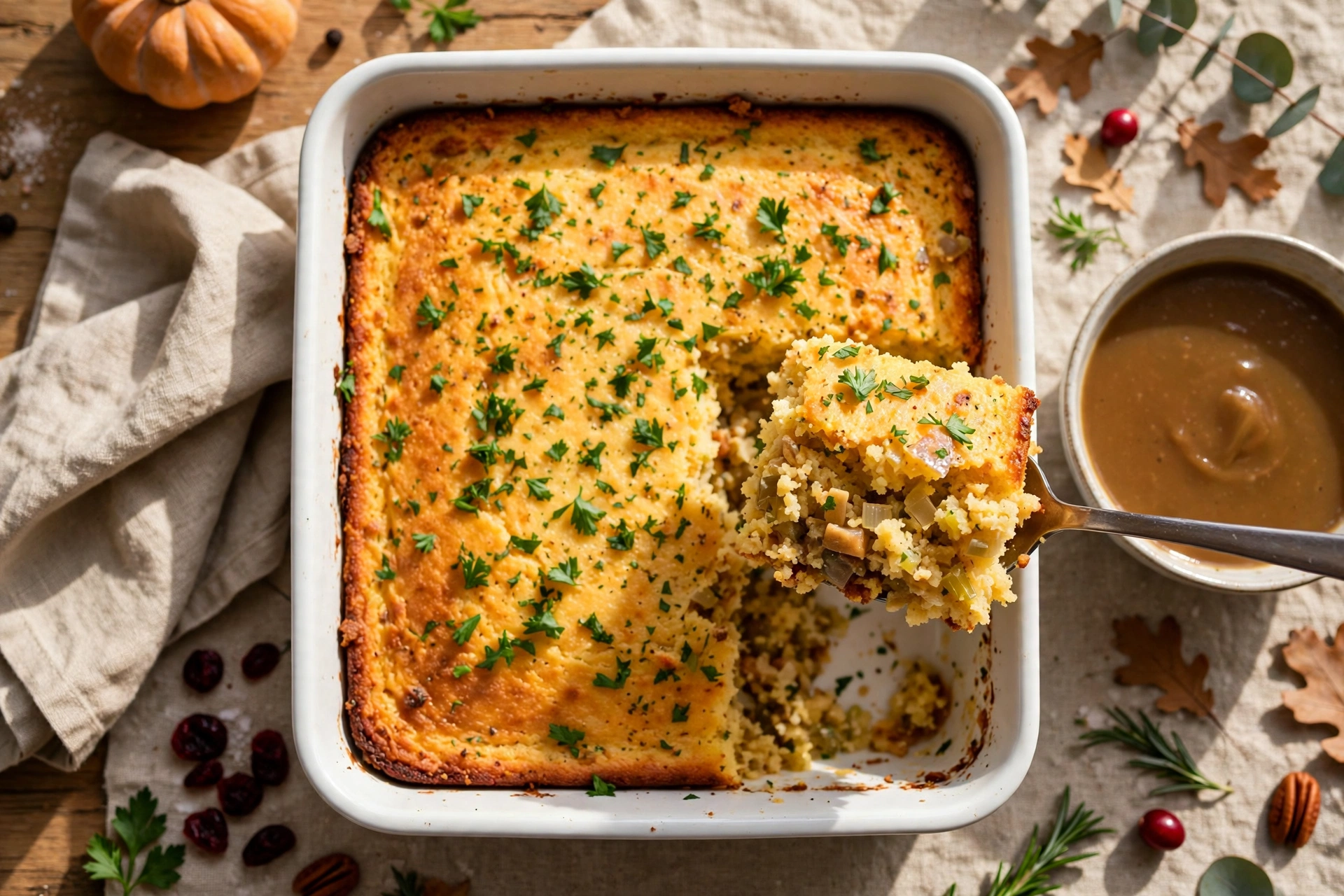
This pan joins a table that runs on the same mercy. Our easy Christmas morning casserole waits in its dish beside it, and the blueberry French toast casserole from earlier this week takes the other oven rack, so sweet and savory land together.
If your Christmas Eve is full, the work can move one day earlier still. Shape the buns on the 23rd, freeze the pan solid, then give it a full night in the fridge on the 24th to thaw and proof before the morning bake.
Tart Berries Under a Glossy Amber Blanket
A sticky bun lives or dies on contrast, and this one is built on a fair fight. The caramel is deep and almost toffee-like, the dough is soft and faintly citrus, and the cranberries arrive with enough acidity to cut a clean line through both.
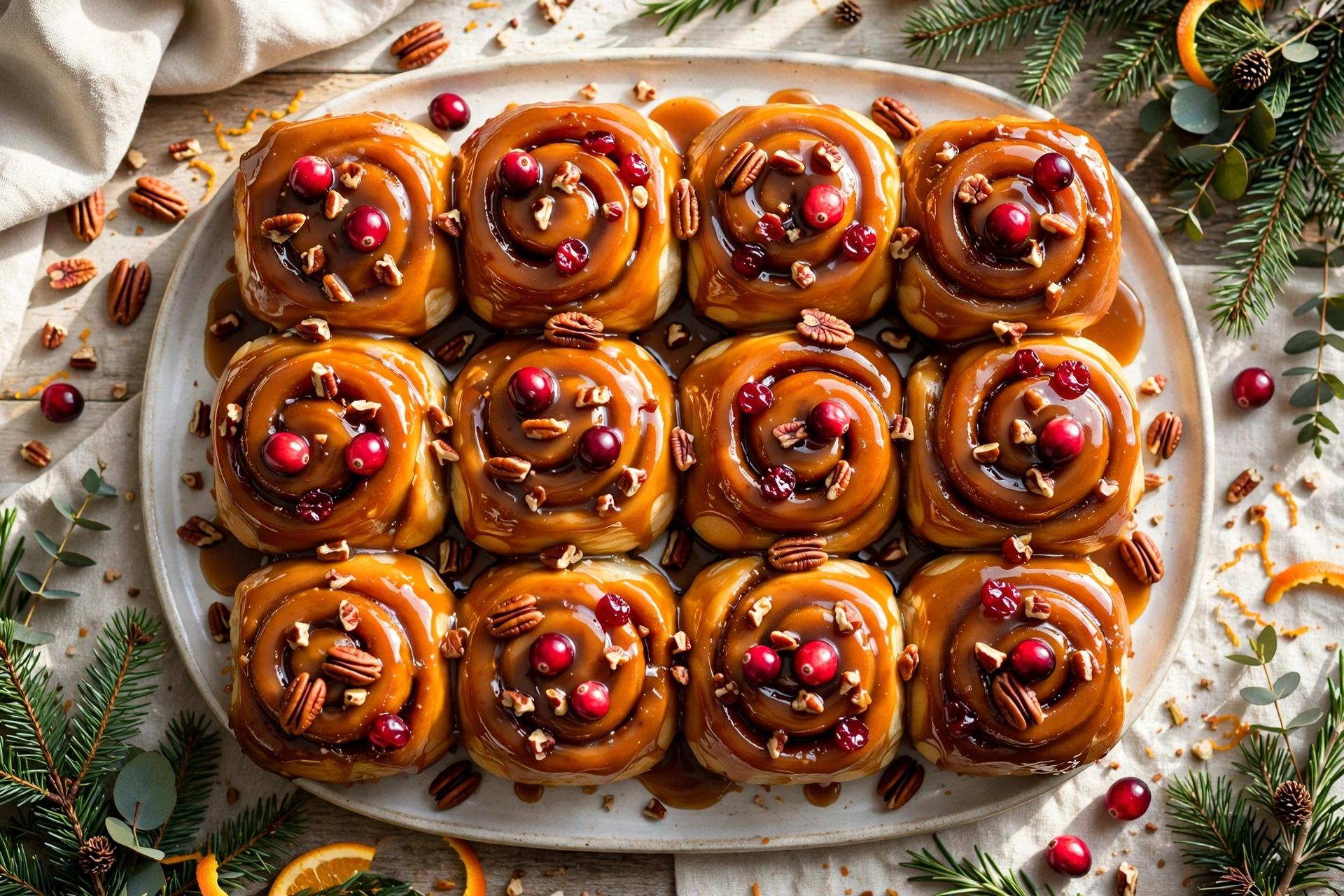
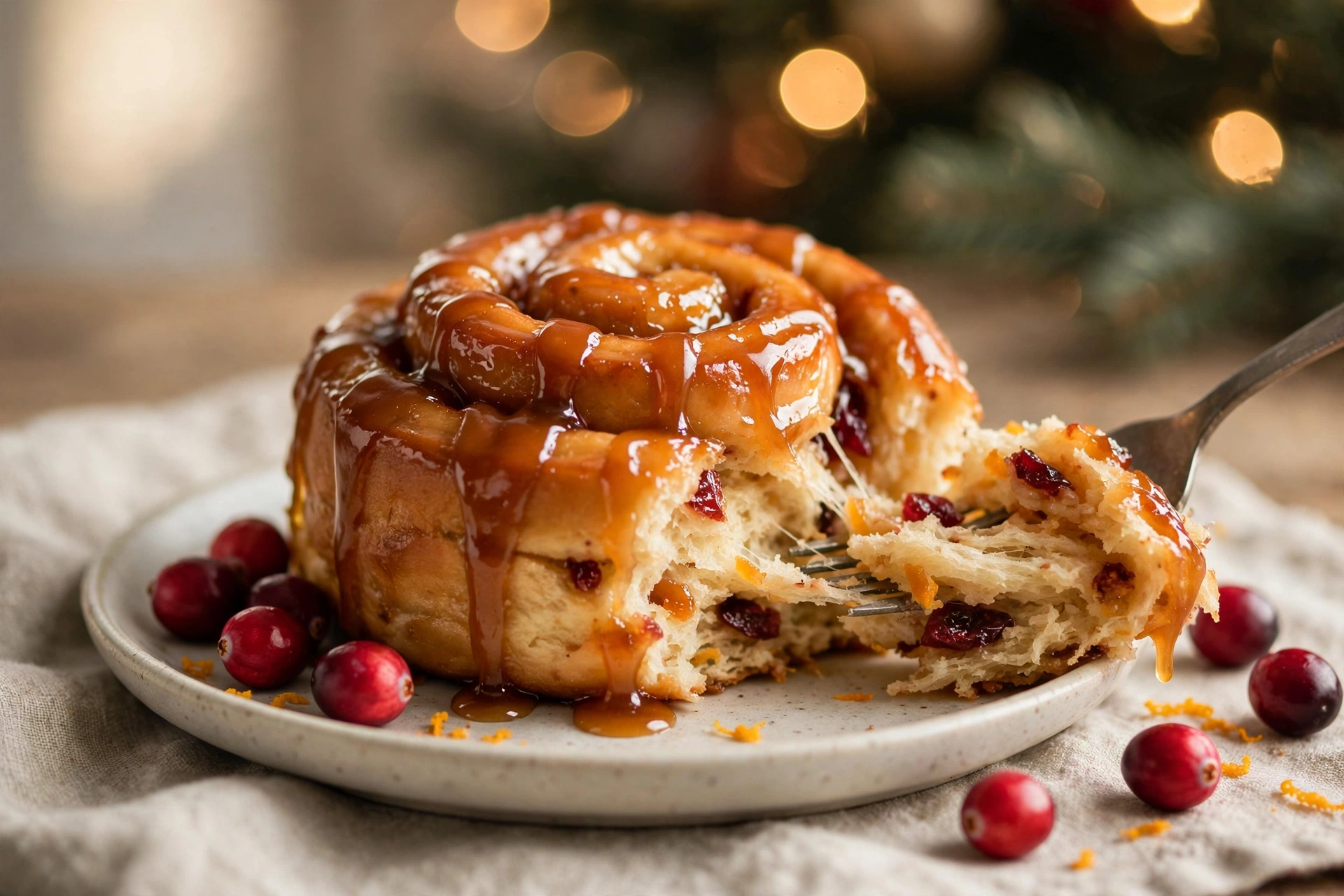
The top is the show: amber, shining, studded with ruby berries and toasted pecans where the caramel ran thick. Underneath, the spiral stays pale and tender, the cinnamon and orange sugar just darkened at the edges where they met the heat.
Eaten warm, a bun pulls apart in layers rather than tearing. The first bite is caramel and berry, the middle is all soft crumb and spice, and the last bite, the center of the spiral, is the sweetest and most tender of the three.
Temperature matters more than decoration here. Ten minutes out of the pan, the caramel is liquid silk; at thirty minutes it sets into a chewy glaze; by the afternoon the buns are still good, but they have become a different, quieter pastry. Serve them warm and they are an event.
The sound is part of the serving: the soft crackle of caramel letting go of the pan, then the quiet sigh as twelve buns settle onto the platter in one piece. It is the loudest thing that happens in my kitchen on Christmas morning before the coffee finishes brewing.
Nothing else is needed on the plate. These cranberry orange sticky buns carry their sauce, their fruit and their crunch in the same bite, and a fork is optional equipment. A napkin, on the other hand, is not negotiable, and anyone who tells you otherwise has not met the caramel yet.
What You Need for the Buns
For the dough, an enriched and gently citrus crumb that stays soft under its caramel, mixed and kneaded on Christmas Eve:
- 3/4 cup whole milk, warm (about 110°F)
- 2 1/4 teaspoons instant yeast (1 packet)
- 1/4 cup granulated sugar
- 1 large egg plus 1 egg yolk, at room temperature
- 4 tablespoons unsalted butter, melted
- Finely grated zest of 1 large orange (about 1 tablespoon)
- 1 teaspoon fine salt
- 3 1/4 to 3 1/2 cups all-purpose flour, plus more for dusting
For the caramel that goes into the pan first and finishes on top, with the fruit and nuts scattered over it before a single bun is placed:
- 8 tablespoons (1 stick) unsalted butter
- 3/4 cup packed dark brown sugar
- 1/4 cup honey
- 2 tablespoons orange juice
- 1/2 teaspoon fine salt
- 1 cup fresh cranberries, coarsely chopped (or frozen, unthawed)
- 3/4 cup pecan halves, roughly chopped
For the filling, spread and sprinkled over the rolled dough in the last minutes before the pan goes into the fridge for its long cold rest:
- 4 tablespoons unsalted butter, very soft
- 1/2 cup packed light brown sugar
- 1 tablespoon ground cinnamon
- Finely grated zest of 1 large orange
- 1/2 cup dried cranberries, chopped
Rolling, Filling, Flipping
- Whisk the warm milk, yeast and granulated sugar in a large bowl and let it stand 5 minutes, until foamy. Whisk in the egg, the yolk, the melted butter and the orange zest.
- Add the salt and 3 1/4 cups of the flour. Mix to a shaggy dough, then knead 8 to 10 minutes, adding flour a spoonful at a time, until the dough is smooth, elastic and only slightly tacky.
- Set the dough in a buttered bowl, cover, and let it rise in a warm spot for 1 to 1 1/2 hours, until doubled. Meanwhile, build the caramel in the next step so the pan is ready when the dough is.
- Melt the stick of butter in a small saucepan over medium heat. Stir in the dark brown sugar, honey, orange juice and salt and cook 2 minutes, until glossy and unified. Pour it into a buttered 9×13 inch pan and scatter the fresh cranberries and pecans evenly over it.
- Roll the risen dough on a floured counter into a 12×16 inch rectangle. Spread the soft butter edge to edge, then rub the light brown sugar, cinnamon and orange zest together and sprinkle them on. Scatter the dried cranberries over the sugar.
- Roll up from a long side into a snug log and pinch the seam closed. Slice into 12 even buns with a sharp knife or a loop of unflavored dental floss drawn under the log and crossed over the top.
- Arrange the buns, cut side down, over the caramel in the pan. For the overnight path, cover the pan tightly and refrigerate 8 to 16 hours. For the same day path, cover and let them rise 30 to 40 minutes, until puffy.
- On bake morning, set the pan on the counter for 30 to 45 minutes while the oven heats to 350°F. Bake 25 to 30 minutes, until the buns are deep golden and the caramel bubbles at the edges; cover loosely with foil if the tops brown too fast.
- Rest the pan exactly 5 minutes, no longer. Run a knife around the edges, set a platter or rimmed board over the pan, and flip it in one confident motion. Lift the pan away and scrape any caramel and berries left behind over the buns. Serve warm.
The Five Minute Flip, and Other Sticky Bun Insurance
The flip is the only dramatic moment in the recipe, and it runs on a clock. At five minutes, the caramel is fluid enough to pour and thick enough to cling. At fifteen, it has set in the pan and takes half the topping with it when the buns come out.
If the flip goes wrong anyway, the rescue is heat, not force. Set the pan over a low burner for 20 to 30 seconds to reliquify the caramel, scrape it out with a spatula, and spoon it over the buns where it always belonged.
Cut the log with floss, not a knife you press down. A sawing, pressing motion drags the spiral and squeezes the filling out of the bottom; floss drawn tight cuts cleanly and keeps every layer of these cranberry orange sticky buns round and distinct.
Chop the fresh cranberries coarse, and leave a few whole. Fully minced berries vanish into the caramel, while rough halves keep their shape, their color and their bright bite. A sharp knife and a patient minute are all the technique involved.
Room temperature eggs are worth the small planning. Cold eggs dropped into warm, yeasty milk slow the dough at exactly the moment it should be waking up, and an overnight recipe has no extra morning minutes to spend forgiving that.
Frozen Berries, No Pecans, and Other Swaps That Keep the Pan
Frozen cranberries work in the caramel without a single adjustment beyond chopping them straight from the freezer. They bleed a little more color into the sauce, which most tables read as a feature. The USDA nutrient data for cranberries shows why they earn their place: real fiber and vitamin C under all that shine.
For a nut free table, simply leave the pecans out, or trade them for pumpkin seeds scattered over the caramel for the same crunch. Nothing else in the pan changes, and the flip behaves exactly as written.
The orange can step aside in two directions. Grapefruit zest and juice give a sharper, more adult bun, while a blood orange, in season, stains the caramel a deep rose. Lemon works too, but pull the honey back by a tablespoon, because the balance tips faster.
Dough shortcuts have honest limits. A tube of crescent dough will produce a pleasant breakfast, but it will not produce these buns: no chew, no spiral that holds, no overnight rise. If rolls are the craving and time is truly gone, our overnight cinnamon roll casserole carries the same morning with far less ceremony.
The honey in the caramel can become maple syrup, measure for measure, for a darker, woodier top that leans toward January. The buns lose a little of their brightness, so keep the orange zest full strength and add one extra teaspoon of juice to the pan.
Keeping the Buns Soft for Boxing Day
Sticky buns are at their best within the hour, but the pan rarely empties. Cover the platter tightly once the buns cool, and they keep at room temperature through the next day, the caramel holding the moisture in like a seal.
To serve them again, warm the buns covered at 300°F for 8 to 10 minutes. The caramel reliquifies, the crumb softens, and a cranberry orange sticky bun on Boxing Day tastes remarkably like a planned encore instead of a leftover.
For longer keeping, freeze the baked buns individually, well wrapped, for up to 2 months. Thaw overnight in the fridge and give them the same covered warm-up, with a teaspoon of orange juice brushed over the top if the caramel looks shy.
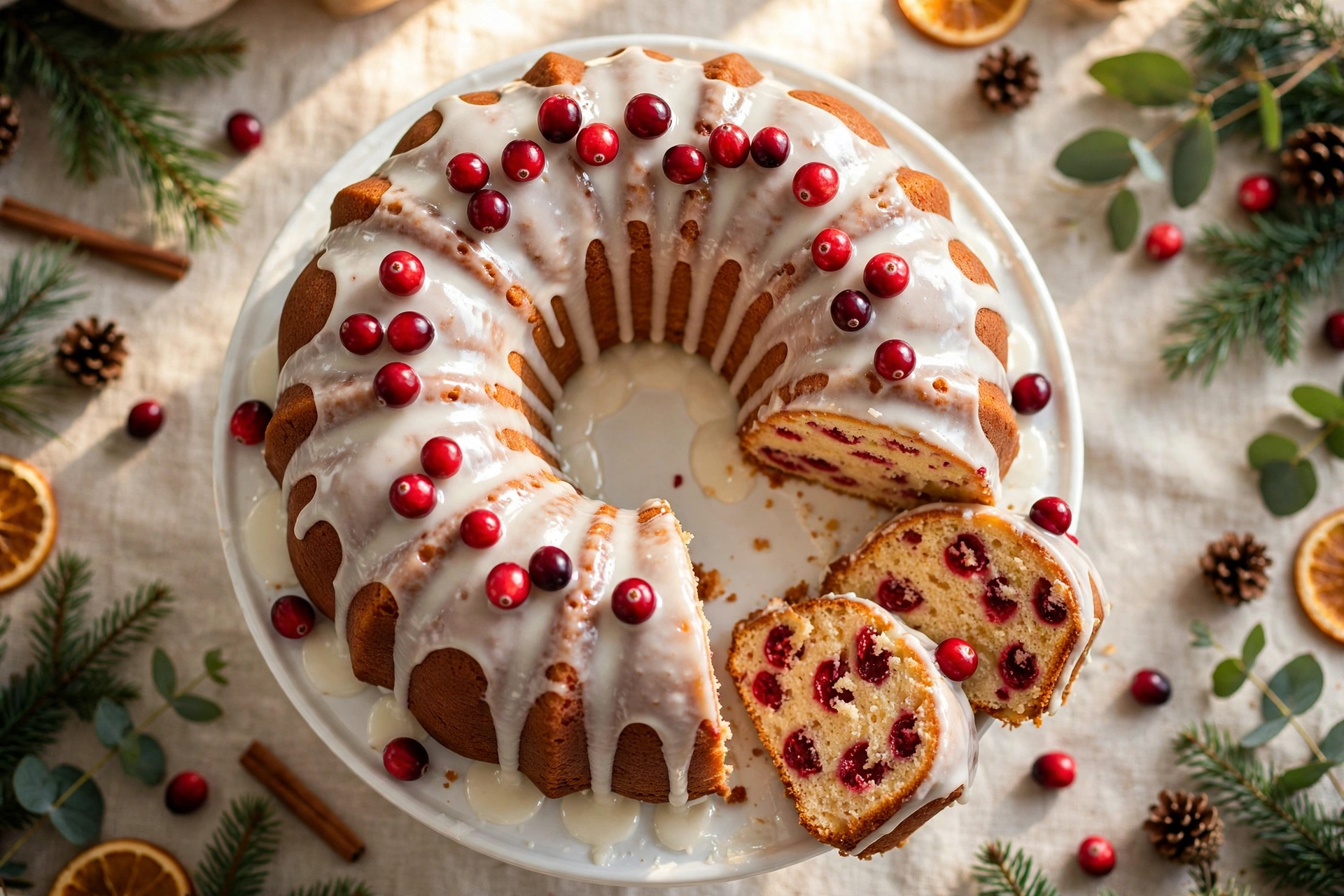
The flavor pairing at my table is fixed: these buns, a pot of coffee, and a glass of our cranberry orange Christmas punch for whoever wants the fruit cold instead of warm. Readers who bake the cranberry orange pound cake will recognize the same December logic in a different pan.
The Pan That Gets Flipped at My Table
These cranberry orange sticky buns ask for one evening of calm work and one five minute moment of nerve, and they return a Christmas morning that smells like caramel and citrus before a single gift is opened. That trade has never once felt unfair.
Make them on the 24th, flip them on the 25th, and let the pan do the showing off. Some recipes feed people; this one also gives the cook a morning.
Questions About These Sticky Buns
FAQ
My dough barely rose in the fridge overnight. Are the buns ruined?
Almost certainly not. A cold rise is slow and modest by design; the buns finish proofing during the 30 to 45 minute counter rest and in the oven’s first heat. Only worry if the dough is truly flat and the yeast was old or the milk was hot enough to kill it.
Can I use frozen cranberries in the caramel layer?
Yes, and do not thaw them first. Chop them coarse straight from the freezer, scatter them over the warm caramel, and add about 2 minutes to the bake. They release a little more juice and color than fresh berries, which deepens the sauce.
Half my caramel stayed in the pan when I flipped. What happened?
The flip waited too long and the caramel set. Five minutes of rest is the window: fluid enough to pour, thick enough to cling. To rescue a set pan, warm it over a low burner for 20 to 30 seconds and scrape the caramel over the buns.
Can I leave the pecans out for a nut free Christmas table?
Yes. The buns lose crunch but nothing structural. Pumpkin seeds scattered over the caramel give back most of the texture, or simply add an extra quarter cup of chopped fresh cranberries for a fully fruit topped pan.
Is it better to freeze these sticky buns before or after baking?
Both work, for different plans. Freezing the shaped, unbaked pan suits a make ahead Christmas: thaw and proof overnight in the fridge on the 24th. Freezing baked buns suits leftovers: wrap them individually and rewarm covered at 300°F for 8 to 10 minutes.