
In this article:
- A glaze that goes on last, not first
- Dark edges, custardy centers
- Cutting a butternut without the wrestling match
- What goes on the tray
- Roast plain first, glaze at the end
- Cut today, roast tomorrow
- Pale, steamed or scorched: the fixes
- Air fryer trays and savory plates
- Leftovers with a second life
- Roasted butternut squash questions, answered
Roasted butternut squash should taste like the squash itself, only deeper: sweet, nutty and edged with real caramel. Too many trays come out of the oven pale and steamed, or lacquered with a syrup that scorched long before the centers turned tender.
This version fixes the order of operations. The cubes roast plain at high heat until the edges catch, and the maple thyme glaze waits in a cup until the last ten minutes. Brushed on late, it turns glossy and clings instead of burning.
The plan is Thanksgiving friendly from the start. The squash can be peeled and cubed the day before, the glaze stirs together in two minutes, and the tray roasts while the turkey rests. Nothing about it needs the cook’s full attention.
A Glaze That Goes On Last, Not First
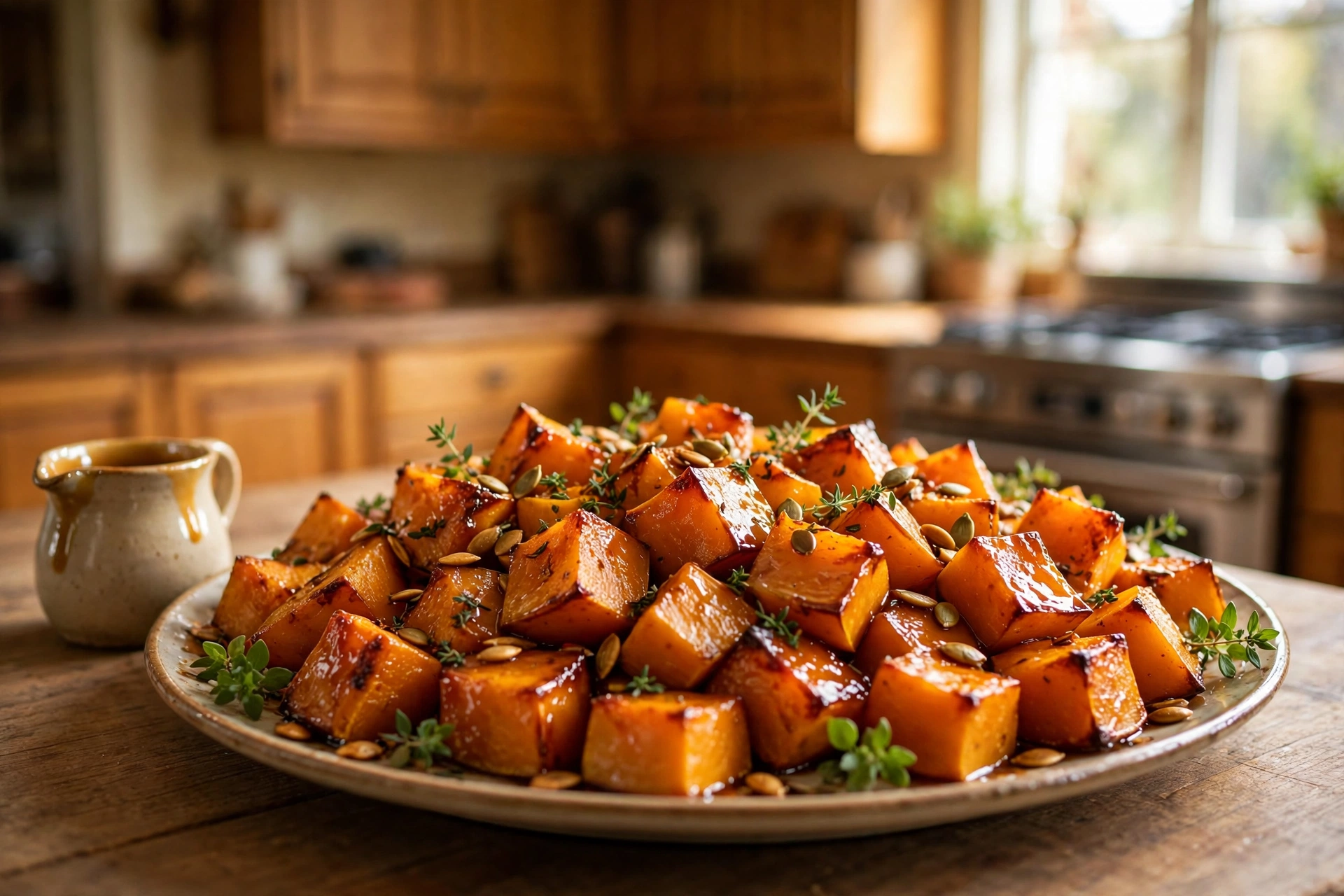
Roasted butternut squash works here because the sweet part is treated as a finish, not a marinade. Maple syrup is mostly sugar and water; given thirty minutes at high heat, the water steams the surface and the sugar races past amber into bitter. Ten minutes is all it needs to set into a shine.
The first roast is deliberately plain. Olive oil, salt, pepper, garlic powder and smoked paprika give the cubes a savory base, so the finished dish reads as a side dish and not a dessert that wandered onto the dinner plate.
Heat does the real work in that first stretch. At 425 degrees F, the cut faces of the cubes dry out, press against hot metal and caramelize. A wet glaze at this stage would keep the surfaces damp and postpone browning by several minutes.
The glaze itself is balanced, not just sweet. Maple brings the shine, melted butter carries it across the cubes, fresh thyme adds a piney note, and a teaspoon of apple cider vinegar keeps the sweetness from sitting flat on the tongue.
Peeling deeply matters more than most recipes admit. The pale, fibrous layer just under the skin never turns pleasant in the oven, so the peeler keeps going until the flesh is fully orange. It costs one extra minute and improves every bite.
The finishing crunch is toasted pumpkin seeds rather than the usual pecans. They echo the squash’s own seeds, they suit a nut free table, and they stay crisp under the warm glaze when they are scattered on at the very end.
Dark Edges, Custardy Centers
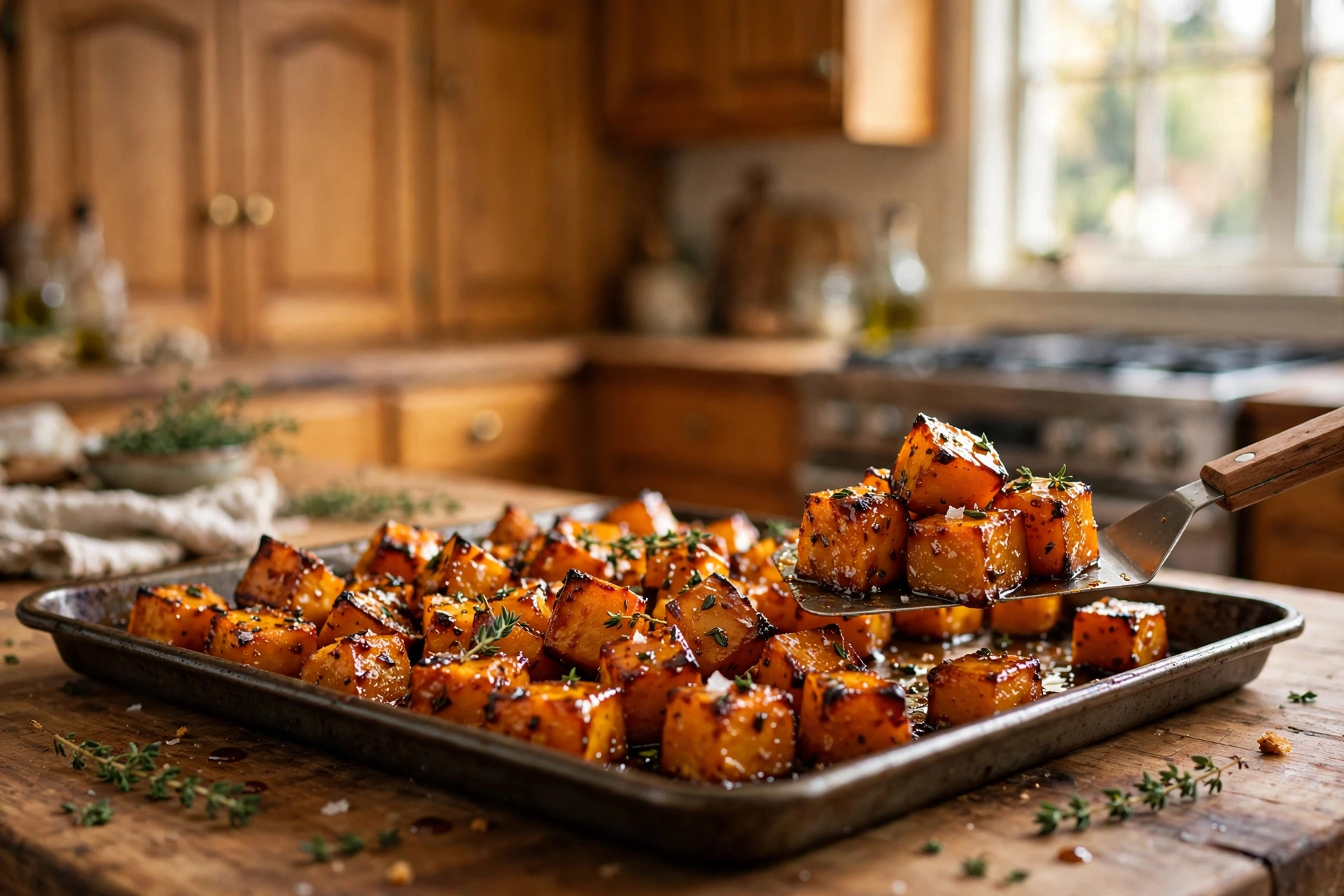
The color to look for is deep amber at the corners, almost mahogany on the thinnest edges. Butternut holds a lot of natural sugar, and a hot, dry first roast concentrates it exactly where the cube meets the pan.
Inside, the texture should be custardy without collapsing. A roasted butternut squash cube is done when a knife slides in with a whisper of resistance and the cube still holds its shape on the spatula. Mush is over the line; crunch means it needs more time.
The flavor moves in layers. First comes the roasted, almost chestnut sweetness of the squash, then the savory base of garlic and paprika, and only at the end the maple and thyme, bright and brief because the vinegar keeps them moving.
Flaky salt at serving is not decoration. The glaze sweetens the surface, and a pinch of flaky salt on the hot cubes sharpens the contrast between the shiny coat and the soft center. It also wakes up the thyme.
Served straight from the pan, the cubes glisten without swimming. There should be no pool of syrup on the platter; if there is, the glaze went on too early or the pan was crowded and the cubes gave up their juices instead of browning.
Cutting a Butternut Without the Wrestling Match
Choose a squash that feels heavy for its size, with matte tan skin, no soft spots and a long, thick neck. The neck is solid flesh with no seeds, so a long neck means more cubes and less scraping. Three pounds is the comfortable size for one large tray.
Stabilize before you cut. Trim a thin slice from the bottom so the squash stands flat, microwave the whole squash for two minutes if your knife meets real resistance, and keep a damp towel under the board so nothing travels while you work.
Peel with a sharp Y peeler, working in long strokes from neck to base. Keep going until no pale streaks remain under the skin; that whitish layer is fibrous and stays chewy after roasting. Fully orange flesh is the sign you peeled deeply enough.
Separate the neck from the bulb. The neck cuts into even planks, then sticks, then one inch cubes. Halve the bulb, scrape the seeds with a sturdy spoon, and cut that flesh into pieces as close to the same size as you can manage.
One inch is the cube to trust for this recipe. Smaller pieces scorch at the corners before the glaze goes on; bigger ones brown on the outside while the center is still firm. Even size matters more than perfect shape.
Sort the tray as you arrange it. Put the smallest cubes toward the center of the pan, where the heat is gentlest, and the biggest near the edges. That one habit fixes most cases of trays that finish half scorched and half pale.
What Goes on the Tray
- 1 large butternut squash, about 3 pounds
- 2 tablespoons olive oil
- 1 teaspoon kosher salt
- 1/2 teaspoon black pepper
- 1/2 teaspoon garlic powder
- 1/2 teaspoon smoked paprika
- 3 tablespoons pure maple syrup
- 1 tablespoon unsalted butter, melted
- 1 teaspoon apple cider vinegar
- 1 teaspoon fresh thyme leaves, plus more for serving
- 1/3 cup pumpkin seeds, toasted
- 1 teaspoon flaky sea salt, for serving
The tray sits comfortably beside the bird: a pan of our cranberry glazed chicken shares the maple and thyme notes without repeating them, which is exactly what a holiday table needs.
Roast Plain First, Glaze at the End
- Heat the oven to 425 degrees F. Line a large rimmed sheet pan with parchment paper.
- Trim the ends of the butternut squash, peel it deeply until the flesh is fully orange, halve it, scrape out the seeds, and cut the flesh into 1 inch cubes.
- Toss the cubes with the olive oil, kosher salt, black pepper, garlic powder and smoked paprika until every piece is lightly coated.
- Spread the cubes on the sheet pan in a single layer with space between them, a cut face down wherever you can. Crowded cubes steam instead of roasting.
- Roast for 20 minutes without touching the pan, until the undersides are deeply golden and the edges start to darken.
- While the squash roasts, stir the maple syrup, melted butter, apple cider vinegar and thyme leaves together in a small cup.
- Flip the cubes, brush or drizzle the glaze over them, and return the pan to the oven for 8 to 10 minutes, until the glaze is shiny and set and the cubes are tender.
- Rest the tray for 2 minutes. Scatter with the toasted pumpkin seeds, extra thyme leaves and the flaky sea salt, and serve warm.
Cut Today, Roast Tomorrow
Nearly all the work of this roasted butternut squash can happen a day early. Peel and cube the squash, seal the cubes in a container with a paper towel, and keep them in the fridge for up to two days. The towel keeps the cut faces dry, which protects the browning.
On the day, roast the cubes straight from the fridge. Cold cubes need about five extra minutes in the first, unglazed roast; check the undersides before flipping and give them the time. The glaze goes on only after the edges have caught.
Store bought pre cut squash works here too, and nobody should feel guilty about it on Thanksgiving week. Choose the freshest container, pick out any slimy pieces, pat the cubes very dry, and expect a slightly shorter roast because the pieces run smaller.
Full reheating is the honest weak point of any roasted squash. Roasted and refrigerated cubes reheat best in a 425 degree oven for eight to ten minutes, which brings the edges back; the microwave returns them soft. Planned as a fresh roast, made ahead as insurance, the dish holds its dignity.
If the same tray needs to travel, roast it at home, glaze it there, and rewarm it covered at the destination. Add the pumpkin seeds and flaky salt after the rewarm, never before, so the finish stays crisp.
Pale, Steamed or Scorched: The Fixes
Pale cubes with no browning almost always mean a crowded pan. The squash gave up its moisture, the moisture had nowhere to go, and the pieces steamed in it. Use two pans rather than one crowded one, and leave real gaps between the cubes.
Steamed flavor also follows wet squash. Cubes rinsed or cut hours ago should be patted dry with a towel before the oil goes on. Surface water spends the first ten minutes of roasting boiling off, and browning waits until it is gone.
Scorched glaze has one cause: it went on too early or the oven runs hot. Maple sugar darkens fast past the ten minute mark at this temperature. If your oven is known to run hot, glaze at the seven minute mark of the final stretch and watch the corners.
Burnt bottoms with raw centers point to a dark pan and a low rack. A light colored pan on the middle rack evens things out. If the undersides are dark at the first flip but the centers are firm, finish the tray on the top rack after glazing.
Flavor that tastes flat usually needs salt, not more syrup. Salt the first toss generously, keep the flaky salt for the end, and do not skip the vinegar in the glaze. It is a teaspoon, but it is the difference between sweet and balanced.
Air Fryer Trays and Savory Plates
The air fryer handles a half batch well. Cook the cubes at 400 degrees F for about 12 minutes, shaking the basket once, then brush on the glaze and give them 3 more minutes. The edges come out even darker than the oven version, so watch the last minutes closely.
For a fully savory plate, skip the maple and finish the roasted cubes with brown butter and fried sage, or with a squeeze of lemon and a dusting of grated parmesan. The plain first roast stays exactly the same; only the finish changes.
The squash also anchors bigger trays. Our squash with Brussels sprouts, pecans and cranberries takes the same vegetable in a busier direction, and leftover cubes fold into grain bowls, salads and a quick frittata the next morning.
Leftovers with a saucepan nearby become soup without a new recipe. Blend the cubes with broth and a splash of cream, or follow our creamy roasted butternut squash soup and stir the leftovers in at the end.
Half a squash left uncut keeps for a week in the fridge, wrapped. Cut cubes intended for another roast should wait raw, not roasted; freeze them raw on a tray and bag them, and they will roast from frozen later with ten extra minutes.
Leftovers With a Second Life
Cool the tray within two hours and refrigerate the squash in a sealed container for up to four days, the window the USDA leftovers guide gives cooked vegetables. Reheat in a hot oven, as above, when texture matters.
Serve a scoop of make ahead turkey gravy beside the reheated squash and nobody will guess it is on its second appearance. The gravy loves the sweet edges as much as the turkey does.
On the day itself, this roasted butternut squash is the tray I would put within reach of the cook. It asks for one pan, one honest flip and a glaze that waits its turn, and it returns color, sweetness and crunch to a table that runs heavy and soft without it.
Questions Before the Tray Goes In
Roasted Butternut Squash
Roasted butternut squash with deep caramelized edges and a maple thyme glaze brushed on in the last ten minutes, so it shines instead of scorching. Finished with toasted pumpkin seeds and flaky salt, it is the make ahead friendly side a Thanksgiving table actually needs.
Ingredients
- 1 large butternut squash, about 3 pounds
- 2 tablespoons olive oil
- 1 teaspoon kosher salt
- 1/2 teaspoon black pepper
- 1/2 teaspoon garlic powder
- 1/2 teaspoon smoked paprika
- 3 tablespoons pure maple syrup
- 1 tablespoon unsalted butter, melted
- 1 teaspoon apple cider vinegar
- 1 teaspoon fresh thyme leaves, plus more for serving
- 1/3 cup pumpkin seeds, toasted
- 1 teaspoon flaky sea salt, for serving
Instructions
- Heat the oven to 425 degrees F. Line a large rimmed sheet pan with parchment paper.
- Trim the ends of the butternut squash, peel it deeply until the flesh is fully orange, halve it, scrape out the seeds, and cut the flesh into 1 inch cubes.
- Toss the cubes with the olive oil, kosher salt, black pepper, garlic powder and smoked paprika until every piece is lightly coated.
- Spread the cubes on the sheet pan in a single layer with space between them, a cut face down wherever you can. Crowded cubes steam instead of roasting.
- Roast for 20 minutes without touching the pan, until the undersides are deeply golden and the edges start to darken.
- While the squash roasts, stir the maple syrup, melted butter, apple cider vinegar and thyme leaves together in a small cup.
- Flip the cubes, brush or drizzle the glaze over them, and return the pan to the oven for 8 to 10 minutes, until the glaze is shiny and set and the cubes are tender.
- Rest the tray for 2 minutes. Scatter with the toasted pumpkin seeds, extra thyme leaves and the flaky sea salt, and serve warm.
Nutrition
- Calories: 155
- Sugar: 10
- Sodium: 320
- Fat: 6
- Saturated Fat: 2
- Carbohydrates: 26
- Fiber: 5
- Protein: 2
- Cholesterol: 5