
In this article:
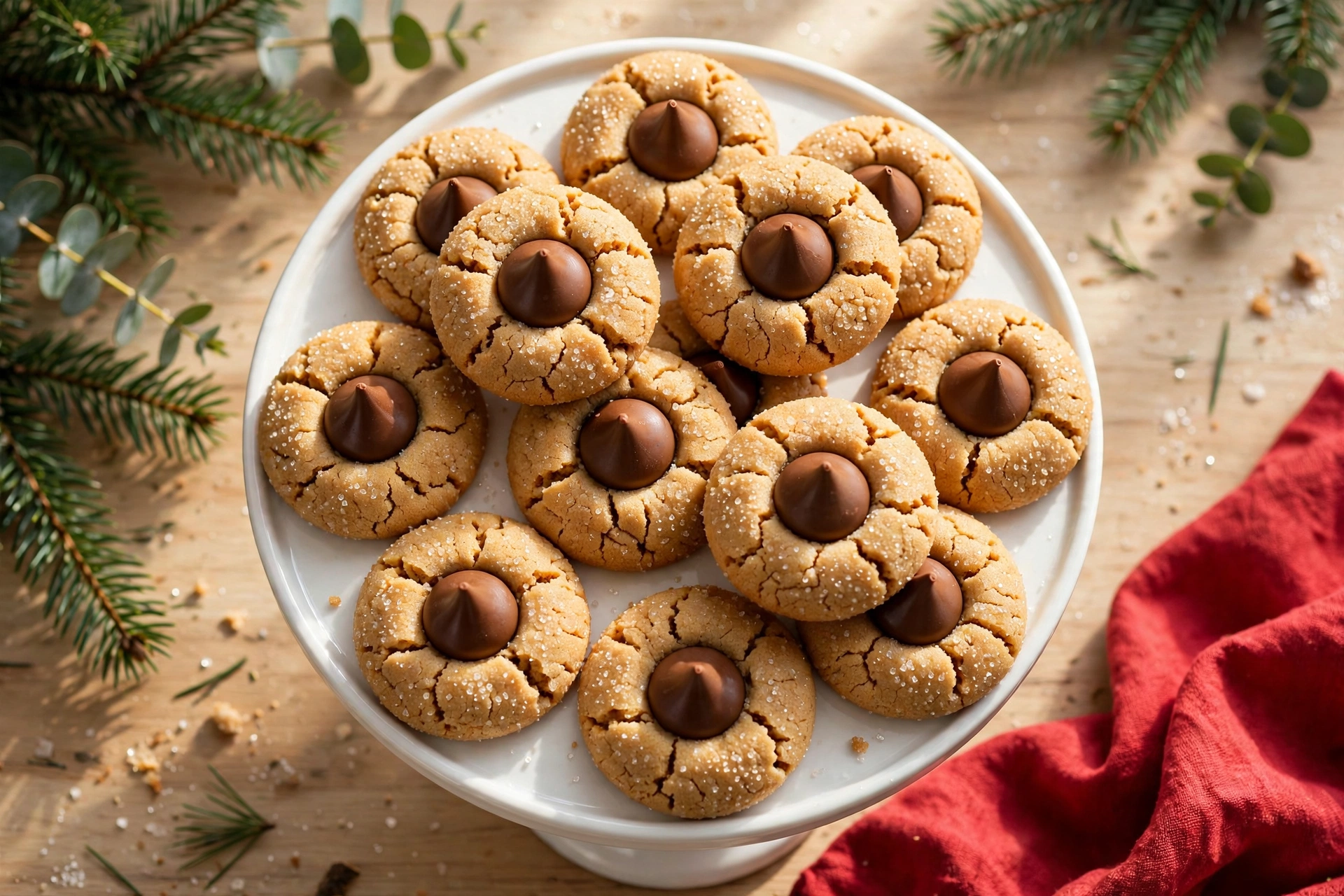
These peanut butter blossoms are the cookie that disappears first from every Christmas platter I have ever carried into a room. A soft, crackled peanut butter cookie, rolled in sparkling sugar, crowned with a single glossy point of chocolate.
The classic recipe has been around since the 1950s, and most versions are nearly identical. The difference here is temperature, twice over: kisses that go on frozen, and a dough that rests just long enough to roll clean. Those two choices fix the cookie’s only real flaws.
Why These Peanut Butter Blossoms Start With Frozen Kisses
These peanut butter blossoms work because the chocolate goes on cold. Fifteen minutes in the freezer firms each kiss enough that the heat of the fresh cookie softens its base into the crumb without melting the point flat or letting it slide.
That one step answers the complaint under every other version of this recipe: kisses that slump, kisses that turn grainy, kisses that pop off in the cookie tin. A frozen kiss keeps its silhouette, takes a shine as it warms, and stays anchored for days.
The dough gets its own short rest, thirty minutes rather than the two hours some recipes demand. Chilled dough rolls into neat balls without sticking to your palms, spreads less in the oven, and bakes into the thick, soft rounds the cookie is supposed to be.
Butter does the flavor work that shortening never could. This version is all butter, so the peanut flavor rides on something rich and real, and the crumb stays tender for days instead of turning firm by the second morning.
The recipe also respects the cook’s December. Nothing here needs a mixer upgrade, a specialty pan or a candy thermometer. A bowl, a whisk, two sheets and a freezer that is already running: the entire technique is timing, and timing is free.
Crackled Sugar Edges, One Glossy Point of Chocolate
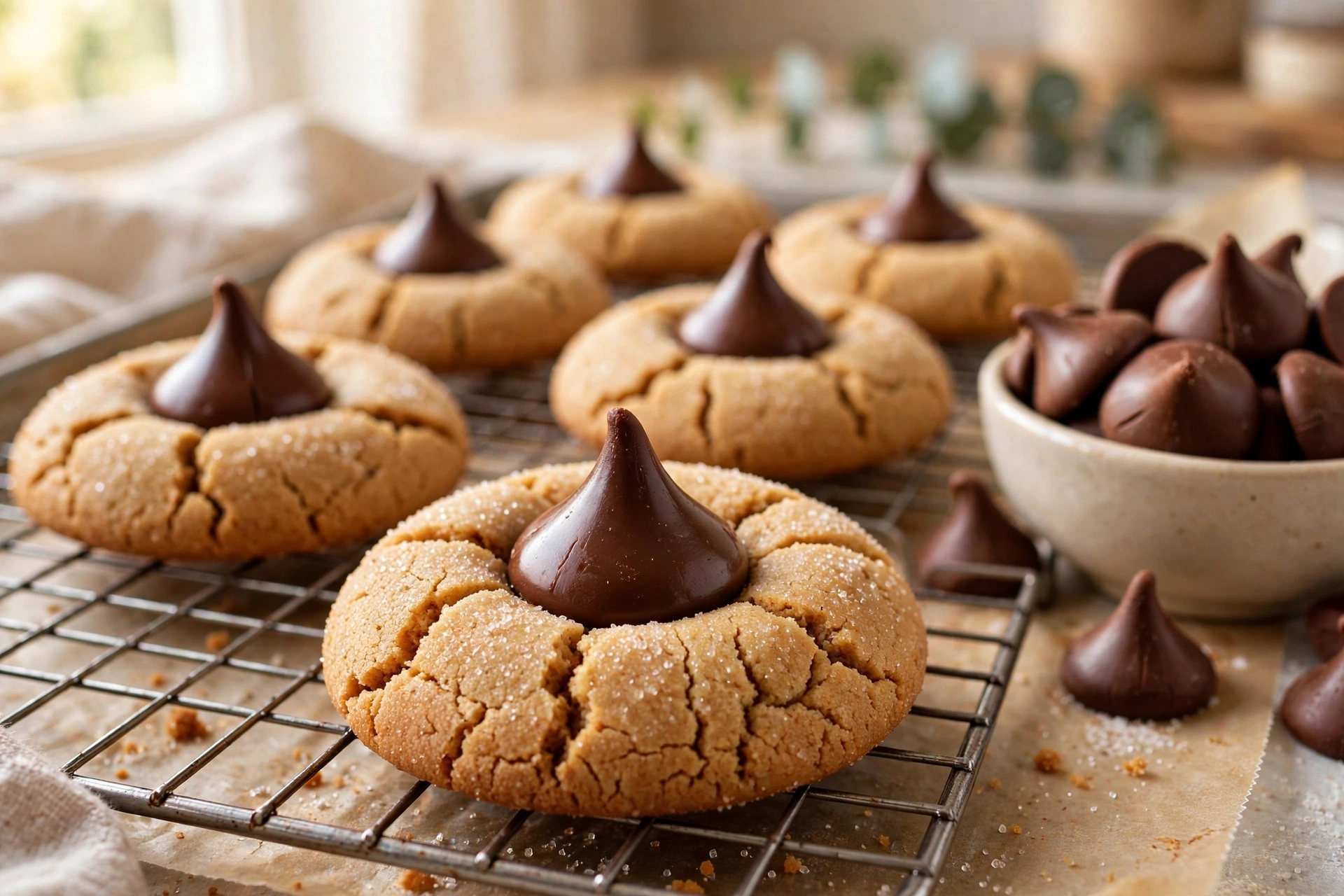
A proper blossom announces itself before you taste it: a round, crackled cookie with fine fissures running from the chocolate outward, each crack dusted with sugar that catches the light. The cracks are not decoration; they are the sign the bake was right.
The bite runs in three beats. First the sugared edge, crisp for a second. Then the soft peanut butter crumb, dense and almost fudgy at the center. Then the chocolate, cool and firm, melting only after the cookie has given everything it has.
Peanut butter and chocolate is an old friendship, but the proportions matter. Too much chocolate and the cookie becomes a delivery vehicle. Here the kiss is one bite of the four or five a cookie gives you, a punctuation mark instead of the whole sentence.
Serve them barely warm if you can time it. Ten minutes off the tray, the crumb has set but the chocolate still yields at the center when you press it. It is the version of this cookie that people remember and ask about later.
On the platter, they hold their looks for hours, which is rarer than it sounds. No frosting to slump, no glaze to dull, no filling to weep into the cookie beneath. At midnight the last blossom looks like the first one did at noon.
What You Need: Pantry Staples and a Bag of Kisses
One specification matters more than any other on this list: the peanut butter. Use a classic creamy peanut butter, the shelf stable kind. Natural peanut butter, the kind with oil pooled on top, makes a greasy dough that spreads thin and bakes dry at the edges.
Everything else is an ordinary baking shelf. Butter, two sugars, an egg, a splash of milk, vanilla, flour, soda and salt, plus a bag of milk chocolate kisses unwrapped before anything else begins. Unwrapping mid bake, with a hot tray waiting, is nobody’s favorite job.
- 1/2 cup unsalted butter, softened to room temperature
- 3/4 cup creamy peanut butter (classic style, not natural)
- 1/3 cup granulated sugar
- 1/3 cup packed light brown sugar
- 1 large egg
- 2 tablespoons whole milk
- 1 teaspoon vanilla extract
- 1 1/2 cups all-purpose flour
- 1 teaspoon baking soda
- 1/2 teaspoon fine salt
- 1/3 cup granulated sugar, for rolling
- 36 milk chocolate kisses, unwrapped
Rolling, Baking and Pressing the Blossoms
Sequence is the whole craft of this cookie. Kisses into the freezer before the dough exists. Dough rested before it is rolled. Sugar bowl beside the tray. Tray out, kisses on within the minute, while the cookies are still puffed and soft enough to take the press.
- Unwrap the kisses and put them on a small plate in the freezer for at least 15 minutes. Line two baking sheets with parchment.
- Beat the butter, peanut butter, granulated sugar and brown sugar together for about 2 minutes, until pale and fluffy. Beat in the egg, milk and vanilla until smooth.
- Whisk the flour, baking soda and salt in a separate bowl. Add to the peanut butter mixture and stir until a soft dough forms with no dry flour at the bottom.
- Cover and chill the dough for 30 minutes. Heat the oven to 375°F while it rests.
- Roll the dough into 1 inch balls, about 36. Roll each ball in the sugar for rolling and set on the sheets, 2 inches apart.
- Bake one sheet at a time for 8 to 10 minutes, until the cookies are puffed, the tops look dry, and fine cracks ring the edges. Do not wait for browning; that is already too far.
- Take the sheet out and immediately press one frozen kiss into the center of each cookie, firmly enough that the edges crack a little more. The kiss will soften at its base and hold.
- Leave the cookies on the hot sheet for 10 minutes to set, then move them to a rack to cool completely. Repeat with the second sheet.
Built for the Cookie Box: Freezing, Stacking, Gifting
This recipe was chosen for the season’s cookie boxes, so its storage numbers are the honest ones. Finished peanut butter blossoms keep in an airtight tin at room temperature for up to 5 days, the kiss still glossy on day three.
Stack them with parchment between the layers, never directly chocolate to cookie. The points are the fragile part: a tin packed snugly, layers separated, travels across town without a single casualty. Loose cookies in a big box arrive as a delicious rumor.
The dough freezes better than the finished cookie. Roll the balls, sugar them, and freeze them solid on a tray before bagging. Bake from frozen at the same temperature, adding about 2 minutes, and press the kisses on as usual. Fresh cookies, any December evening, in fifteen minutes.
Finished cookies also freeze, for up to 2 months, though the chocolate blooms faintly after thawing. It harms nothing but the shine. For a gift box, the dough ball route gives a better looking cookie, and the baking smells like a present of its own.
One packing habit protects the whole assortment: blossoms go on the top layer, points up, never under heavier cookies. A thumbprint can bear weight; a chocolate kiss cannot. Packed last and lifted first, they arrive looking bakery fresh at the other end.
A box takes shape quickly beside its neighbors. These travel well next to our classic peanut butter cookies, they contrast with chocolate crinkle cookies and thumbprint cookies, and a row of snowball cookies gives the box its snowfall. Add gingerbread cookies and the assortment is complete.
If Your Blossoms Bake Up Dry, Read This First
Dry blossoms are overbaked blossoms, almost every time. The cookie should look slightly underdone at the center when the tray comes out; it finishes on the hot sheet. Two extra minutes in the oven is the whole distance between tender and chalky.
Flat cookies tell a different story. Butter that was melted instead of softened, or a warm kitchen and dough rolled without its rest, lets the balls slump before they set. Chill the rolled, sugared balls for 10 minutes while the oven heats and they will hold their shape.
A kiss that detaches in the tin was pressed too late. The cookie’s surface must still be soft when the kiss goes on, inside the first minute off the oven. If a tray waited, ten seconds back in the oven softens the centers enough to take the press properly.
Gritty dough usually means the sugars were not beaten long enough at the start. Give the butter, peanut butter and sugars their full two minutes. The mixture should look like frosting, pale and smooth, before the egg goes in.
Dark Chocolate, Colored Sugar and Three More Trays to Try
The traditionalist variation is colored sugar: red and green sanding sugar on the rolling bowl turns the same dough into the most festive tray on the table. The cracks show the color beautifully, and children identify their cookie from across the room.
Dark chocolate kisses shift the balance toward grown up. The crumb is sweet, the peanut butter is rich, and a darker chocolate keeps the finish clean. White chocolate kisses go the other way, sweeter and softer, best on cookies served the same day.
For a double peanut tray, press a miniature peanut butter cup into half the batch instead of kisses. The shape differs, the flavor doubles down, and the mixed tray looks deliberate. A tiny pinch of flaky salt on the chocolate, while it is still soft from the press, suits this version well.
Rolled in cinnamon sugar, the same dough becomes a snickerdoodle blossom, warm spiced at the edges. It strays from the classic, cheerfully, and it earns its place on January trays when the Christmas sugars have gone back into the cupboard.
One more tray worth knowing: the blossom press works on other soft cookies too. A ginger molasses round, baked the same way and pressed with a dark chocolate kiss, borrows the whole technique and tastes like the classic’s moodier cousin. December tables hold both happily.
A Smaller Batch and a Gluten Free Tray
Half the recipe makes 18 cookies with no adjustment beyond a smaller bowl, and it is the right size for most weeknights of the season. The dough also waits in the fridge for up to 2 days, so a full batch can bake off in two evenings.
For a gluten free tray, a one to one gluten free flour blend swaps in cleanly, since the dough is sturdy and the bake is short. The cookies spread a fraction more; the 30 minute chill, kept strict, holds them in shape.
Nut allergies close this recipe entirely, and honesty is better than a workaround: the cookie is its peanut butter. For mixed company, bake the blossoms first and box them separately, clearly labeled, before any other tray shares the counter.
The First Cookie Gone From Every Platter
These peanut butter blossoms keep the promise the classic always made, with the shine left on the chocolate and the crumb left soft. Frozen kisses, a short rest, a tray pulled on time: nothing here is hard, and everything here matters.
Bake them once for the platter. Then freeze a bag of sugared dough balls for the evening somebody drops by, and be the house that produces warm Christmas cookies in fifteen minutes, as if it were nothing at all.
Questions About These Peanut Butter Blossoms
Peanut butter blossoms prompt the same handful of questions every December, so here are the answers I give most often. Readers ask whether peanut butter blossoms can be made ahead (yes, and they freeze beautifully), whether peanut butter blossoms need natural or classic peanut butter (classic, for the cleanest set), and how peanut butter blossoms keep their glossy chocolate point (freeze the kisses first). If your peanut butter blossoms crack, slump or bake up dry, the answers below will put them right.
FAQ
Why do the kisses need to be frozen before pressing?
A room temperature kiss melts against the hot cookie: the point slumps, the surface turns dull, and the loosened chocolate can detach once cool. Fifteen minutes in the freezer firms the kiss so only its base softens into the warm crumb. The point stays sharp, the finish stays glossy, and the kiss stays anchored in the tin.
Can I use natural peanut butter for peanut butter blossoms?
It is the one swap this recipe refuses. Natural peanut butter separates, and its extra oil makes the dough greasy: the cookies spread thin, crack badly and bake dry at the edges. Classic creamy peanut butter, the shelf stable kind, gives the thick, tender crumb the cookie is known for. Reference values for both styles are listed in USDA FoodData Central at https://fdc.nal.usda.gov/ if you want to compare them.
Why did my blossoms crack so much, and is that bad?
Cracks are the signature of this cookie, not a flaw. They form as the puffed cookie settles around the pressed kiss, and a sugared surface cracks more visibly. What you do not want is a dry, crumbly crack that breaks the cookie apart; that means the tray stayed in the oven too long.
How far ahead can I make the dough balls?
Rolled and sugared balls keep 2 days in the fridge, covered, or up to 2 months in the freezer, frozen solid on a tray then bagged. Bake frozen balls at 375°F with about 2 extra minutes, and press the frozen kisses on the moment the tray leaves the oven.
My kisses keep falling off the cooled cookies. What happened?
The press came too late. The cookie surface must still be soft, within about a minute of leaving the oven, so the chocolate base melts slightly into the crumb and glues itself as it cools. If a tray waited, return it to the oven for 10 seconds to soften the centers, then press.