
In this article:
- Why the Glaze Goes on Last
- The Five Roots and the Job of Each One
- Cut by Density, Not by Habit
- Maple Roasted Root Vegetables Ingredients
- How to Roast Root Vegetables so They Actually Brown
- The Thanksgiving Timing Plan
- Swaps for the Pan You Already Own
- Reheating Leftovers Without Losing the Edges
- Questions Home Cooks Ask About Roasted Roots
Every Thanksgiving table has one pan of roasted vegetables, and it is usually the pan that almost worked. The carrots are tender but pale. The sweet potato has gone soft at the corners. Something in the middle is still firm, and the sweet glaze that looked so promising in the bowl has turned dark and a little bitter on the thin edges. The vegetables are fine. They are just not the pan anybody goes back for.
The problem is rarely the vegetables. It is the order of operations. Most recipes toss everything in maple syrup at the start and roast for the better part of an hour, which asks a sugar glaze to survive a hot oven far longer than sugar can. This version of maple roasted root vegetables roasts the roots first, with oil, salt and warm spices, and brings the maple in at the end, in two thin coats, when the vegetables are nearly done. The glaze stays glossy, the edges stay crisp, and each root keeps its own flavor instead of fading into one sweet mush.
There is a second fix built into this recipe, and it matters just as much: the vegetables are cut by density, not all to the same size. Dense turnips and parsnips go smaller, quick cooking sweet potato and carrot go bigger, and everything lands at tender at the same moment. No parboiling, no steaming step, no fishing out the done pieces while the rest catch up.
Why the Glaze Goes on Last
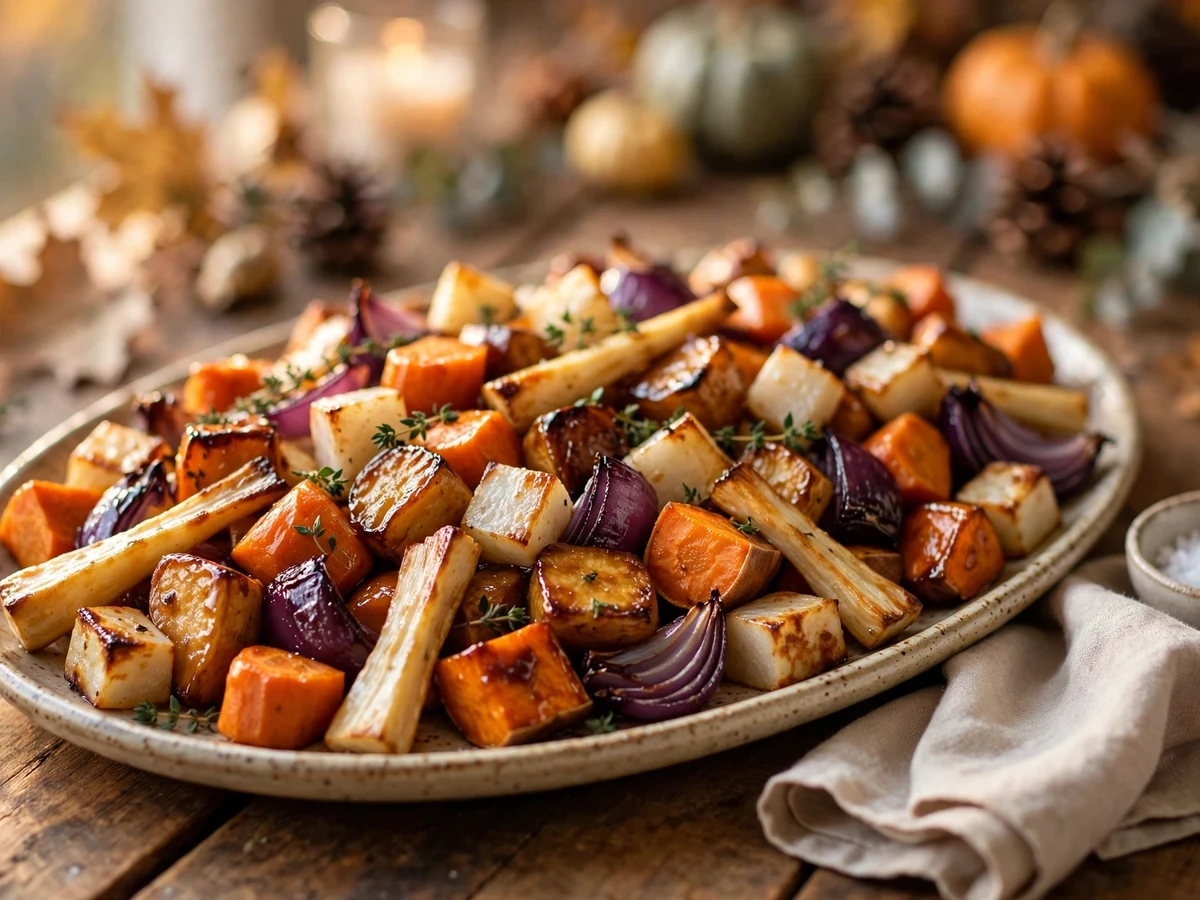
Maple syrup is mostly sugar and water. In a 425 degree oven, the water leaves quickly, and the sugar that remains starts to darken. Given 10 or 12 minutes, that darkening is exactly what you want: deep color, a slight chew at the edges, a shine that catches the light on the platter. Given 40 minutes, the same sugar goes past caramel into bitter, and it takes the thin edges of the vegetables with it.
So the vegetables roast in two acts. Act one is oil, kosher salt, black pepper, garlic powder and a little smoked paprika, at high heat, until the pieces are tender and starting to color on their own. Act two is the glaze: maple syrup whisked with a spoonful of apple cider vinegar and fresh thyme, drizzled over in two coats with a short roast between them. The first coat soaks into the hot surfaces. The second coat stays on top and sets during a five minute rest, which is why the finished pan looks lacquered instead of wet.
The vinegar is not there to make anything sour. A small amount of acid keeps a sweet glaze from tasting flat, the same way a squeeze of lemon wakes up a caramel sauce. Once it roasts, nobody at the table will name it. They will just say the vegetables taste bright.
The Five Roots and the Job of Each One
Carrots bring the color and the familiar sweetness. Cut them into one inch chunks, thick enough that they caramelize at the cut faces before they soften through.
Parsnips are the quiet flavor of the pan, sweet and a little earthy, almost spiced on their own. Cut them into batons about half an inch thick. Parsnip cores can be woody in very large roots; if a parsnip is fat, quarter it lengthwise and slice out the pale core before cutting the batons.
Turnips keep the pan honest. Their gentle peppery bite balances all the sweetness around them, and they are the densest vegetable here, which is why they get the smallest cut, three quarter inch cubes. Peel them well; turnip skin turns bitter in a hot oven.
Sweet potato cooks fastest and sweetest. Give it the biggest pieces, a full inch, and it will hold its shape instead of slumping into the pan. Choose a firm orange fleshed sweet potato, not a soft one.
Red onion is not a root, but it earns its place. Cut into wedges held together by the root end, it roasts into sweet purple petals that weave through the pan and give the glaze something silky to cling to.
One vegetable is missing on purpose: the beet. Beets are wonderful roasted on their own, but in a mixed pan they dye every pale neighbor pink and their earthy flavor takes over. If your family loves them, roast them on a separate small pan and fold them in at the platter, where the color reads as a garnish instead of a stain.
Cut by Density, Not by Habit
The single most useful habit for mixed roasted vegetables is to stop cutting everything the same size. A one inch cube of turnip and a one inch cube of sweet potato are not the same piece of food: the turnip is dense and wet, the sweet potato is starchy and quick. Cut to the same size, one of them loses.
Use this guide and the whole pan finishes together:
- Turnip: 3/4 inch cubes, the smallest cut, because it is the densest.
- Parsnip: 1/2 inch thick batons, about 2 inches long.
- Carrot: 1 inch chunks, cut on a slight diagonal for more surface.
- Sweet potato: 1 inch cubes, the largest cut, because it softens first.
- Red onion: 8 wedges per onion, cut through the root so they hold together.
Surface matters as much as size. Flat cut faces are what brown against the pan, so turn the pieces cut side down when you spread them out, and resist stirring for the first 20 minutes. One confident turn halfway is all this pan needs.
Maple Roasted Root Vegetables Ingredients
- 3 large carrots, peeled and cut into 1 inch chunks (about 1 pound)
- 3 medium parsnips, peeled and cut into 1/2 inch thick batons (about 3/4 pound)
- 2 medium turnips, peeled and cut into 3/4 inch cubes (about 3/4 pound)
- 1 large sweet potato, peeled and cut into 1 inch cubes (about 1 pound)
- 1 large red onion, cut into 8 wedges through the root end
- 3 tablespoons olive oil
- 1 1/4 teaspoons kosher salt
- 1/2 teaspoon black pepper
- 1 teaspoon garlic powder
- 1/2 teaspoon smoked paprika
- 1/3 cup pure maple syrup
- 1 tablespoon apple cider vinegar
- 2 teaspoons fresh thyme leaves, plus more for serving
- 1/2 teaspoon flaky sea salt, for serving
Use real maple syrup here, the kind that pours thin. Pancake syrup is mostly corn syrup and flavoring; it burns faster and tastes like candy instead of maple. Grade does not matter much for roasting, so save the fancy bottle for the table and use the everyday one.
How to Roast Root Vegetables so They Actually Brown
- Heat the oven to 425 degrees F. Line two large rimmed sheet pans with parchment paper.
- Cut the vegetables by density: turnips in 3/4 inch cubes and parsnips in 1/2 inch batons so the dense ones cook faster, carrots and sweet potato in bigger 1 inch pieces, and the onion in wedges held together by the root end.
- Put all the vegetables in a large bowl. Add the olive oil, kosher salt, black pepper, garlic powder and smoked paprika, and toss until every piece looks glossy.
- Spread the vegetables over the two pans in a single layer with a little space between the pieces. Crowded pieces steam instead of roasting.
- Roast for 20 minutes. Turn the pieces with a spatula, swap the pans top to bottom, and roast 8 minutes more.
- Whisk the maple syrup with the apple cider vinegar and the thyme leaves. Drizzle half over the vegetables, toss gently right on the pans, and spread the pieces back out.
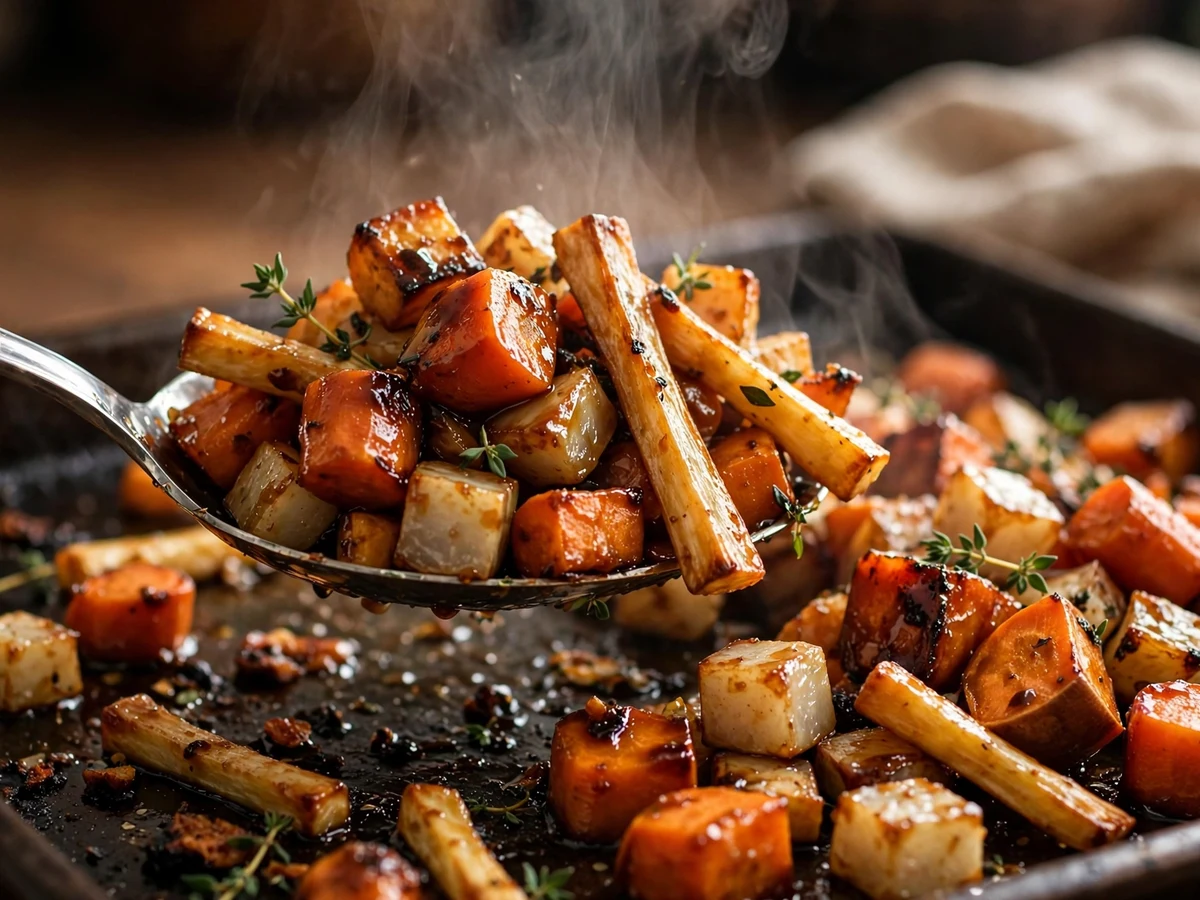
- Roast 5 minutes. Drizzle the rest of the glaze, toss once more, and roast 5 to 7 minutes more, until the edges are deep golden and the glaze looks thick and shiny.
- Rest the pans for 5 minutes so the glaze sets. Move the vegetables to a warm platter, finish with the flaky sea salt and extra thyme, and serve warm.
The Thanksgiving Timing Plan
This side dish is built to fit around the bird instead of fighting it for oven space. Here is the plan that works in a real kitchen on the day:
- The day before: peel and cut all the vegetables. Keep the sweet potato separate in cold water so it does not darken, and everything else in a sealed container lined with a paper towel. Drain and dry the sweet potato well before roasting.
- While the turkey roasts: whisk the glaze and leave it on the counter. Measure the spices into a small bowl.
- When the turkey comes out to rest: the oven is already hot and empty. The vegetables go in for their full 40 minutes while the bird rests under foil and the gravy gets made. A rested turkey is a juicy turkey, so nothing is wasted.
- To hold: if dinner slips, keep the finished pan in a 200 degree oven for up to 30 minutes. Add the flaky salt at the table, not before.
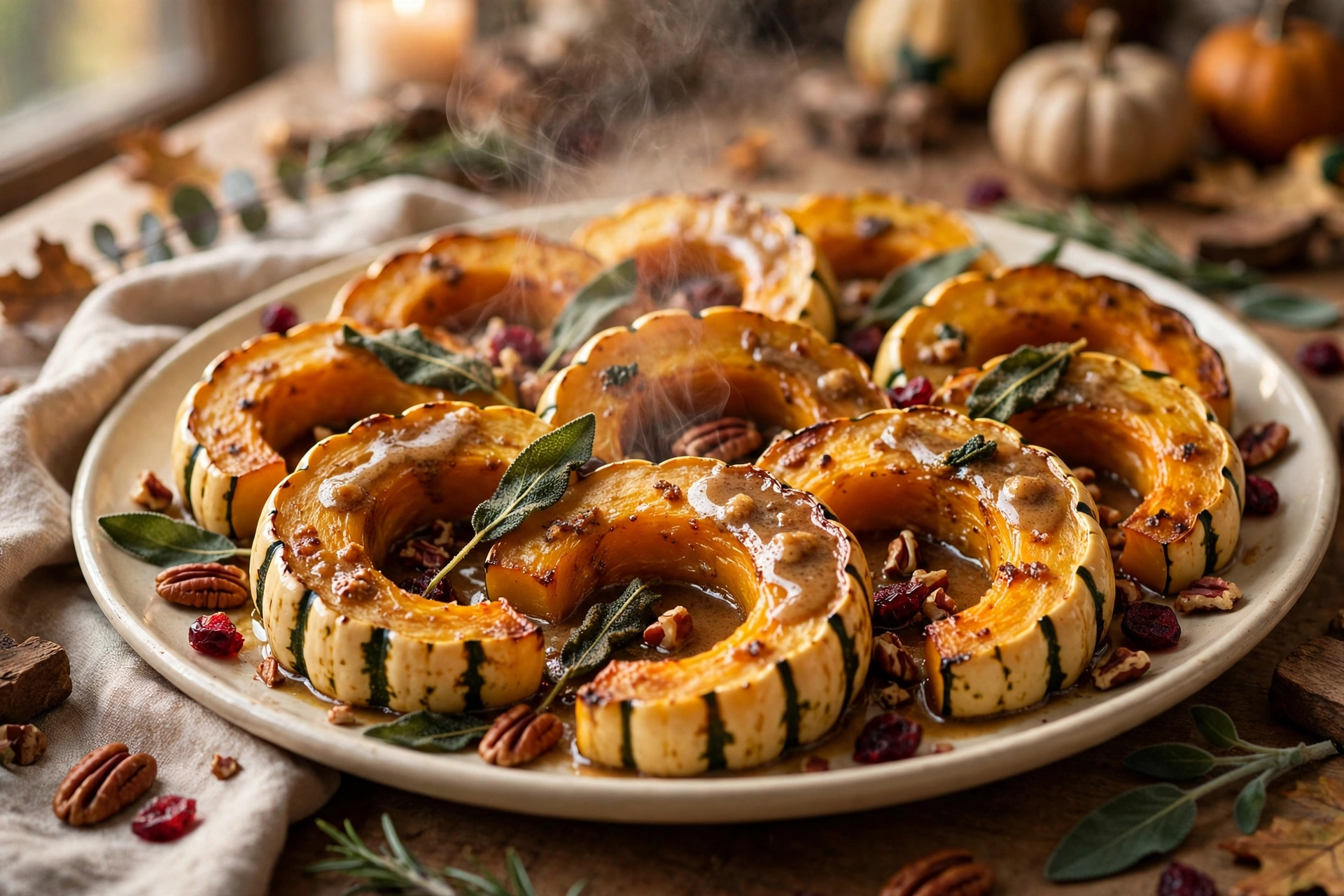
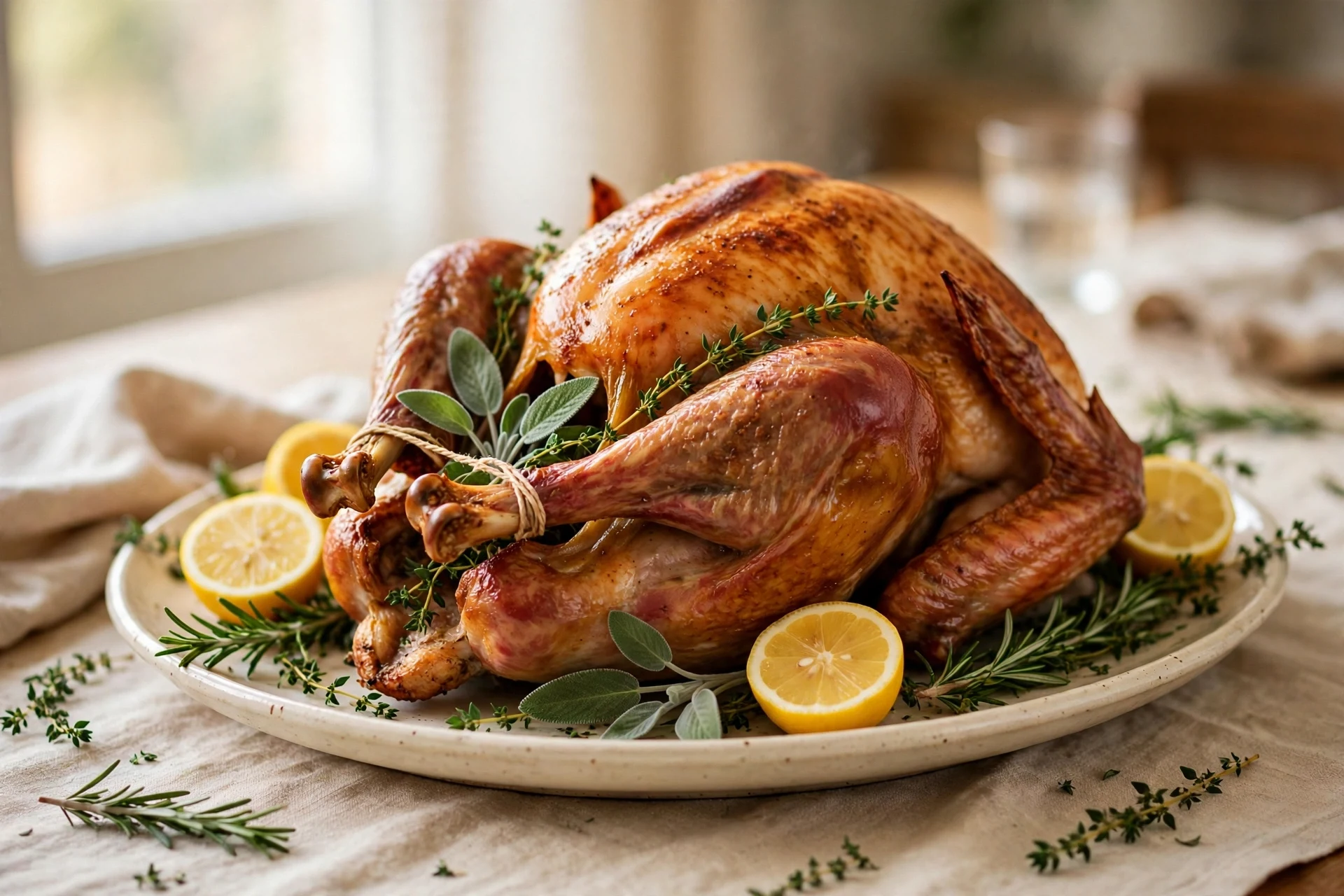
The roots sit happily next to a classic bird like our herb butter roast turkey, and a spoonful of make-ahead turkey gravy over the top is never a mistake. For a second vegetable with a different texture, the roasted delicata squash with brown butter can roast on the rack below in the same heat.
Swaps for the Pan You Already Own
One pan instead of two: use your largest sheet pan and roast in a single tight layer only if the pieces still have space. If they pile up, split the batch and roast twice; steamed roots cannot be rescued by extra time.
Rutabaga for turnip: a fine swap, and denser still, so cut it a touch smaller than the turnip, closer to 1/2 inch cubes, and give it the full roast.
Honey for maple: it works, but honey browns faster than maple syrup. Add it in the same two coats and pull the pans a minute early.
Rosemary for thyme: use half as much, finely chopped, and add it to the oil at the start instead of the glaze; rosemary needs heat and time to soften, thyme does not.
No smoked paprika: sweet paprika plus a pinch of cumin gives a similar warmth. The pan should still taste like itself.
Reheating Leftovers Without Losing the Edges
Leftover roasted roots reheat better than most Thanksgiving sides, as long as you keep them out of the microwave. Spread them on a sheet pan in a 400 degree oven for 8 to 10 minutes and the edges come back, because the glaze re-melts and crisps at the same time. In an air fryer, 375 degrees for 5 minutes does the same job for a smaller portion.
Cold leftovers are worth keeping too. Chop them and fold into a grain bowl, tuck them into a frittata, or blend the softest pieces into a soup base with stock. The USDA leftovers guidance is the reference to follow for storage: refrigerate within two hours, use within three to four days, and reheat until hot all the way through. The vegetables also freeze well for up to three months; thaw overnight in the fridge and reheat on a pan as above.
Questions Home Cooks Ask About Roasted Roots
Can I roast the vegetables ahead and reheat them for dinner?
Yes, and they hold up well. Roast them fully, glaze included, up to one day ahead. Cool, cover and refrigerate on the pan or in a shallow container. Reheat uncovered at 400 degrees for 10 to 12 minutes, until the edges shine and crisp again. Add the flaky salt after reheating.
Do I have to peel the turnips and parsnips?
The turnips, yes: their skin has a waxy, bitter edge that a hot oven makes worse. Parsnips can keep a well scrubbed skin if they are young and thin, but peeling gives a cleaner sweetness and better browning, so this recipe peels both.
Why did my vegetables steam instead of roasting?
Almost always crowding. When pieces touch, the water leaving them has nowhere to go and the pan turns into a steamer. Two pans, a single layer, and space between the pieces fix it. Wet vegetables cause the same problem, so dry anything you rinsed or soaked.
Can I add potatoes to the mix?
Yes. Yukon Gold potatoes cut in 3/4 inch cubes roast on the same schedule. If you would rather give potatoes their own moment, our hasselback sweet potatoes make a strong second side with the same maple mood.
How do I know the vegetables are done?
A knife should slide into the thickest turnip cube with no resistance, the carrot edges should be deep golden, and the glaze should look thick and glossy rather than runny. If the vegetables are tender but pale, give them 3 more minutes before the final glaze coat rather than more time after it.
Can I roast the vegetables ahead and reheat them for Thanksgiving dinner?
Yes. Roast them fully, glaze included, up to one day ahead, then cool, cover and refrigerate. Reheat uncovered at 400 degrees F for 10 to 12 minutes until the edges crisp again, and add the flaky salt after reheating.
Do I have to peel the turnips and parsnips?
Peel the turnips, because their skin turns bitter in a hot oven. Parsnips can keep a well scrubbed skin when young and thin, but peeling gives cleaner sweetness and better browning.
Why did my roasted vegetables steam instead of browning?
Crowding is the usual cause. When the pieces touch, their moisture cannot escape and the pan steams. Use two sheet pans, a single layer, space between the pieces, and dry vegetables before they go in.
Can I freeze maple roasted root vegetables?
Yes. Cool them completely, freeze in a single layer, then store in a sealed bag for up to three months. Thaw overnight in the fridge and reheat on a sheet pan at 400 degrees F for 8 to 10 minutes.