
In this article:
- The Two Day Panettone Schedule, Hour by Hour
- What Real Panettone Tastes Like: Feathery, Buttery, Perfumed with Citrus
- Why the Overnight Starter Makes the Whole Loaf
- Panettone Ingredients
- Making the Panettone: From Sticky Dough to a Tall Dome
- No Panettone Mold and No Stand Mixer? Both Problems Solved
- When a Panettone Sinks, Splits, or Bakes Up Dense
- Wrapped for the Gift Box: Storing Panettone All Week
- Questions Cooks Ask About Panettone
Panettone is the tall, golden Christmas bread of Milan, a butter rich dome that tears into long, feathery strands and smells of orange, lemon, and warm vanilla. Baked at home, on a calm two day schedule, it outclasses anything wrapped in cellophane at the store.
The reputation for difficulty is mostly a reputation for patience. The dough itself is an enriched bread dough, no more mysterious than brioche, and the famous overnight starter does its work while you sleep. What the recipe truly needs is a clock, a warm corner, and butter added slowly.
This version keeps the traditional method and changes one thing on purpose: the fruit soaks in warm orange juice instead of spirits, so it plumps sweet and bright for every seat at the table. Start it beside our yule log in the early December baking days and the house will smell like a Milan bakery by the weekend.
The Two Day Panettone Schedule, Hour by Hour
Day one, around 8 in the evening, stir together the starter: flour, water, and a pinch of yeast, five unhurried minutes. Cover it and put it in the refrigerator for 10 to 14 hours. At the same moment, pour warm orange juice over the raisins and candied peel and leave the bowl on the counter overnight.
Day two, around 9 in the morning, mix the final dough. Beat in the eggs, then the butter a spoonful at a time, then knead until the dough turns glossy and stretches thin without tearing, about 12 to 15 minutes of machine work. The fruit goes in last, for one gentle minute.
By 10 the dough rests in its mold, rising in the warmest corner of the kitchen until it crowns the rim, usually 3 to 4 hours. It bakes around 2 in the afternoon for about 50 minutes, then hangs upside down to cool for 2 full hours. Slice it at dinner, or wrap it for giving the next day.
If the loaf is destined for Christmas morning, shift the whole plan one day earlier and bake on the 24th in the morning instead. Panettone is one of the rare celebration breads that tastes better on its second and third days, once the citrus and butter have settled into the crumb, so baking ahead is a strategy, never a compromise.
What Real Panettone Tastes Like: Feathery, Buttery, Perfumed with Citrus
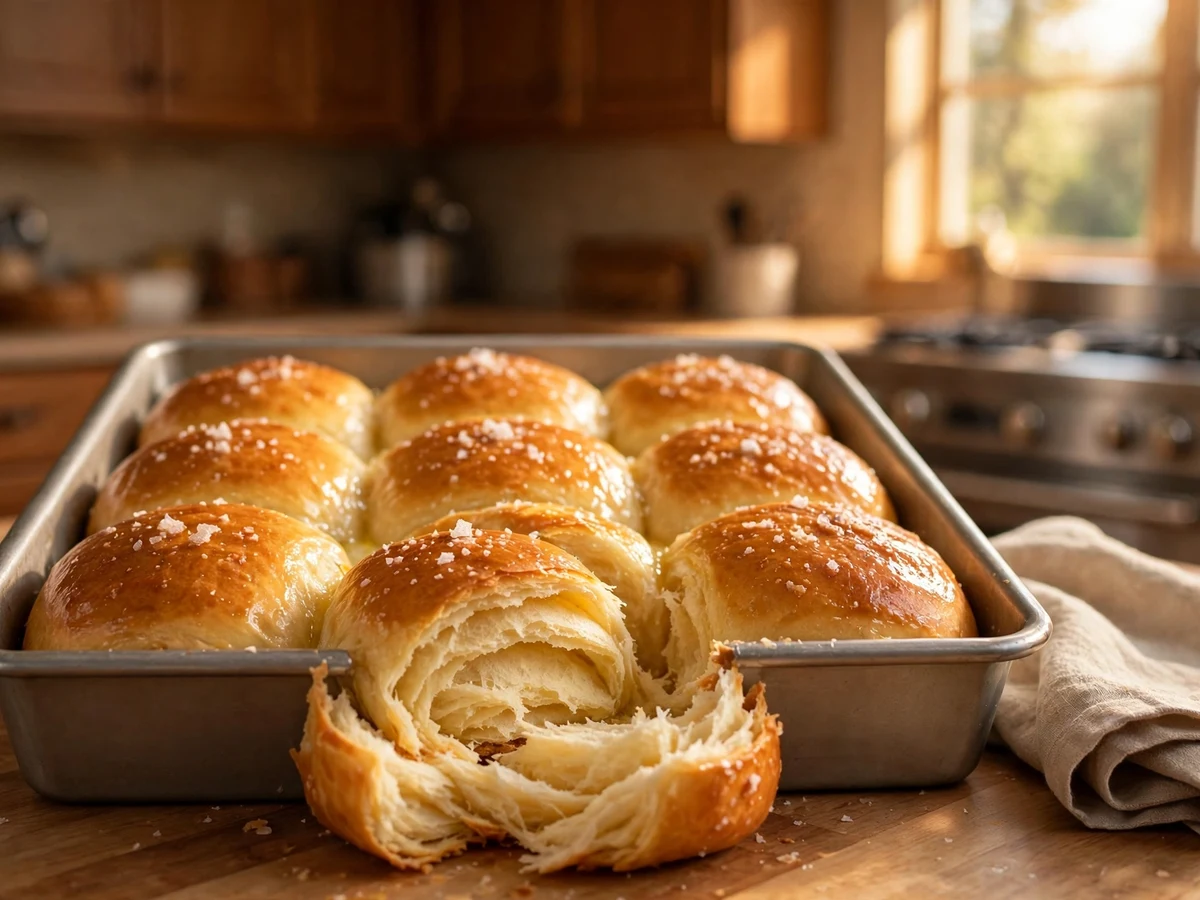
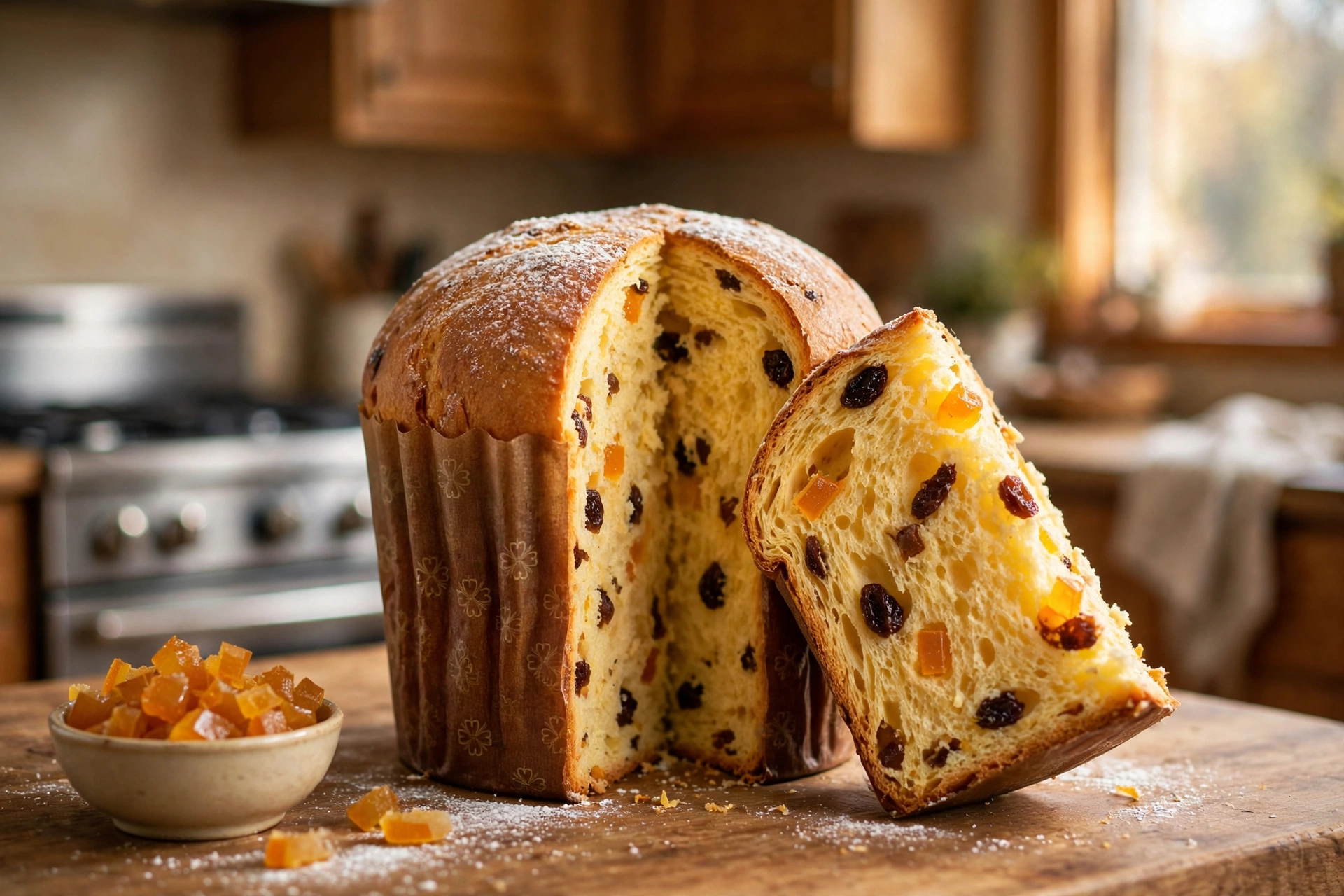
A proper slice pulls apart in strands, the way good brioche does, and the crumb shines faintly from the butter worked through it. The flavor is gentle rather than sweet: warm dairy, vanilla, and a citrus perfume that comes from real zest rubbed into the sugar, not from a bottle.
The fruit is distributed like punctuation, a raisin here, a cube of candied orange there, each one plump and juicy instead of hard. Because the soak was orange juice, the fruit tastes of the citrus itself, clean and bright, and the crumb around it stays tender for days.
The fruit is not decoration, either. The listings in USDA FoodData Central for raisins and candied citrus peel show how much natural sweetness and body they carry, which is why this dough can stay only gently sweet and let the butter and fermentation do the talking.
The crust deserves its own sentence: deep amber, thin, and just firm enough to contrast the soft interior, with the scored cross opening into pale petals at the top. Dust it with powdered sugar only at the table, where it lands like the first snow of the season.
Why the Overnight Starter Makes the Whole Loaf
Panettone fails most often as a flavor problem disguised as a texture problem: dense, bready, and bland. The overnight starter fixes both halves at once. A slow, cold fermentation builds the faint tang and deep aroma that make bakery panettone taste complex instead of merely sweet, and it does so before the butter ever arrives.
The starter also strengthens the dough quietly. Flour that has fermented overnight stretches further and holds more gas, which is how a dough heavy with butter, yolks, and fruit still manages to rise tall instead of spreading. Skipping it produces a cake like loaf; keeping it produces strands.
There is a practical gift hidden in the method, too. Splitting the work across two days means the long rise of the starter happens in the refrigerator, on nobody’s schedule but its own. Our christmas fruitcake uses the same overnight patience for its fruit, and the two bakes share a shopping list more than most cooks expect.
Panettone Ingredients
For the overnight starter:
- 3/4 cup bread flour (90 g)
- 1/2 cup cool water (120 ml)
- 1/8 teaspoon instant yeast
For the fruit soak:
- 1 cup golden raisins (150 g)
- 1/2 cup candied orange peel, cut into small cubes (80 g)
- 1/4 cup candied lemon peel, cut into small cubes (40 g)
- 3/4 cup fresh orange juice, warmed (180 ml)
For the final dough:
- 3 1/4 cups bread flour (410 g), plus more for the board
- 1/2 cup granulated sugar (100 g)
- 2 teaspoons instant yeast
- 1 teaspoon fine sea salt
- 4 large egg yolks, at room temperature
- 2 large eggs, at room temperature
- 1/3 cup warm milk (80 ml)
- 1 tablespoon honey
- 2 teaspoons vanilla extract
- 1 tablespoon orange zest
- 2 teaspoons lemon zest
- 3/4 cup unsalted butter (170 g), very soft, cut into pieces
- Powdered sugar, for dusting at serving
Making the Panettone: From Sticky Dough to a Tall Dome
- The night before, stir the starter flour, cool water, and yeast in a medium bowl until no dry flour remains. Cover and refrigerate for 10 to 14 hours. In a second bowl, pour the warm orange juice over the raisins and both candied peels, cover, and leave at room temperature overnight.
- Next morning, let the starter stand at room temperature for 30 minutes. Drain the fruit well in a sieve, pressing lightly, and reserve the soak liquid for another use, such as sweetening whipped cream.
- Rub the orange and lemon zests into the sugar with your fingers until the sugar is fragrant and damp. This releases the citrus oils through the whole crumb.
- In the bowl of a stand mixer, combine the starter, bread flour, zested sugar, yeast, and salt. Add the yolks, eggs, warm milk, honey, and vanilla. Mix with the dough hook on low speed until a shaggy dough forms, about 3 minutes.
- Increase the speed to medium and knead for 5 minutes. Then add the soft butter one spoonful at a time, waiting for each addition to disappear before adding the next, about 8 minutes in total. Keep kneading until the dough is smooth, glossy, and pulls away from the bowl, and a small piece stretches thin enough to show light through it.
- Add the drained fruit and mix on low speed for 1 to 2 minutes, only until it is evenly distributed. The dough will be soft and slightly sticky; that is correct.
- Scrape the dough into a 6 inch panettone paper mold set on a baking sheet. Smooth the top with a wet hand, cover loosely, and let it rise in a warm, draft free place until the dough crowns just at the rim of the mold, 3 to 4 hours.
- Heat the oven to 350°F (175°C) with a rack in the lower third. Score a shallow cross on top of the risen dough with a sharp knife and lay a small knob of butter in the center of the cross.
- Bake for 45 to 50 minutes, until the dome is deep golden and the center reads 190 to 195°F on an instant read thermometer. If the top darkens early, tent it loosely with foil for the last 15 minutes.
- The moment it leaves the oven, push two long skewers horizontally through the base of the mold, about 1 inch from the bottom. Hang the loaf upside down between two tall pots or stacks of books and let it cool completely, at least 2 hours, before slicing.
No Panettone Mold and No Stand Mixer? Both Problems Solved
The paper mold is a convenience, not a requirement. A 6 or 7 inch springform pan works if you line it with a collar of parchment that stands 3 inches above the rim, well greased, so the rising dough has a wall to climb. Expect the same bake time and check the center temperature exactly as written.
A tall, straight sided saucepan with an oven safe handle, lined the same way, is the second workable substitute. What will not work is a wide, low pan: the loaf spreads instead of doming, and the crumb bakes dense. Height is the whole secret of the shape, whatever vessel provides it.
By hand, the dough needs patience rather than strength. Mix it in a large bowl, rest it 10 minutes, then knead on a lightly oiled counter with the slap and fold method for about 15 minutes, adding the butter in four additions and resting 2 minutes whenever the dough starts to tear. It comes together; it simply asks for music and time.
When a Panettone Sinks, Splits, or Bakes Up Dense
A dome that sinks in the oven was usually underproofed or overproofed at the edges of the window. The dough should crown the mold, feel airy when the mold is nudged, and hold a fingertip dent that fills back slowly. It should also reach the oven promptly, since the last rise continues at room temperature while the oven heats.
A dense, bready crumb points to the butter step. Butter added too fast, or melted instead of soft, coats the flour before the gluten forms and the dough never becomes elastic. Keep the butter soft as lip balm, add it gradually, and do not stop kneading until the windowpane stretch described in the method works for you.
Fruit that sinks to the bottom went in wet or too early. Drain the soak thoroughly, pat the fruit dry, and add it only after the dough is fully kneaded. A top that darkens too fast is simpler: tent with foil and check the temperature rather than the color, since a sugary crust lies about doneness.
A loaf that barely rises in a cold December kitchen is usually suffering temperature, not bad yeast. Move the mold near the preheating oven, into a cupboard with a bowl of hot water, or onto a chair over a heating vent. Enriched dough in winter often needs a full extra hour, and giving it that hour is the fix, not more yeast stirred in late.
Wrapped for the Gift Box: Storing Panettone All Week
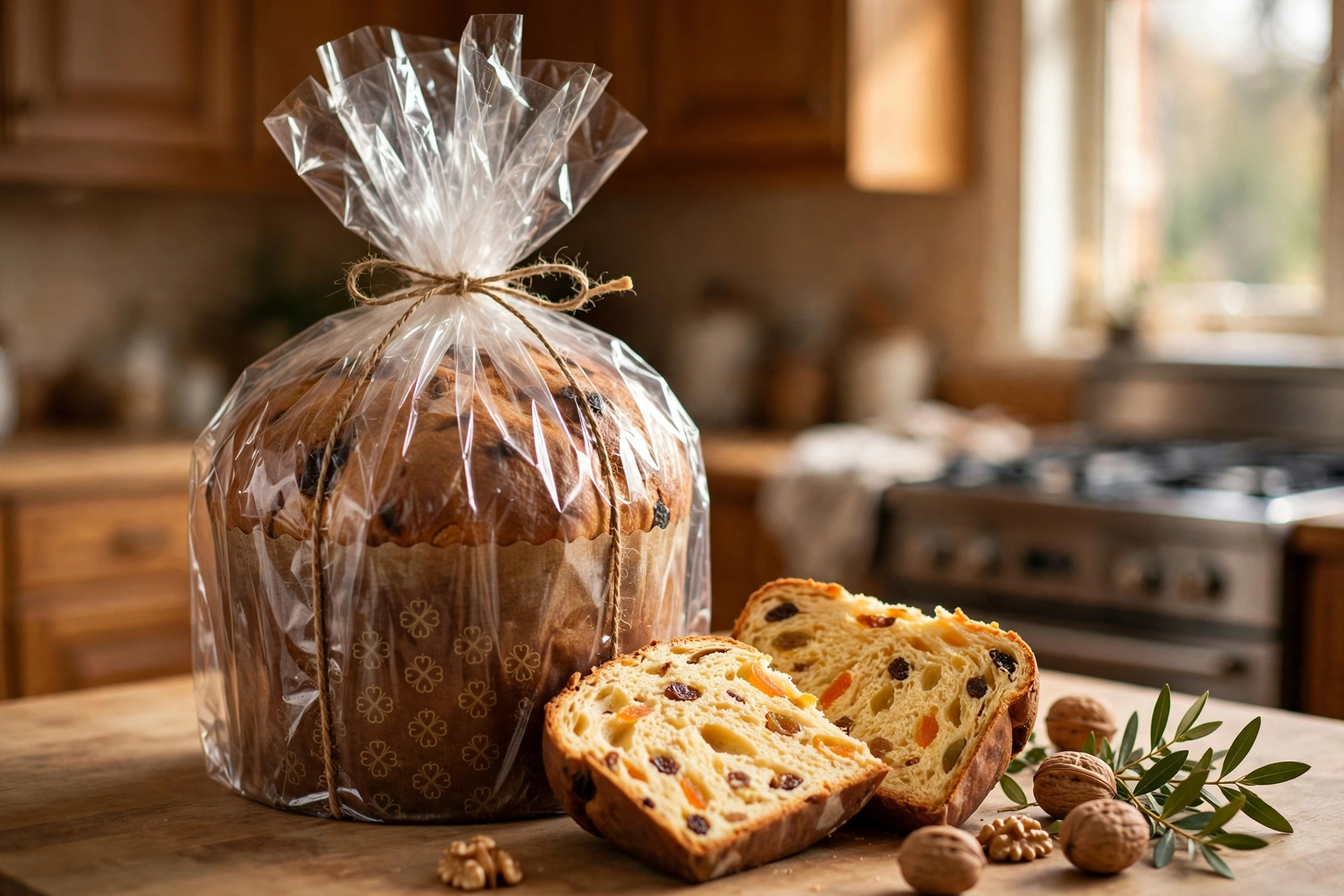
Left whole and wrapped tightly, panettone keeps its moisture remarkably well, 5 to 7 days at room temperature, thanks to the butter, yolks, and fermented starter. Keep it in its mold, slide the whole loaf into a large food safe bag, and store it away from heat and light. Slices cut in advance dry faster than the loaf does.
For a December gift box, a whole panettone wrapped in clear cellophane and tied with twine sits proudly beside a batch of cranberry pistachio biscotti. Few homemade gifts travel better, since the loaf forgives a day in the mail and arrives still fragrant.
Freeze what remains in thick slices, wrapped individually, for up to 2 months, and thaw them at room temperature or toast them straight from frozen. Stale slices make superb French toast casserole on Christmas morning, which is reason enough to bake the full size loaf even for a small household.
Panettone asks for two calm days, a warm corner, and a little faith in an overnight bowl of flour and water. In return it gives you the tallest, most fragrant bread of the season, made by your own hands, ready to slice or to give.
Questions Cooks Ask About Panettone
Can I soak the panettone fruit without alcohol?
Yes, and this recipe is built that way. Warm orange juice plumps raisins and candied peel overnight just as well, and the fruit tastes brighter and cleaner. Warm water with a spoonful of honey and extra zest also works. Always drain and pat the fruit dry before it meets the dough.
Why does panettone cool upside down?
The hot crumb is so soft and butter rich that its own weight can compress it as it cools, squeezing out the tall, feathery texture. Hanging the loaf from skewers lets gravity hold the crumb stretched while it sets. Cool it upside down for at least 2 hours, until fully room temperature.
Can I bake panettone in a regular cake pan?
Yes, with one adjustment: line a 6 or 7 inch springform or deep cake pan with a parchment collar standing 3 inches above the rim, greased well. The dough needs that height to climb into a dome. Keep the same temperature and check the center for 190 to 195°F.
How far ahead can I bake panettone for a gift?
Bake it 2 to 4 days before giving for the best texture, wrap it whole and uncut, and keep it at room temperature. The flavor deepens over the first days thanks to the overnight starter. For longer storage, freeze the whole cooled loaf, well wrapped, for up to 2 months.
My panettone dough is very sticky. Should I add more flour?
Resist the flour. An enriched dough with this much butter and yolk is supposed to feel soft and tacky, and it firms as it is kneaded and as the butter warms into it. Oil your hands and the counter lightly instead, and judge the dough by its stretch: it should pull thin without tearing.
Panettone
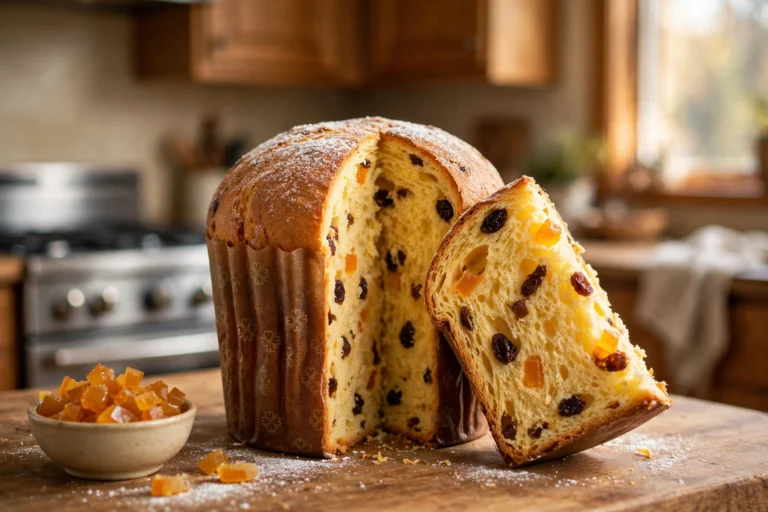
The tall Milan Christmas bread on a calm two day schedule: an overnight refrigerator starter, fruit soaked in warm orange juice instead of spirits, butter beaten in slowly, and the classic upside down cool for a feathery, strand pulling crumb. One large loaf for the table or the gift box.
- Total Time: 14 hours
- Yield: 1 large loaf, 12 slices 1x
Ingredients
- 3/4 cup bread flour (90 g), for the overnight starter
- 1/2 cup cool water (120 ml), for the overnight starter
- 1/8 teaspoon instant yeast, for the overnight starter
- 1 cup golden raisins (150 g)
- 1/2 cup candied orange peel, cut into small cubes (80 g)
- 1/4 cup candied lemon peel, cut into small cubes (40 g)
- 3/4 cup fresh orange juice, warmed (180 ml), for soaking the fruit
- 3 1/4 cups bread flour (410 g), plus more for the board
- 1/2 cup granulated sugar (100 g)
- 2 teaspoons instant yeast
- 1 teaspoon fine sea salt
- 4 large egg yolks, at room temperature
- 2 large eggs, at room temperature
- 1/3 cup warm milk (80 ml)
- 1 tablespoon honey
- 2 teaspoons vanilla extract
- 1 tablespoon orange zest
- 2 teaspoons lemon zest
- 3/4 cup unsalted butter (170 g), very soft, cut into pieces
- Powdered sugar, for dusting at serving
Instructions
- The night before, stir the starter flour, cool water, and yeast in a medium bowl until no dry flour remains. Cover and refrigerate for 10 to 14 hours. In a second bowl, pour the warm orange juice over the raisins and both candied peels, cover, and leave at room temperature overnight.
- Next morning, let the starter stand at room temperature for 30 minutes. Drain the fruit well in a sieve, pressing lightly.
- Rub the orange and lemon zests into the sugar with your fingers until the sugar is fragrant and damp.
- In the bowl of a stand mixer, combine the starter, bread flour, zested sugar, yeast, and salt. Add the yolks, eggs, warm milk, honey, and vanilla. Mix with the dough hook on low speed until a shaggy dough forms, about 3 minutes.
- Increase the speed to medium and knead for 5 minutes. Add the soft butter one spoonful at a time, waiting for each addition to disappear before adding the next, about 8 minutes in total. Keep kneading until the dough is smooth, glossy, pulls away from the bowl, and stretches thin enough to show light through it.
- Add the drained fruit and mix on low speed for 1 to 2 minutes, only until evenly distributed.
- Scrape the dough into a 6 inch panettone paper mold set on a baking sheet. Smooth the top with a wet hand, cover loosely, and let rise in a warm, draft free place until the dough crowns just at the rim of the mold, 3 to 4 hours.
- Heat the oven to 350°F (175°C) with a rack in the lower third. Score a shallow cross on top of the risen dough and lay a small knob of butter in the center of the cross.
- Bake for 45 to 50 minutes, until the dome is deep golden and the center reads 190 to 195°F on an instant read thermometer. Tent loosely with foil for the last 15 minutes if the top darkens early.
- The moment it leaves the oven, push two long skewers horizontally through the base of the mold, about 1 inch from the bottom. Hang the loaf upside down between two tall pots or stacks of books and cool completely, at least 2 hours, before slicing.
- Prep Time: 45 minutes
- Cook Time: 50 minutes
Nutrition
- Serving Size: 1
- Calories: 370
- Sodium: 180
- Saturated Fat: 8
- Protein: 6
- Cholesterol: 65